Prime Minister Sanae Takaichi said Japan will further deepen relations with Britain under new Prime Minister Andy Burnham, who took office Monday after winning the ruling Labour Party’s leadership race last week.
In a post on X on Monday evening, Takaichi said in English that she looks forward to working closely with Burnham, who succeeded Keir Starmer, to further deepen bilateral ties “across a wide range of fields” as “enhanced global strategic partners.”
Takaichi also said she believes Burnham will lead Britain with “robust leadership,” leveraging his “strong track record” from his time as the mayor of Greater Manchester, during which he promoted public services reforms before returning to national politics by winning a June by-election.
On Tuesday, Chief Cabinet Secretary Minoru Kihara said at a press conference that Japan will tackle global challenges with Britain, such as the realization of a free and open Indo-Pacific, a vision advocated by Japan that is seen as an attempt to counter China’s growing clout in the region.
Kihara, the top government spokesman, also said that Japan will continue to collaborate with Britain and Italy on their joint project of developing a next-generation fighter jet by 2035.
As the sole contender, Burnham won the party leadership contest held on Friday following Starmer’s announcement in late June of his decision to resign after the party’s heavy defeat in May local elections. (JapanToday)
Andy Burnham took office Monday as Britain’s new prime minister, promising a 10-year plan to restore political stability and revive the economy while acknowledging that six other U.K. leaders have tried and failed to do so in the past decade.
Speaking outside 10 Downing Street minutes after being formally appointed by King Charles III, Burnham pledged to ease the cost of living for ordinary people, decentralize political power, revitalize industry and end street sleeping by homeless people. He said he would deliver a “circuit breaker” for a system that has taken wrong turns since the 1980s, when public services and utilities were privatized and local government eroded.
“We will take power out of here and carry it into every postcode in the land so that they can do more and in doing more, build a new economy where we put life’s essentials back under stronger public control to make them affordable to you again,” he said.
Burnham said he was “acutely conscious” of the political revolving door he was walking through.
“This is a moment for reflection and new resolution,” he said. “It requires my generation of politicians to raise our game and rise to the new challenge. Britain needs to show the world that we can regain our stability once again, and that is our challenge to make politics work, to make it work better.”
One of Burnham’s biggest tasks on his first day was to appoint a cabinet. The key post of chancellor of the exchequer went to John Healey, the former defense secretary who quit the previous government a few weeks ago over funding plans for his department. His appointment as Treasury chief was a surprise.
Healey replaces Rachel Reeves, the architect of much of the economic agenda of Burnham’s predecessor, Keir Starmer, as well as some of the missteps that ate away at his support. Others leaving the cabinet included David Lammy, who was deputy prime minister.
Energy Secretary Ed Miliband was given the role of foreign secretary. He replaces Yvette Cooper, who was appointed health secretary, a demotion but a hugely important post for the Labour Party’s reelection prospects. Shabana Mahmood remains as home secretary. The full cabinet meets Tuesday.
Burnham became the seventh U.K. prime minister since 2016 in a now well-rehearsed handover after replacing Starmer as leader of the center-left governing Labour Party on Friday. Starmer announced last month that he would resign.
Starmer left office just two years after winning a landslide election victory, forced out by his own party after a series of missteps and U-turns.
Britain’s parliamentary democracy allows governing parties to change leaders, and thus prime ministers, without the need for a general election. The next national poll does not have to be held until 2029, though Burnham can call one sooner if he wants.
Burnham was the only candidate in a contest to become the party’s new leader, securing nominations from 379 of the 403 Labour lawmakers in the House of Commons.
He will confront many of the same struggles as his predecessor: a sluggish economy, a cost-of-living crisis, overstretched public services, concerns about migration and foreign affairs that include wars in Ukraine and the Middle East.
He will also try to navigate relations with U.S. President Donald Trump, who first warmed to, then soured on, Starmer. Burnham’s office said the prime minister spoke to Trump on Monday afternoon and “underlined his commitment to defense and security.”
The former mayor of Greater Manchester previously pledged to make politics “less toxic,” improve living standards across the country and “bring back the hope we have all been missing.”
Burnham said he will set out a 10-year plan for Britain later this year. Before that, he will lay out first steps “to give people some breathing space now, some help with the cost of living.”
“And I will set out some of those measures starting tomorrow, including how we pay for them,” he said.
After his speech, he told reporters that he has “always taken a very prudent approach” to the economy in previous jobs, and will not take any economic risks now.
Tim Bale, professor of politics at Queen Mary University of London, said Labour had backed Burnham “to inject a sense of positivity, of hope, of purpose, a sense of direction.”
Burnham says “he is going to mark a big break, not just with Keir Starmer, but also with what he regards as four decades of the country going in the wrong direction,” Bale said. “But quite what that means in terms of concrete policies, in terms how much he’s going to spend and on what, and how much is going to tax … we’re not sure yet.”
In the rapid-fire world of British political transitions, Burnham entered Downing Street only minutes after Starmer left.
“I go with good grace. I go with a smile, and I go proud of everything that we have achieved,” Starmer said before heading to Buckingham Palace to offer his resignation to the king. It was an offer the king “was graciously pleased to accept,” the palace said in a statement.
Starmer became Labour leader in 2020 after one of the party’s worst election defeats, and he led Labour to a landslide victory four years later. But he was soon defeated by the challenges of governing.
“It has been the privilege of my life to serve you and this great country as prime minister,” Starmer said before leaving Downing Street, hand-in-hand with his wife, Victoria. “I am confident that Britain is now stronger and fairer than it was two years ago.” (JapanToday)
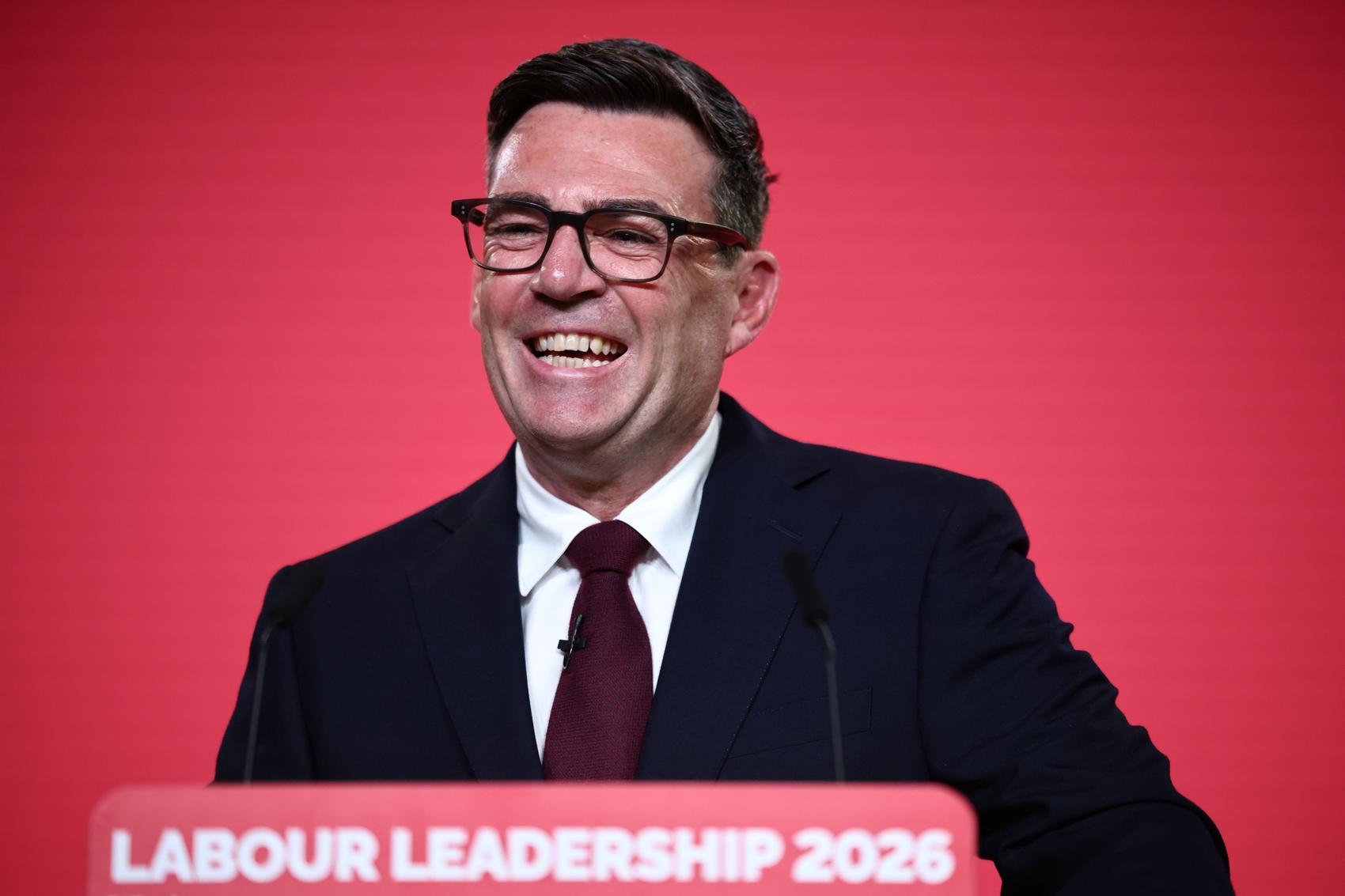
Andy Burnham was officially declared leader of Britain’s governing Labour Party on Friday, promising to bring hope to the British people and purpose to the floundering government as he cleared his final hurdle to take office as prime minister next week.
The former mayor of Greater Manchester was the only contender in the center-left party’s leadership contest to replace departing Prime Minister Keir Starmer, who was forced out by a rebellion within his party. Friday’s announcement was a foregone conclusion after Burnham secured nominations from 379 of the 403 Labour lawmakers in the House of Commons.
Burnham pledged to serve “people and places who have been waiting too long for politics to let them hope again.”
“We’re going to give them hope back,” he told an audience of lawmakers, party activists and trade union leaders in his first speech as leader. “I am ready.”
“I have a plan,” he added, in a bid to reassure a party that has seen its popularity nosedive since winning a landslide election victory two years ago. He pledged to end Labour’s factional disputes, saying “we won’t beat Britain’s new right if we are consumed by infighting and pulling in different directions.”
Burnham has been prime minister-in-waiting for weeks, since winning a special election for a seat in Parliament a month ago, but he has revealed little detail about his policy priorities. He will arrive in Number 10 Downing Street largely unknown to voters outside Manchester.
He sketched out some priorities in Friday’s speech, promising to deliver “hope in every heart” and “good growth in every post code,” in part by transferring power from central government in London to local leaders in cities and regions.
“We will take power back from Westminster and Whitehall and give it to the place you live,” he told the audience. “More power over life’s essentials so you can make them work better.”
Starmer announced last month that he would resign after two years in office marred by missteps and judgment errors that eroded his standing with his party and the public.
Labour regularly trails behind anti-immigration party Reform UK in opinion polls, and the governing party had catastrophic results in local elections in May, triggering pressure on Starmer to step down that he couldn’t resist.
Burnham brings a more relaxed style of leadership than the rather stern Starmer, and is regarded as one of the Labour Party’s best communicators. But he faces many of the same problems as his predecessor, including a sluggish economy, a cost-of-living squeeze fueled by wars in Ukraine and the Middle East and overstretched public services.
And his promises of a new, less divisive politics are not too different to what Starmer pledged when he took office in 2024.
“I will work to build a new politics. The country is crying out for it,” Burnham said. “How can politicians point fingers when living standards are falling and politics as a whole isn’t working for them? It infuriates them and makes them switch off.”
He said he would have the “courage to fix the big things that politics has neglected,” such as tackling the patchy access to social care for those who need it because of age, illness or disability. It’s a pressing issue in a country with an aging population, and one that has foxed previous Labour and Conservative governments.
He highlighted plans to focus on economic renewal, more public control of key sectors and creating new modern industrial jobs, arguing that Britain took “a series of wrong turns in the 1980s” when “political power was centralized and economic power privatized.”
That’s the decade when Conservative Prime Minister Margaret Thatcher oversaw policies of privatization, deindustrialization and political centralization that transformed the U.K. economy.
“Slowly, at times imperceptibly, over four decades, political and economic power drained away out of our communities in every region and nation of the U.K.,” Burnham said, calling Britain’s change of prime ministers — for the sixth time in a decade — “the most significant change moment in our politics for 40 years.”
Starmer will remain prime minister until Monday, when he formally tenders his resignation to King Charles III. The king will then ask Burnham to form a government.
Britain’s parliamentary democracy allows governing parties to change leaders, and thus prime ministers, without the need for a general election. The next national election doesn’t have to be held until 2029.
New prime ministers have come with increasing frequency in recent years. Burnham will be the U.K.’s seventh leader since 2016. (JapanToday)
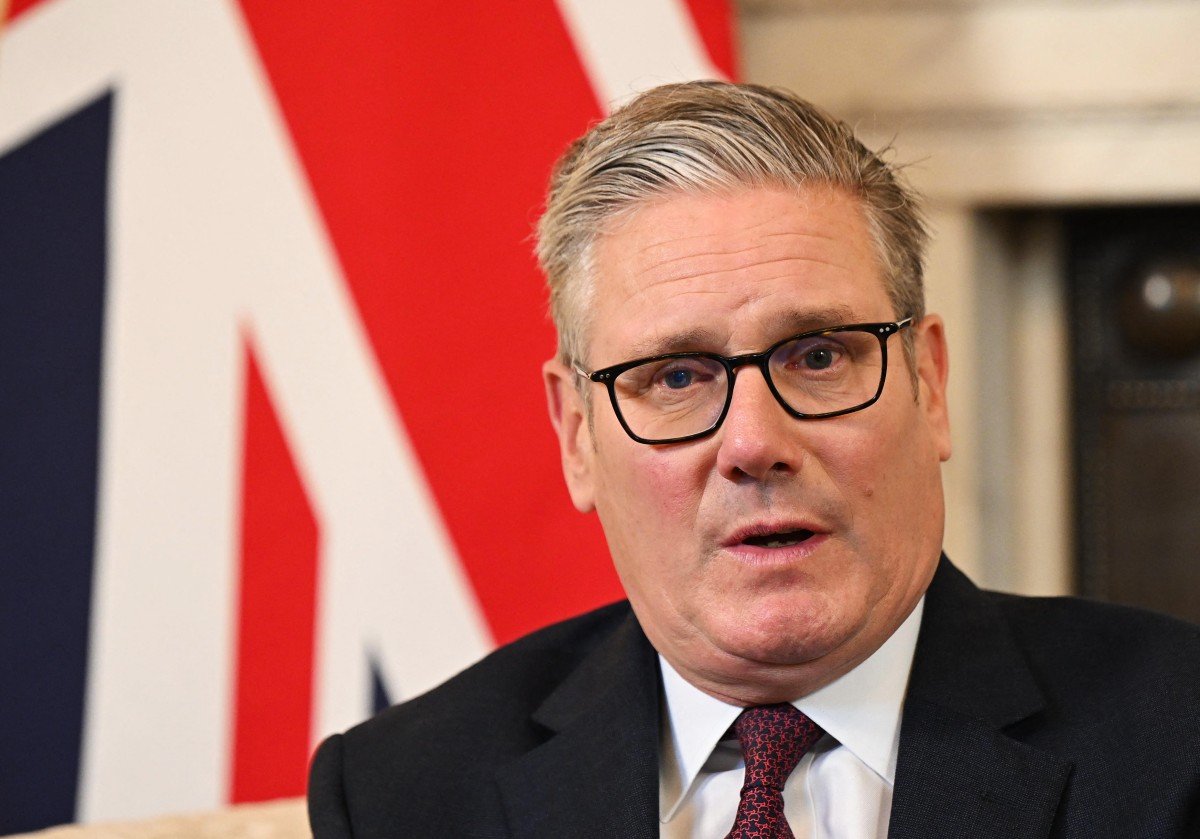
Sir Keir Starmer has said he will quit as Labour Party leader, paving the way for a contest to decide a new prime minister.
Speaking in Downing Street, Sir Keir said he accepted he was not best placed to lead Labour into the next general election and he had informed the King of his decision to step down.
Sir Keir added he has asked Labour’s governing body to set out a timetable to replace him, with nominations opening on 9 July and ending by the summer recess on 16 July.
He said if there was a contest then a new leader would be in place before Parliament returns in September, and he will “do everything” he can to ensure an “orderly” transition of power.
Sir Keir said he would remain as prime minister until the leadership contest is complete.
He added he would also give his successor “my full and unequivocal support, knowing that they will inherit a Britain that is far stronger and fairer than the one I inherited two years ago”.
Andy Burnham is regarded by many as the frontrunner to replace Sir Keir after he secured an emphatic win over his Reform UK rival in last week’s Makerfield by-election.
Burnham announced on Monday that he would put himself forward as a candidate in the leadership contest, hours before he is expected to formally take up his seat as an MP.
His chances were given an immediate boost by former Health Secretary Wes Streeting, who had been viewed as his main rival, offering his backing to the former Greater Manchester mayor.
Sir Keir was elected leader of the Labour Party in April 2020 and became prime minister on 5 July 2024 following Labour’s landslide general election victory.
He will leave Downing Street as the shortest-serving Labour prime minister in history.
His period in office will last longer than his Conservative predecessors Rishi Sunak and Liz Truss but behind all six previous Labour prime ministers.
Sir Keir’s decision to step down also means the UK will soon have its seventh prime minister since 2016. (BBC)
British Prime Minister Keir Starmer pledged Monday to prove the “doubters” in his own party and among the electorate wrong as he struggled to fight off growing demands to step down after devastating local election results for his Labour Party.
Starmer said he would “face up to the big challenges” and restore hope to the country, in part by forging closer ties with the European Union, six years after the UK’s acrimonious departure from the bloc.
“I know I have my doubters and I know I need to prove them wrong, and I will,” Starmer said during a speech in London intended to kickstart his fightback against detractors.
It did not appear to have the intended effect. In the hours after the speech a steady stream of Labour lawmakers spoke to the media or posted on social media saying Starmer should resign, either now or soon.
Several of those calling for him to go were ministerial aides, in an apparently coordinated move aimed at putting pressure on Starmer’s Cabinet to deliver an ultimatum, perhaps at its weekly meeting on Tuesday.
Labour has been plunged into gloom by heavy losses last week in local elections across England and legislative votes in Scotland and Wales. The elections have been interpreted as an unofficial referendum on Starmer, whose popularity has plummeted since he swept to power in a landslide less than two years ago.
Starmer’s government has struggled to deliver promised economic growth, repair tattered public services and ease the cost of living, and been hamstrung by repeated missteps and policy U-turns on issues including welfare reform. He has been further hurt by his disastrous decision to appoint Peter Mandelson, a scandal-tarnished friend of Jeffrey Epstein, as Britain’s ambassador to Washington.
Last week’s elections saw Labour squeezed from both right and left, losing votes to both Reform UK and the “eco-populist” Green Party. The result reflects the increasing fragmentation of British politics, long dominated by Labour and the Conservatives.
Starmer had hoped to regain momentum with his speech and an ambitious set of legislative plans to be set out in a speech Wednesday by King Charles III at the State Opening of Parliament.
In Monday’s speech, he vowed to prove to millions of people “tired of a status quo that has failed them” that the government is on their side.
He said Labour is in “a battle for the soul of our nation,” and warned Britain will go down “a dark path” if Reform UK, the anti-immigration party led by Nigel Farage, comes to power.
Starmer told an audience of party lawmakers and activists that the government will take control of Britain’s energy, economic and defense security and make the country fairer. He announced plans to nationalize what is left of the once-mighty British Steel, a move that could save some industrial jobs in an area where working-class voters have deserted Labour for Reform UK.
Starmer also pledged to put Britain “at the heart of Europe” and forge closer ties with the 27-nation EU. Farage, who spearheaded the Brexit campaign, and Reform UK oppose any move to get closer to the EU.
Brexit has been a drag on the British economy, and President Donald Trump’s “America First” economic and foreign policy has spurred Britain to seek closer defense, security and economic cooperation with its European neighbors.
Labour supporters are largely anti-Brexit, which failed to deliver the benefits its backers promised. But Starmer has been reluctant to reopen a debate that bitterly divided the country. He has ruled out seeking to reenter the EU, or to rejoin the bloc’s customs union or single market, things that would make a big economic difference.
British politics allows parties to change leader midterm without the need for a new election.
None of the high-profile Labour politicians considered potential challengers to Starmer — including former Deputy Prime Minister Angela Rayner, Health Secretary Wes Streeting and Greater Manchester Mayor Andy Burnham — has yet called for him to resign.
Rayner did not explicitly call for Starmer to quit, but accused him of presiding over “a toxic culture of cronyism” and said the government must “stay true to Labour and social democratic values” and ease the cost of living for working people.
Labour lawmaker Catherine West, who had vowed to trigger a leadership challenge if Monday’s speech didn’t mark a major turning point, said she would hold off for now, though she urged Starmer to resign by September.
More than 60 other lawmakers, out of Labour’s total of 403, also urged him to announce a departure date, with the number ticking up in the hours after the speech.
“I don’t think we saw a plan from the prime minister this morning in order to implement the kind of change that this country needs,,” lawmaker Chris Curtis told Sky News.
Another legislator, Joe Morris, said: “the message from last week’s elections was clear: The prime minister has lost the confidence of the public.”
But some who attended Starmer’s speech said kicking out the man who led them to victory in 2024 would be counterproductive.
“You can’t be changing prime ministers two years in,” said Kevin Craig, a former local councilor in London. “It’s really important we stay grown-up now.” (JapanToday)
The UK and French governments signed a new multimillion-euro deal on Thursday aimed at reducing the number of migrants crossing the English Channel in small boats, with increased police patrols and enhanced surveillance in northern France.
UK Home Secretary Shabana Mahmood and French Interior Minister Laurent Nuñez formally endorsed the three-year agreement during a joint visit to the Dunkirk region.
Mahmood praised the new deal as providing “the right mix of skills and capabilities that we know will work on the beaches in order to reduce the crossings.”
Nuñez said that it will help in “combating illegal immigration networks, human trafficking networks, which are obviously extremely harmful.”
Under the agreement, the UK will provide 500 million pounds ($675 million) to strengthen measures in northern France, with an additional 160 million pounds ($216 million) depending on the success of new tactics to curb Channel crossings. If those efforts fail, the additional funding will be halted after one year, the UK Home Office said.
The plan aims at increasing the number of officers deployed on the ground from 907 now to 1,392 for the 2026—2029 period, along with the creation of an additional police unit dedicated to combating irregular migration, funded by France, the French Interior Ministry said.
It will also include the deployment of new technologies aimed at reducing departures of “taxi boats,” the term authorities use for small motorized vessels that are typically inflatable and used by smugglers to pick up migrants along long stretches of the northern French coast.
Unlike boats that migrants carry into the water themselves, “taxi boats” typically set off largely empty from secluded coastal areas and pick up migrants at prearranged meeting points on beaches.
The deal also expands surveillance capabilities through drones, helicopters and electronic monitoring, to better prevent crossing attempts.
“Our work with the French has already stopped tens of thousands of crossings and this government has deported or returned nearly 60,000 people with no right to be here,” UK Prime Minister Keir Starmer said.
Since taking office nearly two years ago, Starmer’s center-left Labour government has pushed through a series of policies that it hopes will sharply reduce immigration.
Small boat crossings have become a potent political issue in the UK over recent years. Anger at the seeming inability of successive governments to get a handle on the issue has been behind a series of demonstrations and riots over the past few years and fueled the rise of the hard-right Reform UK party, which has been leading in opinion polls for more than a year and is predicted to make sweeping gains in a raft of elections on May 7. (JapanToday)
Sir Keir Starmer has arrived in Saudi Arabia as he visits Gulf allies after the US and Iran agreed a two-week ceasefire.
The prime minister is expected to “discuss diplomatic efforts to support and uphold the ceasefire”, according to No 10. He will return to the UK on Friday.
The ceasefire comes after Donald Trump threatened “a whole civilisation will die” if Iran did not agree to end the war and unblock the Strait of Hormuz – comments that led Downing Street to call again for “de-escalation”.
Sir Keir said: “I welcome the ceasefire agreement reached overnight, which will bring a moment of relief to the region and the world.”
He added: “Together with our partners we must do all we can to support and sustain this ceasefire, turn it into a lasting agreement and reopen the Strait of Hormuz.”
Sir Keir is also expected to meet UK military personnel in the region as part of his Gulf trip, which was planned before the ceasefire announcement.
For the Conservatives, shadow housing secretary Sir James Cleverly told BBC Breakfast the ceasefire is an “opportunity for Iran to make some serious choices” about how it behaves at home and abroad.
Former foreign secretary Sir James said the war was initiated to ensure Iran “never acquires a nuclear weapon” and that remains an “absolute priority”, adding: “So we’ll welcome this two-week ceasefire, but it’s time that mustn’t be wasted.”
Liberal Democrat leader Sir Ed Davey welcomed the ceasefire but questioned whether the UK could trust Trump, labelling him a “totally unreliable ally”.
Sir Ed said the Strait of Hormuz needed to be opened otherwise people would “pay a heavy price in inflation and lower growth”, adding: “So whatever it takes, but I do think we’ve got to stand up to America.
“America has caused this problem so we’ve got to work with allies who we can trust.”
Last week the UK hosted a virtual summit in which representatives from more than 40 countries began work to assemble a coalition capable of ensuring security in the Strait after the fighting has stopped.
This was followed by a military planning conference on Tuesday.
Iran and the US agreed to the conditional ceasefire on Tuesday, just over an hour before the expiry of the deadline Trump had set for Iran to make a deal.
In a post on Truth Social, Trump said the ceasefire was “subject to the Islamic Republic of Iran agreeing to the COMPLETE, IMMEDIATE, and SAFE OPENING of the Strait of Hormuz”.
Meanwhile, the Iranian Foreign Minister Abbas Araghchi announced Iran would agree to a ceasefire “if attacks against Iran are halted”.
“For a period of two weeks, safe passage through the Strait of Hormuz will be possible,” he added.
The war began in February, when the US and Israel launched co-ordinated attacks on Iran over concerns Tehran was accelerating efforts towards building a nuclear weapon.
In response, Iran has launched strikes on its neighbours across the Gulf and the wider Middle East.
It also placed a stranglehold on the Strait of Hormuz, a waterway that serves as a critical shipping route through which a fifth of the world’s energy shipments usually transits.
The conflict caused the price of crude oil to spike, with sharp increases in petrol and diesel costs, leading to concerns about the cost of living in countries across the world. (BBC)
Oluwole Oke, chairman of the house of representatives committee on foreign affairs, says President Bola Tinubu’s two-day official visit to the United Kingdom has repositioned Nigeria on the global stage.
Following an invitation from King Charles III, Tinubu departed Abuja on Tuesday for London, accompanied by his wife and other top government officials.
The state visit, scheduled to end on Thursday, represents the highest level of diplomatic engagement hosted by the British monarchy and marks the first visit of such scale by a Nigerian leader to the UK in 37 years.
Speaking on Channels Television on Wednesday, Oke, who represents Obokun/Oriade federal constituency of Osun state in the green chamber, said beyond economic benefits, Tinubu’s UK visit has elevated Nigeria’s profile internationally.
“This state visit is not just an honour to the President and his family, but to all Nigerians,” he said.
“For the United Kingdom to invite a president on a state visit, they must have strong confidence in our reforms and in the governance under the leadership of President Bola Ahmed Tinubu.”
During the visit, Tinubu is expected to meet with Keir Starmer, UK prime minister, in a high-level bilateral engagement aimed at strengthening ties between Nigeria and Britain.
Reports indicate that a major highlight of the visit is the signing of a £746 million financing agreement between UK export finance, the Nigerian Ports Authority, and the Federal Ministry of Finance.
Oke said at the end of the visit, the British government will be looking forward to numerous opportunities for partnership between the two countries.
He also noted the importance of the maritime deal, which he said, would create jobs and generate huge revenue for the federal government.
“This kind of investment will have linkage effects that will snowball into employment,” he said.
“Participants in that sector will make profits, pay taxes, and, as you know, public finance relies on taxation. So, it is a positive development, and there will be many win-win outcomes. This invitation has further repositioned Nigeria on the global stage.” (TheCable)
The United Kingdom and Nigeria have sealed new export agreements as both countries committed to taking their economic partnership to another level, UK Prime Minister Keir Starmer said on Thursday.
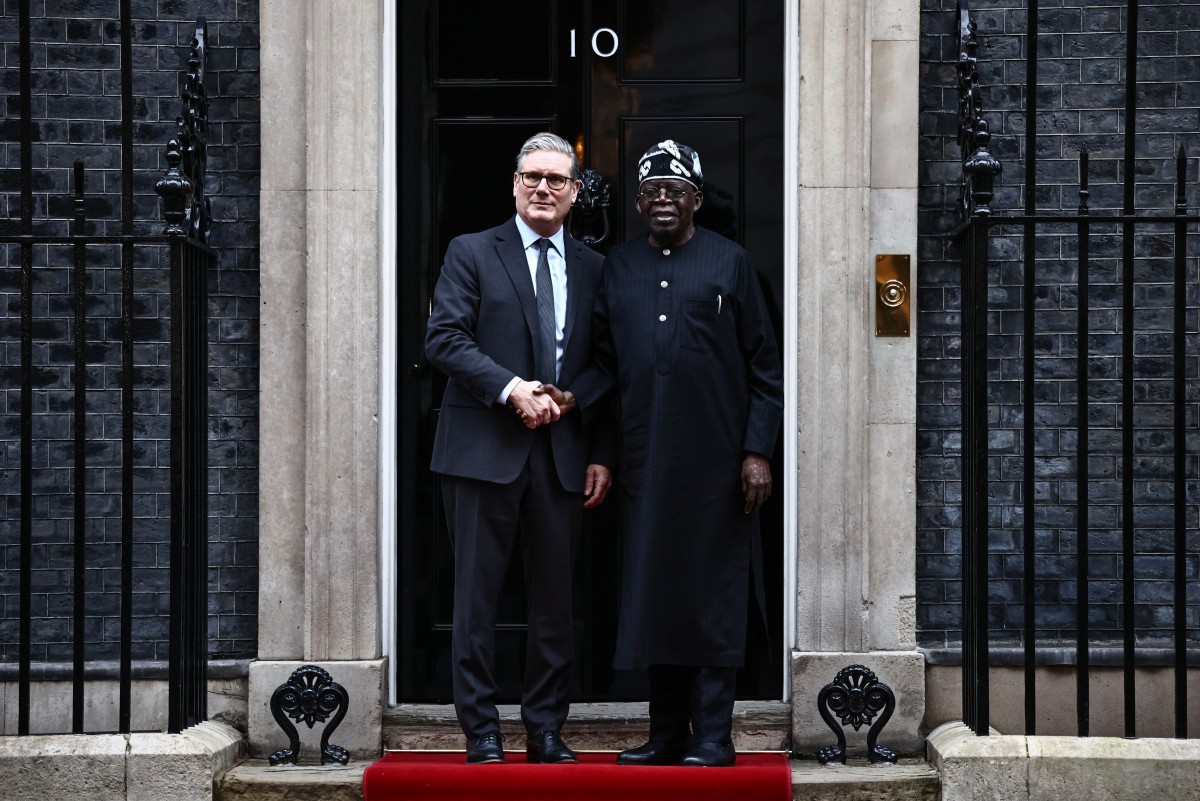
Starmer made the disclosure during a bilateral meeting with President Bola Tinubu at 10 Downing Street on the second day of the Nigerian leader’s historic state visit to Britain.
“Today is the opportunity to take that to another level with the agreements that we’ve been able to reach on exports, and I think that shows we can go even further than we’ve already gone,” the British Prime Minister stated.
Tinubu, in his remarks, revealed that Nigeria is currently undergoing “very strong reform of the economy” and linked the terrorism challenges facing West Africa to climate change conflict.
“We need more trade agreements and economic relationships that we build between nations. Nigeria is currently going through a very strong reform of the economy,” Tinubu said during the meeting at 10 Downing Street.
The President described Nigeria as facing significant challenges, stating, “The largest country in West Africa, and on the continent, is challenged by terrorism coming from the conflict of climate change.”
Tinubu emphasised that both countries face global economic challenges, noting, “Currently, the entire world is challenged. Nigeria is not immune. Britain is not immune.”
He said the discussions focused on the “economic welfare of the people and how we can work together to improve livelihood” amid economic volatility.
The President affirmed that Thursday’s bilateral discussions would address what Britain can do to “accelerate the friendship, partnership and collaboration” between both nations.
On his part, Prime Minister Starmer described the visit as historic, noting it was the first inward state visit for 37 years by a Nigerian leader.
“The long and shared history between our countries is obvious and much valued, as is the people-to-people contact and engagement that enriches lives here in the United Kingdom,” Starmer said.
He noted that both countries already collaborate on economy, defence, and security matters but expressed determination to deepen the partnership.
“Today is the opportunity to take that to another level with the agreements that we’ve been able to reach on exports,” the Prime Minister stated.
Nigeria became the United Kingdom’s biggest export market in Africa in January 2026, with bilateral trade continuing to expand.
King Charles III had disclosed on Wednesday night at a state banquet that visitors from Nigeria spent £178m in Britain in 2024, while 251,000 people from Britain travelled to Nigeria and spent just as much in return.
The state visit, which began on Wednesday, March 18, saw the signing of several memoranda of understanding and agreements covering trade, investment, defence, and cultural cooperation.
A major outcome already announced is a £746m financing deal involving UK Export Finance, the Nigerian Ports Authority, and the Ministry of Finance for the refurbishment of Lagos Port Complex (Apapa) and Tin Can Island Port.
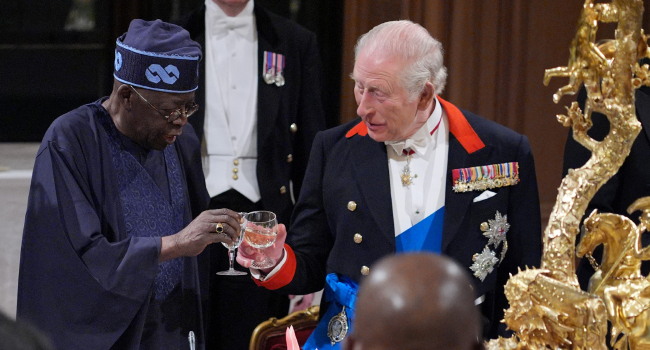
The bilateral meeting at Downing Street followed Wednesday night’s state banquet at Windsor Castle, where King Charles III acknowledged “painful marks” in the shared history between both nations while praising Nigeria’s transformation and the contributions of the Nigerian diaspora to British society.
The state visit, the first by a Nigerian president since 1989 when former military leader Ibrahim Babangida was hosted by Queen Elizabeth II, concludes on Thursday with President Tinubu expected to return to Nigeria. (Punch)
The Iranian and Russian regimes are “brothers in hatred”, Volodymyr Zelensky has told MPs and peers, as he warned about the dangers of drone warfare.
Addressing around 120 parliamentarians in a Westminster committee room, the Ukrainian president highlighted how Tehran was selling Shahed ‘kamikaze’ drones to Moscow, which had been used in Ukraine.
He also warned against easing sanctions on Russian oil, saying it was “crucial” to keep up the pressure against Moscow.
The US has temporarily eased sanctions on some Russian oil in an attempt to tackle surging prices triggered by the conflict in the Middle East.
Among those in the audience in a packed committee room were Prime Minister Sir Keir Starmer, Nato secretary-general Mark Rutte, Defence Secretary John Healey and leaders of opposition parties.
In his speech, Zelensky sought to link the headline-generating war in the Middle East with the long-running conflict in Ukraine.
He argued that Ukrainians were now pioneers in modern warfare and schooled in techniques they could share with allies.
In its fight against Russia, Ukraine has been using cheap, mass-produced interceptor drones to defend its skies.
Zelensky said there were now 201 Ukrainian military experts in the Middle East, with another 44 ready to deploy, who were sharing their knowledge on how to defend against Iranian drones.
He added that Ukraine was “ready to offer similar deals to all our reliable partners”.
On a TV screen, Zelensky demonstrated how Ukraine was mapping Russian strikes and defensive action against them in real time.
He explained how using technology as simple as an iPad allowed Ukrainian commanders to control the country’s security.
Zelensky added that during a meeting earlier at Buckingham Palace, he gave the King the iPad “as a sign of respect and gratitude”, to “strengthen our cooperation with the United Kingdom”.
Earlier, Sir Keir said “the focus must remain on Ukraine” despite the Iran war, ahead of a meeting with Zelensky.
Welcoming the Ukrainian leader to No 10, the prime minister said: “Putin can’t be the one who benefits from a conflict in Iran, whether that’s oil prices or the dropping of sanctions.”
During their meeting, the leaders agreed a new defence partnership aimed at tackling cheap attack drones.
Downing Street said the deal would bring together “Ukrainian expertise and the UK’s industrial base” to manufacture and supply drones and other capabilities.
Under the partnership between the UK and Ukraine, closer co-operation in the defence industries will also be sought with third countries as part of efforts to bolster international security.
Britain will also give £500,000 to fund an AI centre of excellence in Kyiv.
It comes as the US-Israeli war with Iran enters a third week, while US President Donald Trump continues to criticise the UK and other countries over the extent of their response to the conflict.
Rising oil prices are fuelling Russia’s war machine, while Ukraine’s allies are distracted and divided over the Middle East.
Zelensky is currently on a tour of European capitals to shore up support and keep his conflict at the forefront of allies’ minds. (BBC)

 English