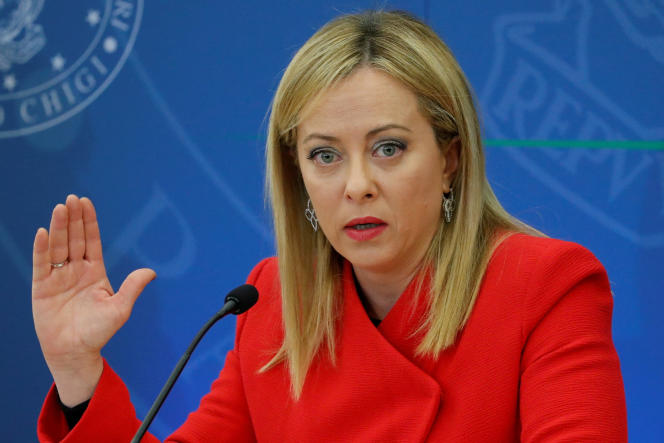
Italian Prime Minister Giorgia Meloni lacks courage and has let Washington down, U.S. President Donald Trump told an Italian newspaper on Tuesday, delivering a blunt public rebuke to one of his closest European allies.
Meloni had been a vociferous supporter of Trump, but she distanced herself from him after he went to war with Iran in February, and on Monday she openly criticized him for lashing out at Pope Leo, saying his verbal assault was “unacceptable”.
Trump responded in an interview with Corriere della Sera, saying Meloni was “very different from what I thought” and denouncing her for refusing to help re-open the Strait of Hormuz, which has been blocked by Iran.
“I’m shocked by her. I thought she had courage. I was wrong,” he was quoted as saying in the Italian-language article.
The White House declined to comment on the reported quotes. Meloni’s office also declined to comment, but politicians of all stripes rallied to her defence, including Foreign Minister Antonio Tajani, head of the coalition Forza Italia party.
“We are, and will remain, sincere supporters of Western unity and steadfast allies of the United States, but that unity is built on loyalty, respect and mutual frankness,” he said, applauding Meloni for denouncing Trump’s attack on the pope.
“On Pope Leo XIV, she said exactly what all of us Italian citizens think,” he added in a statement on X.
Trump’s criticism marked a dramatic change in tone toward Meloni, the only European leader to attend his inauguration in 2025 and whom he had hailed as “a great leader” just one month ago.
On Tuesday he accused her of failing to back U.S. efforts to tackle Iran’s nuclear program and guarantee energy flows through the Gulf, saying she wanted America “to do the job for her.”
Asked about her condemnation of his comments on Pope Leo, he said: “She is the one who is unacceptable, because she does not care whether Iran has a nuclear weapon and would blow Italy up in two minutes if it had the chance.”
The reprimand capped a tumultuous month for Meloni, who lost a crunch referendum on judicial reform in March and then saw her political ally Viktor Orban ousted from power in Hungary.
The U.S.-Israeli war in the Gulf threatens to upend the economy with surging energy costs and is hugely unpopular with Italians, putting Meloni on a collision course with Trump.
Seeking to distance herself from the conflict, she refused to let U.S. fighters use an air base in Sicily for combat operations in Iran last month and on Tuesday, she suspended a military cooperation pact with Israel.
Trump said the surge in energy prices should have encouraged Italy, which is heavily dependent on oil and gas imports, to help re-open the Strait of Hormuz.
“They pay the highest energy costs in the world and are not even ready to fight for the Strait of Hormuz… They depend on Donald Trump to keep it open,” Trump said. (JapanToday)
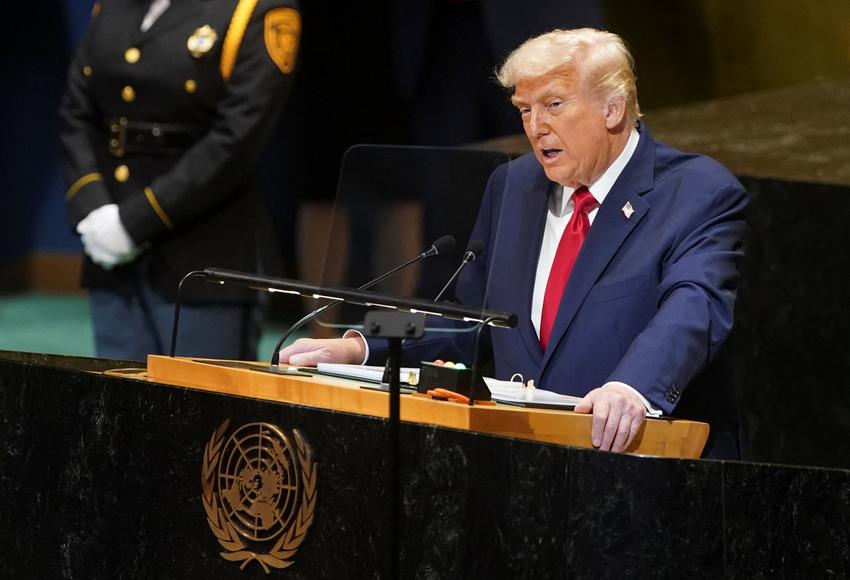
U.S. President Donald Trump on Tuesday agreed to a two-week ceasefire with Iran, less than two hours before his deadline for Tehran to reopen the Strait of Hormuz or face devastating attacks on its civilian infrastructure.
Trump’s announcement on social media represented an abrupt turnaround from earlier in the day, when he issued an extraordinary warning that “a whole civilization will die tonight” if his demands were not met.
Pakistan Prime Minister Shehbaz Sharif, who helped mediate the ceasefire, said in a post on X that he had invited Iranian and U.S. delegations to meet in Islamabad on Friday.
Trump said the last-minute deal was subject to Iran’s agreement to pause its blockade of oil and gas supplies through the strait, which typically handles about one-fifth of global oil shipments. Iran’s foreign minister, Abbas Araqchi, said in a statement that Tehran would stop counter-attacks and provide safe passage through the waterway.
“This will be a double sided CEASEFIRE!” Trump wrote on his Truth Social platform. “The reason for doing so is that we have already met and exceeded all Military objectives, and are very far along with a definitive Agreement concerning Longterm PEACE with Iran, and PEACE in the Middle East.”
Iran’s Supreme National Security Council portrayed the deal as a victory over the U.S., claiming Trump had accepted Iran’s conditions for ending hostilities.
In response, White House press secretary Karoline Leavitt said, “The truth is that President Trump and our powerful military got Iran to agree to reopening the Strait of Hormuz, and negotiations will continue.”
The war, now in its sixth week, has claimed more than 5,000 lives in nearly a dozen countries, including more than 1,600 civilians in Iran, according to tallies from government sources and human rights groups.
Two White House officials confirmed that Israel has also agreed to the two-week ceasefire and to suspend its bombing campaign on Iran. The agreement includes a cessation of Israel’s campaign in Lebanon, Sharif said.
It was not immediately clear how soon the ceasefire would take full effect. Israeli media reported it would begin once Iran reopened the strait and that Israel expected Iranian attacks to continue in the interim.
More than an hour after Trump’s announcement, the Israeli military said it had identified missiles launched from Iran, and explosions from intercepted missiles could be heard in Tel Aviv. Gulf countries including Kuwait, Bahrain, Saudi Arabia and the United Arab Emirates also issued near-simultaneous alerts and activated air defenses.
Trump, who has issued a series of threats in recent weeks only to back away, said progress between the two sides had prompted him to agree to the ceasefire. He said Iran had presented a 10-point proposal that was a “workable basis” for negotiations and that he expected an agreement to be “finalized and consummated” during the two-week window.
Markets breathed a sigh of relief, with U.S. stock futures rising in the minutes following Trump’s message. Oil prices fell sharply, with U.S. crude futures touching their lowest price since March 26. (JapanToday)
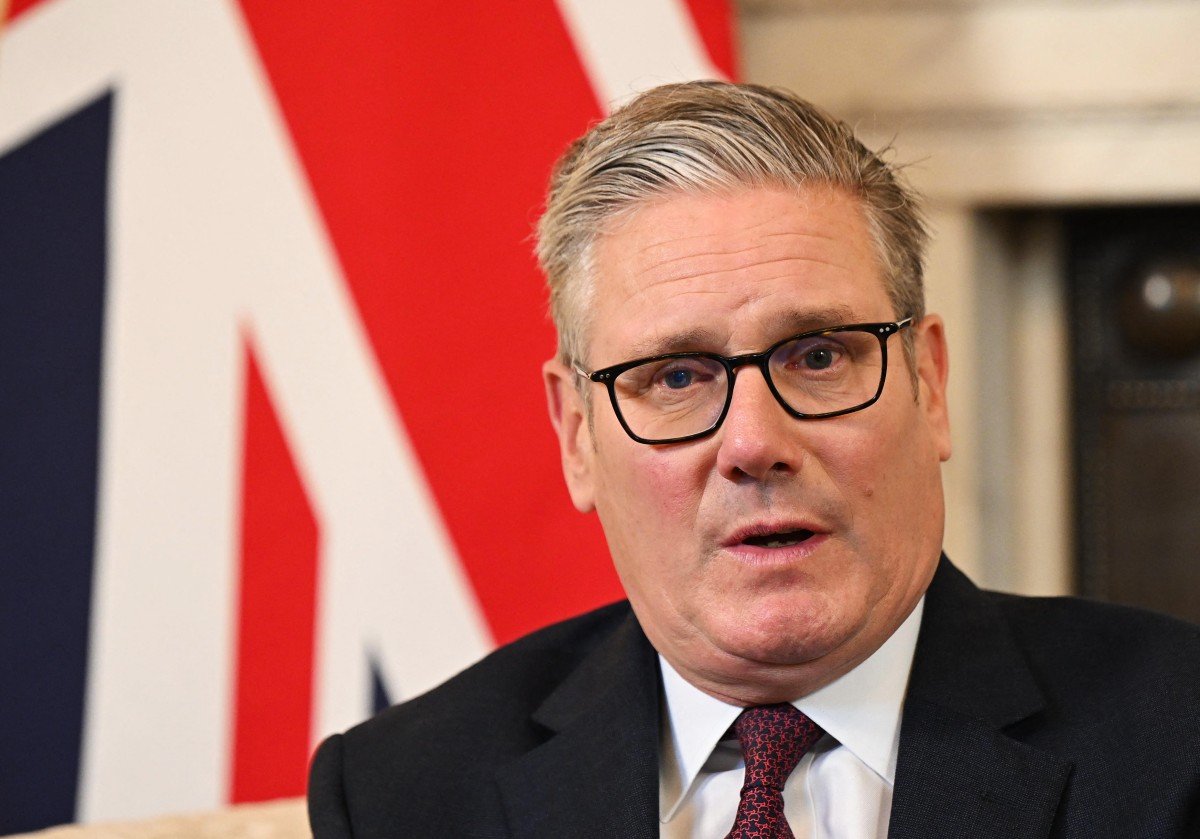
Sir Keir Starmer has arrived in Saudi Arabia as he visits Gulf allies after the US and Iran agreed a two-week ceasefire.
The prime minister is expected to “discuss diplomatic efforts to support and uphold the ceasefire”, according to No 10. He will return to the UK on Friday.
The ceasefire comes after Donald Trump threatened “a whole civilisation will die” if Iran did not agree to end the war and unblock the Strait of Hormuz – comments that led Downing Street to call again for “de-escalation”.
Sir Keir said: “I welcome the ceasefire agreement reached overnight, which will bring a moment of relief to the region and the world.”
He added: “Together with our partners we must do all we can to support and sustain this ceasefire, turn it into a lasting agreement and reopen the Strait of Hormuz.”
Sir Keir is also expected to meet UK military personnel in the region as part of his Gulf trip, which was planned before the ceasefire announcement.
For the Conservatives, shadow housing secretary Sir James Cleverly told BBC Breakfast the ceasefire is an “opportunity for Iran to make some serious choices” about how it behaves at home and abroad.
Former foreign secretary Sir James said the war was initiated to ensure Iran “never acquires a nuclear weapon” and that remains an “absolute priority”, adding: “So we’ll welcome this two-week ceasefire, but it’s time that mustn’t be wasted.”
Liberal Democrat leader Sir Ed Davey welcomed the ceasefire but questioned whether the UK could trust Trump, labelling him a “totally unreliable ally”.
Sir Ed said the Strait of Hormuz needed to be opened otherwise people would “pay a heavy price in inflation and lower growth”, adding: “So whatever it takes, but I do think we’ve got to stand up to America.
“America has caused this problem so we’ve got to work with allies who we can trust.”
Last week the UK hosted a virtual summit in which representatives from more than 40 countries began work to assemble a coalition capable of ensuring security in the Strait after the fighting has stopped.
This was followed by a military planning conference on Tuesday.
Iran and the US agreed to the conditional ceasefire on Tuesday, just over an hour before the expiry of the deadline Trump had set for Iran to make a deal.
In a post on Truth Social, Trump said the ceasefire was “subject to the Islamic Republic of Iran agreeing to the COMPLETE, IMMEDIATE, and SAFE OPENING of the Strait of Hormuz”.
Meanwhile, the Iranian Foreign Minister Abbas Araghchi announced Iran would agree to a ceasefire “if attacks against Iran are halted”.
“For a period of two weeks, safe passage through the Strait of Hormuz will be possible,” he added.
The war began in February, when the US and Israel launched co-ordinated attacks on Iran over concerns Tehran was accelerating efforts towards building a nuclear weapon.
In response, Iran has launched strikes on its neighbours across the Gulf and the wider Middle East.
It also placed a stranglehold on the Strait of Hormuz, a waterway that serves as a critical shipping route through which a fifth of the world’s energy shipments usually transits.
The conflict caused the price of crude oil to spike, with sharp increases in petrol and diesel costs, leading to concerns about the cost of living in countries across the world. (BBC)
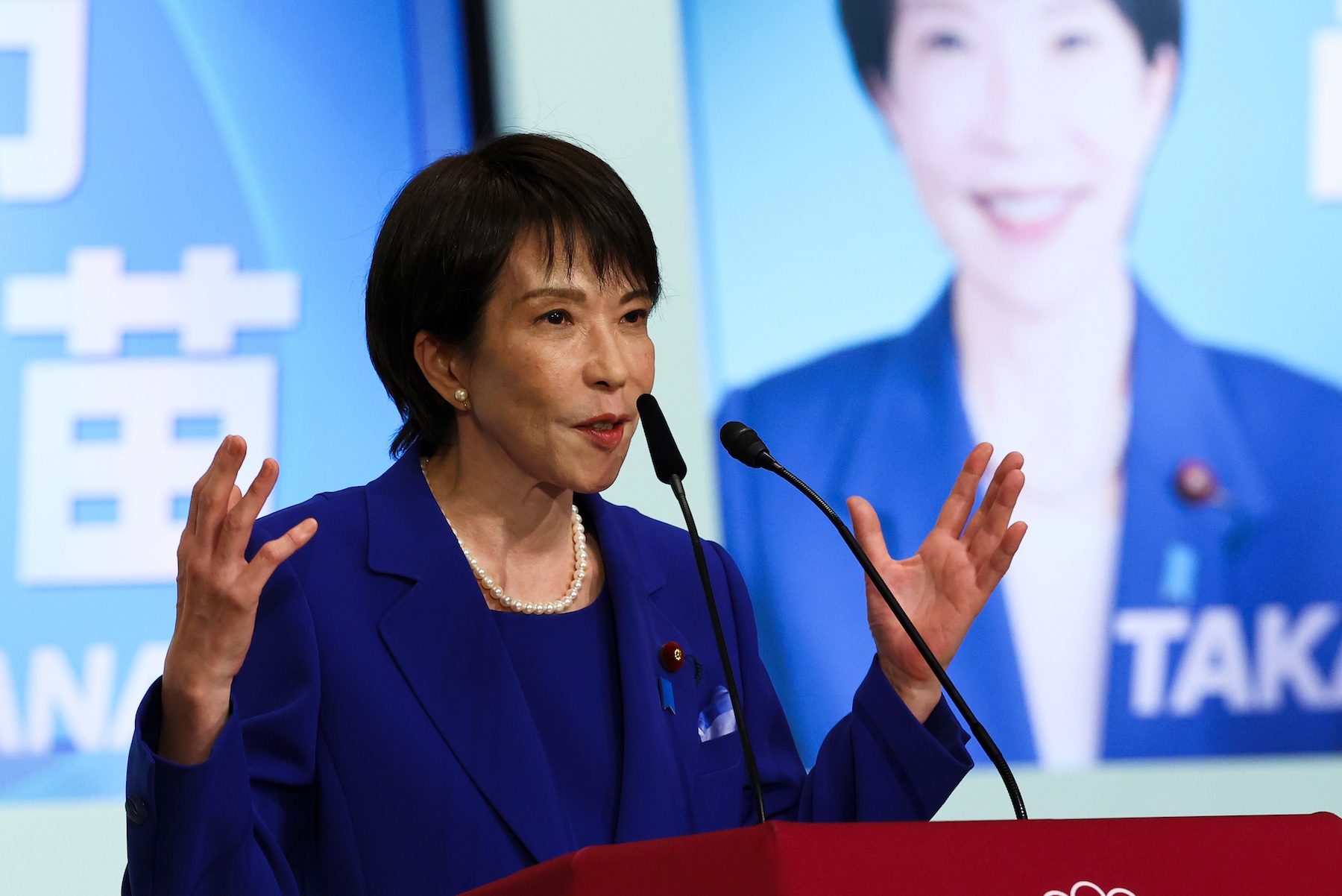
Japanese Prime Minister Sanae Takaichi sought to reaffirm her alliance with President Donald Trump on Thursday after the president this week seemed to complain that Japan was among the nations that did not join his call to help protect the Strait of Hormuz.
Takaichi, who met with Trump at the White House, told the president that Japan has opposed Iran’s development of its nuclear program and appealed to his desire to be seen as a peacemaker, despite his launching a war of choice with Iran. She told the U.S. president that in the Middle East and around the world now, there was “a very severe security environment,” but said, “Even against that backdrop, I firmly believe that it is only you, Donald, who can achieve peace across the world.”
The two leaders had warm words for each other, including Trump calling the prime minister a “popular powerful woman,” but there appeared to be some tension as they faced repeated questions from reporters about Japan’s support for the Iran war.
Trump told reporters that he and Takaichi would be discussing in their meeting Japan’s level of support for the U.S. in the Iran war, saying, “They are really stepping up to the plate.” He did not offer details.
He later said that much of the oil Japan relies on passes through the Strait of Hormuz and said, “so that’s a big reason to step up. He also mentioned U.S. spending in Japan and the number of troops it has stationed there.
“I expect Japan to step up you know, because we have that kind of relationship,” Trump said.
Taikaichi’s meeting at the White House, followed by a dinner Thursday night, was supposed to give her a prime opportunity to have Trump’s ear before he embarked on a trip to China.
The pair were all smiles in the evening, as Trump hosted a dinner in the prime minister’s office. “This is a spectacular woman, and it’s an honor to have you at the White House,” Trump said. Taikaichi referred to the leaders through an interpreter as “best buddies” before declaring, in English, “Japan is back.”
But now, the war in Iran and Trump’s unsuccessful call for Japan and other nations to help protect the vital Strait of Hormuz means the China trip has been delayed. Trump had repeatedly complained on camera and online that U.S. allies, including Japan, rejected his request to help safeguard the critical waterway for oil and gas transport.
The prime minister acknowledged before she left Japan that she expected her meeting with Trump will be “very difficult.”
Beyond facing questions about Iran, Takaichi and Trump are expected to announce a $40 billion nuclear reactor deal, according to a White House official, who was not authorized to speak publicly and spoke on the condition of anonymity to share details before the announcement.
Under the deal, U.S.-based GE Vernova Inc. and Japan-based Hitachi Ltd. will build advanced small modular reactors in Tennessee and Alabama, the official said. The deal aims to help stabilize electricity prices and expand power generation in the U.S.
Takaichi and her ministers have denied that Washington officially requested Japanese warships for the U.S.-Israeli operation.
Japan, a key U.S. ally in Asia, is one of the countries that Trump namechecked on Tuesday as he railed against the lack of help with the Strait of Hormuz before declaring the help wasn’t needed.
Kurt Campbell, the former U.S. deputy secretary of state in the Biden administration who is now chair of The Asia Group, said that in order to press for Japan’s interests, Takaichi will want to find a way to suggest that Japan is a part of the U.S. plan in the Middle East.
“She’s going to want to come out of that as a partner in this case and realize that if she can do that, that she can translate that potentially into the president listening more to Japanese concerns about Taiwan or other issues,” Campbell said.
The constraints on Japan’s involvement in Iran include a provision in its post-World War II constitution that bans the use of force except to defend its territory. The country’s military is called the Self-Defense Force.
Christopher Johnstone, a partner and chair of the defense and national security practice at The Asia Group, said Japan could help with mine-sweeping and has had “a small naval presence” in the region as part of an anti-piracy mission for at least a decade. But to join the U.S. mission would require Takaichi to clear “an exceptionally high bar politically to invoke collective self-defense” that has never been done before.
Takaichi, who had her first meeting with Trump in October in Tokyo, is Japan’s first female prime minister and a protégé of former leader Shinzo Abe, who developed a close relationship with Trump.
She is also a hardline conservative and longtime supporter of Taiwan whose comments about Japan’s willingness to provide military support to the island have heightened tensions with China.
Ahead of her meeting with Trump, Takaichi had sought to focus on trade, strengthening the U.S.-Japan relationship and security concerns. Japanese officials said the two sides would work to deepen cooperation in regional security, critical minerals, energy and dealing with China.
China views self-governed Taiwan, which the U.S. relies on for its production of computer chips, as its sovereign territory and has said it would take it by force if needed.
But beyond questions about helping with the Strait of Hormuz, the global implications of the Iran war have also put the Japanese leader in a tougher spot with Trump as she seeks to ensure U.S. commitment to the Indo-Pacific region.
Japan considers China a growing security threat and has pushed a military buildup on southwestern islands near the East China Sea. But the U.S. has shifted some troops stationed in Japan to the Middle East, removing a check against China’s power.
Takaichi is expected to raise concerns about troop shifts with Trump because they are coming at the same time China is launching a large number of exercises around Taiwan.
“This raises the prospect that — once again — the United States will be distracted and bogged down in the Middle East at a time when the deterrence problem in East Asia has never been greater,” Johnstone said. (JapanToday)
US President Donald Trump on Saturday urged other nations to send ships to help secure the Strait of Hormuz, the critical chokepoint for global oil supplies disrupted by the Mideast war.
Trump, who has said the United States will soon start escorting tankers through the strait, posted on Truth Social that “Many countries, especially those who are affected by Iran’s attempted closure of the Hormuz Strait, will be sending War Ships, in conjunction with the United States of America, to keep the Strait open and safe.”
The US president added: “Hopefully China, France, Japan, South Korea, the UK, and others, that are affected by this artificial constraint, will send Ships to the area.”
Iranian strikes have all but halted maritime traffic in the strait, through which a fifth of global crude oil and liquefied natural gas normally pass. It is just 54 kilometers (34 miles) wide at its narrowest point.
With oil prices spiking, Trump was asked Friday when the US Navy would begin escorting tankers through the Strait of Hormuz. “It’ll happen soon, very soon,” he said.
In his post on Saturday, Trump asserted that Iran’s military capability had been eliminated but he conceded that it was still able to attack the strait.
“We have already destroyed 100% of Iran’s Military capability, but it’s easy for them to send a drone or two, drop a mine, or deliver a close range missile somewhere along, or in, this Waterway, no matter how badly defeated they are,” he wrote.
As he urged nations to send ships to the strait, he added that “the United States will be bombing the hell out of the shoreline, and continually shooting Iranian Boats and Ships out of the water. One way or the other, we will soon get the Hormuz Strait OPEN, SAFE, and FREE!” (Channels)

 English