Posted on Leave a comment

UK, France pledge ‘reassurance force’ for Ukraine after Russia ceasefire

Key European allies pledged to send a “reassurance force” to Ukraine in a move described as a significant step in the effort to end Russia’s nearly four-year invasion.

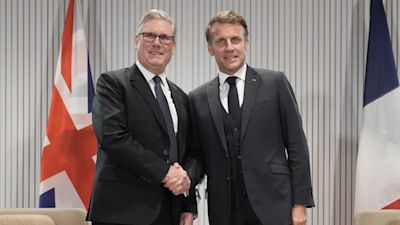
Ukrainian President Volodymyr Zelenskyy, French President Emmanuel Macron, and British Prime Minister Keir Starmer signed a declaration of intent on Tuesday for the deployment of multinational forces to support Kyiv’s defence and reconstruction – if a ceasefire with Russia is agreed on.

The announcement follows a meeting of more than two dozen countries in Paris. The nations dubbed the “coalition of the willing” have explored for months how to deter any future Russian aggression should it agree to stop fighting Ukraine.

There was no immediate response from Russia, however. President Vladimir Putin has ruled out any deployment of troops from NATO countries on Ukrainian soil.

Kyiv has long said it cannot be safe without guarantees that are comparable to the NATO alliance’s ‍mutual defence agreement Article 5 to deter Russia from attacking again.

Zelenskyy welcomed the promised security guarantees for Ukraine.

“It’s important that today the coalition has substantive documents. These are not just words. There is concrete content: a joint declaration by all the coalition countries and a trilateral declaration by France, Britain, and Ukraine,” he said.

“It has been defined how those forces will be managed and at what levels command will be exercised,” Zelensky added.

Macron said “several thousand” French soldiers could be deployed to Ukraine to maintain peace.

“These are not forces that will be engaged in combat,” Macron told France 2 television on the sidelines of the summit, calling such a deployment “a force of reassurance”.

Starmer said allies will participate in US-led monitoring and verification of any ceasefire, support the long-term provision of armaments for Ukraine’s defence.

The UK and France will “establish military hubs across Ukraine and build protected facilities for weapons and military equipment to support Ukraine’s defensive needs” – in the event of a peace deal with Russia, he added.

Starmer said peace in Ukraine ⁠is closer than ever though ​the “hardest yards” still ‍lay ahead.

US ‍envoy ‍Steve Witkoff said there was significant progress made on ​several critical issues facing ‍Ukraine including security guarantees and a “prosperity plan”. Security ‍protocols for Ukraine are “largely ⁠finished”, he added.

“We agree ‍with ⁠the coalition that durable security guarantees and robust prosperity commitments are essential to ​a lasting peace ‌in the Ukraine, and we will continue to ‌work together on this effort,” ‌Witkoff said ⁠in a post on X after talks in ‌Paris.

Ukraine’s ‍reconstruction ‍is inextricably linked to security guarantees, German ⁠Chancellor Friedrich Merz ​said.

“Economic strength will ‍be indispensable ⁠to guarantee that Ukraine will continue to credibly block ​Russia ‌in the future,” Merz said.

However, he noted Ukraine and its European allies will have to accept “compromises” to achieve a peace deal.

“We will certainly have to make compromises” to end the nearly four-year-old war. “We will not achieve textbook diplomatic solutions,” said Merz.

Moscow has revealed few details of its stance in the US-led peace negotiations. Officials have reaffirmed Russia’s demands and insisted there can be no ceasefire until a comprehensive settlement is agreed. (AlJazeera)

Posted on Leave a comment

Peace hopes dented as Russia says Ukraine tried to attack Putin residence

Russia accused Ukraine on Monday of trying to attack President Vladimir Putin’s residence in northern Russia, although it provided no evidence to back up an assertion that Kyiv dismissed as baseless and designed to undermine peace negotiations.

The angry exchanges – including a statement by Russia that it was reviewing its stance ‌in negotiations in response to the attack – dealt a new blow to prospects for peace in Ukraine.

U.S. President Donald Trump said Putin had told him about the alleged attack in a phone call on Monday morning, which had angered him. Still, Trump repeated his belief that a peace deal may be near.

“It’s one thing to be offensive,” Trump told reporters. “It’s another thing to attack his house. It’s not the ⁠right time to do any of that. And I learned about it from President Putin today. I was very angry about ‍it.”

On Sunday, Trump met Ukrainian President Volodymyr Zelenskyy in Florida and the U.S. president said they were “getting a lot closer, maybe very ‍close” to an agreement to end the ‍war, although “thorny” territorial issues remained.

On Monday, Putin struck a defiant tone, telling his army to press on with a campaign to take full control of Ukraine’s Zaporizhzhia region. ⁠The Kremlin repeated demands for Kyiv to pull its forces out of the last part of the Donbas area that they still hold in eastern Ukraine.

Putin told Trump in Monday’s phone call that Russia, which invaded Ukraine in February 2022, was reviewing its stance following the ​reported drone attack, an aide said.

After the call with Putin, Trump told reporters outside his home in Palm Beach, Florida, that he had no further information about the alleged attack.

“I don’t like it, it’s not good,” Trump said. Asked if U.S. intelligence agencies had evidence of such an attack, Trump said: “We’ll find out.”

Trump said the conversation with Putin was productive.

“We have a couple of issues that we’re going to get resolved, hopefully, and if we get them resolved, you’re going to have peace,” Trump said.

Russian Foreign Minister Sergei Lavrov said Ukraine had tried to attack Putin’s residence in the Novgorod region west ⁠of Moscow on December 28-29 with 91 long-range drones which were all destroyed by Russian air defenses. No one was injured and there was no damage, he said in comments reported by Russian media.

“Such reckless actions will not go unanswered,” Lavrov said in a statement, describing the attack as “state terrorism” and adding that targets had already been selected for retaliatory strikes by Russia’s armed forces.

Lavrov did not offer any evidence for his assertions in his statement. It was not clear where Putin was at the time.

Lavrov said the attack took place during negotiations about a possible peace deal, and said Russia would review its negotiating stance but not quit the negotiations.

Denying Ukraine had planned such an attack, Zelenskyy accused Russia of preparing the ground to strike government buildings in Kyiv, saying Russia wanted to undermine progress at U.S.-Ukrainian talks on ending the war.

“Another round of lies from the Russian Federation,” Zelenskyy told reporters via WhatsApp. “It is clear that we had a meeting with Trump yesterday, and it is clear that for the Russians, if there is no scandal between us and America, and we are making progress – for them it is a failure, because they do not want to end this war.”

He added: “I am sure they are simply preparing the ground for strikes, probably on the capital, probably on government buildings.”

Ukrainian Foreign Minister Andrii Sybiha said on social media the attack was a fabrication intended to create a pretext for more Russian attacks on Ukraine and to undermine the peace ​process. He urged world leaders to condemn Russia over its accusations. (JapanToday)

Posted on Leave a comment

Putin accuses Europeans of sabotaging peace efforts on Ukraine; meets U.S. delegation

Russian President Vladimir Putin accused Kyiv’s European allies Tuesday of sabotaging U.S.-led efforts to end the nearly 4-year-old war in Ukraine, shortly before he met with a delegation sent by President Donald Trump.

“They don’t have a peace agenda, they’re on the side of the war,” Putin said of the Europeans prior to talks in the Kremlin with U.S. special envoy Steve Witkoff and Trump’s son-in-law Jared Kushner.

Putin’s accusations appeared to be his latest attempt to sow dissension between Trump and European countries and set the stage for exempting Moscow from blame for any lack of progress.

He accused Europe of amending peace proposals with “demands that are absolutely unacceptable to Russia,” thus “blocking the entire peace process” and blaming Moscow for it.

“That’s their goal,” Putin said.

He reiterated his long-held position that Russia has no plans to attack Europe — a concern regularly voiced by some European countries.

“But if Europe suddenly wants to wage a war with us and starts it, we are ready right away. There can be no doubt about that,” Putin said.

Russia started the war in 2022 with its full-scale invasion of a sovereign European country, and European governments have since spent billions of dollars to support Ukraine financially and militarily, to wean themselves from energy dependence on Russia, and to strengthen their own militaries to deter Moscow from seizing more territory by force.

They worry that if Russia gets what it wants in Ukraine, it will have free rein to threaten or disrupt other European countries, which already have faced incursions from Russian drones and fighter jets, and an alleged widespread Russian sabotage campaign.

Trump’s peace plan relies on Europe to provide the bulk of the financing and security guarantees for a postwar Ukraine, even though no Europeans appear to have been consulted on the original plan. That’s why European governments have pushed to ensure that peace efforts address their concerns, too.

Speaking with Putin via a translator before the talks, Witkoff said he and Kushner had taken “a beautiful walk” around Moscow and described it as a “magnificent city.”

Coinciding with Witkoff’s trip, Ukrainian President Volodymyr Zelenskyy went to Ireland, continuing his visits to European countries that have helped sustain his country’s fight against Russia’s invasion.

In what could be a high-stakes day of negotiations, Zelenskyy said he was expecting swift reports later Tuesday from the U.S. envoys in Moscow on whether talks could move forward, after Trump’s initial 28-point plan was whittled down to 20 items in Sunday’s talks between U.S. and Ukrainian officials in Florida.

“They want to report right after that meeting to us, specifically. The future and the next steps depend on these signals. Such steps will change throughout today, even hour by hour, I believe,” Zelenskyy said at a news conference in Dublin with Irish Prime Minister Micheál Martin.

“If the signals show fair play with our partners, we then might meet very soon, meet with the American delegation,” he said.

“There is a lot of dialogue, but we need results. Our people are dying every day,” Zelenskyy said. “I am ready … to meet with President Trump. It all depends on today’s talks.”

After months of frustration in trying to stop the fighting, Trump deployed officials to get traction for his peace proposals. Kremlin spokesman Dmitry Peskov said Putin’s talks with Witkoff and Kushner would take “as long as needed.”

The talks have followed parallel lines so far, with U.S. Secretary of State Marco Rubio sitting down with Ukrainian officials. (JapanToday)

Posted on Leave a comment

Putin, Modi, Erdogan to attend Tianjin Summit as Xi welcomes world leaders

Chinese President Xi Jinping began welcoming dignitaries including United Nations chief Antonio Guterres and Egyptian Premier Moustafa Madbouly on Saturday before a summit attended by leaders from more than 20 countries.

The Shanghai Cooperation Organisation gathering will be held in the northern port city of Tianjin on Sunday and Monday, days before a massive military parade in nearby Beijing to mark 80 years since the end of World War II.

North Korea’s Kim Jong Un will be among some 26 world leaders slated to attend the parade.

The SCO comprises China, India, Russia, Pakistan, Iran, Kazakhstan, Kyrgyzstan, Tajikistan, Uzbekistan and Belarus. Sixteen more countries are affiliated as observers or “dialogue partners”.

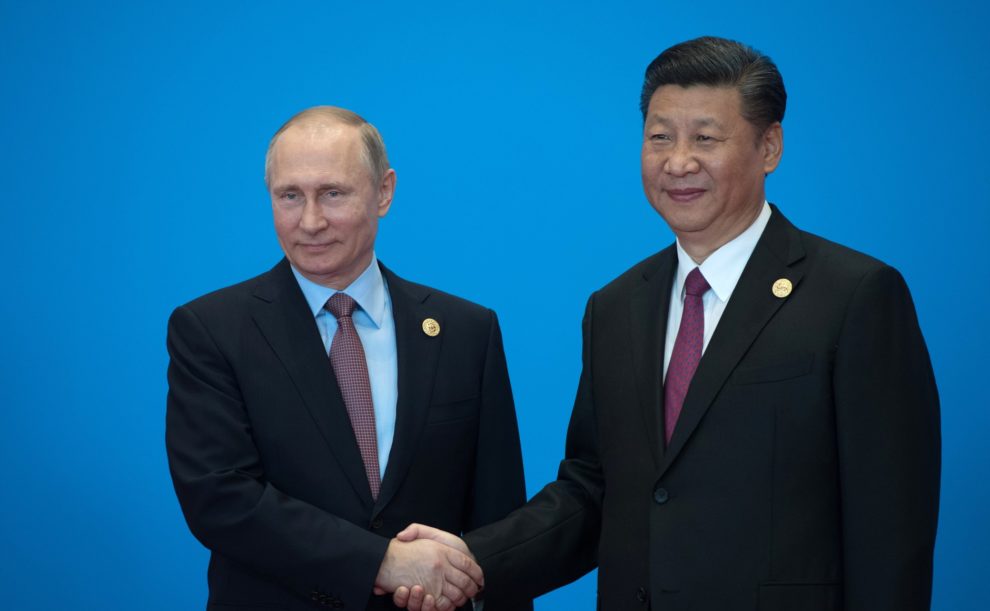
Russian President Vladimir Putin and Indian Prime Minister Narendra Modi are also due to arrive in Tianjin ahead of the summit.

China and Russia have used the organisation — sometimes touted as a counter to the Western-dominated NATO military alliance — to deepen ties with Central Asian states.

Other leaders including Iranian and Turkish presidents Masoud Pezeshkian and Recep Tayyip Erdogan will also attend the bloc’s largest meeting since its founding in 2001.

Multiple bilateral meetings are expected to be held on the sidelines of the summit.

The Kremlin said on Friday that Putin will discuss the Ukraine conflict with Erdogan on Monday.

Turkey has hosted three rounds of peace talks between Russia and Ukraine this year that have failed to break the deadlock over how to end the conflict, triggered when Moscow launched its invasion of its pro-European neighbour in February 2022.

Putin will also talk about Tehran’s nuclear programme on Monday with his Iranian counterpart Pezeshkian, a meeting that comes as Iran faces fresh Western pressure.

Britain, France and Germany, known as the E3, triggered a “snapback” mechanism on Thursday to reinstate UN sanctions on Tehran for failing to comply with commitments made in a 2015 deal over its nuclear programme.

Russia’s foreign ministry warned that the reimposition of sanctions against Iran risked “irreparable consequences”.

Tehran and Moscow have been bolstering political, military and economic ties over the past decade as Russia drifted away from the West.

Relations between them grew even closer after Moscow launched its offensive against Ukraine.

Modi’s visit comes after a trip to Japan, and is his first to China since 2018.

The world’s two most populous nations are intense rivals competing for influence across South Asia and fought a deadly border clash in 2020.

A thaw began last October when Modi met with Xi for the first time in five years at a summit in Russia. (Punch)