Posted on Leave a comment

UK’s Starmer calls Trump’s remarks on allies in Afghanistan ‘frankly appalling’

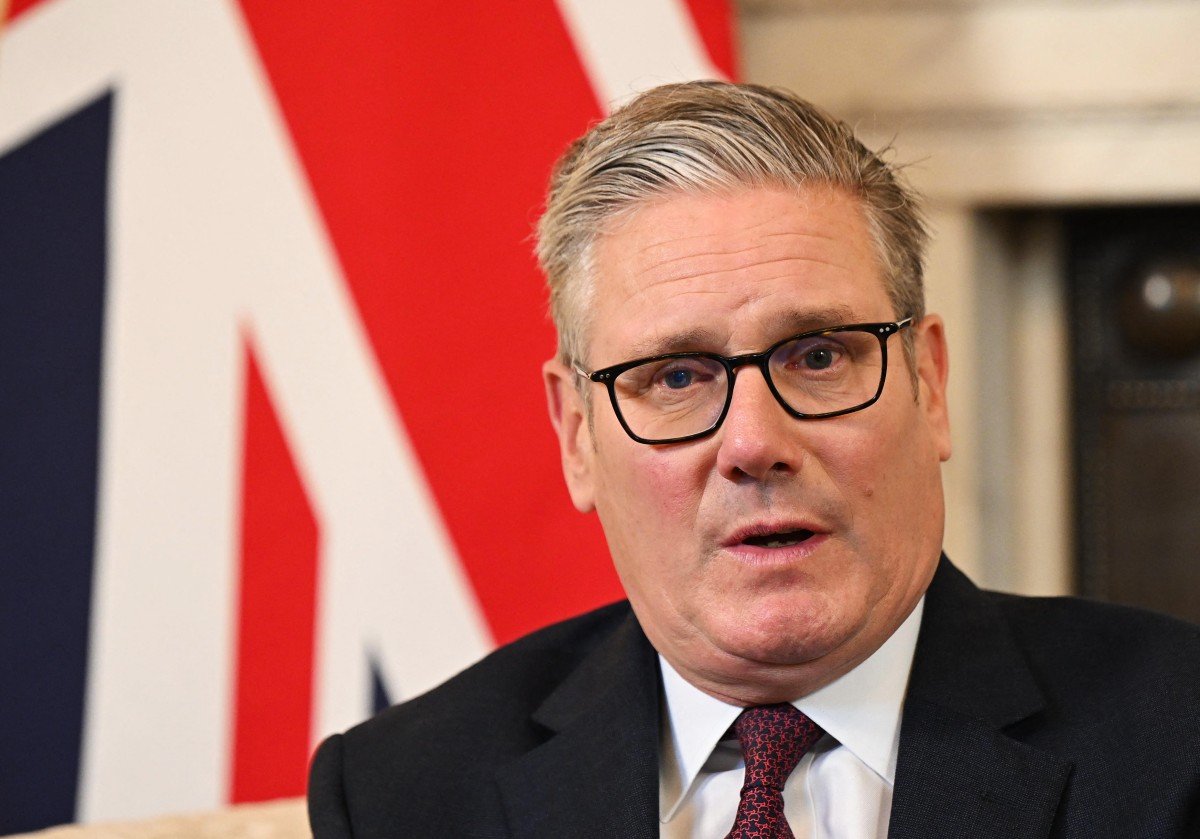
British Prime Minister Keir Starmer called U.S. President Donald Trump’s comments about European troops staying off the front lines in Afghanistan insulting and appalling, joining a chorus of criticism from ‌other European officials and veterans.

“I consider President Trump’s remarks to be insulting and frankly appalling, and I’m not surprised they’ve caused such hurt for the loved ones of those who were killed or injured,” Starmer told reporters.

When asked whether he would demand an apology from the U.S. leader, Starmer ⁠said: “If I had misspoken in that way or said those words, I would certainly apologize.”

Britain lost ‍457 service personnel killed in Afghanistan, its deadliest overseas war since the 1950s. For several ‍of the war’s most intense ‍years it led the allied campaign in Helmand, Afghanistan’s biggest and most violent province, while also fighting as the main ⁠U.S. battlefield ally in Iraq.

Starmer’s remarks were notably strong coming from a leader who has tended to avoid direct criticism of Trump in public.

Trump told Fox Business Network’s “Mornings with Maria” on Thursday the ​United States had “never needed” the transatlantic alliance and accused allies of staying “a little off the front lines” in Afghanistan.

His remarks added to already strained relations with European allies after he used the World Economic Forum in the Swiss ski resort of Davos to again signal his interest in acquiring Greenland.

Dutch Foreign Minister David van Weel condemned Trump’s remarks on Afghanistan, calling them untrue and disrespectful.

Britain’s Prince Harry, who served in Afghanistan, also weighed in. “Those sacrifices deserve to ⁠be spoken about truthfully and with respect,” he said in a statement.

“We expect an apology for this statement,” Roman Polko, a retired Polish general and former special forces commander who also served in Afghanistan and Iraq, told Reuters in an interview.

Trump has “crossed a red line”, he added. “We paid with blood for this alliance. We truly sacrificed our own lives.”

Britain’s veterans minister, Alistair Carns, whose own military service included five tours including alongside American troops in Afghanistan, called Trump’s claims “utterly ridiculous”.

“We shed blood, sweat and tears together. Not everybody came home,” he said in a video posted on X.

Richard Moore, the former head of Britain’s MI6 intelligence service, said he, like many MI6 officers, had operated in dangerous environments with “brave and highly esteemed” CIA counterparts and had been proud to do so with Britain’s closest ally.

Under NATO’s founding treaty, members are bound by a collective-defense clause, Article 5, which treats an attack on one member as an attack on all.

It has been invoked only once – after the September 11, 2001 attacks on New ​York and Washington, when allies pledged to support the United States. For most of the war in Afghanistan, the U.S.-led force there was under NATO command.

Some politicians noted that Trump had avoided the draft for ⁠the Vietnam War, citing bone spurs in his feet.

“Trump avoided military service 5 times,” Ed Davey, leader of Britain’s centrist Liberal Democrats, wrote on X. “How dare he question their sacrifice.”

Poland’s sacrifice “will never be forgotten and must not be diminished”, Defence Minister Wladyslaw Kosiniak-Kamysz said.

Trump’s comments were “ignorant”, said Rasmus Jarlov, an opposition ‍Conservative Party member of Denmark’s parliament.

In addition to the British deaths, more than 150 Canadians were killed in Afghanistan, along ‌with 90 French service personnel and scores ‌from Germany, Italy and other countries. Denmark – now under heavy pressure ‍from Trump to transfer its semi-autonomous region of Greenland to the U.S. – lost 44 troops, one of NATO’s highest per-capita death rates.

The United States lost ‌about 2,460 troops in Afghanistan, according to the U.S. Department of Defense, a figure on ‍par per capita with those of Britain and Denmark. (JapanToday)

Posted on Leave a comment

Trump threatens European nations with tariffs until US can acquire Greenland

US President Donald Trump on Saturday escalated his quest to acquire Greenland, threatening multiple European nations with tariffs of up to 25 percent until his purchase of the Danish territory is achieved.

Trump aimed his ire at Denmark, a fellow NATO member, as well as several European countries that have deployed troops in recent days to the vast, mineral-rich territory at the gateway to the Arctic with a population of 57,000.

If realized, Trump’s threats against Washington’s NATO partners would create unprecedented tension within the alliance.

From February 1, Denmark, Norway, Sweden, France, Germany, the United Kingdom, the Netherlands, and Finland would be subject to a 10-percent tariff on all goods sent to the United States, Trump said in a post on his Truth Social network.

“On June 1st, 2026, the Tariff will be increased to 25%. This Tariff will be due and payable until such time as a Deal is reached for the Complete and Total purchase of Greenland,” he wrote.

“These Countries, who are playing this very dangerous game, have put a level of risk in play that is not tenable or sustainable,” Trump said.

“Therefore, it is imperative that, in order to protect Global Peace and Security, strong measures be taken so that this potentially perilous situation end quickly, and without question.”

It was not immediately clear what authority the US leader would invoke to impose the threatened tariffs of up to 25 percent.

Since returning to the presidency, Trump has unleashed sweeping tariffs on goods from virtually all trading partners, to address what Washington says are unfair trade practices and as a tool to press governments on US concerns. (Vanguard)

Posted on Leave a comment

Danish PM says Greenland showdown at ‘decisive moment’ after new Trump threats

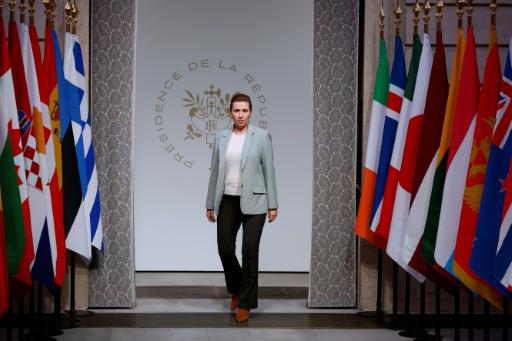
Denmark’s Prime Minister said Sunday that her country faces a “decisive moment” in its diplomatic battle over Greenland after U.S. President Donald Trump again suggested using force to seize the Arctic territory.

Ahead of meetings in Washington from Monday on the global scramble for key raw materials, Prime Minister Mette Frederiksen said that “there is a conflict over Greenland”.

“This is a decisive moment” with stakes that go beyond the immediate issue of Greenland’s future, she added in a debate with other Danish political leaders.

Frederiksen posted on Facebook that “we are ready to defend our values – wherever it is necessary – also in the Arctic. We believe in international law and in peoples’ right to self-determination.”

Germany and Sweden backed Denmark against Trump’s latest claims to the self-governing Danish territory.

Swedish Prime Minister Ulf Kristersson condemned U.S. “threatening rhetoric” after Trump repeated that Washington was “going to do something on Greenland, whether they like it or not”.

“Sweden, the Nordic countries, the Baltic states, and several major European countries stand together with our Danish friends,” he told a defense conference in Salen where the U.S. general in charge of NATO took part.

Kristersson said a U.S. takeover of mineral-rich Greenland would be “a violation of international law and risks encouraging other countries to act in exactly the same way”.

Germany reiterated its support for Denmark and Greenland ahead of the Washington discussions.

Before meeting U.S. Secretary of State Marco Rubio on Monday, German Foreign Minister Johann Wadehpul was to hold talks in Iceland to address the “strategic challenges of the Far North”, according to a foreign ministry statement.

“The legitimate interests of all NATO Allies, as well as those of the inhabitants of the (Arctic) region, must be at the centre of our discussions,” Wadehpul said.

“It is clear that it is exclusively up to Greenland and Denmark to decide questions of Greenland’s territory and sovereignty,” he previously told Germany’s Bild daily.

“We are strengthening security in the Arctic together, as NATO allies, and not against one another,” German Finance Minister Lars Klingbeil said ahead of an international meeting on critical raw materials in Washington.

European nations have scrambled to coordinate a response after the White House said this week that Trump wanted to buy Greenland and refused to rule out military action.

On Tuesday, leaders of seven European countries including France, Britain, Germany and Italy signed a letter saying it is “only” for Denmark and Greenland to decide the territory’s future.

Trump says controlling the island is crucial for U.S. national security because of the rising Russian and Chinese military activity in the Arctic.

NATO Supreme Allied Commander General Alexus Grynkewich told the Swedish conference that alliance members were discussing Greenland’s status. The US general added that while there was “no immediate threat” to NATO territory, the Arctic’s strategic importance is fast growing.

Grynkewich said he would not comment on “the political dimensions of recent rhetoric” but that talks on Greenland were being held at the North Atlantic Council.

“Those dialogues continue in Brussels. They have been healthy dialogues from what I’ve heard,” the general said.

A Danish colony until 1953, Greenland gained home rule 26 years later and is contemplating eventually loosening its ties with Denmark. Polls indicate that Greenland’s population strongly oppose a U.S. takeover.

“I don’t think there’s an immediate threat to NATO territory right now,” Grynkewich told the conference.

But he said Russian and Chinese vessels had been seen patrolling together on Russia’s northern coast and near Alaska and Canada, working together to get greater access to the Arctic as ice recedes due to global warming. (JapanToday)

Posted on Leave a comment

UK, France pledge ‘reassurance force’ for Ukraine after Russia ceasefire

Key European allies pledged to send a “reassurance force” to Ukraine in a move described as a significant step in the effort to end Russia’s nearly four-year invasion.

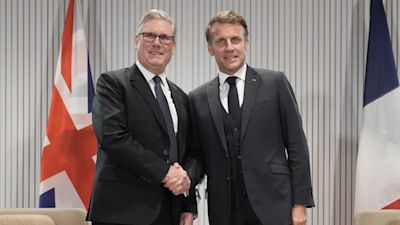
Ukrainian President Volodymyr Zelenskyy, French President Emmanuel Macron, and British Prime Minister Keir Starmer signed a declaration of intent on Tuesday for the deployment of multinational forces to support Kyiv’s defence and reconstruction – if a ceasefire with Russia is agreed on.

The announcement follows a meeting of more than two dozen countries in Paris. The nations dubbed the “coalition of the willing” have explored for months how to deter any future Russian aggression should it agree to stop fighting Ukraine.

There was no immediate response from Russia, however. President Vladimir Putin has ruled out any deployment of troops from NATO countries on Ukrainian soil.

Kyiv has long said it cannot be safe without guarantees that are comparable to the NATO alliance’s ‍mutual defence agreement Article 5 to deter Russia from attacking again.

Zelenskyy welcomed the promised security guarantees for Ukraine.

“It’s important that today the coalition has substantive documents. These are not just words. There is concrete content: a joint declaration by all the coalition countries and a trilateral declaration by France, Britain, and Ukraine,” he said.

“It has been defined how those forces will be managed and at what levels command will be exercised,” Zelensky added.

Macron said “several thousand” French soldiers could be deployed to Ukraine to maintain peace.

“These are not forces that will be engaged in combat,” Macron told France 2 television on the sidelines of the summit, calling such a deployment “a force of reassurance”.

Starmer said allies will participate in US-led monitoring and verification of any ceasefire, support the long-term provision of armaments for Ukraine’s defence.

The UK and France will “establish military hubs across Ukraine and build protected facilities for weapons and military equipment to support Ukraine’s defensive needs” – in the event of a peace deal with Russia, he added.

Starmer said peace in Ukraine ⁠is closer than ever though ​the “hardest yards” still ‍lay ahead.

US ‍envoy ‍Steve Witkoff said there was significant progress made on ​several critical issues facing ‍Ukraine including security guarantees and a “prosperity plan”. Security ‍protocols for Ukraine are “largely ⁠finished”, he added.

“We agree ‍with ⁠the coalition that durable security guarantees and robust prosperity commitments are essential to ​a lasting peace ‌in the Ukraine, and we will continue to ‌work together on this effort,” ‌Witkoff said ⁠in a post on X after talks in ‌Paris.

Ukraine’s ‍reconstruction ‍is inextricably linked to security guarantees, German ⁠Chancellor Friedrich Merz ​said.

“Economic strength will ‍be indispensable ⁠to guarantee that Ukraine will continue to credibly block ​Russia ‌in the future,” Merz said.

However, he noted Ukraine and its European allies will have to accept “compromises” to achieve a peace deal.

“We will certainly have to make compromises” to end the nearly four-year-old war. “We will not achieve textbook diplomatic solutions,” said Merz.

Moscow has revealed few details of its stance in the US-led peace negotiations. Officials have reaffirmed Russia’s demands and insisted there can be no ceasefire until a comprehensive settlement is agreed. (AlJazeera)

Posted on Leave a comment

Trump tells world leaders their countries are ‘going to hell’ in combative U.N. speech

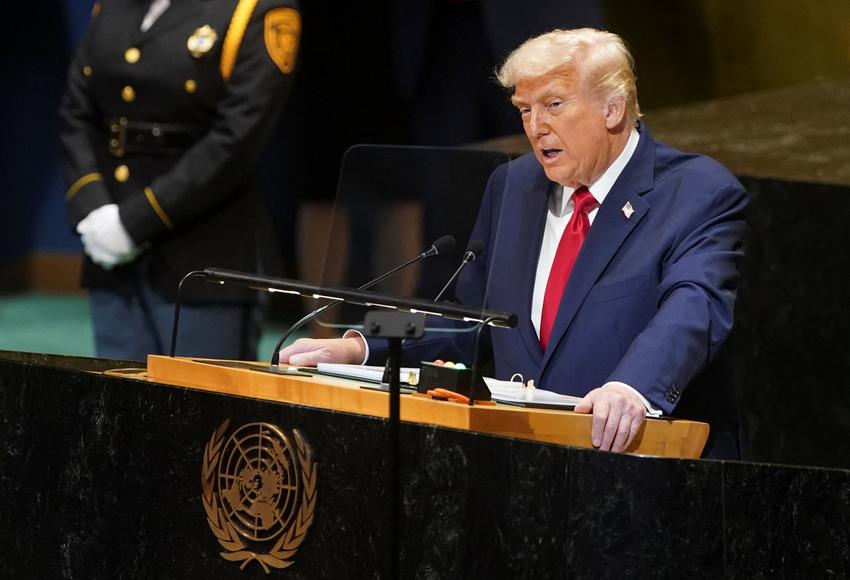
U.S. President Donald Trump argued for lower levels of global migration and urged a turn away from climate change policies on Tuesday in a combative, wide-ranging speech to the U.N. General Assembly that leveled scathing criticism of world leaders.

The 56-minute speech was a rebuke to the world body and a return to form for Trump, who routinely bashed the U.N. during his first term as president. Leaders gave him polite applause when he exited the chamber.

He rejected moves by allies to endorse a Palestinian state amid Israel’s latest Gaza offensive and urged European nations to adopt the same set of economic measures he is proposing against Russia to force an end to the war in Ukraine.

Much of his speech was dominated by two of his biggest grievances: immigration and climate change.

Trump offered his U.S. immigration crackdown as a case study for what other world leaders should do to curb mass migration that he says is altering the fabric of nations. Human rights advocates argue the migrants are seeking better lives.

“I’m really good at this stuff,” Trump said. “Your countries are going to hell.”

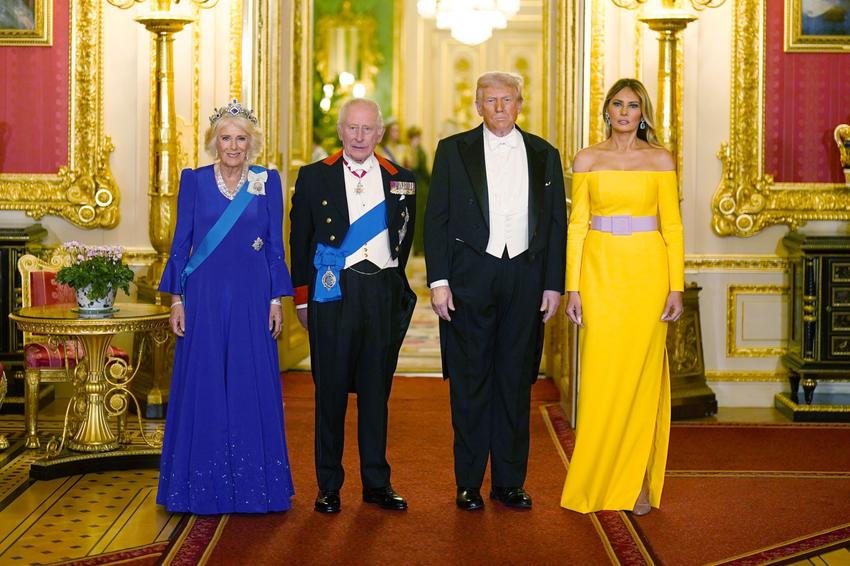
Trump, who met last week with Britain’s environmentally conscious King Charles at Windsor Castle, called climate change a “con job” and urged a return to a greater reliance on fossil fuels. Scientists say climate change caused by humans is real.

“Immigration and their suicidal energy ideas will be the death of Western Europe,” Trump said.

Trump’s administration plans to call for sharply narrowing the right to asylum at the United Nations later this month, Reuters reported last week, as it seeks to undo the post-World War II framework around humanitarian protection.

Trump sprinkled into his speech a litany of false and misleading statements, such as that London Mayor Sadiq Khan wants to impose “sharia law” on London and that “inflation has been defeated” in the United States six days after the Federal Reserve said inflation has gone up.

European powers have spent months trying to stabilize their relationship with the U.S. leader with a focus on winning U.S. support to end the war in Ukraine. At a NATO summit in June, Trump and European leaders lavished each other with praise.

But in Tuesday’s speech, Trump mocked NATO allies for not shutting down purchases of Russian oil and said he would impose strong economic measures against Moscow.

“They’re funding the war against themselves. Who the hell ever heard of that one? In the event that Russia is not ready to make a deal to end the war, then the United States is fully prepared to impose a very strong round of powerful tariffs,” he said.

“But for those tariffs to be effective, European nations, all of you are gathered here right now, would have to join us in adopting the exact same measures.”

He did not detail the measures, but he has been considering a package that includes sanctions against countries that do business with Russia, like India and China. The main buyers of Russian oil in Europe are Hungary, Slovakia and Turkey.

Trump later held talks with Ukrainian President Volodymyr Zelenskiy, who pressed for more U.S. support to resist Russian advances. Trump, asked by reporters if NATO countries should shoot down Russian aircraft if they enter their airspace, said, “Yes, I do.”

On the Israel-Palestinian conflict, Trump rejected efforts by world leaders to embrace a Palestinian state, a move that faces fierce resistance from Israel.

“The rewards would be too great for Hamas terrorists, for their atrocities,” he said, repeating his call for the return of hostages taken by the Palestinian militant group.

Trump said the United States wants a ceasefire-for-hostages deal that would see the return of all remaining hostages, alive and dead.

“We have to stop the war in Gaza immediately. We have to immediately negotiate peace,” he said.

He was to discuss the future of Gaza during afternoon talks with several Gulf leaders.

Trump, who has cast himself as a peacemaker in a bid to win the Nobel Peace Prize, complained that the United Nations did not support his efforts to end conflicts around the world.

He added to his complaints with personal grievances about the U.N. infrastructure, saying he and first lady Melania Trump were briefly marooned on a malfunctioning U.N. escalator and that his teleprompter was not initially working.

“These are the two things I got from the United Nations – a bad escalator and a bad teleprompter,” Trump said, noting that Melania Trump nearly fell when the escalator stopped abruptly. (JapanToday)