Australia has granted asylum to five members of the Iranian women’s soccer team who were visiting the country for a tournament, Australia’s Home Affairs Minister Tony Burke said Tuesday.
The women were transported from their hotel in Gold Coast, Australia “to a safe location” by Australian federal police officers in the early hours of Tuesday morning local time. There, they met with Burke and the processing of their humanitarian visas finalized, the minister told reporters in Brisbane hours later.
“I say to the other members of the team the same opportunity is there,” Burke said. “Australia has taken the Iranian women’s soccer team into our hearts.”
Burke’s announcement came after U.S. President Donald Trump on Monday called on Australia to grant asylum to any team member who wanted it.
The Iranian team arrived in Australia for the Women’s Asian Cup last month, before the Iran war began. The team was knocked out of the tournament over the weekend and was facing the prospect of returning to a country under bombardment. Iran’s head coach Marziyeh Jafari on Sunday said the players “want to come back to Iran as soon as we can,” according to Australia’s national news agency, AAP.
Earlier Monday, Trump had blasted Australia on social media, saying Australia was “making a terrible humanitarian mistake by allowing the … team to be forced back to Iran, where they will most likely be killed.” Trump called on Australia to grant the team asylum, adding: “The U.S. will take them if you won’t.” Less than two hours later, in another social media post, Trump praised Australian Prime Minister Anthony Albanese, saying, “He’s on it! Five have already been taken care of, and the rest are on their way.”
Trump also said that some players “feel they must go back because they are worried about the safety of their families, including threats to those family members if they don’t return.”
Trump’s offer of asylum represented something of a change for the president, whose administration has sought to limit the number of immigrants who can receive asylum for political purposes.
During the tournament, the players have mostly declined to comment on the situation at home, although Iran forward Sara Didar choked back tears in a news conference on Wednesday as she shared their concerns for their families, friends and all Iranians during the conflict.
The team’s silence during the anthem before an opening loss to South Korea last week was viewed by some as an act of resistance and others as a show of mourning. The team hasn’t clarified. They later sang and saluted during the anthem before their remaining two matches. (JapanToday)
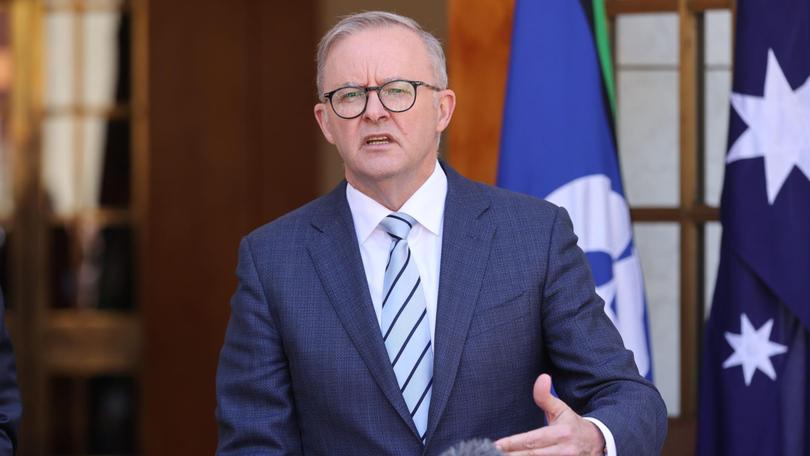
Australian Prime Minister Anthony Albanese said on Tuesday his government was writing to the Commonwealth realms that it would back the removal for former prince Andrew from the line of royal succession.
Albanese said he had been in touch with British Prime Minister Keir Starmer about the former royal who is being investigated for alleged misconduct in public office, after new revelations of his links to the late sex offender Jeffrey Epstein.
“Australia likes being first and we have made sure that everyone knows what our position is and we’ll be writing today to the other realm countries as well, informing them of our position,” Albanese told public broadcaster ABC.
Albanese told reporters that Australians were “disgusted” by the “grave” revelations.
“King Charles has said that the law must now take its full course. There must be a full, fair and proper investigation. And that needs to occur,” he added.
Meanwhile, New Zealand Prime Minister Christopher Luxon’s office said it would also back such a move, in a statement to media on Tuesday.
“The bottom line is no one is above the law, and once that investigation is closed, should the UK government decide to remove him from the line of succession, that is something we would support,” Luxon told reporters after the statement was released.
Andrew Mountbatten-Windsor, formerly Prince Andrew, is the third child of late Queen Elizabeth II.
He is currently eighth in the royal line of succession, behind Prince William; William’s children Prince George, Princess Charlotte, Prince Louis; William’s brother Prince Harry; and Harry’s children Prince Archie and Princess Lilibet.
Last week, Mountbatten-Windsor was arrested on suspicion of leaking confidential government documents while in public office. The allegations originate from documents released by the US Department of Justice as part of the so-called Epstein Files.
The UK Police released Mountbatten-Windsor “under investigation” after 11 hours in custody but the arrest itself was unprecedented in modern British history.
Mountbatten Windsor has denied any wrongdoing over his ties to Epstein, having been named by Epstein victim Virginia Giuffre in her posthumous memoir, but has not responded to the latest allegations.
In response to the investigation, the British government said it was considering introducing legislation to ensure the former prince could never be king. The Commonwealth realms would also have to consent to the move for a formal removal. (DW)
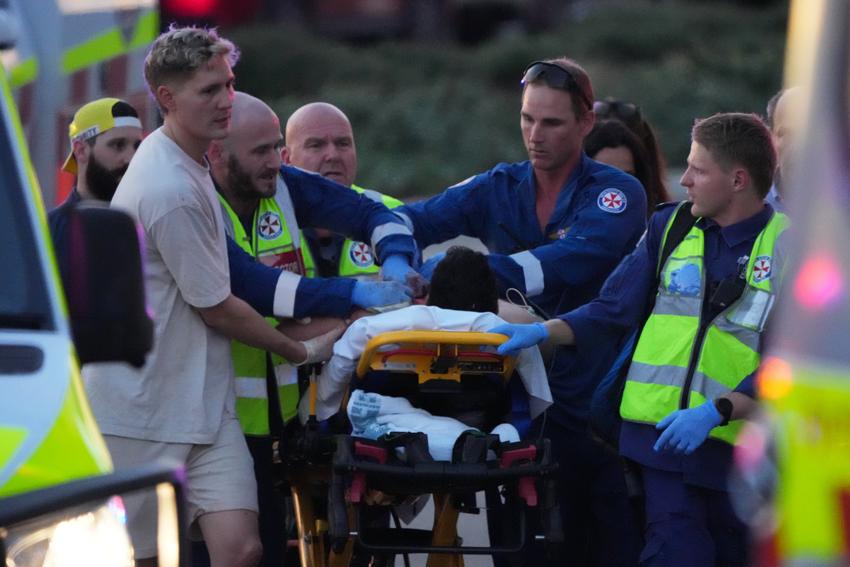
At least 12 people were killed and 29 wounded when gunmen fired on a Jewish holiday event at Sydney’s Bondi Beach on Sunday in what Australian police and officials described as a terrorist attack.
One suspected gunman was killed and another was in a critical condition, New South Wales Police Commissioner Mal Lanyon told a press conference. At least 29 people injured, including two police officers, were taken to hospital, he said.
Police were investigating whether a third gunman was involved in the shooting, and a bomb-disposal unit was working on several suspected improvised explosive devices in cars parked near the beach, Lanyon said.
Mike Burgess, a top Australian intelligence official, said one of the suspected attackers was known to authorities but had not been deemed an immediate threat.
Sunday’s shootings were the most serious of a string of antisemitic attacks on synagogues, buildings and cars in Australia since the beginning of Israel’s war in Gaza in October 2023.
Mass shootings are rare in Australia, one of the world’s safest countries. Sunday’s attack was the worst such incident in the country since 1996, when a gunman killed 35 people at a tourist site in the southern state of Tasmania.
Prime Minister Anthony Albanese convened a meeting of the country’s national security council and condemned the attack, saying the evil that was unleashed was “beyond comprehension”.
“This is a targeted attack on Jewish Australians on the first day of Hanukkah, which should be a day of joy, a celebration of faith,” he said. “At this dark moment for our nation, our police and security agencies are working to determine anyone associated with this outrage.”
Witnesses said the shooting at the famed beach on a hot summer’s evening lasted about 10 minutes, sending hundreds of people scattering along the sand and into nearby streets and parks. Police said around 1,000 people had attended the Hanukkah event alone.
“I was just getting ready to go home, and I was packing my bag, was ready to catch my bus, and then I started hearing the shots,” said Bondi Junction resident Marcos Carvalho, 38.
“We all panicked and started running as well. So we left everything behind. We just ran through the hill,” he said. “I must have heard, I don’t know, maybe, like, 40, 50 shots.”
Israeli President Isaac Herzog said Jewish people who had gone to light the first candle of the Hanukkah holiday on the beach had been attacked by “vile terrorists”.
Israeli Foreign Minister Gideon Saar said he was appalled by the shooting and that Australia’s government must “come to its senses” after countless warnings.
“These are the results of the antisemitic rampage in the streets of Australia over the past two years, with the antisemitic and inciting calls of ‘Globalise the Intifada’ that were realized today.”
One of the world’s most famous beaches, Bondi is typically crowded with locals and tourists.
“If we were targeted deliberately in this way, it’s something of a scale that none of us could have ever fathomed. It’s a horrific thing,” Alex Ryvchin, co-chief executive of the Executive Council of Australian Jewry, told Sky News, adding his media adviser had been wounded in the attack. (JapanToday)
Australian Prime Minister Anthony Albanese on Thursday acknowledged some young people were still on social media a day after a world-first ban on under-16s went live, saying the rollout was always going to be bumpy but would ultimately save lives.
A day after the law took effect, Australian social media feeds were flooded with comments from people claiming to be under 16, including one on the prime minister’s TikTok account saying “I’m still here, wait until I can vote”.
Under the law, 10 of the biggest platforms including TikTok, Meta’s Instagram and Alphabet’s YouTube must bar underage users or face a fine of up to A$49.5 million ($33 million). The government has said previously that it would take some time for the platforms to set up processes to do this.
“Of course it isn’t smooth,” Albanese told Melbourne radio station FOX. “You can’t in one day switch off over a million accounts across the board. But it is happening.”
On Nova Radio in Sydney, Albanese added: “If it was easy, someone else would have done it.”
Governments around the world have said they would monitor the Australian rollout as they weigh whether to do something similar. U.S. Republican senator Josh Hawley endorsed the ban as it took effect, Nine newspapers reported.
The United Nations children’s agency UNICEF warned in a statement the ban might encourage children to visit less regulated parts of the internet and could not work alone.
“Laws introducing age restrictions are not an alternative to companies improving platform design and content moderation,” the statement said.
Albanese has pitched the ban as an intervention to protect young people from mental health risks associated with social media, including bullying, body image problems and addictive algorithms.
The measure would “save lives and it will change lives for this and future generations”, he told Nova.
Australian searches for virtual private networks (VPNs), which can mask an internet user’s location, surged to the highest in about 10 years in the week before the ban took effect, according to publicly available Google data.
Free VPN provider hide.me told Reuters it experienced a 65% spike in visits from Australia in the days before the ban kicked in, although that had not translated to a rising number of downloads.
All 10 platforms named by the ban opposed it before saying they would comply. As the ban took effect, some platforms not covered by the ban rose to the top of app download charts, prompting the Australian government to say the platform list was “dynamic”.
One app, Lemon8, which is owned by TikTok parent Bytedance, introduced an age minimum of 16. Photo-sharing app Yope told Reuters it had experienced “very fast growth” to about 100,000 Australian users. About half its users were over 16.
The company told Reuters it had told the Australian internet regulator overseeing the rollout that it considered itself a private messaging service, not social media. (JapanToday)
Australian Prime Minister Anthony Albanese married his girlfriend Jodie Haydon on Saturday, becoming the country’s first leader to tie the knot while in office.
A beaming Albanese, 62, wed the financial services worker at a private ceremony in the garden of his official residence in Canberra, The Lodge.
“Married”, the prime minister said in a one-word post on social media with video of him in a bow-tie holding the hand of his smiling bride, who wore a long, white dress, as confetti showered down.
In a separate joint statement, the couple said: “We are absolutely delighted to share our love and commitment to spending our future lives together, in front of our family and closest friends.”
The ceremony took place more than a year after Albanese proposed on Valentine’s Day 2024, saying at the time he had found a partner “who I want to spend the rest of my life with”.
They wrote their own vows and were married by a celebrant.
Albanese’s dog, a shaggy cavoodle named Toto, was the ring bearer.
After the ceremony, where guests drank beer from a Sydney brewery, the couple walked down the aisle to Stevie Wonder’s “Signed, Sealed, Delivered (I’m Yours).”
The newlyweds are to go on a five-day honeymoon in Australia from Monday.
The prime minister — who divorced his previous wife in 2019 and has an adult son, Nathan — met Haydon more than five years ago at a Melbourne business dinner.
The centre-left Labor Party leader secured a second three-year term in office in a landslide election victory in May this year.
He joined Labor while in high school and later became deeply involved in the bruising world of student politics at the University of Sydney. (Vanguard)
Australia will recognise a Palestinian state in September, Prime Minister Anthony Albanese has announced, drawing condemnation from Israel.
Albanese said on Monday that his government would formally announce the move when the United Nations General Assembly (UNGA) meets in New York.
“A two-state solution is humanity’s best hope to break the cycle of violence in the Middle East and to bring an end to the conflict, suffering and starvation in Gaza,” Albanese said at a news conference in Canberra.
Australia’s announcement comes as Canada, France and the United Kingdom are also preparing to formally recognise Palestine at the meeting next month, joining the vast majority of UN member states that already do so.
Israeli Ambassador to Australia Amir Maimon said recognition of a Palestinian state will do nothing to end the war in Gaza, telling the Australian Broadcasting Corporation (ABC): “We reject the recognition, unilateral recognition.”
Israeli President Isaac Herzog also slammed the Australian announcement as a reward for Hamas for its October 7, 2023, attack on southern Israel, repeating the Israeli government’s stance on all recognition announcements thus far.
This latest recognition comes about a week after hundreds of thousands of Australians marched across the Sydney Harbour Bridge to protest Israel’s war in the Gaza Strip.
Speaking a day after the protest, Australian Minister for Foreign Affairs Penny Wong told ABC that “there is a risk there will be no Palestine left to recognise.”
“In relation to recognition, I’ve said for over a year now, it’s a matter of when, not if,” Wong added.
The opposition Liberal Party criticised the move, saying it put Australia at odds with the United States, its closest ally, and reversed a bipartisan consensus that there should be no recognition while Hamas remains in control of Gaza.
“Despite his words today, the reality is Anthony Albanese has committed Australia to recognising Palestine while hostages remain in tunnels under Gaza and with Hamas still in control of the population of Gaza. Nothing he has said today changes that fact,” Liberal Party leader Sussan Ley said in a statement.
“Recognising a Palestinian state prior to a return of the hostages and defeat of Hamas, as the Government has today, risks delivering Hamas one of its strategic objectives of the horrific terrorism of October 7.”
The Australian Greens, the fourth largest party in parliament, welcomed the move to recognise Palestine but said the announcement did not meet the “overwhelming calls from the Australian public for the government to take material action”.
“Millions of Australians have taken to the streets, including 300,000 last weekend in Sydney alone, calling for sanctions and an end to the arms trade with Israel. The Albanese Government is still ignoring this call,” Senator David Shoebridge, the party’s spokesperson on foreign affairs, said in a statement.
The Australian Palestine Advocacy Network (APAN) also criticised the announcement, describing it as a “political fig leaf, letting Israel’s genocide and apartheid continue unchallenged, and distracting from Australia’s complicity in Israeli war crimes via ongoing weapons and components trade”.
“Palestinian rights are not a gift to be granted by Western states. They are not dependent on negotiation with, or the behaviour or approval of their colonial oppressors,” APAN said in a statement.
According to Albanese, Australia’s decision to recognise Palestinians’ right to their own state will be “predicated on the commitments Australia has received from the Palestinian Authority (PA)”.
These “detailed and significant commitments” include the PA reaffirming it “recognises Israel’s right to exist in peace and security” and committing to “demilitarise and to hold general elections”, Albanese said while announcing the decision.
The PA is a governing body that has overseen parts of the Israeli-occupied West Bank since the mid-1990s.
It has not held parliamentary elections since 2006 and has been criticised by some Palestinians for helping Israel to keep tight control over residents in the occupied West Bank.
Albanese said the commitments secured by Australia were “an opportunity to deliver self-determination for the people of Palestine in a way that isolates Hamas, disarms it and drives it out of the region once and for all”.
Hamas has been in power in the Gaza Strip since 2007 when it fought a brief war against forces loyal to PA President Mahmoud Abbas.
Meanwhile, New Zealand Foreign Minister Winston Peters said on Monday that his country’s cabinet will make a formal decision on Palestinian statehood in September.
“Some of New Zealand’s close partners have opted to recognise a Palestinian state, and some have not,” Peters said in a statement.
“Ultimately, New Zealand has an independent foreign policy, and on this issue, we intend to weigh up the issue carefully and then act according to New Zealand’s principles, values and national interest.”
Peters said that while New Zealand has for some time considered the recognition of a Palestinian state a “matter of when, not if”, the issue is not “straightforward” or “clear-cut”.
“There are a broad range of strongly held views within our Government, Parliament and indeed New Zealand society over the question of recognition of a Palestinian state,” he said.
“It is only right that this complicated issue be approached calmly, cautiously and judiciously. Over the next month, we look forward to canvassing this broad range of views before taking a proposal to Cabinet.”
Of the UN’s 193 member states, 147 already recognise Palestinian statehood, representing three-quarters of the world’s countries and the vast majority of its population.
Under its 1947 plan to partition Palestine, the UNGA said it would grant 45 percent of the land to an Arab state although this never eventuated.
The announcements by Australia and New Zealand on Monday came hours after an Israeli attack killed five Al Jazeera staff members in Gaza City and as Israeli Prime Minister Benjamin Netanyahu continues to threaten a full-scale invasion of the city in the north of the Gaza Strip.
Israel’s war on Gaza has killed at least 61,430 people, according to Gaza’s health authorities.
More than 200 people, including 100 children, have died from starvation under Israel’s punishing siege, according to health authorities. (Aljazeera)


 English