Posted on Leave a comment

UK’s Starmer calls Trump’s remarks on allies in Afghanistan ‘frankly appalling’

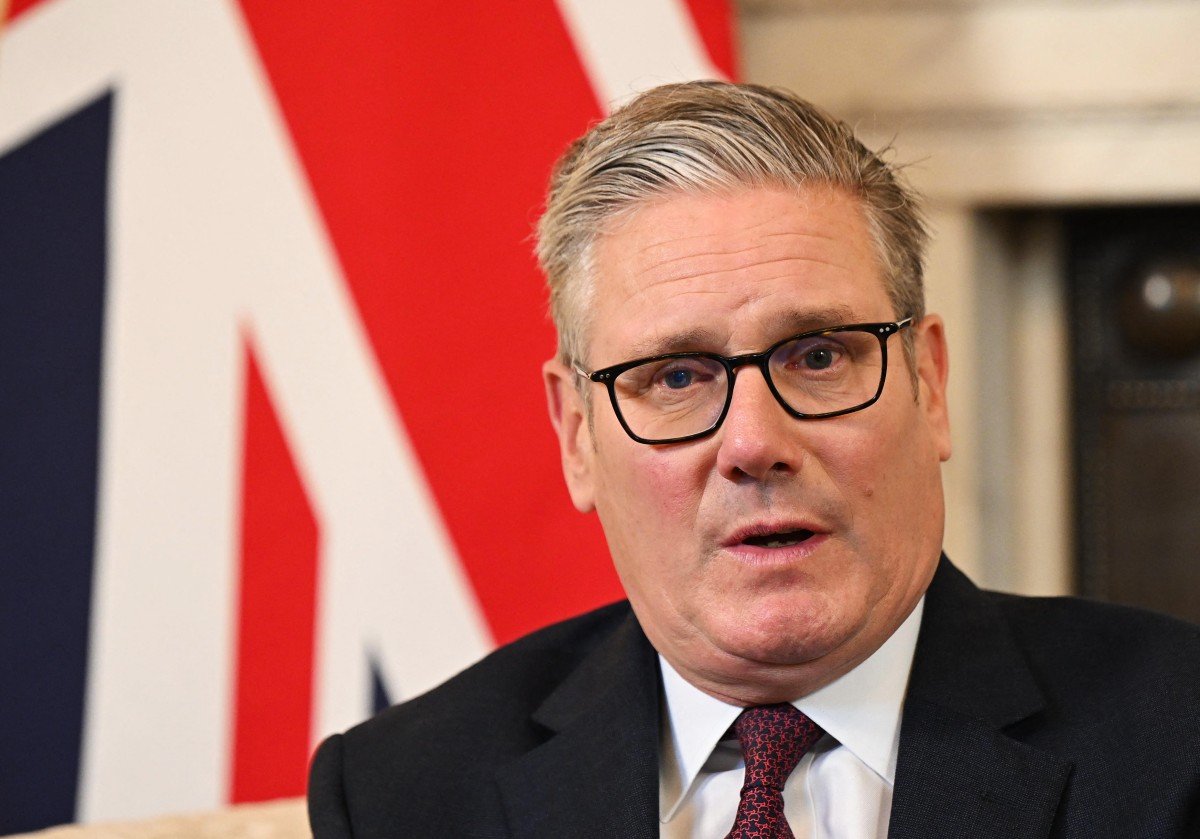
British Prime Minister Keir Starmer called U.S. President Donald Trump’s comments about European troops staying off the front lines in Afghanistan insulting and appalling, joining a chorus of criticism from ‌other European officials and veterans.

“I consider President Trump’s remarks to be insulting and frankly appalling, and I’m not surprised they’ve caused such hurt for the loved ones of those who were killed or injured,” Starmer told reporters.

When asked whether he would demand an apology from the U.S. leader, Starmer ⁠said: “If I had misspoken in that way or said those words, I would certainly apologize.”

Britain lost ‍457 service personnel killed in Afghanistan, its deadliest overseas war since the 1950s. For several ‍of the war’s most intense ‍years it led the allied campaign in Helmand, Afghanistan’s biggest and most violent province, while also fighting as the main ⁠U.S. battlefield ally in Iraq.

Starmer’s remarks were notably strong coming from a leader who has tended to avoid direct criticism of Trump in public.

Trump told Fox Business Network’s “Mornings with Maria” on Thursday the ​United States had “never needed” the transatlantic alliance and accused allies of staying “a little off the front lines” in Afghanistan.

His remarks added to already strained relations with European allies after he used the World Economic Forum in the Swiss ski resort of Davos to again signal his interest in acquiring Greenland.

Dutch Foreign Minister David van Weel condemned Trump’s remarks on Afghanistan, calling them untrue and disrespectful.

Britain’s Prince Harry, who served in Afghanistan, also weighed in. “Those sacrifices deserve to ⁠be spoken about truthfully and with respect,” he said in a statement.

“We expect an apology for this statement,” Roman Polko, a retired Polish general and former special forces commander who also served in Afghanistan and Iraq, told Reuters in an interview.

Trump has “crossed a red line”, he added. “We paid with blood for this alliance. We truly sacrificed our own lives.”

Britain’s veterans minister, Alistair Carns, whose own military service included five tours including alongside American troops in Afghanistan, called Trump’s claims “utterly ridiculous”.

“We shed blood, sweat and tears together. Not everybody came home,” he said in a video posted on X.

Richard Moore, the former head of Britain’s MI6 intelligence service, said he, like many MI6 officers, had operated in dangerous environments with “brave and highly esteemed” CIA counterparts and had been proud to do so with Britain’s closest ally.

Under NATO’s founding treaty, members are bound by a collective-defense clause, Article 5, which treats an attack on one member as an attack on all.

It has been invoked only once – after the September 11, 2001 attacks on New ​York and Washington, when allies pledged to support the United States. For most of the war in Afghanistan, the U.S.-led force there was under NATO command.

Some politicians noted that Trump had avoided the draft for ⁠the Vietnam War, citing bone spurs in his feet.

“Trump avoided military service 5 times,” Ed Davey, leader of Britain’s centrist Liberal Democrats, wrote on X. “How dare he question their sacrifice.”

Poland’s sacrifice “will never be forgotten and must not be diminished”, Defence Minister Wladyslaw Kosiniak-Kamysz said.

Trump’s comments were “ignorant”, said Rasmus Jarlov, an opposition ‍Conservative Party member of Denmark’s parliament.

In addition to the British deaths, more than 150 Canadians were killed in Afghanistan, along ‌with 90 French service personnel and scores ‌from Germany, Italy and other countries. Denmark – now under heavy pressure ‍from Trump to transfer its semi-autonomous region of Greenland to the U.S. – lost 44 troops, one of NATO’s highest per-capita death rates.

The United States lost ‌about 2,460 troops in Afghanistan, according to the U.S. Department of Defense, a figure on ‍par per capita with those of Britain and Denmark. (JapanToday)
Posted on Leave a comment

Dick Cheney, one of the most powerful and polarizing vice presidents in U.S. history, dies at 84

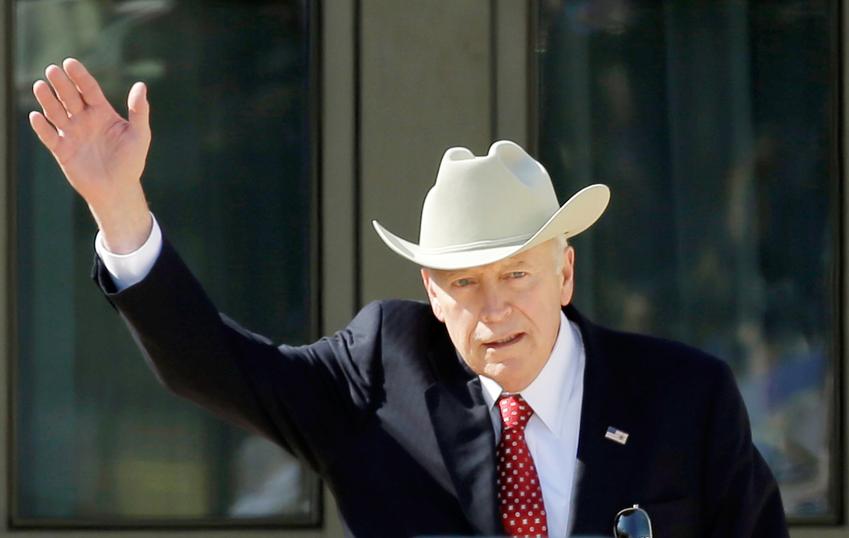
Dick Cheney, the hard-charging conservative who became one of the most powerful and polarizing vice presidents in U.S. history and a leading advocate for the invasion of Iraq, has died at 84.

Cheney died Monday due to complications of pneumonia and cardiac and vascular disease, his family said Tuesday.

The quietly forceful Cheney led the armed forces as defense secretary during the Persian Gulf War under President George H.W. Bush before returning to public life as vice president under Bush’s son George W Bush.

Cheney was, in effect, the chief operating officer of the younger Bush’s presidency. He often had a commanding hand in implementing decisions most important to the president and some of surpassing interest to himself — all while living with decades of heart disease and, post-administration, a heart transplant. Cheney consistently defended the extraordinary tools of surveillance, detention and inquisition employed in response to the Sept. 11, 2001, attacks.

“History will remember him as among the finest public servants of his generation — a patriot who brought integrity, high intelligence, and seriousness of purpose to every position he held,” Bush said.

Years after leaving office, Cheney became a target of President Donald Trump, especially after his daughter Liz Cheney became the leading Republican critic and examiner of Trump’s attempts to stay in power after his 2020 election defeat and his actions in the Jan 6, 2021, Capitol riot.

Cheney said last year he was voting for Democrat Kamala Harris for president against Trump.

For all his conservatism, Cheney was privately and publicly supportive of his daughter Mary Cheney after she came out as gay, years before same-sex marriage was broadly supported. “Freedom means freedom for everyone,” he said.

In his time in office, no longer was the vice presidency merely a ceremonial afterthought. Instead, Cheney made it a network of back channels from which to influence policy on Iraq, terrorism, presidential powers and energy.

A hard-liner on Iraq, Cheney was proved wrong about the rationale for the Iraq War, a point he didn’t acknowledge.

He alleged links between the 9/11 attacks and prewar Iraq that didn’t exist. He said U.S. troops would be welcomed as liberators; they weren’t.

He declared the Iraqi insurgency in its last throes in May 2005, when 1,661 U.S. service members had been killed, not even half the toll by the war’s end.

Cheney and Bush struck an odd bargain, unspoken but well understood. Shelving ambitions he might have had to succeed Bush, Cheney was accorded extraordinary power.

His penchant for secrecy had a price. He came to be seen as a Machiavelli orchestrating a bungled response to criticism of the Iraq War. And when he shot a hunting companion with an errant shotgun blast in 2006, he and his coterie were slow to disclose that episode. The victim, his friend Harry Whittington, recovered and forgave him.

Bush asked Cheney to lead a search for his vice president, eventually deciding the job should go to Cheney himself. Their election in 2000 was ultimately sealed by the Supreme Court after a protracted legal fight.

On Capitol Hill, Cheney lobbied for the president’s programs where he had once served as a deeply conservative member of Congress and the No. 2 Republican House leader.

On Sept. 11, 2001, with Bush out of town, the president gave Cheney approval to authorize the military to shoot down hijacked planes. By then, two airliners had hit the World Trade Center and a third was bearing down on the capital. A Secret Service agent burst into the West Wing room, grabbed Cheney by the belt and shoulder and led him to a bunker underneath the White House.

Cheney’s career in Washington started with a congressional fellowship in 1968. He became a protégé of Rep. Donald Rumsfeld, R-Ill., serving under him in Gerald Ford’s White House before he was elevated to chief of staff, the youngest ever, at age 34.

He later returned to Casper, Wyoming, and won the state’s lone congressional seat, the first of six terms.

In 1989, Cheney became defense secretary and led the Pentagon during the 1990-91 Persian Gulf War. Between the two Bush administrations, Cheney led Dallas-based Halliburton Corp., an oil industry services company.

Cheney was born in Lincoln, Nebraska, son of a longtime Agriculture Department worker. Senior class president and football co-captain in Casper, he went to Yale on a full scholarship for a year but failed out.

He moved back to Wyoming and renewed a relationship with high school sweetheart Lynne Anne Vincent, marrying her in 1964. He is survived by his wife and daughters. (JapanToday)

Posted on Leave a comment

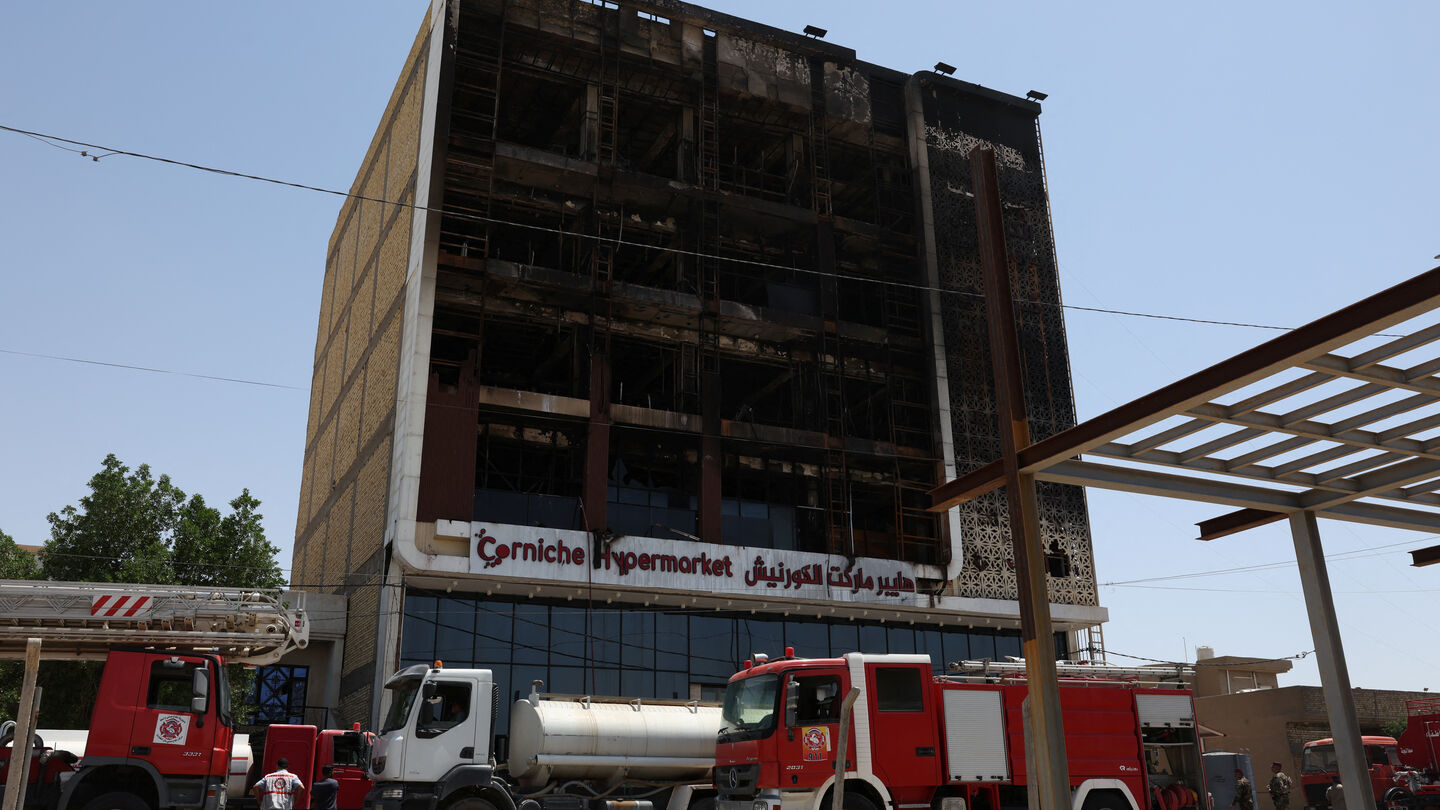
60 dead after fire tears through Iraqi shopping centre, officials say

A fire that tore through a five-storey shopping centre in the Iraqi city of Kut has left at least 60 dead, officials said.

The blaze at the mall, which opened seven days ago, broke out on Wednesday night and has since been brought under control.

Social media videos showed firefighters rescuing people from the mall’s roof, but state media reported that many are still missing.

“A tragedy and a calamity has befallen us,” regional governor Mohammed al-Miyahi said, adding that legal action would be brought against the shopping centre’s owner.

The governor has also declared three days of mourning.

Videos on INA’s news channel show flames ripping through several floors of the Corniche Hypermarket in the city’s centre, as firefighters try to douse them.

Other clips circulating on social media appear to show a small number of people on the roof during the fire, as well as the burned out insides of the centre.

A number of people were rescued from the building by firefighters, al-Miyahi told local media.

Ambulances were still taking casualties to hospitals in the city, which is about 160 km (100 miles) southeast of Baghdad, at 04:00 local time.

“The tragic fire claimed the lives of 61 innocent citizens, most of whom suffocated in bathrooms, and among them 14 charred bodies yet to be identified,” the interior ministry said in a statement.

It added that 45 people were rescued from inside the building.

Nasir al-Quraishi, a doctor in his 50s, told AFP he lost five family members in the blaze.

“A disaster has befallen us,” he said. “We went to the mall to have some food, eat dinner and escape power cuts at home.

“An air conditioner exploded on the second floor and then the fire erupted and we couldn’t escape it.”

Ali Kadhim, 51, had been looking for his cousin, who is missing alongside his wife and three children, at the main hospital and the mall where rescuers were searching the wreckage.

“We don’t know what happened to them,” he said.

Moataz Karim, 45, identified the bodies of two of his relatives – one of whom began working at the mall three days ago – on Thursday morning.

“There is no fire extinguishing system,” he told AFP, as he waited for further news of a third missing relative outside the forensic department.

Iraqi Prime Minister Mohammed Shia al-Sudani expressed condolences to the families of victims in a statement.

He has also asked the interior ministry to launch an immediate investigation into the fire’s causes, as well as to identify shortcomings and “to take all necessary strict measures to prevent the recurrence of such incidents”.

The mall, which included a restaurant, opened a week ago, according to the interior ministry.

Safety standards are often poorly observed at Iraqi construction sites, which have face decades of mismanagement and corruption. (BBC)