Posted on Leave a comment

Andy Burnham becomes Britain’s 7th prime minister in a decade

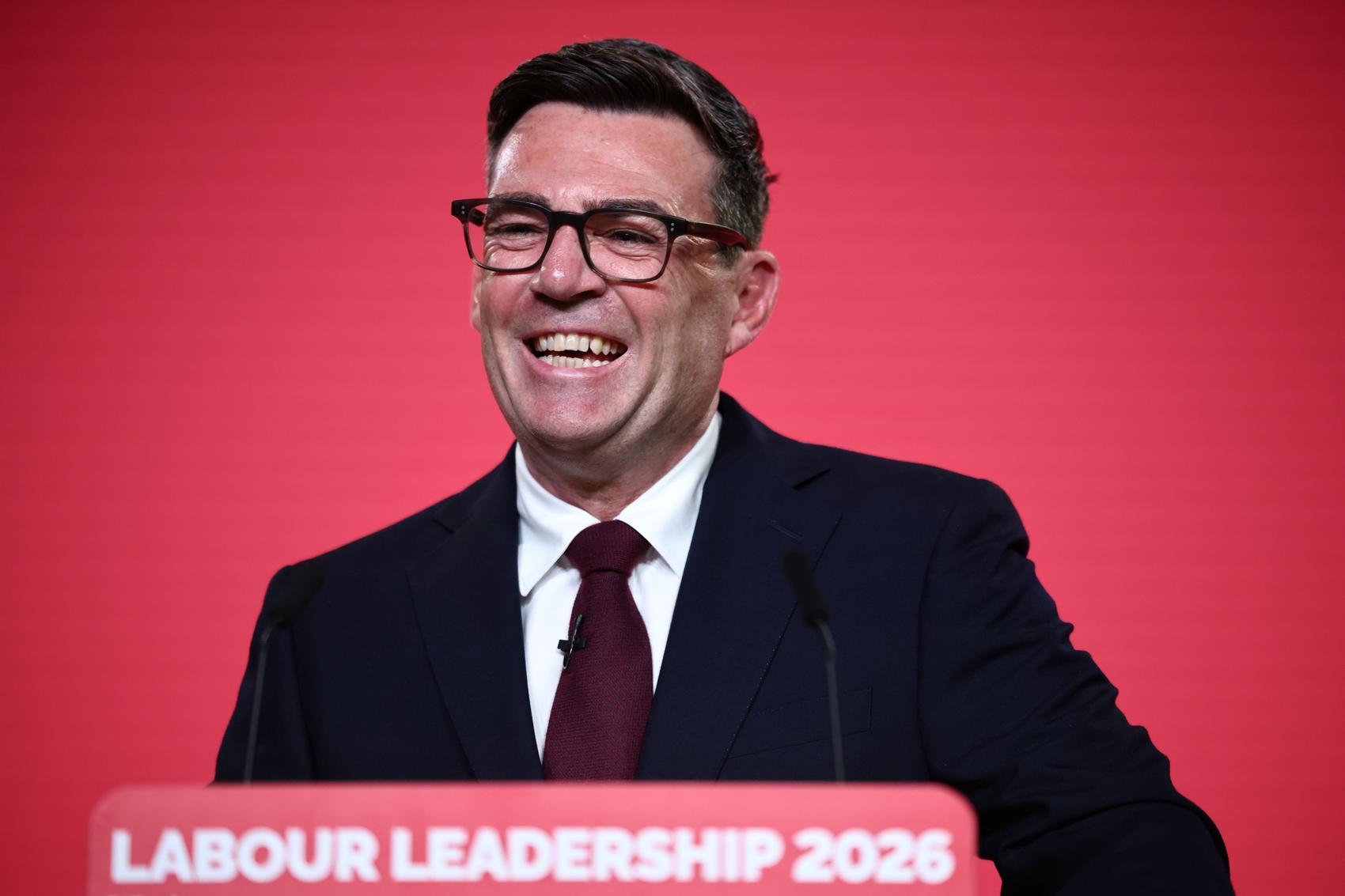
Andy Burnham took office Monday as Britain’s new prime minister, promising a 10-year plan to restore political stability and revive the economy while acknowledging that six other U.K. leaders have tried and failed to do so in the past decade.

Speaking outside 10 Downing Street minutes after being formally appointed by King Charles III, Burnham pledged to ease the cost of living for ordinary people, decentralize political power, revitalize industry and end street sleeping by homeless people. He said he would deliver a “circuit breaker” for a system that has taken wrong turns since the 1980s, when public services and utilities were privatized and local government eroded.

“We will take power out of here and carry it into every postcode in the land so that they can do more and in doing more, build a new economy where we put life’s essentials back under stronger public control to make them affordable to you again,” he said.

Burnham said he was “acutely conscious” of the political revolving door he was walking through.

“This is a moment for reflection and new resolution,” he said. “It requires my generation of politicians to raise our game and rise to the new challenge. Britain needs to show the world that we can regain our stability once again, and that is our challenge to make politics work, to make it work better.”

One of Burnham’s biggest tasks on his first day was to appoint a cabinet. The key post of chancellor of the exchequer went to John Healey, the former defense secretary who quit the previous government a few weeks ago over funding plans for his department. His appointment as Treasury chief was a surprise.

Healey replaces Rachel Reeves, the architect of much of the economic agenda of Burnham’s predecessor, Keir Starmer, as well as some of the missteps that ate away at his support. Others leaving the cabinet included David Lammy, who was deputy prime minister.

Energy Secretary Ed Miliband was given the role of foreign secretary. He replaces Yvette Cooper, who was appointed health secretary, a demotion but a hugely important post for the Labour Party’s reelection prospects. Shabana Mahmood remains as home secretary. The full cabinet meets Tuesday.

Burnham became the seventh U.K. prime minister since 2016 in a now well-rehearsed handover after replacing Starmer as leader of the center-left governing Labour Party on Friday. Starmer announced last month that he would resign.

Starmer left office just two years after winning a landslide election victory, forced out by his own party after a series of missteps and U-turns.

Britain’s parliamentary democracy allows governing parties to change leaders, and thus prime ministers, without the need for a general election. The next national poll does not have to be held until 2029, though Burnham can call one sooner if he wants.

Burnham was the only candidate in a contest to become the party’s new leader, securing nominations from 379 of the 403 Labour lawmakers in the House of Commons.

He will confront many of the same struggles as his predecessor: a sluggish economy, a cost-of-living crisis, overstretched public services, concerns about migration and foreign affairs that include wars in Ukraine and the Middle East.

He will also try to navigate relations with U.S. President Donald Trump, who first warmed to, then soured on, Starmer. Burnham’s office said the prime minister spoke to Trump on Monday afternoon and “underlined his commitment to defense and security.”

The former mayor of Greater Manchester previously pledged to make politics “less toxic,” improve living standards across the country and “bring back the hope we have all been missing.”

Burnham said he will set out a 10-year plan for Britain later this year. Before that, he will lay out first steps “to give people some breathing space now, some help with the cost of living.”

“And I will set out some of those measures starting tomorrow, including how we pay for them,” he said.

After his speech, he told reporters that he has “always taken a very prudent approach” to the economy in previous jobs, and will not take any economic risks now.

Tim Bale, professor of politics at Queen Mary University of London, said Labour had backed Burnham “to inject a sense of positivity, of hope, of purpose, a sense of direction.”

Burnham says “he is going to mark a big break, not just with Keir Starmer, but also with what he regards as four decades of the country going in the wrong direction,” Bale said. “But quite what that means in terms of concrete policies, in terms how much he’s going to spend and on what, and how much is going to tax … we’re not sure yet.”

In the rapid-fire world of British political transitions, Burnham entered Downing Street only minutes after Starmer left.

“I go with good grace. I go with a smile, and I go proud of everything that we have achieved,” Starmer said before heading to Buckingham Palace to offer his resignation to the king. It was an offer the king “was graciously pleased to accept,” the palace said in a statement.

Starmer became Labour leader in 2020 after one of the party’s worst election defeats, and he led Labour to a landslide victory four years later. But he was soon defeated by the challenges of governing.

“It has been the privilege of my life to serve you and this great country as prime minister,” Starmer said before leaving Downing Street, hand-in-hand with his wife, Victoria. “I am confident that Britain is now stronger and fairer than it was two years ago.” (JapanToday)
Posted on Leave a comment

Andy Burnham declared leader of UK’s Labour Party, pledges to restore hope

Andy Burnham was officially declared leader of Britain’s governing Labour Party on Friday, promising to bring hope to the British people and purpose to the floundering government as he cleared his final hurdle to take office as prime minister next week.

The former mayor of Greater Manchester was the only contender in the center-left party’s leadership contest to replace departing Prime Minister Keir Starmer, who was forced out by a rebellion within his party. Friday’s announcement was a foregone conclusion after Burnham secured nominations from 379 of the 403 Labour lawmakers in the House of Commons.

Burnham pledged to serve “people and places who have been waiting too long for politics to let them hope again.”

“We’re going to give them hope back,” he told an audience of lawmakers, party activists and trade union leaders in his first speech as leader. “I am ready.”

“I have a plan,” he added, in a bid to reassure a party that has seen its popularity nosedive since winning a landslide election victory two years ago. He pledged to end Labour’s factional disputes, saying “we won’t beat Britain’s new right if we are consumed by infighting and pulling in different directions.”

Burnham has been prime minister-in-waiting for weeks, since winning a special election for a seat in Parliament a month ago, but he has revealed little detail about his policy priorities. He will arrive in Number 10 Downing Street largely unknown to voters outside Manchester.

He sketched out some priorities in Friday’s speech, promising to deliver “hope in every heart” and “good growth in every post code,” in part by transferring power from central government in London to local leaders in cities and regions.

“We will take power back from Westminster and Whitehall and give it to the place you live,” he told the audience. “More power over life’s essentials so you can make them work better.”

Starmer announced last month that he would resign after two years in office marred by missteps and judgment errors that eroded his standing with his party and the public.

Labour regularly trails behind anti-immigration party Reform UK in opinion polls, and the governing party had catastrophic results in local elections in May, triggering pressure on Starmer to step down that he couldn’t resist.

Burnham brings a more relaxed style of leadership than the rather stern Starmer, and is regarded as one of the Labour Party’s best communicators. But he faces many of the same problems as his predecessor, including a sluggish economy, a cost-of-living squeeze fueled by wars in Ukraine and the Middle East and overstretched public services.

And his promises of a new, less divisive politics are not too different to what Starmer pledged when he took office in 2024.

“I will work to build a new politics. The country is crying out for it,” Burnham said. “How can politicians point fingers when living standards are falling and politics as a whole isn’t working for them? It infuriates them and makes them switch off.”

He said he would have the “courage to fix the big things that politics has neglected,” such as tackling the patchy access to social care for those who need it because of age, illness or disability. It’s a pressing issue in a country with an aging population, and one that has foxed previous Labour and Conservative governments.

He highlighted plans to focus on economic renewal, more public control of key sectors and creating new modern industrial jobs, arguing that Britain took “a series of wrong turns in the 1980s” when “political power was centralized and economic power privatized.”

That’s the decade when Conservative Prime Minister Margaret Thatcher oversaw policies of privatization, deindustrialization and political centralization that transformed the U.K. economy.

“Slowly, at times imperceptibly, over four decades, political and economic power drained away out of our communities in every region and nation of the U.K.,” Burnham said, calling Britain’s change of prime ministers — for the sixth time in a decade — “the most significant change moment in our politics for 40 years.”

Starmer will remain prime minister until Monday, when he formally tenders his resignation to King Charles III. The king will then ask Burnham to form a government.

Britain’s parliamentary democracy allows governing parties to change leaders, and thus prime ministers, without the need for a general election. The next national election doesn’t have to be held until 2029.

New prime ministers have come with increasing frequency in recent years. Burnham will be the U.K.’s seventh leader since 2016. (JapanToday)

Posted on Leave a comment

Investigation into King Charles’ brother Andrew will be lengthy, UK police say

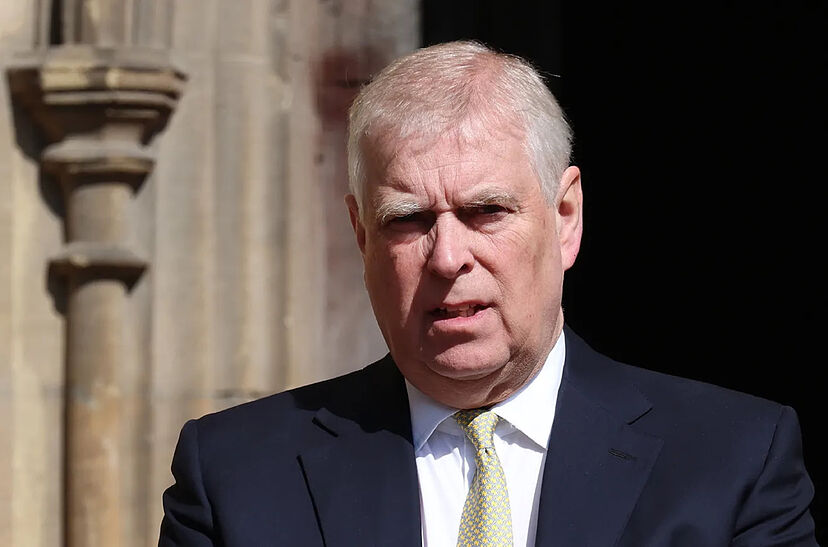
The British police investigation into Andrew Mountbatten-Windsor will be long and complex, senior officers said on Friday, after his arrest earlier this year on suspicion of misconduct in public office, an offense ‌that can include sexual impropriety.

King Charles’ younger brother was interviewed under caution for hours by detectives after he was arrested at his home in Norfolk in February following the release of millions of documents by the U.S. Department of Justice relating to the late U.S. sex offender ‌Jeffrey Epstein.

The arrest of the senior royal, eighth in line to the throne, was unprecedented ⁠in modern times. A Reuters photo of the ashen-faced former prince leaving the police station ⁠made front pages around the ⁠world.

Mountbatten-Windsor, 66, the second son of the late Queen Elizabeth, has always denied any wrongdoing in relation to Epstein, ‌and said he regrets their friendship. He has made no public statement since his arrest.

“The investigation is by necessity ⁠hugely thorough and will take time,” Oliver Wright, Assistant Chief ⁠Constable of Thames Valley Police, who are carrying out the inquiry, told reporters. “It’s not going to be a quick investigation by any means.”

The focus of the inquiry is the former prince’s role as special representative for trade and investment between 2001 and 2011, with emails released by the DOJ suggesting he had shared sensitive information ⁠with Epstein.

However, misconduct in public office, which carries a maximum sentence of life imprisonment, can relate to any serious ⁠wrongdoing – from sharing confidential information to corruption and sexual ‌misconduct.

“There’s a number of aspects of alleged misconduct that the investigation is examining. So we’re speaking with a range of witnesses,” said Wright, who did not refer to Mountbatten-Windsor by name, as is customary in Britain before someone is charged.

Wright said police had received “a significant amount of information” from the public and other sources and that the investigation would be incredibly complex.

He said ‌the force was also assessing reports that a woman was taken to an address in Windsor in 2010 for sexual purposes after a lawyer for the alleged victim told the BBC she had been sent to Britain by Epstein for a sexual encounter with the former prince.

Detectives have spoken to the lawyer but the woman involved has not yet reported the offense. The British police said some victims might be put off because of the pressure of national and international attention.

“In terms of Epstein victims and survivors, we hope that anyone with relevant information will come forward and I really want to stress that ​our door is open whenever a victim survivor is ready to engage with us. We’re ready for you at whatever point that may be,” Wright said.

A specialist team of experienced officers is carrying out the investigation, which is ‌being treated as a major crime, on a par with a murder inquiry. They have also been liaising with the U.S. Department of Justice but as yet have not received any of the Epstein documents.

“That is ongoing, and it’s a fairly complex thing to do, but we’re working ‌very hard on that,” Wright said.

On Thursday, the British government released confidential documents relating to Mountbatten-Windsor’s appointment as trade ⁠envoy that showed the late queen had ⁠pressed for him to get the role.

However, King Charles, who ​stripped his sibling of his titles and honors last October, said he was deeply concerned about the news ⁠when Mountbatten-Windsor was arrested and that authorities ‌had the family’s “full and wholehearted support and cooperation”.

Thames Valley is not the only British ​police force looking into possible offences relating to information in the Epstein files.

On Tuesday, Surrey police said it was investigating two allegations of child sex abuse, one reported to have been committed in the 1980s and the other in the mid-1990s to 2000. It gave no further details about who was involved. (JapanToday)

Posted on Leave a comment

King sends ‘warmest congratulations’ to Sir David Attenborough on his 100th birthday

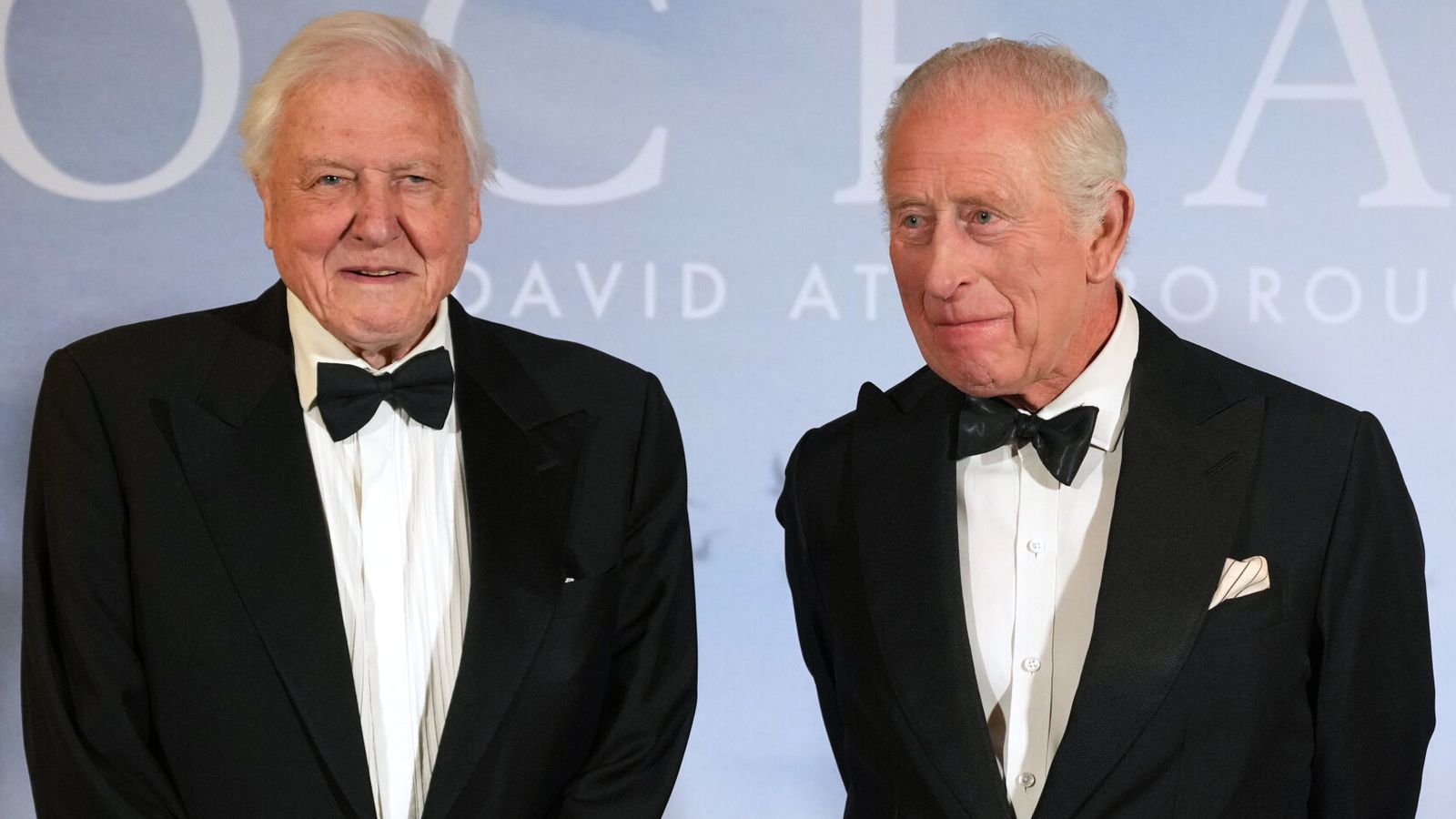
The King has led birthday tributes to Sir David Attenborough, sending his “warmest congratulations” to the environmentalist who has reached 100 years of age.

The monarch said in a birthday card message how the pair have known each other for more than 60 years, having first met in 1958, and their “paths have crossed many times since”.

He was shown writing the card in a clip at the conservationist’s birthday concert at the Royal Albert Hall in London.

The 77-year-old royal said Sir David has revealed “the beauty and wonders of nature to audiences around the world in new and marvellous ways”.

He added that the broadcaster has shared the King’s “determination to highlight the urgent need to protect and preserve” Earth for future generations.

The King said he and the Queen were “delighted” to learn he will be celebrating the milestone and on behalf of the whole country wished him a very happy birthday.

Animals could then be seen delivering the letter across land, sea and air, before Sir David could be seen holding his royal birthday card aloft in the venue.

The card’s journey was initially thwarted by a fallen tree – only to be saved by the creatures, including an eagle, a fox, a red squirrel and an otter that travel across the UK to ensure that the wildlife presenter receives his royal dispatch.

The Prince of Wales spoke of his “profound” friendship with Sir David, adding that his children have grown up with the broadcaster’s “incredible storytelling” and that he has been a “guiding light” in efforts to protect the natural world.

He said in his speech: “David, for decades, your voice has been a constant in our lives, guiding us through rainforests and oceans, over mountains and into the very fabric of life.”

The audience in the Royal Albert Hall all sang happy birthday at the conclusion of the event.

The King and Queen also shared a carousel of photographs of Sir David on the official Royal Family Instagram account.

The caption read: “Wishing Sir David Attenborough a very happy 100th birthday. Enjoy your special celebration this evening!”

Sir David Beckham also marked Sir David’s big day with a post on his Instagram account captioned: “Happy 100th Birthday to our National Treasure.”

Meanwhile, fellow environmentalist and Hollywood star Leonardo DiCaprio called Sir David “one of the most enduring champions of our shared planet” in an Instagram post.

The Royal Albert Hall celebration was just one of many events to mark the broadcaster’s birthday, including a takeover of the Piccadilly Lights in central London, displaying a birthday message for Sir David.

The naturalist said he has been “completely overwhelmed” by goodwill messages and thanked well wishers “most sincerely”. (SkyNews)

Posted on Leave a comment

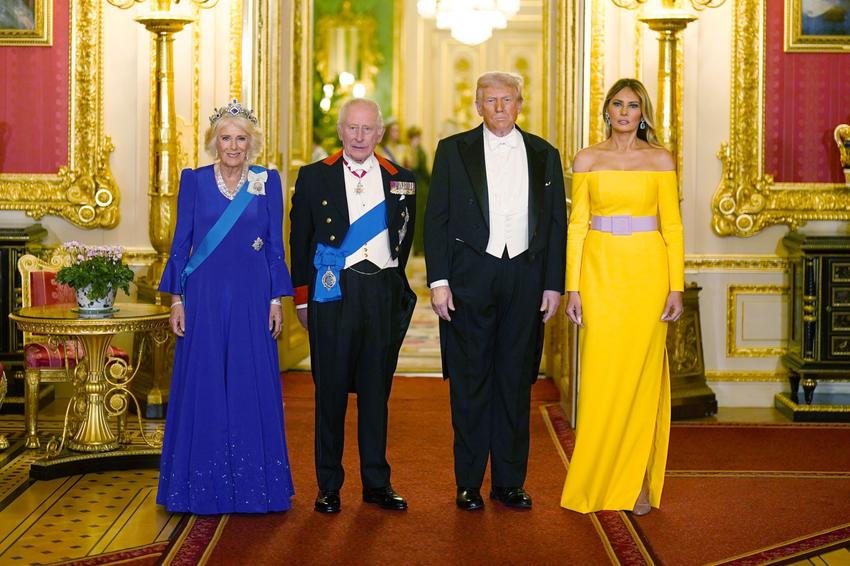
King Charles calls for NATO unity, Ukraine support in US Congress speech

Britain’s King Charles III has used a speech in front of the United States Congress to pledge NATO unity and call for support for Ukraine amid Russia’s ongoing invasion.

The address on Tuesday came during the royal’s four-day visit to the US, with the US-Israel war with Iran, US President Donald Trump’s criticism of NATO, and trade tensions between the longtime allies looming large.

But Charles avoided any reference to specific frictions during his speech at the US Capitol, instead striking a light tone in his joke-heavy opening.

He praised what he called the shared history and values of the two countries, quipping at one point that Washington, DC was “a tale of two Georges”, the first US President George Washington and his ancestor, the UK’s King George.

He assured lawmakers, to laughs, he was not in the US “as part of some cunning rearguard action” in a delayed continuation of the Revolutionary War.

“I am here on this great occasion in the life of our nations to express the highest regard and friendship of the British people to the people of the United States,” the sovereign said to repeated standing ovations.

But amid broad themes of unity, more pointed messages lurked.

Charles did not directly address the US-Israel war with Iran or Trump’s outspoken criticism of NATO allies who have rejected joining Washington’s war efforts.

Instead, he praised support for NATO and the alliance’s invocation of its Article 5 collective defence treaty in the wake of the September 11, 2001 attacks.

“We answered the call together, as our people have done so for more than a century, shoulder to shoulder through two world wars, the Cold War, Afghanistan and moments that have defined our shared security,” he said.

He then turned to funding for Ukraine, an increasingly pointed issue in the Republican-controlled US Congress.

“Today, Mr Speaker, that same unyielding resolve is needed for the defence of Ukraine and her most courageous people,” he said, referring to House Speaker Mike Johnson.

In one instance, Charles hailed the “$430 billion in annual trade that continues to grow, the $1.7 trillion in mutual investment that fuels that innovation”.

Last week, Trump threatened to impose a “big tariff” on the UK if it did not drop a digital services tax on US tech companies.

At another point, Charles pointed to global environmental concerns.

“We ignore, at our peril, the fact that these natural systems, in other words, nature’s own economy, provide the foundation for our prosperity and our national security,” he said.

Trump has called climate change a “con job” and withdrew from the landmark Paris Agreement climate accords during his first and second terms. His administration has since pursued deregulation of fossil fuels and pivoted away from green energy, an approach embraced by many members of the president’s Republican party.

Other messages appeared to gently reference political trends in the US, where critics have accused Trump of using the Department of Justice for political retribution and of overturning long-standing norms of presidential authority.

Charles described the “common ideals” of the US and UK: “The rule of law, the certainty of stable and accessible rules, an independent judiciary, resolving disputes and delivering impartial justice”.

He also drew a throughline between the Magna Carta, the 13th-century document that established that the British king was subject to law, and constitutional and legal precedent in the US, calling it “the foundation of the principle that executive power is subject to checks and balances”.

The address came shortly before Trump was set to host Charles and his wife, Queen Camilla, for an official state dinner.

The pair were then set to visit New York and Virginia, before an official farewell ceremony at the White House on Thursday. (AlJazeera)

Posted on Leave a comment

Tinubu’s UK visit has repositioned Nigeria on global stage, says Oluwole Oke

Oluwole Oke, chairman of the house of representatives committee on foreign affairs, says President Bola Tinubu’s two-day official visit to the United Kingdom has repositioned Nigeria on the global stage.

Following an invitation from King Charles III, Tinubu departed Abuja on Tuesday for London, accompanied by his wife and other top government officials.

The state visit, scheduled to end on Thursday, represents the highest level of diplomatic engagement hosted by the British monarchy and marks the first visit of such scale by a Nigerian leader to the UK in 37 years.

Speaking on Channels Television on Wednesday, Oke, who represents Obokun/Oriade federal constituency of Osun state in the green chamber, said beyond economic benefits, Tinubu’s UK visit has elevated Nigeria’s profile internationally.

“This state visit is not just an honour to the President and his family, but to all Nigerians,” he said.

“For the United Kingdom to invite a president on a state visit, they must have strong confidence in our reforms and in the governance under the leadership of President Bola Ahmed Tinubu.”

During the visit, Tinubu is expected to meet with Keir Starmer, UK prime minister, in a high-level bilateral engagement aimed at strengthening ties between Nigeria and Britain.

Reports indicate that a major highlight of the visit is the signing of a £746 million financing agreement between UK export finance, the Nigerian Ports Authority, and the Federal Ministry of Finance.

Oke said at the end of the visit, the British government will be looking forward to numerous opportunities for partnership between the two countries.

He also noted the importance of the maritime deal, which he said, would create jobs and generate huge revenue for the federal government.

“This kind of investment will have linkage effects that will snowball into employment,” he said.

“Participants in that sector will make profits, pay taxes, and, as you know, public finance relies on taxation. So, it is a positive development, and there will be many win-win outcomes. This invitation has further repositioned Nigeria on the global stage.” (TheCable)

Posted on Leave a comment

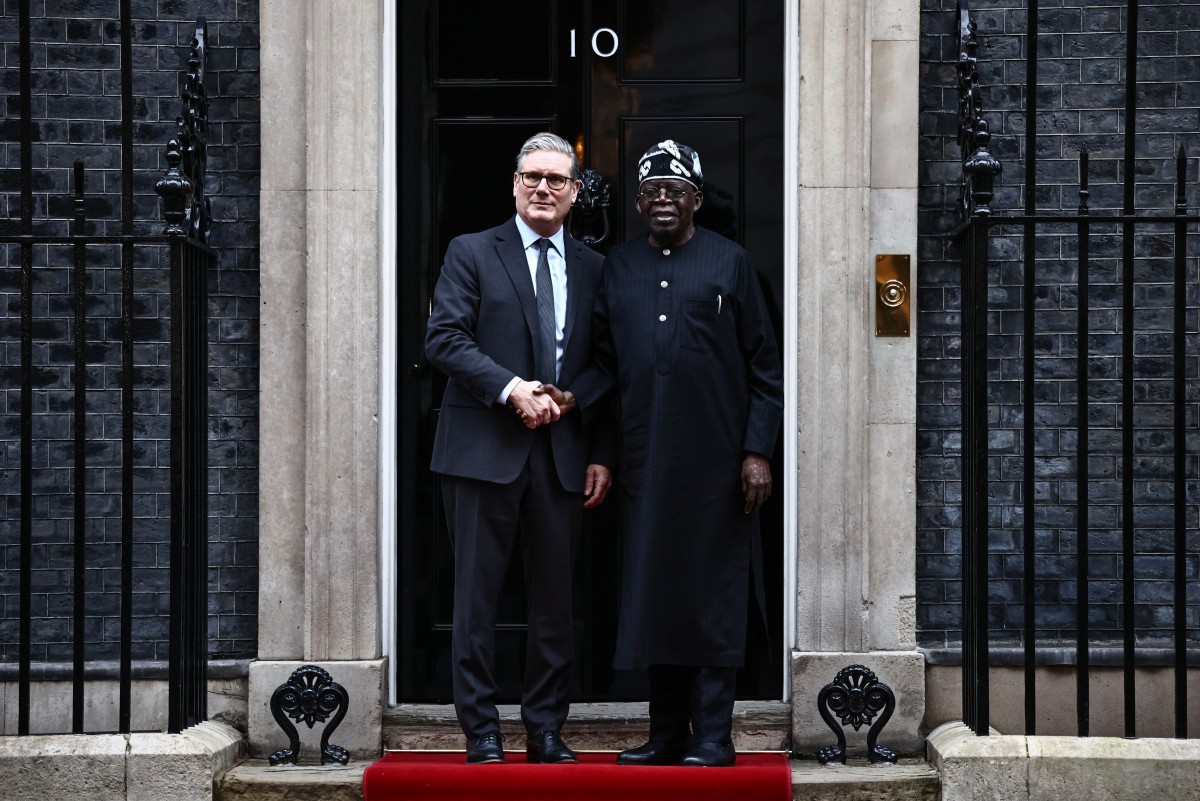
Starmer pushes strategic UK-Nigeria alliance with N1.4tn fresh deal

The United Kingdom and Nigeria have sealed new export agreements as both countries committed to taking their economic partnership to another level, UK Prime Minister Keir Starmer said on Thursday.

Starmer made the disclosure during a bilateral meeting with President Bola Tinubu at 10 Downing Street on the second day of the Nigerian leader’s historic state visit to Britain.

“Today is the opportunity to take that to another level with the agreements that we’ve been able to reach on exports, and I think that shows we can go even further than we’ve already gone,” the British Prime Minister stated.

Tinubu, in his remarks, revealed that Nigeria is currently undergoing “very strong reform of the economy” and linked the terrorism challenges facing West Africa to climate change conflict.

“We need more trade agreements and economic relationships that we build between nations. Nigeria is currently going through a very strong reform of the economy,” Tinubu said during the meeting at 10 Downing Street.

The President described Nigeria as facing significant challenges, stating, “The largest country in West Africa, and on the continent, is challenged by terrorism coming from the conflict of climate change.”

Tinubu emphasised that both countries face global economic challenges, noting, “Currently, the entire world is challenged. Nigeria is not immune. Britain is not immune.”

He said the discussions focused on the “economic welfare of the people and how we can work together to improve livelihood” amid economic volatility.

The President affirmed that Thursday’s bilateral discussions would address what Britain can do to “accelerate the friendship, partnership and collaboration” between both nations.

On his part, Prime Minister Starmer described the visit as historic, noting it was the first inward state visit for 37 years by a Nigerian leader.

“The long and shared history between our countries is obvious and much valued, as is the people-to-people contact and engagement that enriches lives here in the United Kingdom,” Starmer said.

He noted that both countries already collaborate on economy, defence, and security matters but expressed determination to deepen the partnership.

“Today is the opportunity to take that to another level with the agreements that we’ve been able to reach on exports,” the Prime Minister stated.

Nigeria became the United Kingdom’s biggest export market in Africa in January 2026, with bilateral trade continuing to expand.

King Charles III had disclosed on Wednesday night at a state banquet that visitors from Nigeria spent £178m in Britain in 2024, while 251,000 people from Britain travelled to Nigeria and spent just as much in return.

The state visit, which began on Wednesday, March 18, saw the signing of several memoranda of understanding and agreements covering trade, investment, defence, and cultural cooperation.

A major outcome already announced is a £746m financing deal involving UK Export Finance, the Nigerian Ports Authority, and the Ministry of Finance for the refurbishment of Lagos Port Complex (Apapa) and Tin Can Island Port.

The bilateral meeting at Downing Street followed Wednesday night’s state banquet at Windsor Castle, where King Charles III acknowledged “painful marks” in the shared history between both nations while praising Nigeria’s transformation and the contributions of the Nigerian diaspora to British society.

The state visit, the first by a Nigerian president since 1989 when former military leader Ibrahim Babangida was hosted by Queen Elizabeth II, concludes on Thursday with President Tinubu expected to return to Nigeria. (Punch)

Posted on Leave a comment

‘I found safety here,’ Tinubu recounts UK’s protection during pro-democracy struggle

President Bola Tinubu has recalled how he found refuge in the United Kingdom during Nigeria’s pro-democracy struggle, stating that British authorities once placed his residence under police protection amid threats from agents of the military regime.

Tinubu made the remarks on Wednesday during a state banquet hosted by King Charles III at Windsor Castle.

In his address, the Nigerian leader expressed gratitude to the UK for its support during the years of military rule.

“Your Majesty, I wish to express Nigeria’s deep gratitude to this great nation for the refuge and support it extended during the dark years of military dictatorship.

“Like many Nigerians involved in the pro-democracy struggle, I found safety here, and I recall that my residence was placed under Metropolitan Police surveillance for protection following threats from agents of the junta,” he said.

He added that such solidarity remains significant, noting it was “deeply humbling” to return as President of a democratic Nigeria.

igeria’s pro-democracy struggle reached its peak in the 1990s following the annulment of the June 12, 1993 presidential election won by Moshood Abiola under the regime of Ibrahim Babangida. The decision triggered widespread protests and resistance.

Repression intensified during the rule of Sani Abacha, marked by arrests, assassinations, and the execution of Ken Saro-Wiwa and the Ogoni Nine, drawing international condemnation.

Sustained pressure from pro-democracy groups, including civil society organisations and the media, eventually paved the way for a transition to civilian rule under Abdulsalami Abubakar in 1999, ushering in the Fourth Republic with Olusegun Obasanjo as President.

The legacy of the struggle endures, notably through the recognition of June 12 as Democracy Day and ongoing efforts to honour its key figures.

Tinubu also highlighted Nigeria’s current security challenges, particularly terrorism linked to instability in the Sahel, stressing the importance of continued cooperation with the UK.

“Our West African region faces complex terrorism challenges with roots in the Sahel. Nigeria carries an enormous responsibility to help safeguard regional stability.

“In confronting these threats, partnership with the United Kingdom remains essential,” he said, adding that he looked forward to meeting Prime Minister Keir Starmer.

The President further expressed confidence in the future of bilateral relations, noting that both countries share a commitment to progress, mutual respect, and common values.


He also pointed to Nigeria’s role within the Commonwealth of Nations as a platform for strengthening ties.

Reflecting on historical and institutional links, Tinubu acknowledged the influence of British legal and political traditions on Nigeria’s governance system, including its courts, parliamentary structures, and civil service.

He also praised the contributions of Nigerians in the UK, describing them as the “strongest bridge” between both nations, particularly in sectors such as healthcare, business, technology, and the arts. (Channels)

Posted on Leave a comment

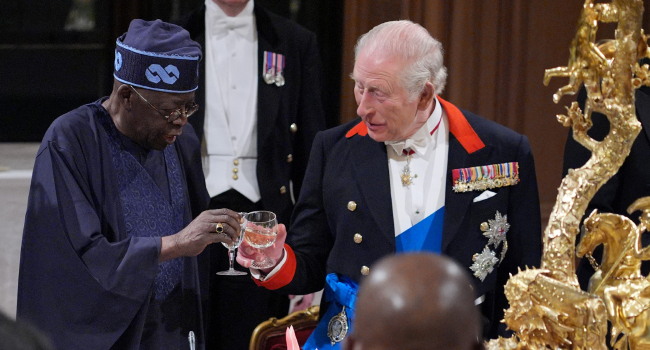
King Charles hosts Tinubu to state banquet, hails UK–Nigeria partnership

King Charles III on Wednesday praised what he described as a “partnership of equals” between the United Kingdom and Nigeria, as he hosted Bola Tinubu at a state banquet marking the first visit by a Nigerian leader in nearly four decades.

he banquet, held at Windsor Castle, brought together senior officials, business leaders, and cultural figures from both countries, underscoring deepening diplomatic and economic ties.

In his opening remarks, King Charles described the relationship between both nations as built on mutual respect and shared progress.

“Britain and the former British colony have a deep bond and a partnership of equals that has brought us both enormous benefits,” he said.

The monarch also highlighted Nigeria’s growing economic influence.

“Nigeria is an economic powerhouse. It has not merely changed, it has arrived,” he said, adding that “Nigeria is investing in Britain’s future as much as Britain is investing in Nigeria’s.”

King Charles paid glowing tribute to Nigerians living in Britain, describing them as central to the country’s development.

“We in the United Kingdom are blessed that so many people of Nigerian heritage… are now at the heart of British life,” he said.T

The King noted their contributions across sectors, including business, technology, academia, law, science, sports, literature, and the arts.

“I have met so many of these quiet heroes in our schools, businesses, National Health Service, and universities, including countless young people who have flourished through the work of my King’s Trust over the last 50 years,” he said.

He added with humour, “Only last week, I was delighted to host a rather lively group of them to a jollof and tea party at St. James’s Palace. I was firmly assured that the jollof was only the best — Nigerian, of course… or perhaps Ghanaian or Senegalese. Diplomatically, I cannot remember.”

The monarch also acknowledged Nigeria’s cultural footprint in Britain, referencing Afrobeats, Nollywood, and Nigerian excellence across professions.

“From Afrobeats filling our concert halls and Nollywood captivating our screens… so much of Britain’s culture is in truth profoundly enriched by Nigerians,” he said, before concluding: “Naija no dey carry last.”

Acknowledging history, King Charles noted that while the relationship has evolved, it is not without its challenges.

“There are chapters in our shared history that I know have left painful marks… no words can dissolve these,” he said.

The King also thanked Tinubu for visiting during Ramadan, describing it as “no small sacrifice,” and wished him “Ramadan Mubarak.” The banquet—adjusted to accommodate fasting—featured an iftar and provisions such as a prayer room.

Tinubu, while responding, echoed the sentiment.

“Our people remain the strongest bridge between our two countries,” he said, pointing to their impact in healthcare, sports, and beyond.

“Our two nations share a vision of progress based on mutual respect and common values,” President Tinubu added, noting he was the first Nigerian leader to speak at Windsor Castle.

Also in attendance were the wife of the President, Oluremi Tinubu; Queen Camilla, Minister of Finance and Coordinating Minister of the Economy, Chief Wale Edun; National Security Adviser, Mallam Nuhu Ribad; and President of the Senate, Godswill Akpabio.

The attendees include the Attorney General of the Federation and Minister of Justice, Lateef Fagbemi, SAN; Minister of Defence, General Christopher Gwabin Musa (retd.); Minister of Communications, Innovation and Digital Economy, Bosun Tijani; Minister of Arts, Culture and the Creative Economy, Ms. Hannatu Musawa; and Minister of Industry, Trade and Investment, Jumoke Oduwole, among other cabinet members.

Governors in attendance were Dapo Abiodun (Ogun), Peter Mbah (Enugu), and Babajide Sanwo-Olu (Lagos), among others.

Other prominent guests at the banquet included Maro Itoje, Christine Ohuruogu, Eniola Aluko, Ben Okri, and Tiwa Savage—figures the King described as a “living bridge” between both nations.

Earlier, President Tinubu was received with full state pageantry, including a guard of honour and a ceremonial gun salute, as artillery rang out across Windsor.

Nigerian and British flags lined the streets while the President and the King inspected troops in traditional regalia.

The visit, part of a two-day state engagement, is aimed at strengthening cooperation in trade, investment, security, and education, while also recognising the role of the Nigerian diaspora in the UK.

It is the first visit by a Nigerian president in 37 years.

President Tinubu is scheduled to meet Keir Starmer and engage with members of the Nigerian diaspora as part of the visit.

The trip builds on longstanding ties between both countries, with London hosting a large Nigerian community that continues to play a vital role in strengthening bilateral relations. (Channels)

Posted on Leave a comment

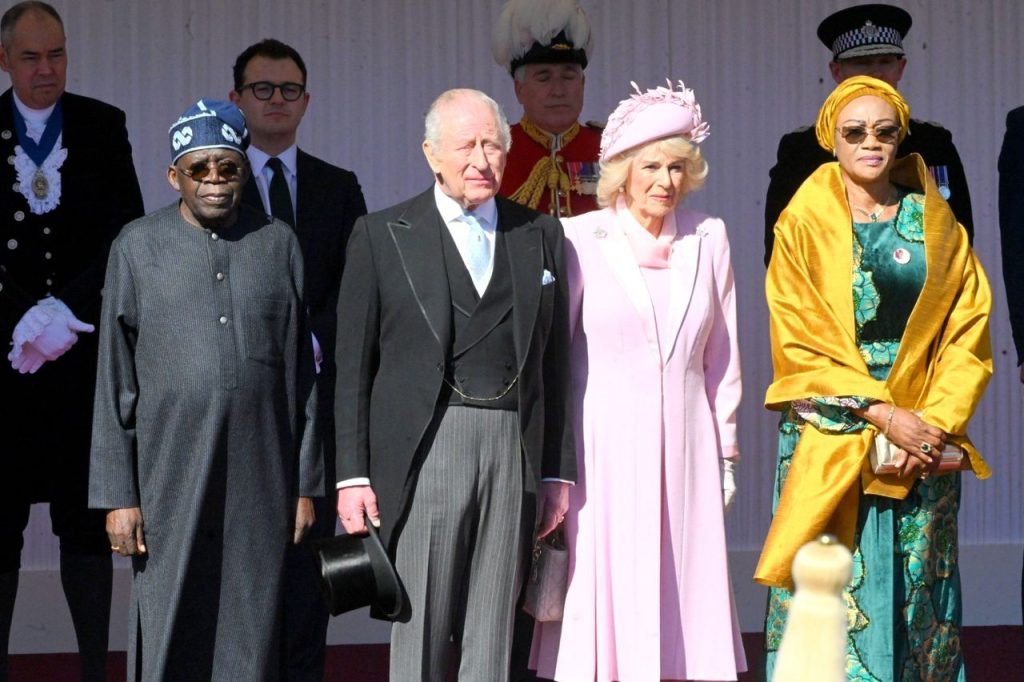
Nigeria’s President Tinubu meets royals in UK state visit

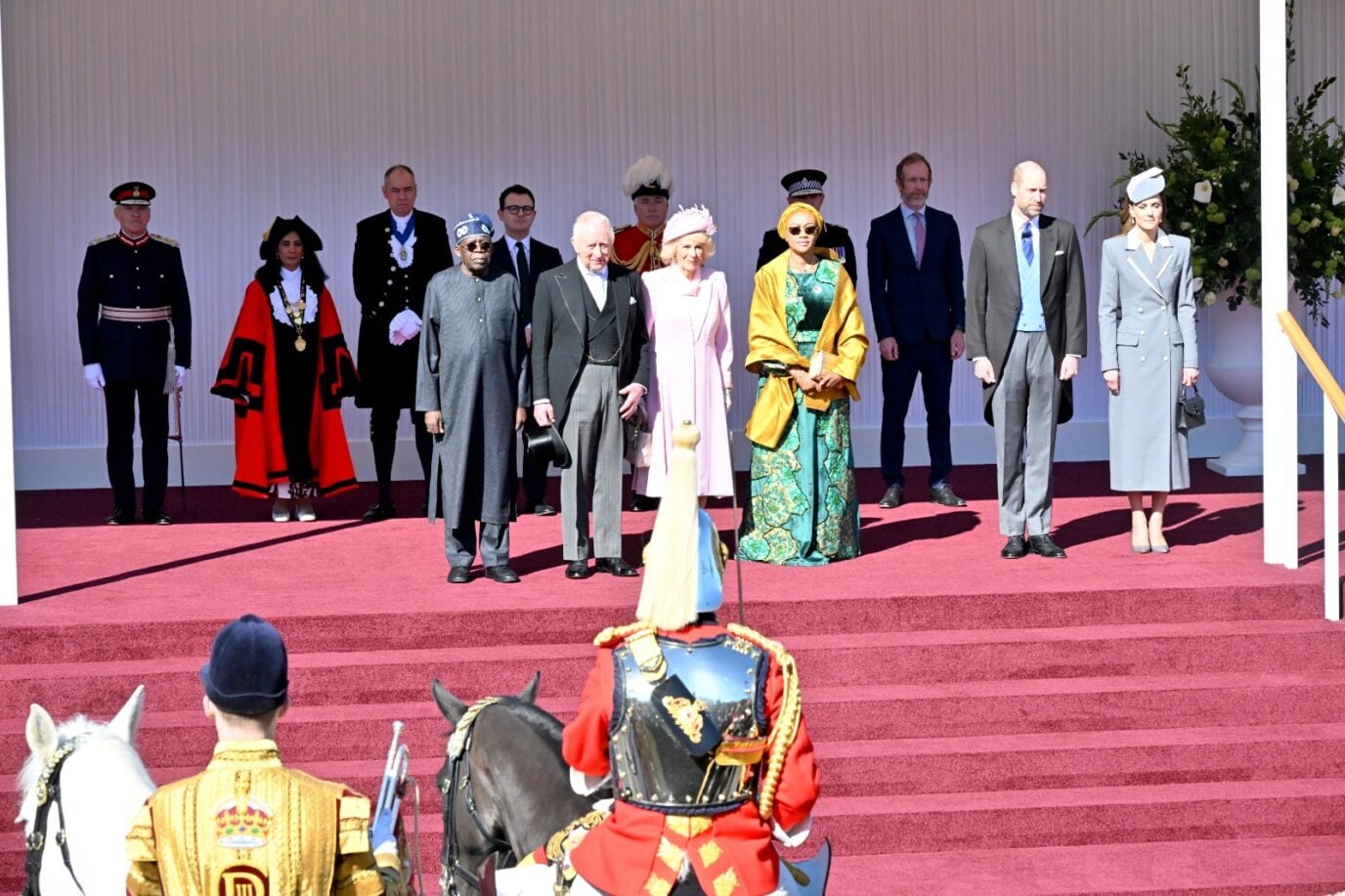
The UK’s King Charles III has welcomed Nigerian President Bola Tinubu at Windsor Castle in the first state visit by the leader of Africa’s most populous nation in nearly four decades.

More than 1,000 soldiers were out in force on Wednesday for the diplomatic show of soft power by the royal family.

With trade between the two countries at a record high, Charles is using the two-day visit to highlight the pair’s deep cultural and commercial links.

Tinubu has made less formal visits to the United Kingdom several times during his tenure, and the two countries remain major partners in trade, aid and defence. London is also home to a large Nigerian diaspora of about 300,000 people.

Nigeria’s presidency said the visit signalled a “renewed chapter” and reflected a shared commitment to “advancing trade and strengthening diplomatic ties”.

King Charles and Queen Camilla greeted the president and his wife in Windsor, west of London, as artillery fired salutes.

Both Nigerian flags and Union Jacks fluttered amid the procession.

The Nigerian president and his wife earlier chatted with heir-to-the-throne Prince William and his wife Catherine, at a hotel in the town.

Calling the visit “historic”, London announced Nigerian companies, including banks, are expanding operations and creating hundreds of jobs in the UK, strengthening it as a global hub for African business.

The party then rode in carriages to the historic Windsor Castle.

Later, the king and queen showed the president and first lady items from the UK’s colonial rule of Nigeria, which existed until 1960. (AlJazeera)