Posted on Leave a comment

Iran to play at least one World Cup game in U.S.

Iran will play at least one of its World Cup matches in the United States though the tournament draw on Friday avoided a group-stage clash between the geopolitical rivals.

The Iranian team, representing a country targeted by U.S. airstrikes in June and whose citizens are subject to a travel ban imposed by President Donald Trump’s administration, will open its World Cup campaign against New Zealand in Seattle or Inglewood, California, on June 15.

Iran’s next two games could be played across the Canadian border in Vancouver or in Inglewood and Seattle. FIFA will confirm the detailed game schedule Saturday.

The United States was drawn to play Australia, Paraguay and a third team to be determined in the European playoffs in March.

Iran’s participation in the tournament, co-hosted by the U.S., Canada and Mexico, has already presented diplomatic challenges.

Last week Iran said it would boycott the draw after several officials including soccer federation president Mehdi Taj and general secretary Hedayat Momebeni were denied U.S. travel visas. The federation later modified its stance saying Iran coach Amir Ghalenoei would attend the event at the Kennedy Center in Washington.

It wasn’t immediately clear whether Ghalenoei was present at Friday’s draw.

Iran was among 12 countries subject to a travel ban ordered by Trump’s administration on June 5. A second World Cup nation, Haiti, also is on it.

Exemptions were promised for teams and support staff traveling for the World Cup, but not for fans.

The Trump administration called Iran a “state sponsor of terrorism” and barred visitors except for those already holding visas or coming special visas issued for minorities facing persecution.

Later in June, Trump ordered a bombardment of Iran by so-called “bunker buster” bombs and cruise missiles targeting underground uranium enrichment plants. Within days he declared a ceasefire in a 12-day war between U.S. ally Israel and Iran.

Iran is an established force in soccer, ranked No. 20 in the world by FIFA and second only to Japan among Asian national teams.

Team Melli, as the squad is popularly known, is preparing to play at its seventh World Cup. Its best known player is forward Mehdi Taremi, who has played for Inter Milan, Porto and now Olympiakos.

Iran’s most problematic diplomatic relations among its future World Cup opponents are with Egypt.

Their diplomatic ties were severed in 1979 after Egypt signed a peace treaty with Israel and remained strained until recent years.

New Zealand’s government condemned the death in September 2022 of 22-year-old Mahsa Amini in the custody of the country’s morality police.

Amini’s death just a few weeks before the last World Cup played in nearby Qatar brought domestic politics into the stadiums where Iran played.

The team refused to sign Iran’s national anthem before its opening game in Doha against England, and there were clashes between fans and pro-government supporters at its second game against Wales.

Many fans displayed the “Woman, Life, Freedom” slogan to protest the government before Iran’s World Cup campaign ended with a 1-0 loss to the U.S. (JapanToday)

Posted on Leave a comment

Springboks retain Rugby Championship crown after beating Argentina 29-27

South Africa retained the Rugby Championship crown for the first time after beating Argentina 29-27 at Twickenham on Saturday.

The title was decided on points difference for the first time, the Springboks’ 57-plus margin eclipsing New Zealand’s eight-plus.

The All Blacks beat Australia 28-14 in Perth hours earlier to put pressure on the Springboks, who clinched the title decider in typically punchy style.

They didn’t lead until the 44th minute, gradually overwhelming the Pumas with the power of their set-piece.

“Not the most perfect game we’ve played but it is the fight we show each and every week,” Springboks captain Siya Kolisi said. “It doesn’t always go the way we want it to go but we are always able to find that second gear. With the bench that we have, they are special.”

Taking advantage of the superior muscle up front, scrumhalf Cobus Reinach — named the player of the match — and hooker Malcolm Marx scored two tries each.

The Pumas weren’t as close to South Africa as the scoreline suggested. They scored two late converted tries but finished with the wooden spoon for the first time since 2022.

Argentina gave up the scheduled home match to relocate to Twickenham for bigger ticket revenue, and the Springboks felt more at home thanks to expatriates filling an impressive crowd of 70,360. They celebrated the Springboks’ sixth title in 30 tournaments and their first back-to-back crowns.

“After the way we started (with the shocking loss to the Wallabies at Ellis Park), you could not have said we would be here now,” Kolisi said. “But the belief we have in ourselves is because of what coach Rassie (Erasmus) has instilled into this team. Since 2018, the mindset created means you don’t feel at any moment that you are going to lose. No matter how it looks.”

It didn’t go to plan at the start on Saturday either.

Center Canan Moodie was yellow-carded in the second minute for head-on-head contact, and moments later Argentina gave right winger Bautista Delguy space and time to bust through Reinach and Ethan Hooker to the try-line.

South Africa’s first scrum tighthead was rewarded with a Sacha Feinberg-Mngomezulu penalty.

World Cup winner Ox Nche gave a torrid time to scrum opposite Francisco Coria Marchetti. He debuted in June against the British and Irish Lions and always appeared off the bench until Joel Sclavi was injured on Friday in the captain’s run. That forced the Pumas to start Coria Marchetti, their 10th change to the starting XV that lost to the Springboks 67-30 in Durban last weekend.

Despite Nche being the only change to the Springboks starting XV, they struggled to click at Twickenham. Feinberg-Mngomezulu, the star in Durban, passed over Cheslin Kolbe’s head in one of 10 handling errors in the half.

Santiago Carreras’ second penalty extended Argentina’s lead to 13-3 then Moodie was lucky not to receive a second yellow card and subsequent red when his deliberate knock-on was only penalized.

But South Africa finished the half strong. Lock Eben Etzebeth was held up over the line by Pumas flyhalf Geronimo Prisciantelli but when No. 8 Jasper Wiese lost control of a pushover try Reinach was too close to the line to be stopped.

The second half started badly for Argentina. Loosehead prop Mayco Vivas was sin-binned for a high tackle, and South Africa drove the subsequent lineout, dishing a 26th test try for Marx.

South Africa finally had the lead and an extra man. RG Snyman took over for Etzebeth, who went to the blood bin, and his pop-up helped Reinach burrow over for his second try and extend the lead to 22-13.

Before the game was an hour old, Marx regained an Argentina lineout tap down from his own throw-in then crashed over for his second try of the match. It also was his 17th in championship history, tying him with Richie McCaw for the most tries by a forward.

When Coria Marchetti injured his right leg, the Pumas finishing props were four-cap Boris Wenger and 20-year-old debutant Tomás Rapetti. They were consoled by Delguy’s second try from a wild pass by Kolbe, and fellow wing Rodrigo Isgro scoring after the hooter from a crossfield kick by Carreras. (JapanToday)

Posted on Leave a comment

2027 Rugby World Cup draw set for Dec 3

The draw for an expanded 2027 Rugby World Cup will take place on December 3, organizers said Wednesday, with host Australia confirmed as kicking off the tournament at Perth Stadium.

Twenty-four teams will be divided into six pools of four, with 52 games across six weeks from October 1 to November 13. A round of 16 will be played for the first time.

The last World Cup in France, won by South Africa, featured 20 teams.

“I’m thrilled to see the tournament draw date revealed,” said World Rugby chairman Brett Robinson. “Expanding the men’s Rugby World Cup to 24 teams is a landmark moment for our sport. It means more nations, more matches, and more opportunities for fans around the world to connect with rugby.”

World Rugby rankings at the end of the November international window will be used to determine which teams head each of the six groups, making every win crucial ahead of the draw.

South Africa are currently ranked one ahead of Ireland, New Zealand, France, England and Argentina, with hosts Australia seventh. Scotland, Fiji and Italy round out the top 10.

The top two from each pool plus the four best third-placed teams will qualify for the knockout phase.

“The introduction of a round of 16 will deliver even more knockout rugby, ensuring every match counts and every team has the chance to make history,” said Robinson.

“Importantly, we’ve been able to achieve this within a streamlined tournament window that protects player welfare while enhancing the spectacle. This is a huge step forward for rugby and a reflection of the game’s global growth.”

Sydney had already been announced to host the final and both semi-finals, along with a third-place playoff and a string of other knockout and pool stage games.

The rest of the schedule is split between Brisbane, Melbourne, Newcastle, Perth, Adelaide and Townsville.

Some 2.5 million tickets will go on sale in February, with one million priced under A$100 (U.S.$66) in a bid to make it the most family-friendly tournament yet. (JapanToday)

Posted on Leave a comment

New Zealand dad shot dead by police after years on the run with children

A father who had been on the run with his three children in New Zealand’s wilderness for nearly four years has been shot dead by police.

Tom Phillips, who disappeared with his children in late 2021, had evaded capture despite a nationwide search and multiple sightings over the years.

The case had gripped the country and remains one of New Zealand’s most enduring mysteries.

Phillips was killed in a shoot-out around 02:30 (14:30 GMT Sunday) on Monday, in which a police officer was seriously injured, authorities said.

Officers were responding to a reported robbery at a commercial property in Piopio, a small town in northern New Zealand, when Phillips and one of his children were spotted riding a quad bike.

Police officers then gave chase before laying road spikes to stop them. The bike hit the spikes and went off road.

When police reached the vehicle they were met with gunfire, Deputy Police Commissioner Jill Rogers told reporters.

The first attending officer at the scene was shot in the head, and remains in a serious condition, police said.

A second patrol unit then engaged Phillips, who was shot and died at the scene. While the body had not been formally identified at the time of the announcement, police were confident it was Phillips.

The other two children were found later in the day at a remote campsite in dense bush. All three children are unharmed, Rogers said.

The child he was with, who has not been identified, had provided “crucial” information that helped them locate Phillips’ two other children later in the day.

It was unclear whether the children had been informed of their father’s death.

Police have notified their mother and Phillips’ parents that the children are safe, though they declined to comment on who will provide ongoing care.

The children’s mother, known only as Cat, told local media outlet RNZ she was “deeply relieved” that “this ordeal has come to an end” after missing her children dearly “every day for nearly four years.” But, she continued: “We are saddened by how events unfolded today.”

Authorities said Phillips had been evading capture since failing to appear in court in 2022.

Before they disappeared, Phillips and his children were living in Marokopa, a small rural town in the region of Waikato. Phillips, believed to be in his late-30s this year, had been described as an experienced hunter and bushman.

Police believe he took his children after losing legal custody of them.

Marokopa is an area surrounded by a very harsh landscape, a sweeping and rough coastline, dense bush and forested terrain with a network of caves spanning many kilometres.

Locals know Phillips as a bushman with survival skills that would have set him up for building shelters and foraging for food in the wilderness.

Still, there were signs that he got desperate for resources. Since 2023, there have been sightings of Phillips and his children at numerous break-ins at hardware and grocery shops.

Last October, a group of teenagers spotted them trekking through the bush and filmed the encounter. In the video, Phillips and the children were wearing camouflaged clothing and each was carrying their own packs.

The teenagers had briefly spoken to one of the children, asking if anyone knew they were there. The child had replied “only you” and kept walking, New Zealand’s 1News reported.

Last year, a warrant was issued for the arrest of Phillips over his suspected involvement in a bank robbery in Te Kuiti, a small town on the North Island.

Police said he had had an accomplice during the alleged incident.

In fact, over the years, many have wondered if Phillips got any help from the tight-knit community in Marokopa, a town where fewer than 100 people lived, and the question remains unanswered.

Phillips’s death comes less than a month after his family directly appealed to him to come home.

In an interview with local news website Stuff, his sister Rozzi said the family had been “ready to help [Phillips] walk through what you need to walk through”.

“I really want to see you and the kids and be part of your lives again,” she said then.

New Zealand’s Prime Minister Chris Luxon has described the turn of events as “sad and absolutely tragic”.

“This is not what anybody wanted to happen today. I think that is a consistent feeling from everybody across New Zealand,” he said in a weekly briefing on Monday.

Other New Zealanders are also concerned about how Phillips’s death would affect his children’s wellbeing.

Marlene McIsaac, a resident in the Waitomo district, says she wished there had been “a happier ending”. “For the kids, you know? The kids will be devastated,” she told 1News. (BBC)

Posted on Leave a comment

Australia to recognise Palestinian statehood; New Zealand may follow

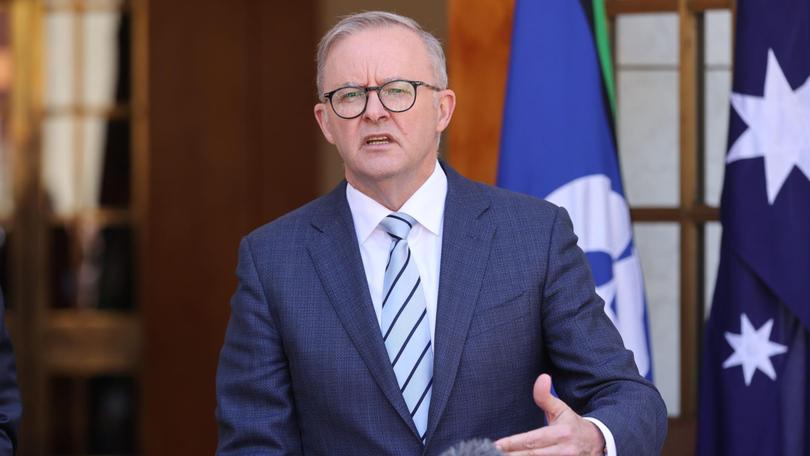
Australia will recognise a Palestinian state in September, Prime Minister Anthony Albanese has announced, drawing condemnation from Israel.

Albanese said on Monday that his government would formally announce the move when the United Nations General Assembly (UNGA) meets in New York.

“A two-state solution is humanity’s best hope to break the cycle of violence in the Middle East and to bring an end to the conflict, suffering and starvation in Gaza,” Albanese said at a news conference in Canberra.

Australia’s announcement comes as Canada, France and the United Kingdom are also preparing to formally recognise Palestine at the meeting next month, joining the vast majority of UN member states that already do so.

Israeli Ambassador to Australia Amir Maimon said recognition of a Palestinian state will do nothing to end the war in Gaza, telling the Australian Broadcasting Corporation (ABC): “We reject the recognition, unilateral recognition.”

Israeli President Isaac Herzog also slammed the Australian announcement as a reward for Hamas for its October 7, 2023, attack on southern Israel, repeating the Israeli government’s stance on all recognition announcements thus far.

This latest recognition comes about a week after hundreds of thousands of Australians marched across the Sydney Harbour Bridge to protest Israel’s war in the Gaza Strip.

Speaking a day after the protest, Australian Minister for Foreign Affairs Penny Wong told ABC that “there is a risk there will be no Palestine left to recognise.”

“In relation to recognition, I’ve said for over a year now, it’s a matter of when, not if,” Wong added.

The opposition Liberal Party criticised the move, saying it put Australia at odds with the United States, its closest ally, and reversed a bipartisan consensus that there should be no recognition while Hamas remains in control of Gaza.

“Despite his words today, the reality is Anthony Albanese has committed Australia to recognising Palestine while hostages remain in tunnels under Gaza and with Hamas still in control of the population of Gaza. Nothing he has said today changes that fact,” Liberal Party leader Sussan Ley said in a statement.

“Recognising a Palestinian state prior to a return of the hostages and defeat of Hamas, as the Government has today, risks delivering Hamas one of its strategic objectives of the horrific terrorism of October 7.”

The Australian Greens, the fourth largest party in parliament, welcomed the move to recognise Palestine but said the announcement did not meet the “overwhelming calls from the Australian public for the government to take material action”.

“Millions of Australians have taken to the streets, including 300,000 last weekend in Sydney alone, calling for sanctions and an end to the arms trade with Israel. The Albanese Government is still ignoring this call,” Senator David Shoebridge, the party’s spokesperson on foreign affairs, said in a statement.

The Australian Palestine Advocacy Network (APAN) also criticised the announcement, describing it as a “political fig leaf, letting Israel’s genocide and apartheid continue unchallenged, and distracting from Australia’s complicity in Israeli war crimes via ongoing weapons and components trade”.

“Palestinian rights are not a gift to be granted by Western states. They are not dependent on negotiation with, or the behaviour or approval of their colonial oppressors,” APAN said in a statement.

According to Albanese, Australia’s decision to recognise Palestinians’ right to their own state will be “predicated on the commitments Australia has received from the Palestinian Authority (PA)”.

These “detailed and significant commitments” include the PA reaffirming it “recognises Israel’s right to exist in peace and security” and committing to “demilitarise and to hold general elections”, Albanese said while announcing the decision.

The PA is a governing body that has overseen parts of the Israeli-occupied West Bank since the mid-1990s.

It has not held parliamentary elections since 2006 and has been criticised by some Palestinians for helping Israel to keep tight control over residents in the occupied West Bank.

Albanese said the commitments secured by Australia were “an opportunity to deliver self-determination for the people of Palestine in a way that isolates Hamas, disarms it and drives it out of the region once and for all”.

Hamas has been in power in the Gaza Strip since 2007 when it fought a brief war against forces loyal to PA President Mahmoud Abbas.

Meanwhile, New Zealand Foreign Minister Winston Peters said on Monday that his country’s cabinet will make a formal decision on Palestinian statehood in September.

“Some of New Zealand’s close partners have opted to recognise a Palestinian state, and some have not,” Peters said in a statement.

“Ultimately, New Zealand has an independent foreign policy, and on this issue, we intend to weigh up the issue carefully and then act according to New Zealand’s principles, values and national interest.”

Peters said that while New Zealand has for some time considered the recognition of a Palestinian state a “matter of when, not if”, the issue is not “straightforward” or “clear-cut”.

“There are a broad range of strongly held views within our Government, Parliament and indeed New Zealand society over the question of recognition of a Palestinian state,” he said.

“It is only right that this complicated issue be approached calmly, cautiously and judiciously. Over the next month, we look forward to canvassing this broad range of views before taking a proposal to Cabinet.”

Of the UN’s 193 member states, 147 already recognise Palestinian statehood, representing three-quarters of the world’s countries and the vast majority of its population.

Under its 1947 plan to partition Palestine, the UNGA said it would grant 45 percent of the land to an Arab state although this never eventuated.

The announcements by Australia and New Zealand on Monday came hours after an Israeli attack killed five Al Jazeera staff members in Gaza City and as Israeli Prime Minister Benjamin Netanyahu continues to threaten a full-scale invasion of the city in the north of the Gaza Strip.

Israel’s war on Gaza has killed at least 61,430 people, according to Gaza’s health authorities.

More than 200 people, including 100 children, have died from starvation under Israel’s punishing siege, according to health authorities. (Aljazeera)