Posted on Leave a comment

US could ask foreign tourists for five-year social media history before entry

Tourists from dozens of countries including the UK could be asked to provide a five-year social media history as a condition of entry to the United States, under a new proposal unveiled by American officials.

The new condition would affect people from dozens of countries who are eligible to visit the US for 90 days without a visa, as long as they have filled out an Electronic System for Travel Authorization (ESTA) form.

Since returning to the White House in January, President Donald Trump has moved to toughen US borders more generally – citing national security as a reason.

Analysts say the new plan could pose an obstacle to potential visitors, or harm their digital rights.

Asked whether the proposal could lead to a steep drop-off in tourism to the US, Trump said he was not concerned.

“No. We’re doing so well,” the president said on Wednesday.

“We just want people to come over here, and safe. We want safety. We want security.

“We want to make sure we’re not letting the wrong people come enter our country.”

The US expects a major influx of foreign tourists next year, as it hosts the men’s football World Cup alongside Canada and Mexico, and for the 2028 Olympics in Los Angeles.

The proposal document was filed by the Department of Homeland Security (DHS) and its component agency Customs and Border Protection (CBP).

It was published in the Federal Register, the official journal of the US government.

The proposal says “the data element will require ESTA applicants to provide their social media from the last 5 years”, without giving further details of which specific information will be required.

The existing ESTA requires a comparatively limited amount of information from travellers, as well as a one-off payment of $40 (£30). It is accessible to citizens of about 40 countries – including the UK, Ireland, France, Australia and Japan – and allows them to visit the US multiple times during a two-year period.

As well as the collection of social media information, the new document proposes the gathering of an applicant’s telephone numbers and email addresses used over the last five and 10 years respectively, and more information about their family members.

The text cites an executive order from Trump in January, titled “Protecting the United States From Foreign Terrorists and Other National Security and Public Safety Threats”.

The new proposal regarding ESTA data collection for tourists invites views from the public for 60 days.

“Nothing has changed on this front for those coming to the United States,” a spokesperson for CBP said in a statement.

“This is not a final rule, it is simply the first step in starting a discussion to have new policy options to keep the American people safe.”

Sophia Cope, of digital rights organisation the Electronic Frontier Foundation, criticised the plan, telling the New York Times it could “exacerbate civil liberties harms”.

Meanwhile, immigration law practice Fragomen suggested there could be practical impacts as applicants could face longer waits for ESTA approvals. (BBC)

Posted on Leave a comment

UK unveils record-breaking bid for 2035 Women’s World Cup

UK football chiefs on Friday unveiled details of their unopposed joint bid to host the Women’s World Cup in 2035, with 22 proposed stadiums listed in the official submission.

The bid team said the 48-nation finals would be the biggest single-sport event ever staged in the UK.

It would be the first World Cup played on British soil since the men’s finals in 1966, which were solely hosted by England.

“With 63 million people living within two hours of a proposed venue, it would be the most accessible tournament ever,” the bid team said in a statement.

Sixteen of the stadiums on the shortlist are in England, including Manchester United’s proposed new 100,000-seater arena, with three in Wales, two in Scotland, and one in Northern Ireland, across 15 cities.

The final number of stadiums is expected to be whittled down to around 16.

A measure of the size of the event is that at the Qatar men’s World Cup in 2022, just eight stadiums were used.

FIFA confirmed later on Friday that the UK bid would be formally ratified at next year’s congress in Vancouver.

The April gathering of football’s global governing body is also set to approve the joint candidature of the United States, Mexico, Costa Rica, and Jamaica to stage the 2031 women’s World Cup.

“Hosting the FIFA Women’s World Cup would be a huge privilege for our four home nations,” the chief executives of the UK football associations  said on Friday.

“If we are successful, the 2035 tournament will be the biggest single-sport event held on UK soil with 4.5 million tickets available for fans.

“We are proud of the growth that we’ve driven in recent years across the women’s and girls’ game, but there is still so much more growth to come, and this event will play a key role in helping us deliver that.”

Manchester United’s existing Old Trafford stadium has been included, but the bid team intend to put the club’s proposed new ground forward for consideration by FIFA once plans are confirmed.

Prime Minister Keir Starmer said that the bid showed the UK’s passion for football.

“The (England) Lionesses’ success has inspired girls across our country, and we’ll build on that momentum by welcoming millions of football fans from around the world to a tournament that will benefit communities and businesses in host cities up and down the UK,” he said.

England’s women’s team have won the past two European Championships and reached the final of the 2023 World Cup.

From 2031, the Women’s World Cup will be contested between 48 teams, up from 32.The next Women’s World Cup will take place in Brazil in 2027. (Guardian)

Posted on Leave a comment

BBC apologises to Trump over Panorama edit but refuses to pay compensation

The BBC has apologised to US President Donald Trump for a Panorama episode that spliced parts of his 6 January 2021 speech together, but rejected his demands for compensation.

The corporation said the edit had given “the mistaken impression that President Trump had made a direct call for violent action” and said it would not show the 2024 programme again.

Lawyers for Trump have threatened to sue the BBC for $1bn (£759m) in damages unless the corporation issues a retraction, apologises and compensates him.

Culture Secretary Lisa Nandy told BBC Breakfast she was confident the corporation was “gripping this with the seriousness that it demands”, adding her role was to ensure “the highest standards are upheld”.

But she also told BBC Radio 4’s Today programme that the BBC’s editorial standards and guidelines were “in some cases not robust enough and in other cases not consistently applied”, adding that there would need to be people “at a very senior level with a journalistic background”.

Political appointments to the corporation’s board would be examined in the BBC’s charter review, she said in response to a question asking if member Sir Robbie Gibb, a former political adviser to Theresa May, had overstepped his remit and weighed into politics.

While this was a matter for the board and its chairman, she said, those appointments “damaged confidence and trust in the BBC’s impartiality”.

Liberal Democrats leader Sir Ed Davey had urged the prime minister on Thursday to “get on the phone to Trump” to put a stop to his lawsuit threat and “defend the impartiality and independence of the BBC”.

The fallout from the scandal led to the resignations of BBC director general Tim Davie and head of news Deborah Turness on Sunday.

BBC News has approached the White House for comment.

The apology comes hours after a second similarly edited clip, broadcast on Newsnight in 2022, was revealed by the Daily Telegraph.

In its Corrections and Clarifications section, published on Thursday evening, the BBC said the Panorama programme had been reviewed after criticism of how Trump’s speech had been edited.

The BBC had been given a deadline of 22:00 GMT (17:00 EST) on Friday to respond.

“We accept that our edit unintentionally created the impression that we were showing a single continuous section of the speech, rather than excerpts from different points in the speech, and that this gave the mistaken impression that President Trump had made a direct call for violent action,” the statement said.

Lawyers for the BBC have written to President Trump’s legal team in response to a letter received on Sunday, a BBC spokesperson said.

“BBC chair Samir Shah has separately sent a personal letter to the White House making clear to President Trump that he and the corporation are sorry for the edit of the president’s speech on 6 January 2021, which featured in the programme,” they said.

They added: “While the BBC sincerely regrets the manner in which the video clip was edited, we strongly disagree there is a basis for a defamation claim.”

In Trump’s speech he said: “We’re going to walk down to the Capitol, and we’re going to cheer on our brave senators and congressmen and women.”

More than 50 minutes later in the speech, he said: “And we fight. We fight like hell.”

In the Panorama programme the clip shows him as saying: “We’re going to walk down to the Capitol… and I’ll be there with you. And we fight. We fight like hell.”

Speaking to Fox News, Trump said his speech had been “butchered” and the way it was presented had “defrauded” viewers.

The BBC received the letter from Trump’s lawyers on Sunday. It demands a “full and fair retraction” of the documentary, an apology, and that the BBC “appropriately compensate President Trump for the harm caused”.

In its letter to Trump’s legal team, the BBC sets out five main arguments for why it does not think it has a case to answer.

First it says the BBC did not have the rights to, and did not, distribute the Panorama episode on its US channels.

When the documentary was available on BBC iPlayer, it was restricted to viewers in the UK.

Secondly, it says the documentary did not cause Trump harm, as he was re-elected shortly after.

Thirdly, it says the clip was not designed to mislead, but just to shorten a long speech, and that the edit was not done with malice.

Fourthly, it says the clip was never meant to be considered in isolation. Rather, it was 12 seconds within an hour-long programme, which also containedlots of voices in support of Trump.

Finally, an opinion on a matter of public concern and political speech is heavily protected under defamation laws in the US.

A BBC insider said that internally, there is a strong belief in the case the corporation has put forward, and in its defence. (BBC)

Posted on Leave a comment

Donald Trump pardons UK billionaire and former Tottenham owner Joe Lewis

Joe Lewis, the British billionaire and former owner of Tottenham Hotspur FC, has been pardoned by Donald Trump over a 2024 conviction for his part in a “brazen” insider trading scheme.

Lewis, 88, was fined $5m (£3.8m) and given three years probation by a New York judge last year but was spared jail time after pleading guilty to involvement in a plan that prosecutors said was designed to enrich his friends, lovers and employees.

Lawyers for the east London-born investor initially accused prosecutors of making an “egregious” mistake by charging him with multiple counts of securities fraud and conspiracy.

But Lewis, who also owns the largest stake in one of the UK’s biggest operators of pubs, bars and restaurants, Mitchells & Butlers, later changed his plea to guilty after prosecutors agreed to a non-custodial sentence.

Lewis retained his right to change his plea again if a custodial sentence were imposed.

In a statement to the court at his sentencing last year, he said: “I made a terrible mistake. I broke the law. I am ashamed, sorry, and I hold myself accountable.”

The judge, Jessica Clarke, said Lewis’s circumstances did not warrant incarceration and imposed a $44m fine on his company, Broad Bay, on top of his $5m personal fine and probation.

But on Thursday, the Daily Telegraph was first to report that Trump planned to pardon Lewis entirely. The Guardian understands that the fine will not be repaid to Lewis or his company.

The White House later confirmed the pardon and said Lewis requested it so that he could receive medical treatment and visit his grandchildren and great-grandchildren in the US, the Associated Press reported.

Lewis said: “I am pleased all of this is now behind me, and I can enjoy retirement and watch as my family and extended family continue to build our businesses based on the quality and pursuit of excellence that has become our trademark.”

A source close to the family said: “Joe and the Lewis family are extremely grateful for this pardon and would like to thank President Trump for taking this action.

“Over his long business career, Joe has been a visionary, creating businesses across the world, which multiple generations of his family are now taking forward. There is so much more to the Joe Lewis story than this one event.”

Lewis already transferred his majority ownership interest in Tottenham to his family via a trust in 2022, the year before he was charged.

The north London football club is now overseen by Lewis’s daughter Vivienne, his son Charles, and Vivienne’s son-in-law Nick Beucher.

Details of the insider trading scheme were documented in a 29-page dossier published by the US attorney for the southern district of New York in 2023.

Prosecutors accused Lewis of passing on share tips based on inside information to his employees, including his private jet pilot and his then 33-year-old girlfriend, Carolyn Carter, to allow them to make a profit from stock trading. (Guardian)

Posted on Leave a comment

‘We’ve got to fight for our journalism,’ BBC director general tells staff

BBC director general Tim Davie has told staff that “we’ve got to fight for our journalism” after Donald Trump threatened to sue the corporation for $1bn (£760m) over a Panorama programme.

It comes after a leaked internal BBC memo, published by the Telegraph last Monday, said the film had misled viewers by splicing together parts of the US president’s speech on 6 January 2021 and made it appear as if he had explicitly encouraged the Capitol Hill riot.

“We have made some mistakes that have cost us, but we need to fight,” Davie, who resigned on Sunday alongside BBC News CEO Deborah Turness after mounting pressure over the memo, said on Tuesday.

“This narrative will not just be given by our enemies, it’s our narrative,” he added.

He said the BBC went through “difficult times… but it just does good work, and that speaks louder than any newspaper, any weaponisation”.

Trump threatened to take legal action if the BBC did not make a “full and fair retraction” of the programme by Friday. The corporation has said it will reply in due course.

BBC chair Samir Shah said in a letter to the Culture, Media and Sport Committee (CMS) on Monday that the corporation would like to apologise for the edit, which he called an “error of judgement” which gave the impression of a “direct call for violent action”.

During Tuesday’s staff call, where Shah also spoke, neither Davie nor the BBC chair mentioned Trump’s legal threat.

Davie said the fact that “there was an editorial breach, and I think some responsibility had to be taken” was one of the reasons he was quitting.

He also cited the upcoming charter renewal – saying he wanted to give his successor a “runway into that” – and the personal pressures of the “relentless” role.

Shah also defended the fact that the corporation did not respond to the memo’s publication for seven days.

“We had a deadline, that was Monday… and we met that,” he said, referring to the deadline given by the CMS, and stressed that he “needed to be careful and get it right”.

No timeline was given for selecting Davie’s replacement, but the chair said the corporation was in “succession mode”.

The BBC’s culture editor Katie Razzall said there was “some disquiet” from BBC staff over the Q&A session, which was moderated by a member of the BBC’s communications team, not by a journalist.

Speaking in the Commons on Tuesday, Culture Secretary Lisa Nandy defended the BBC from “sustained attacks” by politicians who she said were going beyond criticising its editorial failures.

She said the “concerns are serious” but there was a “fundamental difference from raising serious concerns about editorial failings and members of this house launching a sustained attack on the institution itself.”

She added that the BBC was “essential to this country” and wasn”not just a broadcaster, it’s a national institution” – “It is a light on the hill here and around the world.”

Nandy confirmed that the once-a-decade process of reviewing the corporation’s charter would begin shortly and that it would ensure a BBC which is “fiercely independent” and “genuinely accountable” to the public.

At its meeting on Tuesday, the CMS committee agreed to hold an evidence session with members of the BBC’s editorial guidelines and standards committee in coming weeks, including Shah and BBC board members Robbie Gibb and Caroline Thomson.

Shadow culture secretary Nigel Huddleston said the BBC “needs saving from itself” and that whilst “we all want the BBC to succeed” there needed to be “institutional change…not just a few people at the top”.

Downing Street has refused to comment on Trump’s legal threat, explaining that this was a “matter for the BBC”.

“It is clearly not for the government to comment on any ongoing legal matters,” the prime minister’s official spokesperson said.

“Our position is clear, the BBC is independent and it’s for the cooperation to respond to questions about their editorial decisions.”

Asked whether there were concerns the issue would impact Keir Starmer’s relationship with Trump, the spokesperson said the two had a “very strong” relationship.

The spokesperson would not be drawn on whether the BBC should apologise directly to the president.

Trump’s legal team wrote to the BBC on Sunday threatening to take action over the “false, defamatory, disparaging, misleading, and inflammatory statements” in the Panorama programme.

The BBC said the programme, which was first broadcast on 24 October 2024, was not available to watch on iPlayer because it was “over a year old”. (BBC)

Posted on Leave a comment

Transgender woman jailed for deceiving man about gender in UK

A British court has sentenced a transgender woman, Ciara Watkin, to 21 months in prison for deceiving a man into sexual activity by falsely claiming to be a biological female.

According to a BBC report on Friday, the victim told Durham Crown Court he would not have consented to the sexual encounter had he known Watkin was biologically male.

The court heard that Watkin, 21, from Thornaby in Stockton-on-Tees, was found guilty of sexual assault after jurors rejected her claim that the man “would have realised” her gender identity.

Recorder Peter Makepeace KC said he was “certain” the victim “fully believed from start to finish” that Watkin was a woman due to her “lies and deception.”

Watkin, who was born male and had used the name Ciara since childhood, had not undergone any medical transition or surgery, the BBC reported.

Both Watkin and the victim were 18 when they met on Snapchat, where she used a female cartoon character as her profile picture. They later met in person, leading to sexual contact. Prosecutor Paul Reid told the court that Watkin even claimed to be menstruating to stop the man from touching her below the waist.

When Watkin later confessed to being biologically male, the man said he was “physically sick” and immediately reported the matter to the police.

Transgender woman jailed for deceiving man about gender in UK

A British court has sentenced a transgender woman, Ciara Watkin, to 21 months in prison for deceiving a man into sexual activity by falsely claiming to be a biological female.

According to a BBC report on Friday, the victim told Durham Crown Court he would not have consented to the sexual encounter had he known Watkin was biologically male.

The court heard that Watkin, 21, from Thornaby in Stockton-on-Tees, was found guilty of sexual assault after jurors rejected her claim that the man “would have realised” her gender identity.

Recorder Peter Makepeace KC said he was “certain” the victim “fully believed from start to finish” that Watkin was a woman due to her “lies and deception.”

Watkin, who was born male and had used the name Ciara since childhood, had not undergone any medical transition or surgery, the BBC reported.

Both Watkin and the victim were 18 when they met on Snapchat, where she used a female cartoon character as her profile picture. They later met in person, leading to sexual contact. Prosecutor Paul Reid told the court that Watkin even claimed to be menstruating to stop the man from touching her below the waist.

When Watkin later confessed to being biologically male, the man said he was “physically sick” and immediately reported the matter to the police.

“He said he was shocked and upset about being deceived, adding that he felt ashamed, embarrassed, and had been ridiculed online due to Watkin’s actions and deception,” the report stated.

The victim, who described himself as heterosexual, told the court he felt “part of his masculinity was taken away.”

Defence counsel Victoria Lamballe argued that Watkin’s actions were not “predatory or sadistic” but stemmed from “shame and a deep sense of discomfort” with her own body.

She said Watkin, who has been diagnosed with gender dysphoria, identified as female from primary school and had endured years of bullying.

“It is hardly surprising that Watkin built up a façade and presented almost as a caricature of herself to mask the inner turmoil she feels at having been born into the wrong body,” Lamballe said, adding that Watkin “simply wanted to be loved.”

However, Recorder Makepeace ruled that the victim was “totally deceived,” saying Watkin had lied to “get away” with her deception and was aware the man would not have consented if he knew her biological sex.

The judge also criticised Watkin’s attitude during the trial, describing her as “flippant, disinterested, and bored,” showing “not a shred of remorse.” (Punch)

Posted on Leave a comment

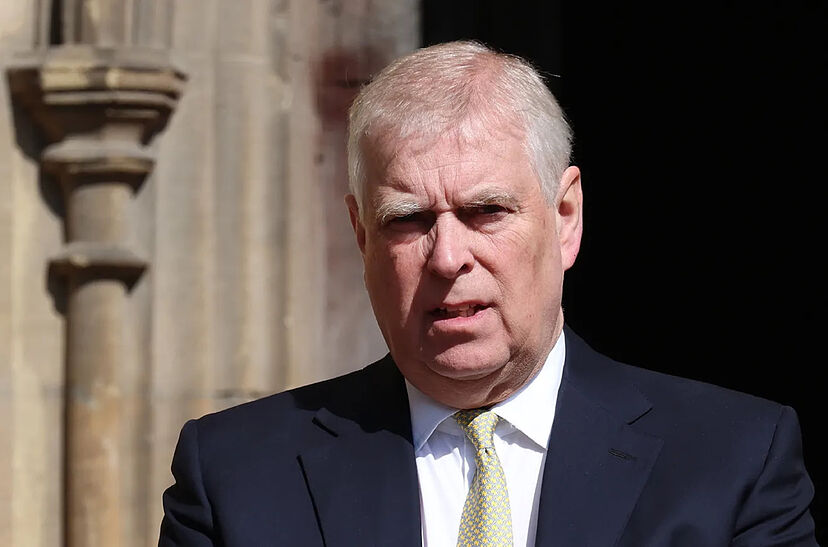
UK’s Prince Andrew gives up royal title

The UK’s Prince Andrew Friday renounced his title of Duke of York under pressure from his brother King Charles, amid further revelations about his ties to US sex offender Jeffrey Epstein.

“I will… no longer use my title or the honours which have been conferred upon me,” Andrew, 65, said in a bombshell announcement.

He said his decision came after discussions with the head of state, King Charles III.

“I have decided, as I always have, to put my duty to my family and country first,” Andrew said in a statement, sent out by Buckingham Palace.

He again denied all allegations of wrongdoing, but said: “We have concluded the continued accusations about me distract from the work of His Majesty and the Royal Family.”

Andrew, who stepped back from public life in 2019 amid the Epstein scandal, will remain a prince, as he is the second son of the late queen Elizabeth II.

But he will no longer hold the title of Duke of York that she had conferred on him.

UK media reported that he would also give up membership of the prestigious Order of the Garter, the most senior knighthood in the British honours system which dates back to 1348.

Andrew’s ex-wife Sarah Ferguson will also no longer use the title of Duchess of York, although his daughters Beatrice and Eugenie remain princesses and it is thought that Friday’s move will not affect their status.

The disgraced royal has become a source of deep embarrassment for his brother Charles, following a devastating 2019 TV interview in which Andrew defended his friendship with the late billionaire paedophile Epstein.

In the interview, he vowed he had cut ties in 2010 with Epstein, who was disgraced after an American woman, Virginia Giuffre, accused him of using her as a sex slave.

But in a reported exchange which emerged in UK media this week, Andrew told the convicted sex offender in 2011 that they were “in this together” when a photo of the prince with his arm around Giuffre was published.

But he added that the two would “play together soon”.

Andrew was stripped of his military titles in 2022 and shuffled off into retirement after Giuffre accused him of sexually assaulting her when she was 17.

New allegations emerged this week in Giuffre’s posthumous memoir in which she wrote that Andrew had behaved as if having sex with her was his “birthright”. (Vanguard)

Posted on Leave a comment

The next James Bond will be ‘an unknown’ British actor, according to a report

Director Denis Villeneuve is on the hunt for a potentially unknown actor to play James Bond next year, according to a new report.

On Wednesday, Sept. 24, Deadline reported that Dune filmmaker Villeneuve, 57, will begin a casting search for the next 007 after he finalizes production on Dune: Part Three with Timothée Chalamet. The outlet reported that Villeneuve and the producers behind the next iteration of the Bond franchise are looking for a “fresh face” to portray the iconic British spy, citing sources.

As Deadline reported, the next Bond will be male and portrayed by an actor from the United Kingdom, ruling out any recent rumors that American actors have been in consideration for the part. Its sources said Villeneueve’s approach is to cast “an unknown,” potentially in his late 20s or early 30s, which remains in line with what the series’ former producer Barbara Broccoli said as recently as November 2024, before she exited the franchise and handed full control over to Amazon MGM Studios in February.

“Whoever it is, has to look like he could kill you with his bare hands in a trice. From the moment you see him, that has to be readily apparent,” a source told Deadline. The outlet also reported that screenwriter Steven Knight, who is writing the next Bond movie, may be approaching the story by going back to Bond’s origins as a British naval officer before his time at MI6, though the outlet noted that the script is still being written. 

“Every name you’ve heard of, and many you’ve never heard of,” one source told the outlet. “We’ve been flooded. But understand that the casting process has not begun and it won’t until Denis finishes the Dune movie.” 

Villeneuve was announced as the next Bond director back in June; the filmmaker described the franchise as “sacred territory” in a statement at the time. “I intend to honor the tradition and open the path for many new missions to come. This is a massive responsibility, but also, incredibly exciting for me and a huge honor,” he added, in part.

Screenwriter Knight, who is best known for creating the British crime series Peaky Blinders, said in an August BBC Radio interview that he intends to “produce something that’s the same but different and better and stronger and bolder” with the next movie’s script. Knight, 65, said that casting for the lead part remains a “very good question and one I can’t give you the answer to” at that time.

Deadline reported that the next Bond movie currently plans to release in 2028 and film in 2027. Dune: Part Three, Villeneuve’s next movie, is expected to hit theaters Dec. 18, 2026. (People)

Posted on Leave a comment

France among six more countries to formally recognise Palestinian statehood

The leaders of six countries, including France, have moved to recognise Palestinian statehood at a high-level summit ahead of the annual United Nations General Assembly (UNGA) meeting in New York.

Alongside France, which co-convened the meeting with Saudi Arabia on Monday in New York, Andorra, Belgium, Luxembourg, Malta and Monaco said they were recognising a Palestinian state.

Leaders from Australia, Canada, Portugal and the United Kingdom, which formally made the move to recognise Palestine a day earlier, also spoke at the meeting.

“We have gathered here because the time has come,” Emmanuel Macron said at the summit convened to revive the long-delayed two-state solution to end the Israel-Palestine conflict.

“It falls on us, this responsibility, to do everything in our power to preserve the possibility of a two-state solution,” Macron said.

“Today, I declare that France recognises the state of Palestine,” he said.

The additional countries recognising Palestine now join some 147 of the 193 UN member states that had already formally recognised Palestinian statehood as of April this year.

With more than 80 percent of the international community now recognising the state of Palestine, diplomatic pressure has ramped up on Israel as it continues its genocidal war on Gaza, where more than 65,300 Palestinians have been killed and the has been enclave turned into rubble.

Spain, Norway and Ireland recognised Palestinian statehood last year, with Madrid also imposing sanctions on Israel for its war on Gaza.

Spanish Prime Minister Pedro Sanchez told the summit on Monday that a two-state solution was not possible “when the population of one of those two states is the victim of a genocide”.

“The Palestinian people are being annihilated, [so] in the name of reason, in the name of international law and in the name of human dignity, we have to stop this slaughter,” Sanchez said.

Macron, in his speech to the summit, also outlined a framework for the creation of a “renewed Palestinian Authority”. The post-war framework envisages an International Stabilisation Force (ISF) that would assist in preparing the Palestinian Authority (PA) to take over governance in Gaza.

PA President Mahmoud Abbas commended the countries that had recognised Palestine. He made his statement to the conference by video because he was denied a visa by the administration of US President Donald Trump to attend the UNGA this week.

“We call on those that have not yet done so to do so to follow suit”, Abbas said, adding that the PA also demanded “support for Palestine’s full membership in the United Nations”.

Israel and the US, which are becoming increasingly isolated internationally on the issue, boycotted the summit, with Israel’s UN ambassador, Danny Danon, describing the event as a “circus”.

Although the vast majority of UN member states now recognise Palestinian statehood, new UN member states must have the support of the UN Security Council, where the US has used its veto to block Palestine from becoming a full UN member state.

Speaking at the summit, UN Secretary-General Antonio Guterres reiterated his support for the two-state solution, framing it as the only viable path towards peace after years of failed negotiations and ongoing violence.

Guterres said that statehood for Palestinians “is a right, not a reward”, rejecting US and Israeli claims that it was a reward for Hamas.

Saudi Arabia’s foreign minister, Prince Faisal bin Farhan Al Saud, thanked Macron and the UN chief for their efforts towards a two-state solution, which he said is “the only way to achieve just and lasting peace”.

He said the conference comes at a time when “the Israeli occupation authorities continue their aggression and their brutal crimes” against Palestinians in Gaza.

Israel also continues its “violations in the West Bank, and its repeated attacks on Arab and Muslim countries, with the most recent attack on Qatar”, he said.

“These actions underline Israel’s insistence on continuing aggressive practices that threaten regional and international peace and stability and undermine efforts of peace in the region,” he added. (AlJazeera)

Posted on Leave a comment

Trump says he will designate anti-fascist ‘Antifa’ as a “terrorist organization”

US President Donald Trump early Thursday said he would designate “Antifa” – a shorthand term for “anti-fascist” used by Trump allies to describe diffuse left-wing groups – as “a major terrorist organization”.

Trump, who is on a state visit to the United Kingdom, made the announcement in a social media post, calling Antifa a “SICK, DANGEROUS, RADICAL LEFT DISASTER”. He also said he will be “strongly recommending” that funders of antifa be investigated. 

Trump and his supporters have, without evidence, ascribed blame to Antifa for various actions Trump dislikes, from violence against police to the US Capitol riot on January 6, 2021.

It’s unclear how the administration would label what is effectively a decentralized ideology as a terrorist organization, and the White House on Wednesday did not immediately offer details.

Trump’s previous FBI director, Christopher Wray, said in testimony in 2020 that Antifa is an ideology, not an organization, and lacks the hierarchical structure that would usually allow it to be designated as a terror group by the federal government.

While federal law enforcement includes combating domestic terrorism under its purview, the United States does not have a list of designated domestic terrorist organizations.

Senior White House official Stephen Miller has vowed the administration would dismantle an alleged “vast domestic terror movement” that he linked to the killing of right-wing activist Charlie Kirk. The political leanings of the suspect in Kirk’s death remain unclear. 

After Trump’s post, Senator Bill Cassidy, R-La., praised the announcement, saying: “Antifa seized upon a movement of legitimate grievances to promote violence and anarchy, working against justice for all. The President is right to recognize the destructive role of Antifa by designating them domestic terrorists.”

Cassidy and Senator Ted Cruz, R-Texas, introduced a July 2019 resolution in the Senate to condemn “Antifa” and designate it a domestic terror organization. (France24)