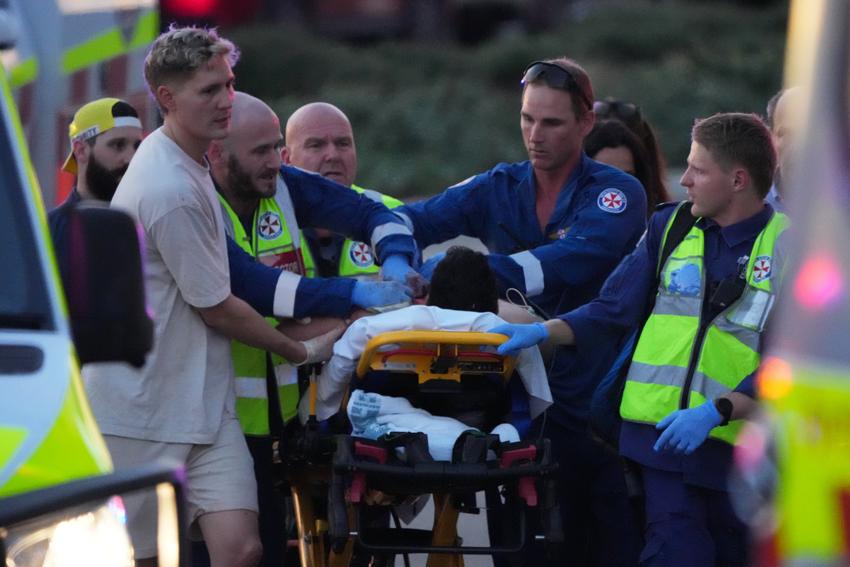
At least 12 people were killed and 29 wounded when gunmen fired on a Jewish holiday event at Sydney’s Bondi Beach on Sunday in what Australian police and officials described as a terrorist attack.
One suspected gunman was killed and another was in a critical condition, New South Wales Police Commissioner Mal Lanyon told a press conference. At least 29 people injured, including two police officers, were taken to hospital, he said.
Police were investigating whether a third gunman was involved in the shooting, and a bomb-disposal unit was working on several suspected improvised explosive devices in cars parked near the beach, Lanyon said.
Mike Burgess, a top Australian intelligence official, said one of the suspected attackers was known to authorities but had not been deemed an immediate threat.
Sunday’s shootings were the most serious of a string of antisemitic attacks on synagogues, buildings and cars in Australia since the beginning of Israel’s war in Gaza in October 2023.
Mass shootings are rare in Australia, one of the world’s safest countries. Sunday’s attack was the worst such incident in the country since 1996, when a gunman killed 35 people at a tourist site in the southern state of Tasmania.
Prime Minister Anthony Albanese convened a meeting of the country’s national security council and condemned the attack, saying the evil that was unleashed was “beyond comprehension”.
“This is a targeted attack on Jewish Australians on the first day of Hanukkah, which should be a day of joy, a celebration of faith,” he said. “At this dark moment for our nation, our police and security agencies are working to determine anyone associated with this outrage.”
Witnesses said the shooting at the famed beach on a hot summer’s evening lasted about 10 minutes, sending hundreds of people scattering along the sand and into nearby streets and parks. Police said around 1,000 people had attended the Hanukkah event alone.
“I was just getting ready to go home, and I was packing my bag, was ready to catch my bus, and then I started hearing the shots,” said Bondi Junction resident Marcos Carvalho, 38.
“We all panicked and started running as well. So we left everything behind. We just ran through the hill,” he said. “I must have heard, I don’t know, maybe, like, 40, 50 shots.”
Israeli President Isaac Herzog said Jewish people who had gone to light the first candle of the Hanukkah holiday on the beach had been attacked by “vile terrorists”.
Israeli Foreign Minister Gideon Saar said he was appalled by the shooting and that Australia’s government must “come to its senses” after countless warnings.
“These are the results of the antisemitic rampage in the streets of Australia over the past two years, with the antisemitic and inciting calls of ‘Globalise the Intifada’ that were realized today.”
One of the world’s most famous beaches, Bondi is typically crowded with locals and tourists.
“If we were targeted deliberately in this way, it’s something of a scale that none of us could have ever fathomed. It’s a horrific thing,” Alex Ryvchin, co-chief executive of the Executive Council of Australian Jewry, told Sky News, adding his media adviser had been wounded in the attack. (JapanToday)
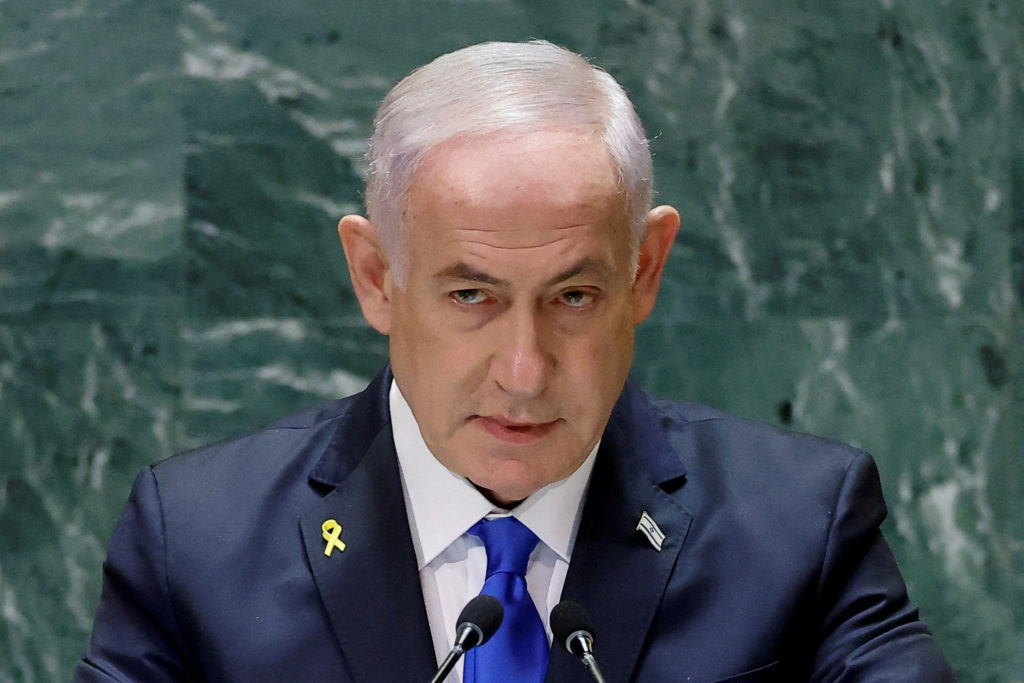
Israeli Prime Minister Benjamin Netanyahu said Sunday that Israel and Hamas are “very shortly expected to move into the second phase of the ceasefire,” after Hamas returns the remains of the last hostage held in Gaza.
Netanyahu spoke during a news conference with visiting German Chancellor Friedrich Merz and stressed that the second phase, which addresses the disarming of Hamas and the withdrawal of Israeli troops from Gaza, could begin as soon as the end of the month.
Hamas has yet to hand over the remains of Ran Gvili, a 24-year-old police officer who was killed in the Hamas-led Oct. 7, 2023, attack that sparked the war. His body was taken to Gaza.
The ceasefire’s second stage also includes the deployment of an international force to secure Gaza and forming a temporary Palestinian government to run day-to-day affairs under the supervision of an international board led by U.S. President Donald Trump.
A senior Hamas official on Sunday told The Associated Press the group is ready to discuss “freezing or storing or laying down” its weapons as part of the ceasefire in a possible approach to one of the most difficult issues ahead.
Netanyahu said few people believed the ceasefire’s first stage could be achieved, and the second phase is just as challenging.
“As I mentioned to the chancellor, there’s a third phase, and that is to deradicalize Gaza, something that also people believed was impossible. But it was done in Germany, it was done in Japan, it was done in the Gulf States. It can be done in Gaza, too, but of course Hamas has to be dismantled,” he said.
The return of Gvili’s remains — and Israel’s return of 15 bodies of Palestinians in exchange — would complete the first phase of Trump’s 20-point ceasefire plan.
Hamas says it has not been able to reach all remains because they are buried under rubble left by Israel’s two-year offensive in Gaza. Israel has accused the militants of stalling and threatened to resume military operations or withhold humanitarian aid if all remains are not returned.
A group of families of hostages said in a statement that “we cannot advance to the next phase before Ran Gvili returns home.”
Meanwhile, Israeli military Chief of Staff Lt. Gen. Eyal Zamir on Sunday called the so-called Yellow Line that divides the Israeli-controlled majority of Gaza from the rest of the territory a “new border.”
“We have operational control over extensive parts of the Gaza Strip and we will remain on those defense lines,” Zamir said. “The Yellow Line is a new border line, serving as a forward defensive line for our communities and a line of operational activity.”
Merz said Germany, one of Israel’s closest allies, is assisting with the implementation of the second phase by sending officers and diplomats to a U.S.-led civilian and military coordination center in southern Israel, and by sending humanitarian aid to Gaza.
The chancellor also said Germany still believes that a two-state-solution is the best possible option but that “the German federal government remains of the opinion that recognition of a Palestinian state can only come at the end of such a process, not at the beginning.”
The U.S.-drafted plan for Gaza leaves the door open to Palestinian independence. Netanyahu has long asserted that creating a Palestinian state would reward Hamas and eventually lead to an even larger Hamas-run state on Israel’s borders.
Netanyahu also said that while he would like to visit Germany, he hasn’t planned a diplomatic trip because he is concerned about an arrest warrant issued by the International Criminal Court, the U.N.’s top war crimes court, last year in connection with the war in Gaza.
Merz said there are currently no plans for a visit but he may invite Netanyahu in the future. He added that he is not aware of future sanctions against Israel from the European Union nor any plans to renew German bans on military exports to Israel.
Germany had a temporary ban on exporting military equipment to Israel, which was lifted after the ceasefire began on Oct. 10.
The Israeli military said it killed a militant who approached its troops across the Yellow Line.
Gaza’s Health Ministry says Israeli forces have killed more than 370 Palestinians since the start of the ceasefire, and that the bodies of six people killed in attacks had been brought to local hospitals over the past 24 hours.
In the original Hamas-led attack in 2023, the militants killed around 1,200 people and took more than 250 others hostage. Almost all the hostages or their remains have been returned in ceasefires or other deals.
Israel’s offensive in Gaza has killed at least 70,360 Palestinians, according to Gaza’s Health Ministry, which operates under the Hamas-run government. The ministry does not differentiate between civilians and combatants, but says that nearly half the dead have been women and children. The ministry is part of Gaza’s Hamas government and its numbers are considered reliable by the U.N. and other international bodies. (JapanToday)
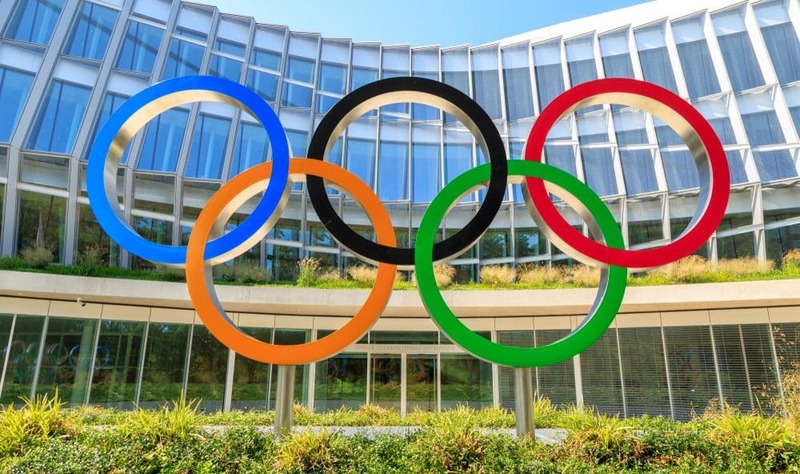
The International Olympic Committee said Wednesday it will recommend no international sporting events be held in Indonesia after the country barred Israeli athletes from the gymnastics world championships in Jakarta.
The governing body also said it was ceasing any discussions with Indonesia about hosting future Olympics.
An Indonesian government official declared earlier this month that Israeli athletes would be denied visas to participate in the championships, which started Oct. 19. Israel’s team included 2020 Olympic gold medalist and defending world champion Artem Dolgopyat in the men’s floor exercise.
“These actions deprive athletes of their right to compete peacefully and prevent the Olympic movement from showing the power of sport,” the IOC executive board said in a statement.
Indonesia is the world’s most populous Muslim-majority nation and has long been a staunch supporter of Palestinians. The scheduled participation of Israeli athletes had sparked intense opposition within the country.
The IOC executive board met remotely this week to discuss the situation in Indonesia and also the “recurrent global issue regarding athletes’ access to international competitions.”
The IOC said “all eligible athletes, teams and sports officials must be able to take part in international sports competitions and events without any form of discrimination by the host country.” It added that the fundamental principles that govern the Olympic movement include “non-discrimination, autonomy and political neutrality.”
It said it was ceasing dialogue with Indonesia over hosting the Olympic Games, Youth Olympic Games, Olympic events and conferences until the government gave “adequate guarantees” that all participants would be granted access to the country regardless of nationality.
In addition, it said it would recommend international federations do not stage tournaments, events or meetings in Indonesia until those guarantees were given.
The Indonesian Olympic committee has been invited to IOC headquarters in Lausanne, Switzerland to discuss the issue. (JapanToday)
Israeli Prime Minister Benjamin Netanyahu warned on Saturday that the war in Gaza wouldn’t be over until Hamas was disarmed and the Palestinian territory demilitarised.
His declaration came as Hamas’s armed wing, the Ezzedine Al-Qassam Brigades, said it would hand over the remains of two further hostages on Saturday night.
The Israeli military said a Red Cross team was en route to receive “several” bodies just before 11:00pm (2000 GMT).
The issue of the dead hostages still in Gaza has become a sticking point in the implementation of the first phase of the ceasefire, with Israel linking the reopening of the key Rafah crossing between the territory and Egypt to the issue.
Netanyahu cautioned, however, that completing the ceasefire’s second phase was essential to ending the war, saying late on Saturday that “Phase B also involves the disarming of Hamas — or more precisely, the demilitarisation of the Gaza Strip, following the stripping of Hamas of its weapons”.
“When that is successfully completed — hopefully in an easy way, but if not, in a hard way — then the war will end,” he added in an appearance on right-wing Israeli Channel 14.
The group has so far resisted the idea and since the pause in fighting has moved to reassert its control over the Gaza Strip.
Under the ceasefire deal brokered by US President Donald Trump, Hamas has so far released all 20 living hostages, along with the remains of nine Israelis and one Nepalese.
The most recent handover was on Friday night, that of the body identified by Israel as Eliyahu Margalit, who died aged 75 in Hamas’s October 7, 2023 attack.
In exchange, Israel has released nearly 2,000 Palestinian prisoners and 135 other bodies of Palestinians since the truce came into effect on October 10.
Hamas has said it needs time and technical assistance to recover the remaining bodies, which it says are buried under Gaza’s rubble.
The two bodies to be returned on Saturday “were recovered earlier today” the al-Qassam Brigades said on Telegram.
Netanyahu on Saturday linked the reopening of the vital Rafah crossing to Egypt with Hamas returning all the bodies of hostages still in Gaza.
The Palestinian mission in Cairo announced that the crossing could open as early as Monday, though only for Gazans living in Egypt who wished to return to the territory.
Shortly after, however, Netanyahu’s office said he had “directed that the Rafah crossing remain closed until further notice”.
“Its reopening will be considered based on how Hamas fulfils its part in returning the hostages and the bodies of the deceased, and in implementing the agreed-upon framework,” it said, referring to the week-old ceasefire deal.
Further delays to the reopening could complicate the task facing Tom Fletcher, the UN head of humanitarian relief, who was in northern Gaza on Saturday.
“I drove through here seven to eight months ago when most of these buildings were still standing and, to see the devastation — this is a vast part of the city, just a wasteland — and it’s absolutely devastating to see,” he told AFP.
Fletcher said the task ahead for the UN and aid agencies was a “massive, massive job”.
He said he had met residents returning to destroyed homes who were trying to dig latrines in the ruins.
“They’re telling me most of all they want dignity,” he said.
“We have a massive 60-day plan now to surge in food, get a million meals out there a day, start to rebuild the health sector, bring in tents for the winter, get hundreds of thousands of kids back into school.”
While the Rafah crossing has yet to reopen, just over a week since the brokering of the truce, hundreds of trucks are rolling in each day via Israeli checkpoints and aid is being distributed.
According to figures supplied to mediators by the Israeli military’s civil affairs agency and released by the UN humanitarian office, on Thursday some 950 trucks carrying aid and commercial supplies crossed into Gaza from Israel.
Some violence has persisted despite the ceasefire.
Gaza’s civil defence agency, which operates under Hamas authority, said on Saturday that it had recovered the bodies of nine Palestinians — two men, three women and four children — from the Shaaban family after Israeli troops fired two tank shells at a bus. (Punch)
Donald Trump was heckled by left-wing politicians as he told Israel’s parliament the Gaza peace deal marks “the historic dawn of a new Middle East”.
Addressing the Knesset for more than an hour before signing the peace deal in Egypt on Monday afternoon, the US president said: “This is not only the end of a war.
“This is the end of an age of terror and death and the beginning of the age of faith and hope, and of God.
“It’s the start of a grand concord and lasting harmony for Israel and all the nations of what will soon be a truly magnificent region. I believe that so strongly. This is the historic dawn of a new Middle East.”
He added: “Against all odds, we have done the impossible, and brought our hostages home.”
The US president entered the Knesset to a two-minute standing ovation, before several members of the US and Israeli negotiating teams had their names read out to cheers and applause.
There was a particularly enthusiastic reaction for America’s envoy to the Middle East Steve Witkoff and Mr Trump’s son-in-law Jared Kushner who spearheaded the negotiations for the US president.
As Mr Trump heaped praise on Mr Witkoff, saying how he was a “great negotiator because he’s a great guy”, two left-wing Knesset members, Ayman Odeh and Ofer Kassif, heckled the president before being swiftly removed from the chamber.
Mr Trump said he has now stopped eight wars in eight months, claiming his personality “is all about stopping wars” – in reference to Hillary Clinton previously saying he has a personality that’s all about war.
The president called the peace deal, agreed on Thursday, an “incredible triumph” for Israel and the world to have so many nations working together for peace, and said the US joins Israel in “two everlasting vows – never forget, and never again”.
Mr Trump said “generations from now” this moment “will be remembered as the moment that everything began to change, and change very much for the better”.
“From Gaza to Iran, those bitter hatreds have delivered nothing but misery, suffering and failure,” he said.
The “total focus” of Gazans must be on restoring the fundamentals of stability, safety, dignity and economic development, he said.
“At last, not only for Israelis, but also for Palestinians and for many others, the long and painful nightmare is finally over, and as the dust settles, the smoke fades, the debris is removed and the ashes clear from the air,” he said.
During the lengthy speech, Mr Trump went off script, to much applause, as he called on Israeli President Isaac Herzog to pardon Israeli Prime Minister Benjamin Netanyahu, who is accused of corruption.
Earlier on Monday, Mr Trump simply said “yes” when asked by Israeli media if the war with Hamas was over.
In the Knesset gallery, a few people were wearing red hats that said: “Trump, The Peace President.”
Knesset speaker Amir Ohana announced he and US speaker of the house Mike Johnson will “rally speakers and presidents” from around the world to submit a nomination for Mr Trump for next year’s Nobel Peace Prize, to which the president smiled broadly.
Speaking ahead of the president, Mr Netanyahu said Mr Trump is “the greatest friend the state of Israel has had in the White House” and thanked him for the peace deal that returned all the remaining hostages.
He said the agreement “achieves all our objectives” and “opens the door to a historic expansion of peace in our region and beyond”.
Mr Netanyahu said he is “committed to this peace” as he admitted Israel has paid “a high price for this war”.
“But our enemies now understand just how powerful and just how determined Israel is,” the Israeli PM added.
“They understand that attacking Israel on October 7th was a catastrophic mistake. They understand that Israel is strong and that Israel is here to stay.”
Just before Mr Trump addressed the Knesset, the remaining 20 living hostages – all men – were released by Hamas to Red Cross officials, the Israeli military said.
The bodies of the remaining 28 dead hostages are also expected to be handed over as part of the deal, although timings remained unclear.
Palestinians were also awaiting the release of hundreds of prisoners held by Israel as part of the peace agreement.
The peace deal comes two years after Hamas stormed Israel on October 7 2023, killing 1,200 people and taking 251 hostages.
Israel’s military offensive has killed more than 67,000 Palestinians in Gaza, according to the Hamas-run health ministry, which the UN deems reliable, and a famine has been declared in parts of the area. (SkyNews)
Erling Haaland reached 21 goals for the season for club and country as his hat-trick helped Norway to a 5-0 win over Israel in their World Cup qualifier after pro-Palestine protests in Oslo.
Haaland’s latest hat-trick means he has surpassed the 20-goal mark for the season in just 12 games. His second goal of the match – a header from Antonio Nusa’s cross – made it 50 goals for Norway in just 46 matches.
Haaland could have had more had he converted a first-half penalty, but he saw see two attempts from 12 yards saved after referee Szymon Marciniak ordered the first kick to be retaken because Israel goalkeeper Daniel Peretz had moved off his line too soon, before saving his second attempt.
Norway’s other two goals came from Israel own goals – conceded by Anan Khalaili and Idan Nachmias.
Before the game, pro-Palestinian protesters lit flares and waved flags as they marched to the stadium.
Public broadcaster NRK said around 1,000 protesters marched from Oslo’s city centre to Ullevaal Stadion, where they were reportedly planning to stay until the start of the game at 6pm local time.
A banner about the war in Gaza was carried by the protesters in what appeared to be a peaceful march. A few dozen fans stayed to continue protesting outside the stadium once the match had started. Only 3,000 spectators were being allowed into the game amid tight security checks.
A Palestine flag was unfurled inside the stadium early in the game along with a banner which read “Let Children Live.” Some fans jeered the Israel national anthem and others held up red cards in the crowd.
On Friday, FIFA President Gianni Infantino appealed for calm ahead of Israel’s qualifying matches after Israel and Hamas agreed to a peace deal.
After Haaland’s winner for Man City vs Brentford in the Premier League, Jamie Carragher described the striker as English football’s “greatest goalscorer” after the game. The player himself said he is in the form of his life. “I’ve never felt better than I do now,” he told Sky Sports.
So, is Haaland getting even better? His numbers make a compelling case.
He has already made history in the Champions League. With his goal his in 49th appearance in the competition against Napoli, Haaland became the quickest player to reach 50 Champions League goals, smashing the record held by Ruud van Nistelrooy, who needed 62 games, with Lionel Messi next on 66.
For further context, Cristiano Ronaldo, the Champions League’s leading scorer with 140 goals, took 91 games to reach a half-century.
Haaland has of course been similarly prolific in the Premier League. His goal against Brentford took him to 94 in 104 appearances, giving him an unprecedented strike rate which puts him close to becoming the quickest player in the competition’s history to join the 100-club ahead of Alan Shearer, who needed 125 games.
Harry Kane, Sergio Aguero, Thierry Henry and Mohamed Salah are the next-fastest players behind Shearer to reach the milestone, all of them trailing in Haaland’s wake.
Haaland’s astonishing scoring rate makes him an outlier and, with nine years still to run on the extraordinary contract he signed in January, and having only turned 25 in July, he is on course to break just about every Premier League scoring record.
If he continues scoring at the same rate, and factoring his average playing time, Haaland is projected to beat Shearer’s record of 260 Premier League goals in September 2030.
Should he stay at the Etihad Stadium for the duration of his contract, until 2034, the same projection suggests he will reach a staggering total of 389 Premier League goals. (SkySports)
Israel’s Cabinet early Friday approved President Donald Trump’s plan for a ceasefire in the Gaza Strip and the release of all the remaining hostages held by Hamas, a key step toward ending a ruinous two-year war that has destabilized the Middle East.
A brief statement from Prime Minister Benjamin Netanyahu’s office said the Cabinet approved the “outline” of a deal to release the hostages, without mentioning other aspects of the plan that are more controversial.
The broader ceasefire plan included many unanswered questions, such as whether and how Hamas will disarm and who will govern Gaza. But the sides appeared closer than they have been in months to ending a war that has killed tens of thousands of Palestinians, reduced much of Gaza to rubble, brought famine to parts of the territory and left dozens of hostages, living and dead, in Gaza.
The war, which began with Hamas’ deadly attack on Israel on Oct. 7, 2023, has also triggered other conflicts in the region, sparked worldwide protests and led to allegations of genocide that Israel denies.
Some 1,200 people were killed in the Hamas-led assault, and 251 were taken hostage. In Israel’s ensuing offensive, more than 67,000 Palestinians have been killed in Gaza and nearly 170,000 wounded, according to Gaza’s Health Ministry, which doesn’t differentiate between civilians and combatants but says around half of the deaths were women and children.
In the hours leading up to the Israeli Cabinet’s vote, Israeli strikes continued. Explosions were seen Thursday in northern Gaza, and a strike on a building in Gaza City killed at least two people and left more than 40 trapped under rubble, according to the Palestinian Civil Defense.
At least 11 dead Palestinians and another 49 who were wounded arrived at hospitals over the past 24 hours, Gaza’s Health Ministry said.
An Israeli military official who spoke on the condition of anonymity in line with military guidelines said Israel was hitting targets that posed a threat to its troops as they reposition. Hamas blasted Israel over the strike, saying Netanyahu was trying to “shuffle the cards and confuse” efforts by mediators to end the war in Gaza.
A senior Hamas official and lead negotiator made a speech Thursday laying out what he says are the core elements of the ceasefire deal: Israel releasing around 2,000 Palestinian prisoners, opening the border crossing with Egypt, allowing aid to flow and withdrawing from Gaza.
Khalil al-Hayya said all women and children held in Israeli jails will also be freed. He did not offer details on the extent of the Israeli withdrawal from Gaza.
Al-Hayya said the Trump administration and mediators had given assurances that the war is over, and that Hamas and other Palestinian factions will now focus on achieving self-determination and establishing a Palestinian state.
“We declare today that we have reached an agreement to end the war and the aggression against our people,” Al-Hayya said in a televised speech Thursday evening.
In other developments, U.S. officials announced that they would send about 200 troops to Israel to help support and monitor the ceasefire deal as part of a broader, international team. The officials spoke on condition of anonymity to discuss details not authorized for release.
In the southern Gaza city of Khan Younis, reactions to the announcement of a ceasefire were relatively muted and often colored by grief.
“I am happy and unhappy. We have lost a lot of people and lost loved ones, friends and family. We lost our homes,” said Mohammad Al-Farra. “Despite our happiness, we cannot help but think of what is to come. … The areas we are going back to, or intending to return to, are uninhabitable.”
In Tel Aviv, families of the remaining hostages popped champagne and cried tears of joy after Trump announced the deal.
In Jerusalem on Thursday, Sharon Canot celebrated with some others.
“We are so excited this morning. We cried all morning,” she said. “It’s been two years that we are in horror.”
Under the terms, Hamas intends to release all living hostages in a matter of days, while the Israeli military will begin a withdrawal from the majority of Gaza, people familiar with the matter told The Associated Press. They spoke on condition of anonymity to discuss details of an agreement that has not fully been made public. Some 20 of the 48 hostages still in captivity are believed to be alive.
In a short video posted by U.S. Commerce Secretary Howard Lutnick, Trump was seen speaking by phone to a group of elated hostage families.
“They are all coming back on Monday,” said Trump, who is expected to visit the region in the coming days.
Tom Fletcher, the U.N. humanitarian chief, told reporters Thursday that officials have 170,000 metric tons of medicine, aid and other supplies at ready for transport into Gaza when they are given a green light.
The deal, which was expected to be signed in Egypt, will include a list of prisoners to be released and maps for the first phase of an Israeli withdrawal to new positions in Gaza, according to two Egyptian officials briefed on the talks, a Hamas official and another official.
Israel will publish the list of the prisoners, and victims of their attacks will have 24 hours to lodge objections.
The withdrawal could start as soon as Thursday evening, said the officials, who spoke on condition of anonymity because they were not authorized to be publicly named speaking about the negotiations. The hostage and prisoner releases are expected to begin Monday, the officials from Egypt and Hamas said, though the other official said they could occur as early as Sunday night.
Five border crossings would reopen, including the Rafah crossing between Gaza and Egypt, the Egyptian and Hamas officials said.
The Trump plan calls for Israel to maintain an open-ended military presence inside Gaza, along its border with Israel. An international force, comprised largely of troops from Arab and Muslim countries, would be responsible for security inside Gaza. The U.S. would lead a massive internationally funded reconstruction effort.
The plan also envisions an eventual role for the Palestinian Authority — something Netanyahu has long opposed. But it requires the authority, which administers parts of the West Bank, to undergo a sweeping reform program that could take years.
The Trump plan is even more vague about a future Palestinian state, which Netanyahu firmly rejects. (PBS)
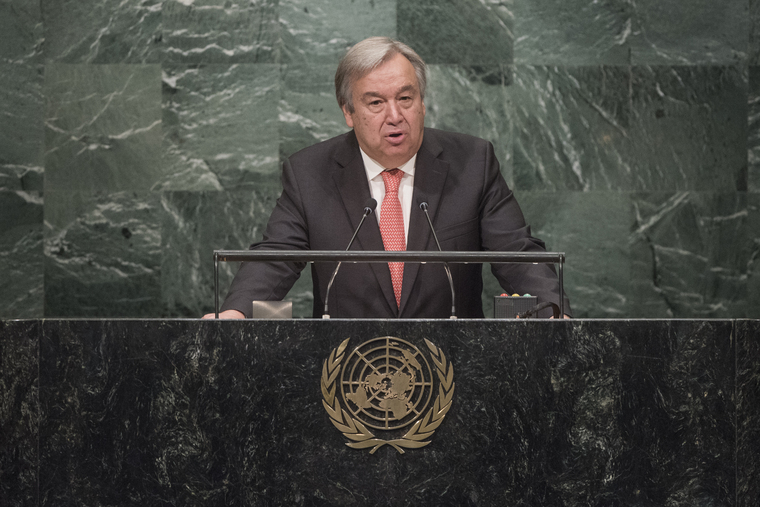
The United Nations Secretary General, António Guterres, has called on all parties to adhere to the reached agreement between Israel and Hamas on the first phase of a U.S.-backed Gaza peace plan.
“All hostages must be released in a dignified manner. A permanent ceasefire must be secured,” Guterres said in a statement on X on Thursday, urging an end to fighting and immediate, unhindered access for humanitarian aid into Gaza. “The suffering must end,” he added.
Guterres praised diplomatic efforts by the United States, Qatar, Egypt and Turkey, which helped broker the deal at talks in the Egyptian coastal resort of Sharm el-Sheikh.
The United Nations would support full implementation of the agreement, expand humanitarian aid and assist reconstruction efforts in Gaza, Guterres said.
The UN chief also encouraged both sides to seize this momentous opportunity to advance a two-state solution that would allow Israelis and Palestinians to live in peace and security. “The stakes have never been higher,” he said.
The two-state solution envisages an independent Palestinian state coexisting peacefully alongside Israel.
Both Israeli Prime Minister Benjamin Netanyahu and Hamas currently reject such an outcome. (Punch)
Police on Saturday were questioning six people arrested on suspicion of terror offenses after an attack on a synagogue in northwest England that left two men dead and Britain’s Jewish community shocked and grieving.
Jihad Al-Shamie, 35, was shot dead by police on Thursday outside the Heaton Park Congregation Synagogue in Manchester after he rammed a car into pedestrians, attacked them with a knife and tried to force his way into the building.
Three men and three women, aged between 18 and their 60s, were arrested in the greater Manchester area on suspicion of the “commission, preparation and instigation of acts of terrorism,” as police work to determine whether the attacker acted alone.
Congregation members Melvin Cravitz, 66, and Adrian Daulby, 53, died in the attack on Yom Kippur, the holiest day of the Jewish year. Police say Daulby was accidentally shot by an armed officer as he and other congregants barricaded the synagogue to block Al-Shamie from entering. Three other men are hospitalized with serious injuries.
Detectives say Al-Shamie, a British citizen of Syrian origin who lived in Manchester, may have been influenced by “extreme Islamist ideology.” He wore what appeared to be an explosives belt, which was found to be fake.
Police said Al-Shamie was out on bail over an alleged rape at the time of the attack but had not been charged.
The attack has devastated Britain’s Jewish community and intensified debate about the line between criticism of Israel and antisemitism.
Recorded antisemitic incidents in the U.K. have risen sharply since Hamas’ Oct. 7, 2023, attack on Israel and Israel’s ensuing war against Hamas in Gaza, according to Community Security Trust, a charity that provides advice and protection for British Jews.
Some politicians and religious leaders claimed pro-Palestinian demonstrations, which have been held regularly since the war in Gaza began, had played a role in spreading hatred of Jews. The protests have been overwhelmingly peaceful but some say chants such as “From the river to the sea, Palestine will be free” incite anti-Jewish hatred.
Israeli Prime Minister Benjamin Netanyahu and his supporters have frequently accused critics of Israel for its conduct of the war of antisemitism. Critics see it as an attempt to stifle even legitimate criticism.
Chief Rabbi Ephraim Mirvis, the head of Orthodox Judaism in Britain, said the attack was the result of “an unrelenting wave of Jew hatred” on the streets and online.
Some also say the U.K.’s recognition of a Palestinian state last month has emboldened antisemitism — a claim the government rejects. Deputy Prime Minister David Lammy was interrupted by boos and shouts of “Shame on you” on Friday as he addressed a vigil for victims of the attack in Manchester.
Police in London urged organizers to call off a protest planned for Saturday to oppose the banning of the group Palestine Action, which has been labeled a terrorist organization by the government.
Prime Minister Keir Starmer said protest organizers should “recognize and respect the grief of British Jews this week” and postpone the demonstration.
The group Defend Our Juries said it would not cancel the protest, where hundreds of people are expected to risk arrest by holding signs supporting the banned group.
Member Jonathon Porritt said protesters would “demonstrate huge respect and real grief for those affected by the absolute atrocity at Heaton Park.”
“But I don’t think that means that we should be asked to give up on our right to stand up for those who are being devastated by an ongoing, real-time genocide in Gaza,” he told the BBC. (CBS)
Hamas said on Friday it was ready to release hostages held in Gaza under a peace deal proposed by but wantDonald Trumped negotiations on the details and a say in the future of the Palestinian territory.
“The movement announces its approval for the release of all hostages — living and remains — according to the exchange formula included in President Trump’s proposal,” Hamas said in a statement, adding it was ready to enter talks “to discuss the details”.
The peace plan for Gaza, presented by Trump this week and backed by Israeli Prime Minister Benjamin Netanyahu, calls for a ceasefire, the release of hostages within 72 hours, Hamas’s disarmament and a gradual Israeli withdrawal from Gaza.
In the statement, Hamas said it agreed to hand over power in Gaza to a body of Palestinian technocrats but said decisions on the territory’s long-term future would need to be discussed within a Palestinian framework “in which Hamas will participate and contribute responsibly”.
Hamas’s statement made no mention of its intentions on disarmament, a key part of the US president’s plan and a move the group has previously resisted.
Following the announcement, Mahmoud Mardawi, a senior Hamas official, told AFP the group welcomed Trump’s proposal, but that “without clear terms, criteria, and transparency, we need clarification and confirmation through a negotiated agreement”.
“The American proposal is vague, ambiguous, and lacks clarity,” Mardawi said.
Hamas had “made our position clear, and we are now waiting to see how the details of the terms will be implemented and clarified”, he added.
Under the US plan published on Monday — which has been welcomed by world powers, including Arab and Muslim nations — a post-war transitional authority for Gaza would be headed by Trump himself.
Earlier on Friday the US president gave Hamas until Sunday night to respond to the plan, and warned the group it faced “all hell” if it did not agree to the terms. (Vanguard)



 English