The United Nations on Tuesday marked four years since Russia launched its full-scale invasion of Ukraine with a high-level debate and renewed calls to end the war.
The General Assembly also passed a resolution reaffirming its strong commitment to the sovereignty, independence and territorial integrity of Ukraine.
Meeting in an emergency special session on Ukraine at UN Headquarters in New York, the UN General Assembly adopted a resolution titled “Support for lasting peace in Ukraine.”
The General Assembly called for an immediate, full and unconditional ceasefire between Russia and Ukraine.
The text reaffirmed the Assembly’s commitment to Ukraine’s sovereignty and territorial integrity and called for a comprehensive, just and lasting peace in line with the UN Charter, the exchange of prisoners of war, and the return of civilians forcibly transferred, including children.
The resolution was adopted by 107 votes in favour, including Nigeria, 12 against and 51 abstentions.
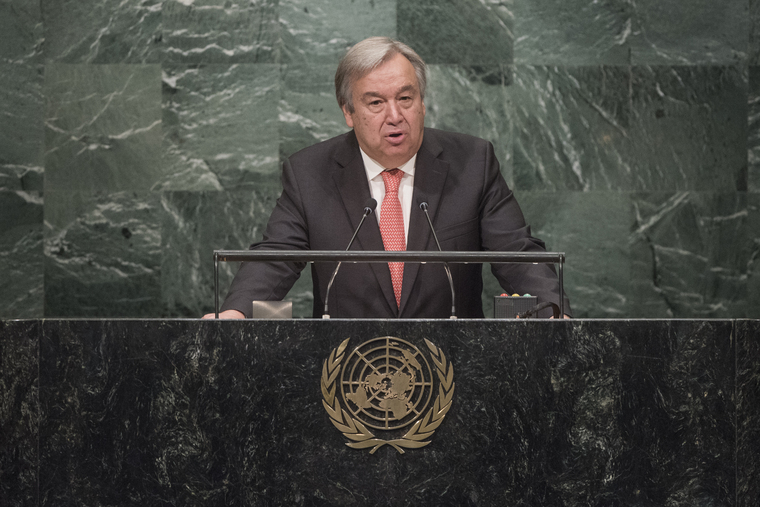
Meanwhile, the UN Secretary-General, António Guterres, in a statement, said the invasion was a violation of the United Nations Charter and international law.
“This devastating war is a stain on our collective consciousness and remains a threat to regional and international peace and security.
“The longer the war continues, the deadlier it becomes. Civilians bear the brunt of this conflict, with 2025 witnessing the largest number of civilians killed in Ukraine.
“This is simply unacceptable. I reiterate my call for an immediate, full and unconditional ceasefire as a first step towards a just, lasting and comprehensive peace,” he said.
According to him, for peace to be just, it must be in line with the UN Charter, international law and relevant United Nations resolutions, respecting Ukraine’s independence, sovereignty and territorial integrity.
“The United Nations remains ready to contribute to all efforts towards this end,” he added. (Punch)
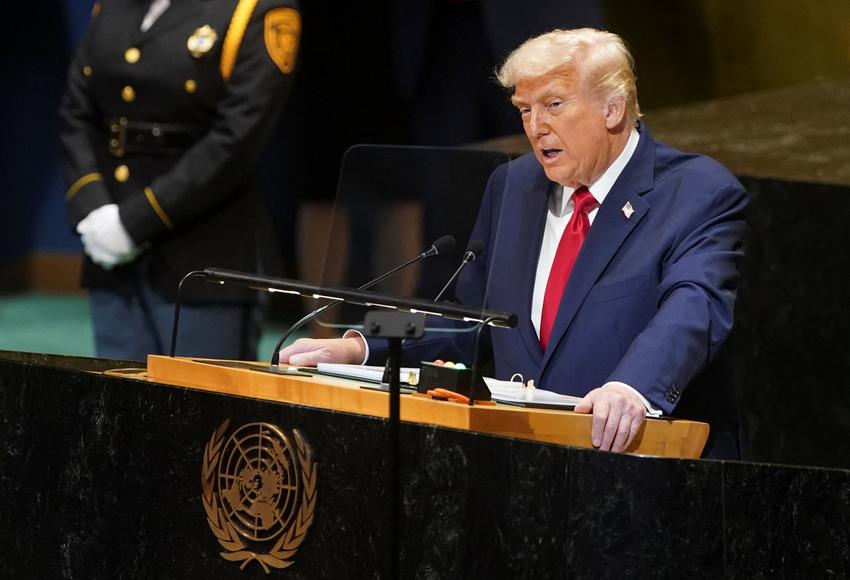
U.S. President Donald Trump told the UN General Assembly on Tuesday that he hopes “countless people from all over the globe” will attend the 2026 World Cup and 2028 Olympics hosted by the U.S., making no mention of his migration crackdown that has deterred some visitors.
Overseas travel to the U.S. fell 2.9% year-on-year in August to about 3.5 million visitors, according to preliminary U.S. government data. It was the sixth month this year that travel declined from a year ago, bucking the global tourism trend and defying expectations that in 2025 annual inbound visitors would finally surpass the pre-pandemic level of 79.4 million.
In a wide-ranging speech, Trump said next year the United States will celebrate the 250th anniversary of its independence. “We will also be proudly hosting the 2026 FIFA World Cup, and shortly thereafter, the 2028 Olympics,” he said.
“It’s going to be very exciting. I hope you all come. I hope that countless people from all over the globe will take part.”
More than 1.5 million ticket applications from fans in 210 countries were received by FIFA for the World Cup within 24 hours of the presale draw, the governing body of world soccer said earlier this month. The 48-team tournament will be hosted by Mexico, Canada and the U.S. and will feature 104 matches across 16 host cities.
But a U.S. trip may be expensive and complicated for many. Visitors from non-visa waiver countries face a $250 “visa integrity fee,” on top of the existing fee, with travelers already navigating long average visa wait times. Such visitors face an average 169 days for a B-1/B-2 tourism or business visa interview, according to data from the U.S. State Department.
That will hit fans from countries that traditionally send a large contingent to the World Cup, including Mexico, Argentina and Brazil.
Global ticket demand for the tournament came primarily from the three host countries, followed by Argentina, Colombia, and Brazil, according to FIFA.
Tourists from visa-waiver countries – mostly in Europe – will not need to pay the new fee, but industry experts say some are being put off U.S. vacations by fears of being stopped at the border after a number of widely publicized cases.
The White House is also looking to tighten the duration of visas for students, cultural exchange visitors and members of the media, according to a proposed government regulation issued in August.
The 2028 Summer Olympics is set to be held in Los Angeles, California, in July 2028. (JapanToday)
U.S. President Donald Trump argued for lower levels of global migration and urged a turn away from climate change policies on Tuesday in a combative, wide-ranging speech to the U.N. General Assembly that leveled scathing criticism of world leaders.
The 56-minute speech was a rebuke to the world body and a return to form for Trump, who routinely bashed the U.N. during his first term as president. Leaders gave him polite applause when he exited the chamber.
He rejected moves by allies to endorse a Palestinian state amid Israel’s latest Gaza offensive and urged European nations to adopt the same set of economic measures he is proposing against Russia to force an end to the war in Ukraine.
Much of his speech was dominated by two of his biggest grievances: immigration and climate change.
Trump offered his U.S. immigration crackdown as a case study for what other world leaders should do to curb mass migration that he says is altering the fabric of nations. Human rights advocates argue the migrants are seeking better lives.
“I’m really good at this stuff,” Trump said. “Your countries are going to hell.”
Trump, who met last week with Britain’s environmentally conscious King Charles at Windsor Castle, called climate change a “con job” and urged a return to a greater reliance on fossil fuels. Scientists say climate change caused by humans is real.
“Immigration and their suicidal energy ideas will be the death of Western Europe,” Trump said.
Trump’s administration plans to call for sharply narrowing the right to asylum at the United Nations later this month, Reuters reported last week, as it seeks to undo the post-World War II framework around humanitarian protection.
Trump sprinkled into his speech a litany of false and misleading statements, such as that London Mayor Sadiq Khan wants to impose “sharia law” on London and that “inflation has been defeated” in the United States six days after the Federal Reserve said inflation has gone up.
European powers have spent months trying to stabilize their relationship with the U.S. leader with a focus on winning U.S. support to end the war in Ukraine. At a NATO summit in June, Trump and European leaders lavished each other with praise.
But in Tuesday’s speech, Trump mocked NATO allies for not shutting down purchases of Russian oil and said he would impose strong economic measures against Moscow.
“They’re funding the war against themselves. Who the hell ever heard of that one? In the event that Russia is not ready to make a deal to end the war, then the United States is fully prepared to impose a very strong round of powerful tariffs,” he said.
“But for those tariffs to be effective, European nations, all of you are gathered here right now, would have to join us in adopting the exact same measures.”
He did not detail the measures, but he has been considering a package that includes sanctions against countries that do business with Russia, like India and China. The main buyers of Russian oil in Europe are Hungary, Slovakia and Turkey.
Trump later held talks with Ukrainian President Volodymyr Zelenskiy, who pressed for more U.S. support to resist Russian advances. Trump, asked by reporters if NATO countries should shoot down Russian aircraft if they enter their airspace, said, “Yes, I do.”
On the Israel-Palestinian conflict, Trump rejected efforts by world leaders to embrace a Palestinian state, a move that faces fierce resistance from Israel.
“The rewards would be too great for Hamas terrorists, for their atrocities,” he said, repeating his call for the return of hostages taken by the Palestinian militant group.
Trump said the United States wants a ceasefire-for-hostages deal that would see the return of all remaining hostages, alive and dead.
“We have to stop the war in Gaza immediately. We have to immediately negotiate peace,” he said.
He was to discuss the future of Gaza during afternoon talks with several Gulf leaders.
Trump, who has cast himself as a peacemaker in a bid to win the Nobel Peace Prize, complained that the United Nations did not support his efforts to end conflicts around the world.
He added to his complaints with personal grievances about the U.N. infrastructure, saying he and first lady Melania Trump were briefly marooned on a malfunctioning U.N. escalator and that his teleprompter was not initially working.
“These are the two things I got from the United Nations – a bad escalator and a bad teleprompter,” Trump said, noting that Melania Trump nearly fell when the escalator stopped abruptly. (JapanToday)
Britain, Australia and Canada on Sunday recognised a Palestinian state in a seismic shift in decades of western foreign policy, triggering swift Israeli anger.
Portugal was also to recognise Palestinian statehood later Sunday, as Israel came under huge international pressure over the war in Gaza triggered almost two years ago by the October 7, 2023 Hamas attack.
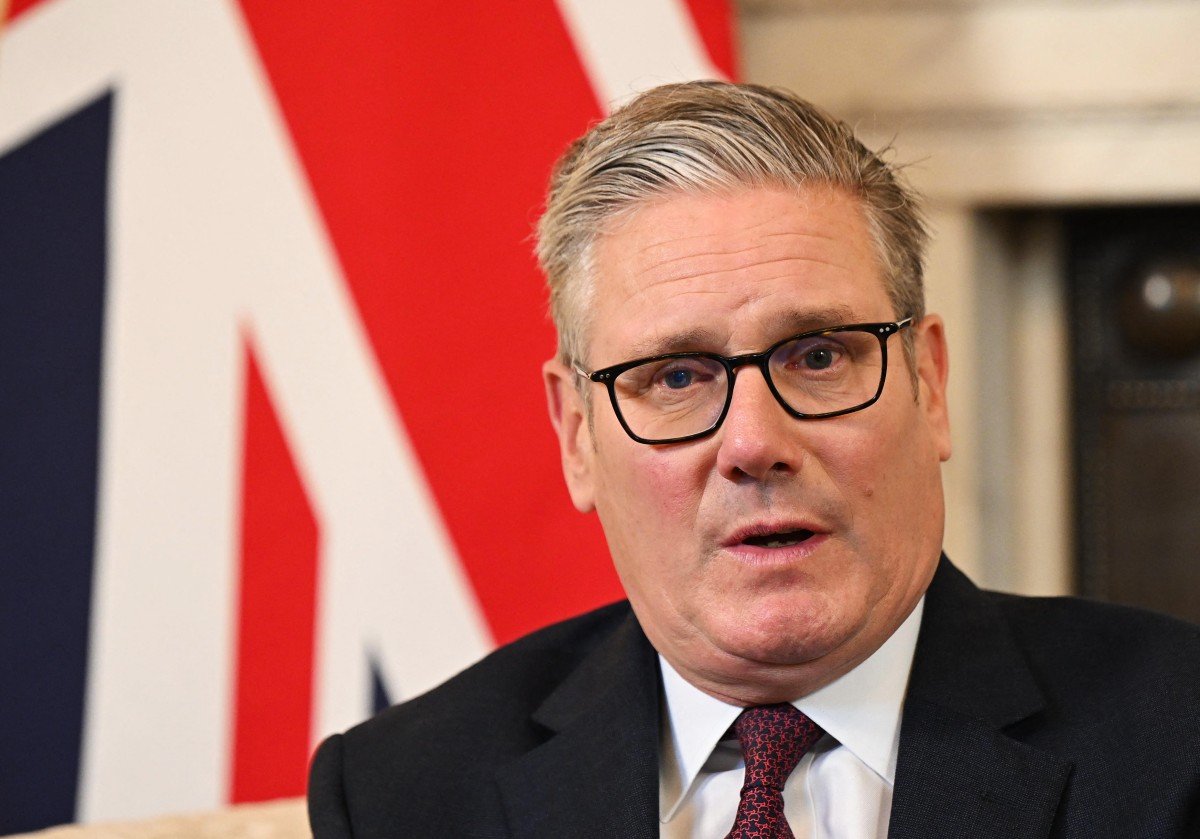
“Today, to revive the hope of peace for the Palestinians and Israelis, and a two-state solution, the United Kingdom formally recognises the State of Palestine,” UK Prime Minister Keir Starmer said in a message on X.
Britain and Canada became the first G7 countries to take the step, with France and other nations expected to follow at the annual UN General Assembly which opens Monday in New York.
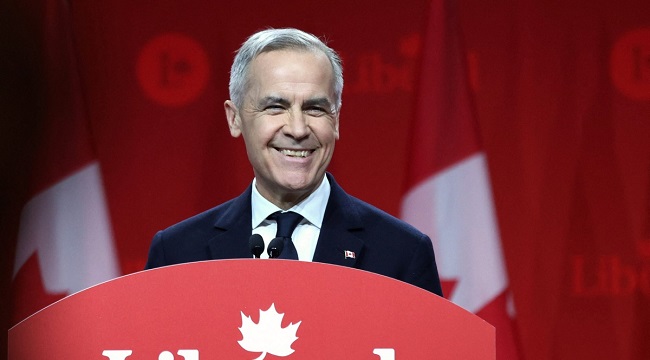
“Canada recognises the State of Palestine and offers our partnership in building the promise of a peaceful future for both the State of Palestine and the State of Israel,” Canadian Prime Minister Mark Carney wrote on X.
It is a watershed moment for Palestinians and their decades-long ambitions for statehood, with the most powerful Western nations having long argued it should only come as part of a negotiated peace deal with Israel.
But the move puts those countries at odds with the United States and Israel, with Israeli Prime Minister Benjamin Netanyahu reacting angrily and vowing to oppose it at the UN talks.
Calls for a Palestinian state “would endanger our existence and serve as an absurd reward for terrorism,” Netanyahu said Sunday.
A growing number of longtime allies have shifted positions, as Israel has intensified its Gaza offensive, vowing to eliminate the Hamas Palestinian militants.
The Gaza Strip has suffered vast destruction, a spiralling death toll and a lack of food that has sparked a major humanitarian crisis since the start of the conflict which has drawn an international outcry
The UK government has come under increasing public pressure to act, with thousands rallying every month on the streets. A poll released by YouGov on Friday showed two-thirds of young Britons aged 18-25 supported Palestinian statehood.
Deputy Prime Minister David Lammy acknowledged at the UN in July that “Britain bears a special burden of responsibility to support the two-state solution”.
Over a century ago, the UK was pivotal in laying the groundwork for the creation of the state of Israel through the 1917 Balfour Declaration.
Three-quarters of UN members already recognise Palestinian statehood, with over 140 of the 193 having taken the step.
Starmer said in July that his Labour government intended to recognise a Palestinian State unless Israel took “substantive” steps including reaching a ceasefire in Gaza, getting more aid into the territory and confirming it would not annex the West Bank.
Starmer has also repeatedly called on Hamas to release the remaining hostages they captured in the 2023 attack, and is expected to set out new sanctions on the Palestinian militants.
Lammy told the BBC on Sunday that the Palestinian Authority, the civilian body that governs in areas of the West Bank, had been calling for the move for some time “and I think a lot of that is wrapped up in hope”.
“Will this feed children? No it won’t, that’s down to humanitarian aid. Will this free hostages? That must be down to a ceasefire.”
But he said it was an attempt to “hold out for” a two-state solution.
Palestinian foreign minister Varsen Aghabekian Shahin told AFP last week: “Recognition is not symbolic.”
“It sends a very clear message to the Israelis on their illusions about continuing their occupation forever,” she added.
Hamas’s 2023 attack on southern Israel resulted in the deaths of 1,219 people, most of them civilians, according to an AFP tally of official figures.
Israel’s retaliatory campaign has killed at least 65,208 people, also mostly civilians, according to figures from the Gaza health ministry that the United Nations considers reliable.
Portugal said that it would also formally declare its recognition in New York on Sunday.
“By acting now, as the Portuguese government has decided, we’re keeping alive the possibility of having two states,” Portuguese President Marcelo Rebelo de Sousa said. (Punch)
Canada plans to recognise a Palestinian state at the UN General Assembly in September, Prime Minister Mark Carney said Wednesday, a major policy shift that drew an angry response from US President Donald Trump and was rejected by Israel.
Carney said the move was necessary to preserve hopes of a two-state solution to the Israeli-Palestinian conflict, a long-standing Canadian goal that was “being eroded before our eyes.”
“Canada intends to recognise the State of Palestine at the 80th Session of the United Nations General Assembly in September 2025,” the prime minister said.
This makes Canada — a G7 nation — the third country, following recent announcements by France and the United Kingdom, to signal plans to recognise a Palestinian state in September.
Carney said the worsening suffering of civilians in Gaza left “no room for delay in coordinated international action to support peace.”
Israel blasted Canada’s announcement as part of a “distorted campaign of international pressure,” while Trump warned that trade negotiations with Ottawa may not proceed smoothly.
“Wow! Canada has just announced that it is backing statehood for Palestine,” the US president wrote on his Truth Social platform.
“That will make it very hard for us to make a Trade Deal with them.”
Asked by reporters if there was a scenario where Canada could change its position before the UN meeting, Carney said: “There’s a scenario (but) possibly one that I can’t imagine.”
Canada’s intention “is predicated on the Palestinian Authority’s commitment to much-needed reforms,” Carney said, referring to the body led by President Mahmoud Abbas, which has civil authority in parts of the Israeli-occupied West Bank.
Carney said his plans were further predicated on Abbas’s pledge to “hold general elections in 2026 in which Hamas can play no part, and to demilitarise the Palestinian state.”
With Wednesday’s announcement, Carney positioned Canada alongside France, after President Emmanuel Macron said his country would formally recognise a Palestinian state during the UN meeting, the most powerful European nation to announce such a move.
The Israeli embassy in Ottawa said, “Recognising a Palestinian state in the absence of accountable government, functioning institutions, or benevolent leadership, rewards and legitimises the monstrous barbarity of Hamas on October 7, 2023.”
The PA’s Abbas welcomed the announcement as a “historic” decision, while France said the countries would work together “to revive the prospect of peace in the region.”
Canada’s plan goes a step further than this week’s announcement by British Prime Minister Keir Starmer.
Starmer said the UK will formally recognise the State of Palestine in September unless Israel takes various “substantive steps,” including agreeing to a ceasefire in Gaza.
Carney stressed that Canada has been an unwavering member of the group of nations that hoped a two-state solution “would be achieved as part of a peace process built around a negotiated settlement between the Israeli government and the Palestinian Authority.”
“Regrettably, this approach is no longer tenable,” he said, citing “Hamas terrorism” and the group’s “longstanding violent rejection of Israel’s right to exist.”
The peace process has also been eroded by the expansion of Israeli settlements across the occupied West Bank and east Jerusalem, Carney said.
The prime minister said a two-state solution was growing increasingly remote, with a vote in Israel’s parliament “calling for the annexation of the West Bank,” as well as Israel’s “ongoing failure” to prevent a humanitarian catastrophe in Gaza.
He framed his decision as one aimed at safeguarding Israel’s future.
“Any path to lasting peace for Israel also requires a viable and stable Palestinian state, and one that recognises Israel’s inalienable right to security and peace,” Carney said. (Punch)

 English