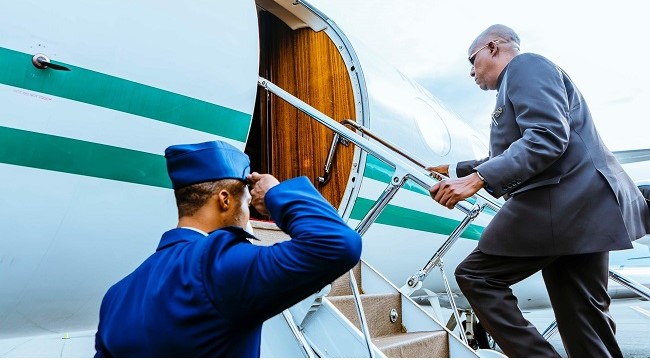
Vice President Kashim Shettima has departed New York, United States, after representing President Bola Tinubu at the 80th Session of the United Nations General Assembly.
According to a statement on Sunday by his media aide, Stanley Nkwocha, the Vice President is now headed to Germany where he is scheduled to hold strategic meetings with officials of Deutsche Bank to explore areas of intervention and partnership in Nigeria’s developmental initiatives.
Nkwocha said that during his participation at UNGA 80, VP Shettima secured UN Secretary-General António Guterres’ commendation for Nigeria’s bid for a permanent UN Security Council seat.
He also showcased Nigeria’s $200 billion energy transition opportunity to global investors and strengthened strategic partnerships with the UK on trade, defence, and migration issues.
The Vice President delivered President Tinubu’s national statement, calling for UN reforms and a permanent seat for Nigeria at the UN Security Council, even as he demanded Africa’s control over its $700 billion mineral wealth, and digital inclusion initiatives.
He also engaged with the Gates Foundation on healthcare and education expansion, positioning Nigeria as the natural hub for the African Continental Free Trade Area’s $3.4 trillion market.
The statement noted that Shettima was seen off at John F. Kennedy International Airport, New York, by cabinet Ministers who were part of the UNGA 80 delegation and Nigerian Mission officials.
He will return to Nigeria immediately after his engagements in Germany, it added. (Channels)
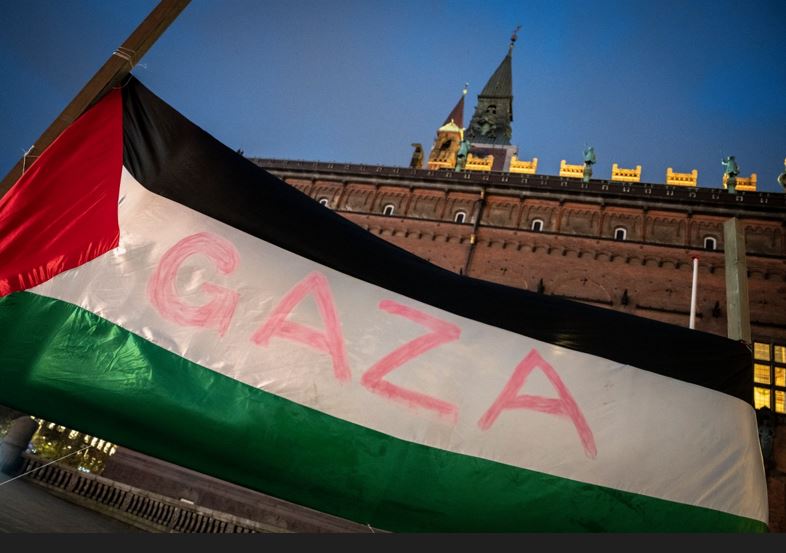
The leaders of six countries, including France, have moved to recognise Palestinian statehood at a high-level summit ahead of the annual United Nations General Assembly (UNGA) meeting in New York.
Alongside France, which co-convened the meeting with Saudi Arabia on Monday in New York, Andorra, Belgium, Luxembourg, Malta and Monaco said they were recognising a Palestinian state.
Leaders from Australia, Canada, Portugal and the United Kingdom, which formally made the move to recognise Palestine a day earlier, also spoke at the meeting.
“We have gathered here because the time has come,” Emmanuel Macron said at the summit convened to revive the long-delayed two-state solution to end the Israel-Palestine conflict.
“It falls on us, this responsibility, to do everything in our power to preserve the possibility of a two-state solution,” Macron said.
“Today, I declare that France recognises the state of Palestine,” he said.
The additional countries recognising Palestine now join some 147 of the 193 UN member states that had already formally recognised Palestinian statehood as of April this year.
With more than 80 percent of the international community now recognising the state of Palestine, diplomatic pressure has ramped up on Israel as it continues its genocidal war on Gaza, where more than 65,300 Palestinians have been killed and the has been enclave turned into rubble.
Spain, Norway and Ireland recognised Palestinian statehood last year, with Madrid also imposing sanctions on Israel for its war on Gaza.
Spanish Prime Minister Pedro Sanchez told the summit on Monday that a two-state solution was not possible “when the population of one of those two states is the victim of a genocide”.
“The Palestinian people are being annihilated, [so] in the name of reason, in the name of international law and in the name of human dignity, we have to stop this slaughter,” Sanchez said.
Macron, in his speech to the summit, also outlined a framework for the creation of a “renewed Palestinian Authority”. The post-war framework envisages an International Stabilisation Force (ISF) that would assist in preparing the Palestinian Authority (PA) to take over governance in Gaza.
PA President Mahmoud Abbas commended the countries that had recognised Palestine. He made his statement to the conference by video because he was denied a visa by the administration of US President Donald Trump to attend the UNGA this week.
“We call on those that have not yet done so to do so to follow suit”, Abbas said, adding that the PA also demanded “support for Palestine’s full membership in the United Nations”.
Israel and the US, which are becoming increasingly isolated internationally on the issue, boycotted the summit, with Israel’s UN ambassador, Danny Danon, describing the event as a “circus”.
Although the vast majority of UN member states now recognise Palestinian statehood, new UN member states must have the support of the UN Security Council, where the US has used its veto to block Palestine from becoming a full UN member state.
Speaking at the summit, UN Secretary-General Antonio Guterres reiterated his support for the two-state solution, framing it as the only viable path towards peace after years of failed negotiations and ongoing violence.
Guterres said that statehood for Palestinians “is a right, not a reward”, rejecting US and Israeli claims that it was a reward for Hamas.
Saudi Arabia’s foreign minister, Prince Faisal bin Farhan Al Saud, thanked Macron and the UN chief for their efforts towards a two-state solution, which he said is “the only way to achieve just and lasting peace”.
He said the conference comes at a time when “the Israeli occupation authorities continue their aggression and their brutal crimes” against Palestinians in Gaza.
Israel also continues its “violations in the West Bank, and its repeated attacks on Arab and Muslim countries, with the most recent attack on Qatar”, he said.
“These actions underline Israel’s insistence on continuing aggressive practices that threaten regional and international peace and stability and undermine efforts of peace in the region,” he added. (AlJazeera)
US officials have further restricted visitor visas for Palestinians, by denying them to almost all applicants who use a Palestinian passport, media reports say.
The development comes days after 80 Palestinian officials were denied visas ahead of the United Nations General Assembly in New York.
Earlier in August, visitor visas were paused for people hoping to travel from the Palestinian territory of Gaza. This newly-reported decree would affect a wider group – including people living in the Israeli-occupied West Bank.
The Department of State did not explicitly confirm the move but said it was “taking concrete steps in compliance with US law and our national security”.
The decision was issued in a diplomatic cable dated 18 August, the New York Times and CNN reported.
US consular officers were told to refuse non-immigrant visas to “all otherwise eligible Palestinian Authority passport holders”, the communication was quoted as saying.
That would apply to Palestinians hoping to come to the US for a range of purposes, including for business, study or medical treatment.
The move meant that officials would be required to perform a further review of each applicant, which amounted to a blanket ban on issuing visas to Palestinians, the New York Times added in its report.
Palestinians who are able to make visa applications using other passports were said to be unaffected.
It is not clear what prompted the reported move, though the Trump administration has been steadfast in its support for Israel’s military campaign against Hamas in Gaza.
The news also follows last month’s announcements by a number of other US allies – including the UK, Canada and France – that they would recognise a Palestinian state on certain conditions. US Vice-President JD Vance has said Washington has “no plans” to follow suit.
The Trump administration has also cracked down on pro-Palestinian protests on university campuses.
The move represents a further toughening of the president’s stance on visas, following two earlier measures.
Palestinian President Mahmoud Abbas was among a group of dozens of Palestinian officials who were recently blocked from attending the UN General Assembly session in New York later this month, after US officials revoked his visa and accused the Palestinian Authority and Palestine Liberation Organisation (PLO), both of which Abbas leads, of undermining peace efforts.
And the Department of State said on 16 August it had paused approvals of visitor visas for Palestinians from Gaza specifically, so that a review could take place.
Hamas, which is designated as a terrorist group by the US, governed Gaza when hundreds of its armed fighters attacked Israel on 7 October 2023, killing about 1,200 people and taking 251 hostages. The attack triggered a massive and ongoing Israeli military offensive, in which at least 63,459 Palestinians have been killed, according to the Hamas-run health ministry.
The US visa policy has effectively been extended now to include people from the West Bank and wider Palestinian diaspora.
Asked about the latest move, a Department of State spokesperson’s statement said: “The Trump administration is taking concrete steps in compliance with US law and our national security in regards to announced visa restrictions and revocations for PA (Palestinian Authority) passport holders. We refer you to those public announcements for more information on those restrictions and revocations.
“Every visa decision is a national security decision, and the State Department is vetting and adjudicating visa decisions for PA passport holders accordingly.” (BBC)
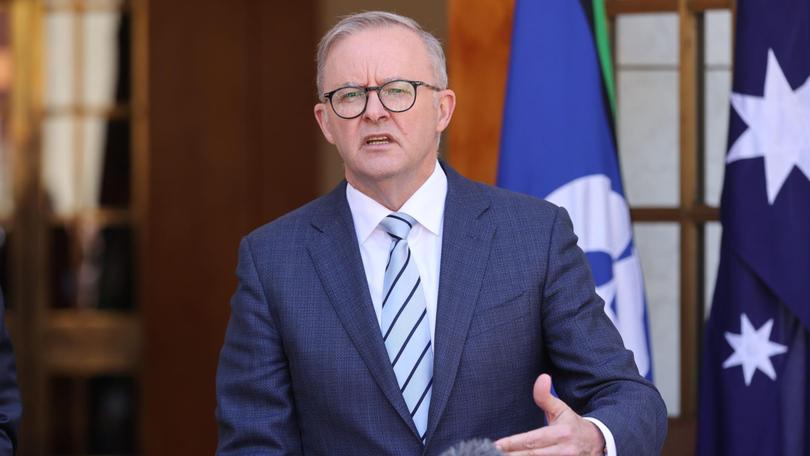
Australia will recognise a Palestinian state in September, Prime Minister Anthony Albanese has announced, drawing condemnation from Israel.
Albanese said on Monday that his government would formally announce the move when the United Nations General Assembly (UNGA) meets in New York.
“A two-state solution is humanity’s best hope to break the cycle of violence in the Middle East and to bring an end to the conflict, suffering and starvation in Gaza,” Albanese said at a news conference in Canberra.
Australia’s announcement comes as Canada, France and the United Kingdom are also preparing to formally recognise Palestine at the meeting next month, joining the vast majority of UN member states that already do so.
Israeli Ambassador to Australia Amir Maimon said recognition of a Palestinian state will do nothing to end the war in Gaza, telling the Australian Broadcasting Corporation (ABC): “We reject the recognition, unilateral recognition.”
Israeli President Isaac Herzog also slammed the Australian announcement as a reward for Hamas for its October 7, 2023, attack on southern Israel, repeating the Israeli government’s stance on all recognition announcements thus far.
This latest recognition comes about a week after hundreds of thousands of Australians marched across the Sydney Harbour Bridge to protest Israel’s war in the Gaza Strip.
Speaking a day after the protest, Australian Minister for Foreign Affairs Penny Wong told ABC that “there is a risk there will be no Palestine left to recognise.”
“In relation to recognition, I’ve said for over a year now, it’s a matter of when, not if,” Wong added.
The opposition Liberal Party criticised the move, saying it put Australia at odds with the United States, its closest ally, and reversed a bipartisan consensus that there should be no recognition while Hamas remains in control of Gaza.
“Despite his words today, the reality is Anthony Albanese has committed Australia to recognising Palestine while hostages remain in tunnels under Gaza and with Hamas still in control of the population of Gaza. Nothing he has said today changes that fact,” Liberal Party leader Sussan Ley said in a statement.
“Recognising a Palestinian state prior to a return of the hostages and defeat of Hamas, as the Government has today, risks delivering Hamas one of its strategic objectives of the horrific terrorism of October 7.”
The Australian Greens, the fourth largest party in parliament, welcomed the move to recognise Palestine but said the announcement did not meet the “overwhelming calls from the Australian public for the government to take material action”.
“Millions of Australians have taken to the streets, including 300,000 last weekend in Sydney alone, calling for sanctions and an end to the arms trade with Israel. The Albanese Government is still ignoring this call,” Senator David Shoebridge, the party’s spokesperson on foreign affairs, said in a statement.
The Australian Palestine Advocacy Network (APAN) also criticised the announcement, describing it as a “political fig leaf, letting Israel’s genocide and apartheid continue unchallenged, and distracting from Australia’s complicity in Israeli war crimes via ongoing weapons and components trade”.
“Palestinian rights are not a gift to be granted by Western states. They are not dependent on negotiation with, or the behaviour or approval of their colonial oppressors,” APAN said in a statement.
According to Albanese, Australia’s decision to recognise Palestinians’ right to their own state will be “predicated on the commitments Australia has received from the Palestinian Authority (PA)”.
These “detailed and significant commitments” include the PA reaffirming it “recognises Israel’s right to exist in peace and security” and committing to “demilitarise and to hold general elections”, Albanese said while announcing the decision.
The PA is a governing body that has overseen parts of the Israeli-occupied West Bank since the mid-1990s.
It has not held parliamentary elections since 2006 and has been criticised by some Palestinians for helping Israel to keep tight control over residents in the occupied West Bank.
Albanese said the commitments secured by Australia were “an opportunity to deliver self-determination for the people of Palestine in a way that isolates Hamas, disarms it and drives it out of the region once and for all”.
Hamas has been in power in the Gaza Strip since 2007 when it fought a brief war against forces loyal to PA President Mahmoud Abbas.
Meanwhile, New Zealand Foreign Minister Winston Peters said on Monday that his country’s cabinet will make a formal decision on Palestinian statehood in September.
“Some of New Zealand’s close partners have opted to recognise a Palestinian state, and some have not,” Peters said in a statement.
“Ultimately, New Zealand has an independent foreign policy, and on this issue, we intend to weigh up the issue carefully and then act according to New Zealand’s principles, values and national interest.”
Peters said that while New Zealand has for some time considered the recognition of a Palestinian state a “matter of when, not if”, the issue is not “straightforward” or “clear-cut”.
“There are a broad range of strongly held views within our Government, Parliament and indeed New Zealand society over the question of recognition of a Palestinian state,” he said.
“It is only right that this complicated issue be approached calmly, cautiously and judiciously. Over the next month, we look forward to canvassing this broad range of views before taking a proposal to Cabinet.”
Of the UN’s 193 member states, 147 already recognise Palestinian statehood, representing three-quarters of the world’s countries and the vast majority of its population.
Under its 1947 plan to partition Palestine, the UNGA said it would grant 45 percent of the land to an Arab state although this never eventuated.
The announcements by Australia and New Zealand on Monday came hours after an Israeli attack killed five Al Jazeera staff members in Gaza City and as Israeli Prime Minister Benjamin Netanyahu continues to threaten a full-scale invasion of the city in the north of the Gaza Strip.
Israel’s war on Gaza has killed at least 61,430 people, according to Gaza’s health authorities.
More than 200 people, including 100 children, have died from starvation under Israel’s punishing siege, according to health authorities. (Aljazeera)


 English