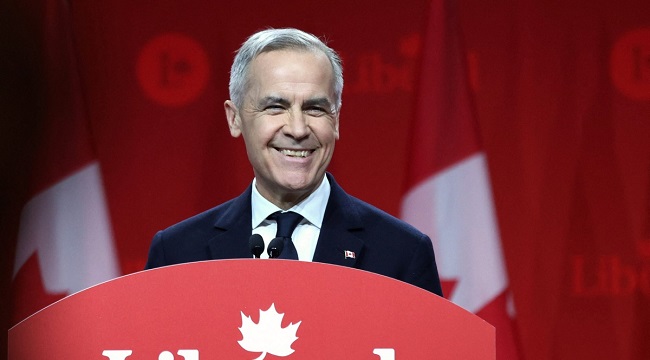
Canadian Prime Minister Mark Carney says his government is developing a government-owned investment fund.
Carney said on Monday that the fund, a first for the country, will invest in major Canadian industrial projects in areas such as energy, infrastructure, mining, agriculture and technology. It will begin at 25 billion Canadian dollars (US$18bn).
The prime minister said the federal government will put up funds alongside private investors. The money will help finance major projects that Carney’s government is focused on building as Canada seeks to diversify away from the United States.
US President Donald Trump has threatened Canada’s economy and sovereignty with tariffs and claims that Canada could be “the 51st state” in the US.
Carney is a former central banker in England and Canada as well as chairman of the board of directors for Bloomberg.
“We take a lesson from other jurisdictions that had the foresight many decades ago to start sovereign wealth funds,” Carney said. “In some cases, they began with a domestic focus then outgrew the scale of the domestic focus.”
Sovereign wealth funds invest in assets, such as stocks, bonds and real estate. They are typically funded by a country’s budgetary surpluses, which Canada currently does not have. The announcement came a day before Carney’s government announces its spring economic update.
There are more than 90 sovereign wealth funds around the world. They manage more than $8 trillion in assets, according to the International Forum of Sovereign Wealth Funds, a London-based organisation made up of roughly 50 of these entities.
Trump ordered the creation of a US sovereign wealth fund last year. In the US, more than 20 sovereign wealth funds exist at the state level, according to an analysis from the Center for Global Development, a Washington, DC-based nonpartisan think tank. (AlJazeera)
FIFA added new, even more expensive tiers of tickets for this year’s World Cup, asking up to $4,105 for a front category 1 seat at the U.S. opener against Paraguay in Inglewood, California, on June 12.
Last week, FIFA had asked for a top price of $2,735 for category 1 tickets for the match but added new “front category” pricing.
FIFA also added a front category 2 tier to its ticket sales website without public announcement, asking $1,940 to $2,330 for those tickets for the U.S. opener. The new categories were first reported Thursday by The Athletic.
The World Cup will be held from June 11 to July 19 in 16 cities in the U.S., Mexico and Canada.
Soccer’s governing body had in its Sept. 9 “ticket products and categories” information called category 1 “the highest-priced seats, located primarily in the lower tier” but appears to have withheld some seats from that category. It had labeled category 2 as “positioned outside of category 1 areas, available in both lower and upper tiers.”
FIFA did not respond to an email sent to its media office seeking comment.
FIFA added seats at up to $3,360 in front category 1 for Canada’s opener against Bosnia and Herzegovina on June 12 in Toronto.
For round of 16 games, it added $905 seats in Philadelphia.
FIFA last week raised its top ticket price for the World Cup final to $10,990 during the glitch-hampered reopening of sales. The price had been $8,680 when FIFA sold tickets after the tournament draw in December.
FIFA’s category 2 tickets for the July 19 game at MetLife Stadium in East Rutherford, New Jersey, were $7,380, up from $5,575, and category 3 cost $5,785, an increase from $4,185.
No tickets appeared to be available for the final on Thursday on FIFA’s ticket site. (JapanToday)
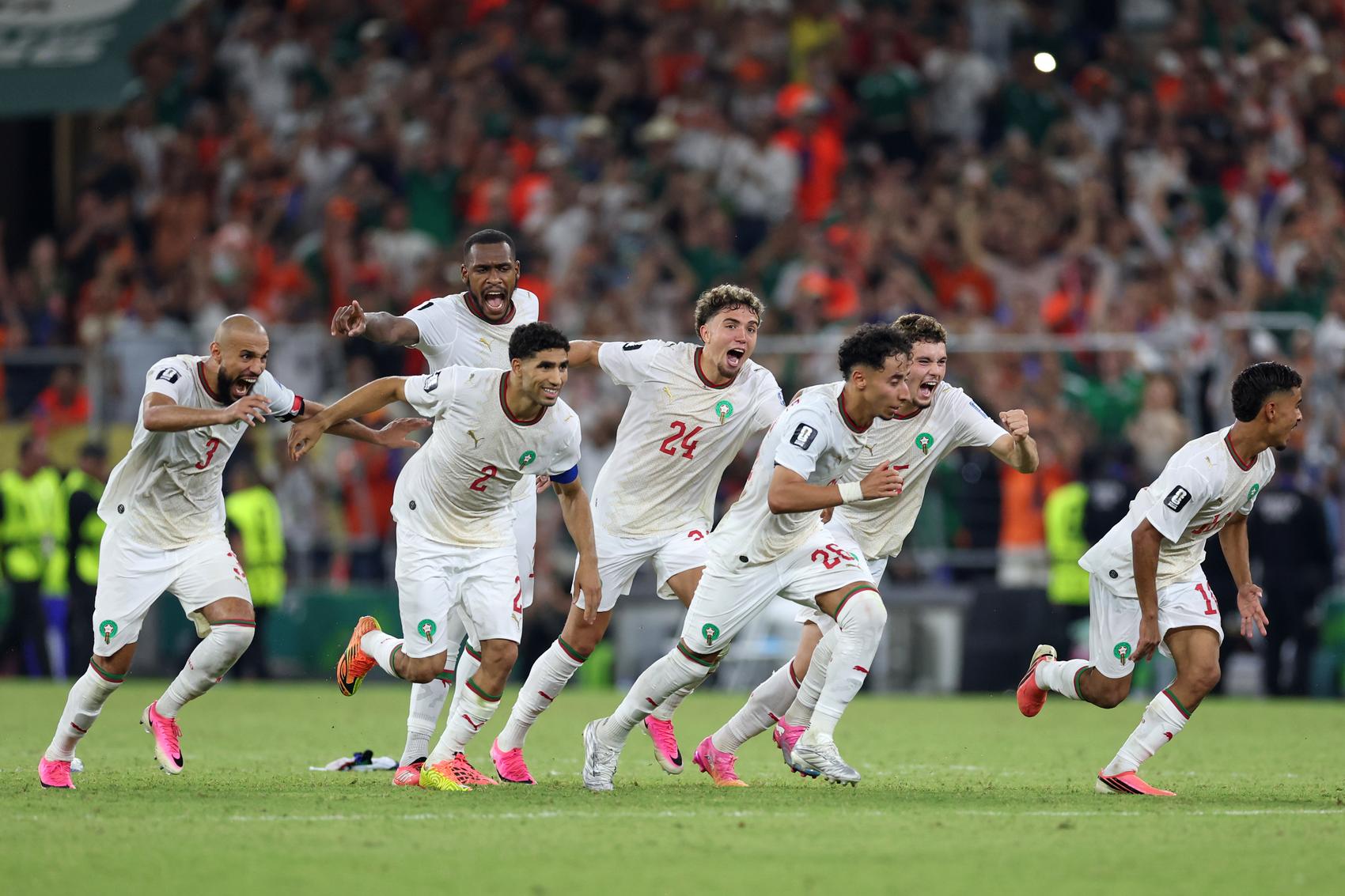
Iraq’s qualification for the FIFA World Cup 2026 has completed the lineup of 48 nations for the tournament hosted by Canada, Mexico and the United States.
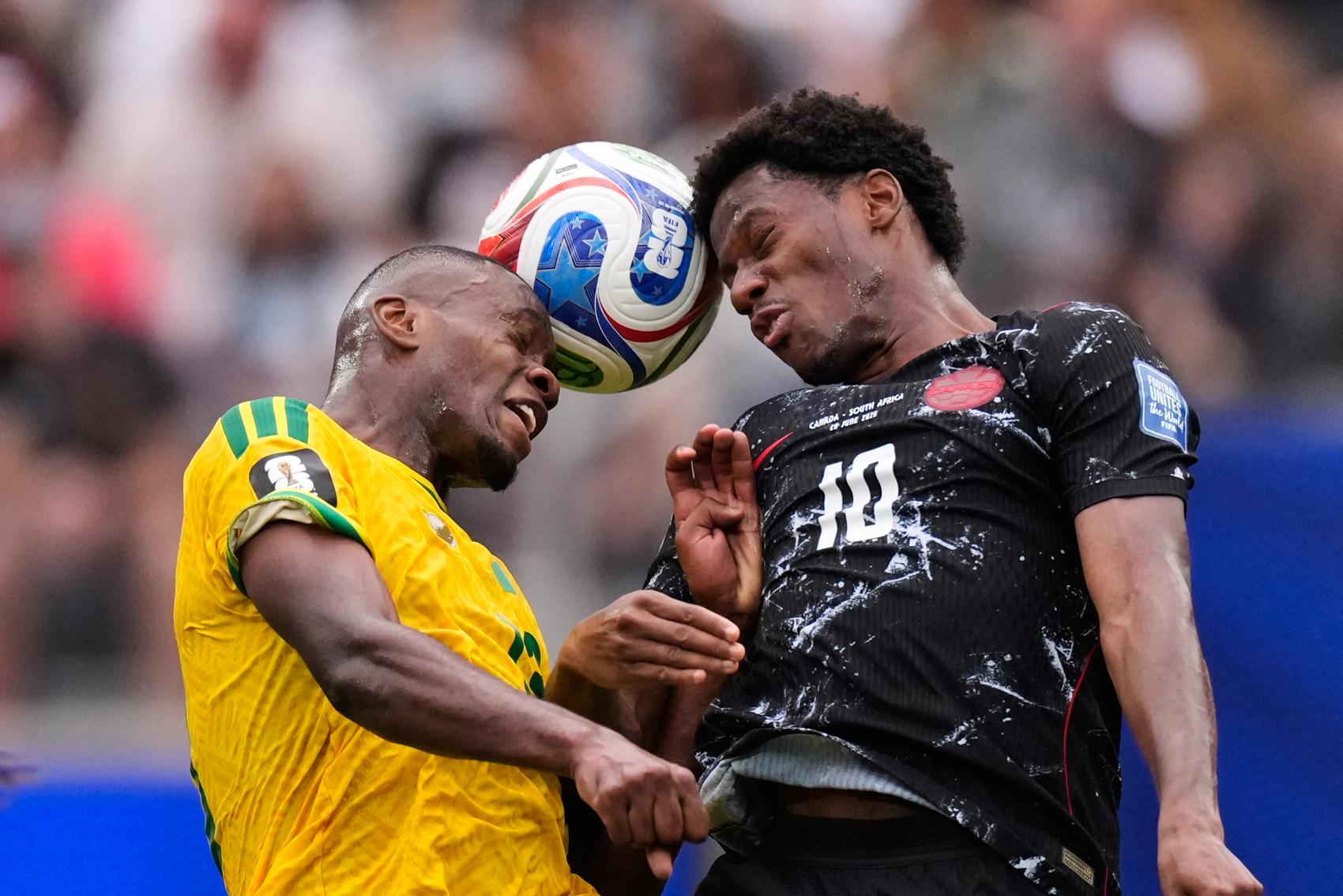
The Lions of Mesopotamia edged Bolivia 2-1 on Tuesday to win the second final of the FIFA Playoff tournament in Mexico. In the first final earlier, Democratic Republic of the Congo beat Jamaica 1-0.
In the other games, Turkiye, Bosnia and Herzegovina, Sweden and Czechia were the final four teams to complete the European quota of World Cup qualification.
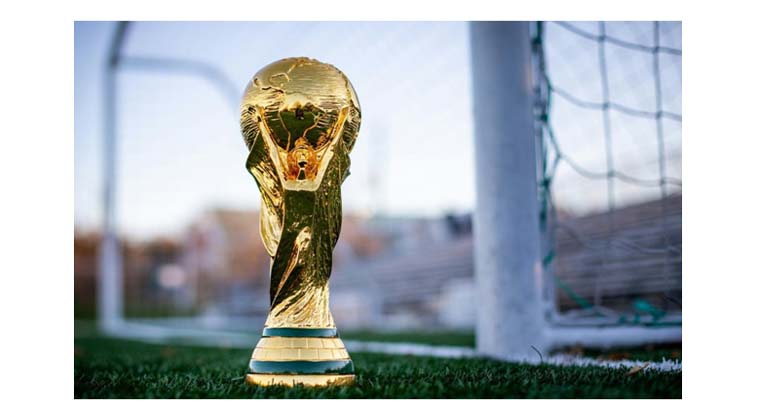
Widely considered the most famous sporting event in the world, the 2026 FIFA World Cup will be its biggest ever. Forty-eight nations will play instead of the usual 32, with 104 matches in 16 venues across the three host nations.
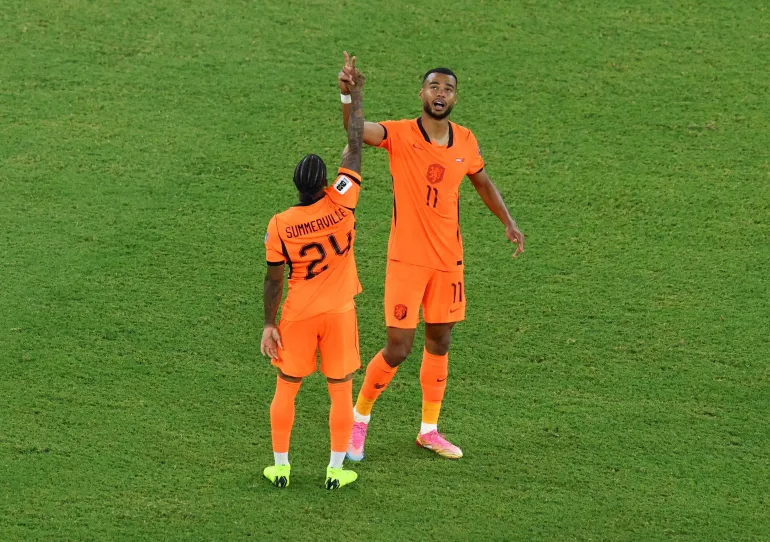
Argentina will look to defend the trophy lifted by iconic captain, Lionel Messi at Qatar 2022. Cape Verde, Curacao, Jordan and Uzbekistan will make their debut.
The World Cup’s first game will be a throwback to 2010 when Mexico take on South Africa on June 11 in Mexico City in a replay of the tournament opener then. Football fans will hope the opening goal this year matches the screamer scored by Lawrence Tshabalala from the South African hosts then. (AlJazeera)
Mexican President Claudia Sheinbaum said on Tuesday that her country is prepared to host Iran’s first-round matches at the 2026 World Cup if needed due to the conflict in the Middle East.
Iran’s participation at this summer’s finals in the United States, Canada and Mexico has been in doubt since the war began last month, with President Donald Trump warning that Iranian players’ safety would be at risk if they travelled to the U.S.
Iran’s football federation has opened talks with FIFA about potentially relocating its matches from the United States, though the global governing body has so far maintained that the tournament’s schedule remains unchanged.
Asked directly if Mexico was open to hosting the matches, and if the decision will purely come down to FIFA logistics, Sheinbaum told a press conference: “Yes.”
“Mexico maintains diplomatic relations with every country in the world, therefore we will wait to see what FIFA decides,” she added.
Iran’s place at the tournament was thrown into question after the U.S. and Israel launched a massive offensive against the Islamic Republic, which responded with waves of missiles and drones targeting Israeli territory and American targets across the Middle East.
FIFA President Gianni Infantino initially said that Trump had given assurances that the Iranian team — scheduled to face New Zealand and Belgium in Los Angeles, followed by Egypt in Seattle — would still be welcome.
But the Republican president then triggered uproar last week after stating that Iran’s football team should not travel to the tournament “for their own life and safety”.
Iran hit back at Trump’s comments saying that “no one can exclude Iran’s national team from the World Cup”.
Iran were the second Asian team after Japan to qualify for the World Cup, securing their place almost a year ago as they topped their qualifying group.
On Monday, Iranian soccer chief Mehdi Taj wrote on social media: “When Trump has explicitly stated that he cannot ensure the security of the Iranian national team, we will certainly not travel to America.
“We are currently negotiating with FIFA to hold Iran’s matches in the World Cup in Mexico.”
Iranian soccer authorities “are currently discussing with FIFA whether it is feasible — since they were originally scheduled to go to the United States — to see if they can” move Iran’s games to Mexico, confirmed Sheinbaum. “The matter is under review and we will provide an update in due course.”
When contacted by AFP on the matter, FIFA said it was “looking forward to all participating teams competing as per the match schedule announced on 6 December 2025”.
“FIFA is in regular contact with all participating member associations, including IR Iran, to discuss planning for the FIFA World Cup 2026,” a spokesperson said.
The Iran team’s base camp for the tournament is currently slated to be located in Tucson, Arizona.
Abolfazl Pasandideh, Iran’s ambassador to Mexico, on Monday denounced “the U.S. government’s lack of cooperation regarding visa issuance and the provision of logistical support” for the Iranian delegation ahead of the World Cup, in a statement published on the embassy’s website.
Should Iran not take part in the World Cup, it is not yet clear which country might replace them. (JapanToday)
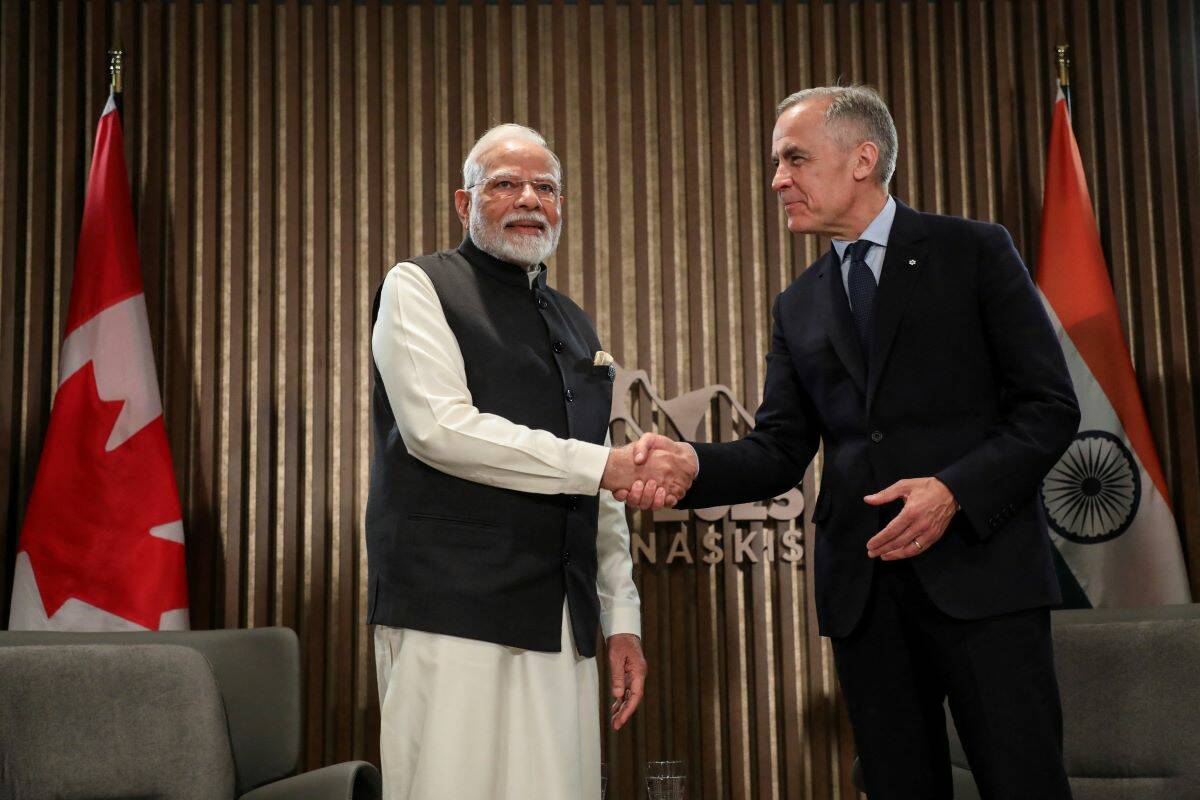
India and Canada have announced a host of agreements, including a 10-year nuclear energy deal, after their prime ministers met in Delhi to reset ties that plummeted due to diplomatic tensions.
Narendra Modi and Mark Carney also struck agreement in areas such as technology, critical minerals, space, defence and education.
Carney said they agreed to conclude a free trade deal, years in the making, by the end of 2026. Both countries want to reduce exposure to punitive US trade tariffs.
Under Carney, the two governments are trying to repair ties that were strained when his predecessor accused Delhi of a link to the 2023 assassination of Sikh separatist Hardeep Singh Nijjar on Canadian soil.
India vociferously rejected the allegation by Justin Trudeau.
Trade and diplomatic relations almost came to a standstill as both sides expelled each other’s diplomats and cancelled visa services. Canada hosts a huge expatriate Indian community.
But since Carney took office last year, the relationship has been cautiously rebuilt —helped by the fact that his government has said it believes India is not currently linked to violent crimes or threats on Canadian soil.
Some in Canada have countered that claim, however, including a Liberal MP from Carney’s own party and members of the Sikh diaspora in Canada, who say they believe they continue to be targeted by India.
Canada’s spy agency listed India late last year as one of the countries carrying out espionage and foreign interference in the country, along with Russia, China and Iran.
In a statement on Monday, the Canadian Security Intelligence Service said its “threat assessment of the main perpetrators of foreign interference and espionage against Canada has not changed”.
Canada’s foreign minister Anita Anand has distanced herself from comments made by a senior Canadian official saying that India had ceased all foreign interference in Canada.
“The words of the senior official are not words that I personally would use,” she told reporters in Delhi after Carney’s meeting with Modi on Monday.
But Anand defended Canada’s decision to re-engage with India, saying “we need to have these diplomatic conversations in order to make progress”.
Carney has not yet spoken to Canadian reporters since his trip began. His office cancelled a planned news conference following the meeting with Modi, citing his tight schedule.
The case of four men charged over Nijjar’s killing is still before the courts.
At talks in Delhi, both Carney and Modi underscored India and Canada’s long-standing relationship, mutual goals and close people-to-people ties.
“In civil nuclear energy, we have reached a landmark deal for long-term uranium supply. We will also work together on small modular reactors and advanced reactors,” Modi told reporters after their meeting at Hyderabad House in Delhi.
He described the two countries as “natural partners in technology and innovation” and said they would enhance co-operation in AI, supercomputing and semiconductors, as well as jointly host a renewable energy summit.
Carney said Canada was well positioned to contribute to energy-hungry India’s nuclear fuel needs and added that the two countries were launching a strategic energy partnership.
He hailed the progress made in rebuilding relations.
“There has been more engagement between the Canadian and Indian governments in the last year than there has been in more than two decades combined,” he said.
On trade, Modi said: “Our target is to reach $50bn in bilateral trade. This is why we have decided to finalise a comprehensive economic partnership soon.”
Carney said he wanted to reach a deal on the “ambitious agreement” by the end of the year. It’s been discussed on-and-off for the past 15 years so concluding it would be a significant achievement.
Analysts say that Carney’s decision to put diplomatic tensions behind him and extend an olive branch to India is a pragmatic one, based on present day geopolitical shifts.
The same holds true for India, which is looking to forge new trade partnerships to diversify its imports and also reduce its reliance on Russia for its energy needs.
Surveys suggest a majority of the Canadian public support re-engaging with India. One recent poll conducted by Angus Reid found that half believe it is the “right time” to restore ties.
The poll also suggests that more Canadians have a favourable view of India (30%) than of the US (26%), as Canada continues to be squeezed by tariffs imposed by the Trump administration.
Earlier on Monday, Carney met India’s Foreign Minister S Jaishankar where the two discussed charting a “forward-looking partnership”.
Carney’s four-day trip began with a visit to the financial capital, Mumbai, where he met business leaders and ministers on 28 February with a view to boost trade and investment in India.
After concluding his trip in Delhi, Carney is set to travel to Australia and then Japan as part of his strategy to diversify Canada’s trade and invite new investments. (BBC)
The president of Iran’s soccer federation says he does not know if the national team can play World Cup matches in the United States following the surprise U.S. and Israeli bombardment of his country.
“What is certain is that after this attack, we cannot be expected to look forward to the World Cup with hope,” Mehdi Taj told sports portal Varzesh3 as Iran traded strikes with Israel as part of a widening war prompted by the bombardment.
The U.S.-Israeli strikes on Iran continued for a second day on Sunday after the killing of Iranian Supreme Leader Ayatollah Ali Khamenei threw the future of the Islamic Republic into uncertainty and raised the risk of regional instability.
Iran has been drawn in Group G at the World Cup and is scheduled to play in Los Angeles – where it faces New Zealand and Belgium on June 15 and 21, respectively – before it plays Egypt in Seattle on June 26.
The United States is hosting the tournament with Canada and Mexico from June 11-July 19.
Fans from Iran were already banned from entering the U.S. in the first iteration of the travel ban announced by the Trump administration.
FIFA did not immediately reply to an email from The Associated Press over the current situation regarding Iran’s participation in the World Cup. (JapanToday)
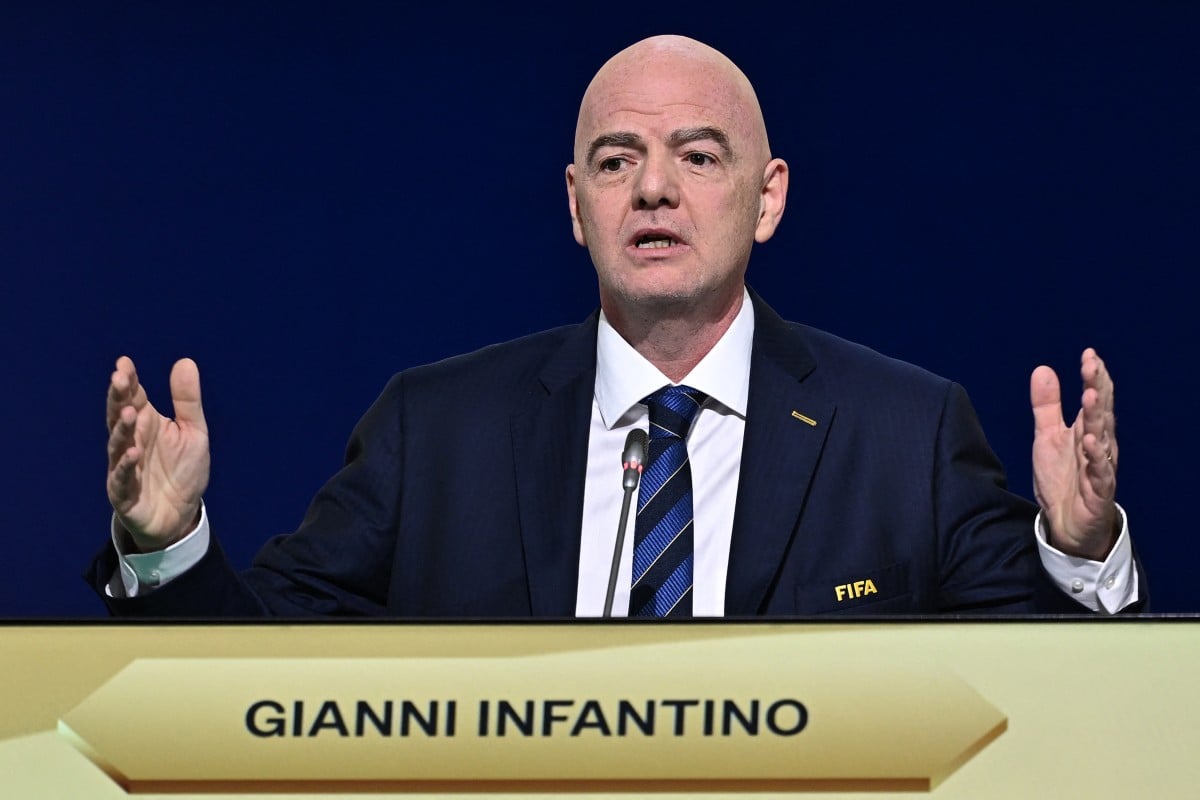
FIFA chief Gianni Infantino defended his controversial decision to award a peace prize to U.S. President Donald Trump as he dismissed calls for a World Cup boycott.
Infantino was widely criticized for giving Trump the honor on behalf of his governing body at the 2026 World Cup draw in Washington DC in December.
The move drew further scrutiny after U.S. forces seized Venezuelan president Miguel Maduro, while Trump caused more controversy with his desire to acquire Greenland for national security reasons.
However, Infantino insisted Trump was deserving of FIFA’s inaugural peace prize, telling Sky News on Monday: “Objectively, he deserves it.
“Whatever we can do to help peace in the world, we should be doing it, and for this reason, for some time we were thinking we should do something to reward people who do something.”
Infantino rejected suggestions there might be a boycott of this year’s World Cup — to be held in the United States, Canada and Mexico from June 11 to July 19 — due to policies adopted at home and abroad by the Trump administration.
There has been unrest in a number of U.S. cities, most notably Minneapolis, over the Trump administration’s approach to immigration enforcement.
But Infantino said there were never calls for businesses to boycott a country, “so why football?”
The 55-year-old added: “In our divided world, in our aggressive world, we need occasions where people can come, can meet around the passion (for football).”
Infantino also said FIFA and UEFA — European football’s governing body — would “have to” look at allowing Russia back into international action.
Russia has been banned since its invasion of Ukraine in 2022, but the International Olympic Committee has now recommended sports federations allow Russian teams to compete at youth level.
“We have to(look at readmitting Russia. Definitely,” Infantino said. “This ban has not achieved anything, it has just created more frustration and hatred.
“Having girls and boys from Russia being able to play football games in other parts of Europe would help.” (JapanToday)
Iran and Egypt have both objected to plans by local organisers in the United States to brand their 2026 World Cup group-stage match as an event supporting the LGBTQ community.
The organising committee in Seattle, Washington, where the fixture is scheduled to take place next year, had previously announced its intention to hold a “Pride Match” coinciding with the northwestern city’s Pride Weekend in late June.
Following last week’s FIFA tournament draw, Egypt and Iran are now slated to face off in Seattle on June 26, the Friday before.
The head of Iran’s Football Federation, Mehdi Taj, was quoted by local news agency ISNA as saying that Tehran and Cairo had both raised “objections against the issue”, which he labelled an “irrational move that supports a certain group”.
Taj did not mention the specific branding of the fixture.
On Monday, Iranian state television said Tehran would “appeal” to FIFA over the matter.
Homosexuality is illegal in Iran under Islamic law and can be punishable by death.
In a statement, the Egyptian Football Association said it had sent a formal letter to FIFA secretary-general Mattias Grafstrom, rejecting “in absolute terms” any activities linked to LGBTQ support during the match.
The EFA said such initiatives would clash with “the cultural, religious and social values” of both Egypt and Iran and urged FIFA to ensure the match would remain focused solely on football.
In Egypt, homosexuality is not expressly outlawed, but is often punished under loosely worded laws prohibiting “debauchery”.
The EFA cited FIFA’s statutes on political and social neutrality, arguing that matches should not be used to promote causes that are “sensitive or of a contentious nature”.
The 2026 World Cup will mark Iran’s seventh participation in the tournament, which will be jointly hosted by the United States, Canada and Mexico.
Iran and the United States have had no diplomatic relations since 1980, following a hostage crisis in the wake of the 1979 Islamic revolution.
Iran had initially opted out of Friday’s draw to protest the US refusal to grant visas to several members of its delegation but eventually reversed the decision.
On Tuesday, Taj said some Iranian players might face visa problems over their service in the Iranian military, which includes the Islamic Revolutionary Guards Corps (IRGC) — designated a “terrorist organisation” by the US in 2019.
“For the World Cup, we must work on having replacement options, and we have already started that,” he said. (Punch)
The draw for the 2026 FIFA World Cup, to be hosted by the United States, Canada, and Mexico from 11 June to 19 July 2026, was conducted in Washington on Friday, producing 12 groups for the expanded tournament.
In Group A, Mexico will face South Africa, South Korea and a qualifier. Group B pairs Canada with a qualifier, Qatar and Switzerland. Brazil take their place in Group C alongside Morocco, Haiti and Scotland, while hosts United States lead Group D with Paraguay, Australia and a qualifier.
Germany heads Group E with Curaçao, Ivory Coast and Ecuador. The Netherlands will compete in Group F with Japan, Tunisia and a qualifier. Belgium, Egypt, Iran and New Zealand make up Group G. Group H features Spain, Cape Verde, Saudi Arabia and Uruguay.
France are placed in Group I with Senegal, Norway and a qualifier. Argentina will contest Group J with Algeria, Austria and Jordan. Group K includes Portugal, Uzbekistan, Colombia and a qualifier. England lead Group L with Croatia, Ghana and Panama. (Guardian)
United States President Donald Trump received the inaugural Fifa Peace Prize before the draw for the 2026 Fifa World Cup.
The award has been introduced this year by Fifa president Gianni Infantino, designated for a person who has “taken exceptional and extraordinary actions for peace” and “united people across the world”.
It was widely expected that Trump, who arrived at the ceremony with Infantino and has made several public appearances with him in recent months, would be the winner.
That was confirmed at the ceremony in Washington DC on Friday.
As well as receiving a large golden trophy, Trump was also given a medal and certificate by Infantino before making a speech.
Trump stated he had saved “tens of millions of lives” through diplomatic interventions and had “stopped wars happening just before they started”.
“This is truly one of the great honours of my life,” Trump said, before claiming that the 2026 World Cup has set a new record for ticket sales.
“Gianni has done an incredible job. It is a nice tribute to you and the game of football, or as we call it soccer. It is beyond the numbers we thought were possible,” Trump said.
“The world is a safer place now. The USA was not doing well a year ago; now we are the hottest country in the world right now.”
The 2026 World Cup will be co-hosted by the United States, Canada and Mexico, and will take place between June 11 and July 19.
Trump later returned to the stage alongside Mexico’s President Claudia Sheinbaum and Canada’s Prime Minister Mark Carney to perform the ceremonial opening to the draw.
The three leaders drew the balls of their respective nations, which had already been assigned their groups. Afterwards, the trio posed for a selfie taken by Infantino.
Mexico are in Group A – and will play in the tournament’s opening match – while Canada are in Group B and USA feature in Group D.
Trump, after repeating his comments about ticket sales, joked about the name clash between American football and what Americans generally call soccer.
“We have to find another name for the NFL,” Trump said. “This is football, we call it soccer here in the USA but it is really football. It doesn’t make sense that we call it soccer.” (BBC)