
Posted on Leave a comment

Global outrage mounts as funeral held for five journalists killed by Israel

The death of the prominent Al Jazeera journalist Anas al-Sharif, killed along with four colleagues in an Israeli airstrike on Sunday, prompted condemnation from around the world, as hundreds of mourners carried their bodies through the streets of Gaza City.

Sharif, one of Al Jazeera’s most recognisable faces in Gaza, was killed while inside a tent for journalists outside al-Shifa hospital in Gaza City on Sunday night. Seven people were killed in the attack, including the Al Jazeera correspondent Mohammed Qreiqeh and the camera operators Ibrahim Zaher, Mohammed Noufal and Moamen Aliwa, according to the Qatar-based broadcaster.

On Monday, the Guardian visited the site where the journalists were killed. Wadi Abu al-Saud, a Palestinian journalist who was near the tent when the Israeli strike occurred on Sunday, said the attack happened at 11.22pm, just after he had finished filming his latest news bulletin.

“I entered the tent opposite theirs, raised my phone to make a call, and then the explosion occurred, Saud said. “A piece of shrapnel hit my phone. I looked back and saw people burning in flames. I tried to extinguish them. Anas and the others had died instantly from the strike.”

In two videos of the aftermath of the strike, Saud can be seen carrying the bodies of those killed. “From now on, I will not continue the coverage,” he said. “I will return to my life as a citizen. The truth has died and the coverage has ended.”

The Israel Defense Forces (IDF) admitted carrying out the attack, claiming Sharif was the leader of a Hamas cell responsible for rocket attacks against Israel – an allegation that Al Jazeera and Sharif had previously dismissed as baseless.

It was the first time during the war that Israel’s military has swiftly claimed responsibility after a journalist was killed in a strike.

Pro-Israel advocates on social media hailed the killing of Sharif and posted photos handed out by the IDF of photos the journalist took with the former Hamas leader Yahya Sinwar, taken before Hamas’s attack on 7 October.

Sara Qudah, the Middle East and north Africa director at the Committee to Protect Journalists (CPJ), said: “Israel’s pattern of labelling journalists as militants without providing credible evidence raises serious questions about its intent and respect for press freedom.”

In July, Sharif told CPJ that he lived with the “feeling that I could be bombed and martyred at any moment”.

In July, Sharif told CPJ that he lived with the “feeling that I could be bombed and martyred at any moment”.

Reporters Without Borders condemned the “acknowledged murder by the Israeli army” of Sharif in Gaza and called on the international community to intervene.

Keir Starmer’s spokesperson said: “We are gravely concerned by the repeated targeting of journalists in Gaza. Reporters covering conflicts are afforded protection under international humanitarian law and journalists must be able to report independently without fear, and Israel must ensure journalists can carry out their work safely.”

The UN human rights office condemned the targeting of the journalists’ tent, saying it was “in grave breach of international humanitarian law”.

Al Jazeera said the attack was “a desperate attempt to silence voices in anticipation of the occupation of Gaza” and called Sharif “one of Gaza’s bravest journalists”.

People gathered at Sheikh Radwan cemetery in the heart of the Gaza Strip to mourn the journalists, whose bodies lay wrapped in white sheets at al-Shifa hospital before their burial. Friends, colleagues and relatives embraced and consoled one another.

The area where the attack took place was crowded with media workers on Monday, some speaking to cameras or mobile phones, others taking photos.

Islam al-Za’anoun, a news correspondent for Palestine TV and several Arab channels who participated in the funeral, said Sunday’s attack was “a turning point in the world of journalism”.

She said: “Despite all the threats he received and the Israeli media’s incitement against him, al-Sharif continued reporting. Now one question haunts me: Who will be next on the list? Will it be me?”

Bilal Abu Khalifa, a presenter at Al Jazeera, said he had met Sharif four days ago. “He told me he was in danger,” Abu Khalifa said. “I asked him not to go out or appear publicly too often. He gave me a very simple answer: Bilal, I will not leave Gaza except to the sky! I will not leave Gaza even if I am killed. I know I am on the assassination list, but I will continue to expose the crimes of the Israeli army against my people and show the world, and everyone who stands by them, the truth.”

In a final message, which Al Jazeera said had been written on 6 April and which was posted to Sharif’s X account after his death, the reporter said he had “lived through pain in all its details, tasted suffering and loss many times, yet I never once hesitated to convey the truth as it is, without distortion or falsification.”

He continued: “Allah may bear witness against those who stayed silent, those who accepted our killing, those who choked our breath, and whose hearts were unmoved by the scattered remains of our children and women, doing nothing to stop the massacre that our people have faced for more than a year and a half.”

After the Hamas attacks on 7 October 2023, Israel barred international journalists from entering Gaza – one of the rare moments when international reporters have been denied access to an active war zone. Since then, the task of documenting the war has fallen heavily on Palestinian journalists, often at the cost of their lives – themselves caught in its devastation, displaced multiple times, their homes reduced to rubble, friends and relatives killed, and at times queueing for food at perilous distribution points.

According to Gaza’s government media office, 238 journalists have been killed by Israel since the war started. CPJ said at least 186 journalists had been killed in the Gaza conflict. Israel denies deliberately targeting journalists.

In a report released this year, the Watson School of International and Public Affairs’ costs of war project said more journalists had been killed in Gaza than in both world wars, the Vietnam war, the wars in Yugoslavia and the US war in Afghanistan combined. (Guardian)
Posted on Leave a comment

Australia to recognise Palestinian statehood; New Zealand may follow

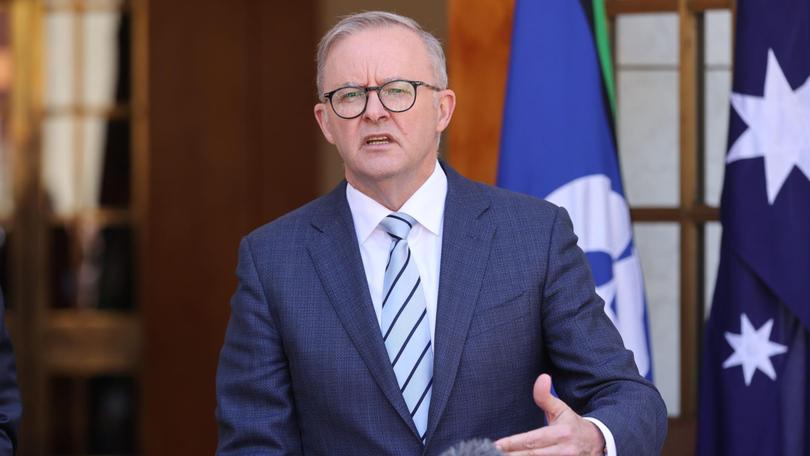
Australia will recognise a Palestinian state in September, Prime Minister Anthony Albanese has announced, drawing condemnation from Israel.

Albanese said on Monday that his government would formally announce the move when the United Nations General Assembly (UNGA) meets in New York.

“A two-state solution is humanity’s best hope to break the cycle of violence in the Middle East and to bring an end to the conflict, suffering and starvation in Gaza,” Albanese said at a news conference in Canberra.

Australia’s announcement comes as Canada, France and the United Kingdom are also preparing to formally recognise Palestine at the meeting next month, joining the vast majority of UN member states that already do so.

Israeli Ambassador to Australia Amir Maimon said recognition of a Palestinian state will do nothing to end the war in Gaza, telling the Australian Broadcasting Corporation (ABC): “We reject the recognition, unilateral recognition.”

Israeli President Isaac Herzog also slammed the Australian announcement as a reward for Hamas for its October 7, 2023, attack on southern Israel, repeating the Israeli government’s stance on all recognition announcements thus far.

This latest recognition comes about a week after hundreds of thousands of Australians marched across the Sydney Harbour Bridge to protest Israel’s war in the Gaza Strip.

Speaking a day after the protest, Australian Minister for Foreign Affairs Penny Wong told ABC that “there is a risk there will be no Palestine left to recognise.”

“In relation to recognition, I’ve said for over a year now, it’s a matter of when, not if,” Wong added.

The opposition Liberal Party criticised the move, saying it put Australia at odds with the United States, its closest ally, and reversed a bipartisan consensus that there should be no recognition while Hamas remains in control of Gaza.

“Despite his words today, the reality is Anthony Albanese has committed Australia to recognising Palestine while hostages remain in tunnels under Gaza and with Hamas still in control of the population of Gaza. Nothing he has said today changes that fact,” Liberal Party leader Sussan Ley said in a statement.

“Recognising a Palestinian state prior to a return of the hostages and defeat of Hamas, as the Government has today, risks delivering Hamas one of its strategic objectives of the horrific terrorism of October 7.”

The Australian Greens, the fourth largest party in parliament, welcomed the move to recognise Palestine but said the announcement did not meet the “overwhelming calls from the Australian public for the government to take material action”.

“Millions of Australians have taken to the streets, including 300,000 last weekend in Sydney alone, calling for sanctions and an end to the arms trade with Israel. The Albanese Government is still ignoring this call,” Senator David Shoebridge, the party’s spokesperson on foreign affairs, said in a statement.

The Australian Palestine Advocacy Network (APAN) also criticised the announcement, describing it as a “political fig leaf, letting Israel’s genocide and apartheid continue unchallenged, and distracting from Australia’s complicity in Israeli war crimes via ongoing weapons and components trade”.

“Palestinian rights are not a gift to be granted by Western states. They are not dependent on negotiation with, or the behaviour or approval of their colonial oppressors,” APAN said in a statement.

According to Albanese, Australia’s decision to recognise Palestinians’ right to their own state will be “predicated on the commitments Australia has received from the Palestinian Authority (PA)”.

These “detailed and significant commitments” include the PA reaffirming it “recognises Israel’s right to exist in peace and security” and committing to “demilitarise and to hold general elections”, Albanese said while announcing the decision.

The PA is a governing body that has overseen parts of the Israeli-occupied West Bank since the mid-1990s.

It has not held parliamentary elections since 2006 and has been criticised by some Palestinians for helping Israel to keep tight control over residents in the occupied West Bank.

Albanese said the commitments secured by Australia were “an opportunity to deliver self-determination for the people of Palestine in a way that isolates Hamas, disarms it and drives it out of the region once and for all”.

Hamas has been in power in the Gaza Strip since 2007 when it fought a brief war against forces loyal to PA President Mahmoud Abbas.

Meanwhile, New Zealand Foreign Minister Winston Peters said on Monday that his country’s cabinet will make a formal decision on Palestinian statehood in September.

“Some of New Zealand’s close partners have opted to recognise a Palestinian state, and some have not,” Peters said in a statement.

“Ultimately, New Zealand has an independent foreign policy, and on this issue, we intend to weigh up the issue carefully and then act according to New Zealand’s principles, values and national interest.”

Peters said that while New Zealand has for some time considered the recognition of a Palestinian state a “matter of when, not if”, the issue is not “straightforward” or “clear-cut”.

“There are a broad range of strongly held views within our Government, Parliament and indeed New Zealand society over the question of recognition of a Palestinian state,” he said.

“It is only right that this complicated issue be approached calmly, cautiously and judiciously. Over the next month, we look forward to canvassing this broad range of views before taking a proposal to Cabinet.”

Of the UN’s 193 member states, 147 already recognise Palestinian statehood, representing three-quarters of the world’s countries and the vast majority of its population.

Under its 1947 plan to partition Palestine, the UNGA said it would grant 45 percent of the land to an Arab state although this never eventuated.

The announcements by Australia and New Zealand on Monday came hours after an Israeli attack killed five Al Jazeera staff members in Gaza City and as Israeli Prime Minister Benjamin Netanyahu continues to threaten a full-scale invasion of the city in the north of the Gaza Strip.

Israel’s war on Gaza has killed at least 61,430 people, according to Gaza’s health authorities.

More than 200 people, including 100 children, have died from starvation under Israel’s punishing siege, according to health authorities. (Aljazeera)