
Posted on Leave a comment

Israel kills over 50 in Gaza; Qatar calls Israeli attack ‘state terror’

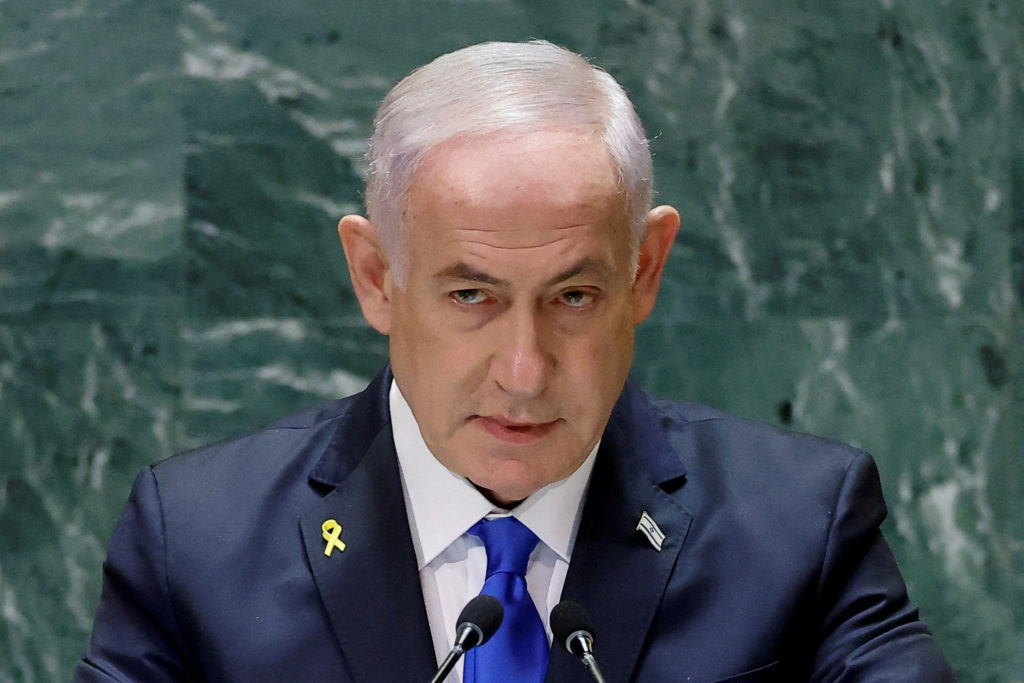
As the world’s attention was focused on Israel’s attack on Hamas leaders in Doha, Israeli forces continued their unrelenting bombardment of Gaza, killing more than 50 people on Tuesday.

Among the dead are nine Palestinians, who had gathered in the enclave’s south seeking aid. Israel pressed on with its offensive in Gaza City after Prime Minister Benjamin Netanyahu threatened Palestinians to flee to the south for their lives.

The Wafa news agency reported that a drone strike on a makeshift tent sheltering displaced families at Gaza’s port killed two civilians and injured others. Warplanes also hit several residential buildings, including four homes in the al-Mukhabarat area and the Zidan building northwest of Gaza City, it reported.

Another house was reportedly bombed in the Talbani neighbourhood of Deir el-Balah in central Gaza, while two young men were killed in an attack on civilians in the az-Zarqa area of Tuffah, northeast of Gaza City.

Al Jazeera’s Sanad fact-checking agency confirmed footage showing an Israeli strike on the Ibn Taymiyyah mosque in Deir el-Balah. The video captured a flash of light before the mosque’s minaret was enveloped in smoke. Despite the blast, the minaret appeared to remain standing.

Israel issued new evacuation threats on Monday, releasing maps warning Palestinians to leave a highlighted building and nearby tents on Jamal Abdel Nasser Street in Gaza City or face death. It told residents to move to the so-called “humanitarian area” in al-Mawasi, a barren stretch of coast in southern Gaza.

But al-Mawasi itself has been repeatedly bombed, despite Israel insisting it is a safe zone. At the start of the year, about 115,000 people lived there. Today, aid agencies estimate that more than 800,000 people – nearly a third of Gaza’s population – are crammed into overcrowded makeshift camps.

Philippe Lazzarini, the chief of the United Nations agency for Palestinian refugees, UNRWA, described al-Mawasi as a vast camp “concentrating hungry Palestinians in despair”.

“There is no safe place in Gaza, let alone a humanitarian zone. Warnings of famine have fallen on deaf ears,” he said.

The Palestinian Civil Defence warned that “Gaza City is burning, and humanity is being annihilated”.

The rescue agency said that in just 72 hours, five high-rise towers containing more than 200 apartments were destroyed, leaving thousands of people homeless.

More than 350 tents sheltering displaced families were also flattened, it added, forcing nearly 7,600 people to sleep in the open, “struggling against death, hunger, and unbearable heat”.

More than 64,000 Palestinians have been killed, some 20,000 of them children, in the Israeli offensive, which has been dubbed a genocide by numerous scholars and activists. The International Criminal Court has also issued an arrest warrant for Netanyahu for alleged war crimes.

The Government Media Office in Gaza said that more than 1.3 million people remain in Gaza City and surrounding areas, despite Israeli attempts to push them south. It described the evacuation orders as an effort to carry out “the crime of forced displacement in violation of all international laws”.

More than 90 percent of Gaza’s 2.3 million people have been displaced multiple times in 23 months of genocidal war, and an Israeli curb on aid entry, including food items, has led to starvation deaths. Last month, a UN agency declared famine in Gaza, affecting half a million people.

On Tuesday morning, Palestinians in central Gaza staged a protest against the latest evacuation orders.

Reporting from Deir el-Balah, Al Jazeera’s Hind Khoudary said that demonstrators carried banners reading, “We will not leave”, and “Not going out”.

“The primary goal of the [Israeli] occupation is displacement,” said Bajees al-Khalidi, a displaced Palestinian at the protest. “But there’s no place left, not in the south, nor the north. We’ve become completely trapped.”

Violence also flared in the occupied West Bank, where Israeli forces killed two teenagers in the Jenin refugee camp, according to the Wafa news agency.

Mourners on Tuesday buried 14-year-old Islam Noah, who was shot while attempting to enter the besieged refugee camp. A funeral was also held for another 14-year-old, Muhammad Alawneh. Two others were wounded in the same incident.

Israel sent missiles at Doha as Hamas leaders were meeting in the Qatari capital for talks on the latest ceasefire proposal from the United States to end the war in Gaza. Hamas said five people were killed, while Qatar said a security official was also among the dead. Hamas said its leadership survived the assassination attempt.

Qatar’s Emir Sheikh Tamim bin Hamad Al Thani condemned Israel’s “reckless criminal attack” in a phone call with US President Donald Trump. Qatari Prime Minister and Minister of Foreign Affairs Sheikh Mohammed bin Abdulrahman bin Jassim Al Thani called the attack “state terrorism”.

The Qatari prime minister said Doha would continue to work to end Israel’s war on Gaza, but raised doubts about the viability of the most recent talks. “When it comes to the current talks, I don’t think there is something valid right now after we’ve seen such an attack,” he said.

Qatar has sent a letter to the UN Security Council, condemning what it calls a cowardly Israeli assault on residential buildings in Doha.

The Doha attack has drawn global condemnation, with the UN chief calling it a “flagrant violation” of the sovereignty and territorial integrity of Qatar.

The White House claimed that the US had warned Qatar of the impending strike, but Doha rejected that account, insisting the warning came only after the bombing had begun.

Trump later said he felt “very badly about the location of the attack” and that he had assured Qatar that it would not happen again.

“This was a decision made by Prime Minister Netanyahu, it was not a decision made by me,” Trump wrote on Truth Social. “Unilaterally bombing inside Qatar, a Sovereign Nation and close Ally of the United States, that is working very hard and bravely taking risks with us to broker Peace, does not advance Israel or America’s goals.” (AlJazeera)
Posted on Leave a comment

Israeli PM Netanyahu approves Gaza City seizure despite ceasefire talks

Israeli Prime Minister Benjamin Netanyahu said he will give final approval for the seizure of Gaza City while also restarting negotiations with Hamas aimed at returning all the remaining captives and ending the nearly two-year-old war, but on “terms acceptable to Israel”.

Speaking to soldiers near Gaza on Thursday, Netanyahu said he was still set on approving plans for seizing Gaza City, the densely populated centre at the heart of the Palestinian enclave, forcibly displacing close to 1 million people and carrying out the systematic demolitions of Palestinian homes.

“At the same time I have issued instructions to begin immediate negotiations for the release of all our hostages and an end to the war on terms acceptable to Israel,” Netanyahu said, adding: “We are in the decision-making phase.”

The wide-scale operation in Gaza City could start within days after Netanyahu grants final approval at a meeting with senior security officials later on Thursday.

Israeli forces have already stepped up attacks there, and thousands of Palestinians have left their homes as Israeli tanks edged closer to Gaza City over the last 10 days.

Hamas said earlier this week that it had agreed to a ceasefire proposal from mediators Qatar and Egypt, which, if accepted by Israel, could forestall the assault.

Israel’s army plans to call up 60,000 reservists and extend the service of 20,000 more.

The proposal on the table calls for a 60-day ceasefire and the release of 10 living captives held in Gaza by Hamas and of 18 bodies. In turn, Israel would release about 200 Palestinian prisoners held by Israel.

Once the temporary ceasefire begins, the proposal is for Hamas and Israel to begin negotiations on a permanent ceasefire that would include the return of the remaining captives.

Marwan Bishara, Al Jazeera’s senior political analyst, has likened Netanyahu’s announcement about relaunching purported truce talks while the military escalates its assault on Gaza City to “negotiation under fire”.

“There will be no stoppage of the fighting. There will be no breaks in the genocide. Hamas is going to have to make up its mind as Israel kills dozens, perhaps hundreds, of Palestinians moving forward [and] as it transfers a million Palestinians southward in Gaza,” Bishara said.

“Israel is now dictating all the terms, and it’s not listening to anyone, and it has a green light from Washington.”

At least 48 Palestinians were killed in Israeli attacks across Gaza since dawn, including 16 aid seekers who were the latest victims of shootings at GHF aid distribution points.

Meanwhile, two more people have starved to death in Gaza in the past 24 hours, the Health Ministry said on Thursday. The new deaths raised the number of Palestinians who have died from Israeli-induced hunger to 271, including 112 children, since the war began.

A renewed Israeli offensive could bring even more casualties and displacement to the famine-struck territory. The UN agency for Palestinian refugees (UNRWA) estimated that 90 percent of Gaza’s residents have been displaced, warning that shelters are deteriorating and any further displacement will worsen the catastrophic situation.

The Palestinian Ministry of Interior denounced Israel’s push to seize Gaza City as a “death sentence” for the more than one million people living there.

The Palestinian Health Ministry also released a statement responding to what it says is an Israeli push to transfer health system resources to the south of the enclave.

“The Ministry of Health expresses its rejection of any step that would undermine what remains of the health system following the systematic destruction carried out by the Israeli occupation authorities,” it said.

“This step would deprive more than one million people of their right to treatment and put the lives of residents, patients and the wounded at imminent risk.”

Some Palestinian families in Gaza City have left for shelters along the coast, while others have moved to central and southern parts of the enclave, according to residents there.

“We are facing a bitter, bitter situation, to die at home or leave and die somewhere else. As long as this war continues, survival is uncertain,” Rabah Abu Elias, 67, a father of seven, told the Reuters news agency.

“In the news, they speak about a possible truce, on the ground, we only hear explosions and see deaths. To leave Gaza City or not isn’t an easy decision to make,” he said.

Meanwhile, Israeli air attacks also destroyed a tent camp in Deir el-Balah, central Gaza, where many people have sought refuge. Residents said the Israeli military warned them to flee shortly before the attacks set the camp ablaze.

Families, many with children, could later be seen sifting through the ashes for the belongings they had managed to take with them during earlier evacuations.

Mohammad Kahlout, who had been displaced from northern Gaza, told The Associated Press they were given just five minutes to gather what they could and flee.

“We are civilians, not terrorists. What did we do, and what did our children do, to be displaced again?” (AlJazeera)

Posted on Leave a comment

Global outrage mounts as funeral held for five journalists killed by Israel

The death of the prominent Al Jazeera journalist Anas al-Sharif, killed along with four colleagues in an Israeli airstrike on Sunday, prompted condemnation from around the world, as hundreds of mourners carried their bodies through the streets of Gaza City.

Sharif, one of Al Jazeera’s most recognisable faces in Gaza, was killed while inside a tent for journalists outside al-Shifa hospital in Gaza City on Sunday night. Seven people were killed in the attack, including the Al Jazeera correspondent Mohammed Qreiqeh and the camera operators Ibrahim Zaher, Mohammed Noufal and Moamen Aliwa, according to the Qatar-based broadcaster.

On Monday, the Guardian visited the site where the journalists were killed. Wadi Abu al-Saud, a Palestinian journalist who was near the tent when the Israeli strike occurred on Sunday, said the attack happened at 11.22pm, just after he had finished filming his latest news bulletin.

“I entered the tent opposite theirs, raised my phone to make a call, and then the explosion occurred, Saud said. “A piece of shrapnel hit my phone. I looked back and saw people burning in flames. I tried to extinguish them. Anas and the others had died instantly from the strike.”

In two videos of the aftermath of the strike, Saud can be seen carrying the bodies of those killed. “From now on, I will not continue the coverage,” he said. “I will return to my life as a citizen. The truth has died and the coverage has ended.”

The Israel Defense Forces (IDF) admitted carrying out the attack, claiming Sharif was the leader of a Hamas cell responsible for rocket attacks against Israel – an allegation that Al Jazeera and Sharif had previously dismissed as baseless.

It was the first time during the war that Israel’s military has swiftly claimed responsibility after a journalist was killed in a strike.

Pro-Israel advocates on social media hailed the killing of Sharif and posted photos handed out by the IDF of photos the journalist took with the former Hamas leader Yahya Sinwar, taken before Hamas’s attack on 7 October.

Sara Qudah, the Middle East and north Africa director at the Committee to Protect Journalists (CPJ), said: “Israel’s pattern of labelling journalists as militants without providing credible evidence raises serious questions about its intent and respect for press freedom.”

In July, Sharif told CPJ that he lived with the “feeling that I could be bombed and martyred at any moment”.

In July, Sharif told CPJ that he lived with the “feeling that I could be bombed and martyred at any moment”.

Reporters Without Borders condemned the “acknowledged murder by the Israeli army” of Sharif in Gaza and called on the international community to intervene.

Keir Starmer’s spokesperson said: “We are gravely concerned by the repeated targeting of journalists in Gaza. Reporters covering conflicts are afforded protection under international humanitarian law and journalists must be able to report independently without fear, and Israel must ensure journalists can carry out their work safely.”

The UN human rights office condemned the targeting of the journalists’ tent, saying it was “in grave breach of international humanitarian law”.

Al Jazeera said the attack was “a desperate attempt to silence voices in anticipation of the occupation of Gaza” and called Sharif “one of Gaza’s bravest journalists”.

People gathered at Sheikh Radwan cemetery in the heart of the Gaza Strip to mourn the journalists, whose bodies lay wrapped in white sheets at al-Shifa hospital before their burial. Friends, colleagues and relatives embraced and consoled one another.

The area where the attack took place was crowded with media workers on Monday, some speaking to cameras or mobile phones, others taking photos.

Islam al-Za’anoun, a news correspondent for Palestine TV and several Arab channels who participated in the funeral, said Sunday’s attack was “a turning point in the world of journalism”.

She said: “Despite all the threats he received and the Israeli media’s incitement against him, al-Sharif continued reporting. Now one question haunts me: Who will be next on the list? Will it be me?”

Bilal Abu Khalifa, a presenter at Al Jazeera, said he had met Sharif four days ago. “He told me he was in danger,” Abu Khalifa said. “I asked him not to go out or appear publicly too often. He gave me a very simple answer: Bilal, I will not leave Gaza except to the sky! I will not leave Gaza even if I am killed. I know I am on the assassination list, but I will continue to expose the crimes of the Israeli army against my people and show the world, and everyone who stands by them, the truth.”

In a final message, which Al Jazeera said had been written on 6 April and which was posted to Sharif’s X account after his death, the reporter said he had “lived through pain in all its details, tasted suffering and loss many times, yet I never once hesitated to convey the truth as it is, without distortion or falsification.”

He continued: “Allah may bear witness against those who stayed silent, those who accepted our killing, those who choked our breath, and whose hearts were unmoved by the scattered remains of our children and women, doing nothing to stop the massacre that our people have faced for more than a year and a half.”

After the Hamas attacks on 7 October 2023, Israel barred international journalists from entering Gaza – one of the rare moments when international reporters have been denied access to an active war zone. Since then, the task of documenting the war has fallen heavily on Palestinian journalists, often at the cost of their lives – themselves caught in its devastation, displaced multiple times, their homes reduced to rubble, friends and relatives killed, and at times queueing for food at perilous distribution points.

According to Gaza’s government media office, 238 journalists have been killed by Israel since the war started. CPJ said at least 186 journalists had been killed in the Gaza conflict. Israel denies deliberately targeting journalists.

In a report released this year, the Watson School of International and Public Affairs’ costs of war project said more journalists had been killed in Gaza than in both world wars, the Vietnam war, the wars in Yugoslavia and the US war in Afghanistan combined. (Guardian)