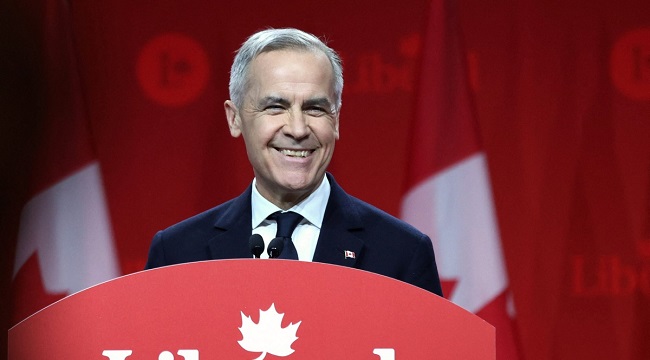
Canadian Prime Minister Mark Carney says his government is developing a government-owned investment fund.
Carney said on Monday that the fund, a first for the country, will invest in major Canadian industrial projects in areas such as energy, infrastructure, mining, agriculture and technology. It will begin at 25 billion Canadian dollars (US$18bn).
The prime minister said the federal government will put up funds alongside private investors. The money will help finance major projects that Carney’s government is focused on building as Canada seeks to diversify away from the United States.
US President Donald Trump has threatened Canada’s economy and sovereignty with tariffs and claims that Canada could be “the 51st state” in the US.
Carney is a former central banker in England and Canada as well as chairman of the board of directors for Bloomberg.
“We take a lesson from other jurisdictions that had the foresight many decades ago to start sovereign wealth funds,” Carney said. “In some cases, they began with a domestic focus then outgrew the scale of the domestic focus.”
Sovereign wealth funds invest in assets, such as stocks, bonds and real estate. They are typically funded by a country’s budgetary surpluses, which Canada currently does not have. The announcement came a day before Carney’s government announces its spring economic update.
There are more than 90 sovereign wealth funds around the world. They manage more than $8 trillion in assets, according to the International Forum of Sovereign Wealth Funds, a London-based organisation made up of roughly 50 of these entities.
Trump ordered the creation of a US sovereign wealth fund last year. In the US, more than 20 sovereign wealth funds exist at the state level, according to an analysis from the Center for Global Development, a Washington, DC-based nonpartisan think tank. (AlJazeera)
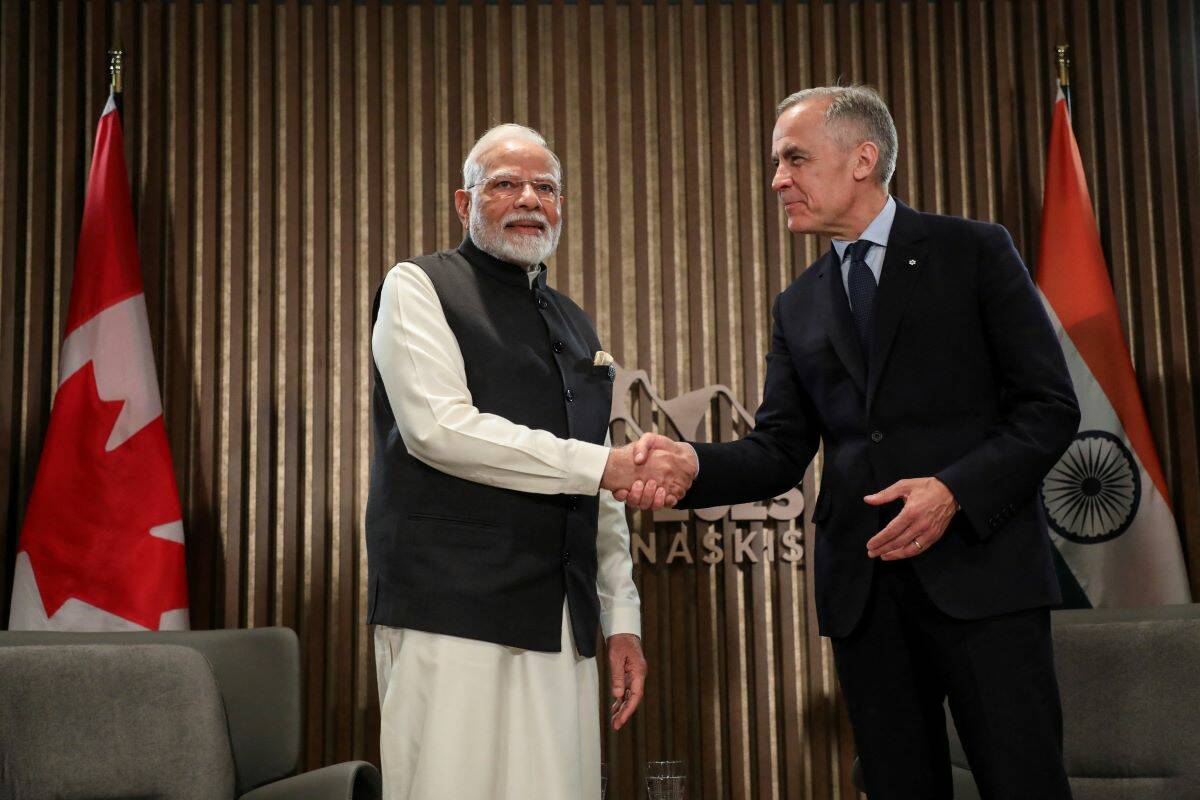
India and Canada have announced a host of agreements, including a 10-year nuclear energy deal, after their prime ministers met in Delhi to reset ties that plummeted due to diplomatic tensions.
Narendra Modi and Mark Carney also struck agreement in areas such as technology, critical minerals, space, defence and education.
Carney said they agreed to conclude a free trade deal, years in the making, by the end of 2026. Both countries want to reduce exposure to punitive US trade tariffs.
Under Carney, the two governments are trying to repair ties that were strained when his predecessor accused Delhi of a link to the 2023 assassination of Sikh separatist Hardeep Singh Nijjar on Canadian soil.
India vociferously rejected the allegation by Justin Trudeau.
Trade and diplomatic relations almost came to a standstill as both sides expelled each other’s diplomats and cancelled visa services. Canada hosts a huge expatriate Indian community.
But since Carney took office last year, the relationship has been cautiously rebuilt —helped by the fact that his government has said it believes India is not currently linked to violent crimes or threats on Canadian soil.
Some in Canada have countered that claim, however, including a Liberal MP from Carney’s own party and members of the Sikh diaspora in Canada, who say they believe they continue to be targeted by India.
Canada’s spy agency listed India late last year as one of the countries carrying out espionage and foreign interference in the country, along with Russia, China and Iran.
In a statement on Monday, the Canadian Security Intelligence Service said its “threat assessment of the main perpetrators of foreign interference and espionage against Canada has not changed”.
Canada’s foreign minister Anita Anand has distanced herself from comments made by a senior Canadian official saying that India had ceased all foreign interference in Canada.
“The words of the senior official are not words that I personally would use,” she told reporters in Delhi after Carney’s meeting with Modi on Monday.
But Anand defended Canada’s decision to re-engage with India, saying “we need to have these diplomatic conversations in order to make progress”.
Carney has not yet spoken to Canadian reporters since his trip began. His office cancelled a planned news conference following the meeting with Modi, citing his tight schedule.
The case of four men charged over Nijjar’s killing is still before the courts.
At talks in Delhi, both Carney and Modi underscored India and Canada’s long-standing relationship, mutual goals and close people-to-people ties.
“In civil nuclear energy, we have reached a landmark deal for long-term uranium supply. We will also work together on small modular reactors and advanced reactors,” Modi told reporters after their meeting at Hyderabad House in Delhi.
He described the two countries as “natural partners in technology and innovation” and said they would enhance co-operation in AI, supercomputing and semiconductors, as well as jointly host a renewable energy summit.
Carney said Canada was well positioned to contribute to energy-hungry India’s nuclear fuel needs and added that the two countries were launching a strategic energy partnership.
He hailed the progress made in rebuilding relations.
“There has been more engagement between the Canadian and Indian governments in the last year than there has been in more than two decades combined,” he said.
On trade, Modi said: “Our target is to reach $50bn in bilateral trade. This is why we have decided to finalise a comprehensive economic partnership soon.”
Carney said he wanted to reach a deal on the “ambitious agreement” by the end of the year. It’s been discussed on-and-off for the past 15 years so concluding it would be a significant achievement.
Analysts say that Carney’s decision to put diplomatic tensions behind him and extend an olive branch to India is a pragmatic one, based on present day geopolitical shifts.
The same holds true for India, which is looking to forge new trade partnerships to diversify its imports and also reduce its reliance on Russia for its energy needs.
Surveys suggest a majority of the Canadian public support re-engaging with India. One recent poll conducted by Angus Reid found that half believe it is the “right time” to restore ties.
The poll also suggests that more Canadians have a favourable view of India (30%) than of the US (26%), as Canada continues to be squeezed by tariffs imposed by the Trump administration.
Earlier on Monday, Carney met India’s Foreign Minister S Jaishankar where the two discussed charting a “forward-looking partnership”.
Carney’s four-day trip began with a visit to the financial capital, Mumbai, where he met business leaders and ministers on 28 February with a view to boost trade and investment in India.
After concluding his trip in Delhi, Carney is set to travel to Australia and then Japan as part of his strategy to diversify Canada’s trade and invite new investments. (BBC)
President Donald Trump said late Thursday that he was ending “all trade negotiations” with Canada because of a television ad opposing U.S. tariffs that he said misstated the facts and called “egregious behavior” aimed at influencing U.S. court decisions.
The post on Trump’s social media site came after Canadian Prime Minister Mark Carney said he aims to double his country’s exports to countries outside the U.S. because of the threat posed by Trump’s tariffs. Trump’s call for an abrupt end to negotiations could further inflame trade tensions that already have been building between the two neighboring countries for months.
Trump posted, “The Ronald Reagan Foundation has just announced that Canada has fraudulently used an advertisement, which is FAKE, featuring Ronald Reagan speaking negatively about Tariffs.”
“The ad was for $75,000. They only did this to interfere with the decision of the U.S. Supreme Court, and other courts,” Trump wrote on his social media site. “TARIFFS ARE VERY IMPORTANT TO THE NATIONAL SECURITY, AND ECONOMY, OF THE U.S.A. Based on their egregious behavior, ALL TRADE NEGOTIATIONS WITH CANADA ARE HEREBY TERMINATED.”
Carney’s office didn’t immediately respond to a request for comment. The prime minister was set to leave Friday morning for a summit in Asia, while Trump is set to do the same Friday evening.
Earlier Thursday night, the Ronald Reagan Presidential Foundation and Institute posted on X that an ad created by the government of Ontario “misrepresents the ‘Presidential Radio Address to the Nation on Free and Fair Trade’ dated April 25, 1987.” It added that Ontario did not receive foundation permission “to use and edit the remarks.”
The foundation said it is “reviewing legal options in this matter” and invited the public to watch the unedited video of Reagan’s address.
Carney met with Trump earlier this month to try to ease trade tensions, as the two countries and Mexico prepare for a review of the U.S.-Mexico-Canada Agreement — a trade deal Trump negotiated in his first term, but has since soured on.
More than three-quarters of Canadian exports go to the U.S., and nearly $3.6 billion Canadian (US$2.7 billion) worth of goods and services cross the border daily.
In his own post on X last week, Doug Ford, the premier of Ontario, posted a link to the ad and the message: “It’s official: Ontario’s new advertising campaign in the U.S. has launched.”
He continued, “Using every tool we have, we’ll never stop making the case against American tariffs on Canada. The way to prosperity is by working together.”
Trump said earlier this week that he had seen the ad on television and said that it showed that his tariffs were having an impact.
“I saw an ad last night from Canada. If I was Canada, I’d take that same ad also,” he said then.
The president has moved to impose steep U.S. tariffs on many goods from Canada. In April, Canada’s government imposed retaliatory levies on certain U.S. goods — but it carved out exemptions for some automakers to bring specific numbers of vehicles into the country, known as remission quotas.
Trump’s tariffs have especially hurt Canada’s auto sector, much of which is based in Ontario. This month, Stellantis said it would move a production line from Ontario to Illinois. (JapanToday)
Britain, Australia and Canada on Sunday recognised a Palestinian state in a seismic shift in decades of western foreign policy, triggering swift Israeli anger.
Portugal was also to recognise Palestinian statehood later Sunday, as Israel came under huge international pressure over the war in Gaza triggered almost two years ago by the October 7, 2023 Hamas attack.
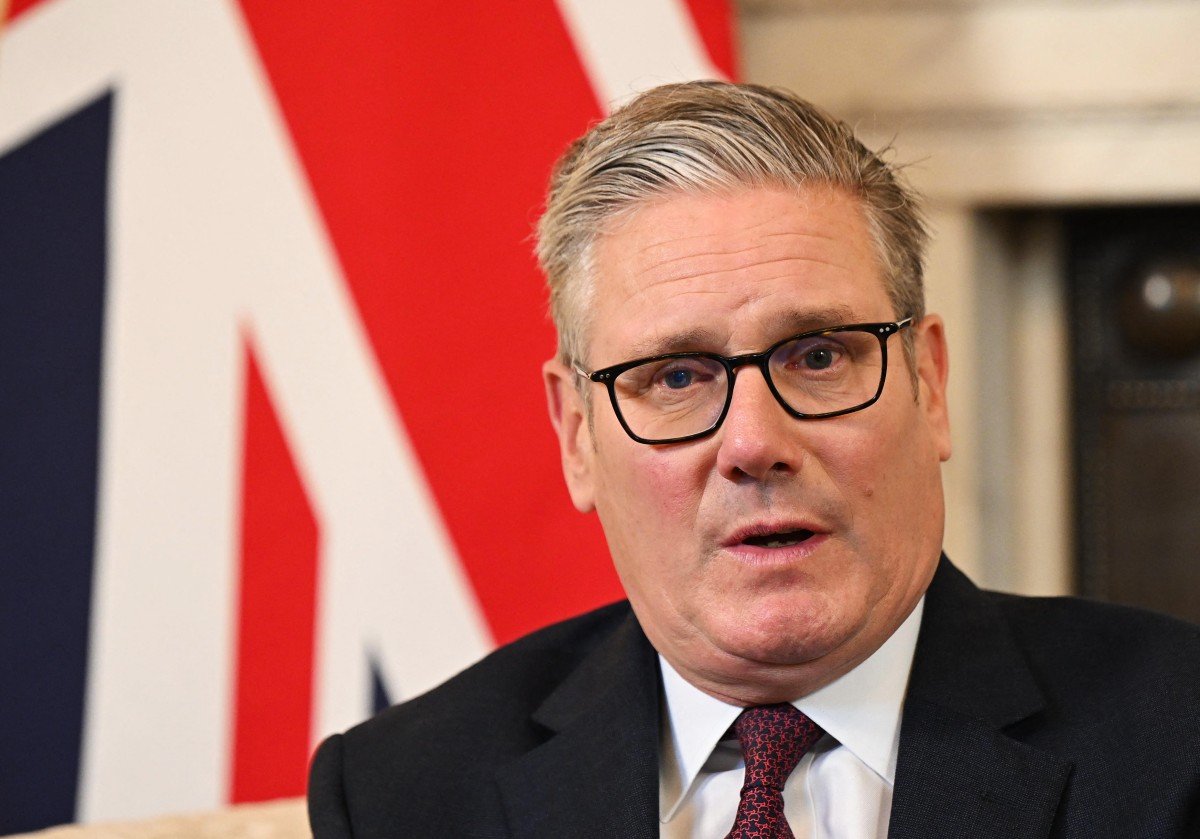
“Today, to revive the hope of peace for the Palestinians and Israelis, and a two-state solution, the United Kingdom formally recognises the State of Palestine,” UK Prime Minister Keir Starmer said in a message on X.
Britain and Canada became the first G7 countries to take the step, with France and other nations expected to follow at the annual UN General Assembly which opens Monday in New York.
“Canada recognises the State of Palestine and offers our partnership in building the promise of a peaceful future for both the State of Palestine and the State of Israel,” Canadian Prime Minister Mark Carney wrote on X.
It is a watershed moment for Palestinians and their decades-long ambitions for statehood, with the most powerful Western nations having long argued it should only come as part of a negotiated peace deal with Israel.
But the move puts those countries at odds with the United States and Israel, with Israeli Prime Minister Benjamin Netanyahu reacting angrily and vowing to oppose it at the UN talks.
Calls for a Palestinian state “would endanger our existence and serve as an absurd reward for terrorism,” Netanyahu said Sunday.
A growing number of longtime allies have shifted positions, as Israel has intensified its Gaza offensive, vowing to eliminate the Hamas Palestinian militants.
The Gaza Strip has suffered vast destruction, a spiralling death toll and a lack of food that has sparked a major humanitarian crisis since the start of the conflict which has drawn an international outcry
The UK government has come under increasing public pressure to act, with thousands rallying every month on the streets. A poll released by YouGov on Friday showed two-thirds of young Britons aged 18-25 supported Palestinian statehood.
Deputy Prime Minister David Lammy acknowledged at the UN in July that “Britain bears a special burden of responsibility to support the two-state solution”.
Over a century ago, the UK was pivotal in laying the groundwork for the creation of the state of Israel through the 1917 Balfour Declaration.
Three-quarters of UN members already recognise Palestinian statehood, with over 140 of the 193 having taken the step.
Starmer said in July that his Labour government intended to recognise a Palestinian State unless Israel took “substantive” steps including reaching a ceasefire in Gaza, getting more aid into the territory and confirming it would not annex the West Bank.
Starmer has also repeatedly called on Hamas to release the remaining hostages they captured in the 2023 attack, and is expected to set out new sanctions on the Palestinian militants.
Lammy told the BBC on Sunday that the Palestinian Authority, the civilian body that governs in areas of the West Bank, had been calling for the move for some time “and I think a lot of that is wrapped up in hope”.
“Will this feed children? No it won’t, that’s down to humanitarian aid. Will this free hostages? That must be down to a ceasefire.”
But he said it was an attempt to “hold out for” a two-state solution.
Palestinian foreign minister Varsen Aghabekian Shahin told AFP last week: “Recognition is not symbolic.”
“It sends a very clear message to the Israelis on their illusions about continuing their occupation forever,” she added.
Hamas’s 2023 attack on southern Israel resulted in the deaths of 1,219 people, most of them civilians, according to an AFP tally of official figures.
Israel’s retaliatory campaign has killed at least 65,208 people, also mostly civilians, according to figures from the Gaza health ministry that the United Nations considers reliable.
Portugal said that it would also formally declare its recognition in New York on Sunday.
“By acting now, as the Portuguese government has decided, we’re keeping alive the possibility of having two states,” Portuguese President Marcelo Rebelo de Sousa said. (Punch)
Canada plans to recognise a Palestinian state at the UN General Assembly in September, Prime Minister Mark Carney said Wednesday, a major policy shift that drew an angry response from US President Donald Trump and was rejected by Israel.
Carney said the move was necessary to preserve hopes of a two-state solution to the Israeli-Palestinian conflict, a long-standing Canadian goal that was “being eroded before our eyes.”
“Canada intends to recognise the State of Palestine at the 80th Session of the United Nations General Assembly in September 2025,” the prime minister said.
This makes Canada — a G7 nation — the third country, following recent announcements by France and the United Kingdom, to signal plans to recognise a Palestinian state in September.
Carney said the worsening suffering of civilians in Gaza left “no room for delay in coordinated international action to support peace.”
Israel blasted Canada’s announcement as part of a “distorted campaign of international pressure,” while Trump warned that trade negotiations with Ottawa may not proceed smoothly.
“Wow! Canada has just announced that it is backing statehood for Palestine,” the US president wrote on his Truth Social platform.
“That will make it very hard for us to make a Trade Deal with them.”
Asked by reporters if there was a scenario where Canada could change its position before the UN meeting, Carney said: “There’s a scenario (but) possibly one that I can’t imagine.”
Canada’s intention “is predicated on the Palestinian Authority’s commitment to much-needed reforms,” Carney said, referring to the body led by President Mahmoud Abbas, which has civil authority in parts of the Israeli-occupied West Bank.
Carney said his plans were further predicated on Abbas’s pledge to “hold general elections in 2026 in which Hamas can play no part, and to demilitarise the Palestinian state.”
With Wednesday’s announcement, Carney positioned Canada alongside France, after President Emmanuel Macron said his country would formally recognise a Palestinian state during the UN meeting, the most powerful European nation to announce such a move.
The Israeli embassy in Ottawa said, “Recognising a Palestinian state in the absence of accountable government, functioning institutions, or benevolent leadership, rewards and legitimises the monstrous barbarity of Hamas on October 7, 2023.”
The PA’s Abbas welcomed the announcement as a “historic” decision, while France said the countries would work together “to revive the prospect of peace in the region.”
Canada’s plan goes a step further than this week’s announcement by British Prime Minister Keir Starmer.
Starmer said the UK will formally recognise the State of Palestine in September unless Israel takes various “substantive steps,” including agreeing to a ceasefire in Gaza.
Carney stressed that Canada has been an unwavering member of the group of nations that hoped a two-state solution “would be achieved as part of a peace process built around a negotiated settlement between the Israeli government and the Palestinian Authority.”
“Regrettably, this approach is no longer tenable,” he said, citing “Hamas terrorism” and the group’s “longstanding violent rejection of Israel’s right to exist.”
The peace process has also been eroded by the expansion of Israeli settlements across the occupied West Bank and east Jerusalem, Carney said.
The prime minister said a two-state solution was growing increasingly remote, with a vote in Israel’s parliament “calling for the annexation of the West Bank,” as well as Israel’s “ongoing failure” to prevent a humanitarian catastrophe in Gaza.
He framed his decision as one aimed at safeguarding Israel’s future.
“Any path to lasting peace for Israel also requires a viable and stable Palestinian state, and one that recognises Israel’s inalienable right to security and peace,” Carney said. (Punch)

 English