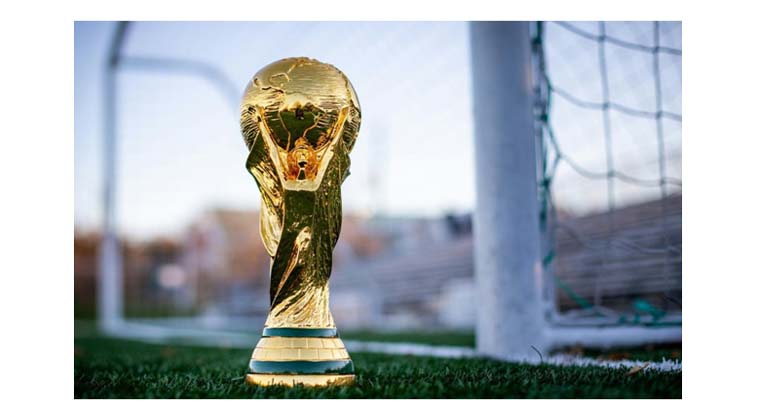

FIFA has unveiled the official match ball for the 2026 World Cup, combining high-tech refinements and design details celebrating the three co-host countries — the United States, Mexico and Canada.
The ball, called Trionda, was again designed by German manufacturer Adidas, provider of the official World Cup balls since the 1970 tournament.
“I am delighted and proud to present the Trionda,” FIFA president Gianni Infantino as the ball was revealed at an event in New York on Thursday.
The first World Cup organized by three countries, with 48 teams competing, inspired both the name and the design of the ball featuring red, blue and green colors.
Iconography from each host nation — maple leaves from Canada, the eagle from Mexico and stars from the United States also feature, with a triangle referring to the unity of the three countries.
Less visible are technological advancements that include deep seams designed to produce “optimal in-flight stability” and embossed icons that improve grip in wet or humid conditions.
A motion sensor chip will relay information on the ball’s movement, sending data to the video assistant referee (VAR) system.
The unveiling marks another step in the countdown to the North American World Cup, which will be held June 11-July 19 next year.
FIFA has launched its online phased ticket sales procedures, with more than 4.5 million fans from 216 countries and territories entering the presale draw.
The tournament draw will be held in Washington on December 5. (JapanToday)
Hamas said on Friday it was ready to release hostages held in Gaza under a peace deal proposed by but wantDonald Trumped negotiations on the details and a say in the future of the Palestinian territory.
“The movement announces its approval for the release of all hostages — living and remains — according to the exchange formula included in President Trump’s proposal,” Hamas said in a statement, adding it was ready to enter talks “to discuss the details”.
The peace plan for Gaza, presented by Trump this week and backed by Israeli Prime Minister Benjamin Netanyahu, calls for a ceasefire, the release of hostages within 72 hours, Hamas’s disarmament and a gradual Israeli withdrawal from Gaza.
In the statement, Hamas said it agreed to hand over power in Gaza to a body of Palestinian technocrats but said decisions on the territory’s long-term future would need to be discussed within a Palestinian framework “in which Hamas will participate and contribute responsibly”.
Hamas’s statement made no mention of its intentions on disarmament, a key part of the US president’s plan and a move the group has previously resisted.
Following the announcement, Mahmoud Mardawi, a senior Hamas official, told AFP the group welcomed Trump’s proposal, but that “without clear terms, criteria, and transparency, we need clarification and confirmation through a negotiated agreement”.
“The American proposal is vague, ambiguous, and lacks clarity,” Mardawi said.
Hamas had “made our position clear, and we are now waiting to see how the details of the terms will be implemented and clarified”, he added.
Under the US plan published on Monday — which has been welcomed by world powers, including Arab and Muslim nations — a post-war transitional authority for Gaza would be headed by Trump himself.
Earlier on Friday the US president gave Hamas until Sunday night to respond to the plan, and warned the group it faced “all hell” if it did not agree to the terms. (Vanguard)
Jane Fonda and hundreds of Hollywood celebrities have relaunched a Cold War-era free speech protest movement, warning that the Trump administration is engaged in a coordinated campaign to silence critics.
Actors Natalie Portman, Sean Penn and Anne Hathaway are among the more than 550 signatories to the revived “Committee for the First Amendment,” along with director Spike Lee and “West Wing” creator Aaron Sorkin.
“This Committee was initially created during the McCarthy Era, a dark time when the federal government repressed and persecuted American citizens for their political beliefs,” said a statement published on Wednesday.
It added: “Those forces have returned. And it is our turn to stand together in defense of our constitutional rights.”
U.S. actor and activist Fonda is spearheading the effort.
Her father, actor Henry Fonda, was an early member of the first “Committee for the First Amendment” in the 1940s.
Back in the early days of the Cold War, Senator Joseph McCarthy led draconian measures in the United States to stifle supposedly “Un-American” dissent, with a particular focus on Hollywood.
The original committee, which also featured Golden Age icons Judy Garland, Humphrey Bogart and Frank Sinatra, called out government repression and harassment, sending delegations to Washington and delivering radio broadcasts to highlight the threat.
The relaunch of the committee “is not a warning shot. This is the beginning of a sustained fight,” said its website.
It comes in the wake of Disney’s decision to briefly pull late-night show Jimmy Kimmel off-air following pressure from the U.S. government and its broadcast regulator.
Kimmel — who had made remarks about the killer of right-wing activist Charlie Kirk — was restored to the airwaves last week following widespread outrage over alleged government censorship.
The comedian described the efforts to silence him as “un-American.”
But President Donald Trump has described domestic media coverage of him as unduly negative and therefore “illegal.”
The newly reconstituted committee’s statement pledges to “stand together — fiercely united — to defend free speech and expression from this assault,” and warned Hollywood companies against succumbing to government pressure in future.
“And to those who profit from our work while threatening the livelihoods of everyday working people, bowing to government censorship, and cowering to brute intimidation: we see you and history will not forget,” it said. “This will not be the last you hear from us.” (JapanToday)
President Donald Trump’s administration on Wednesday froze $26 billion for Democratic-leaning states, following through on a threat to use the government shutdown to target Democratic priorities.
The targeted programs included $18 billion for transit projects in New York, home to Congress’s top two Democrats, and $8 billion for green-energy projects in 16 Democratic-run states, including California and Illinois. Vice President JD Vance, meanwhile, warned that the administration might extend its purge of federal workers if the shutdown lasts more than a few days.
The moves made clear that Trump would carry out his threat to take advantage of the shutdown to punish his political opponents and extend his control over the $7 trillion federal budget, established by the U.S. Constitution as the domain of Congress.
The pressure tactics came as the 15th government shutdown since 1981 suspended scientific research, financial oversight, environmental cleanup efforts and a wide range of other activities.
Some 750,000 federal workers were ordered not to work, while others, such as troops and Border Patrol agents, began to work without pay. The Department of Veterans Affairs said it would provide burials at national cemeteries, but would not erect headstones or mow the grass.
Vance said at a White House briefing that the administration would be forced to resort to layoffs if the shutdown lasts more than a few days, adding to the 300,000 who will be pushed out by December. Previous shutdowns have not resulted in permanent layoffs.
The U.S. Patent and Trademark Office said it would lay off 1% of its 14,000 employees, according to an internal letter seen by Reuters.
Hakeem Jeffries, the top Democrat in the House of Representatives, said the funding freeze for subway and harbor projects in his home of New York would throw thousands out of work.
Top Senate Democrat Chuck Schumer, also from New York, said Trump was targeting regular Americans for partisan aims.
“He is using the American people as pawns, threatening pain on the country as blackmail,” Schumer said.
Republican Senator Thom Tillis said he was concerned that the freezing of infrastructure funds for New York could make it harder for Congress to exit the shutdown.
“They need to be really careful with that, because they can create a toxic environment here,” Tillis said. “So hopefully they’re working with the leader, and the leader with them, on not creating more work to get us out of this posture.”
Republican Senate Leader John Thune dismissed concerns that the spending freeze amounted to hostage-taking.
“Well, vote to open up the government and that issue goes away, right? I mean, it’s pretty straightforward,” he said at a press conference.
Meanwhile, the Senate again rejected efforts to keep the government functioning as both a Republican proposal that would fund the government through November 21 and a Democratic vote that would pair funding with additional health benefits failed in floor votes.
Trump’s Republicans hold a 53-47 Senate majority, but they need the support of at least seven of Schumer’s Democrats to meet the chamber’s 60-vote threshold for spending bills.
At issue on the government funding front is $1.7 trillion for agency operations, which amounts to roughly one-quarter of annual spending. Much of the remainder goes to health and retirement programs and interest payments on the growing $37.5 trillion debt.
A bipartisan group of senators huddled on the floor during the vote, trying to find a path forward.
“I want to see that a deal is a deal, and I would like to see the Republicans make a commitment to work with us on health care,” said Senator Tim Kaine, a Virginia Democrat who represents many federal workers near the nation’s capital. “But I’ve never said that has to be all I’s dotted and T’s crossed because that could be complicated.”
Democrats are also seeking guarantees that Trump will not be able to ignore spending bills he signs into law, as he has repeatedly done since returning to office.
Both sides sought to pin the blame on the other, looking for advantage ahead of the 2026 midterm elections that will determine control of Congress.
Democrats said Republicans were responsible for the disruption, as they control the levers of power in Washington.
Republicans said Democrats were surrendering to partisan pressures to oppose Trump, even though they have routinely backed spending bills in the past. They also repeated a false claim that the Democratic proposal would extend health coverage to people who are in the country illegally. According to the nonpartisan Congressional Budget Office, the Democratic plan would only restore coverage to certain categories of immigrants who are in the country legally, such as asylum seekers and people on work visas.
Several government agencies posted notices on their websites blaming the “radical left” for the shutdown – a possible violation of a law known as the Hatch Act meant to insulate nuts-and-bolts government services from partisan politics.
The longest U.S. government shutdown, which stretched over 35 days in 2018-2019 during Trump’s first term, ended in part after flight delays caused by air traffic controllers calling in sick. (JapanToday)
Supporters of President Donald Trump, including a senior White House official, have lashed out after Latin megastar Bad Bunny was named as the headliner for next year’s Super Bowl halftime show.
The Grammy-winning Puerto Rican rapper had already sparked right-wing ire after saying he would skip the United States during his upcoming world tour due to fears of immigration raids at his concerts.
But Trump’s Make America Great Again movement was doubly infuriated by the naming on Sunday of an artist who mainly sings in Spanish as the star performer for the NFL’s flagship event in February.
“Is the @NFL incapable of reading the room?” Sebastian Gorka, Trump’s Senior Director for Counter Terrorism, posted on X late Monday after the announcement.
Gorka’s comment accompanied a post by a conservative podcaster calling Bad Bunny “a rapper with a catalog of vulgar lyrics in Spanish and English” — including one aimed at Trump.
Former racing driver turned right-wing commentator Danica Patrick said separately on X: “No songs in English should not be allowed at one of America’s highest rated television events of the year.”
Sage Steele, a former host on sports network ESPN who appeared in the White House’s “new media” seat at a briefing earlier this year, called Bad Bunny “DEMONIC” and added: “NFL…I just don’t get it.”
The artist himself said in a statement released by the NFL that his naming as Super Bowl halftime act was “for my people, my culture, and our history.”
Puerto Rico, where Bad Bunny hails from, is a U.S. territory in the Caribbean. In June, Bad Bunny posted video footage on his social media channels from an ICE raid that took place on his home island.
Super Bowl halftime shows have traditionally attracted the biggest names in the music industry, including the likes of Michael Jackson, the Rolling Stones, Madonna, Bruce Springsteen, Prince and Paul McCartney.
More recent performers have included this past year’s headliner Kendrick Lamar, the rapper who cut out profanity but still performed a viral diss track of his rival Drake. (JapanToday)
Scientists said Wednesday they have turned human skin cells into eggs and fertilised them with sperm in the lab for the first time – a breakthrough that is hoped to one day let infertile people have children.
The technology is still years away from potentially becoming available to aspiring parents, the US-led team of scientists warned.
But outside experts said the proof-of-concept research could eventually change the meaning of infertility, which affects one in six people worldwide.
If successful, the technology called in-vitro gametogenesis would allow older women or women who lack eggs for other reasons to genetically reproduce, Paula Amato, the co-author of a new study announcing the achievement, told AFP.
“It also would allow same-sex couples to have a child genetically related to both partners,” said Amato, a researcher at the Oregon Health & Science University in the United States.
Scientists have been making significant advances in this field in recent years, with Japanese researchers announcing in July that they had created mice with two biological fathers.
But the new study, published in the journal Nature Communications, marks a major advance by using DNA from humans, rather than mice.
The scientists first removed the nucleus from normal skin cells and transferred them into a donor egg, which had its nucleus removed. This technique, called somatic cell nuclear transfer, was used to clone Dolly the sheep in 1996.
However, a problem still had to be overcome: skin cells have 46 chromosomes, but eggs have 23.
The scientists managed to remove these extra chromosomes using a process they are calling “mitomeiosis”, which mimics how cells normally divide.
They created 82 developing eggs called oocytes, which were then fertilised by sperm via in vitro fertilisation.
After six days, less than nine per cent of the embryos developed to the point that they could hypothetically be transferred to the uterus for a standard IVF process.
However, the embryos displayed a range of abnormalities, and the experiment was ended.
While the nine per cent rate was low, the researchers noted that during natural reproduction, only around a third of embryos make it to the IVF-ready “blastocyst” stage.
Amato estimated the technology was at least a decade away from becoming widely available.
“The biggest hurdle is trying to achieve genetically normal eggs with the correct number and complement of chromosomes,” she said.
Ying Cheong, a reproductive medicine researcher at the UK’s University of Southampton, hailed the “exciting” breakthrough.
“For the first time, scientists have shown that DNA from ordinary body cells can be placed into an egg, activated, and made to halve its chromosomes, mimicking the special steps that normally create eggs and sperm,” she said.
“While this is still very early laboratory work, in the future it could transform how we understand infertility and miscarriage, and perhaps one day open the door to creating egg- or sperm-like cells for those who have no other options.”
Other researchers trying to create eggs in the lab are using a different technique. It involves reprogramming skin cells into what are called induced pluripotent stem cells — which have the potential to develop into any cell in the body — then turning those into eggs.
“It’s too early to tell which method will be more successful,” Amato said. “Either way, we are still many years away.”
The researchers followed existing US ethical guidelines regulating the use of embryos, the study said. (Punch)
A gunman opened fire inside a Church of Jesus Christ of Latter-day Saints chapel in Michigan during a Sunday service and set the building ablaze, killing at least four people and injuring eight others. Police shot and killed the suspect, authorities said.
Hundreds of people were inside the church in Grand Blanc Township when a man rammed a four-door pickup with two American flags in the truck bed through the front door, then got out of the vehicle and started shooting, Police Chief William Renye told reporters. Investigators believe he deliberately set the building on fire, Renye said.
Officers responded to a 911 call and were at the church within 30 seconds and killed the shooter about eight minutes later, Renye said. After the suspect left the church, two officers pursued him and “engaged in gunfire,” the chief said.
Flames and smoke could be seen pouring from the church for hours before the blaze was put out.
Renye identified the suspect as Thomas Jacob Sanford, 40, from neighboring Burton. Reyne did not specify a motive at a news conference on Sunday evening. Police cordoned off the street leading to the suspect’s home.
Renye said one of the wounded people was in critical condition Sunday evening and seven others were stable.
The bodies of two of the victims were found as authorities searched the debris in the church, Renye said, emphasizing the search was continuing and that more victims could be found.
Investigators were searching the suspect’s residence in nearby Burton. Authorities did not provide any additional details about the suspect, including whether he was a member of The Church of Jesus Christ of Latter-day Saints, widely known as the Mormon church.
It was the latest of many shooting attacks on houses of worship in the U.S. over the past 20 years, including one in August that killed two children during Mass at the Church of the Annunciation in Minneapolis.
President Donald Trump said in a social media post that he was briefed on the shooting and applauded the FBI for its response. Local authorities said the FBI was sending 100 agents to Grand Blanc Township, a community of roughly 40,000 people outside Flint.
“PRAY for the victims, and their families. THIS EPIDEMIC OF VIOLENCE IN OUR COUNTRY MUST END, IMMEDIATELY!” Trump wrote.
The church building, circled by a parking lot and a large lawn, is near residential areas and a Jehovah’s Witness church.
Brad Schneemann, whose home is about 365 meters from the church, told The Associated Press that he and his daughter heard “two rounds of four to five shots” around 10:30 a.m. “Then, we really didn’t hear anything for a while” before they left their home to see what was going on.
Timothy Jones, 48, said his family is part of another Church of Jesus Christ of Latter-day Saints congregation, or ward, about 15 minutes away, but that his children were at the Grand Blanc Township ward Saturday night for a youth fall festival. He and his family moved to Flint two years ago in large part because of how strong the faith’s community is in the area, he said.
As people in his congregation got word of the shooting from texts and phone calls during their Sunday service, his ward went into lockdown and police came as a precaution, he said. His children were “frantically, just trying to get word that people were OK.”
Sundays are “supposed to be a time of peace and a time of reflection and worship,” Jones said. Yet in the wake of violence at other houses of worship, a shooting “feels inevitable, and all the more tragic because of that,” he added.
The shooting occurred the morning after Russell M Nelson, the oldest-ever president of the Utah-based faith, died at 101. The next president is expected to be Dallin H Oaks, per church protocol.
“The church is in communication with local law enforcement as the investigation continues and as we receive updates on the condition of those affected,” spokesperson Doug Anderson said. “Places of worship are meant to be sanctuaries of peacemaking, prayer and connection. We pray for peace and healing for all involved.”
When striking nurses at nearby Henry Ford Genesys Hospital heard about the shooting, some left the picket line and ran the short distance to the church to help first responders, Teamsters Local 332 President Dan Glass said.
“Human lives matter more than our labor dispute,” Glass said.
Michigan Gov. Gretchen Whitmer said in a statement that her heart was breaking for the community. “Violence anywhere, especially in a place of worship, is unacceptable,” she said.
The impact spread quickly to neighboring communities, including the small city that shares a name with the township.
“Although we are two separate governmental units, we are a very cohesive community,” said city of Grand Blanc Mayor John Creasey. “This sort of thing is painful for our entire community.” (JapanToday)
China’s new visa program aimed at attracting foreign tech talent kicks off this week, a move seen boosting Beijing’s fortunes in its geopolitical rivalry with Washington as a new U.S. visa policy prompts would-be applicants to scramble for alternatives.
While China has no shortage of skilled local engineers, the programme is part of an effort by Beijing to portray itself as a country welcoming foreign investment and talent, as rising trade tensions due to U.S. tariffs cloud the country’s economic outlook.
China has taken a series of measures to boost foreign investment and travel, opening more sectors to overseas investors and offering visa waivers for citizens from most European countries, Japan and South Korea among others.
“The symbolism is powerful: while the U.S. raises barriers, China is lowering them,” said Iowa-based immigration attorney Matt Mauntel-Medici, referring to China’s new visa category, called the K visa, which launches on Wednesday.
The K visa, announced in August, targets young foreign science, technology, engineering and mathematics (STEM) graduates and promises to allow entry, residence and employment without a job offer, which could appeal to foreign workers looking for alternatives to U.S. job opportunities.
Earlier this month, the Trump administration said it would ask companies to pay $100,000 per year for H-1B worker visas, widely used by tech companies to hire skilled foreign workers.
“The U.S. has definitely shot itself in the foot on H-1Bs, and the timing is exquisite for China’s K visa,” said Michael Feller, chief strategist at Geopolitical Strategy.
Other countries including South Korea, Germany and New Zealand are also loosening visa rules to attract skilled migrants.
Immigration experts say the main attraction of the K visa is no requirement of a sponsoring employer, which has been regarded as one of the biggest hurdles for those seeking H-1B visas.
The H-1B visa requires employer sponsorship and is subject to a lottery system, with only 85,000 slots available annually. The new $100,000 fee could further deter first-time applicants.
“It’s an appealing alternative for Indian STEM professionals seeking flexible, streamlined visa options,” said Bikash Kali Das, an Indian student at Sichuan University.
India was by far the largest beneficiary of H-1B visas last year, accounting for 71% of approved beneficiaries.
Despite its promise, the K visa faces hurdles. Chinese government guidelines mention vague “age, educational background and work experience” requirements.
There are also no details on financial incentives, employment facilitation, permanent residency, or family sponsorship. Unlike the U.S., China does not offer citizenship to foreigners except in rare cases.
China’s State Council did not respond to a request for comment asking for more details on the logistics and underlying strategy of the K visa.
Language is another barrier: most Chinese tech firms operate in Mandarin, limiting opportunities for non-Chinese speakers.
Political tensions between Delhi and Beijing could also become a factor that could limit the number of Indian K visa applicants China is willing to accept, experts said.
“China will need to ensure Indian citizens feel welcome and can do meaningful work without Mandarin,” said Feller.
China’s talent recruitment has traditionally focused on China-born scientists abroad and overseas Chinese.
Recent efforts include home-purchase subsidies and signing bonuses of up to 5 million yuan ($702,200). These have drawn back U.S.-based Chinese STEM talent, especially amid Washington’s growing scrutiny on ties to China.
“The recruitment effort targeting Indian tech talent in China is growing but remains moderate compared to the more intensive, well-established, and well-funded initiatives aimed at repatriating Chinese STEM talent,” said Sichuan University’s Das.
A Chinese STEM graduate who recently got a job offer from a Silicon Valley-based tech company was also sceptical about the K visa’s prospects.
“Asian countries like China don’t rely on immigration and local Chinese governments have many ways to attract domestic talent,” he said, declining to be named for privacy reasons.
The U.S. has over 51 million immigrants — 15% of its population — compared to just 1 million foreigners in China, less than 1% of its population.
While China is unlikely to significantly alter its immigration policy to allow in millions of foreign workers, analysts say the K visa could still boost Beijing’s fortunes in its geopolitical rivalry with Washington.
“If China can attract even a sliver of global tech talent, it will be more competitive in cutting-edge technology,” Feller said. (JapanToday)
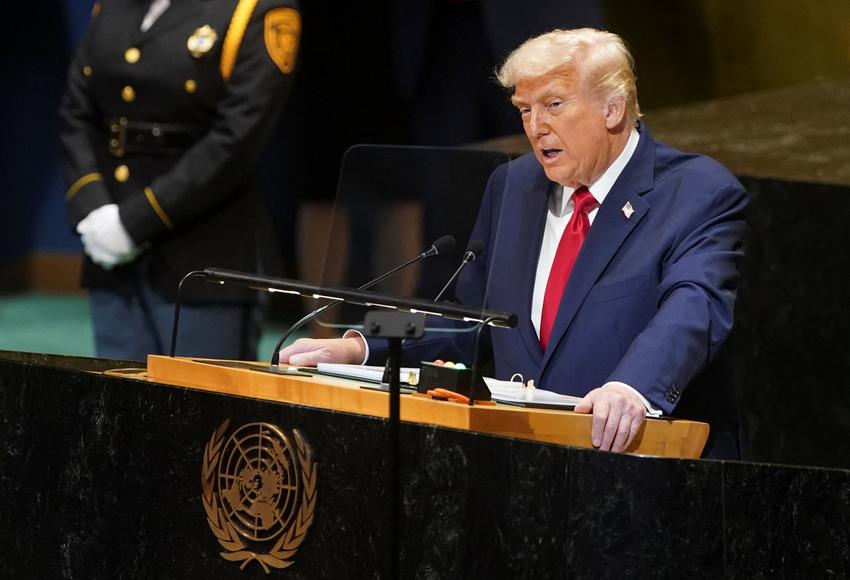
U.S. President Donald Trump told the UN General Assembly on Tuesday that he hopes “countless people from all over the globe” will attend the 2026 World Cup and 2028 Olympics hosted by the U.S., making no mention of his migration crackdown that has deterred some visitors.
Overseas travel to the U.S. fell 2.9% year-on-year in August to about 3.5 million visitors, according to preliminary U.S. government data. It was the sixth month this year that travel declined from a year ago, bucking the global tourism trend and defying expectations that in 2025 annual inbound visitors would finally surpass the pre-pandemic level of 79.4 million.
In a wide-ranging speech, Trump said next year the United States will celebrate the 250th anniversary of its independence. “We will also be proudly hosting the 2026 FIFA World Cup, and shortly thereafter, the 2028 Olympics,” he said.
“It’s going to be very exciting. I hope you all come. I hope that countless people from all over the globe will take part.”
More than 1.5 million ticket applications from fans in 210 countries were received by FIFA for the World Cup within 24 hours of the presale draw, the governing body of world soccer said earlier this month. The 48-team tournament will be hosted by Mexico, Canada and the U.S. and will feature 104 matches across 16 host cities.
But a U.S. trip may be expensive and complicated for many. Visitors from non-visa waiver countries face a $250 “visa integrity fee,” on top of the existing fee, with travelers already navigating long average visa wait times. Such visitors face an average 169 days for a B-1/B-2 tourism or business visa interview, according to data from the U.S. State Department.
That will hit fans from countries that traditionally send a large contingent to the World Cup, including Mexico, Argentina and Brazil.
Global ticket demand for the tournament came primarily from the three host countries, followed by Argentina, Colombia, and Brazil, according to FIFA.
Tourists from visa-waiver countries – mostly in Europe – will not need to pay the new fee, but industry experts say some are being put off U.S. vacations by fears of being stopped at the border after a number of widely publicized cases.
The White House is also looking to tighten the duration of visas for students, cultural exchange visitors and members of the media, according to a proposed government regulation issued in August.
The 2028 Summer Olympics is set to be held in Los Angeles, California, in July 2028. (JapanToday)
European soccer body UEFA is moving toward a vote to suspend its member federation Israel over the war in Gaza, people familiar with the proposal told The Associated Press on Thursday.
A majority of UEFA’s 20-member executive committee is expected to support any vote in favor of suspending Israeli teams from international play, two sources told The Associated Press on condition of anonymity because of the sensitivity of the subject.
Such a step would prevent Israeli national and club teams from playing in international competitions including next year’s World Cup. Israel’s men’s team is set to resume its World Cup qualifying campaign in two weeks with away games against Norway and Italy.
It is unclear whether world soccer body FIFA will support excluding Israel given the close relations between FIFA’s leader, Gianni Infantino, and President Donald Trump.
The Trump administration’s support to secure the World Cup, and process visas for players, officials and potentially hundreds of thousands of visiting fans, is seen as key to FIFA delivering a successful tournament in the U.S., Canada and Mexico next year.
A State Department spokesperson said it will work to stop any efforts that tried to ban Israel’s team from the World Cup.
FIFA’s ruling council is scheduled to meet in Zurich next week. The 37-member council includes eight from UEFA.
FIFA declined to comment on Thursday. Infantino is based this week at FIFA’s satellite office in Trump Tower in Manhattan while attending events on the fringes of the United Nations General Assembly.
Calls to exclude Israel from soccer and other sports have increased in recent weeks amid an outcry over the humanitarian toll of its military campaign in Gaza. Last week Spanish Prime Minister Pedro Sánchez said Israel should be banned from international sports events just like Russia, which was sidelined after its full-scale invasion of Ukraine in 2022.
Earlier this week seven independent experts working with the U.N. Human Rights Council urged FIFA and UEFA to suspend Israel from international competitions.
UEFA and its president Aleksander Ceferin signaled a tougher view on Israel last month when banners saying “Stop Killing Children. Stop Killing Civilians” were placed on the field in front of the Paris Saint-Germain and Tottenham teams ahead of the Super Cup game in Udine, Italy.
The discussion about whether to ban Israel from international sports comes as Israel faces increasing criticism and isolation over its military campaign, launched in response to the Hamas-led attack on Oct. 7, 2023.
Last week, Israel was accused of committing genocide in Gaza by an inquiry commission commissioned by the United Nations Human Rights Council.
Israel’s sports and culture minister, Miki Zohar, Prime Minister Benjamin Netanyahu and the head of Israel’s soccer federation, Moshe Zuares, have been working “intensively behind the scenes” to block efforts to oust Israel from UEFA, Zohar’s office said Thursday. “The right step now is to act responsibly with the professionals and not to make statements, and this is how all the parties involved in the efforts are acting. We will address this later.”
The decision to ban Russia in 2022 was partly driven by a swath of UEFA member federations refusing to play scheduled games against Russian opponents. No national or club team in Europe has so far refused to play an Israeli opponent, though soccer leaders in Norway and Italy have publicly expressed their unease in recent weeks.
The Norwegian soccer federation also pledged to give its profits from ticket sales for the Oct. 11 game in Oslo to humanitarian work in Gaza by Doctors Without Borders.
Both Italy’s Gabriele Gravina and Lise Klaveness of Norway are elected members of the UEFA executive committee which could vote on suspending Israel. Zuares, the Israeli soccer federation president, is also on the panel as is Nasser Al-Khelaïfi, a member of the Qatari government who is president of European champion Paris Saint-Germain.
Israel enraged Qatar, an influential U.S. ally that has been a key mediator throughout the war, with a Sept. 9 airstrike targeting Hamas leaders in Doha, the Qatari capital.
At the Champions League final in May, PSG fans displayed a banner saying “Stop Genocide in Gaza” in French. UEFA did not open a disciplinary case despite having rules against political messaging inside stadiums.
On Wednesday evening in Greece, Israeli club Maccabi Tel Aviv played PAOK in the UEFA-organized Europa League. There were pro-Palestinian protests outside the stadium in Thessaloniki and a “Stop Genocide” banner displayed inside. (JapanToday)