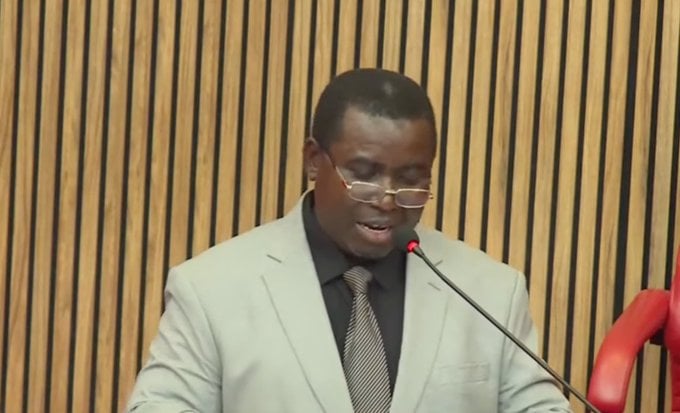
The Chairman of the Independent National Electoral Commission (INEC), Joash Amupitan, has said that employees of the agency who were responsible for shortfalls recorded in Kuje and Kabusa during the Federal Capital Territory elections will be investigated.
He said the workers would be punished if found guilty.
According to him, the transporters who were responsible for the delay in the movement of logistics to the Kwali area council will also be blacklisted.
Amupitan stated this while reviewing the FCT polls at a meeting with Resident Electoral Commissioners at the INEC headquarters in Abuja on Wednesday.
The meeting is being held exactly four days after the conduct of the Federal Capital Territory council elections and by-elections in Rivers and Kano states on Saturday.
Apart from reviewing the outcomes of those elections, the meeting is expected to allow the INEC chairman to get feedback from the resident electoral commissioners about their concerns and preparations for the 2027 general election.
All resident electoral commissioners from the 36 states and the Federal Capital Territory were invited to the meeting.
Also attending the meeting is the forum of state independent electoral commissions, who are on a courtesy visit to the INEC chairman.
In Abuja Municipal Area Council (AMAC), APC’s Christopher Maikalangu was returned elected after polling 40,295 votes out of 62,861 valid votes cast.
In the Kwali Area Council, APC’s Daniel Nuhu secured 17,032 votes to defeat PDP’s Haruna Pai, who polled 8,575 votes.
In Gwagwalada Area Council, the Peoples Democratic Party candidate Mohammed Kasim won the chairmanship seat with 22,165 votes, defeating the APC’s Yahaya Shehu, who scored 17,788 votes. (Channels)
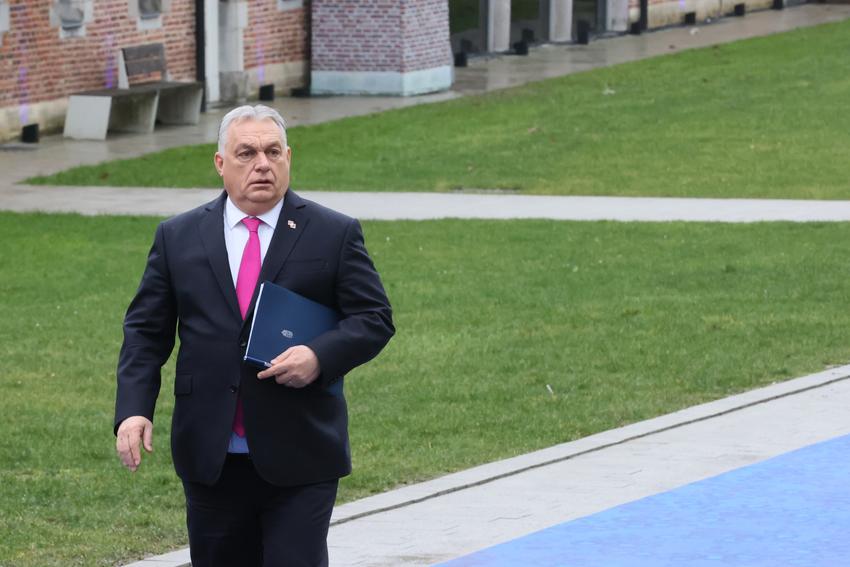
The real threat facing Hungary is not Russia but the European Union, Prime Minister Viktor Orbán said in a speech to supporters on Saturday, as his nationalist party ramps up an anti-EU campaign ahead of national elections.
With only eight weeks until the April 12 vote, Orbán and his Fidesz party are facing their most serious challenge since the right-wing populist leader retook power in 2010.
Most independent polls show Fidesz trailing the center-right Tisza party and its leader, Péter Magyar, even as Orbán has campaigned on the unsubstantiated premise that the EU would send Hungarians to their deaths in neighboring Ukraine if his party loses.
In his speech on Saturday, Orbán compared the EU to the repressive Soviet regime that dominated Hungary for over 40 years last century, and dismissed the belief of many European leaders that Russian President Vladimir Putin poses a threat to the continent’s security.
“We must get used to the idea that those who love freedom should not fear the East, but Brussels,” he said, referring to the EU’s de-facto capital in Belgium.
“Fear-mongering about Putin is primitive and unserious. Brussels, however, is a palpable reality and a source of imminent danger,” he said “This is the bitter truth, and we will not tolerate it.”
Orbán has been a firm opponent of military and financial aid for Kyiv since Russia launched its full-scale invasion nearly four years ago, and has maintained close relations with Moscow while adopting a combative posture toward Hungary’s EU and NATO partners, which he portrays as warmongers.
In December, he said it was “unclear who attacked whom” when tens of thousands of Russian forces poured across Ukraine’s borders in February 2022.
Hungary’s government has long been at odds with the EU, which has frozen billions of euros in funding to Budapest over concerns that Orbán has dismantled democratic institutions, eroded judicial independence and overseen widespread official corruption. In return, Orbán has increasingly acted as a spoiler in EU decision making, routinely threatening to veto key policies like providing financial support for Ukraine.
As the elections approach, he has increasingly portrayed the Tisza party as a puppet created by the EU to overthrow his government and serve foreign interests, claims that Tisza has firmly denied. Magyar, the party’s leader, has pledged to repair Hungary’s strained relations with its Western allies, revive the stagnant economy and return the country to a more democratic track.
On Saturday, Orbán accused multinational corporations like banks and energy companies of profiting off the war in Ukraine, and conspiring with his political opposition to defeat him in the election.
“It is crystal clear that in Hungary the oil business, the banking world and the Brussels elite are preparing to form a government,” he said. “They need someone in Hungary who will never say no to Brussels’ demands.”
If his party wins a fifth-straight majority in the election, Orbán promised to push ahead with ridding Hungary of entities that he argues infringe on the country’s sovereignty.
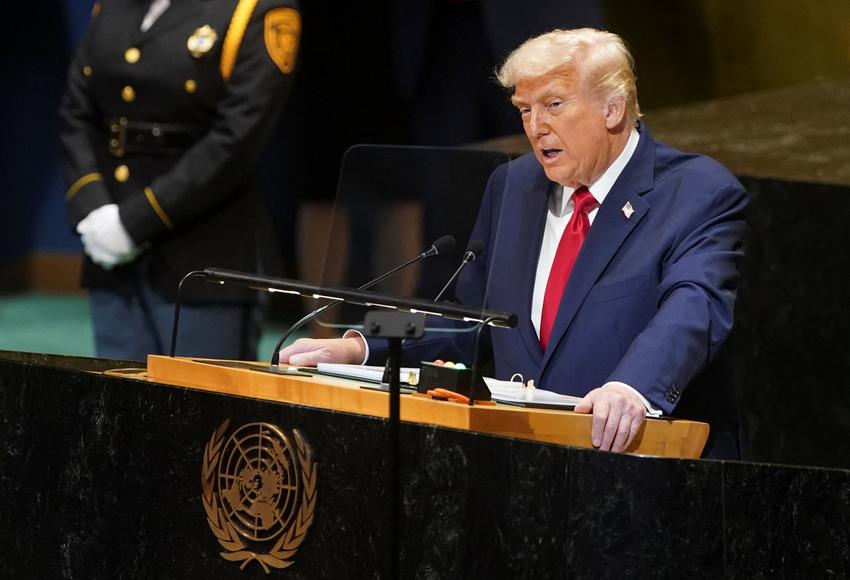
He credited U.S. President Donald Trump, who has endorsed him ahead of the election, with creating an environment where “fake nongovernmental organizations and bought-and-paid-for journalists, judges and politicians” can be expelled.
“The new president of the United States has rebelled against the global business, media and political network of liberals, thus improving our chances,” he said. “We, too, can go a long way and expel foreign influence from Hungary, along with its agents, that limit our sovereignty.”
“The Brussels repressive machine is still operating in Hungary. We’ll clean it up after April,” he said. (JapanToday)
Democrats swept a trio of races on Tuesday in the first major elections since Donald Trump regained the presidency, elevating a new generation of leaders and giving the beleaguered party a shot of momentum ahead of next year’s congressional elections.
In New York City, Zohran Mamdani, a 34-year-old democratic socialist, won the mayoral race, capping a meteoric and unlikely rise from an anonymous state lawmaker to one of the country’s most visible Democratic figures. And in Virginia and New Jersey, moderate Democrats Abigail Spanberger, 46, and Mikie Sherrill, 53, won the elections for governor with commanding leads, respectively.
Tuesday’s contests offered a barometer of how Americans are responding to Trump’s tumultuous nine months in office. The races also served as a test of differing Democratic campaign playbooks ahead of 2026, with the party locked out of power in Washington and still trying to forge a path out of the political wilderness.
That said, the midterm election is a year away, an eternity in the Trump era, and opinion polls show the Democratic brand remains broadly unpopular, even as Trump’s own approval rating has declined. The contests on Tuesday also all unfolded in Democratic-leaning regions that did not support Trump in last year’s presidential election.
Perhaps the biggest practical boost to Democrats on Tuesday came out of California, where voters gave Democratic lawmakers the power to redraw the state’s congressional map, expanding a national battle over redistricting that will shape the race for the U.S. House of Representatives.
The winning candidates on Tuesday could reenergize and inspire more engagement from Democratic voters, many of whom have clamored for fresh faces at the vanguard of the party. Turnout in the New York City mayoral race was the highest since at least 1969.
All three Democratic candidates emphasized economic issues, particularly affordability, an issue that remains top of mind for most voters. But Spanberger and Sherrill hail from the party’s moderate wing, while Mamdani used a viral video-fueled insurgent campaign to present himself as an unabashed progressive in the mold of Senator Bernie Sanders and U.S. Representative Alexandria Ocasio-Cortez.
“The Democratic Party is back,” Hakeem Jeffries, the Democratic leader in the U.S. House of Representatives, assrted on X.
Mamdani, who will become the first Muslim mayor of the biggest U.S. city, outlasted former Democratic Governor Andrew Cuomo, 67, who ran as an independent after losing the nomination to Mamdani earlier this year. Cuomo, who resigned as governor four years ago after sexual harassment allegations that he has denied, portrayed Mamdani as a radical leftist whose proposals were unworkable and dangerous.
Mamdani has called for raising taxes on corporations and the wealthy to pay for ambitious left-wing policies such as frozen rents, free childcare and free city buses. Wall Street executives have expressed concern about putting a democratic socialist at the helm of the financial capital of the world.
Republicans have already signaled they intend to present Mamdani as the face of the Democratic Party. Trump has incorrectly labeled Mamdani a “communist” and vowed to cut funding for the city in response to Mamdani’s ascension.
In a social media post on Tuesday night, Trump blamed the losses on the fact his name was not on the ballot and on an ongoing federal government shutdown.
Spanberger, who beat Republican Lieutenant Governor Winsome Earle-Sears, will take over from Republican Governor Glenn Youngkin in Virginia. New Jersey’s Sherrill defeated Republican Jack Ciattarelli and will succeed Democratic Governor Phil Murphy.
Both Sherrill and Spanberger had sought to tie their opponents to Trump in an effort to harness frustration among Democratic and independent voters over his chaotic tenure.
“We sent a message to the world that in 2025 Virginia chose pragmatism over partisanship,” Spanberger said in her victory speech. “We chose our Commonwealth over chaos.”
Trump gave both candidates some late-stage grist during the ongoing government shutdown.
His administration threatened to fire federal workers — a move with an outsized impact on Virginia, a state adjacent to Washington, D.C., and home to many government employees. He froze billions in funding for a new Hudson River train tunnel, a critical project for New Jersey’s large commuter population.
In interviews at Virginia polling stations on Tuesday, some voters said Trump’s most contentious policies were on their minds, including his efforts to deport immigrants who entered the U.S. illegally and to impose costly tariffs on imports of foreign goods, the legality of which is being weighed by the U.S. Supreme Court this week.
Juan Benitez, a self-described independent, was voting for the first time. The 25-year-old restaurant manager backed all of Virginia’s Democratic candidates because of his opposition to Trump’s immigration policies and the federal government shutdown, for which he blamed Trump.
For Republicans, Tuesday’s elections served as a test of whether the voters who powered Trump’s victory in 2024 will still show up when he is not on the ballot.
But Ciattarelli and Earle-Sears, both running in Democratic-leaning states, faced a conundrum: criticizing Trump risked losing his supporters, but embracing him too closely could have alienated moderate and independent voters who disapprove of his policies. (JapanToday)
President Bola Tinubu has sworn in Professor Joash Amupitan, SAN, as the new Chairman of the Independent National Electoral Commission.
Amupitan took the oath of office at 1:50 pm at the Council Chamber of the Presidential Villa, Abuja.
Tinubu charged Amuputan to protect the integrity of Nigeria’s elections and electoral process, as well as strengthen the institutional capacity of INEC.
“As the chairman of the Independent National Electoral Commission, your nomination to the important role and the subsequent confirmation by the Senate is a testament to your capacity and the confidence reposed in you by both the executive and the legislative arm of government.
“The significant achievement marked the beginning of a challenging yet rewarding journey, and I trust that you will approach your responsibilities with the highest level of integrity, dedication and patriotism.
“Our democracy has come a long way. In 25 years, we have consolidated and strengthened our democratic institutions, particularly our electoral system, through innovation and reforms. We have learned a great deal along the way and have improved significantly from where we were many years ago.
“We must now remain committed to the principles that underpin democracy in a complex, multifaceted society,” the President said.
“The electoral process is a vital part of a democracy, safeguarding the people’s exclusive right to choose their leaders and shape their future. To ensure that our democracy continues to flourish, the integrity of our electoral system must be beyond reproach. It is important that our elections are free, fair and credible.
“We must consistently improve our electoral process, addressing the challenges of yesterday and innovating for today and tomorrow. To maintain public trust in elections, electoral integrity must be protected. All aspects of the process, from registration to campaigning, immediate access, voting and counting should be transparent, non-violent and credible.
“No electoral system is flawless, but since elections are vital to a nation’s future, it is essential to continually strengthen electoral institutions, ensuring they are robust, resilient and safeguarded against official setbacks.
“I therefore charge you, Professor, as you take on this important assignment to protect the integrity of our elections and electoral process and strengthen the institutional capacity of INEC,” Tinubu added.
Amupitan arrived at the State House on Thursday morning, dressed in a white ‘agbada’ paired with a gold cap, exchanging greetings with onlookers ahead of the ceremony to formalise his assumption of office as the head of the nation’s electoral umpire.
Amupitan’s swearing in by the President comes a week after the Senate confirmed his appointment as INEC Chairman following a rigorous screening session on October 16. (Punch)

 English