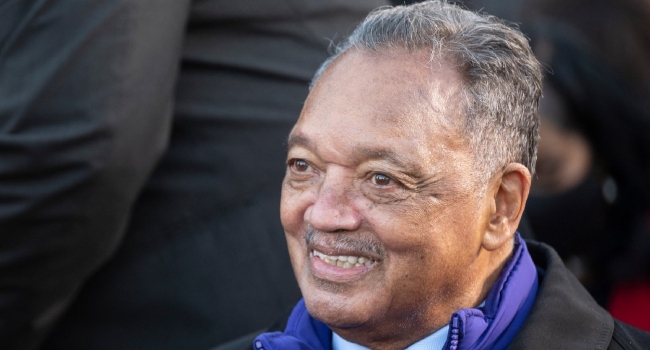
Former US presidents, celebrities and thousands of members of the public have gathered to honour civil rights leader, the Reverend Jesse Jackson, who died last month.
Former presidents Joe Biden, Barack Obama and Bill Clinton were among those who spoke at a memorial service in Chicago for the activist.
Mourners included former Vice President Kamala Harris, filmmaker Tyler Perry and former basketball star Isiah Thomas. The service also featured performances, including from singer and actress Jennifer Hudson.
Jackson, who worked alongside Martin Luther King Jr, twice ran to be the Democratic nominee for president and founded the Rainbow PUSH coalition, a social justice and civil rights non-profit.
While praising Jackson in his remarks at the service, Obama made a thinly veiled mention of US President Donald Trump. He said, “Each day we wake up to some new assault on our democratic institutions”.
He said the late reverend inspired people to take a harder path and called “on each of us to be heralds of change”.
Former Vice President Harris received a standing ovation when she spoke at the service. She appeared to take a jab at Trump, saying, “Let me just start out by saying: I predicted a lot of what is happening right now. I hate to say I told you so, but we did see it coming”.
But, she added, that she didn’t realise they would be tackling this moment without Jackson’s guidance.
Calling Jackson “impatient,” she noted, “He did not waste time waiting, even when the doors in front of him were barred and bolted, even if those on the other side hesitated or even ignored him. He always devised a way through”.
Civil rights leader, the Reverend Al Sharpton, who worked closely with Jackson during the civil rights movement, was also among the speakers. (BBC)
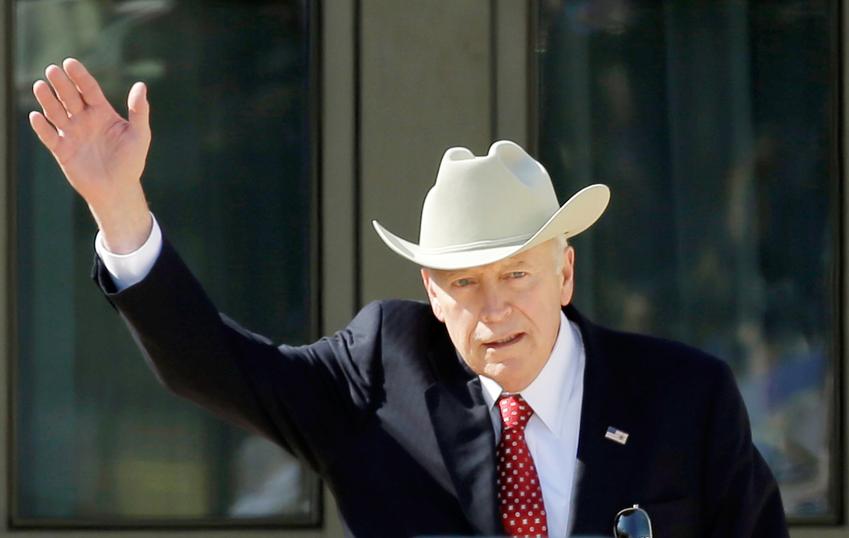
Dick Cheney, the hard-charging conservative who became one of the most powerful and polarizing vice presidents in U.S. history and a leading advocate for the invasion of Iraq, has died at 84.
Cheney died Monday due to complications of pneumonia and cardiac and vascular disease, his family said Tuesday.
The quietly forceful Cheney led the armed forces as defense secretary during the Persian Gulf War under President George H.W. Bush before returning to public life as vice president under Bush’s son George W Bush.
Cheney was, in effect, the chief operating officer of the younger Bush’s presidency. He often had a commanding hand in implementing decisions most important to the president and some of surpassing interest to himself — all while living with decades of heart disease and, post-administration, a heart transplant. Cheney consistently defended the extraordinary tools of surveillance, detention and inquisition employed in response to the Sept. 11, 2001, attacks.
“History will remember him as among the finest public servants of his generation — a patriot who brought integrity, high intelligence, and seriousness of purpose to every position he held,” Bush said.
Years after leaving office, Cheney became a target of President Donald Trump, especially after his daughter Liz Cheney became the leading Republican critic and examiner of Trump’s attempts to stay in power after his 2020 election defeat and his actions in the Jan 6, 2021, Capitol riot.
Cheney said last year he was voting for Democrat Kamala Harris for president against Trump.
For all his conservatism, Cheney was privately and publicly supportive of his daughter Mary Cheney after she came out as gay, years before same-sex marriage was broadly supported. “Freedom means freedom for everyone,” he said.
In his time in office, no longer was the vice presidency merely a ceremonial afterthought. Instead, Cheney made it a network of back channels from which to influence policy on Iraq, terrorism, presidential powers and energy.
A hard-liner on Iraq, Cheney was proved wrong about the rationale for the Iraq War, a point he didn’t acknowledge.
He alleged links between the 9/11 attacks and prewar Iraq that didn’t exist. He said U.S. troops would be welcomed as liberators; they weren’t.
He declared the Iraqi insurgency in its last throes in May 2005, when 1,661 U.S. service members had been killed, not even half the toll by the war’s end.
Cheney and Bush struck an odd bargain, unspoken but well understood. Shelving ambitions he might have had to succeed Bush, Cheney was accorded extraordinary power.
His penchant for secrecy had a price. He came to be seen as a Machiavelli orchestrating a bungled response to criticism of the Iraq War. And when he shot a hunting companion with an errant shotgun blast in 2006, he and his coterie were slow to disclose that episode. The victim, his friend Harry Whittington, recovered and forgave him.
Bush asked Cheney to lead a search for his vice president, eventually deciding the job should go to Cheney himself. Their election in 2000 was ultimately sealed by the Supreme Court after a protracted legal fight.
On Capitol Hill, Cheney lobbied for the president’s programs where he had once served as a deeply conservative member of Congress and the No. 2 Republican House leader.
On Sept. 11, 2001, with Bush out of town, the president gave Cheney approval to authorize the military to shoot down hijacked planes. By then, two airliners had hit the World Trade Center and a third was bearing down on the capital. A Secret Service agent burst into the West Wing room, grabbed Cheney by the belt and shoulder and led him to a bunker underneath the White House.
Cheney’s career in Washington started with a congressional fellowship in 1968. He became a protégé of Rep. Donald Rumsfeld, R-Ill., serving under him in Gerald Ford’s White House before he was elevated to chief of staff, the youngest ever, at age 34.
He later returned to Casper, Wyoming, and won the state’s lone congressional seat, the first of six terms.
In 1989, Cheney became defense secretary and led the Pentagon during the 1990-91 Persian Gulf War. Between the two Bush administrations, Cheney led Dallas-based Halliburton Corp., an oil industry services company.
Cheney was born in Lincoln, Nebraska, son of a longtime Agriculture Department worker. Senior class president and football co-captain in Casper, he went to Yale on a full scholarship for a year but failed out.
He moved back to Wyoming and renewed a relationship with high school sweetheart Lynne Anne Vincent, marrying her in 1964. He is survived by his wife and daughters. (JapanToday)
Former US vice president Kamala Harris said in a British television interview previewed in Saturday that she may “possibly” run again to be president.
Harris, who replaced Joe Biden as the 2024 Democratic presidential candidate but lost to Donald Trump, told the BBC that she had not yet decided whether to make another White House bid.
But the 61-year-old insisted she was “not done” in American politics and that her young grandnieces would see a female president in the Oval Office “in their lifetime, for sure”.
“I have lived my entire career a life of service, and it’s in my bones, and there are many ways to serve.
“I’ve not decided yet what I will do in the future, beyond what I am doing right now,” Harris told the British broadcaster in an interview set to air in full on Sunday.
The comments are the strongest hint yet that Harris could attempt to be the Democratic Party nominee for the 2028 election.
The interview follows the release of her memoir last month, in which she argued it had been “recklessness” to let Biden run for a second term as president.
She also accused his White House team of failing to support her while she was his deputy, and at times of actively hindering her. (Punch)
An $8bn (£5.9bn) merger between Paramount Global and Skydance Media has been approved by the US Federal Communications Commission (FCC).
The merger between the independent film studio and one of Hollywood’s oldest and most storied companies was first announced in 2024.
The approval came just weeks after Paramount Global agreed to pay $16m (£13.5m) to settle a legal dispute with US President Donald Trump over an interview it broadcast on subsidiary CBS with former Vice-President Kamala Harris.
The settlement did not include a statement of apology or regret.
FCC head Brendan Carr, who was appointed by the president, announced the merger’s approval on Thursday, saying he welcomed Skydance’s ideas to make “significant changes” at CBS.
The approval means the merger could be finalised soon but Paramount did not provide an expected completion date when asked by the BBC. Skydance did not immediately reply to a request for comment.
The FCC agreed to transfer broadcast licences for 28 owned-and-operated CBS television stations to the new owner.
“Americans no longer trust the legacy national news media to report fully, accurately, and fairly,” Mr Carr said. “It is time for a change.”
Mr Carr said Skydance had made promises to the agency, including a “commitment to unbiased journalism” where the merged company would install a ombudsman to evaluate complaints of bias.
Skydance also promised to end diversity, equity, and inclusion efforts, something the Trump administration has targeted.
The FCC voted 2-1 to approve the deal, with one commissioner, Anna Gomez, a Democrat, dissenting.
“After months of cowardly capitulation to this administration, Paramount finally got what it wanted. Unfortunately, it is the American public who will ultimately pay the price for its actions,” she wrote.
Paramount Global traces its origins back more than a century to the founding of Paramount Pictures Corporation in 1914. The studio has made many hit films, including the Godfather, Star Trek, and Mission: Impossible series.
Paramount owns streaming service Paramount+, as well as Paramount Pictures, CBS, Nickelodeon, BET, MTV, Comedy Central and other media brands.
But the entertainment giant has struggled over the past decade.
Skydance is owned by David Ellison, the son of Larry Ellison, who founded US technology giant Oracle.
The FCC’s approval was necessary for the deal to move forward.
The deal, which includes CBS, Paramount Pictures and Comedy Central, was approved after a series of moves by Paramount, including settling a lawsuit from Trump.
According to both the Wall Street Journal and New York Times, the settlement over the 60 Minutes interview was agreed – with the help of mediator – so as to not affect the planned merger, which the FCC was reviewing and therefore Trump technically had the power to halt.
Trump had alleged the network had deceptively edited an interview that aired on its 60 Minutes news programme with his presidential election rival Kamala Harris, to “tip the scales in favour of the Democratic party”.
Paramount said it would pay to settle the suit, but with the money allocated to Trump’s future presidential library, not paid to him “directly or indirectly”.
It also comes just days after CBS, owned by Paramount, announced it would end The Late Show with Stephen Colbert, who has been critical of Trump.
The network said the move “is purely a financial decision against a challenging backdrop in late night [television]” and “is not related in any way to the show’s performance, content or other matters”. (BBC)
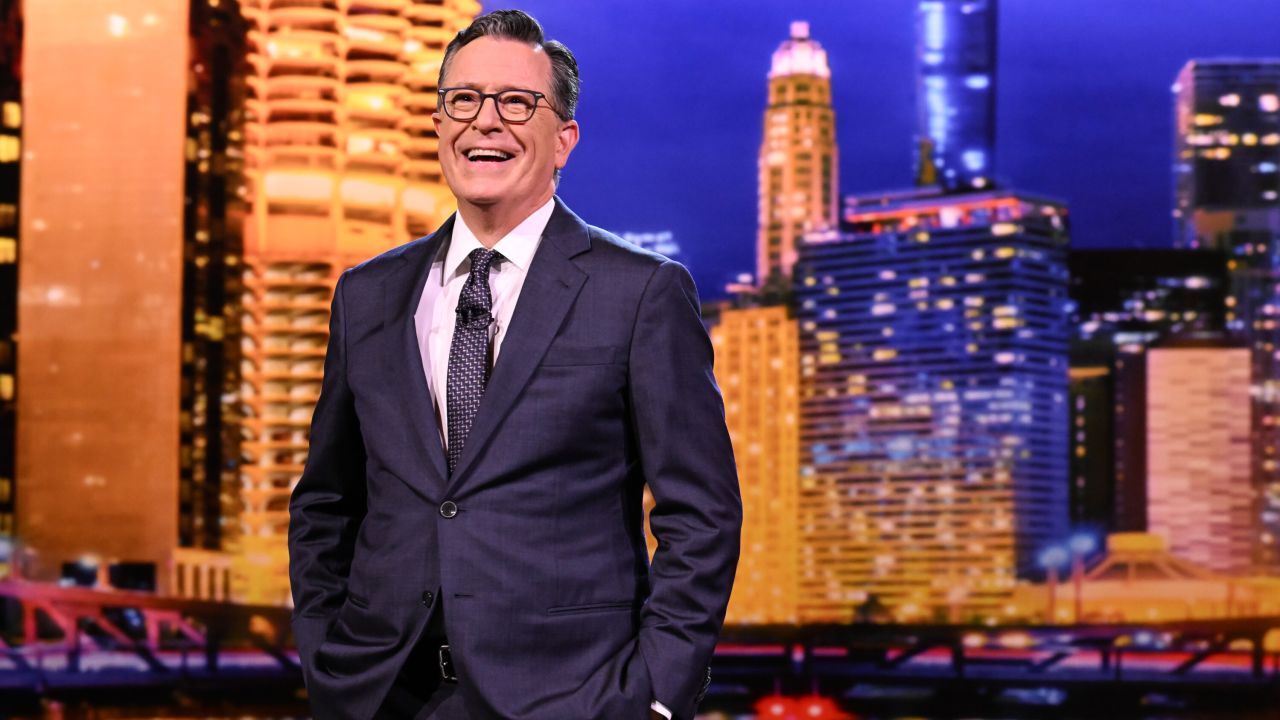
The Late Show with Stephen Colbert will end in May 2026 after 33 years on air, the CBS television network announced in a surprise statement on Thursday.
The move “is purely a financial decision against a challenging backdrop in late night [television]” and “is not related in any way to the show’s performance, content or other matters”, CBS said.
Colbert broke the news at a taping of the show, earlier on Thursday evening, triggering a chorus of boos from the live studio audience.
“I do want to say that the folks at CBS have been great partners,” he said, adding: “And of course, I’m grateful to you, the audience, who have joined us every night in here, out there, all around the world.”
The move brings a close to the more than three-decade old programme, leaving the network without a late-night comedy talk show for the first time since 1993.
Colbert, who took over the CBS programme from David Letterman in 2015, has become one of US President Donald Trump’s staunchest critics on late-night TV.
The presenter was informed of the decision to cancel his show on Wednesday night, he told the audience during his Thursday monologue.
“Yeah, I share your feeling,” he said as the crowd in the Ed Sullivan Theatre in New York shouted “no” and booed.
“It’s not just the end of our show, but it’s the end of The Late Show on CBS. I’m not being replaced. This is all just going away,” he continued. “It is a fantastic job. I wish somebody else was getting it.”
The announcement comes two weeks after CBS parent company Paramount settled a lawsuit with Trump stemming from a CBS interview with his 2024 election rival Kamala Harris.
The Late Show was created by CBS, the BBC’s US news partner, in 1993 as a competitor to NBC’s own talk show. It came after a dispute between hosts David Letterman and Jay Leno over who should succeed Johnny Carson on the wildly-popular Tonight Show.
Before taking over the job at The Late Show, Colbert had been the host of “The Colbert Report” on Comedy Central – a programme which skewered US conservative politics and culture.
The announcement of the ending of the programme came amid talks between Paramount and Skydance Media to merge the two companies, a move that would require approval from the US federal government.
Democratic Senator Adam Schiff posted on X on Thursday that he had finished taping an interview with Colbert just before the cancellation was announced.
He questioned whether the announcement was tied to the $16m (£12m) settlement the network agreed to pay to Trump, writing: “If Paramount and CBS ended the Late Show for political reasons, the public deserved to know”.
Another US senator, Elizabeth Warren, echoed those sentiments, posting on X: “America deserves to know if his show was cancelled for political reasons.”
The settlement came after Trump sued CBS last October alleging the network had deceptively edited an interview that aired on its 60 Minutes news programme with his presidential election rival Kamala Harris, to “tip the scales in favour of the Democratic party”.
Paramount said it would pay to settle the suit, but with the money allocated to Trump’s future presidential library, not paid to him “directly or indirectly”. (BBC)
US media company Paramount Global has agreed to pay $16 million (£13.5m) to settle a legal dispute with US President Donald Trump regarding an interview it broadcast on CBS with former Vice President Kamala Harris.
Trump filed a lawsuit last October, alleging the network had deceptively edited an interview that aired on its 60 Minutes news programme with his presidential election rival Kamala Harris, to “tip the scales in favour of the Democratic party”.
Paramount said it would pay to settle the suit, but with the money allocated to Trump’s future presidential library, not paid to him “directly or indirectly”.
The company noted the settlement does not include a statement of apology or regret.
CBS, which is owned by Paramount, previously said the case was “completely without merit” and had asked a judge to dismiss it.
The settlement marks the latest concession by a US media company to a president who has targeted outlets over what he describes as false or misleading coverage.
According to the lawsuit filed in federal court in Texas, CBS aired two versions of the Harris interview in which she appeared to give different answers to the same question about the Israel-Gaza war.
Interviewer Bill Whitaker asked the Democratic nominee about the Biden administration’s relationship with Israel. The network later aired two different versions of her response, according to the claim.
One clip aired on Face the Nation and the other on 60 Minutes. Trump claimed Harris’s “word salad” answer had been deceptively edited in one version to shield her from backlash.
CBS said it edited Harris’s answer for time, in accordance with television news standards.
Trump sued, originally claiming for $10bn (£8.5bn) but that figure was later increased to $20bn ($17bn) for damages.
In May this year, the company offered $15m (12.7m) to settle the suit but Trump wanted more than $25m (£21m).
In a statement released on Tuesday, Paramount confirmed the settlement fee included the president’s legal fees, and that it had agreed that 60 Minutes will release transcripts of interviews with future presidential candidates.
According to both the Wall Street Journal and New York Times, the settlement was agreed – with the help of mediator – so as to not affect Paramount’s planned merger with Skydance Media, which the Federal Communications Commission has been reviewing and therefore Trump technically has the power to halt.
During the month-long settlement talks, some CBS News executives including chief executive Wendy McMahon have left their roles, due to their unwillingness to issue an apology to Trump.
There were also reportedly concerns over whether paying to settle the lawsuit could be viewed as bribing a public official.
A spokesman for Trump’s legal team said the settlement was “another win for the American people as he, once again, holds the Fake News media accountable for their wrongdoing and deceit.”
He added that CBS and Paramount “realised the strength of this historic case.”
CBS has said the broadcast was “not doctored or deceitful”.
The Paramount settlement follows a decision by Walt Disney-owned ABC News to settle a defamation case brought by Trump. (BBC)


 English