Posted on Leave a comment

‘We’ve got to fight for our journalism,’ BBC director general tells staff

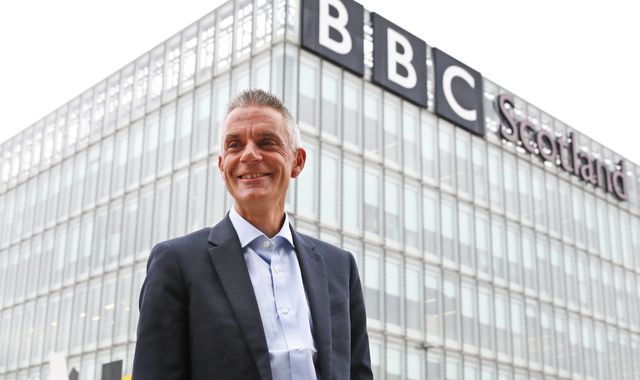
BBC director general Tim Davie has told staff that “we’ve got to fight for our journalism” after Donald Trump threatened to sue the corporation for $1bn (£760m) over a Panorama programme.

It comes after a leaked internal BBC memo, published by the Telegraph last Monday, said the film had misled viewers by splicing together parts of the US president’s speech on 6 January 2021 and made it appear as if he had explicitly encouraged the Capitol Hill riot.

“We have made some mistakes that have cost us, but we need to fight,” Davie, who resigned on Sunday alongside BBC News CEO Deborah Turness after mounting pressure over the memo, said on Tuesday.

“This narrative will not just be given by our enemies, it’s our narrative,” he added.

He said the BBC went through “difficult times… but it just does good work, and that speaks louder than any newspaper, any weaponisation”.

Trump threatened to take legal action if the BBC did not make a “full and fair retraction” of the programme by Friday. The corporation has said it will reply in due course.

BBC chair Samir Shah said in a letter to the Culture, Media and Sport Committee (CMS) on Monday that the corporation would like to apologise for the edit, which he called an “error of judgement” which gave the impression of a “direct call for violent action”.

During Tuesday’s staff call, where Shah also spoke, neither Davie nor the BBC chair mentioned Trump’s legal threat.

Davie said the fact that “there was an editorial breach, and I think some responsibility had to be taken” was one of the reasons he was quitting.

He also cited the upcoming charter renewal – saying he wanted to give his successor a “runway into that” – and the personal pressures of the “relentless” role.

Shah also defended the fact that the corporation did not respond to the memo’s publication for seven days.

“We had a deadline, that was Monday… and we met that,” he said, referring to the deadline given by the CMS, and stressed that he “needed to be careful and get it right”.

No timeline was given for selecting Davie’s replacement, but the chair said the corporation was in “succession mode”.

The BBC’s culture editor Katie Razzall said there was “some disquiet” from BBC staff over the Q&A session, which was moderated by a member of the BBC’s communications team, not by a journalist.

Speaking in the Commons on Tuesday, Culture Secretary Lisa Nandy defended the BBC from “sustained attacks” by politicians who she said were going beyond criticising its editorial failures.

She said the “concerns are serious” but there was a “fundamental difference from raising serious concerns about editorial failings and members of this house launching a sustained attack on the institution itself.”

She added that the BBC was “essential to this country” and wasn”not just a broadcaster, it’s a national institution” – “It is a light on the hill here and around the world.”

Nandy confirmed that the once-a-decade process of reviewing the corporation’s charter would begin shortly and that it would ensure a BBC which is “fiercely independent” and “genuinely accountable” to the public.

At its meeting on Tuesday, the CMS committee agreed to hold an evidence session with members of the BBC’s editorial guidelines and standards committee in coming weeks, including Shah and BBC board members Robbie Gibb and Caroline Thomson.

Shadow culture secretary Nigel Huddleston said the BBC “needs saving from itself” and that whilst “we all want the BBC to succeed” there needed to be “institutional change…not just a few people at the top”.

Downing Street has refused to comment on Trump’s legal threat, explaining that this was a “matter for the BBC”.

“It is clearly not for the government to comment on any ongoing legal matters,” the prime minister’s official spokesperson said.

“Our position is clear, the BBC is independent and it’s for the cooperation to respond to questions about their editorial decisions.”

Asked whether there were concerns the issue would impact Keir Starmer’s relationship with Trump, the spokesperson said the two had a “very strong” relationship.

The spokesperson would not be drawn on whether the BBC should apologise directly to the president.

Trump’s legal team wrote to the BBC on Sunday threatening to take action over the “false, defamatory, disparaging, misleading, and inflammatory statements” in the Panorama programme.

The BBC said the programme, which was first broadcast on 24 October 2024, was not available to watch on iPlayer because it was “over a year old”. (BBC)

Posted on Leave a comment

BBC chief resigns after row over Trump documentary

The Director General of the BBC, Tim Davie, announced his resignation on Sunday following a row over the editing of a documentary about US President Donald Trump.

Davie and the broadcaster’s head of news, Deborah Turness, resigned after accusations that a documentary by its flagship Panorama programme had edited a speech by Trump in a misleading way.

“Like all public organisations, the BBC is not perfect, and we must always be open, transparent and accountable.

“While not being the only reason, the current debate around BBC News has understandably contributed to my decision… I have to take ultimate responsibility,” Davie said in a statement posted on the BBC website.

The latest controversy follows a Daily Telegraph report this week that said concerns were first raised in the summer in a memo on impartiality by Michael Prescott, a former external adviser to the BBC’s editorial standards committee.

Earlier Sunday, the UK Culture, Media and Sport Minister Lisa Nandy called the allegations “incredibly serious”.

The BBC has promised “a full response” to Parliament’s culture, media, and sport committee on Monday.

The criticism emerged over clips spliced together from sections of a Trump speech on January 6, 2021, when he was accused of fomenting the mob attack on the US Capitol, seeking to keep him in power despite losing his re-election bid.

The edit made it appear he had told supporters he was going to walk to the US Capitol with them and “fight like hell”.

In the undistorted clip, however, the president urged the audience to walk with him, “and we’re going to cheer on our brave senators and congressmen and women.”

At the time, Trump was still disputing President Joe Biden’s election victory, in a vote that saw him ousted after his first term in office.

The edit was included in a documentary entitled “Trump: A Second Chance?” that was broadcast by the BBC the week before last year’s US election.

Nandy said the Trump edit was one of several concerns about editorial standards at the BBC.

“It isn’t just about the Panorama programme, although that is incredibly serious,” she told BBC television in an interview.

“There are a series of very serious allegations made, the most serious of which is that there is systemic bias in the way that difficult issues are reported at the BBC,” she said.

Nandy said she was concerned about a tendency for editorial standards and the language used in reports to be “entirely inconsistent”, whether it be on “Israel, Gaza… trans people or on this issue about President Trump”.

The licence fee-funded broadcaster earlier this year issued several apologies for “serious flaws” in the making of another documentary entitled “Gaza: How To Survive A Warzone”, broadcast in February.

In October, it accepted a sanction from the UK media watchdog for what was deemed a “materially misleading” programme, whose child narrator was later revealed to be the son of Hamas’s former deputy agriculture minister. (Punch)

Posted on Leave a comment

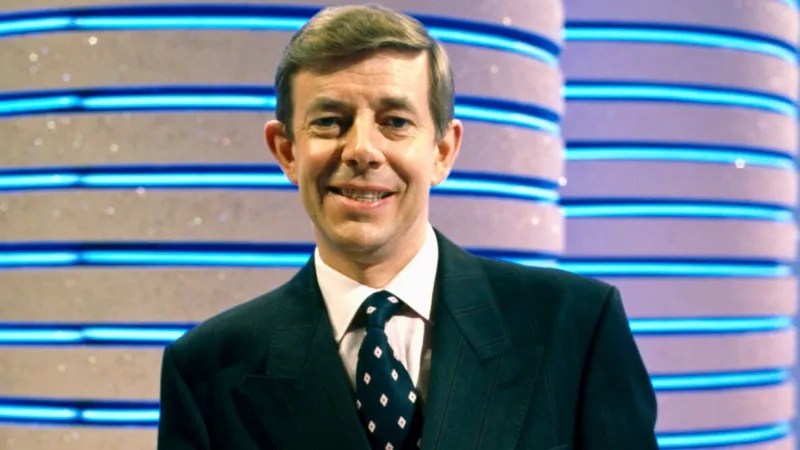
Going For Gold presenter Henry Kelly dies at 78

Journalist and TV presenter Henry Kelly has died aged 78, his family has announced.

Kelly was a journalist who later pivoted to light entertainment, hosting TV gameshow Game For A Laugh and Going For Gold in the 1980s and 90s.

He also presented programmes on BBC Radio 4, LBC and Classic FM.

In a statement, Kelly’s family said he “died peacefully” on Tuesday “after a period of ill health”.

“Henry will be sorely missed by his friends and family,” it continued, “including his partner Karolyn Shindler, their son Alexander, Henry’s daughter Siobhan and her mother Marjorie”.

Born in Dublin on 17 April 1946, Kelly started his journalistic career in newspapers.

He worked for The Irish Times in the 1970s during civil unrest and the Troubles in Northern Ireland.

He left the newspaper and moved to London to join the BBC in 1976, working as a reporter and presenter for Radio 4’s The World Tonight.

But in 1980, aged 34, he left journalism to become a light entertainment presenter.

He went on to front ITV’s Game For A Laugh, and the first iteration of Good Morning Britain on TV-am, alongside Toni Arthur.

Game For A Laugh largely involved practical jokes and elaborate set-ups, often on members of the studio audience or filmed on location on unsuspecting members of the public.

Kelly also fronted lunchtime quiz show Going For Gold for 10 seasons from the late 1980s to the mid-1990s.

The theme tune for Going For Gold was composed by Hans Zimmer, who went on to become a hugely successful film and TV composer.

The show saw contestants from different European countries compete against each other to answer questions to win prizes.

Going For Gold was briefly revived in the late 2000s by Channel 5, presented by John Suchet.

Kelly later became one of the launch presenters of Classic FM and also hosted shows on speech station LBC, BBC Radio London.

He hosted a show on BBC Radio Berkshire for 10 years from 2005.

Speaking to Challenge TV about his memories of Going for Gold, Kelly – who almost missed the hosting audition as he was planning to play golf – noted how “the whole point” of the show “was that it was Pan-European”.

“We were the only people in this country at the time, and probably since, who were really European, and so we had contestants from all over Europe,” he said. (BBC)