
Posted on Leave a comment

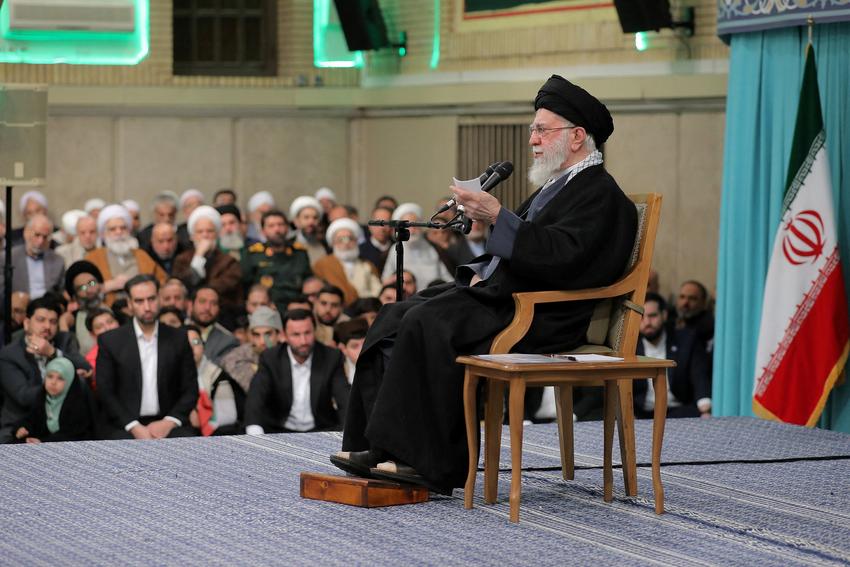
Iran confirms Supreme Leader Ali Khamenei dead after US-Israeli attacks

Iranian state media have confirmed that Supreme Leader Ayatollah Ali Khamenei was killed at his office in the Israeli-US attacks on Iran, following earlier reports of his killing by US and Israeli officials.

A 40-day mourning period for the longtime Iranian leader has been announced.

The Sunday confirmation comes after Iran’s Tasnim and Mehr news agencies initially reported that Khamenei remained “steadfast and firm in commanding the field”.

US President Donald Trump wrote in a post on his Truth Social platform earlier in the day that 86-year-old Khamenei was killed in the joint US-Israeli strikes, which began early on Saturday.

“He was unable to avoid our Intelligence and Highly Sophisticated Tracking Systems and, working closely with Israel, there was not a thing he, or the other leaders that have been killed along with him, could do,” Trump wrote.

“This is the single greatest chance for the Iranian people to take back their Country,” he said. “Hopefully, the IRGC [Islamic Revolutionary Guard Corps] and Police will peacefully merge with the Iranian Patriots.”

While Iranian authorities have long planned for the possible killing of Khamenei in the event of a war with the US and Israel, his assassination injects new uncertainty into an unfolding conflict that has already spurred concerns that fighting could escalate and expand further.

Israeli Prime Minister Benjamin Netanyahu had earlier also claimed that there were “growing signs” that Khamenei had been killed.

Additionally, the Reuters news agency, citing an unnamed senior Israeli official, had reported that Khamenei’s body had ⁠been located.

Khamenei has been Iran’s supreme leader since 1989, succeeding the founder of the post-shah Iran, Ayatollah Ruhollah Khomeini, who steered Iran’s 1979 revolution.

The supreme leader holds ultimate authority over all branches of government, the military and the judiciary, while also acting as the country’s spiritual leader.

Barbara Slavin, a distinguished fellow at the Stimson Center in Washington, DC, told Al Jazeera that Iran “has a plan” in place in the event that Khamenei’s death is confirmed.

“There will probably be a council that will be set up to run the country. It may already have been running the country, as far as we know,” she said.

Saturday’s strikes on Iran targeted 24 provinces, killing at least 201 people, according to Iranian media reports, citing the Red Crescent.

Among the attacks, Israel struck two schools in Iran, killing at least 108 people at the Shajareh Tayyebeh girls’ elementary school in the southern city of Minab, and two others at a school east of the capital, Tehran.

Netanyahu said in his address that many “senior figures” had been “eliminated” in the wave of attacks targeting senior leaders, as Trump called for the government to be toppled.

Israel, Netanyahu said, had killed “commanders in the Revolutionary Guard and senior officials in the nuclear programme. And we will continue.”

Trump indicated on his Truth Social post that “heavy and pinpoint bombing” of Iran would go on “uninterrupted throughout the week or, as long as necessary”.

Iran’s counterattacks on Saturday triggered air-defence interceptions in several countries where airbases with US assets are hosted, including Kuwait, Qatar, the United Arab Emirates and Bahrain.

On Saturday evening, the Iranian Revolutionary Guard Corps (IRGC) said that the third and fourth waves of “retaliatory” strikes on US and Israeli positions were ongoing, according to a statement carried by the IRNA news agency.

United Nations Secretary-General Antonio Guterres told an emergency meeting of the Security Council that he deeply regretted that an opportunity for diplomacy had been “squandered”.

“Military action carries the risk of igniting a chain of events that no one can control in the most volatile region of the world,” he told the 15-member body. “I call for de-escalation and an immediate cessation of hostilities”.

Addressing the Security Council, Iran’s UN ambassador, Amir Saeid Iravani, said the US and Israel had “initiated an unprovoked and premeditated aggression”, attacking “civilian populated areas in multiple large cities of Iran, where millions of people reside”.

“This is not only an act of aggression, it is a war crime, and a crime against humanity,” he said.

The US ambassador to the UN, Mike Waltz, insisted that the military action was lawful. “Iran cannot have a nuclear weapon,” he said. “That principle is not a matter of politics. It’s a matter of global security.”

China’s UN ambassador, Fu Cong, said Beijing was very concerned by “the sudden escalation of regional tensions”.

Russia’s ambassador, Vassily Nebenzia, condemned the US-Israeli air strikes, demanding that the US and Israel “immediately cease their aggressive actions”. (AlJazeera)

Posted on Leave a comment

Jamaica hurricane death toll hits 28 as Caribbean Island reels from colossal disaster

Storm-ravaged communities in western Jamaica were facing dire straits Sunday, days after record-setting Hurricane Melissa left towns demolished and at least 28 people dead across the island.

Prime Minister Andrew Holness confirmed the new death toll — nine higher than the previous tally of 19 — and posted on X late Saturday that “there are additional reports of possible fatalities that are still being verified”.

Melissa became the most intense storm to make landfall in 90 years when it barreled into Jamaica last Tuesday as a Category 5 hurricane packing winds of 185 miles (300 kilometers) per hour.

It ripped a terrifying path through the Caribbean, leaving at least 31 dead in Haiti, Dominican Republicincluding 10 children who drowned in heavy flooding, and ravaged parts of Cuba and the Dominican Republic.

In Jamaica, devastation was rampant in western parishes including Westmoreland and Saint Elizabeth.

AFP reporters witnessed residents grappling with the enormity of the disaster.

Buildings in Whitehouse were destroyed or crumpled, with corrugated roofs strewn across the ground.

Power lines were down, and trees were shorn of all leaves.

Many communities have been cut off.

Countless homes, hospitals, businesses, and other buildings have been badly damaged or destroyed.

With large swathes of the country still without electricity or phone service, it was difficult to gain an accurate assessment of the death toll or the scope of the search and rescue operations needed.

The staggering economic losses will be a “burden” weighing on Jamaica and the rest of the region for years, a senior United Nations official said Sunday in Panama.

“It is estimated that Melissa could cause economic losses equivalent to Jamaica’s annual GDP,” said Nahuel Arenas, head of the UN Office for Disaster Risk Reduction (UNDRR) for the Americas and the Caribbean.

According to the World Bank, the gross domestic product of Jamaica stood at nearly $20 billion in 2024.

“These are losses that will weigh heavily on the economy of all Jamaicans for years and years to come,” Arenas said.

The World Health Organisation and other groups have sent medical teams in the country, and the United States says its emergency response teams are on the ground.

United Nations chief Antonio Guterres “emphasised that international support is crucial at this time,” and called for the “mobilisation of massive resources” to address the loss and damage, a spokesman for the secretary-general said Sunday in a statement.

The UN has allocated $4 million from its Central Emergency Response Fund to help scale up humanitarian operations in Jamaica. (Channels)

Posted on Leave a comment

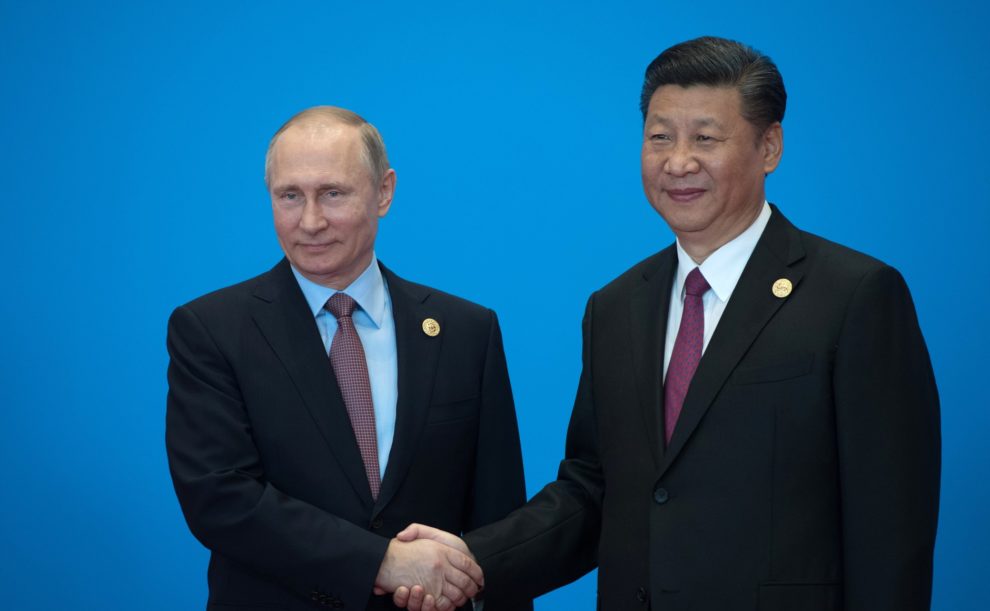
Putin, Modi, Erdogan to attend Tianjin Summit as Xi welcomes world leaders

Chinese President Xi Jinping began welcoming dignitaries including United Nations chief Antonio Guterres and Egyptian Premier Moustafa Madbouly on Saturday before a summit attended by leaders from more than 20 countries.

The Shanghai Cooperation Organisation gathering will be held in the northern port city of Tianjin on Sunday and Monday, days before a massive military parade in nearby Beijing to mark 80 years since the end of World War II.

North Korea’s Kim Jong Un will be among some 26 world leaders slated to attend the parade.

The SCO comprises China, India, Russia, Pakistan, Iran, Kazakhstan, Kyrgyzstan, Tajikistan, Uzbekistan and Belarus. Sixteen more countries are affiliated as observers or “dialogue partners”.

Russian President Vladimir Putin and Indian Prime Minister Narendra Modi are also due to arrive in Tianjin ahead of the summit.

China and Russia have used the organisation — sometimes touted as a counter to the Western-dominated NATO military alliance — to deepen ties with Central Asian states.

Other leaders including Iranian and Turkish presidents Masoud Pezeshkian and Recep Tayyip Erdogan will also attend the bloc’s largest meeting since its founding in 2001.

Multiple bilateral meetings are expected to be held on the sidelines of the summit.

The Kremlin said on Friday that Putin will discuss the Ukraine conflict with Erdogan on Monday.

Turkey has hosted three rounds of peace talks between Russia and Ukraine this year that have failed to break the deadlock over how to end the conflict, triggered when Moscow launched its invasion of its pro-European neighbour in February 2022.

Putin will also talk about Tehran’s nuclear programme on Monday with his Iranian counterpart Pezeshkian, a meeting that comes as Iran faces fresh Western pressure.

Britain, France and Germany, known as the E3, triggered a “snapback” mechanism on Thursday to reinstate UN sanctions on Tehran for failing to comply with commitments made in a 2015 deal over its nuclear programme.

Russia’s foreign ministry warned that the reimposition of sanctions against Iran risked “irreparable consequences”.

Tehran and Moscow have been bolstering political, military and economic ties over the past decade as Russia drifted away from the West.

Relations between them grew even closer after Moscow launched its offensive against Ukraine.

Modi’s visit comes after a trip to Japan, and is his first to China since 2018.

The world’s two most populous nations are intense rivals competing for influence across South Asia and fought a deadly border clash in 2020.

A thaw began last October when Modi met with Xi for the first time in five years at a summit in Russia. (Punch)