South African singer Tyla has become the African artist with the highest number of monthly listeners on Spotify, overtaking Nigerian stars Burna Boy and Tems.
The achievement makes the 22-year-old singer the most-followed African artiste on the streaming platform, showing how quickly she has risen and gained international attention.
Born Tyla Laura Seethal, the Johannesburg-born singer broke into the global spotlight in 2023 with her hit single Water. The song became a viral success across social media platforms, especially TikTok, and helped introduce Tyla to a worldwide audience.
Water went on to chart in several countries and earned Tyla worldwide recognition.
The success of the track marked a turning point in her career, positioning her as one of Africa’s most visible music exports.
Since then, Tyla has released other songs such as Kick to Start, Truth or Dare, and Channel which have helped sustain her momentum and attract new listeners across different markets.
In 2024, Tyla won the Grammy Award for Best African Music Performance with Water, making her one of the youngest African artistes to receive the honour.
Beyond the Grammys, Tyla has also won several international awards. She has won the MTV Video Music Awards, the BET Awards and the MTV Europe Music Awards, recognising both her music and her impact as a rising pop figure.
Her growing list of accolades has helped position her as one of the most influential young artistes from Africa.
By surpassing Burna Boy and Tems in monthly listeners, Tyla joins a small group of African artistes whose music consistently attracts a massive global audience.
Burna Boy is known for his dominance and Grammy-winning career, while Tems has also enjoyed international success and also won several music awards, including the Grammys through collaborations and solo releases.
As Tyla’s fan base continues to grow, fans are glued to see more releases, tours and collaborations from her as we approach 2026. (Guardian)
TikTok’s Chinese owner ByteDance has signed binding agreements with US and global investors to operate its business in America, TikTok’s boss told employees on Thursday.
Half of the joint venture will be owned by a group of investors, including Oracle, Silver Lake and the Emirati investment firm MGX, according to a memo sent by chief executive Shou Zi Chew.
The deal, which is set to close on 22 January, would end years of efforts by Washington to force ByteDance to sell its US operations over national security concerns.
It is in line with a deal unveiled in September, when US President Donald Trump delayed the enforcement of a law that would ban the app unless it was sold.
In the memo, TikTok said the deal will enable “over 170 million Americans to continue discovering a world of endless possibilities as part of a vital global community”.
Under the agreement, ByteDance will retain 19.9% of the business, while Oracle, Silver Lake and Abu Dhabi-based MGX will hold 15% each.
Another 30.1% will be held by affiliates of existing ByteDance investors, according to the memo.
The White House previously said that Oracle, which was co-founded by Trump supporter Larry Ellison, will license TikTok’s recommendation algorithm as part of the deal.
The deal comes after a series of delays.
In April 2024, during President Joe Biden’s administration, the US Congress passed a law to ban the app over national security concerns, unless it was sold.
The law was set to go into effect on 20 January 2025 but was pushed back multiple times by Trump, while his administration worked out a deal to transfer ownership.
Trump said in September that he had spoken on the phone to China’s President Xi Jinping, who he said had given the deal the go ahead.
The platform’s future remained unclear after the leaders met face to face in October.
The app’s fate was clouded by ongoing tensions between the two nations on trade and other matters.
“TikTok has become a bargaining chip in the wider US-China relationship,” said Alvin Graylin, a lecturer at the Massachusetts Institute of Technology.
“With recent softening tensions, Beijing’s sign off on the structure and algorithm licensing now looks less like capitulation and more like calibrated de-escalation, letting both capitals claim a win at home.”
he White House referred the BBC to TikTok when contacted for comment.
Oracle and Silver Lake declined to comment. The BBC has contacted MGX for comment.
The deal drew critiques from Senate Democrat Ron Wyden of Oregon, who said it wouldn’t do “a thing to protect the privacy of American user”.
Under the terms, TikTok’s recommendation algorithm is set to be retrained on American user data to ensure feeds are free from outside manipulation.
“It’s unclear that it will even put TikTok’s algorithm in safer hands,” said Sen Wyden.
He opposed the 2024 law, and was among the US lawmakers who lobbied to extend the TikTok deadline in January in a bid to give Congress more time to mitigate threats from China. (BBC)
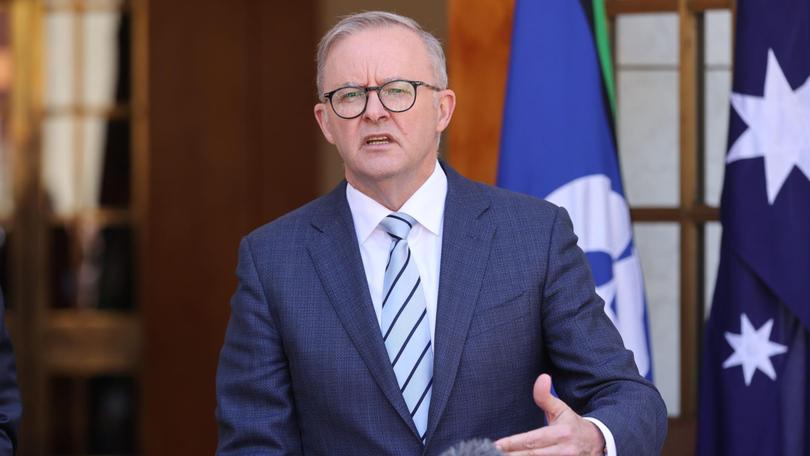
Australian Prime Minister Anthony Albanese on Thursday acknowledged some young people were still on social media a day after a world-first ban on under-16s went live, saying the rollout was always going to be bumpy but would ultimately save lives.
A day after the law took effect, Australian social media feeds were flooded with comments from people claiming to be under 16, including one on the prime minister’s TikTok account saying “I’m still here, wait until I can vote”.
Under the law, 10 of the biggest platforms including TikTok, Meta’s Instagram and Alphabet’s YouTube must bar underage users or face a fine of up to A$49.5 million ($33 million). The government has said previously that it would take some time for the platforms to set up processes to do this.
“Of course it isn’t smooth,” Albanese told Melbourne radio station FOX. “You can’t in one day switch off over a million accounts across the board. But it is happening.”
On Nova Radio in Sydney, Albanese added: “If it was easy, someone else would have done it.”
Governments around the world have said they would monitor the Australian rollout as they weigh whether to do something similar. U.S. Republican senator Josh Hawley endorsed the ban as it took effect, Nine newspapers reported.
The United Nations children’s agency UNICEF warned in a statement the ban might encourage children to visit less regulated parts of the internet and could not work alone.
“Laws introducing age restrictions are not an alternative to companies improving platform design and content moderation,” the statement said.
Albanese has pitched the ban as an intervention to protect young people from mental health risks associated with social media, including bullying, body image problems and addictive algorithms.
The measure would “save lives and it will change lives for this and future generations”, he told Nova.
Australian searches for virtual private networks (VPNs), which can mask an internet user’s location, surged to the highest in about 10 years in the week before the ban took effect, according to publicly available Google data.
Free VPN provider hide.me told Reuters it experienced a 65% spike in visits from Australia in the days before the ban kicked in, although that had not translated to a rising number of downloads.
All 10 platforms named by the ban opposed it before saying they would comply. As the ban took effect, some platforms not covered by the ban rose to the top of app download charts, prompting the Australian government to say the platform list was “dynamic”.
One app, Lemon8, which is owned by TikTok parent Bytedance, introduced an age minimum of 16. Photo-sharing app Yope told Reuters it had experienced “very fast growth” to about 100,000 Australian users. About half its users were over 16.
The company told Reuters it had told the Australian internet regulator overseeing the rollout that it considered itself a private messaging service, not social media. (JapanToday)
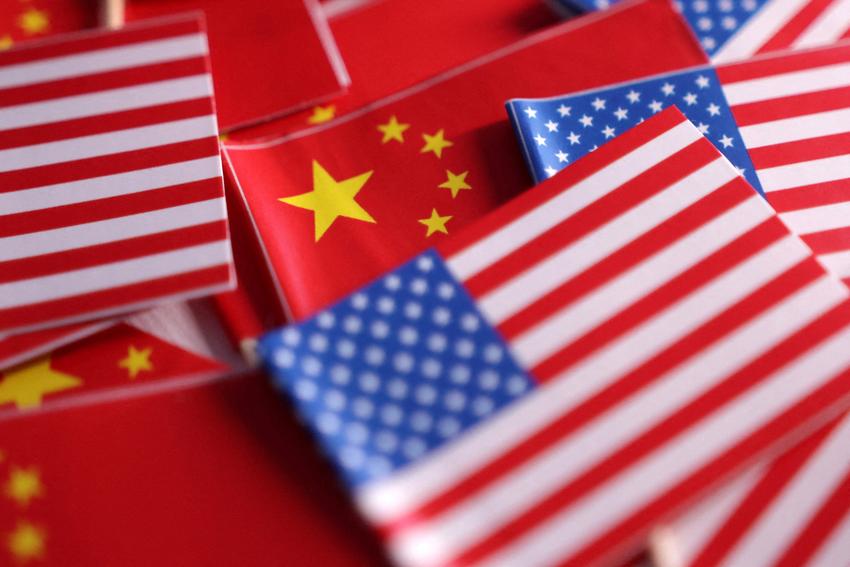
Top Chinese and U.S. economic officials on Sunday hashed out the framework of a trade deal for U.S. President Donald Trump and Chinese President Xi Jinping to decide on later this week that would pause steeper American tariffs and Chinese rare earths export controls, U.S. officials said.
U.S. Treasury Secretary Scott Bessent said talks on the sidelines of the ASEAN Summit in Kuala Lumpur had eliminated the threat of Trump’s 100% tariffs on Chinese imports starting November 1. Bessent also said he expects China to delay implementation of its rare earth minerals and magnets licensing regime by a year while the policy is reconsidered.
Chinese officials were more circumspect about the talks and offered no details about the outcome of the meetings.
Trump and Xi are due to meet on Thursday on the sidelines of the Asia-Pacific Economic Cooperation (APEC) summit in Gyeongju, South Korea, to sign off on the terms. While the White House has officially announced the highly anticipated Trump-Xi talks, China has yet to confirm that the two leaders will meet.
“I think we have a very successful framework for the leaders to discuss on Thursday,” Bessent told reporters after he and the U.S. Trade Representative Jamieson Greer met with Chinese Vice Premier He Lifeng and top trade negotiator Li Chenggang for their fifth round of in-person discussions since May.
Bessent said he anticipates that a tariff truce with China will be extended beyond its November 10 expiration date, and that China will revive substantial purchases of U.S. soybeans after buying none in September while favouring soybeans from Brazil and Argentina.
U.S. soybean farmers “will feel very good about what’s going on both for this season and the coming seasons for several years” once the deal’s terms are announced, Bessent told the ABC program “This Week.”
Greer told the “Fox News Sunday” program that both sides agreed to pause some punitive actions and found “a path forward where we can have more access to rare earths from China, we can try to balance out our trade deficit with sales from the United States.”
China’s Li Chenggang said the two sides reached a “preliminary consensus” and will next go through their respective internal approval processes.
“The U.S. position has been tough, whereas China has been firm in defending its own interests and rights,” Li said through an interpreter. “We have experienced very intense consultations and engaged in constructive exchanges in exploring solutions and arrangements to address these concerns.”
Trump arrived in Malaysia on Sunday for a summit of the Association of Southeast Asian Nations, his first stop in a five-day Asia tour that is expected to culminate in Thursday’s face-to-face with Xi in South Korea.
After the weekend talks, Trump struck a positive tone, saying: “I think we’re going to have a deal with China”.
Trump had threatened new 100% tariffs on Chinese goods and other trade curbs starting on November 1, in retaliation for China’s expanded export controls on rare earth magnets and minerals.
China controls more than 90% of the world’s supply for the materials, which are essential for high-tech manufacturing from electric vehicles to semiconductors and missiles. The export controls and Trump’s threatened retaliation would disrupt a delicate six-month truce under which China and the U.S. reduced tariffs that had quickly escalated to triple-digit rates on each side.
The U.S. and Chinese officials said that, in addition to rare earths, they discussed trade expansion, the U.S. fentanyl crisis, U.S. port entrance fees and the transfer of TikTok to U.S. ownership control.
Bessent told NBC’s “Meet the Press” program that the two sides have to iron out details of the TikTok deal, allowing Trump and Xi to “consummate the transaction” in South Korea.
On the sidelines of the ASEAN Summit, Trump hinted at possible meetings with Xi in China and the United States.
“We’ve agreed to meet. We’re going to meet them later in China, and we’re going to meet in the U.S., in either Washington or at Mar-a-Lago,” Trump said.
Among Trump’s talking points with Xi are Chinese purchases of U.S. soybeans, concerns around democratically governed Taiwan, which China views as its own territory, and the release of jailed Hong Kong media tycoon Jimmy Lai.
The detention of the founder of the now-defunct pro-democracy newspaper Apple Daily has become the most high-profile example of China’s crackdown on rights in Hong Kong.
Trump also said he will seek China’s help in U.S. dealings with Moscow, as Russia’s war in Ukraine grinds on.
Tensions between the world’s two largest economies flared in the past few weeks as a delicate trade truce, reached after a first round of trade talks in Geneva in May and extended in August, failed to prevent the United States and China from hitting each other with more sanctions, export curbs and threats of stronger retaliatory measures.
China’s expanded controls of rare earths exports have caused a global shortage. That has prompted the United States to consider a block on software-powered exports to China, from laptops to jet engines, according to a Reuters report. (JapanToday)
The rise of TikTok trends and social media slang has prompted Cambridge Dictionary to update its online edition with 6,000 fresh entries in the past year, including buzzwords like “skibidi,” “delulu,” and “tradwife.”
For those less immersed in digital culture, some of the sample sentences the UK-based dictionary provides may sound baffling. The term skibidi was popularised through Skibidi Toilet, a surreal YouTube animation series featuring human heads popping out of toilets.
Phrases such as “that wasn’t very skibidi rizz of you” or “As Gen Z say, I’ve entered my ‘delulu era?’” can appear like another language entirely.
According to Cambridge, skibidi is defined as “a word that can have different meanings, such as ‘cool’ or ‘bad,’ or can be used with no real meaning as a joke.” (Punch)



 English