Posted on Leave a comment

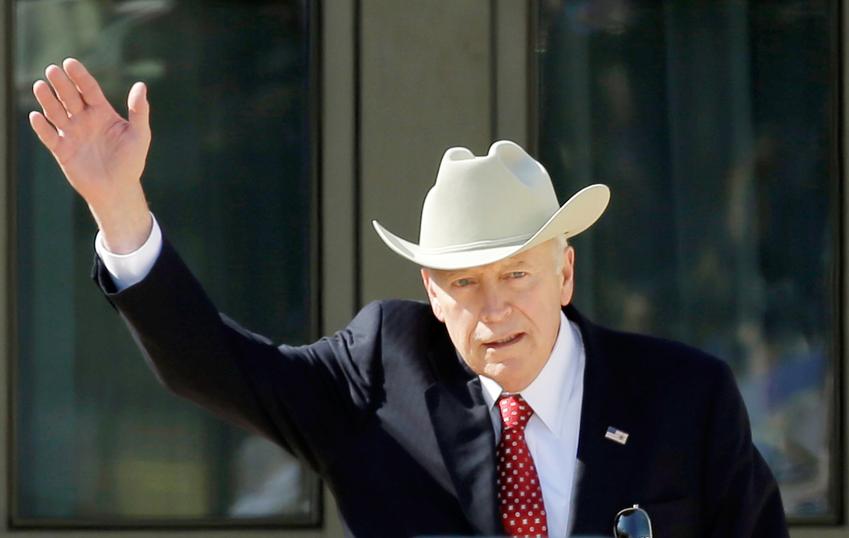
Dick Cheney, one of the most powerful and polarizing vice presidents in U.S. history, dies at 84

Dick Cheney, the hard-charging conservative who became one of the most powerful and polarizing vice presidents in U.S. history and a leading advocate for the invasion of Iraq, has died at 84.

Cheney died Monday due to complications of pneumonia and cardiac and vascular disease, his family said Tuesday.

The quietly forceful Cheney led the armed forces as defense secretary during the Persian Gulf War under President George H.W. Bush before returning to public life as vice president under Bush’s son George W Bush.

Cheney was, in effect, the chief operating officer of the younger Bush’s presidency. He often had a commanding hand in implementing decisions most important to the president and some of surpassing interest to himself — all while living with decades of heart disease and, post-administration, a heart transplant. Cheney consistently defended the extraordinary tools of surveillance, detention and inquisition employed in response to the Sept. 11, 2001, attacks.

“History will remember him as among the finest public servants of his generation — a patriot who brought integrity, high intelligence, and seriousness of purpose to every position he held,” Bush said.

Years after leaving office, Cheney became a target of President Donald Trump, especially after his daughter Liz Cheney became the leading Republican critic and examiner of Trump’s attempts to stay in power after his 2020 election defeat and his actions in the Jan 6, 2021, Capitol riot.

Cheney said last year he was voting for Democrat Kamala Harris for president against Trump.

For all his conservatism, Cheney was privately and publicly supportive of his daughter Mary Cheney after she came out as gay, years before same-sex marriage was broadly supported. “Freedom means freedom for everyone,” he said.

In his time in office, no longer was the vice presidency merely a ceremonial afterthought. Instead, Cheney made it a network of back channels from which to influence policy on Iraq, terrorism, presidential powers and energy.

A hard-liner on Iraq, Cheney was proved wrong about the rationale for the Iraq War, a point he didn’t acknowledge.

He alleged links between the 9/11 attacks and prewar Iraq that didn’t exist. He said U.S. troops would be welcomed as liberators; they weren’t.

He declared the Iraqi insurgency in its last throes in May 2005, when 1,661 U.S. service members had been killed, not even half the toll by the war’s end.

Cheney and Bush struck an odd bargain, unspoken but well understood. Shelving ambitions he might have had to succeed Bush, Cheney was accorded extraordinary power.

His penchant for secrecy had a price. He came to be seen as a Machiavelli orchestrating a bungled response to criticism of the Iraq War. And when he shot a hunting companion with an errant shotgun blast in 2006, he and his coterie were slow to disclose that episode. The victim, his friend Harry Whittington, recovered and forgave him.

Bush asked Cheney to lead a search for his vice president, eventually deciding the job should go to Cheney himself. Their election in 2000 was ultimately sealed by the Supreme Court after a protracted legal fight.

On Capitol Hill, Cheney lobbied for the president’s programs where he had once served as a deeply conservative member of Congress and the No. 2 Republican House leader.

On Sept. 11, 2001, with Bush out of town, the president gave Cheney approval to authorize the military to shoot down hijacked planes. By then, two airliners had hit the World Trade Center and a third was bearing down on the capital. A Secret Service agent burst into the West Wing room, grabbed Cheney by the belt and shoulder and led him to a bunker underneath the White House.

Cheney’s career in Washington started with a congressional fellowship in 1968. He became a protégé of Rep. Donald Rumsfeld, R-Ill., serving under him in Gerald Ford’s White House before he was elevated to chief of staff, the youngest ever, at age 34.

He later returned to Casper, Wyoming, and won the state’s lone congressional seat, the first of six terms.

In 1989, Cheney became defense secretary and led the Pentagon during the 1990-91 Persian Gulf War. Between the two Bush administrations, Cheney led Dallas-based Halliburton Corp., an oil industry services company.

Cheney was born in Lincoln, Nebraska, son of a longtime Agriculture Department worker. Senior class president and football co-captain in Casper, he went to Yale on a full scholarship for a year but failed out.

He moved back to Wyoming and renewed a relationship with high school sweetheart Lynne Anne Vincent, marrying her in 1964. He is survived by his wife and daughters. (JapanToday)

Posted on Leave a comment

Nigerian Nobel laureate Wole Soyinka says US revoked his visa

Nigerian Nobel laureate Wole Soyinka has said the US revoked his visa and banned him from the country.

The 91-year-old author, who won the Nobel Prize for literature in 1986, said the US consulate asked him to bring in his passport so his visa could be cancelled in person as new unspecified information had come to light.

Soyinka called the invitation a “rather curious love letter from an embassy” in a news conference held on Tuesday and told organisations hoping to invite him to the US “not to waste their time”.

The US embassy in Nigeria has said it cannot comment on individual cases.

The Nobel laureate has previously held permanent residency in the US but renounced it in 2016, tearing up his green card in protest of President Donald Trump’s election.

The green card is a permanent residence permit for the US – prized by many African immigrants to the US.

Soyinka affirmed on Tuesday that he no longer had his green card – and jokingly added that it had “fallen between the fingers of a pair of scissors and it got cut into a couple of pieces”.

The famed author has had regular teaching engagements at US universities for the past 30 years.

“I have no visa. I am banned,” he said on Tuesday.

Soyinka has long been critical of the Trump administration’s radical stance on immigration and linked the visa revocation to his outspoken criticism.

He said his recent comparison of Trump to Uganda’s dictator – “Idi Amin in white face” – may have contributed to the current situation.

“When I called Donald Trump Idi Amin, I thought I was paying him a compliment,” Soyinka said, “he’s been behaving like a dictator.”

Idi Amin was a Ugandan military officer and dictator who ruled the country from 1971 to 1979, infamous for his brutal regime and widespread human rights abuses.

When asked if he would consider going back to the US, Soyinka said: “How old am I?”

In July, the US State Department announced sweeping changes to its non-immigrant visa policy for citizens of Nigeria and several other African countries.

According to the policy, nearly all non-immigrant and non-diplomatic visas issued to Nigerians and nationals of Cameroon, Ethiopia and Ghana would now be single-entry and valid for only three months, rolling back the up to five-year, multiple-entry visas they had enjoyed previously. (BBC)

Posted on Leave a comment

Trump tells military to prepare for ‘action’ against Islamist militants in Nigeria

US President Donald Trump has ordered the military to prepare for action in Nigeria to tackle Islamist militant groups, accusing the government of failing to protect Christians.

Trump did not say which killings he was referring to, but claims of a genocide against Nigeria’s Christians have been circulating in recent weeks and months in some right-wing US circles.

Groups monitoring violence say there is no evidence to suggest that Christians are being killed more than Muslims in Nigeria, which is roughly evenly divided between followers of the two religions.

An advisor to Nigeria’s president told the BBC that any military action against the jihadist groups should be carried out together.

Daniel Bwala said Nigeria would welcome US help in tackling the Islamist insurgents but noted that it was a “sovereign” country.

He also said the jihadists were not targeting members of a particular religion and that they had killed people from all faiths, or none.

Nigeria’s President Bola Tinubu has insisted there is religious tolerance in the country and said the security challenges were affecting people “across faiths and regions”.

Trump wrote in a social media post on Saturday that he had instructed the US Department of War to prepare for “possible action”.

He warned that he might send the military into Nigeria “guns-a-blazing” unless the Nigerian government intervened, and said that all aid to what he called “the now disgraced country” would be cut.

Trump added: “If we attack, it will be fast, vicious, and sweet, just like the terrorist thugs attack our CHERISHED Christians!”

US Defence Secretary Pete Hegseth replied to the post by writing: “Yes sir.

“The Department of War is preparing for action. Either the Nigerian Government protects Christians, or we will kill the Islamic Terrorists who are committing these horrible atrocities.”

Trump’s threat has triggered alarm across Nigeria. Many on social media are urging the government to step up its fight against Islamist groups to avert a situation where foreign troops are sent into the country.

But Mr Bwala, who said he was a Christian pastor, told the BBC’s Newshour programme that Trump had a “unique way of communicating” and that Nigeria was not taking his words literally.

“We know the heart and intent of Trump is to help us fight insecurity,” he said, adding that he hoped Trump would meet Tinubu in the coming days to discuss the issue.

Trump earlier announced that he had declared Nigeria a “Country of Particular Concern” because of the “existential threat” posed to its Christian population. He said “thousands” had been killed, without providing any evidence.

This is a designation used by the US State Department that provides for sanctions against countries “engaged in severe violations of religious freedom”.

Following this announcement, Tinubu said his government was committed to working with the US and the international community to protect communities of all faiths.

“The characterisation of Nigeria as religiously intolerant does not reflect our national reality,” the Nigerian leader said in a statement.

Jihadist groups such as Boko Haram and Islamic State West Africa Province have wrought havoc in north-eastern Nigeria for more than a decade, killing thousands of people – however most of these have been Muslims, according to Acled, a group which analyses political violence around the world. (BBC)

Posted on Leave a comment

U.S. to limit refugees to record low 7,500, mostly white South Africans

The Trump administration announced plans on Thursday to drastically cut back the number of refugees to be accepted annually by the United States to a record low and give priority to white South Africans.

Under the new policy, the United States would welcome 7,500 refugees in fiscal 2026, down from more than 100,000 a year under Democratic president Joe Biden.

The vast majority of those being accepted during the fiscal year which began on October 1 would be white South Africans and “other victims of illegal or unjust discrimination in their respective homelands,” according to a White House memo.

“The admissions numbers shall primarily be allocated among Afrikaners from South Africa,” it said.

Republican President Donald Trump essentially halted refugee arrivals after taking office in January, but has been making an exception for white South Africans despite Pretoria’s insistence that they do not face persecution in their homeland.

A first group of around 50 Afrikaners — descendants of the first European settlers of South Africa — arrived for resettlement in the United States in May.

Trump campaigned for the White House on a pledge to deport millions of undocumented migrants and signed an executive order in January suspending the U.S. Refugee Admissions Program.

Aaron Reichlin-Melnick, a senior fellow at the American Immigration Council, said that since 1980 more than two million people fleeing persecution have been admitted into the United States under the program.

“Now it will be used as a pathway for white immigration,” Reichlin-Melnick said on X. “What a downfall for a crown jewel of America’s international humanitarian programs.”

Krish O’Mara Vignarajah, president of another immigration-focused group, Global Refuge, also criticized the move by the Trump administration.

“For more than four decades, the U.S. refugee program has been a lifeline for families fleeing war, persecution, and repression,” Vignarajah said in a statement.

“At a time of crisis in countries ranging from Afghanistan to Venezuela to Sudan and beyond, concentrating the vast majority of admissions on one group undermines the program’s purpose as well as its credibility.”

In addition to slashing refugee numbers, the Trump administration has moved to strip Temporary Protected Status (TPS) for Afghans, Haitians, Venezuelans and nationals of several other countries.

The United States grants TPS to foreign citizens who cannot safely return home because of war, natural disasters or other “extraordinary” conditions.

Trump has said the Afrikaners being taken in as refugees by the United States are fleeing a “terrible situation” back home and has even gone so far as to describe it as “genocide,” an allegation widely dismissed as absurd.

Whites, who make up 7.3 percent of South Africa’s population, generally enjoy a higher standard of living than the Black majority. They still own two-thirds of farmland and on average earn three times as much as Black South Africans.

Mainly Afrikaner-led governments imposed the race-based apartheid system that denied Black people political and economic rights until it was voted out in 1994. (JapanToday)

Posted on Leave a comment

Jamaica hurricane death toll hits 28 as Caribbean Island reels from colossal disaster

Storm-ravaged communities in western Jamaica were facing dire straits Sunday, days after record-setting Hurricane Melissa left towns demolished and at least 28 people dead across the island.

Prime Minister Andrew Holness confirmed the new death toll — nine higher than the previous tally of 19 — and posted on X late Saturday that “there are additional reports of possible fatalities that are still being verified”.

Melissa became the most intense storm to make landfall in 90 years when it barreled into Jamaica last Tuesday as a Category 5 hurricane packing winds of 185 miles (300 kilometers) per hour.

It ripped a terrifying path through the Caribbean, leaving at least 31 dead in Haiti, Dominican Republicincluding 10 children who drowned in heavy flooding, and ravaged parts of Cuba and the Dominican Republic.

In Jamaica, devastation was rampant in western parishes including Westmoreland and Saint Elizabeth.

AFP reporters witnessed residents grappling with the enormity of the disaster.

Buildings in Whitehouse were destroyed or crumpled, with corrugated roofs strewn across the ground.

Power lines were down, and trees were shorn of all leaves.

Many communities have been cut off.

Countless homes, hospitals, businesses, and other buildings have been badly damaged or destroyed.

With large swathes of the country still without electricity or phone service, it was difficult to gain an accurate assessment of the death toll or the scope of the search and rescue operations needed.

The staggering economic losses will be a “burden” weighing on Jamaica and the rest of the region for years, a senior United Nations official said Sunday in Panama.

“It is estimated that Melissa could cause economic losses equivalent to Jamaica’s annual GDP,” said Nahuel Arenas, head of the UN Office for Disaster Risk Reduction (UNDRR) for the Americas and the Caribbean.

According to the World Bank, the gross domestic product of Jamaica stood at nearly $20 billion in 2024.

“These are losses that will weigh heavily on the economy of all Jamaicans for years and years to come,” Arenas said.

The World Health Organisation and other groups have sent medical teams in the country, and the United States says its emergency response teams are on the ground.

United Nations chief Antonio Guterres “emphasised that international support is crucial at this time,” and called for the “mobilisation of massive resources” to address the loss and damage, a spokesman for the secretary-general said Sunday in a statement.

The UN has allocated $4 million from its Central Emergency Response Fund to help scale up humanitarian operations in Jamaica. (Channels)

Posted on Leave a comment

Kamala Harris hints at running for president again

Former US vice president Kamala Harris said in a British television interview previewed in Saturday that she may “possibly” run again to be president.

Harris, who replaced Joe Biden as the 2024 Democratic presidential candidate but lost to Donald Trump, told the BBC that she had not yet decided whether to make another White House bid.

But the 61-year-old insisted she was “not done” in American politics and that her young grandnieces would see a female president in the Oval Office “in their lifetime, for sure”.

“I have lived my entire career a life of service, and it’s in my bones, and there are many ways to serve.

“I’ve not decided yet what I will do in the future, beyond what I am doing right now,” Harris told the British broadcaster in an interview set to air in full on Sunday.

The comments are the strongest hint yet that Harris could attempt to be the Democratic Party nominee for the 2028 election.

The interview follows the release of her memoir last month, in which she argued it had been “recklessness” to let Biden run for a second term as president.

She also accused his White House team of failing to support her while she was his deputy, and at times of actively hindering her. (Punch)

Posted on Leave a comment

U.S., China talks sketch out rare earths deal, tariff pause for Trump and Xi to consider

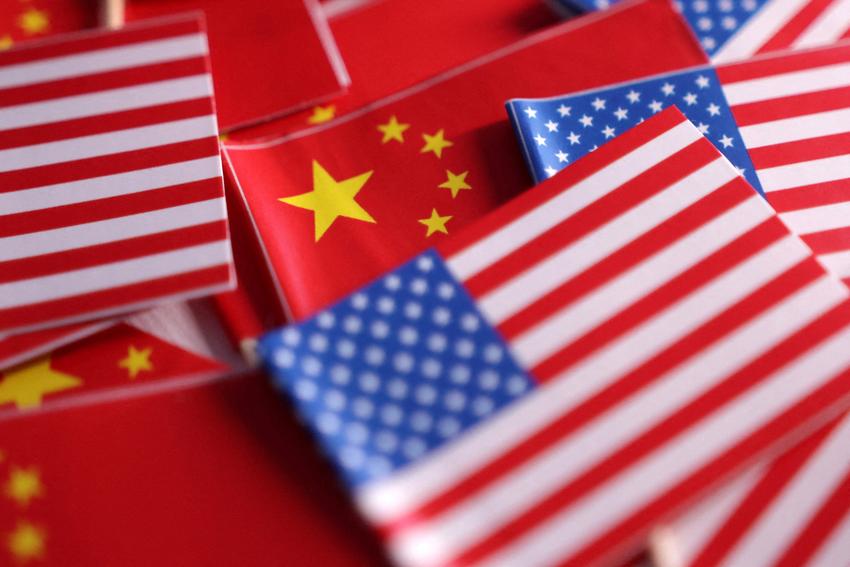
Top Chinese and U.S. economic officials on Sunday hashed out the framework of a trade deal for U.S. President Donald Trump and Chinese President Xi Jinping to decide on later this week that would pause steeper American tariffs and Chinese rare earths export controls, U.S. officials said.

U.S. Treasury Secretary Scott Bessent said talks on the sidelines of the ASEAN Summit in Kuala Lumpur had eliminated the threat of Trump’s 100% tariffs on Chinese imports starting November 1. Bessent also said he expects China to delay implementation of its rare earth minerals and magnets licensing regime by a year while the policy is reconsidered.

Chinese officials were more circumspect about the talks and offered no details about the outcome of the meetings.

Trump and Xi are due to meet on Thursday on the sidelines of the Asia-Pacific Economic Cooperation (APEC) summit in Gyeongju, South Korea, to sign off on the terms. While the White House has officially announced the highly anticipated Trump-Xi talks, China has yet to confirm that the two leaders will meet.

“I think we have a very successful framework for the leaders to discuss on Thursday,” Bessent told reporters after he and the U.S. Trade Representative Jamieson Greer met with Chinese Vice Premier He Lifeng and top trade negotiator Li Chenggang for their fifth round of in-person discussions since May.

Bessent said he anticipates that a tariff truce with China will be extended beyond its November 10 expiration date, and that China will revive substantial purchases of U.S. soybeans after buying none in September while favouring soybeans from Brazil and Argentina.

U.S. soybean farmers “will feel very good about what’s going on both for this season and the coming seasons for several years” once the deal’s terms are announced, Bessent told the ABC program “This Week.”

Greer told the “Fox News Sunday” program that both sides agreed to pause some punitive actions and found “a path forward where we can have more access to rare earths from China, we can try to balance out our trade deficit with sales from the United States.”

China’s Li Chenggang said the two sides reached a “preliminary consensus” and will next go through their respective internal approval processes.

“The U.S. position has been tough, whereas China has been firm in defending its own interests and rights,” Li said through an interpreter. “We have experienced very intense consultations and engaged in constructive exchanges in exploring solutions and arrangements to address these concerns.”

Trump arrived in Malaysia on Sunday for a summit of the Association of Southeast Asian Nations, his first stop in a five-day Asia tour that is expected to culminate in Thursday’s face-to-face with Xi in South Korea.

After the weekend talks, Trump struck a positive tone, saying: “I think we’re going to have a deal with China”.

Trump had threatened new 100% tariffs on Chinese goods and other trade curbs starting on November 1, in retaliation for China’s expanded export controls on rare earth magnets and minerals.

China controls more than 90% of the world’s supply for the materials, which are essential for high-tech manufacturing from electric vehicles to semiconductors and missiles. The export controls and Trump’s threatened retaliation would disrupt a delicate six-month truce under which China and the U.S. reduced tariffs that had quickly escalated to triple-digit rates on each side.

The U.S. and Chinese officials said that, in addition to rare earths, they discussed trade expansion, the U.S. fentanyl crisis, U.S. port entrance fees and the transfer of TikTok to U.S. ownership control.

Bessent told NBC’s “Meet the Press” program that the two sides have to iron out details of the TikTok deal, allowing Trump and Xi to “consummate the transaction” in South Korea.

On the sidelines of the ASEAN Summit, Trump hinted at possible meetings with Xi in China and the United States.

“We’ve agreed to meet. We’re going to meet them later in China, and we’re going to meet in the U.S., in either Washington or at Mar-a-Lago,” Trump said.

Among Trump’s talking points with Xi are Chinese purchases of U.S. soybeans, concerns around democratically governed Taiwan, which China views as its own territory, and the release of jailed Hong Kong media tycoon Jimmy Lai.

The detention of the founder of the now-defunct pro-democracy newspaper Apple Daily has become the most high-profile example of China’s crackdown on rights in Hong Kong.

Trump also said he will seek China’s help in U.S. dealings with Moscow, as Russia’s war in Ukraine grinds on.

Tensions between the world’s two largest economies flared in the past few weeks as a delicate trade truce, reached after a first round of trade talks in Geneva in May and extended in August, failed to prevent the United States and China from hitting each other with more sanctions, export curbs and threats of stronger retaliatory measures.

China’s expanded controls of rare earths exports have caused a global shortage. That has prompted the United States to consider a block on software-powered exports to China, from laptops to jet engines, according to a Reuters report. (JapanToday)

Posted on Leave a comment

Trump says he’s ending all trade talks with Canada over TV ads


President Donald Trump said late Thursday that he was ending “all trade negotiations” with Canada because of a television ad opposing U.S. tariffs that he said misstated the facts and called “egregious behavior” aimed at influencing U.S. court decisions.

The post on Trump’s social media site came after Canadian Prime Minister Mark Carney said he aims to double his country’s exports to countries outside the U.S. because of the threat posed by Trump’s tariffs. Trump’s call for an abrupt end to negotiations could further inflame trade tensions that already have been building between the two neighboring countries for months.

Trump posted, “The Ronald Reagan Foundation has just announced that Canada has fraudulently used an advertisement, which is FAKE, featuring Ronald Reagan speaking negatively about Tariffs.”

“The ad was for $75,000. They only did this to interfere with the decision of the U.S. Supreme Court, and other courts,” Trump wrote on his social media site. “TARIFFS ARE VERY IMPORTANT TO THE NATIONAL SECURITY, AND ECONOMY, OF THE U.S.A. Based on their egregious behavior, ALL TRADE NEGOTIATIONS WITH CANADA ARE HEREBY TERMINATED.”

Carney’s office didn’t immediately respond to a request for comment. The prime minister was set to leave Friday morning for a summit in Asia, while Trump is set to do the same Friday evening.

Earlier Thursday night, the Ronald Reagan Presidential Foundation and Institute posted on X that an ad created by the government of Ontario “misrepresents the ‘Presidential Radio Address to the Nation on Free and Fair Trade’ dated April 25, 1987.” It added that Ontario did not receive foundation permission “to use and edit the remarks.”

The foundation said it is “reviewing legal options in this matter” and invited the public to watch the unedited video of Reagan’s address.

Carney met with Trump earlier this month to try to ease trade tensions, as the two countries and Mexico prepare for a review of the U.S.-Mexico-Canada Agreement — a trade deal Trump negotiated in his first term, but has since soured on.

More than three-quarters of Canadian exports go to the U.S., and nearly $3.6 billion Canadian (US$2.7 billion) worth of goods and services cross the border daily.

In his own post on X last week, Doug Ford, the premier of Ontario, posted a link to the ad and the message: “It’s official: Ontario’s new advertising campaign in the U.S. has launched.”

He continued, “Using every tool we have, we’ll never stop making the case against American tariffs on Canada. The way to prosperity is by working together.”

Trump said earlier this week that he had seen the ad on television and said that it showed that his tariffs were having an impact.

“I saw an ad last night from Canada. If I was Canada, I’d take that same ad also,” he said then.

The president has moved to impose steep U.S. tariffs on many goods from Canada. In April, Canada’s government imposed retaliatory levies on certain U.S. goods — but it carved out exemptions for some automakers to bring specific numbers of vehicles into the country, known as remission quotas.

Trump’s tariffs have especially hurt Canada’s auto sector, much of which is based in Ontario. This month, Stellantis said it would move a production line from Ontario to Illinois. (JapanToday)

Posted on Leave a comment

NFL chief Goodell shrugs off Bad Bunny Super Bowl critics

National Football League Commissioner Roger Goodell on Wednesday stood by the choice of Puerto Rican superstar Bad Bunny to headline next year’s Super Bowl halftime show, a decision President Donald Trump has branded “absolutely ridiculous.”

Speaking in New York after the league’s annual autumn meeting, Goodell said he had no qualms about picking the Grammy-winning entertainer, who is wildly popular across the United States, for the NFL showpiece despite the backlash it had drawn from Trump and right-wing critics.

“He’s one of the leading and most popular entertainers in the world,” Goodell said of the decision. “That’s what we try to achieve. It’s an important stage for us. It’s carefully thought through.”

Goodell said the NFL’s picks for the high-profile halftime show frequently elicited “blowback or criticism.”

Bad Bunny, real name Benito Antonio Martinez Ocasio, had already sparked right-wing ire after saying he would skip the United States during his upcoming world tour due to fears of immigration raids at his concerts.

The Latin megastar brought a fresh wave of controversy after being named to headline the Super Bowl last month, with right-wing critics infuriated at the choice of an artist who sings mostly in Spanish.

In an interview on Newsmax, Trump, who has regularly sparred with the NFL, said he had “never heard” of Bad Bunny.

“I don’t know who he is,” Trump said. “I don’t know why they’re doing it. It’s, like, crazy.” He went on to brand the decision “absolutely ridiculous.”

Other conservative critics have joined the pile-on.

“Is the @NFL incapable of reading the room?” Sebastian Gorka, Trump’s Senior Director for Counter Terrorism, posted on X last month shortly after the announcement.

Former racing driver turned right-wing commentator Danica Patrick said separately on X: “No songs in English should not be allowed at one of America’s highest rated television events of the year.”

Bad Bunny has said his halftime act was “for my people, my culture, and our history.”

Puerto Rico, where Bad Bunny hails from, is a U.S. territory in the Caribbean. In June, Bad Bunny posted video footage on his social media channels from an ICE raid that took place on his home island.

Super Bowl halftime shows have traditionally attracted the biggest names in the music industry, including the likes of Michael Jackson, the Rolling Stones, Madonna, Bruce Springsteen, Prince and Paul McCartney.

More recent performers have included this past year’s headliner Kendrick Lamar, the rapper who cut out profanity but still performed a viral diss track of his rival Drake. (JapanToday)

Posted on Leave a comment

UK’s Prince Andrew gives up royal title

The UK’s Prince Andrew Friday renounced his title of Duke of York under pressure from his brother King Charles, amid further revelations about his ties to US sex offender Jeffrey Epstein.

“I will… no longer use my title or the honours which have been conferred upon me,” Andrew, 65, said in a bombshell announcement.

He said his decision came after discussions with the head of state, King Charles III.

“I have decided, as I always have, to put my duty to my family and country first,” Andrew said in a statement, sent out by Buckingham Palace.

He again denied all allegations of wrongdoing, but said: “We have concluded the continued accusations about me distract from the work of His Majesty and the Royal Family.”

Andrew, who stepped back from public life in 2019 amid the Epstein scandal, will remain a prince, as he is the second son of the late queen Elizabeth II.

But he will no longer hold the title of Duke of York that she had conferred on him.

UK media reported that he would also give up membership of the prestigious Order of the Garter, the most senior knighthood in the British honours system which dates back to 1348.

Andrew’s ex-wife Sarah Ferguson will also no longer use the title of Duchess of York, although his daughters Beatrice and Eugenie remain princesses and it is thought that Friday’s move will not affect their status.

The disgraced royal has become a source of deep embarrassment for his brother Charles, following a devastating 2019 TV interview in which Andrew defended his friendship with the late billionaire paedophile Epstein.

In the interview, he vowed he had cut ties in 2010 with Epstein, who was disgraced after an American woman, Virginia Giuffre, accused him of using her as a sex slave.

But in a reported exchange which emerged in UK media this week, Andrew told the convicted sex offender in 2011 that they were “in this together” when a photo of the prince with his arm around Giuffre was published.

But he added that the two would “play together soon”.

Andrew was stripped of his military titles in 2022 and shuffled off into retirement after Giuffre accused him of sexually assaulting her when she was 17.

New allegations emerged this week in Giuffre’s posthumous memoir in which she wrote that Andrew had behaved as if having sex with her was his “birthright”. (Vanguard)