The draw for an expanded 2027 Rugby World Cup will take place on December 3, organizers said Wednesday, with host Australia confirmed as kicking off the tournament at Perth Stadium.
Twenty-four teams will be divided into six pools of four, with 52 games across six weeks from October 1 to November 13. A round of 16 will be played for the first time.
The last World Cup in France, won by South Africa, featured 20 teams.
“I’m thrilled to see the tournament draw date revealed,” said World Rugby chairman Brett Robinson. “Expanding the men’s Rugby World Cup to 24 teams is a landmark moment for our sport. It means more nations, more matches, and more opportunities for fans around the world to connect with rugby.”
World Rugby rankings at the end of the November international window will be used to determine which teams head each of the six groups, making every win crucial ahead of the draw.
South Africa are currently ranked one ahead of Ireland, New Zealand, France, England and Argentina, with hosts Australia seventh. Scotland, Fiji and Italy round out the top 10.
The top two from each pool plus the four best third-placed teams will qualify for the knockout phase.
“The introduction of a round of 16 will deliver even more knockout rugby, ensuring every match counts and every team has the chance to make history,” said Robinson.
“Importantly, we’ve been able to achieve this within a streamlined tournament window that protects player welfare while enhancing the spectacle. This is a huge step forward for rugby and a reflection of the game’s global growth.”
Sydney had already been announced to host the final and both semi-finals, along with a third-place playoff and a string of other knockout and pool stage games.
The rest of the schedule is split between Brisbane, Melbourne, Newcastle, Perth, Adelaide and Townsville.
Some 2.5 million tickets will go on sale in February, with one million priced under A$100 (U.S.$66) in a bid to make it the most family-friendly tournament yet. (JapanToday)
It’s another chart week, another chart double for KPop Demon Hunters (Republic/Universal) in Australia.
The soundtrack to the hit animated Netflix film is flying at the top of the ARIA leaderboard for a ninth non-consecutive week. Among soundtracks, ARIA reports, that effort equals the nine week run by the 1997 soundtrack for Baz Luhrmann’s Romeo & Juliet.
Since the ARIA Charts were first published in 1983, only four soundtracks have logged more weeks at the top, according to the charts compiler: the Australian cast recording of Jesus Christ Superstar (10 weeks in 1992); plus Titanic (1998), Moulin Rouge (2001) and A Star Is Born (2018), which each led for 11 weeks.
Meanwhile, the top track from KPop Demon Hunters, “Golden,” reigns over the ARIA Singles Chart for a ninth consecutive week. That’s closing in on the all-time mark for a hit from an animated film, currently set at 12 weeks by Pharrell Williams’ 2014 single “Happy” from Despicable Me 2.
Back with the ARIA Albums Chart, Ocean Alley’s Love Balloon (via Community Music) lifts off for a No. 3 debut, the highest start for any new release on the current frame, published Friday, Sept. 26.
Recorded in three stints over about three months, Love Balloon is Ocean Alley’s fifth studio album, and first recorded with legendary American rock producer Nick DiDia (Bruce Springsteen, Rage Against The Machine).
With that bright start, Love Balloon is the Sydney indie-rock outfit’s third consecutive collection to hit No. 3, following 2020’s Lonely Diamond and 2022’s Low Altitude Living. Their breakthrough second album from 2018, Chiaroscuro, which housed the triple j Hottest 100 leader “Confidence,” reached No. 11 on the national survey.
Ocean Alley scores silverware as Love Balloon is crowned on the ARIA Top 20 Australian Albums chart, a feat they celebrated Saturday at London’s Alexandra Palace, with a headline show for more than 8,000 fans.
Also debuting in the top tier is Cardi B‘s sophomore studio album, Am I The Drama? (Atlantic/Warner), new at No. 8. Drama is the followup to the Bronx rapper’s 2018, Invasion Of Privacy, which peaked at No. 5.
Trent Reznor’s Nine Inch Nails bags a top 10 with the soundtrack to TRON: Ares (Interscope/Universal). It’s new at No. 10 for the American industrial rock act’s sixth top tier effort in Australia, a tally that includes a best of No. 2 for 1999’s The Fragile. Daft Punk’s soundtrack to TRON: Legacy reached No. 17 in 2011.
Lola Young just misses out on a top 10 berth with I’m Only F—ing Myself (Island/Universal), her third album. It’s new at No. 12, for the British singer’s first ARIA Albums Chart appearance.
Further down the list, published late Friday, September 26th, Brisbane band Platonic Sex crack the top 40 with their debut album Face To The Flywire (Orchard). It’s new at No. 31. (Billboard)
The leaders of six countries, including France, have moved to recognise Palestinian statehood at a high-level summit ahead of the annual United Nations General Assembly (UNGA) meeting in New York.
Alongside France, which co-convened the meeting with Saudi Arabia on Monday in New York, Andorra, Belgium, Luxembourg, Malta and Monaco said they were recognising a Palestinian state.
Leaders from Australia, Canada, Portugal and the United Kingdom, which formally made the move to recognise Palestine a day earlier, also spoke at the meeting.
“We have gathered here because the time has come,” Emmanuel Macron said at the summit convened to revive the long-delayed two-state solution to end the Israel-Palestine conflict.
“It falls on us, this responsibility, to do everything in our power to preserve the possibility of a two-state solution,” Macron said.
“Today, I declare that France recognises the state of Palestine,” he said.
The additional countries recognising Palestine now join some 147 of the 193 UN member states that had already formally recognised Palestinian statehood as of April this year.
With more than 80 percent of the international community now recognising the state of Palestine, diplomatic pressure has ramped up on Israel as it continues its genocidal war on Gaza, where more than 65,300 Palestinians have been killed and the has been enclave turned into rubble.
Spain, Norway and Ireland recognised Palestinian statehood last year, with Madrid also imposing sanctions on Israel for its war on Gaza.
Spanish Prime Minister Pedro Sanchez told the summit on Monday that a two-state solution was not possible “when the population of one of those two states is the victim of a genocide”.
“The Palestinian people are being annihilated, [so] in the name of reason, in the name of international law and in the name of human dignity, we have to stop this slaughter,” Sanchez said.
Macron, in his speech to the summit, also outlined a framework for the creation of a “renewed Palestinian Authority”. The post-war framework envisages an International Stabilisation Force (ISF) that would assist in preparing the Palestinian Authority (PA) to take over governance in Gaza.
PA President Mahmoud Abbas commended the countries that had recognised Palestine. He made his statement to the conference by video because he was denied a visa by the administration of US President Donald Trump to attend the UNGA this week.
“We call on those that have not yet done so to do so to follow suit”, Abbas said, adding that the PA also demanded “support for Palestine’s full membership in the United Nations”.
Israel and the US, which are becoming increasingly isolated internationally on the issue, boycotted the summit, with Israel’s UN ambassador, Danny Danon, describing the event as a “circus”.
Although the vast majority of UN member states now recognise Palestinian statehood, new UN member states must have the support of the UN Security Council, where the US has used its veto to block Palestine from becoming a full UN member state.
Speaking at the summit, UN Secretary-General Antonio Guterres reiterated his support for the two-state solution, framing it as the only viable path towards peace after years of failed negotiations and ongoing violence.
Guterres said that statehood for Palestinians “is a right, not a reward”, rejecting US and Israeli claims that it was a reward for Hamas.
Saudi Arabia’s foreign minister, Prince Faisal bin Farhan Al Saud, thanked Macron and the UN chief for their efforts towards a two-state solution, which he said is “the only way to achieve just and lasting peace”.
He said the conference comes at a time when “the Israeli occupation authorities continue their aggression and their brutal crimes” against Palestinians in Gaza.
Israel also continues its “violations in the West Bank, and its repeated attacks on Arab and Muslim countries, with the most recent attack on Qatar”, he said.
“These actions underline Israel’s insistence on continuing aggressive practices that threaten regional and international peace and stability and undermine efforts of peace in the region,” he added. (AlJazeera)
Britain, Australia and Canada on Sunday recognised a Palestinian state in a seismic shift in decades of western foreign policy, triggering swift Israeli anger.
Portugal was also to recognise Palestinian statehood later Sunday, as Israel came under huge international pressure over the war in Gaza triggered almost two years ago by the October 7, 2023 Hamas attack.
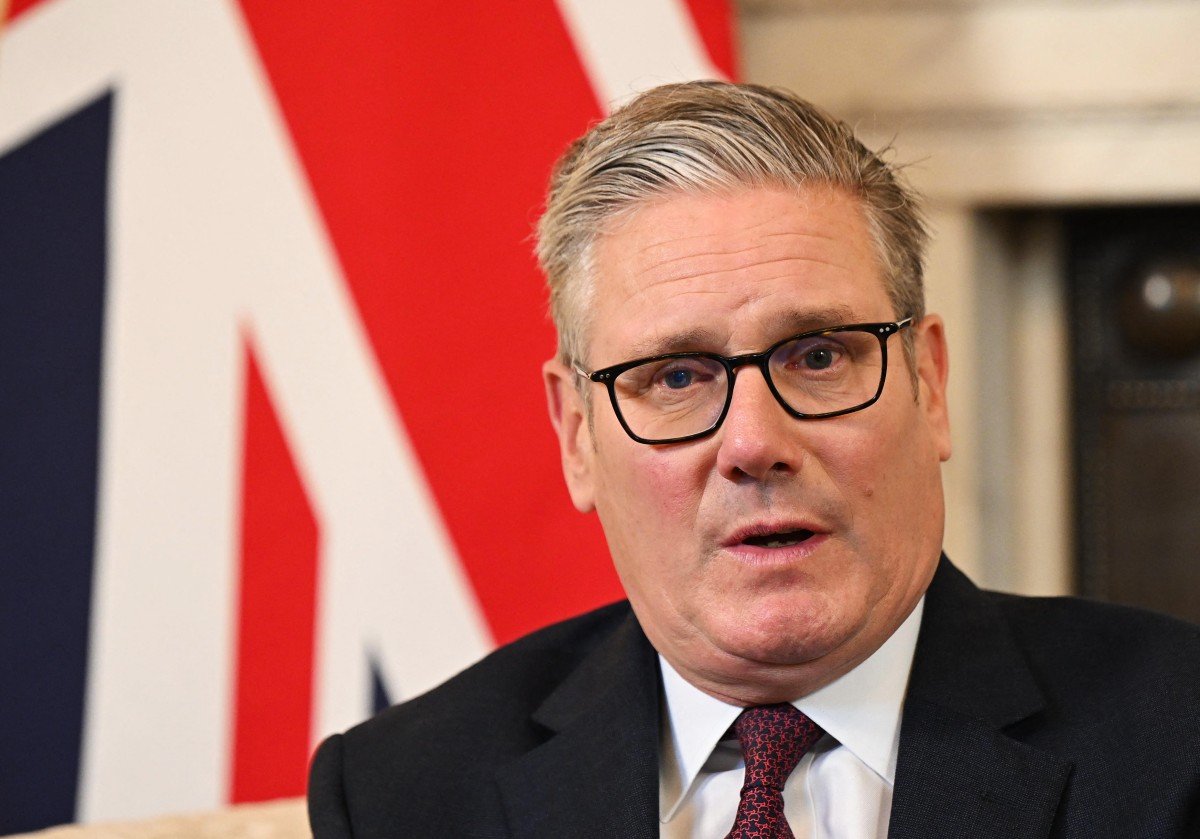
“Today, to revive the hope of peace for the Palestinians and Israelis, and a two-state solution, the United Kingdom formally recognises the State of Palestine,” UK Prime Minister Keir Starmer said in a message on X.
Britain and Canada became the first G7 countries to take the step, with France and other nations expected to follow at the annual UN General Assembly which opens Monday in New York.
“Canada recognises the State of Palestine and offers our partnership in building the promise of a peaceful future for both the State of Palestine and the State of Israel,” Canadian Prime Minister Mark Carney wrote on X.
It is a watershed moment for Palestinians and their decades-long ambitions for statehood, with the most powerful Western nations having long argued it should only come as part of a negotiated peace deal with Israel.
But the move puts those countries at odds with the United States and Israel, with Israeli Prime Minister Benjamin Netanyahu reacting angrily and vowing to oppose it at the UN talks.
Calls for a Palestinian state “would endanger our existence and serve as an absurd reward for terrorism,” Netanyahu said Sunday.
A growing number of longtime allies have shifted positions, as Israel has intensified its Gaza offensive, vowing to eliminate the Hamas Palestinian militants.
The Gaza Strip has suffered vast destruction, a spiralling death toll and a lack of food that has sparked a major humanitarian crisis since the start of the conflict which has drawn an international outcry
The UK government has come under increasing public pressure to act, with thousands rallying every month on the streets. A poll released by YouGov on Friday showed two-thirds of young Britons aged 18-25 supported Palestinian statehood.
Deputy Prime Minister David Lammy acknowledged at the UN in July that “Britain bears a special burden of responsibility to support the two-state solution”.
Over a century ago, the UK was pivotal in laying the groundwork for the creation of the state of Israel through the 1917 Balfour Declaration.
Three-quarters of UN members already recognise Palestinian statehood, with over 140 of the 193 having taken the step.
Starmer said in July that his Labour government intended to recognise a Palestinian State unless Israel took “substantive” steps including reaching a ceasefire in Gaza, getting more aid into the territory and confirming it would not annex the West Bank.
Starmer has also repeatedly called on Hamas to release the remaining hostages they captured in the 2023 attack, and is expected to set out new sanctions on the Palestinian militants.
Lammy told the BBC on Sunday that the Palestinian Authority, the civilian body that governs in areas of the West Bank, had been calling for the move for some time “and I think a lot of that is wrapped up in hope”.
“Will this feed children? No it won’t, that’s down to humanitarian aid. Will this free hostages? That must be down to a ceasefire.”
But he said it was an attempt to “hold out for” a two-state solution.
Palestinian foreign minister Varsen Aghabekian Shahin told AFP last week: “Recognition is not symbolic.”
“It sends a very clear message to the Israelis on their illusions about continuing their occupation forever,” she added.
Hamas’s 2023 attack on southern Israel resulted in the deaths of 1,219 people, most of them civilians, according to an AFP tally of official figures.
Israel’s retaliatory campaign has killed at least 65,208 people, also mostly civilians, according to figures from the Gaza health ministry that the United Nations considers reliable.
Portugal said that it would also formally declare its recognition in New York on Sunday.
“By acting now, as the Portuguese government has decided, we’re keeping alive the possibility of having two states,” Portuguese President Marcelo Rebelo de Sousa said. (Punch)
Australia pledged Thursday to slash planet-warming greenhouse gas emissions by up to 70 percent from 2005 levels over the next decade, a target activists warned was not ambitious enough.
Under the landmark Paris climate accord, each country must provide a headline figure to the United Nations for cutting heat-trapping emissions by 2035, and a detailed blueprint for getting there.
A leading coal exporter, Australia’s pledge has been closely watched given its bid to host next year’s U.N. climate summit alongside Pacific island neighbors threatened by rising seas.
The announcement also comes days after a national climate risk assessment warned rising oceans and flooding caused by climate change would threaten the homes and livelihoods of over a million Australians by 2050.
One prominent climate scientist described the new target as “baffling,” given those findings and Australia’s bid to host climate talks.
“Australia needs to cut its emissions at a pace associated with a 1.5C compatible emission reduction pathway and that properly aligns with bringing emissions to net zero by 2050 in Australia,” said Bill Hare, head of the Climate Analytics research group. “This requires strong government policy action now.”
Climate activists and experts say Australia needs to slash emissions by at least 76 percent from 2005 levels to keep global temperatures from rising over 1.5C higher than pre-industrial levels.
But Prime Minister Anthony Albanese described the goal as a “responsible target backed by the science”.
His government said it would fund a new Aus$5 million ($3.3 billion) “Net Zero Plan” to help firms transition to green energy.
It will also help Australians buy more zero emissions vehicles and access clean energy.
The target is “not likely to please anyone,” said Jacqueline Peel, a climate specialist at the University of Melbourne Law School.
And given the risks outlined in this week’s assessment, “this ‘achievable’ target feels very anticlimactic,” she added.
Anote Tong, former president of Pacific nation Kiribati, told AFP Australia’s goals were undermined by its reliance on fossil fuel.
“The problem has been Australia’s high volume of fossil fuel exports and ongoing substantial subsidies to the fossil fuel industry,” said Tong, often called the founding father of the Pacific climate movement.
“These recent decisions by the government become more stark in contrast to the recently released Climate Risk Assessment Report which predicts apocalyptic scenarios, even for Australian citizens, if unheeded,” he said.
Global emissions have been rising but need to almost halve by the end of the decade to limit global warming to safer levels agreed under the Paris deal.
Australia’s previous 2030 commitment was to cut emissions by 43 percent of 2005 levels.
Countries were meant to submit updated targets earlier this year but only 10 of nearly 200 countries required did so on time, according to a U.N. database tracking the submissions.
Australia has poured billions into solar power, wind turbines and green manufacturing and pledged to make the nation a renewable energy superpower.
But its green ambitions are at odds with its deep entanglement with lucrative fossil fuel industries, and it remains one of the world’s biggest coal exporters. (JapanToday)
A British backpacker has pleaded guilty to killing a man in Australia after hitting him while riding an e-scooter with an alcohol level more than three times the legal limit.
Alicia Kemp, 25, from Redditch, Worcestershire, had been drinking with a friend on a Saturday afternoon in May when she was kicked out of a bar because the two of them were drunk, the court heard earlier.
The pair hired an e-scooter in the evening, and Kemp was driving at speeds of 20 to 25km/h (12 to 15mph) when she hit 51-year-old Thanh Phan from behind on a pavement in Perth’s city centre.
The father-of-two hit his head on the pavement and died in hospital from a brain bleed two days later.
Kemp’s passenger was also hurt in the crash – sustaining a fractured skull and broken nose – but her injuries were not life-threatening.
In Perth’s Magistrates Court on Monday, Kemp – appearing via video link – pleaded guilty to dangerous driving causing death while intoxicated. The charge carries a maximum 20-year prison term.
Prosecutors dropped a second charge of dangerous driving causing bodily harm to her passenger.
Earlier, the court heard that Kemp’s blood alcohol content level was 0.158 after the crash, more than three times the legal limit of 0.05 in Australia.
Prosecutors said CCTV footage showed Kemp’s “inexplicably dangerous” riding before she struck Mr Phan, who was waiting to cross the road.
In a statement from Mr Phan’s family earlier this year, the structural engineer was described as a beloved husband, father, brother and dear friend.
Kemp’s lawyer Michael Tudori said she was relieved after pleading guilty and hoped to be sentenced before Christmas, according to local media.
“You could see she was ready to say those words, you know, she’s obviously done something stupid,” Mr Tudori told the ABC.
Kemp, who was in Western Australia on a working holiday visa, will remain in custody until her sentencing. (BBC)
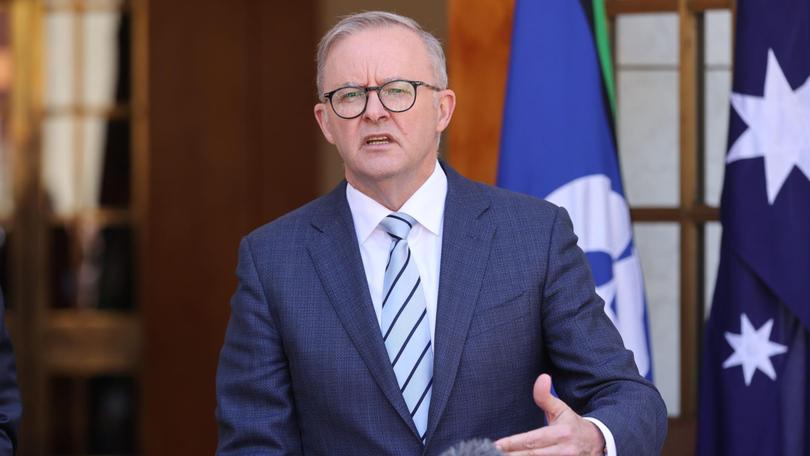
Australia will recognise a Palestinian state in September, Prime Minister Anthony Albanese has announced, drawing condemnation from Israel.
Albanese said on Monday that his government would formally announce the move when the United Nations General Assembly (UNGA) meets in New York.
“A two-state solution is humanity’s best hope to break the cycle of violence in the Middle East and to bring an end to the conflict, suffering and starvation in Gaza,” Albanese said at a news conference in Canberra.
Australia’s announcement comes as Canada, France and the United Kingdom are also preparing to formally recognise Palestine at the meeting next month, joining the vast majority of UN member states that already do so.
Israeli Ambassador to Australia Amir Maimon said recognition of a Palestinian state will do nothing to end the war in Gaza, telling the Australian Broadcasting Corporation (ABC): “We reject the recognition, unilateral recognition.”
Israeli President Isaac Herzog also slammed the Australian announcement as a reward for Hamas for its October 7, 2023, attack on southern Israel, repeating the Israeli government’s stance on all recognition announcements thus far.
This latest recognition comes about a week after hundreds of thousands of Australians marched across the Sydney Harbour Bridge to protest Israel’s war in the Gaza Strip.
Speaking a day after the protest, Australian Minister for Foreign Affairs Penny Wong told ABC that “there is a risk there will be no Palestine left to recognise.”
“In relation to recognition, I’ve said for over a year now, it’s a matter of when, not if,” Wong added.
The opposition Liberal Party criticised the move, saying it put Australia at odds with the United States, its closest ally, and reversed a bipartisan consensus that there should be no recognition while Hamas remains in control of Gaza.
“Despite his words today, the reality is Anthony Albanese has committed Australia to recognising Palestine while hostages remain in tunnels under Gaza and with Hamas still in control of the population of Gaza. Nothing he has said today changes that fact,” Liberal Party leader Sussan Ley said in a statement.
“Recognising a Palestinian state prior to a return of the hostages and defeat of Hamas, as the Government has today, risks delivering Hamas one of its strategic objectives of the horrific terrorism of October 7.”
The Australian Greens, the fourth largest party in parliament, welcomed the move to recognise Palestine but said the announcement did not meet the “overwhelming calls from the Australian public for the government to take material action”.
“Millions of Australians have taken to the streets, including 300,000 last weekend in Sydney alone, calling for sanctions and an end to the arms trade with Israel. The Albanese Government is still ignoring this call,” Senator David Shoebridge, the party’s spokesperson on foreign affairs, said in a statement.
The Australian Palestine Advocacy Network (APAN) also criticised the announcement, describing it as a “political fig leaf, letting Israel’s genocide and apartheid continue unchallenged, and distracting from Australia’s complicity in Israeli war crimes via ongoing weapons and components trade”.
“Palestinian rights are not a gift to be granted by Western states. They are not dependent on negotiation with, or the behaviour or approval of their colonial oppressors,” APAN said in a statement.
According to Albanese, Australia’s decision to recognise Palestinians’ right to their own state will be “predicated on the commitments Australia has received from the Palestinian Authority (PA)”.
These “detailed and significant commitments” include the PA reaffirming it “recognises Israel’s right to exist in peace and security” and committing to “demilitarise and to hold general elections”, Albanese said while announcing the decision.
The PA is a governing body that has overseen parts of the Israeli-occupied West Bank since the mid-1990s.
It has not held parliamentary elections since 2006 and has been criticised by some Palestinians for helping Israel to keep tight control over residents in the occupied West Bank.
Albanese said the commitments secured by Australia were “an opportunity to deliver self-determination for the people of Palestine in a way that isolates Hamas, disarms it and drives it out of the region once and for all”.
Hamas has been in power in the Gaza Strip since 2007 when it fought a brief war against forces loyal to PA President Mahmoud Abbas.
Meanwhile, New Zealand Foreign Minister Winston Peters said on Monday that his country’s cabinet will make a formal decision on Palestinian statehood in September.
“Some of New Zealand’s close partners have opted to recognise a Palestinian state, and some have not,” Peters said in a statement.
“Ultimately, New Zealand has an independent foreign policy, and on this issue, we intend to weigh up the issue carefully and then act according to New Zealand’s principles, values and national interest.”
Peters said that while New Zealand has for some time considered the recognition of a Palestinian state a “matter of when, not if”, the issue is not “straightforward” or “clear-cut”.
“There are a broad range of strongly held views within our Government, Parliament and indeed New Zealand society over the question of recognition of a Palestinian state,” he said.
“It is only right that this complicated issue be approached calmly, cautiously and judiciously. Over the next month, we look forward to canvassing this broad range of views before taking a proposal to Cabinet.”
Of the UN’s 193 member states, 147 already recognise Palestinian statehood, representing three-quarters of the world’s countries and the vast majority of its population.
Under its 1947 plan to partition Palestine, the UNGA said it would grant 45 percent of the land to an Arab state although this never eventuated.
The announcements by Australia and New Zealand on Monday came hours after an Israeli attack killed five Al Jazeera staff members in Gaza City and as Israeli Prime Minister Benjamin Netanyahu continues to threaten a full-scale invasion of the city in the north of the Gaza Strip.
Israel’s war on Gaza has killed at least 61,430 people, according to Gaza’s health authorities.
More than 200 people, including 100 children, have died from starvation under Israel’s punishing siege, according to health authorities. (Aljazeera)
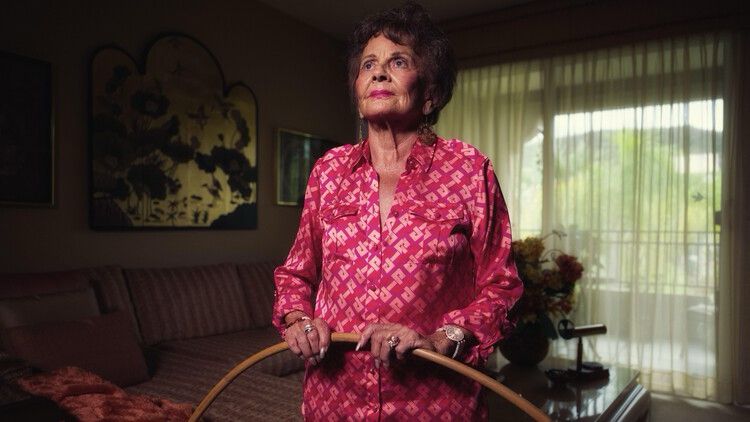
Joan Anderson, who coined the name for the hula hoop and played an unsung role in its rise, has died age 101.
The former model was visiting her native Australia from her home in the US when she spotted groups of people swivelling wooden hoops around their waists.
She was so mesmerised by the growing craze in Australia that she had one of the strange new toys shipped to the US.
The 2018 documentary Hula Girl retold Ms Anderson’s story of dubbing it the hula hoop after the hip-swivelling Hawaiian dance, and how it was she and her husband who first showed it to a toy company boss.
It went on to sell millions and become a global sensation – but the couple went uncredited for their role in its rise.
Recounting meeting the boss of American toy conglomerate Wham-O in the early 1960s, Ms Anderson told documentary makers: “We told him, ‘we’ve called it the hula hoop,’.
“He said, ‘looks like it has some merit, if it makes money for us, it’s going to make money for you’.”
Ms Anderson claimed the deal was sealed with a “gentleman’s handshake” and it began to fly off the shelves in the US.
But in the years that followed, the firm’s boss “kept putting us” off, Ms Anderson said, and the pair eventually filed a lawsuit which resulted in a modest financial settlement – but crucially, no formal recognition of their role in its rise.
Later accounts of its invention mentioned how an “Australian friend” brought an early version to the US.
She told documentary makers: “I think that bugged me more than anything. It was never reported correctly at all. I was not a ‘friend’.”
Born Joan Constance Manning in Sydney on 28 December 1923, she worked as a swimsuit model and met Wayne Anderson, a US Army pilot, on Bondi Beach and married him soon after.
Speaking to the BBC, the filmmaker behind the story of Ms Anderson’s life said: “Telling Joan’s story was such a rewarding experience.
“She was 94 when we met and even with everything she’d been through, she had lived an amazing, full life.
“Seeing her finally get the recognition she deserved after all those years was incredible.”
Ms Anderson died on 14 July at a nursing home in Carlsbad, California, having lived “a wonderful life”, her family said.
She is survived by two sons, a daughter and six grandchildren. Another son, Carl, died in 2023. (BBC)





 English