
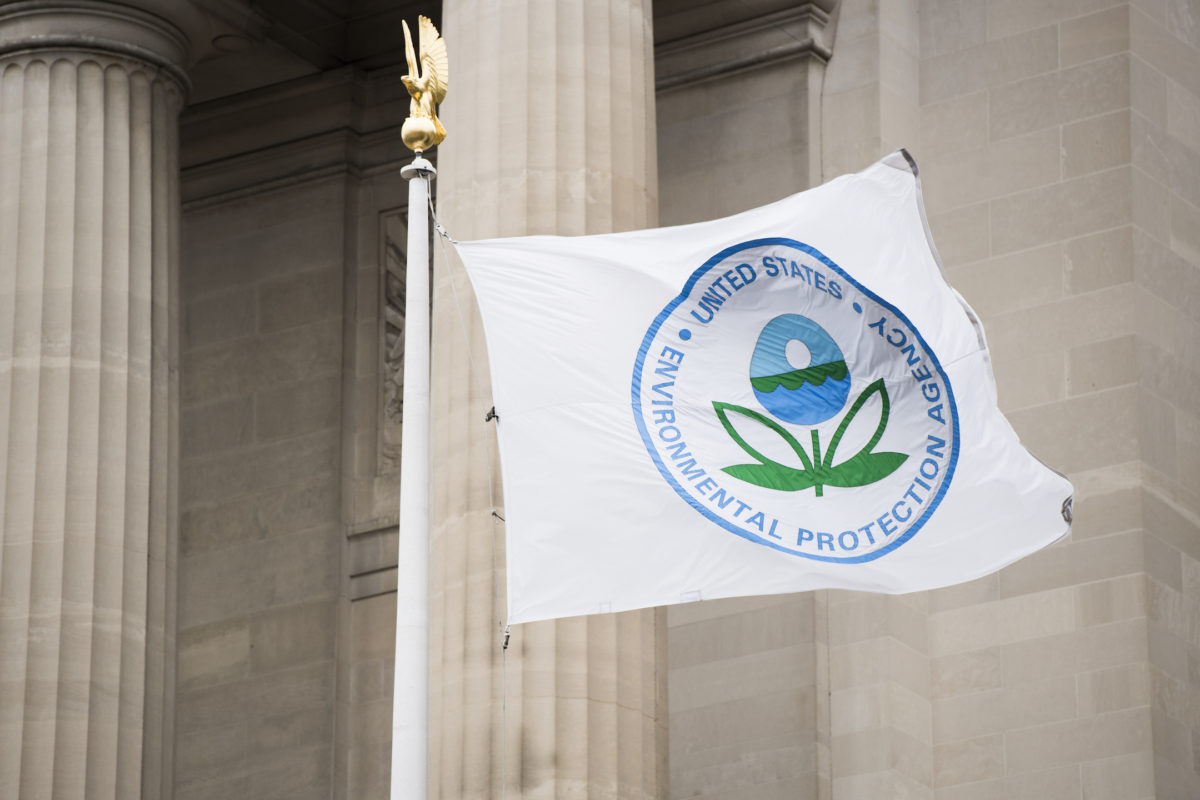
The Trump administration on Thursday revoked a scientific finding that long has been the central basis for U.S. action to regulate greenhouse gas emissions and fight climate change, the most aggressive move by the Republican president to roll back climate regulations.
The rule finalized by the Environmental Protection Agency rescinds a 2009 government declaration known as the endangerment finding that determined that carbon dioxide and other greenhouse gases threaten public health and welfare.
The endangerment finding by the Obama administration is the legal underpinning of nearly all climate regulations under the Clean Air Act for motor vehicles, power plants and other pollution sources that are heating the planet.
President Donald Trump called the move “the single largest deregulatory action in American history, by far” while EPA Administrator Lee Zeldin called the endangerment finding “the Holy Grail of federal regulatory overreach.”
Trump called the endangerment finding “one of the greatest scams in history,” adding that it “had no basis in fact” or law. “On the contrary, over the generations, fossil fuels have saved millions of lives and lifted billions of people out of poverty all over the world,” Trump said at a White House ceremony.
Legal challenges are certain for an action that repeals all greenhouse gas emissions standards for cars and trucks, and could unleash a broader undoing of climate regulations on stationary sources such as power plants and oil and gas facilities, experts say. Overturning the finding will “raise more havoc” than other actions by the Trump administration to roll back dozens of environmental rules, said Ann Carlson, an environmental law professor at the UCLA School of Law.
Environmental groups described the move as the single biggest attack in U.S. history against federal authority to address climate change. Evidence backing up the endangerment finding has only grown stronger in the 17 years since it was approved, they said.
The EPA also said it will propose a two-year delay to a Biden-era rule restricting greenhouse gas emissions by cars and light trucks. And the agency will end tax credits for automakers who install automatic start-stop ignition systems in their vehicles. The device is intended to reduce emissions, but Zeldin said “everyone hates” it.
Zeldin, a former Republican congressman who was tapped by Trump to lead EPA last year, has criticized his predecessors in Democratic administrations, saying that in the name of tackling climate change, they were “willing to bankrupt the country.”
The endangerment finding “led to trillions of dollars in regulations that strangled entire sectors of the United States economy, including the American auto industry,” Zeldin said. “The Obama and Biden administrations used it to steamroll into existence a left-wing wish list of costly climate policies, electric vehicle mandates and other requirements that assaulted consumer choice and affordability.”
The endangerment finding and the regulations based on it “didn’t just regulate emissions, it regulated and targeted the American dream. And now the endangerment finding is hereby eliminated,” Zeldin said.
The Supreme Court ruled in a 2007 case that planet-warming greenhouse gases, caused by the burning of oil and other fossil fuels, are air pollutants under the Clean Air Act.
Since the high court’s decision, in a case known as Massachusetts v. EPA, courts have uniformly rejected legal challenges to the endangerment finding, including a 2023 decision by the U.S. Court of Appeals for the District of Columbia Circuit.
The endangerment finding is widely considered the legal foundation that underpins a series of regulations intended to protect against threats made increasingly severe by climate change. That includes deadly floods, extreme heat waves, catastrophic wildfires and other natural disasters in the United States and around the world.
Gina McCarthy, a former EPA administrator who served as White House climate adviser in the Biden administration, called the Trump administration’s actions reckless. “This EPA would rather spend its time in court working for the fossil fuel industry than protecting us from pollution and the escalating impacts of climate change,” she said.
EPA has a clear scientific and legal obligation to regulate greenhouse gases, McCarthy said, adding that the health and environmental hazards of climate change have “become impossible to ignore.”
Dr. Lisa Patel, a pediatrician and executive director of the Medical Society Consortium on Climate and Health, said Trump’s action “prioritizes the profits of big oil and gas companies and polluters over clean air and water” and children’s health.
“As a result of this repeal, I’m going to see more sick kids come into the Emergency Department having asthma attacks and more babies born prematurely,” she said in a statement. “My colleagues will see more heart attacks and cancer in their patients.”
David Doniger, a climate expert at the Natural Resources Defense Council, said Trump and Zeldin are trying to use repeal of the finding as a “kill shot’’ that would allow the administration to make nearly all climate regulations invalid. The repeal could erase current limits on greenhouse gas pollution from cars, factories, power plants and other sources and could prevent future administrations from proposing rules to address global warming.
The EPA action follows an executive order from Trump that directed the agency to submit a report on “the legality and continuing applicability” of the endangerment finding. Conservatives and some congressional Republicans have long sought to undo what they consider overly restrictive and economically damaging rules to limit greenhouse gases that cause global warming. (JapanToday)

 English