The draw for an expanded 2027 Rugby World Cup will take place on December 3, organizers said Wednesday, with host Australia confirmed as kicking off the tournament at Perth Stadium.
Twenty-four teams will be divided into six pools of four, with 52 games across six weeks from October 1 to November 13. A round of 16 will be played for the first time.
The last World Cup in France, won by South Africa, featured 20 teams.
“I’m thrilled to see the tournament draw date revealed,” said World Rugby chairman Brett Robinson. “Expanding the men’s Rugby World Cup to 24 teams is a landmark moment for our sport. It means more nations, more matches, and more opportunities for fans around the world to connect with rugby.”
World Rugby rankings at the end of the November international window will be used to determine which teams head each of the six groups, making every win crucial ahead of the draw.
South Africa are currently ranked one ahead of Ireland, New Zealand, France, England and Argentina, with hosts Australia seventh. Scotland, Fiji and Italy round out the top 10.
The top two from each pool plus the four best third-placed teams will qualify for the knockout phase.
“The introduction of a round of 16 will deliver even more knockout rugby, ensuring every match counts and every team has the chance to make history,” said Robinson.
“Importantly, we’ve been able to achieve this within a streamlined tournament window that protects player welfare while enhancing the spectacle. This is a huge step forward for rugby and a reflection of the game’s global growth.”
Sydney had already been announced to host the final and both semi-finals, along with a third-place playoff and a string of other knockout and pool stage games.
The rest of the schedule is split between Brisbane, Melbourne, Newcastle, Perth, Adelaide and Townsville.
Some 2.5 million tickets will go on sale in February, with one million priced under A$100 (U.S.$66) in a bid to make it the most family-friendly tournament yet. (JapanToday)
The leaders of six countries, including France, have moved to recognise Palestinian statehood at a high-level summit ahead of the annual United Nations General Assembly (UNGA) meeting in New York.
Alongside France, which co-convened the meeting with Saudi Arabia on Monday in New York, Andorra, Belgium, Luxembourg, Malta and Monaco said they were recognising a Palestinian state.
Leaders from Australia, Canada, Portugal and the United Kingdom, which formally made the move to recognise Palestine a day earlier, also spoke at the meeting.
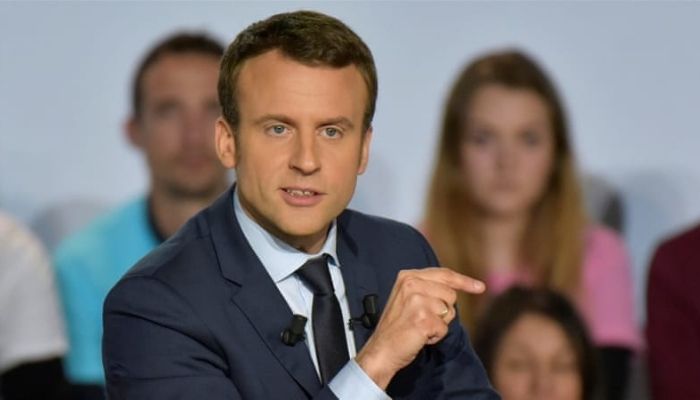
“We have gathered here because the time has come,” Emmanuel Macron said at the summit convened to revive the long-delayed two-state solution to end the Israel-Palestine conflict.
“It falls on us, this responsibility, to do everything in our power to preserve the possibility of a two-state solution,” Macron said.
“Today, I declare that France recognises the state of Palestine,” he said.
The additional countries recognising Palestine now join some 147 of the 193 UN member states that had already formally recognised Palestinian statehood as of April this year.
With more than 80 percent of the international community now recognising the state of Palestine, diplomatic pressure has ramped up on Israel as it continues its genocidal war on Gaza, where more than 65,300 Palestinians have been killed and the has been enclave turned into rubble.
Spain, Norway and Ireland recognised Palestinian statehood last year, with Madrid also imposing sanctions on Israel for its war on Gaza.
Spanish Prime Minister Pedro Sanchez told the summit on Monday that a two-state solution was not possible “when the population of one of those two states is the victim of a genocide”.
“The Palestinian people are being annihilated, [so] in the name of reason, in the name of international law and in the name of human dignity, we have to stop this slaughter,” Sanchez said.
Macron, in his speech to the summit, also outlined a framework for the creation of a “renewed Palestinian Authority”. The post-war framework envisages an International Stabilisation Force (ISF) that would assist in preparing the Palestinian Authority (PA) to take over governance in Gaza.
PA President Mahmoud Abbas commended the countries that had recognised Palestine. He made his statement to the conference by video because he was denied a visa by the administration of US President Donald Trump to attend the UNGA this week.
“We call on those that have not yet done so to do so to follow suit”, Abbas said, adding that the PA also demanded “support for Palestine’s full membership in the United Nations”.
Israel and the US, which are becoming increasingly isolated internationally on the issue, boycotted the summit, with Israel’s UN ambassador, Danny Danon, describing the event as a “circus”.
Although the vast majority of UN member states now recognise Palestinian statehood, new UN member states must have the support of the UN Security Council, where the US has used its veto to block Palestine from becoming a full UN member state.
Speaking at the summit, UN Secretary-General Antonio Guterres reiterated his support for the two-state solution, framing it as the only viable path towards peace after years of failed negotiations and ongoing violence.
Guterres said that statehood for Palestinians “is a right, not a reward”, rejecting US and Israeli claims that it was a reward for Hamas.
Saudi Arabia’s foreign minister, Prince Faisal bin Farhan Al Saud, thanked Macron and the UN chief for their efforts towards a two-state solution, which he said is “the only way to achieve just and lasting peace”.
He said the conference comes at a time when “the Israeli occupation authorities continue their aggression and their brutal crimes” against Palestinians in Gaza.
Israel also continues its “violations in the West Bank, and its repeated attacks on Arab and Muslim countries, with the most recent attack on Qatar”, he said.
“These actions underline Israel’s insistence on continuing aggressive practices that threaten regional and international peace and stability and undermine efforts of peace in the region,” he added. (AlJazeera)
Donald Trump has said he is considering “taking away” the US citizenship of actress and comedian Rosie O’Donnell, despite a Supreme Court ruling that expressly prohibits a government from doing so.
In a post on Truth Social on Saturday, the US president said: “Because of the fact that Rosie O’Donnell is not in the best interests of our Great Country, I am giving serious consideration to taking away her Citizenship.”
He also labelled O’Donnell, who has moved to Ireland, as a “threat to humanity” and said she should “remain in the wonderful country of Ireland, if they want her”.
O’Donnell responded on Instagram by posting a photograph of Mr Trump with Jeffrey Epstein.
“You are everything that is wrong with America and I’m everything you hate about what’s still right with it,” she wrote in the caption.
“I’m not yours to silence. I never was.”
O’Donnell moved to Ireland with her 12-year-old son in January after Mr Trump had secured a second term.
She has said she’s in the process of obtaining Irish citizenship based on family lineage and that she would only return to the US “when it is safe for all citizens to have equal rights there in America”.
O’Donnell and the US president have criticised each other publicly for years, in an often-bitter back-and-forth that predates Mr Trump’s move into politics.
This is just the latest threat by the president to revoke the citizenship of someone he has disagreed with, most recently his former ally Elon Musk.
But the two situations are different as while Musk was born in South Africa, O’Donnell was born in the US and has a constitutional right to American citizenship.
Amanda Frost, a law professor at the University of Virginia School of Law, said the Supreme Court ruled in a 1967 case that the fourteenth amendment of the constitution prevents the government from taking away citizenship.
“The president has no authority to take away the citizenship of a native-born US citizen,” he added.
“In short, we are nation founded on the principle that the people choose the government; the government cannot choose the people.” (SkyNews)


 English