
Posted on Leave a comment

Colombian presidential candidate Uribe dies two months after shooting

Colombian presidential candidate Miguel Uribe has died two months after being shot at a campaign rally, his family said Monday, as the attack rekindled fears of a return to the nation’s violent past.

The 39-year-old conservative senator, a grandson of former president Julio Cesar Turbay (1978-1982), was shot in the head and leg on June 7 at a rally in the capital, Bogota, by a suspected 15-year-old hitman.

Despite signs of progress in recent weeks, his doctors on Saturday announced he had suffered a new brain hemorrhage.

“To break up a family is the most horrific act of violence that can be committed,” his widow, Maria Claudia Tarazona, said at his wake Monday, where she thanked her husband’s medical team for their efforts.

She attended the state ceremony at Congress in Bogota, where Uribe’s body will remain for public viewing until Wednesday.

Authorities have arrested six suspects linked to the attack, including the alleged shooter, who was captured at the scene by Uribe’s bodyguards.

Following a nationwide manhunt, police announced the arrest of an alleged mastermind behind the attack, Elder Jose Arteaga Hernandez, alias “El Costeno.”

Police have also pointed to a dissident wing of the defunct FARC guerrilla group as being behind the assassination.

The attack on Uribe, a leading candidate ahead of the 2026 presidential election, has reopened old wounds in a country wracked by violence.

His mother, journalist Diana Turbay, was killed in a botched 1991 police operation to free her from cocaine kingpin Pablo Escobar’s Medellin cartel.

Four presidential candidates were assassinated during the worst phase of violence in the 1980s and 1990s under Escobar, who terrorized citizens of Bogota, Medellin, and elsewhere with a campaign of bombings.

Writing on X, left-wing President Gustavo Petro, of whom Uribe was a fierce critic, said the government’s role was to “repudiate crime… regardless of ideology” and assured the safety of Colombians was his top priority.

“Today is a sad day for the country,” Vice President Francia Marquez said on social media

“Violence cannot continue to mark our destiny. Democracy is not built with bullets or blood; it is built with respect, with dialogue.”

Uribe had fiercely criticized Petro’s strategy of “total peace,” based on engaging all of Colombia’s remaining armed groups, including drug traffickers, in dialogue.

He announced in October that he would seek to succeed the term-limited Petro in the May 2026 election.

Uribe was elected to Bogota’s city council at age 26, later becoming its youngest-ever chairperson and then the mayor’s right-hand man.

In 2019, he unsuccessfully ran for mayor of Bogota, but three years later, he was elected a senator — receiving the most votes of any candidate in the country.

He took a seat with the conservative Democratic Center party, founded by former president Alvaro Uribe, no relation.

“Evil destroys everything, they killed hope. May Miguel’s struggle be a light that illuminates Colombia’s rightful path,” former president Uribe wrote on X.

In recent months, Petro, a former left-wing guerrilla, has been accused of dialing up the political temperature by labelling his right-wing opponents “Nazis.”

US Secretary of State Marco Rubio, a frequent critic of the leftist Petro government, demanded justice following the announcement of Uribe’s death.

“The United States stands in solidarity with his family, the Colombian people, both in mourning and demanding justice for those responsible,” Rubio said.

Uribe leaves behind a young son and three teenage daughters of his wife, whom he had taken in as his own. (Punch)

Posted on Leave a comment

Global outrage mounts as funeral held for five journalists killed by Israel

The death of the prominent Al Jazeera journalist Anas al-Sharif, killed along with four colleagues in an Israeli airstrike on Sunday, prompted condemnation from around the world, as hundreds of mourners carried their bodies through the streets of Gaza City.

Sharif, one of Al Jazeera’s most recognisable faces in Gaza, was killed while inside a tent for journalists outside al-Shifa hospital in Gaza City on Sunday night. Seven people were killed in the attack, including the Al Jazeera correspondent Mohammed Qreiqeh and the camera operators Ibrahim Zaher, Mohammed Noufal and Moamen Aliwa, according to the Qatar-based broadcaster.

On Monday, the Guardian visited the site where the journalists were killed. Wadi Abu al-Saud, a Palestinian journalist who was near the tent when the Israeli strike occurred on Sunday, said the attack happened at 11.22pm, just after he had finished filming his latest news bulletin.

“I entered the tent opposite theirs, raised my phone to make a call, and then the explosion occurred, Saud said. “A piece of shrapnel hit my phone. I looked back and saw people burning in flames. I tried to extinguish them. Anas and the others had died instantly from the strike.”

In two videos of the aftermath of the strike, Saud can be seen carrying the bodies of those killed. “From now on, I will not continue the coverage,” he said. “I will return to my life as a citizen. The truth has died and the coverage has ended.”

The Israel Defense Forces (IDF) admitted carrying out the attack, claiming Sharif was the leader of a Hamas cell responsible for rocket attacks against Israel – an allegation that Al Jazeera and Sharif had previously dismissed as baseless.

It was the first time during the war that Israel’s military has swiftly claimed responsibility after a journalist was killed in a strike.

Pro-Israel advocates on social media hailed the killing of Sharif and posted photos handed out by the IDF of photos the journalist took with the former Hamas leader Yahya Sinwar, taken before Hamas’s attack on 7 October.

Sara Qudah, the Middle East and north Africa director at the Committee to Protect Journalists (CPJ), said: “Israel’s pattern of labelling journalists as militants without providing credible evidence raises serious questions about its intent and respect for press freedom.”

In July, Sharif told CPJ that he lived with the “feeling that I could be bombed and martyred at any moment”.

In July, Sharif told CPJ that he lived with the “feeling that I could be bombed and martyred at any moment”.

Reporters Without Borders condemned the “acknowledged murder by the Israeli army” of Sharif in Gaza and called on the international community to intervene.

Keir Starmer’s spokesperson said: “We are gravely concerned by the repeated targeting of journalists in Gaza. Reporters covering conflicts are afforded protection under international humanitarian law and journalists must be able to report independently without fear, and Israel must ensure journalists can carry out their work safely.”

The UN human rights office condemned the targeting of the journalists’ tent, saying it was “in grave breach of international humanitarian law”.

Al Jazeera said the attack was “a desperate attempt to silence voices in anticipation of the occupation of Gaza” and called Sharif “one of Gaza’s bravest journalists”.

People gathered at Sheikh Radwan cemetery in the heart of the Gaza Strip to mourn the journalists, whose bodies lay wrapped in white sheets at al-Shifa hospital before their burial. Friends, colleagues and relatives embraced and consoled one another.

The area where the attack took place was crowded with media workers on Monday, some speaking to cameras or mobile phones, others taking photos.

Islam al-Za’anoun, a news correspondent for Palestine TV and several Arab channels who participated in the funeral, said Sunday’s attack was “a turning point in the world of journalism”.

She said: “Despite all the threats he received and the Israeli media’s incitement against him, al-Sharif continued reporting. Now one question haunts me: Who will be next on the list? Will it be me?”

Bilal Abu Khalifa, a presenter at Al Jazeera, said he had met Sharif four days ago. “He told me he was in danger,” Abu Khalifa said. “I asked him not to go out or appear publicly too often. He gave me a very simple answer: Bilal, I will not leave Gaza except to the sky! I will not leave Gaza even if I am killed. I know I am on the assassination list, but I will continue to expose the crimes of the Israeli army against my people and show the world, and everyone who stands by them, the truth.”

In a final message, which Al Jazeera said had been written on 6 April and which was posted to Sharif’s X account after his death, the reporter said he had “lived through pain in all its details, tasted suffering and loss many times, yet I never once hesitated to convey the truth as it is, without distortion or falsification.”

He continued: “Allah may bear witness against those who stayed silent, those who accepted our killing, those who choked our breath, and whose hearts were unmoved by the scattered remains of our children and women, doing nothing to stop the massacre that our people have faced for more than a year and a half.”

After the Hamas attacks on 7 October 2023, Israel barred international journalists from entering Gaza – one of the rare moments when international reporters have been denied access to an active war zone. Since then, the task of documenting the war has fallen heavily on Palestinian journalists, often at the cost of their lives – themselves caught in its devastation, displaced multiple times, their homes reduced to rubble, friends and relatives killed, and at times queueing for food at perilous distribution points.

According to Gaza’s government media office, 238 journalists have been killed by Israel since the war started. CPJ said at least 186 journalists had been killed in the Gaza conflict. Israel denies deliberately targeting journalists.

In a report released this year, the Watson School of International and Public Affairs’ costs of war project said more journalists had been killed in Gaza than in both world wars, the Vietnam war, the wars in Yugoslavia and the US war in Afghanistan combined. (Guardian)

Posted on Leave a comment

British backpacker pleads guilty to killing man while drunk on e-scooter

A British backpacker has pleaded guilty to killing a man in Australia after hitting him while riding an e-scooter with an alcohol level more than three times the legal limit.

Alicia Kemp, 25, from Redditch, Worcestershire, had been drinking with a friend on a Saturday afternoon in May when she was kicked out of a bar because the two of them were drunk, the court heard earlier.

The pair hired an e-scooter in the evening, and Kemp was driving at speeds of 20 to 25km/h (12 to 15mph) when she hit 51-year-old Thanh Phan from behind on a pavement in Perth’s city centre.

The father-of-two hit his head on the pavement and died in hospital from a brain bleed two days later.

Kemp’s passenger was also hurt in the crash – sustaining a fractured skull and broken nose – but her injuries were not life-threatening.

In Perth’s Magistrates Court on Monday, Kemp – appearing via video link – pleaded guilty to dangerous driving causing death while intoxicated. The charge carries a maximum 20-year prison term.

Prosecutors dropped a second charge of dangerous driving causing bodily harm to her passenger.

Earlier, the court heard that Kemp’s blood alcohol content level was 0.158 after the crash, more than three times the legal limit of 0.05 in Australia.

Prosecutors said CCTV footage showed Kemp’s “inexplicably dangerous” riding before she struck Mr Phan, who was waiting to cross the road.

In a statement from Mr Phan’s family earlier this year, the structural engineer was described as a beloved husband, father, brother and dear friend.

Kemp’s lawyer Michael Tudori said she was relieved after pleading guilty and hoped to be sentenced before Christmas, according to local media.

“You could see she was ready to say those words, you know, she’s obviously done something stupid,” Mr Tudori told the ABC.

Kemp, who was in Western Australia on a working holiday visa, will remain in custody until her sentencing. (BBC)

Posted on Leave a comment

Australia to recognise Palestinian statehood; New Zealand may follow

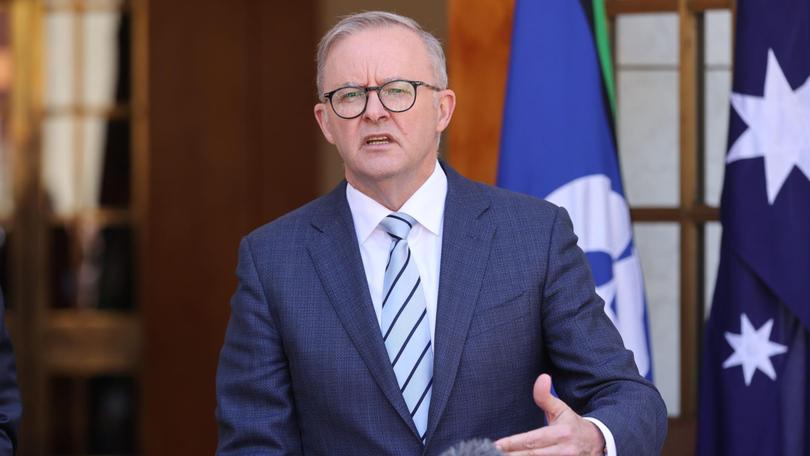
Australia will recognise a Palestinian state in September, Prime Minister Anthony Albanese has announced, drawing condemnation from Israel.

Albanese said on Monday that his government would formally announce the move when the United Nations General Assembly (UNGA) meets in New York.

“A two-state solution is humanity’s best hope to break the cycle of violence in the Middle East and to bring an end to the conflict, suffering and starvation in Gaza,” Albanese said at a news conference in Canberra.

Australia’s announcement comes as Canada, France and the United Kingdom are also preparing to formally recognise Palestine at the meeting next month, joining the vast majority of UN member states that already do so.

Israeli Ambassador to Australia Amir Maimon said recognition of a Palestinian state will do nothing to end the war in Gaza, telling the Australian Broadcasting Corporation (ABC): “We reject the recognition, unilateral recognition.”

Israeli President Isaac Herzog also slammed the Australian announcement as a reward for Hamas for its October 7, 2023, attack on southern Israel, repeating the Israeli government’s stance on all recognition announcements thus far.

This latest recognition comes about a week after hundreds of thousands of Australians marched across the Sydney Harbour Bridge to protest Israel’s war in the Gaza Strip.

Speaking a day after the protest, Australian Minister for Foreign Affairs Penny Wong told ABC that “there is a risk there will be no Palestine left to recognise.”

“In relation to recognition, I’ve said for over a year now, it’s a matter of when, not if,” Wong added.

The opposition Liberal Party criticised the move, saying it put Australia at odds with the United States, its closest ally, and reversed a bipartisan consensus that there should be no recognition while Hamas remains in control of Gaza.

“Despite his words today, the reality is Anthony Albanese has committed Australia to recognising Palestine while hostages remain in tunnels under Gaza and with Hamas still in control of the population of Gaza. Nothing he has said today changes that fact,” Liberal Party leader Sussan Ley said in a statement.

“Recognising a Palestinian state prior to a return of the hostages and defeat of Hamas, as the Government has today, risks delivering Hamas one of its strategic objectives of the horrific terrorism of October 7.”

The Australian Greens, the fourth largest party in parliament, welcomed the move to recognise Palestine but said the announcement did not meet the “overwhelming calls from the Australian public for the government to take material action”.

“Millions of Australians have taken to the streets, including 300,000 last weekend in Sydney alone, calling for sanctions and an end to the arms trade with Israel. The Albanese Government is still ignoring this call,” Senator David Shoebridge, the party’s spokesperson on foreign affairs, said in a statement.

The Australian Palestine Advocacy Network (APAN) also criticised the announcement, describing it as a “political fig leaf, letting Israel’s genocide and apartheid continue unchallenged, and distracting from Australia’s complicity in Israeli war crimes via ongoing weapons and components trade”.

“Palestinian rights are not a gift to be granted by Western states. They are not dependent on negotiation with, or the behaviour or approval of their colonial oppressors,” APAN said in a statement.

According to Albanese, Australia’s decision to recognise Palestinians’ right to their own state will be “predicated on the commitments Australia has received from the Palestinian Authority (PA)”.

These “detailed and significant commitments” include the PA reaffirming it “recognises Israel’s right to exist in peace and security” and committing to “demilitarise and to hold general elections”, Albanese said while announcing the decision.

The PA is a governing body that has overseen parts of the Israeli-occupied West Bank since the mid-1990s.

It has not held parliamentary elections since 2006 and has been criticised by some Palestinians for helping Israel to keep tight control over residents in the occupied West Bank.

Albanese said the commitments secured by Australia were “an opportunity to deliver self-determination for the people of Palestine in a way that isolates Hamas, disarms it and drives it out of the region once and for all”.

Hamas has been in power in the Gaza Strip since 2007 when it fought a brief war against forces loyal to PA President Mahmoud Abbas.

Meanwhile, New Zealand Foreign Minister Winston Peters said on Monday that his country’s cabinet will make a formal decision on Palestinian statehood in September.

“Some of New Zealand’s close partners have opted to recognise a Palestinian state, and some have not,” Peters said in a statement.

“Ultimately, New Zealand has an independent foreign policy, and on this issue, we intend to weigh up the issue carefully and then act according to New Zealand’s principles, values and national interest.”

Peters said that while New Zealand has for some time considered the recognition of a Palestinian state a “matter of when, not if”, the issue is not “straightforward” or “clear-cut”.

“There are a broad range of strongly held views within our Government, Parliament and indeed New Zealand society over the question of recognition of a Palestinian state,” he said.

“It is only right that this complicated issue be approached calmly, cautiously and judiciously. Over the next month, we look forward to canvassing this broad range of views before taking a proposal to Cabinet.”

Of the UN’s 193 member states, 147 already recognise Palestinian statehood, representing three-quarters of the world’s countries and the vast majority of its population.

Under its 1947 plan to partition Palestine, the UNGA said it would grant 45 percent of the land to an Arab state although this never eventuated.

The announcements by Australia and New Zealand on Monday came hours after an Israeli attack killed five Al Jazeera staff members in Gaza City and as Israeli Prime Minister Benjamin Netanyahu continues to threaten a full-scale invasion of the city in the north of the Gaza Strip.

Israel’s war on Gaza has killed at least 61,430 people, according to Gaza’s health authorities.

More than 200 people, including 100 children, have died from starvation under Israel’s punishing siege, according to health authorities. (Aljazeera)

Posted on Leave a comment

Bank of England cuts rate amid tariff concerns

The Bank of England on Thursday cut its key interest rate by a quarter point to four percent, the lowest level in 2.5 years, as it bids to boost a UK economy threatened by US tariffs.

Alongside the expected decision, the BoE forecast British economic growth to hit 1.25 percent this year, slightly better than the central bank’s previous estimate of one percent.

“The direct impact of US tariffs is milder than feared, but more general tariff-related uncertainty still weighs on sentiment,” the BoE said in a statement after studying data gathered by UK businesses.

London and Washington reached an agreement in May to cut levies of more than 10 percent imposed by US President Donald Trump on certain UK-made items imported by the United States, notably vehicles.

The quarter-point cut on Thursday was the BoE’s fifth such reduction since starting a trimming cycle in August 2024.

“Interest rates are still on a downward path, but any future rate cuts will need to be made gradually and carefully,” its governor, Andrew Bailey, said following Thursday’s decision.

The BoE voted 5-4 for the reduction, but not before an unprecedented second vote owing to a three-way split among its nine policymakers that prevented a necessary majority result.

Initially, four members voted for the reduction and four for no change. One member called for a larger cut of 0.50 percent, before switching in favour of a quarter-point drop, as voted for by Bailey.

It was the first time since the BoE became independent of the UK government in 1997 that a second vote had to be held.

“Looking ahead, interest rates are expected to be 3.5 percent in a year, which is slightly higher than before the (latest) meeting,” noted Kathleen Brooks, research director at XTB trading group.

Expectations that the rate will remain at four percent for longer boosted the British pound.

The BoE’s main task is to keep Britain’s annual inflation rate at 2.0 percent, but the latest official data showed it had jumped unexpectedly to an 18-month high in June.

The Consumer Prices Index increased to 3.6 percent as motor fuel and food prices stayed high.

The BoE on Thursday predicted that the annual inflation rate would peak at four percent next month.

Latest official figures show that Britain’s economy unexpectedly contracted for a second month running in May, and UK unemployment is at a near four-year high of 4.7 percent.

This is largely down to Prime Minister Keir Starmer’s Labour government increasing a UK business tax from April, the same month that the country became subject to Trump’s 10-percent baseline tariff on most goods.

Finance minister Rachel Reeves welcomed the latest rate cut, saying in a statement that it helps to “bring down the cost of mortgages and loans for families and businesses”.

The US Federal Reserve last week kept interest rates unchanged, defying strong political pressure from Trump to slash borrowing costs in a bid to boost the world’s biggest economy.

Asked about US tariffs following the decision, Fed Chair Jerome Powell told a press conference: “We’re still a ways away from seeing where things settle down.”

The European Central Bank is meanwhile widely expected to keep rates unchanged at its next meeting, with eurozone inflation around the ECB’s two-percent target.

But that could change, according to some economists, based on how Trump’s tariffs affect the single-currency bloc. (Punch)

Posted on Leave a comment

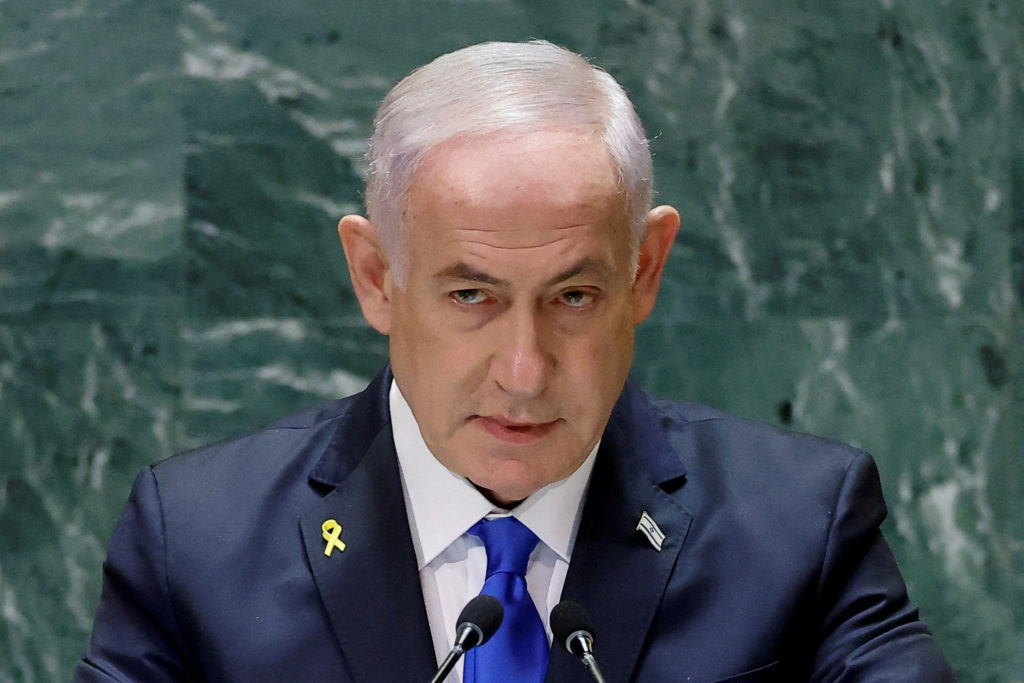
Netanyahu announces plan to take over Gaza City in further escalation

Israel’s security cabinet has approved a plan to take over Gaza City, Benjamin Netanyahu’s office has said, marking another escalation in the 22-month offensive that has killed tens of thousands of Palestinians, destroyed most of Gaza and pushed the territory into famine.

Ahead of the security cabinet meeting, which began on Thursday and ran through the night, the Israeli prime minister had said Israel planned to take control of the entire territory and eventually hand it off to friendly Arab forces opposed to Hamas.

The announced plans stop short of that, perhaps reflecting the reservations of Israel’s top general, who reportedly warned it would endanger the remaining 20 or so living hostages held by Hamas and further strain Israel’s army after nearly two years of regional wars. Many families of hostages are also opposed, fearing further escalation will doom their loved ones.

The resolution by the security cabinet will still need to be approved by the full cabinet, which may not meet until Sunday.

Israel has repeatedly bombarded Gaza City and carried out numerous raids there, returning to different neighbourhoods again and again as militants regrouped. It is one of the few areas of Gaza that has not been turned into an Israeli buffer zone or placed under evacuation orders.

The plan would mean sending ground troops into territory making up approximately 25% of Gaza.

According to Israel’s Channel 12, the plan is being framed as a limited operation rather than a full invasion, apparently to placate military chiefs wary of long-term occupation. The chief of staff, Lt Gen Eyal Zamir, has reportedly warned that occupying Gaza would plunge Israel into a “black hole” of prolonged insurgency, humanitarian responsibility and heightened risk to hostages.

A major ground operation there could displace tens of thousands of people and further disrupt efforts to deliver food to the territory.

The plan would force approximately 1 million Palestinians in Gaza City and other areas into evacuation areas in the southern part of the Gaza Strip. According to sources familiar with the details of the meeting, the evacuation of Gaza City is scheduled to be completed by 7 October.

The Israeli security cabinet’s decision has ignited protests both at home and abroad. Thousands of demonstrators are preparing to take to the streets over the weekend, while families of the remaining hostages held in Gaza fear an escalation could doom their loved ones. Dozens of them protested outside the security cabinet meeting in Jerusalem on Thursday.

Former top Israeli security officials have also come out against the plan, warning of a quagmire with little added military benefit. The Israeli opposition leader, Yair Lapid, denounced the cabinet’s move on Friday, calling it a disaster that would “lead to many other disasters”, including the death of the hostages and the killing of many soldiers, as well as costing Israeli taxpayers tens of billions and causing “diplomatic bankruptcy”.

The British prime minister, Keir Starmer, said Israel’s decision was wrong and urged it to immediately reconsider. “This action will do nothing to bring an end to this conflict or to help secure the release of the hostages. It will only bring more bloodshed,” he said in a statement.

The UN human rights chief, Volker Türk, said the Israeli government’s plan for a complete military takeover of the occupied Gaza Strip “must be immediately halted”.

Netanyahu’s office said that under the plan to defeat Hamas in the Gaza Strip, the Israeli army would prepare to “take control of Gaza City while distributing humanitarian assistance to the civilian population outside combat zones”.

An Israeli official had earlier said the security cabinet would discuss plans to conquer all or parts of Gaza not yet under Israeli control. The official, speaking on condition of anonymity pending a formal decision, said that whatever was approved would be implemented gradually to increase pressure on the Palestinian militant group.

Palestinians, at least 90% of whom have already been displaced at least once by the war and of whom nearly one in 10 have been injured in Israeli attacks, are braced for further misery. There is little remaining of the healthcare system and aid agencies such as the UN have been largely shut out by Israel.

Aya Mohammad, a 30-year-old Palestinian who, after repeated displacement, had returned with her family to Gaza City, said: “Where should we go? We have been displaced and humiliated enough. You know what displacement is? Does the world know? It means your dignity is wiped out, you become a homeless beggar, searching for food, water and medicine.”

At least 42 Palestinians were killed in Israeli airstrikes and shootings across southern Gaza on Thursday, according to local hospitals. (Guardian)

Posted on Leave a comment

More than 60 countries scramble to respond to Trump’s latest tariffs

More than 60 countries around the world are scrambling to respond to the latest wave of US tariffs announced by Donald Trump, which came into force on Thursday.

Industry representatives in rich and poor countries warned of job losses as the tariffs upended a decades-old world trading system with rates ranging from 10% to 39%, 40% and 41% for Switzerland, Brazil and Syria.

All over the globe, leaders were attempting to put contingencies in place after Trump’s tariff threats turned to reality at a minute past midnight Washington time.

The Brazilian government said it was planning a state aid plan for companies affected. The president, Luiz Inácio Lula da Silva, said the duties were “unacceptable blackmail”.

Switzerland said it was seeking new talks with the US after a last-gasp mission to Washington by its president, Karin Keller-Sutter, failed to stop a 39% tariff blow that industry group Swissmem described as a “horror scenario”.

In a statement after an emergency meeting with Keller-Sutter, the Swiss cabinet said the tariffs would “place a substantial strain on Switzerland’s export-oriented economy”.

“For the affected sectors, companies and their employees, this is an extraordinarily difficult situation,” Keller-Sutter told reporters.

Taiwan is also continuing talks with the US. Its president, Lai Ching-te, said the 20% rate imposed on the key Washington ally was “temporary”.

Ireland, which is locked into an EU-US deal setting the tariff ceiling at 15%, said it would publish a new plan for diversifying an economy that relies heavily on US multinationals including Intel, Pfizer and Johnson & Johnson, all in Trump’s crosshairs.

Despite a last minute reprieve from Trump for Lesotho with tariffs dropping from 50% to 15%, the impoverished African nation said it was already hurting.

Textile industry players in the country – which produces jeans and other garments for US companies including Levi and Walmart – said the uncertainty around tariffs over the past few months had already devastated the sector, with orders cancelled and jobs cut.

Laos, which, like Brazil and Myanmar, was hit with a 40% rate, was among those handed a steep increase in import duties because of a trade imbalance with the US.

“A 40% tariff is just a nail in the coffin for any industry trying to ship to the United States,” Johannes Somers, the executive chair of the garment manufacturing firm Diep Vu, told Agence France Presse.

“We estimate about 20,000 workers or more could be impacted,” added Xaybandith Rasphone, the head of the Association of the Lao Garment Industry.

The sweeping “reciprocal” rates were announced by the White House a week ago, just before a previous 1 August deadline was due to elapse.

Just before the tariffs came into effect at midnight, Trump claimed on social media that billions of dollars would start flowing into the US as a result.

However, while the customs duties make countries’ exports more expensive and less competitive, they are payable on import and usually passed on to the customer.

“The only thing that can stop America’s greatness would be a radical left court that wants to see our country fail,” the president wrote in capital letters, referencing an ongoing case in the US court of appeals, which is considering whether he exceeded his authority in imposing the tariffs.

Some trading partners had already secured reductions through negotiations or by striking deals, including the UK, Thailand, Cambodia, Vietnam, Indonesia, the Philippines, Japan, South Korea, Pakistan and the EU.

The EU is the only trading partner where its baseline rate of 15% will include previous tariffs. It means, for example, cheeses that are normally hit with import duties of 14.9% will be taxed at 15% and not 29.9%.

However, the deal has only been implemented in part with tariffs of 27.5% still being imposed on EU car imports while the details of the US-EU deal are being finalised.

Hildegard Müller, the president of the German car industry federation, said the EU-US deal had “brought no clarity or improvement” to the industry.

“The sectoral tariffs on cars and automotive parts of 27.5%, which have been in effect since April and May respectively, remain in place and place a significant burden on German automakers and automotive suppliers, as well as on transatlantic trade.

“It is important that the promised agreement is reached now and the relief measures are implemented promptly,” she said.

India’s 25% tariff rate could rise to a total of 50% after Trump signed an executive order on Wednesday imposing an additional levy in retaliation for the country’s purchase of oil from Russia. Delhi has 21 days to respond. Trump has threatened to use the same tactic on other countries that supply Russia. (Guardian)

Posted on Leave a comment

Japan’s population falls by 908,574 in record low

The population of Japanese nationals fell by a record amount—more than 900,000 people—in 2024, official data showed, as the country battles to reverse its perennially low birth rates.

While many developed countries are struggling with low birth rates, the problem is particularly acute in Japan, where the population has been declining for years.

Prime Minister Shigeru Ishiba has called the situation a “quiet emergency,” pledging family-friendly measures like more flexible working hours and free day care to try and reverse the trend.

Last year, the number of Japanese fell by 908,574, or 0.75 per cent, to 120.65 million.

The decline—for a 16th straight year—was the largest drop since the survey began in 1968, the internal affairs ministry said Wednesday.

Foreign resident totals, however, were at their highest since records began in 2013.

There were 3.67 million foreigners as of January 1, 2025, representing nearly three per cent of the whole population in Japan, which was more than 124.3 million as of that date.

The overall population of the country declined by 0.44 per cent in 2023.

The latest figures come as the government struggles to raise stubbornly low birth rates, while frustration over inflation and other concerns among some voters prompted the rise of a new opposition party with a slogan of “Japanese First”.

The anti-immigrant party has falsely claimed foreigners enjoy more welfare benefits than Japanese nationals.

Foreign nationals are helping address labour shortages exacerbated by the ageing population, and most commonly hold jobs in the manufacturing, hospitality, and retail sectors.

By age, Japanese nationals aged 65 and over accounted for nearly 30 per cent of the population, while the age group between 15 and 64 made up 60 per cent, both minor increases from the previous year.

Japan has the world’s second-oldest population after tiny Monaco, according to the World Bank.

The number of births in Japan last year fell below 700,000 for the first time on record, health ministry data released in June said.

The fast-ageing nation welcomed 686,061 newborns in 2024—41,227 fewer than in 2023, the data showed. It was the lowest figure since records began in 1899.

The shrinking population is also gutting rural communities, with the number of abandoned homes in Japan soaring to almost four million over the last two decades, government data released last year showed.

Many of the homes belong to people living in major cities who have inherited them from relatives and who are unable or unwilling to keep them renovated.

The world’s oldest person, Japanese woman Tomiko Itooka, died at the age of 116 in December.

Women typically enjoy longevity in Japan, but the expanding elderly population is leading to soaring medical and welfare costs, with a shrinking labour force to pay for it. (Punch)

Posted on Leave a comment

Ghana’s defence, environment ministers among 8 killed in helicopter crash

A helicopter crash has killed all eight people on board, including the nation’s defence and environment ministers, according to Ghana’s government.

Defence Minister Edward Omane Boamah and Environment Minister Ibrahim Murtala Muhammed were among the victims of the crash in the southern Ashanti region of the country, said Julius Debrah, chief of staff to President John Mahama, on Wednesday.

“The president and the government extend their condolences and solidarity to the families of our comrades and soldiers who fell in their service to the nation,” said Debrah.

Also among the victims were Alhaji Mohammad Muniru Limuna, deputy national security coordinator and former minister of agriculture, and Samuel Sarpong, vice chairman of Mahama’s National Democratic Congress (NDC) party.

Boamah was helming Ghana’s defence ministry at a time when armed groups across its northern border in Burkina Faso had become increasingly restive.

While Ghana has so far avoided a rebel spillover from the Sahel – unlike neighbours Togo and Benin – observers have warned of increased arms trafficking and of fighters from Burkina Faso crossing the porous border to use Ghana as a rear base.

A medical doctor by training, Boamah’s career in government included stints as communications minister during Mahama’s previous 2012-2017 tenure. Before that, he was the deputy minister for the environment.

As Ghana has pursued increased diplomacy with Burkina Faso, Mali and Niger – all ruled by military governments who have broken with the ECOWAS West African regional bloc – Boamah led a delegation to Ouagadougou in May.

He had been set to release a book titled, A Peaceful Man in an African Democracy, about former President John Atta Mills, who died in 2012.

The Ghanaian Armed Forces had reported earlier Wednesday that an air force helicopter had fallen off radar after taking off from Accra just after 9:00am (09:00 GMT). It had been headed towards the town of Obuasi, northwest of the capital.

The statement had said that three crew and five passengers were on board, without specifying at the time that the ministers were among them.

All flags were to be flown at half-staff, Debrah said, while the presidency said Mahama had cancelled his official activities for the day. (AlJazeera)

Posted on Leave a comment

UK introduces tougher gun laws following deadly shootings

People with a record of violence or domestic abuse will be prevented from owning firearms under new rules in the United Kingdom following a series of killings in recent years.

The new guidance, issued on Tuesday, came in response to concerns raised by coroners and campaigners after shootings in England’s Woodmancote and Keyham.

Police officers will be instructed to interview partners or other household members of people applying for a firearms licence to identify signs of domestic abuse.

Other factors that could make someone unsuitable to own a weapon.

They must carry out additional checks to ensure people with a record of violence are not permitted to hold a firearms licence.

The move came two years after an inquest found that “catastrophic failures” in the licensing system had meant Keyham gunman Jake Davison had been allowed to own a shotgun despite his history of violence.

Davison, then 22, killed his mother and four others, including a three-year-old girl, in an eight-minute shooting spree before taking his own life in August 2021.

Evidence of dishonesty will also be considered against an application, including the withholding of relevant medical history.

Robert Needham killed his partner, Kelly Fitzgibbons, and their daughters, Ava and Lex, with a legally owned shotgun at their home in Woodmancote in 2020.

He was given a licence even after admitting that he had failed to disclose a history of depression and work-related stress.

Emma Ambler, Fitzgibbons’ sister, welcomed the changes but said there was “still some way to go.”

She said: “I still believe that holding a gun licence is a privilege and not a right.

“The priority has to be the safety of society, and it’s so important to stop these extremely dangerous weapons falling into the wrong hands, which these changes will go some way to doing.”

Tuesday’s changes will also mean applicants for shotgun licences now require two referees rather than one, bringing the process into line with the rules for other firearms.

Policing minister Dame Diana Johnson said: “Only those who meet the highest standards of safety and responsibility should be permitted to use shotguns or firearms.

“It is crucial that police have full information about the suitability of all applicants for these lethal weapons.

“The events in Woodmancote in 2020, Plymouth in 2021, and other cases provide a tragic reminder of what can happen when these weapons are in the hands of the wrong people.

“We must do everything we can to protect the public.”

Controls on shotgun ownership could be further toughened after another consultation, due to be launched later this year, that will also seek views on improving the rules on private firearms sales.

The new consultation follows the case of Nicholas Prosper, who killed his mother, Juliana Falcon, and siblings Giselle and Kyle Prosper in Luton in 2024.

Prosper, 19, had been able to purchase a shotgun and 100 cartridges from a legitimate firearms dealer after forging a licence.

He was jailed for life with a minimum term of 49 years after pleading guilty to the murders earlier this year. (Guardian)