Posted on Leave a comment

Ousted Guinea-Bissau president arrives in Congo

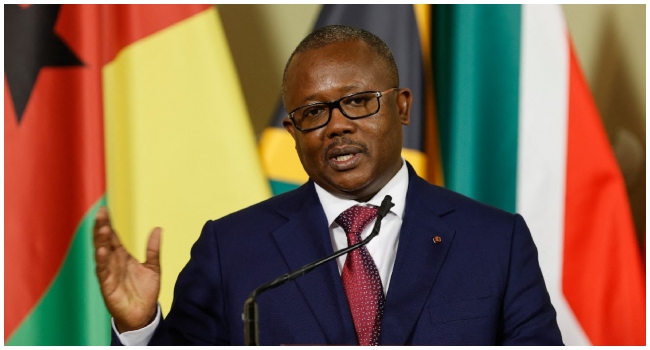
Guinea-Bissau’s ousted president Umaro Sissoco Embalo arrived in the Republic of Congo’s capital Brazzaville on Saturday, days after he was overthrown by the military, Congolese government sources told AFP.

Meanwhile in the capital Bissau, the West African country’s leading opposition party said its headquarters had been “invaded” by a “heavily armed militia”, in the wake of the post-election coup that propelled the army to power.

The military took control of the Portuguese-speaking nation on Wednesday — a day before the provisional results of national elections were due to be announced — and Embalo initially left for neighbouring Senegal.

The true motives for the coup in Guinea-Bissau remain unclear, with speculation and conspiracy theories circulating — including that the coup was carried out with Embalo’s blessing.

“Embalo arrived in Brazzaville late in the morning on a private jet,” a source close to the Congolese government said on condition of anonymity.

A presidency source said Embalo, who had claimed victory in the election, intended to remain in the country, which is also known as Congo-Brazzaville.

Embalo, 53, is rumoured to be close to Congolese President Denis Sassou Nguesso, and has visited the Republic of Congo many times.

After taking power on Wednesday, the officers in charge argued they had taken control to restore order, warning of a plot by the country’s drug barons to destabilise Guinea-Bissau.

The opposition and some experts however suspect that Embalo, in power since 2020, orchestrated the takeover to halt the electoral process.

Those suspicions intensified when the junta named General Horta N’Tam, considered a close ally of the president, to head a transitional administration set to last a year.

On Saturday, the African Party for the Independence of Guinea and Cape Verde (PAIGC), Guinea-Bissau’s powerful opposition party, said in a statement that its headquarters had been “illegally invaded by heavily armed militia groups” in Bissau.

Elsewhere in the capital, minor clashes broke out on Saturday between young people and law enforcement officers in a suburb not far from the headquarters of Fernando Dias, who ran against Embalo and was arrested on the day of the coup.

Some political researchers say a high-level turf war to control illegal drug smuggling networks may have also played a part in Guinea-Bissau’s instability.

Crippling poverty, chaotic administration and political tumult have made Guinea-Bissau a fertile ground for corruption and drug smuggling.

It is a key transit point for Latin American cocaine destined for Europe to the point that some analysts have dubbed it a “narco-state”. (Vanguard)

Posted on Leave a comment

Tanzania president claims 98% victory amid protests, internet blackout

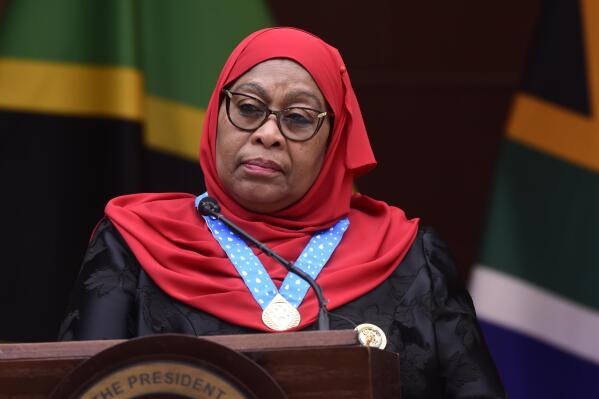
Tanzanian President Samia Suluhu Hassan was to be inaugurated on Monday, with the internet still blocked after election protests in which the opposition says hundreds were killed by security forces.

The electoral commission says Hassan won 98 per cent of the vote.

But the main opposition party, Chadema, which was barred from competing, has rejected the results and called for fresh elections, calling last Wednesday’s vote a “sham”.

State television said the public would not attend the inauguration, which would be held in the State House in the capital, Dodoma, rather than at a stadium as usual.

A total internet blackout has been in place since protests broke out on election day, so only a trickle of verifiable information has been getting out of the East African country.

A diplomatic source said there were credible reports of hundreds — perhaps even thousands — of deaths registered at hospitals and health clinics around Tanzania.

Chadema told AFP it had recorded “no less than 800” deaths by Saturday, but none of the figures could be independently verified.

The government has not commented on any deaths, except to reject accusations that “excessive force” was used.

Schools and colleges remained closed on Monday, with public transport halted.

The diplomatic source said there were “concerning reports” that police were using the internet blackout to buy time as they “hunt down opposition members and protesters who might have videos” of atrocities committed last week.

Dar es Salaam and other cities were much calmer over the weekend as a near-total lockdown was in place.

An AFP reporter said police were stopping almost everyone who moved around the city, checking IDs and bags, and allowing shops to open only in the afternoon.

AFP journalists on the island of Zanzibar — which has greater political freedom and saw few protests — saw masked armed men patrolling without visible insignia or identification in the days after the election.

A rights group in neighbouring Kenya presented gruesome footage on Sunday that it said was gathered from inside Tanzania, including images of dead bodies piled up in the street.

The images could not be independently verified.

Pope Leo XIV on Sunday called for prayers for Tanzania, where he said post-election violence had erupted “with numerous victims”.

“I urge everyone to avoid all forms of violence and to pursue the path of dialogue,” the pope said.

Hassan was elevated from vice-president on the sudden death of her predecessor, John Magufuli, in 2021.

She wanted an emphatic election victory to cement her place and silence critics within the ruling party, analysts say.

Rights groups say she oversaw a “wave of terror” ahead of the vote, including a string of high-profile abductions that escalated in the final days.

Despite a heavy security presence, election day descended into chaos as crowds took to the streets across the country, tearing down her posters and attacking police and polling stations, leading to an internet shutdown and curfew.

Polling stations had been largely empty before the violence broke out, AFP journalists and observers saw, though the electoral commission later said turnout was 87 per cent.

UN chief Antonio Guterres was “deeply concerned” about the situation in Tanzania, “including reports of deaths and injuries during the demonstrations”, his spokesman said last week. (Punch)

Posted on Leave a comment

Japan’s Prime Minister Shigeru Ishiba resigns after election defeats

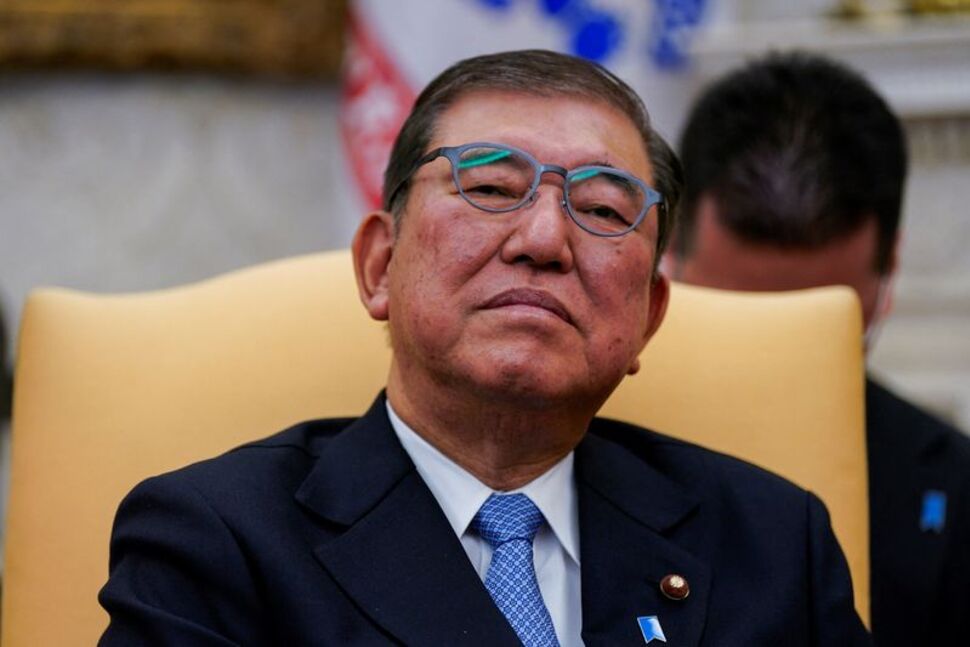
Japan’s Prime Minister Shigeru Ishiba has announced he is stepping down after less than a year in the role, following two major election losses.

The move comes a day before his Liberal Democratic Party (LDP) was expected to vote on whether to hold an internal leadership vote that could have forced him out.

The LDP has governed Japan for most of the past seven decades, but under Ishiba it lost its majority in the lower house for the first time in 15 years and then lost its majority in the upper house in July.

Japan, the world’s fourth-largest economy and a key US ally, now faces a period of political uncertainty as tensions rise with China and regional insecurity mounts.

“Now that a conclusion has been reached in the negotiations concerning the US tariff measures, I believe this is precisely the appropriate time,” Ishiba said, referring to a deal signed last week to ease tariffs imposed by US President Donald Trump on Japanese cars and other exports.

Until Sunday, he had resisted calls to resign, saying it was his responsibility to settle the dispute with Washington before stepping down.

“I have strongly believed that negotiations concerning the US tariff measures, which could be described as a national crisis, must be brought to a conclusion under our administration’s responsibility,” he said.

The 68-year-old said he would continue his responsibilities “to the people” until a successor was selected.

The LDP will now choose a new leader, who will become prime minister following a vote in parliament.

Ishiba, who took office in October 2024 promising to tackle rising prices, struggled to inspire confidence as the country faced economic headwinds, a cost-of-living crisis and fractious politics with the US.

Inflation, particularly the doubling of rice prices in the past year, was politically damaging.

Public support further slid after a series of controversies, including criticism of his decision to appoint only two women to his cabinet and handing out expensive gifts to party members. (BBC)