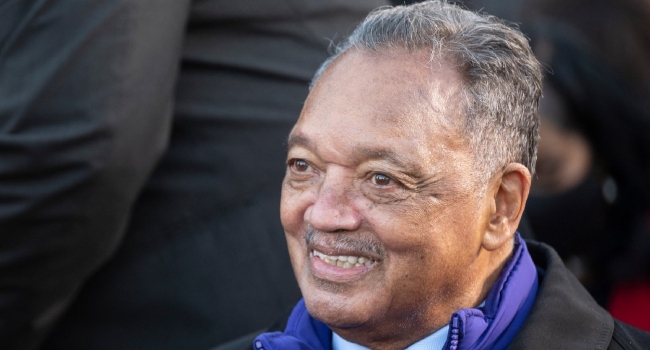
Former US presidents, celebrities and thousands of members of the public have gathered to honour civil rights leader, the Reverend Jesse Jackson, who died last month.
Former presidents Joe Biden, Barack Obama and Bill Clinton were among those who spoke at a memorial service in Chicago for the activist.
Mourners included former Vice President Kamala Harris, filmmaker Tyler Perry and former basketball star Isiah Thomas. The service also featured performances, including from singer and actress Jennifer Hudson.
Jackson, who worked alongside Martin Luther King Jr, twice ran to be the Democratic nominee for president and founded the Rainbow PUSH coalition, a social justice and civil rights non-profit.
While praising Jackson in his remarks at the service, Obama made a thinly veiled mention of US President Donald Trump. He said, “Each day we wake up to some new assault on our democratic institutions”.
He said the late reverend inspired people to take a harder path and called “on each of us to be heralds of change”.
Former Vice President Harris received a standing ovation when she spoke at the service. She appeared to take a jab at Trump, saying, “Let me just start out by saying: I predicted a lot of what is happening right now. I hate to say I told you so, but we did see it coming”.
But, she added, that she didn’t realise they would be tackling this moment without Jackson’s guidance.
Calling Jackson “impatient,” she noted, “He did not waste time waiting, even when the doors in front of him were barred and bolted, even if those on the other side hesitated or even ignored him. He always devised a way through”.
Civil rights leader, the Reverend Al Sharpton, who worked closely with Jackson during the civil rights movement, was also among the speakers. (BBC)
Veteran US civil rights activist Reverend Jesse Jackson, one of the nation’s most influential Black voices, died peacefully Tuesday morning, his family said in a statement. He was 84.
Jackson, a Baptist minister, had been a civil rights leader since the 1960s, when he marched with Martin Luther King Jr. and helped fundraise for the cause.
“Our father was a servant leader — not only to our family, but to the oppressed, the voiceless, and the overlooked around the world,” Jackson’s family said.
“His unwavering belief in justice, equality, and love uplifted millions, and we ask you to honor his memory by continuing the fight for the values he lived by.”
The family did not release a cause of death, but Jackson revealed in 2017 that he had the degenerative neurological disease Parkinson’s.
He was hospitalized for observation in November in connection to another neurodegenerative condition, according to media reports.
A dynamic orator and a successful mediator in international disputes, the long-time Baptist minister expanded the space for African Americans on the national stage for more than six decades.
He was the most prominent Black person to run for the US presidency — with two unsuccessful attempts to capture the Democratic Party nomination in the 1980s — until Barack Obama took the office in 2009.
He was present for many consequential moments in the long battle for racial justice in the United States, including with King in Memphis in 1968 when the civil rights leader was slain.
He openly wept in the crowd as Obama celebrated his 2008 presidential election, and he stood with George Floyd’s family in 2021 after a court convicted an ex-police officer of the unarmed Black man’s murder.
Jackson was born Jesse Louis Burns on October 8, 1941, in Greenville, South Carolina, to an unwed teen mother and a former professional boxer.
He later adopted the last name of his stepfather, Charles Jackson.
“I was not born with a silver spoon in my mouth. I had a shovel programmed for my hands,” he once said.
He excelled in his segregated high school and earned a football scholarship to the University of Illinois, but later transferred to the predominantly Black Agricultural and Technical College of North Carolina, where he received a degree in sociology.
In 1960, he participated in his first sit-in, in Greenville, and then joined the Selma-to-Montgomery civil rights marches in 1965, where he caught King’s attention.
Jackson later emerged as a mediator and envoy on several notable international fronts.
He became a prominent advocate for ending apartheid in South Africa, and in the 1990s served as presidential special envoy for Africa for Bill Clinton.
Missions to free US prisoners took him to Syria, Iraq, and Serbia.
He founded the Rainbow PUSH Coalition, a Chicago-based nonprofit organization focused on social justice and political activism, in 1996
He is survived by his wife and six children. (Channels)
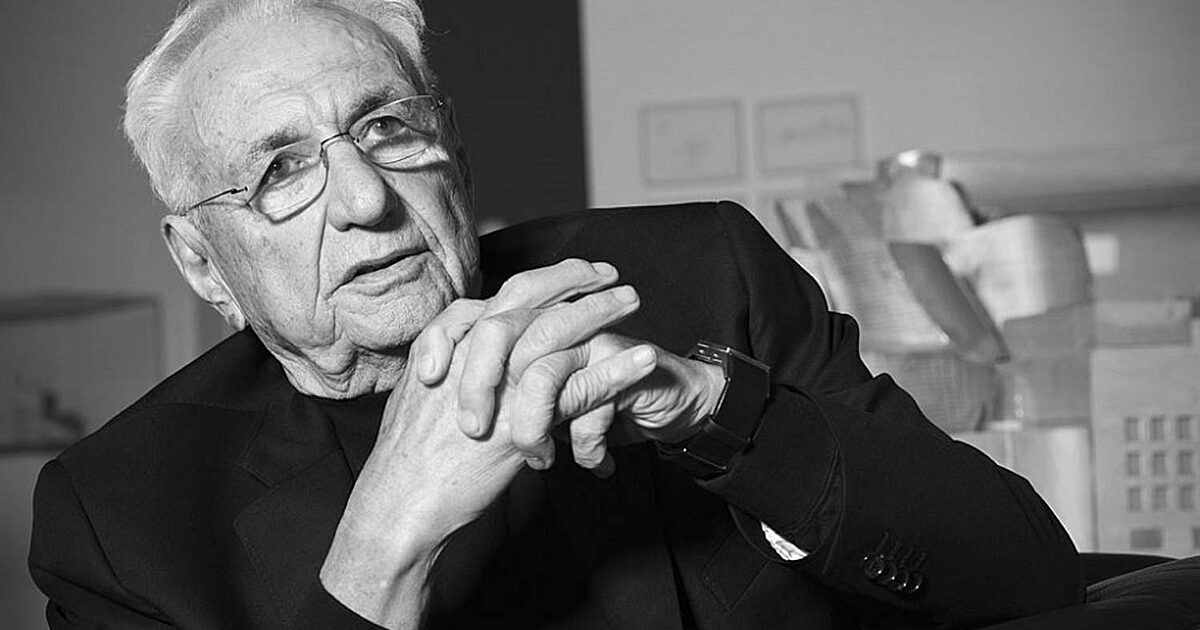
Frank Gehry, who in the second half of the 20th century forged a new language in architecture, becoming one of the most famous architects of his time, has died at the age of 96, according to a spokesperson at Gehry Partners. He died at his home in Santa Monica after a brief respiratory illness.
Gehry was born in Toronto, Canada. After studying architecture at the University of Southern California and urban planning at Harvard, he set up his practice in Los Angeles in 1962.
Redeveloping his own home using utilitarian materials — cinder blocks, plywood, corrugated metal and chain-link fencing — helped jump-start his career in 1978 in and around the state.
“We bought this tiny little bungalow in Santa Monica and for like 50 grand, I built a house around it,” he told TED founder Richard Saul Wurman in a 2008 discussion. “And a few people got excited about it.”
He was awarded the Pritzker Architecture Prize in 1989, which vaulted him and his work to international acclaim.
But Gehry was in his late 60s when he received the commission for the Guggenheim Museum in Bilbao, Spain, perhaps the most critically-acclaimed and renowned building of his career.
In 1998, the late Philip Johnson, the godfather of American modern architecture, stood in the atrium and was moved to tears. According to Vanity Fair, he anointed Gehry “the greatest architect we have today.” It was a rare moment in architecture: critics, academics and the public collectively enraptured by a single building.
Gehry transformed our idea of what was architecturally possible, shaping and sculpting buildings with the same software used to design fighter jets. The titanium-clad Guggenheim swooped, curved and shimmered by a river, which Vanity Fair correspondent Matt Tyrnauer likened to “a gargantuan bouquet of writhing silver fish.”
Fish were a recurrent theme in Gehry’s work, but his designs were also sparked by ideas as diverse as the shape of Japanese Buddhist temples, ice hockey and Stratocaster guitars.
The Guggenheim led to a series of high-profile commissions: the Museum of Pop Culture in Seattle (2000), Walt Disney Concert Hall in Los Angeles (2003), the Louis Vuitton Foundation in Paris (2014) among them. He received the Presidential Medal of Freedom from President Barack Obama in 2016. Gehry brought spectacle and showmanship to the field, undoubtedly, but did not see such qualities in himself.
“You are not going to call me a f***ing ‘starchitect’?” he told a Financial Times reporter in 2013. “I hate that.”
In person, Gehry was a plain-speaking, soft-spoken and good-humored, if occasionally cantankerous, communicator.
He had many close collaborators over the years, and those who knew him spoke to both his momentous impact and his character.
Bernard Arnault, chairman and CEO of LVMH, who worked with Gehry across multiple projects including the Louis Vuitton Foundation, called the architect “a dear friend” in a statement posted to X.
“I owe to him one of the longest, most intense, and most ambitious creative partnerships I have ever had the privilege to experience,” he said. “He will remain a genius of lightness, transparency, and grace.”
US representative and former Speaker of the House Nancy Pelosi called him “a gentleman titan of architecture and a master communicator of the future,” in a statement posted to X, praising his contributions to global visual culture.
“Frank left an indelible mark on his beloved Los Angeles, in California, across America, and indeed around the world — not only through his designs, but also through his generosity,” she said.
Describing his aesthetic, Gehry once told Vanity Fair: “Overall, the kind of language I’ve developed, which culminated in Bilbao, comes from a reaction to Postmodernism. I was desperate not to go there.”
He simply had an aversion to historical pastiche.
“I said to myself, ‘If you have to go backward, why not go back 300 million years before man, to fish?,’” he continued. “And that’s when I started with this fish shtick, as I think of it, and started drawing the damn things, and I realized that they were architectural, conveying motion even when they were not moving.” (CNN)
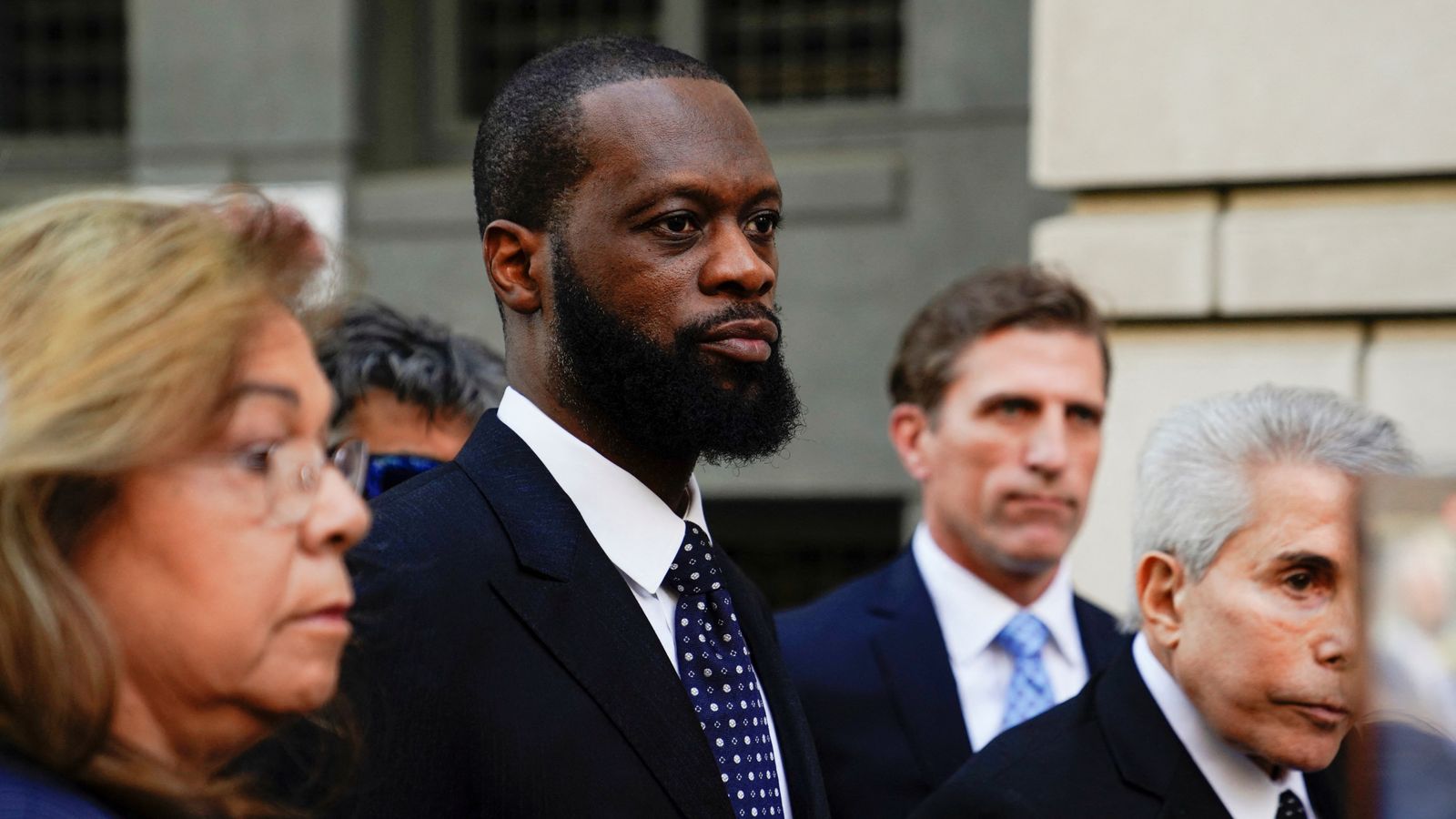
A Grammy-winning rapper who “betrayed his country for money” has been sentenced to 14 years in prison.
Prakazrel “Pras” Michel, who was part of 1990s hip-hop group The Fugees, was convicted of illegally funnelling millions of dollars in foreign contributions to Barack Obama’s re-election campaign in 2012.
The Justice Department had accused the 53-year-old of accepting $120m (£92m) from Malaysian financier Low Taek Jho, who wanted to gain political influence in the US.
Prosecutors said Michel “lied unapologetically and unrelentingly to carry out his actions” – and sought to deceive the White House, senior politicians and the FBI for almost a decade.
In 2018, it is claimed he urged the Trump administration and the justice department to drop embezzlement investigations against Low.
Michel was convicted of 10 counts by a federal jury in 2023 – and last month, he was ordered to forfeit about $65m (£50m) for his role in the scheme.
Hollywood star Leonardo DiCaprio testified at the trial, and Low was a primary financier in his 2013 film The Wolf Of Wall Street.
The Oscar-winning actor said the businessman’s funding and legitimacy had been carefully vetted before they entered a partnership.
Prosecutors had been seeking a life sentence to “reflect the breadth and depth of Michel’s crimes, his indifference to the risks to his country, and the magnitude of his greed”.
However, the rapper’s lawyer Peter Zeidenberg has argued that the 14-year term is “completely disproportionate to the offence” – and is vowing to appeal.
Last year, a judge rejected Michel’s request for a new trial after claiming that one of his lawyers had used AI during closing arguments.
Low Taek Jho has been accused of having a central role in the 1MDB scandal, amid claims billions of dollars were stolen from a Malaysian state fund.
The 44-year-old is a fugitive but has maintained his innocence, with his lawyers writing: “Low’s motivation for giving Michel money to donate was not so that he could achieve some policy objective.
“Instead, Low simply wanted to obtain a photograph with himself and then President Obama.”
Michel, who was born in Brooklyn, was a founding member of The Fugees with childhood friends Lauryn Hill and Wyclef Jean – selling tens of millions of records. (SkyNews)
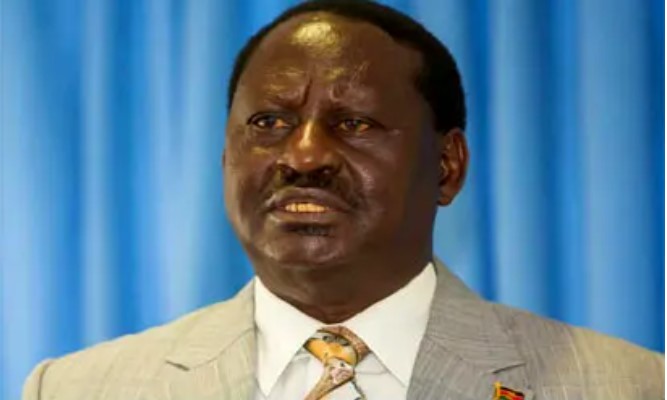
Former Kenyan prime minister and revered long-time opposition leader Raila Odinga was buried in the west of the country after a service attended by thousands on Sunday.
“Now finally Baba is home,” his son, Raila Odinga junior, said beside his father’s casket, draped in the Kenyan flag.
The burial concluded days of memorials that at times led to chaos, with at least five mourners dying at other events and dozens injured at a public viewing on Saturday.
Odinga died on Wednesday aged 80 in an Indian hospital.
He became prime minister after the bloody and disputed 2007 election, and was the main opposition leader for many years, losing five presidential campaigns, most recently three years ago.
He retains a devotional following in the west of the country. Former US President Barack Obama, whose Kenyan family hails from the same region, called Odinga a “true champion of democracy”.
Politicians, relatives and throngs of his supporters waved Kenyan flags and held his picture aloft as they gathered at Sunday’s memorial service, which was held at a university in Bondo.
“Even in the grave, he still remains our hero,” one mourner told the AFP news agency.
Military personnel carried Odinga’s coffin to the front, where a choir sang and speakers, including Kenyan President William Ruto, remembered him.
“His courage, his vision, and his unyielding faith in our collective destiny will forever illuminate the path of our nation,” Ruto said in a post on Facebook about the event.
“His return to Bondo was not merely a homecoming; it was the embrace of a grateful Republic bidding farewell to one of its greatest sons, a patriot who devoted his life to the cause of justice, democracy, and the enduring unity of our beloved Kenya.”
Odinga was buried nearby at his late father’s homestead, where there is a family mausoleum.
Multiple memorial events had already taken place, including a state funeral in Nairobi on Friday and a public viewing in a stadium in his home city of Kisumu on Saturday.
At the viewing, tens of thousands filed past his open coffin, many crying out the phrase “we are orphans”.
At least three people were killed when police opened fire to disperse mourners, with dozens more injured in the chaotic scenes that followed. (BBC)

 English