
Posted on Leave a comment

Japan considers income tax hike in 2027 to cover increase in defense spending


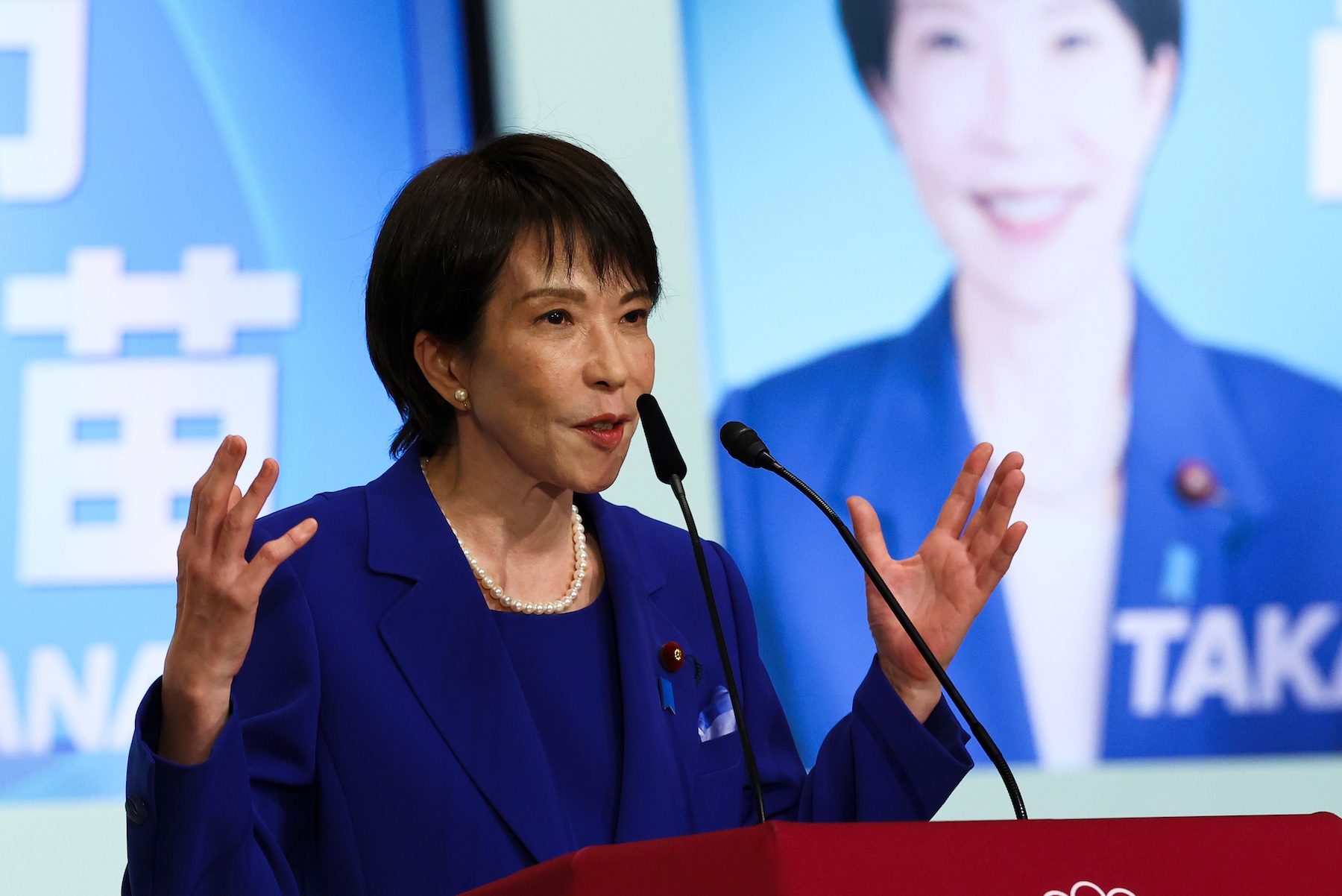
Japan’s ruling party, led by Prime Minister Sanae Takaichi, is considering raising the country’s income tax in January 2027 to cover part of a substantial increase in defense spending, sources close to the matter said Thursday.

The plan being floated within the Liberal Democratic Party would collect revenue for defense-related spending through a special income tax, the sources said.

Before Takaichi became premier in October, Japan decided to boost its defense-related spending to a combined 43 trillion yen over five years through March 2028 to cope with growing security threats.

The increase will be partly funded by raising corporate, tobacco and income taxes, but details have yet to be worked out on the timing of the income tax hike at a time of persistent inflation hurting households.

The plan under discussion within the LDP would raise the income tax so it would translate into upwards of 200 billion yen in added revenue, according to the sources.

A special income tax levied to finance rebuilding projects after the 2011 tsunami and nuclear disaster would also be reduced in an apparent effort to soften the expected blow to taxpayers.

But given that the temporary disaster-related income tax would then be extended to bring in the same amount of revenue overall, the envisioned defense-use income tax would still represent an added burden for households in the long term.

Before entering a coalition arrangement with the Takaichi-led LDP, the formerly opposition Japan Innovation Party was against tax hikes to pay for increased defense-related spending.

The corporate and tobacco taxes will be raised beginning next April, with an additional levy of 4 percent of the amount paid in corporate taxes. The tobacco tax hike will start with higher levies on vaping products.

Through the increases in the three tax categories alone, the government intends to secure slightly over 1 trillion yen annually by the end of March 2028. (JapanToday)

Posted on Leave a comment

Diet elects Sanae Takaichi as Japan’s first female prime minister

Japan’s Diet elected ultraconservative Sanae Takaichi as the country’s first female prime minister Tuesday, a day after her struggling party struck a coalition deal with a new partner expected to pull her governing bloc further to the right.

Takaichi replaces Shigeru Ishiba, ending a three-month political vacuum and wrangling since the Liberal Democratic Party’s disastrous election loss in July.

Ishiba, who lasted only one year as prime minister, resigned with his cabinet earlier in the day, paving the way for his successor.

Takaichi won 237 votes — four more than a majority — compared to 149 won by Yoshikoko Noda, head of the largest opposition party, the Constitutional Democratic Party of Japan, in the lower house, which elects the prime minister. As the results were announced, Takaichi stood up and bowed deeply.

The LDP’s alliance with the Osaka-based rightwing Japan Innovation Party, or Ishin no Kai, ensured her premiership because the opposition is not united. Takaichi’s untested alliance is still short of a majority in both houses of parliament and will need to court other opposition groups to pass any legislation — a risk that could make her government unstable and short-lived.

The two parties signed a coalition agreement on policies underscoring Takaichi’s hawkish and nationalistic views.

Their last-minute deal came after the Liberal Democrats lost its longtime partner, the Buddhist-backed Komeito, which has a more dovish and centrist stance. The breakup threatened a change of power for the LDP, which has governed Japan almost uninterrupted for decades.

Tackling rising prices and other economic measures is the top priority for the Takaichi government, LDP Secretary General Shunichi Suzuki told NHK public television as he apologized over the delay because of the party’s internal power struggle since the July election. He said the new coalition will cooperate with other opposition parties to quickly tackle rising prices to “live up to the expectations of the people.”

Later in the day, Takaichi, 64, will present a cabinet with a number of allies of LDP’s most powerful kingmaker, Taro Aso, and others who backed her in the party leadership vote.

JIP will not hold ministerial posts in Takaichi’s cabinet until his party is confident about its partnership with the LDP, Yoshimura said.

Takaichi is running on a deadline, as she prepares for a major policy speech later this week, talks with U.S. President Donald Trump and regional summits. She needs to quickly tackle rising prices and compile economy-boosting measures by late December to address public frustration.

While she is the first woman serving as Japan’s prime minister, she is in no rush to promote gender equality or diversity.

Takaichi is among Japanese politicians who have stonewalled measures for women’s advancement. Takaichi supports the imperial family’s male-only succession and opposes same-sex marriage and allowing separate surnames for married couples.

A protege of assassinated former Prime Minister Shinzo Abe, Takaichi is expected to emulate his policies including a stronger military and economy, as well as revising Japan’s pacifist constitution. With her potentially weak grip on power, it’s unknown how much Takaichi will be able to achieve.

Also an admirer of former British Prime Minister Margaret Thatcher, Takaichi was first elected to parliament in 1993 and has served in a number of senior party and government posts, including as ministers of economic security and internal affairs, but her diplomatic background is thin.

When Komeito left the governing coalition, it cited the LDP’s lax response to slush fund scandals that led to their consecutive election defeats.

The centrist party also raised concern about Takaichi’s revisionist view of Japan’s wartime past and her regular prayers at Yasukuni Shrine despite protests from Beijing and Seoul that see the visits as lack of remorse about Japanese aggression, as well as her recent xenophobic remarks.

Takaichi has toned down her hawkish rhetoric. On Friday, she sent a religious ornament instead of going to Yasukuni. (JapanToday)

Posted on Leave a comment

Takaichi elected LDP leader; likely to become Japan’s first female prime minister

Japan’s ruling party picked hardline conservative Sanae Takaichi as its head on Saturday, putting her on course to become the country’s first female prime minister in a move set to jolt investors and neighbors.

The Liberal Democratic Party, which has ruled Japan for almost all of the postwar era, elected Takaichi, 64, to regain trust from a public angered by rising prices and drawn to opposition groups promising stimulus and clampdowns on migrants.

A vote in parliament to choose a replacement for outgoing Shigeru Ishiba is expected on October 15. Takaichi is favored as the ruling coalition has the largest number of seats.

Takaichi, the only woman among the five LDP candidates, beat a challenge from the more moderate Shinjiro Koizumi, 44, who was bidding to become the youngest modern leader.

Takaichi got 183 votes, while Koizumi garnered 156 in a runoff.

A former economic security and internal affairs minister with an expansionary fiscal agenda for the world’s fourth-largest economy, Takaichi takes over a party in crisis.

Various other parties, including the expansionist Democratic Party for the People and the anti-immigration Sanseito, have been steadily luring voters, especially younger ones, away from the LDP.

The LDP and its coalition partner lost their majorities in both houses under Ishiba over the past year, triggering his resignation.

“Recently, I have heard harsh voices from across the country saying we don’t know what the LDP stands for anymore,” Takaichi said in a speech before the second-round vote. “That sense of urgency drove me. I wanted to turn people’s anxieties about their daily lives and the future into hope.”

Takaichi, who says her hero is Margaret Thatcher, Britain’s first female prime minister, offers a starker vision for change than Koizumi and is potentially more disruptive.

An advocate of late premier Shinzo Abe’s “Abenomics” strategy to boost the economy with aggressive spending and easy monetary policy, she has previously criticized the Bank of Japan’s interest rate increases.

Such a spending shift could spook investors worried about one of the world’s biggest debt loads.

Naoya Hasegawa, chief bond strategist at Okasan Securities in Tokyo, said Takaichi’s election had weakened the chances of the BOJ raising rates this month, which markets had priced at around a 60% chance before the vote.

Takaichi has also raised the possibility of redoing an investment deal with U.S. President Donald Trump that lowered his punishing tariffs in return for Japanese taxpayer-backed investment.

The U.S. ambassador to Japan, George Glass, congratulated Takaichi, posting on X that he looked forward to strengthening the Japan-U.S. partnership “on every front”.

But her nationalistic positions – such as her regular visits to the Yasukuni shrine to Japan’s war dead, viewed by some Asian countries as a symbol of its past militarism – may rile neighbors like South Korea and China.

South Korea will seek to “cooperate to maintain the positive momentum in South Korea-Japan relations”, President Lee Jae Myung’s office said in a statement.

Takaichi also favors revising Japan’s pacifist postwar constitution and suggested this year that Japan could form a “quasi-security alliance” with Taiwan, the democratically governed island claimed by China.

Taiwan President Lai Ching-te welcomed her election, saying she was a “steadfast friend of Taiwan”.

“It is hoped that under the leadership of the new (LDP) President Takaichi, Taiwan and Japan can deepen their partnership in areas such as economic trade, security, and technological cooperation,” he said in a statement.

If elected prime minister, Takaichi said she would travel overseas more regularly than her predecessor to spread the word that “Japan is Back!”

“I have thrown away my own work-life balance and I will work, work, work,” Takaichi said in her victory speech.

Some of her supporters viewed her selection as a watershed in Japan’s male-dominated politics, though opinion polls suggest her socially conservative positions are favored more by men than women.

“The fact that a woman was chosen might be seen positively. I think it shows that Japan is truly starting to change and that message is getting across,” 30-year-old company worker Misato Kikuchi said outside Tokyo’s Shimbashi station.

Takaichi must also seek to blunt the rise of Sanseito, which broke into the political mainstream in a July election, appealing to conservative voters disillusioned with the LDP.

Echoing Sanseito’s warnings about foreigners, she kicked off her first official campaign speech with an anecdote about tourists reportedly kicking sacred deer in her hometown of Nara.

Takaichi, whose mother was a police officer, promised to clamp down on rule-breaking visitors and immigrants, who have come to Japan in record numbers in recent years.”We hope she will … steer Japanese politics in an ‘anti-globalism’ direction to protect national interests and help the people regain prosperity and hope,” Sanseito said in a statement. (JapanToday)

Posted on Leave a comment

Japan’s Prime Minister Shigeru Ishiba resigns after election defeats

Japan’s Prime Minister Shigeru Ishiba has announced he is stepping down after less than a year in the role, following two major election losses.

The move comes a day before his Liberal Democratic Party (LDP) was expected to vote on whether to hold an internal leadership vote that could have forced him out.

The LDP has governed Japan for most of the past seven decades, but under Ishiba it lost its majority in the lower house for the first time in 15 years and then lost its majority in the upper house in July.

Japan, the world’s fourth-largest economy and a key US ally, now faces a period of political uncertainty as tensions rise with China and regional insecurity mounts.

“Now that a conclusion has been reached in the negotiations concerning the US tariff measures, I believe this is precisely the appropriate time,” Ishiba said, referring to a deal signed last week to ease tariffs imposed by US President Donald Trump on Japanese cars and other exports.

Until Sunday, he had resisted calls to resign, saying it was his responsibility to settle the dispute with Washington before stepping down.

“I have strongly believed that negotiations concerning the US tariff measures, which could be described as a national crisis, must be brought to a conclusion under our administration’s responsibility,” he said.

The 68-year-old said he would continue his responsibilities “to the people” until a successor was selected.

The LDP will now choose a new leader, who will become prime minister following a vote in parliament.

Ishiba, who took office in October 2024 promising to tackle rising prices, struggled to inspire confidence as the country faced economic headwinds, a cost-of-living crisis and fractious politics with the US.

Inflation, particularly the doubling of rice prices in the past year, was politically damaging.

Public support further slid after a series of controversies, including criticism of his decision to appoint only two women to his cabinet and handing out expensive gifts to party members. (BBC)