
Posted on Leave a comment

Ex-Brazil president Bolsonaro begins 27-year jail term

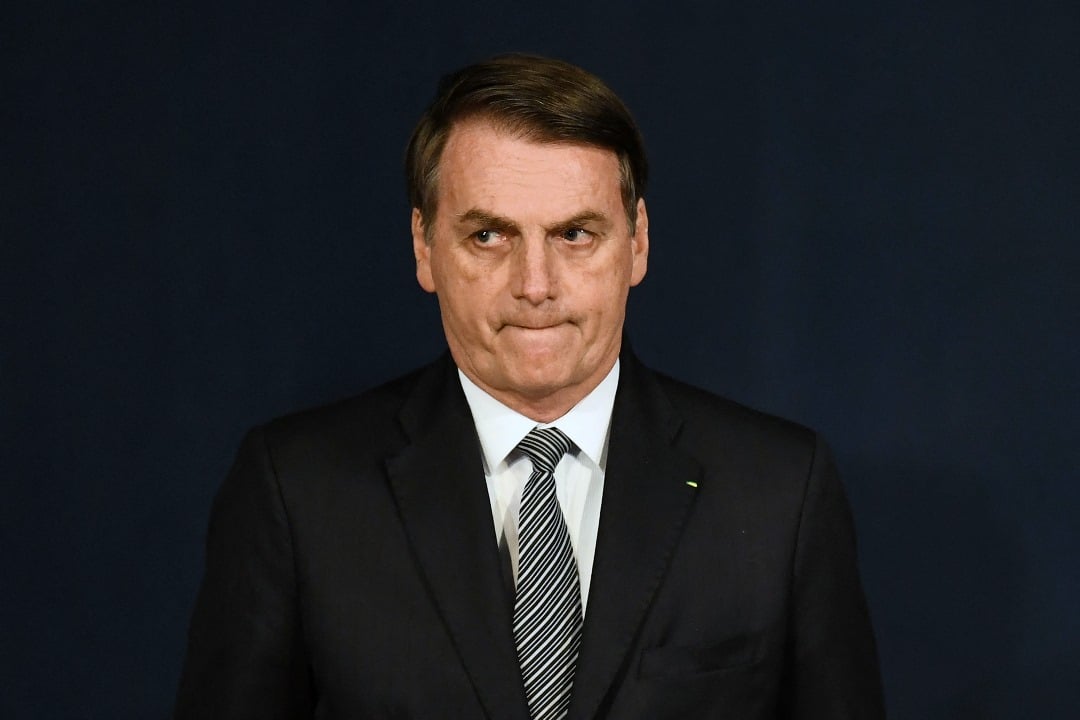
Brazil’s Supreme Court on Tuesday ordered far-right former president Jair Bolsonaro to begin serving a 27-year sentence for plotting a failed coup, after he exhausted all appeals.

The brash former army captain who fired up Brazil’s right and reshaped the country’s politics is ending a divisive career jailed in a small room at police headquarters equipped with a TV, mini-fridge, and air-conditioning.

Bolsonaro, 70, was convicted in September over a scheme to stop Luiz Inácio Lula da Silva from taking office after the 2022 elections that included a plot to kill the veteran leftist.

Prosecutors said the scheme failed only due to a lack of support from military top brass.

The Supreme Court rejected an appeal to his sentence earlier this month and, on Tuesday, ruled the judgement was now final, with no further challenges allowed.

The court also ordered a military tribunal to decide whether Bolsonaro should be stripped of his captain’s rank.

Bolsonaro had been under house arrest until Saturday, when he was detained at police headquarters in the capital, Brasilia, for tampering with his ankle monitor using a soldering iron.

Supreme Court judge Alexandre de Moraes said there had been “very serious indications of a possible attempt to flee” during a planned vigil organised by Bolsonaro’s son outside his home.

The justice pointed to the location of the nearby US embassy and Bolsonaro’s close relationship with US President Donald Trump, suggesting he may have tried to escape to seek political asylum.

During a hearing on Sunday in Brasilia, Bolsonaro stated he “experienced a certain paranoia” due to medications he was on and that he had no intention of fleeing.

Earlier, Bolsonaro had claimed he used a soldering iron on the monitoring bracelet out of “curiosity”.

The court ruled Bolsonaro will remain detained in the officers’ room — a secure space for protected prisoners — where he is currently held in Brasilia. (Punch)
Posted on Leave a comment

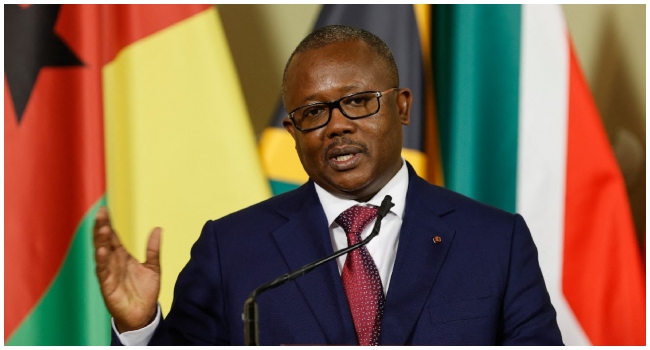
Guinea-Bissau’s President Umaro Embalo arrested amid ‘coup d’etat’

Guinea-Bissau’s President Umaro Embalo says he was arrested while he was inside the presidential palace today.

Also arrested are the chief of staff, General Biague Na Ntan, deputy chief of staff General Mamadou Traore, and the interior minister, Botche Cande.

According to the president, no force was used against him during what he says was a ‘coup d’etat,’ which he says was led by the army chief of staff.

Reporters on the ground say they heard gunfire at the National Electoral Commission headquarters and in the surrounding areas.

The country has been awaiting results from Sunday’s presidential election which President Embalo had said he won 65 per cent of the votes cast.

Embalo’s camp and that of opposition candidate Fernando Dias de Costa have claimed first-round victory in the November 23 presidential election.

Military officers in Guinea-Bissau announced Wednesday they were taking “total control” of the country, the AFP reported.

The officers also suspended the country’s electoral process and closed its borders, three days after the poverty-stricken West African nation’s legislative and presidential elections.

In the early afternoon, General Denis N’Canha, head of the presidential military office, told members of the press that a command “composed of all branches of the armed forces, was taking over the leadership of the country until further notice”.

He read the announcement seated at a table and surrounded by armed soldiers.

The tumultuous West African country has experienced four coups since independence, as well as multiple attempted coups.

N’Canha, in his declaration, claimed to have uncovered a plan to destabilise the country “involving national drug lords” that had included “the introduction of weapons into the country to alter the constitutional order”.

In addition to halting “the entire electoral process”, he said military forces had suspended “all media programming” and imposed a mandatory curfew.

Guinea-Bissau is among the world’s poorest countries and is also a hub for drug trafficking between Latin America and Europe, a trade facilitated by the country’s long history of political instability. (Channels)