
Posted on Leave a comment

Attempted Coup: Senate approves troops deployment to Benin Republic

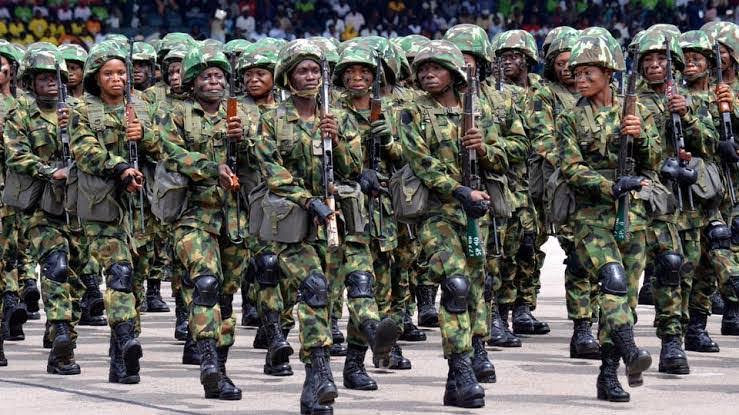
The Senate has approved President Bola Tinubu’s request to deploy Nigerian troops to the Republic of Benin in support of efforts to restore peace and stability following last weekend’s attempted coup.

Senate President Godswill Akpabio announced this on Tuesday during plenary after lawmakers considered the request in the Committee of the Whole in line with section 5, Part 11 of the Constitution.

The Senators unanimously voted in favour of the deployment, giving legislative backing for the regional security intervention.

Akpabio described the decision as a step in the right direction, noting that instability in any neighboring state poses a threat to the entire region.

“An injury to one is an injury to all,” the lawmaker said.

He underscored that it is Nigeria’s responsibility to support its Economic Community of West African States (ECOWAS) partner.

The Senate’s consent letter will be transmitted to President Tinubu immediately.

Tinubu had written to the Senate, seeking their approval for the deployment of troops to the Benin Republic. He said that Nigeria has a historical responsibility to support Benin under the existing Economic Community of West African States (ECOWAS) security frameworks.

According to the President, the crisis demands “urgent external intervention” to help restore stability and prevent further breakdown of order.

Benin Republic’s attempted coup occurred on Sunday, when some military personnel announced the removal of President Patrice Talon. (Channels)
Posted on Leave a comment

Ousted Guinea-Bissau president arrives in Congo

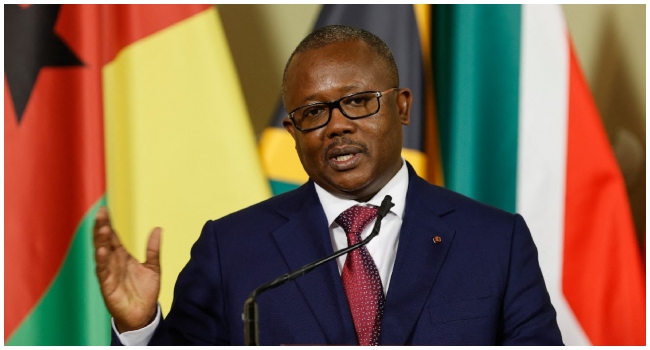
Guinea-Bissau’s ousted president Umaro Sissoco Embalo arrived in the Republic of Congo’s capital Brazzaville on Saturday, days after he was overthrown by the military, Congolese government sources told AFP.

Meanwhile in the capital Bissau, the West African country’s leading opposition party said its headquarters had been “invaded” by a “heavily armed militia”, in the wake of the post-election coup that propelled the army to power.

The military took control of the Portuguese-speaking nation on Wednesday — a day before the provisional results of national elections were due to be announced — and Embalo initially left for neighbouring Senegal.

The true motives for the coup in Guinea-Bissau remain unclear, with speculation and conspiracy theories circulating — including that the coup was carried out with Embalo’s blessing.

“Embalo arrived in Brazzaville late in the morning on a private jet,” a source close to the Congolese government said on condition of anonymity.

A presidency source said Embalo, who had claimed victory in the election, intended to remain in the country, which is also known as Congo-Brazzaville.

Embalo, 53, is rumoured to be close to Congolese President Denis Sassou Nguesso, and has visited the Republic of Congo many times.

After taking power on Wednesday, the officers in charge argued they had taken control to restore order, warning of a plot by the country’s drug barons to destabilise Guinea-Bissau.

The opposition and some experts however suspect that Embalo, in power since 2020, orchestrated the takeover to halt the electoral process.

Those suspicions intensified when the junta named General Horta N’Tam, considered a close ally of the president, to head a transitional administration set to last a year.

On Saturday, the African Party for the Independence of Guinea and Cape Verde (PAIGC), Guinea-Bissau’s powerful opposition party, said in a statement that its headquarters had been “illegally invaded by heavily armed militia groups” in Bissau.

Elsewhere in the capital, minor clashes broke out on Saturday between young people and law enforcement officers in a suburb not far from the headquarters of Fernando Dias, who ran against Embalo and was arrested on the day of the coup.

Some political researchers say a high-level turf war to control illegal drug smuggling networks may have also played a part in Guinea-Bissau’s instability.

Crippling poverty, chaotic administration and political tumult have made Guinea-Bissau a fertile ground for corruption and drug smuggling.

It is a key transit point for Latin American cocaine destined for Europe to the point that some analysts have dubbed it a “narco-state”. (Vanguard)