Two migrants died overnight while trying to cross the Channel to Britain, French authorities said Saturday, adding that some 60 others had been rescued.
The incident occurred south of the beaches of Neuchâtel-Hardelot, when about 100 people were trying to get to the UK on a makeshift boat.
About 60 people “are currently being taken care of”, Isabelle Fradin-Thirode, an official in nearby Montreuil-sur-Mer, said.
The incident brings the number of Channel crossing deaths to at least 25 this year, according to an AFP tally based on official data.
Since January, a record 31,000 migrants have arrived in Britain by crossing the Channel in small boats.
Under a recent Franco-British scheme, the UK can return them after arrival if they are deemed ineligible for asylum, including those who have passed through a “safe country” to reach UK shores.
In return, London will accept an equal number of migrants from France who are likely to have their asylum claims granted. (Punch)
Unidentified drones have flown over Denmark’s military sites, including its biggest base, the latest in a slew of incursions near airports and critical infrastructure this week, which officials have called a “hybrid attack” and hinted at possible Russian involvement.
“The Danish Defence can confirm that drones were observed at several of the Danish Defence’s locations last night. Several capabilities were deployed,” an army spokesperson said on Saturday, without specifying where the drones were observed.
Police said “one to two drones” were observed at about 8:15pm (18:15 GMT) on Friday near and over the Karup military base in western Denmark, the country’s biggest base, which houses all of the armed forces’ helicopters, airspace surveillance, flight school and support functions.
Police spokesman Simon Skelkjaer said they could not comment on where the drones came from, adding: “We didn’t take them down.”
The Karup base shares its runways with the Midtjylland civilian airport, which was briefly closed, though no flights were affected as none were scheduled at that hour, Skelkjaer said.
Mysterious drone observations across the Scandinavian country over the past week have prompted the closure of several airports, including Copenhagen airport, the Nordic region’s busiest, which closed for several hours late on Monday.
Five smaller airports, both civilian and military, were also shut temporarily in the following days.
Drone reports also closed Oslo airport for several hours earlier in the week, following drone incursions in Polish and Romanian territory and the violation of Estonian airspace by Russian fighter jets, which raised tensions in light of Russia’s ongoing invasion of Ukraine.
Danish Prime Minister Mette Frederiksen on Thursday said “over recent days, Denmark has been the victim of hybrid attacks,” referring to unconventional warfare.
Investigators have so far failed to identify those responsible, but Danish Defence Minister Troels Lund Poulsen said on Thursday the flights appeared to be “the work of a professional actor”.
Frederiksen has pointed the finger at Russia, saying it is the “main country that poses a threat to Europe’s security”.
Moscow said on Thursday it “firmly rejects” any suggestion that it was involved in the Danish incidents. In a social media post, its embassy in Copenhagen called them “a staged provocation”.
The drone flights began just days after Denmark announced it would acquire long-range precision weapons for the first time, as Russia would pose a threat “for years to come”.
Defence ministers from about 10 European Union countries agreed on Friday to make a so-called “drone wall” a priority for the bloc.
EU Defence Commissioner Andrius Kubilius said Europe needs to learn from Ukraine and swiftly build anti-drone defences.
“We need to move fast,” Kubilius told AFP news agency in an interview. “And we need to move, taking all the lessons from Ukraine and making this drone wall together with Ukraine.”
Copenhagen will host an EU summit gathering heads of government on Wednesday and Thursday. It said on Friday it had accepted Sweden’s offer of its anti-drone technology to ensure the meeting could go ahead without disruption. (AlJazeera)
Former French president Nicolas Sarkozy has been sentenced to five years in jail after being found guilty of criminal conspiracy in a case related to millions of euros of illicit funds from the late Libyan leader Col Muammar Gaddafi.
The Paris criminal court acquitted him of all other charges, including passive corruption and illegal campaign financing.
The ruling means he will spend time in jail even if he launches an appeal, which Sarkozy says he intends to do.
Speaking after Thursday’s hearing, the 70-year-old, who was president from 2007-12, said the verdict was “extremely serious for rule of law”.
Sarkozy, who claims the case is politically motivated, was accused of using the funds from Gaddafi to finance his 2007 election campaign.
In exchange, the prosecution alleged Sarkozy promised to help Gaddafi combat his reputation as a pariah with Western countries.
Judge Nathalie Gavarino said Sarkozy had allowed close aides to contact Libyan officials with a view to obtaining financial support for his campaign.
But the court ruled that there was not enough evidence to find Sarkozy was the beneficiary of the illegal campaign financing.
He was also ordered to pay a fine of €100,000 ($117,000, £87,000).
There was a shocked intake of breath in court when the judge read out her sentence.
Sarkozy could be sent to prison in Paris in the coming days – a first for a former French president and a humiliating blow for a man who has always protested his innocence in this trial and the other legal cases against him.
“What happened today… is of extreme gravity in regard to the rule of law, and for the trust one can have in the justice system,” Sarkozy said outside the court building.
“If they absolutely want me to sleep in jail, I will sleep in jail, but with my head held high,” he said.
The investigation was opened in 2013, two years after Saif al-Islam, son of the then-Libyan leader, first accused Sarkozy of taking millions of his father’s money for campaign funding.
The following year, Lebanese businessman Ziad Takieddine – who for a long time acted as a middleman between France and the Middle East – said he had written proof that Sarkozy’s campaign bid was “abundantly” financed by Tripoli, and that the €50m (£43m) worth of payments continued after he became president.
Among the others accused in the trial were former interior ministers, Claude Gueant and Brice Hortefeux. The court found Gueant guilty of corruption, among other charges, and Hortefeux was found guilty of criminal conspiracy.
Sarkozy’s wife, Italian-born former supermodel and singer Carla Bruni-Sarkozy, was charged last year with hiding evidence linked to the Gaddafi case and associating with wrongdoers to commit fraud, both of which she denies.
Since losing his re-election bid in 2012, Sarkozy has been targeted by several criminal investigations.
He also appealed against a February 2024 ruling which found him guilty of overspending on his 2012 re-election campaign, then hiring a PR firm to cover it up. He was handed a one-year sentence, of which six months were suspended.
In 2021, he was found guilty of trying to bribe a judge in 2014 and became the first former French president to get a custodial sentence. In December, the Paris appeals court ruled that he could serve his time at home wearing a tag instead of going to jail. (BBC)
Mali, Burkina Faso and Niger, three nations in West Africa run by military governments after coups in recent years, have announced their exit from the International Criminal Court (ICC), referring to it as “neocolonial repression” and accusing the judicial body of selective justice.
In a joint statement on Monday night, the three countries said the ICC had become incapable of prosecuting war crimes, crimes against humanity, crimes of aggression and genocide without elaborating.
“[The ICC is an] instrument of neocolonial repression in the hands of imperialism,” the joint statement read, adding that the countries were seeking more “sovereignty”.
The three states added that they wanted to create “indigenous mechanisms for the consolidation of peace and justice”.
The three countries, which are ruled by military officers, have already left the Economic Community of West African States and instead formed their own bloc known as the Alliance of Sahel States.
Niger, Burkina Faso and Mali have also rolled back defence cooperation with Western powers, most notably their former colonial ruler, France, and opted for closer ties with Russia.
The countries’ withdrawal from the ICC was not unexpected after the coups that brought the military to power in the three states from 2020 to 2023.
Within the three countries, the military governments are fighting armed groups linked to al-Qaeda that control territory and have staged attacks on army posts.
Human Rights Watch and other advocacy groups have accused the fighters, the military and partner forces of Burkina Faso and Mali of possible atrocities.
United Nations experts said in April that the alleged summary executions of several dozen civilians by Malian forces might amount to war crimes.
Moreover, the ICC has had an investigation open in Mali since 2013 over alleged war crimes committed in the northern regions of Gao, Timbuktu and Kidal, which had fallen under the control of armed groups.
Withdrawal from the ICC takes effect one year after the decision is submitted to the UN General Secretariat. (AlJazeera)
Dozens of House Democrats have signed a letter to Donald Trump and secretary of state Marco Rubio, urging the administration to recognize Palestinian statehood.
The letter, led by California Democrat Ro Khanna, has 46 signatures, and lawmakers will send it to the US president on Friday, according to plans first provided to the Guardian.
The letter’s delivery will coincide with the conclusion of the United Nations general assembly. France joined the growing chorus of US allies – including the UK, Canada, Australia and Portugal – and on Monday called for the formal recognition of a Palestinian state.
The conflict has resulted in a catastrophic humanitarian crisis in Gaza, more than 60,000 people killed in the region, and rampant famine. Most recently, the Israeli government has continued its military offensive on Gaza City, killing dozens of Palestinians this week alone. Hundreds of thousands have been displaced from the capital since August.
“Just as the lives of Palestinians must be immediately protected, so too must their rights as a people and nation urgently be acknowledged and upheld,” the letter reads. “We encourage the governments of other countries that have yet to recognize Palestinian statehood, including the United States, to do so as well.”
Joining Khanna in signing the letter are several House progressives including Congressman Greg Casar of Texas, Congresswoman Pramila Jayapal of Washington state and Congressman Maxwell Frost of Florida. In August, the Guardian reported on the draft of the letter, which, at the time, had a little over a dozen signatures.
The letter calls for the adoption of the same framework that French president Emmanuel Macron laid out earlier this year in order to “guarantee Israel’s security”. This includes “the disarmament of and relinquishing of power by Hamas in Gaza”, as well as working with the Palestinian people, the Palestinian Authority, Arab allies, and Israel to ensure this is possible.
Khanna told the Guardian that the letter is a “litmus test” for the Democratic party and any Democratic candidates. He added that lawmakers from his own party that are holding out on signing are “totally out of touch with our base and Democratic voters, they’re totally out of touch with the young generation, and they’re totally out of touch with the world”.
Khanna has been “surprised” by the number of signatures on the letter, and is confident that it will gain even more by Friday. “We’re expecting to cross 50,” he added.
J Street, the prominent pro-Israel advocacy group, will endorse Khanna’s letter. “In light of the explicit efforts being made by the far right in Israel to bury the idea of a Palestinian state, actions like this letter are vital to affirm the global commitment to Palestinian self-determination,” said Jeremy Ben-Ami, the lobby’s president. “From the pro-Israel perspective, a Palestinian state next to Israel is vital if Israel is to remain Jewish and democratic in nature.”
Trump has disagreed publicly with foreign leaders who have pledged to recognize a Palestinian state. During his hour-long address at the UN this week, he called the move a “reward” for acts of terrorism carried out by Hamas, including the 7 October attack.
Senior cabinet members have said that the coordinated recognition is merely superficial. “It’s almost a vanity project for a couple of these world leaders who want to be relevant, but it really makes no difference,” Rubio said in an interview with CBS Mornings.
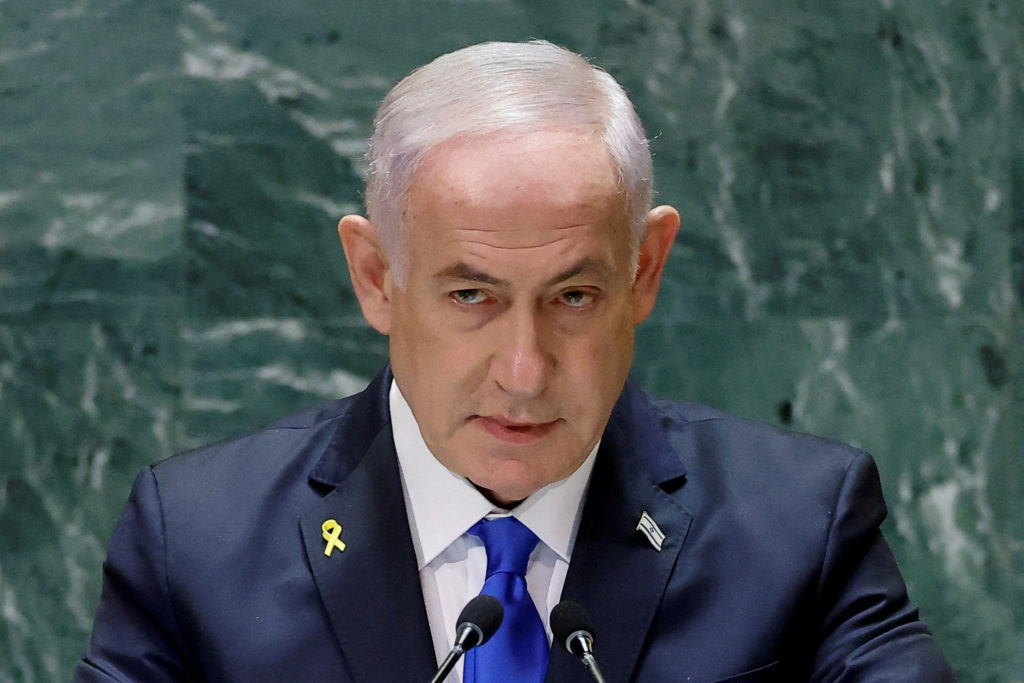
The Israeli prime minister, Benjamin Netanyahu, who is due to address the UN general assembly on Friday, has remained resolute that a Palestinian state is not an option. “The shameful capitulation of some leaders to Palestinian terror does not obligate Israel in any way,” his office said in a statement. “There will be no Palestinian state.”
Khanna is not expecting the letter to force the president’s hand in any way. “I’m not holding my breath as he [Trump] is giving a total blank check to Netanyahu,” the congressman said. But he does hope it will send a “clear” statement.
“America has a new generation that will recognize a Palestinian state when we come to power, that vehemently disagrees with Donald Trump, and that disagrees with how Biden handled the war,” Khanna said.
The United States is currently the only permanent member of the UN security council – which includes Britain, Russia, China and France – who objects to Palestinian statehood, “hurting America’s claim to be the moral leader of the world”, Khanna said.
Meanwhile, in the Senate, a Democratic-led resolution to recognize a demilitarised Palestine state and secure Israel was introduced last week by Jeff Merkley,a senator from Oregon. The first-of-its-kind measure, however, is unlikely to clear the Republican-controlled upper chamber. (Guardian)
President Donald Trump on Monday used the platform of the presidency to promote unproven and in some cases discredited ties between Tylenol, vaccines and autism as his administration announced a wide-ranging effort to study the causes of the complex brain disorder.
“Don’t take Tylenol,” Trump instructed pregnant women around a dozen times during the unwieldy White House news conference, also urging mothers not to give their infants the drug, known by the generic name acetaminophen. He also fueled long-debunked claims that ingredients in vaccines or timing shots close together could contribute to rising rates of autism in the U.S., without providing any medical evidence.
The rambling announcement, which appeared to rely on existing studies rather than significant new research, comes as the Make America Healthy Again movement has been pushing for answers on the causes of autism. The diverse coalition of supporters of Health Secretary Robert Kennedy Jr. includes several anti-vaccine activists who have long spread debunked claims that immunizations are responsible.
The announcement also sheds light on Trump’s own long-held fascination with autism and his trepidation about the childhood vaccine schedule, even as the president has taken pride in his work to disseminate COVID-19 vaccines during his first term.
Medical experts said Trump’s remarks were irresponsible. New York University bioethicist Art Caplan said it was “the saddest display of a lack of evidence, rumors, recycling old myths, lousy advice, outright lies, and dangerous advice I have ever witnessed by anyone in authority.”
Trump announced during the event that the Food and Drug Administration would begin notifying doctors that the use of acetaminophen “can be associated” with an increased risk of autism, but did not immediately provide justification for the new recommendation.
Some studies have raised the possibility that taking acetaminophen during pregnancy might increase the risk of autism — but many others haven’t found that concern, said autism expert David Mandell of the University of Pennsylvania.
One challenge is that it’s hard to disentangle the effects of Tylenol use from the effects of high fevers during pregnancy. Fevers, especially in the first trimester, can increase the risk for miscarriages, preterm birth and other problems, according to the Society for Maternal-Fetal Medicine.
Trump also urged not giving Tylenol to young children, but scientists say that research indicates autism develops in the fetal brain.
Responding to Trump’s warnings, the Society for Maternal-Fetal Medicine said they still recommend Tylenol as an appropriate option to treat fever and pain during pregnancy. The president of the American College of Obstetricians and Gynecologists said Monday that suggestions that Tylenol use in pregnancy causes autism are “irresponsible when considering the harmful and confusing message they send to pregnant patients.”
Trump press secretary Karoline Leavitt said in a statement Monday evening that the administration “does not believe popping more pills is always the answer for better health” and that it “will not be deterred in these efforts as we know millions across America are grateful.”
Tylenol maker Kenvue disputed any link between the drug and autism on Monday and said in a statement that if pregnant mothers don’t use Tylenol when in need, they could face a dangerous choice between suffering fevers or using riskier painkiller alternatives. Shares of Kenvue Inc. fell 7.5% in trading Monday, reducing the company’s market value by about $2.6 billion.
Kennedy announced during the news conference that at Trump’s urging, he was launching a new all-agency effort to uncover all the factors that could be contributing to autism, even as scientists have already been researching that question for decades.
FDA Commissioner Dr. Marty Makary also took the stage to announce it was taking the first steps to try to approve a folic acid metabolite called leucovorin as a treatment option for patients believed to have low levels of folate in the brain. That may include some people with autism.
Leucovorin is used to counteract the side effects of various prescription drugs, including chemotherapy and other high-dose medications that can negatively impact the immune system. It works by boosting folate levels, a form of vitamin B that’s critical to the body’s production of healthy red blood cells.
Women already are told to take folic acid before conception and during pregnancy because it reduces the chances of certain birth defects known as neural tube defects.
In recent years a handful of studies have suggested positive results when high-dose folic acid is used to treat children with autism, with researchers in China and other countries reporting improvements in social skills and other metrics. Those small studies have been quickly embraced by some parts of the autism community online.
The theory is that some, not all, children with autism may not properly metabolize folate, Mandell said. But the recent studies “are really tiny,” he said. To prove an effect, “we would need an independent, large, rigorously controlled randomized trial.”
During the press conference, Trump said he’s a believer in vaccines but claimed without evidence that giving vaccinations close together at the recommended ages has a link to autism. Spacing out shots as he suggests can lead to an increased risk that children become infected with a vaccine-preventable disease before returning for another visit.
Though anti-vaccine activists, including Kennedy, have long suggested a link between vaccines and autism, widespread scientific consensus and decades of studies have firmly concluded there isn’t one.
Autism is not a disease but a complex developmental condition that affects different people in different ways. It can include delays in language, learning or social and emotional skills. For some people, profound autism means being nonverbal and having intellectual disabilities, but the vast majority of people with autism experience far milder effects.
The disorder affects 1 in 31 U.S. children today, a sharp rise from just a few years ago, according to the CDC. Experts say the increase is mainly due to a new definition for the disorder that now includes mild cases on a “spectrum” and better diagnoses. They say there is no single cause to the disorder and say the rhetoric appears to ignore and undermine decades of science into the genetic and environmental factors that can play a role.
The announcement is the latest step the administration, driven by Kennedy and his supporters, has taken to reshape America’s public health landscape.
Beyond cutbacks at federal health agencies, the Centers for Disease Control and Prevention has been roiled by disagreements over Kennedy’s vaccine policies. An influential immunization panel stocked by Kennedy with figures who have been critical of vaccines last week changed shot guidance for COVID-19 and other diseases. (JapanToday)
U.S. President Donald Trump argued for lower levels of global migration and urged a turn away from climate change policies on Tuesday in a combative, wide-ranging speech to the U.N. General Assembly that leveled scathing criticism of world leaders.
The 56-minute speech was a rebuke to the world body and a return to form for Trump, who routinely bashed the U.N. during his first term as president. Leaders gave him polite applause when he exited the chamber.
He rejected moves by allies to endorse a Palestinian state amid Israel’s latest Gaza offensive and urged European nations to adopt the same set of economic measures he is proposing against Russia to force an end to the war in Ukraine.
Much of his speech was dominated by two of his biggest grievances: immigration and climate change.
Trump offered his U.S. immigration crackdown as a case study for what other world leaders should do to curb mass migration that he says is altering the fabric of nations. Human rights advocates argue the migrants are seeking better lives.
“I’m really good at this stuff,” Trump said. “Your countries are going to hell.”
Trump, who met last week with Britain’s environmentally conscious King Charles at Windsor Castle, called climate change a “con job” and urged a return to a greater reliance on fossil fuels. Scientists say climate change caused by humans is real.
“Immigration and their suicidal energy ideas will be the death of Western Europe,” Trump said.
Trump’s administration plans to call for sharply narrowing the right to asylum at the United Nations later this month, Reuters reported last week, as it seeks to undo the post-World War II framework around humanitarian protection.
Trump sprinkled into his speech a litany of false and misleading statements, such as that London Mayor Sadiq Khan wants to impose “sharia law” on London and that “inflation has been defeated” in the United States six days after the Federal Reserve said inflation has gone up.
European powers have spent months trying to stabilize their relationship with the U.S. leader with a focus on winning U.S. support to end the war in Ukraine. At a NATO summit in June, Trump and European leaders lavished each other with praise.
But in Tuesday’s speech, Trump mocked NATO allies for not shutting down purchases of Russian oil and said he would impose strong economic measures against Moscow.
“They’re funding the war against themselves. Who the hell ever heard of that one? In the event that Russia is not ready to make a deal to end the war, then the United States is fully prepared to impose a very strong round of powerful tariffs,” he said.
“But for those tariffs to be effective, European nations, all of you are gathered here right now, would have to join us in adopting the exact same measures.”
He did not detail the measures, but he has been considering a package that includes sanctions against countries that do business with Russia, like India and China. The main buyers of Russian oil in Europe are Hungary, Slovakia and Turkey.
Trump later held talks with Ukrainian President Volodymyr Zelenskiy, who pressed for more U.S. support to resist Russian advances. Trump, asked by reporters if NATO countries should shoot down Russian aircraft if they enter their airspace, said, “Yes, I do.”
On the Israel-Palestinian conflict, Trump rejected efforts by world leaders to embrace a Palestinian state, a move that faces fierce resistance from Israel.
“The rewards would be too great for Hamas terrorists, for their atrocities,” he said, repeating his call for the return of hostages taken by the Palestinian militant group.
Trump said the United States wants a ceasefire-for-hostages deal that would see the return of all remaining hostages, alive and dead.
“We have to stop the war in Gaza immediately. We have to immediately negotiate peace,” he said.
He was to discuss the future of Gaza during afternoon talks with several Gulf leaders.
Trump, who has cast himself as a peacemaker in a bid to win the Nobel Peace Prize, complained that the United Nations did not support his efforts to end conflicts around the world.
He added to his complaints with personal grievances about the U.N. infrastructure, saying he and first lady Melania Trump were briefly marooned on a malfunctioning U.N. escalator and that his teleprompter was not initially working.
“These are the two things I got from the United Nations – a bad escalator and a bad teleprompter,” Trump said, noting that Melania Trump nearly fell when the escalator stopped abruptly. (JapanToday)
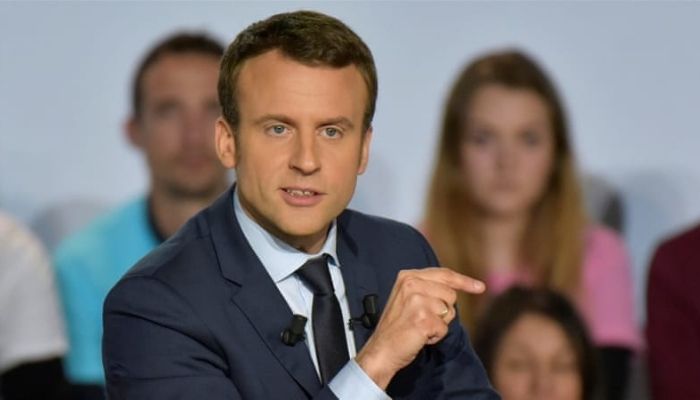
Emmanuel Macron had to walk half an hour by foot through New York after his speech to the United Nations on recognising Palestine as a state.
Video footage shows him getting out of his car to talk to police officers after they stop his vehicle to make way for the expected arrival of the motorcade of Donald Trump, the US president.
The footage, which was captured by a reporter from the social media outlet Brut, appears to show the French president saying he needs to get to his country’s consulate.
“I’m sorry, president, I’m really sorry, everything has been frozen, there’s a motorcade coming right now,” an officer tells Macron.
The president then looks out over the empty street and replies: “If you don’t see it, let me cross. I’ll negotiate with you.”
Macron, who remains stuck behind a metal barrier, takes out his phone and appears to call Trump directly. Leaning on the barrier, he says, laughingly: “How are you? Guess what? I’m waiting in the street because everything is frozen for you.”
Macron later appears to be allowed through on foot but not in his car. Still on his phone, he proceeds to stride off down the street, past shoppers and pedestrians. The reporter from Brut said Macron walked for about 30 minutes with his security detail. He stopped and posed with passersby who asked for photographs, including one encounter with a man who kissed him on the forehead.
“The time has come to end the war in Gaza, the massacres and the death,” Macron had said during his opening speech to a special summit at the UN on Monday evening. “The time has come to do justice for the Palestinian people and thus to recognise the state of Palestine in Gaza, the West Bank and Jerusalem.”
Announcing France’s official recognition of Palestine, the president set out a plan for a UN-mandated international stabilisation force in postwar Gaza that is expected to find support in many countries but not in Israel or the US. (Guardian)
The leaders of six countries, including France, have moved to recognise Palestinian statehood at a high-level summit ahead of the annual United Nations General Assembly (UNGA) meeting in New York.
Alongside France, which co-convened the meeting with Saudi Arabia on Monday in New York, Andorra, Belgium, Luxembourg, Malta and Monaco said they were recognising a Palestinian state.
Leaders from Australia, Canada, Portugal and the United Kingdom, which formally made the move to recognise Palestine a day earlier, also spoke at the meeting.
“We have gathered here because the time has come,” Emmanuel Macron said at the summit convened to revive the long-delayed two-state solution to end the Israel-Palestine conflict.
“It falls on us, this responsibility, to do everything in our power to preserve the possibility of a two-state solution,” Macron said.
“Today, I declare that France recognises the state of Palestine,” he said.
The additional countries recognising Palestine now join some 147 of the 193 UN member states that had already formally recognised Palestinian statehood as of April this year.
With more than 80 percent of the international community now recognising the state of Palestine, diplomatic pressure has ramped up on Israel as it continues its genocidal war on Gaza, where more than 65,300 Palestinians have been killed and the has been enclave turned into rubble.
Spain, Norway and Ireland recognised Palestinian statehood last year, with Madrid also imposing sanctions on Israel for its war on Gaza.
Spanish Prime Minister Pedro Sanchez told the summit on Monday that a two-state solution was not possible “when the population of one of those two states is the victim of a genocide”.
“The Palestinian people are being annihilated, [so] in the name of reason, in the name of international law and in the name of human dignity, we have to stop this slaughter,” Sanchez said.
Macron, in his speech to the summit, also outlined a framework for the creation of a “renewed Palestinian Authority”. The post-war framework envisages an International Stabilisation Force (ISF) that would assist in preparing the Palestinian Authority (PA) to take over governance in Gaza.
PA President Mahmoud Abbas commended the countries that had recognised Palestine. He made his statement to the conference by video because he was denied a visa by the administration of US President Donald Trump to attend the UNGA this week.
“We call on those that have not yet done so to do so to follow suit”, Abbas said, adding that the PA also demanded “support for Palestine’s full membership in the United Nations”.
Israel and the US, which are becoming increasingly isolated internationally on the issue, boycotted the summit, with Israel’s UN ambassador, Danny Danon, describing the event as a “circus”.
Although the vast majority of UN member states now recognise Palestinian statehood, new UN member states must have the support of the UN Security Council, where the US has used its veto to block Palestine from becoming a full UN member state.
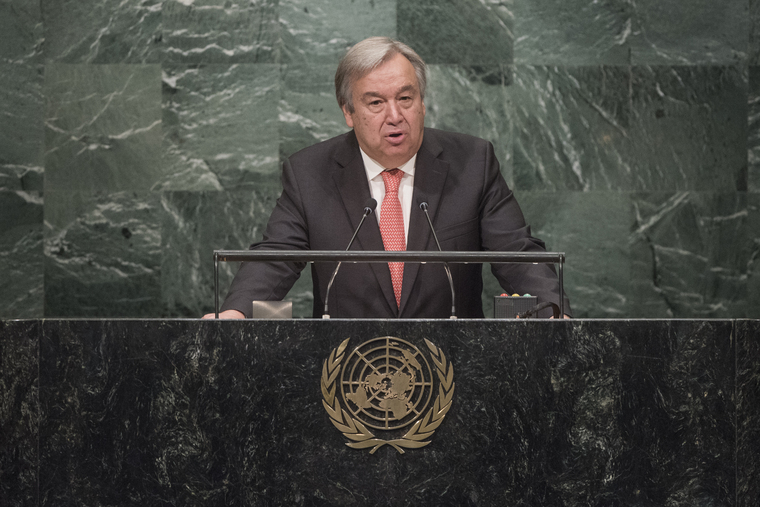
Speaking at the summit, UN Secretary-General Antonio Guterres reiterated his support for the two-state solution, framing it as the only viable path towards peace after years of failed negotiations and ongoing violence.
Guterres said that statehood for Palestinians “is a right, not a reward”, rejecting US and Israeli claims that it was a reward for Hamas.
Saudi Arabia’s foreign minister, Prince Faisal bin Farhan Al Saud, thanked Macron and the UN chief for their efforts towards a two-state solution, which he said is “the only way to achieve just and lasting peace”.
He said the conference comes at a time when “the Israeli occupation authorities continue their aggression and their brutal crimes” against Palestinians in Gaza.
Israel also continues its “violations in the West Bank, and its repeated attacks on Arab and Muslim countries, with the most recent attack on Qatar”, he said.
“These actions underline Israel’s insistence on continuing aggressive practices that threaten regional and international peace and stability and undermine efforts of peace in the region,” he added. (AlJazeera)
US President Donald Trump early Thursday said he would designate “Antifa” – a shorthand term for “anti-fascist” used by Trump allies to describe diffuse left-wing groups – as “a major terrorist organization”.
Trump, who is on a state visit to the United Kingdom, made the announcement in a social media post, calling Antifa a “SICK, DANGEROUS, RADICAL LEFT DISASTER”. He also said he will be “strongly recommending” that funders of antifa be investigated.
Trump and his supporters have, without evidence, ascribed blame to Antifa for various actions Trump dislikes, from violence against police to the US Capitol riot on January 6, 2021.
It’s unclear how the administration would label what is effectively a decentralized ideology as a terrorist organization, and the White House on Wednesday did not immediately offer details.
Trump’s previous FBI director, Christopher Wray, said in testimony in 2020 that Antifa is an ideology, not an organization, and lacks the hierarchical structure that would usually allow it to be designated as a terror group by the federal government.
While federal law enforcement includes combating domestic terrorism under its purview, the United States does not have a list of designated domestic terrorist organizations.
Senior White House official Stephen Miller has vowed the administration would dismantle an alleged “vast domestic terror movement” that he linked to the killing of right-wing activist Charlie Kirk. The political leanings of the suspect in Kirk’s death remain unclear.
After Trump’s post, Senator Bill Cassidy, R-La., praised the announcement, saying: “Antifa seized upon a movement of legitimate grievances to promote violence and anarchy, working against justice for all. The President is right to recognize the destructive role of Antifa by designating them domestic terrorists.”
Cassidy and Senator Ted Cruz, R-Texas, introduced a July 2019 resolution in the Senate to condemn “Antifa” and designate it a domestic terror organization. (France24)