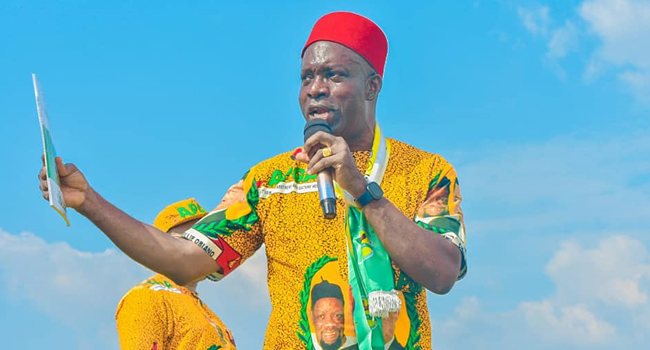
Anambra State Governor, Prof. Chukwuma Soludo, has outlined the conditions under which he could consider the release of native doctors currently standing trial in the state.
The detained individuals — Chigozie Nwangu (popularly known as Akwa Okuko Tiwara Aki) from Oba, Eke Hit from Okija, and Onyeze Jesus from Nkpor — were arrested in February on allegations of promoting get-rich-quick practices, preparing charms for suspected criminals, and misleading youths into believing in wealth without hard work.
Responding, Soludo emphasized that the matter was now in court and beyond his unilateral control.
“You are asking for the release of Akwa Okuko, but I want to say that there is a process. There is a process for me to follow, and there is a process for the court to follow too. Where we are now is the process of the court,” Soludo said.
He acknowledged the concerns of the youths but cautioned that the actions of the detained individuals had negatively influenced young people.
“What we should be praying for is a speedy trial. If he is found guilty and convicted, after that, your leaders can meet with me, and we can discuss the possibility of a pardon. But until the judicial process is concluded, my hands are tied,” he added.
The governor further urged the youths to support efforts to rid Oba and other communities of social vices such as drug abuse, kidnapping, and the pursuit of “fast money,” stressing that the state government is committed to restoring values of hard work and integrity. (Vanguard)
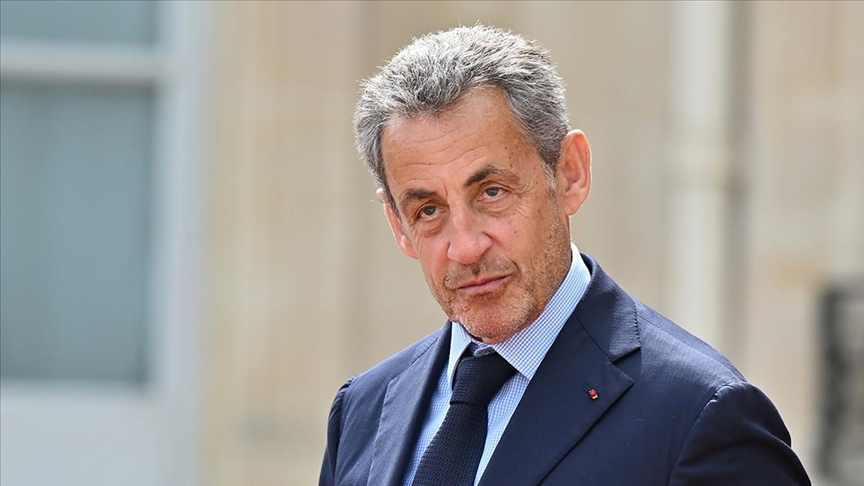
Former French president Nicolas Sarkozy has been sentenced to five years in jail after being found guilty of criminal conspiracy in a case related to millions of euros of illicit funds from the late Libyan leader Col Muammar Gaddafi.
The Paris criminal court acquitted him of all other charges, including passive corruption and illegal campaign financing.
The ruling means he will spend time in jail even if he launches an appeal, which Sarkozy says he intends to do.
Speaking after Thursday’s hearing, the 70-year-old, who was president from 2007-12, said the verdict was “extremely serious for rule of law”.
Sarkozy, who claims the case is politically motivated, was accused of using the funds from Gaddafi to finance his 2007 election campaign.
In exchange, the prosecution alleged Sarkozy promised to help Gaddafi combat his reputation as a pariah with Western countries.
Judge Nathalie Gavarino said Sarkozy had allowed close aides to contact Libyan officials with a view to obtaining financial support for his campaign.
But the court ruled that there was not enough evidence to find Sarkozy was the beneficiary of the illegal campaign financing.
He was also ordered to pay a fine of €100,000 ($117,000, £87,000).
There was a shocked intake of breath in court when the judge read out her sentence.
Sarkozy could be sent to prison in Paris in the coming days – a first for a former French president and a humiliating blow for a man who has always protested his innocence in this trial and the other legal cases against him.
“What happened today… is of extreme gravity in regard to the rule of law, and for the trust one can have in the justice system,” Sarkozy said outside the court building.
“If they absolutely want me to sleep in jail, I will sleep in jail, but with my head held high,” he said.
The investigation was opened in 2013, two years after Saif al-Islam, son of the then-Libyan leader, first accused Sarkozy of taking millions of his father’s money for campaign funding.
The following year, Lebanese businessman Ziad Takieddine – who for a long time acted as a middleman between France and the Middle East – said he had written proof that Sarkozy’s campaign bid was “abundantly” financed by Tripoli, and that the €50m (£43m) worth of payments continued after he became president.
Among the others accused in the trial were former interior ministers, Claude Gueant and Brice Hortefeux. The court found Gueant guilty of corruption, among other charges, and Hortefeux was found guilty of criminal conspiracy.
Sarkozy’s wife, Italian-born former supermodel and singer Carla Bruni-Sarkozy, was charged last year with hiding evidence linked to the Gaddafi case and associating with wrongdoers to commit fraud, both of which she denies.
Since losing his re-election bid in 2012, Sarkozy has been targeted by several criminal investigations.
He also appealed against a February 2024 ruling which found him guilty of overspending on his 2012 re-election campaign, then hiring a PR firm to cover it up. He was handed a one-year sentence, of which six months were suspended.
In 2021, he was found guilty of trying to bribe a judge in 2014 and became the first former French president to get a custodial sentence. In December, the Paris appeals court ruled that he could serve his time at home wearing a tag instead of going to jail. (BBC)

 English