Lagos State Governor, Babajide Sanwo-Olu, on Thursday announced a N200 million support package for autism advocacy and caregiver development, as 16-year-old autistic cyclist Kanyeyachukwu Tagbo-Okeke added another Guinness World Record to his achievements.
The announcement was made at Lagos House, Marina, during an event marking World Autism Awareness Day 2026.
Kanyeyachukwu was celebrated for completing a long-distance cycling journey that began in Enugu on March 14.
Sanwo-Olu said N100m would go to autism-focused organisations under the Lagos State Office for Disability Affairs, while the remaining N100m would support the Kanyeyachukwu Foundation.
“I will give N100 million to all autism-focused groups under LASODA and an additional N100 million from the Lagos State Government to the foundation. This is not just about one child. It is about using this platform to touch many others who do not have the same opportunity.
“We must train and develop real caregivers with the knowledge and skills required to support our children with special needs. Once we do that, half of the problem is solved,” the governor added.
He described the funds as initial support to strengthen advocacy, expand care access and train professional caregivers.
During the event, a Guinness World Records representative certified Kanyeyachukwu as the youngest person to cycle 100 miles, adding to his record last year for the largest painting on canvas unveiled in Abuja.
Sanwo-Olu commended the teenager for changing perceptions of autism.
“Your advocacy has helped many people to see autism not as a limitation, but as a different way of expressing and contributing to our world,” he said.
Kanyeyachukwu’s father, Tagbo Okeke, said the cycling journey passed through multiple states over 15 to 16 days without incident.
He thanked the government and other supporters for guidance and safety measures.
LASODA General Manager, Adenike Oyetunde, said the event highlighted the state’s commitment to inclusivity and improving the lives of people with autism.
“Impossibility is truly a myth. Our core responsibility is to protect the interests and needs of persons with disabilities. We strive to ensure Lagos State is truly inclusive, and our goal is to ensure that the lives of people with autism are optimised,” she said. (Punch)
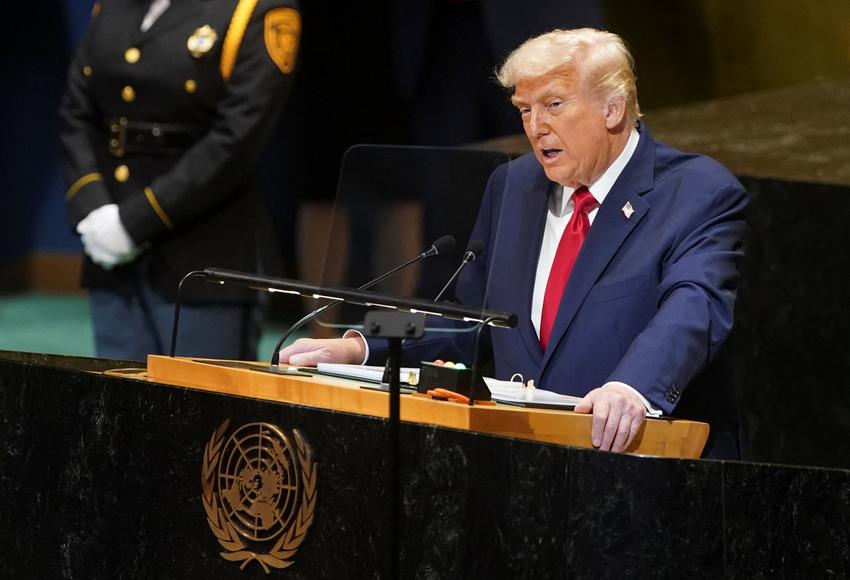
President Donald Trump on Monday used the platform of the presidency to promote unproven and in some cases discredited ties between Tylenol, vaccines and autism as his administration announced a wide-ranging effort to study the causes of the complex brain disorder.
“Don’t take Tylenol,” Trump instructed pregnant women around a dozen times during the unwieldy White House news conference, also urging mothers not to give their infants the drug, known by the generic name acetaminophen. He also fueled long-debunked claims that ingredients in vaccines or timing shots close together could contribute to rising rates of autism in the U.S., without providing any medical evidence.
The rambling announcement, which appeared to rely on existing studies rather than significant new research, comes as the Make America Healthy Again movement has been pushing for answers on the causes of autism. The diverse coalition of supporters of Health Secretary Robert Kennedy Jr. includes several anti-vaccine activists who have long spread debunked claims that immunizations are responsible.
The announcement also sheds light on Trump’s own long-held fascination with autism and his trepidation about the childhood vaccine schedule, even as the president has taken pride in his work to disseminate COVID-19 vaccines during his first term.
Medical experts said Trump’s remarks were irresponsible. New York University bioethicist Art Caplan said it was “the saddest display of a lack of evidence, rumors, recycling old myths, lousy advice, outright lies, and dangerous advice I have ever witnessed by anyone in authority.”
Trump announced during the event that the Food and Drug Administration would begin notifying doctors that the use of acetaminophen “can be associated” with an increased risk of autism, but did not immediately provide justification for the new recommendation.
Some studies have raised the possibility that taking acetaminophen during pregnancy might increase the risk of autism — but many others haven’t found that concern, said autism expert David Mandell of the University of Pennsylvania.
One challenge is that it’s hard to disentangle the effects of Tylenol use from the effects of high fevers during pregnancy. Fevers, especially in the first trimester, can increase the risk for miscarriages, preterm birth and other problems, according to the Society for Maternal-Fetal Medicine.
Trump also urged not giving Tylenol to young children, but scientists say that research indicates autism develops in the fetal brain.
Responding to Trump’s warnings, the Society for Maternal-Fetal Medicine said they still recommend Tylenol as an appropriate option to treat fever and pain during pregnancy. The president of the American College of Obstetricians and Gynecologists said Monday that suggestions that Tylenol use in pregnancy causes autism are “irresponsible when considering the harmful and confusing message they send to pregnant patients.”
Trump press secretary Karoline Leavitt said in a statement Monday evening that the administration “does not believe popping more pills is always the answer for better health” and that it “will not be deterred in these efforts as we know millions across America are grateful.”
Tylenol maker Kenvue disputed any link between the drug and autism on Monday and said in a statement that if pregnant mothers don’t use Tylenol when in need, they could face a dangerous choice between suffering fevers or using riskier painkiller alternatives. Shares of Kenvue Inc. fell 7.5% in trading Monday, reducing the company’s market value by about $2.6 billion.
Kennedy announced during the news conference that at Trump’s urging, he was launching a new all-agency effort to uncover all the factors that could be contributing to autism, even as scientists have already been researching that question for decades.
FDA Commissioner Dr. Marty Makary also took the stage to announce it was taking the first steps to try to approve a folic acid metabolite called leucovorin as a treatment option for patients believed to have low levels of folate in the brain. That may include some people with autism.
Leucovorin is used to counteract the side effects of various prescription drugs, including chemotherapy and other high-dose medications that can negatively impact the immune system. It works by boosting folate levels, a form of vitamin B that’s critical to the body’s production of healthy red blood cells.
Women already are told to take folic acid before conception and during pregnancy because it reduces the chances of certain birth defects known as neural tube defects.
In recent years a handful of studies have suggested positive results when high-dose folic acid is used to treat children with autism, with researchers in China and other countries reporting improvements in social skills and other metrics. Those small studies have been quickly embraced by some parts of the autism community online.
The theory is that some, not all, children with autism may not properly metabolize folate, Mandell said. But the recent studies “are really tiny,” he said. To prove an effect, “we would need an independent, large, rigorously controlled randomized trial.”
During the press conference, Trump said he’s a believer in vaccines but claimed without evidence that giving vaccinations close together at the recommended ages has a link to autism. Spacing out shots as he suggests can lead to an increased risk that children become infected with a vaccine-preventable disease before returning for another visit.
Though anti-vaccine activists, including Kennedy, have long suggested a link between vaccines and autism, widespread scientific consensus and decades of studies have firmly concluded there isn’t one.
Autism is not a disease but a complex developmental condition that affects different people in different ways. It can include delays in language, learning or social and emotional skills. For some people, profound autism means being nonverbal and having intellectual disabilities, but the vast majority of people with autism experience far milder effects.
The disorder affects 1 in 31 U.S. children today, a sharp rise from just a few years ago, according to the CDC. Experts say the increase is mainly due to a new definition for the disorder that now includes mild cases on a “spectrum” and better diagnoses. They say there is no single cause to the disorder and say the rhetoric appears to ignore and undermine decades of science into the genetic and environmental factors that can play a role.
The announcement is the latest step the administration, driven by Kennedy and his supporters, has taken to reshape America’s public health landscape.
Beyond cutbacks at federal health agencies, the Centers for Disease Control and Prevention has been roiled by disagreements over Kennedy’s vaccine policies. An influential immunization panel stocked by Kennedy with figures who have been critical of vaccines last week changed shot guidance for COVID-19 and other diseases. (JapanToday)
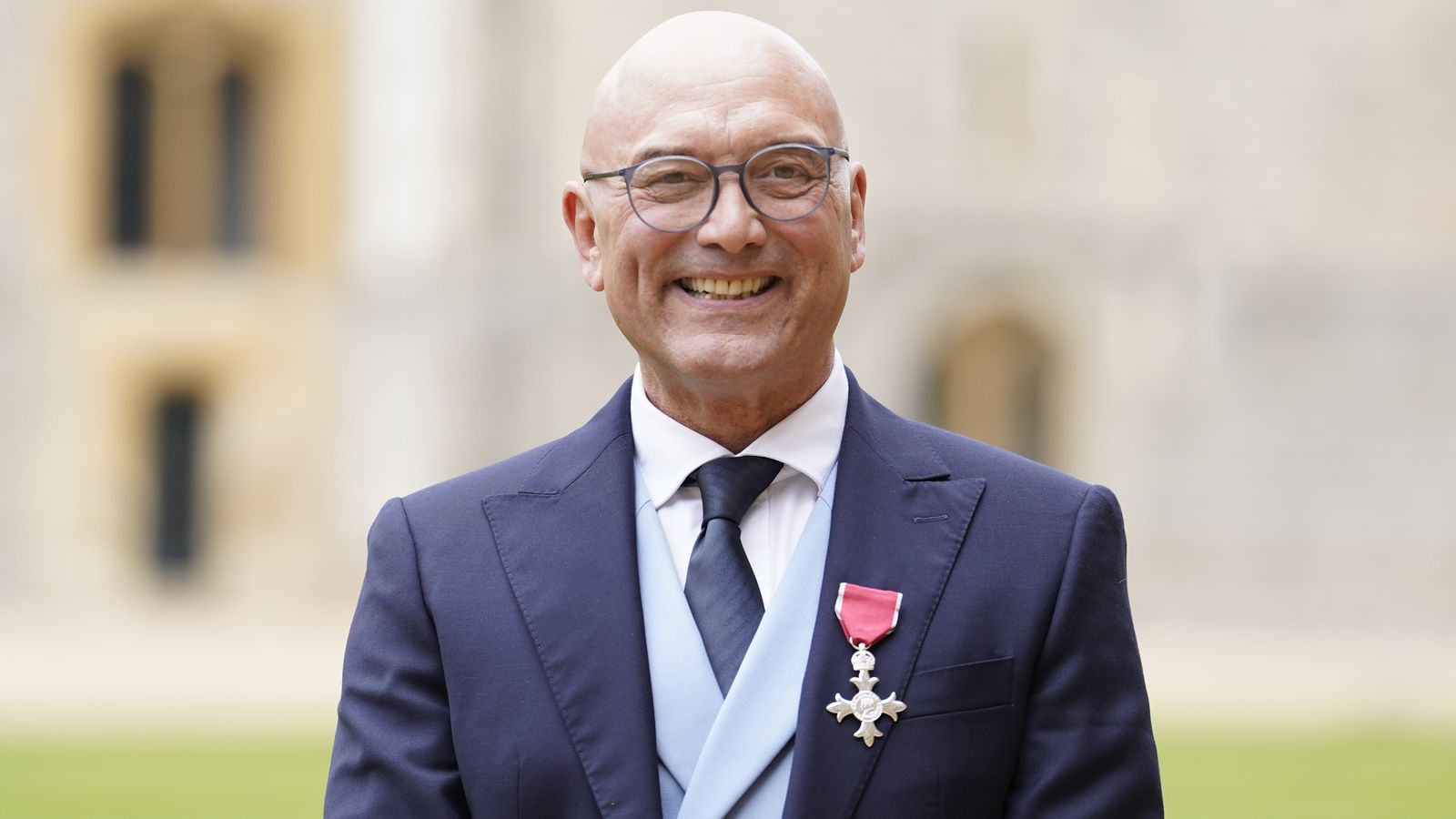
Former MasterChef host Gregg Wallace is facing criticism from charities and groups working with disabled people after he appeared to link claims of misconduct he is facing to his autism diagnosis.
Several dozen people have come forward to BBC News with allegations about Wallace, including inappropriate sexual comments, touching and groping, which he denies.
In a statement this week, the presenter defended himself and also said he had recently been diagnosed with autism, but that TV bosses had failed to “investigate my disability” or “protect me from what I now realise was a dangerous environment”.
One charity told BBC News that autism is “not a free pass for bad behaviour”, while other groups warned that such remarks risked stigmatising the autistic community.
Wallace has been sacked as MasterChef host, and a report into the accusations is expected to be published shortly. He has said it has cleared him of “the most serious and sensational allegations”.
On Tuesday, Wallace wrote on Instagram: “My neurodiversity, now formally diagnosed as autism, was suspected and discussed by colleagues across countless seasons of MasterChef.
“Yet nothing was done to investigate my disability or protect me from what I now realise was a dangerous environment for over 20 years.”
The Telegraph reported on Thursday that he plans to sue the BBC and the makers of MasterChef for discrimination on the grounds of his autism following his sacking.
And the Times reported friends of Wallace as saying his autism means he can’t wear underwear, and that his condition was partly to blame for his alleged inappropriate behaviour.
Speaking to BBC News, Seema Flower, founder of disabilities consultancy Blind Ambition, said there was “no excuse” for being inappropriate to people in society.
“Where does it leave us if we use autism as excuse to behave in whatever way we like?” she asked.
Her comments were echoed by Emily Banks, founder of neurodiversity training body Enna.
“To be clear: being autistic is never an excuse for misconduct. It doesn’t absolve anyone of responsibility, and it certainly doesn’t mean you can’t tell the difference between right and wrong.”
Dan Harris, who runs the charity Neurodiversity in Business and is himself autistic, said people like him “may miss social cues sometimes”.
“But autism is not a free pass for bad behaviour,” he added.
“Comments like this stigmatise us and add an unfortunate negative focus on our community.”
Last year, the charity Ambitious About Autism dropped Wallace as an ambassador in the wake of the original claims against him.
The comments have also sparked debate online and on radio phone-ins.
On BBC Radio 2’s Jeremy Vine Show, Jessie Hewitson, Director of NeuroUniverse, said people with autism “have been stereotyped since the dawn of time”.
She said she worried that remarks like this risk “forming a connection in peoples’ minds – either that autistic people behave inappropriately in the workplace or that we cannot take personal responsibility”.
But on social media, many people responded positively to Wallace’s post and sent him supportive messages.
And on BBC Radio 5 Live’s Nicky Campbell Show, which dedicated an hour to the topic on Thursday, some callers were sympathetic.
One called Danielle, who is autistic, said people with the condition “can misread situations quite often”.
“I think growing up undiagnosed, you grow up thinking everything you’re doing is wrong because you’re different and you then internalise a lot of that so you’re very oversensitive as well,” she said.
Another caller, Jake, said he thought Wallace should have had support a long time ago.
“You’ve got a man here who’s clearly out of touch, he’s been out of touch for a long time, he’s had nobody putting him back in line, whether that’s an employer, whether that’s a friend, whether that’s anybody, and at the moment that’s what he needs.
“He needs some compassion to get him back where he needs to be and I feel for his mental health.” (BBC)


 English