
Posted on Leave a comment

BBC apologises to Trump over Panorama edit but refuses to pay compensation

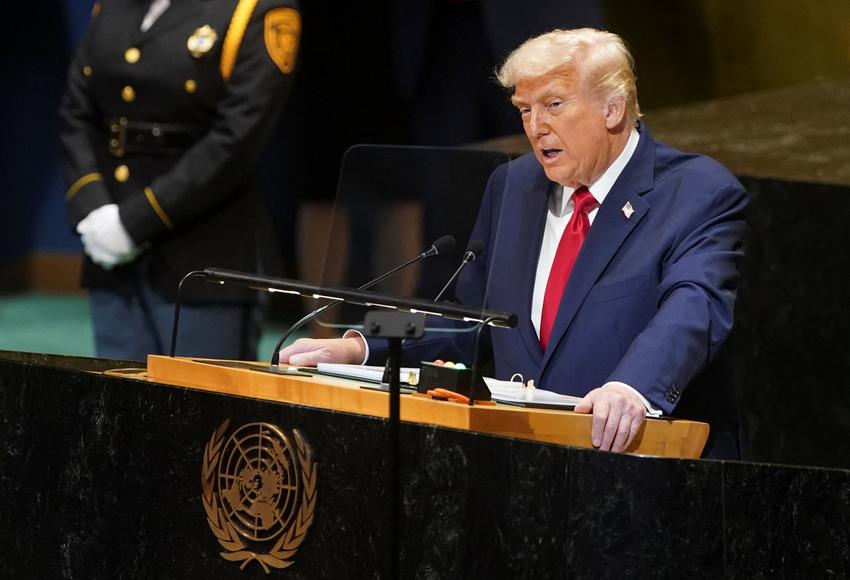
The BBC has apologised to US President Donald Trump for a Panorama episode that spliced parts of his 6 January 2021 speech together, but rejected his demands for compensation.

The corporation said the edit had given “the mistaken impression that President Trump had made a direct call for violent action” and said it would not show the 2024 programme again.

Lawyers for Trump have threatened to sue the BBC for $1bn (£759m) in damages unless the corporation issues a retraction, apologises and compensates him.

Culture Secretary Lisa Nandy told BBC Breakfast she was confident the corporation was “gripping this with the seriousness that it demands”, adding her role was to ensure “the highest standards are upheld”.

But she also told BBC Radio 4’s Today programme that the BBC’s editorial standards and guidelines were “in some cases not robust enough and in other cases not consistently applied”, adding that there would need to be people “at a very senior level with a journalistic background”.

Political appointments to the corporation’s board would be examined in the BBC’s charter review, she said in response to a question asking if member Sir Robbie Gibb, a former political adviser to Theresa May, had overstepped his remit and weighed into politics.

While this was a matter for the board and its chairman, she said, those appointments “damaged confidence and trust in the BBC’s impartiality”.
Liberal Democrats leader Sir Ed Davey had urged the prime minister on Thursday to “get on the phone to Trump” to put a stop to his lawsuit threat and “defend the impartiality and independence of the BBC”.

The fallout from the scandal led to the resignations of BBC director general Tim Davie and head of news Deborah Turness on Sunday.

BBC News has approached the White House for comment.

The apology comes hours after a second similarly edited clip, broadcast on Newsnight in 2022, was revealed by the Daily Telegraph.

In its Corrections and Clarifications section, published on Thursday evening, the BBC said the Panorama programme had been reviewed after criticism of how Trump’s speech had been edited.

The BBC had been given a deadline of 22:00 GMT (17:00 EST) on Friday to respond.

“We accept that our edit unintentionally created the impression that we were showing a single continuous section of the speech, rather than excerpts from different points in the speech, and that this gave the mistaken impression that President Trump had made a direct call for violent action,” the statement said.

Lawyers for the BBC have written to President Trump’s legal team in response to a letter received on Sunday, a BBC spokesperson said.

“BBC chair Samir Shah has separately sent a personal letter to the White House making clear to President Trump that he and the corporation are sorry for the edit of the president’s speech on 6 January 2021, which featured in the programme,” they said.

They added: “While the BBC sincerely regrets the manner in which the video clip was edited, we strongly disagree there is a basis for a defamation claim.”

In Trump’s speech he said: “We’re going to walk down to the Capitol, and we’re going to cheer on our brave senators and congressmen and women.”

More than 50 minutes later in the speech, he said: “And we fight. We fight like hell.”

In the Panorama programme the clip shows him as saying: “We’re going to walk down to the Capitol… and I’ll be there with you. And we fight. We fight like hell.”

Speaking to Fox News, Trump said his speech had been “butchered” and the way it was presented had “defrauded” viewers.

The BBC received the letter from Trump’s lawyers on Sunday. It demands a “full and fair retraction” of the documentary, an apology, and that the BBC “appropriately compensate President Trump for the harm caused”.

In its letter to Trump’s legal team, the BBC sets out five main arguments for why it does not think it has a case to answer.

First it says the BBC did not have the rights to, and did not, distribute the Panorama episode on its US channels.

When the documentary was available on BBC iPlayer, it was restricted to viewers in the UK.

Secondly, it says the documentary did not cause Trump harm, as he was re-elected shortly after.

Thirdly, it says the clip was not designed to mislead, but just to shorten a long speech, and that the edit was not done with malice.

Fourthly, it says the clip was never meant to be considered in isolation. Rather, it was 12 seconds within an hour-long programme, which also containedlots of voices in support of Trump.

Finally, an opinion on a matter of public concern and political speech is heavily protected under defamation laws in the US.

A BBC insider said that internally, there is a strong belief in the case the corporation has put forward, and in its defence. (BBC)

Posted on Leave a comment

BBC chief resigns after row over Trump documentary

The Director General of the BBC, Tim Davie, announced his resignation on Sunday following a row over the editing of a documentary about US President Donald Trump.

Davie and the broadcaster’s head of news, Deborah Turness, resigned after accusations that a documentary by its flagship Panorama programme had edited a speech by Trump in a misleading way.

“Like all public organisations, the BBC is not perfect, and we must always be open, transparent and accountable.

“While not being the only reason, the current debate around BBC News has understandably contributed to my decision… I have to take ultimate responsibility,” Davie said in a statement posted on the BBC website.

The latest controversy follows a Daily Telegraph report this week that said concerns were first raised in the summer in a memo on impartiality by Michael Prescott, a former external adviser to the BBC’s editorial standards committee.

Earlier Sunday, the UK Culture, Media and Sport Minister Lisa Nandy called the allegations “incredibly serious”.

The BBC has promised “a full response” to Parliament’s culture, media, and sport committee on Monday.

The criticism emerged over clips spliced together from sections of a Trump speech on January 6, 2021, when he was accused of fomenting the mob attack on the US Capitol, seeking to keep him in power despite losing his re-election bid.

The edit made it appear he had told supporters he was going to walk to the US Capitol with them and “fight like hell”.

In the undistorted clip, however, the president urged the audience to walk with him, “and we’re going to cheer on our brave senators and congressmen and women.”

At the time, Trump was still disputing President Joe Biden’s election victory, in a vote that saw him ousted after his first term in office.

The edit was included in a documentary entitled “Trump: A Second Chance?” that was broadcast by the BBC the week before last year’s US election.

Nandy said the Trump edit was one of several concerns about editorial standards at the BBC.

“It isn’t just about the Panorama programme, although that is incredibly serious,” she told BBC television in an interview.

“There are a series of very serious allegations made, the most serious of which is that there is systemic bias in the way that difficult issues are reported at the BBC,” she said.

Nandy said she was concerned about a tendency for editorial standards and the language used in reports to be “entirely inconsistent”, whether it be on “Israel, Gaza… trans people or on this issue about President Trump”.

The licence fee-funded broadcaster earlier this year issued several apologies for “serious flaws” in the making of another documentary entitled “Gaza: How To Survive A Warzone”, broadcast in February.

In October, it accepted a sanction from the UK media watchdog for what was deemed a “materially misleading” programme, whose child narrator was later revealed to be the son of Hamas’s former deputy agriculture minister. (Punch)

Posted on Leave a comment

Trump says he will designate anti-fascist ‘Antifa’ as a “terrorist organization”

US President Donald Trump early Thursday said he would designate “Antifa” – a shorthand term for “anti-fascist” used by Trump allies to describe diffuse left-wing groups – as “a major terrorist organization”.

Trump, who is on a state visit to the United Kingdom, made the announcement in a social media post, calling Antifa a “SICK, DANGEROUS, RADICAL LEFT DISASTER”. He also said he will be “strongly recommending” that funders of antifa be investigated. 

Trump and his supporters have, without evidence, ascribed blame to Antifa for various actions Trump dislikes, from violence against police to the US Capitol riot on January 6, 2021.

It’s unclear how the administration would label what is effectively a decentralized ideology as a terrorist organization, and the White House on Wednesday did not immediately offer details.

Trump’s previous FBI director, Christopher Wray, said in testimony in 2020 that Antifa is an ideology, not an organization, and lacks the hierarchical structure that would usually allow it to be designated as a terror group by the federal government.

While federal law enforcement includes combating domestic terrorism under its purview, the United States does not have a list of designated domestic terrorist organizations.

Senior White House official Stephen Miller has vowed the administration would dismantle an alleged “vast domestic terror movement” that he linked to the killing of right-wing activist Charlie Kirk. The political leanings of the suspect in Kirk’s death remain unclear. 

After Trump’s post, Senator Bill Cassidy, R-La., praised the announcement, saying: “Antifa seized upon a movement of legitimate grievances to promote violence and anarchy, working against justice for all. The President is right to recognize the destructive role of Antifa by designating them domestic terrorists.”

Cassidy and Senator Ted Cruz, R-Texas, introduced a July 2019 resolution in the Senate to condemn “Antifa” and designate it a domestic terror organization. (France24)