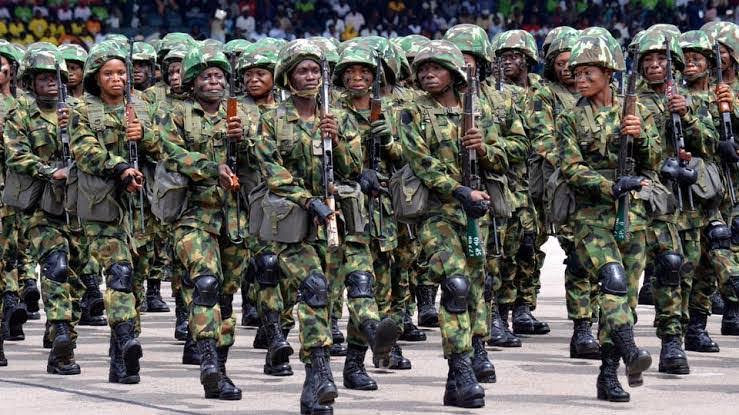
The Senate has approved President Bola Tinubu’s request to deploy Nigerian troops to the Republic of Benin in support of efforts to restore peace and stability following last weekend’s attempted coup.
Senate President Godswill Akpabio announced this on Tuesday during plenary after lawmakers considered the request in the Committee of the Whole in line with section 5, Part 11 of the Constitution.
The Senators unanimously voted in favour of the deployment, giving legislative backing for the regional security intervention.
Akpabio described the decision as a step in the right direction, noting that instability in any neighboring state poses a threat to the entire region.
“An injury to one is an injury to all,” the lawmaker said.
He underscored that it is Nigeria’s responsibility to support its Economic Community of West African States (ECOWAS) partner.
The Senate’s consent letter will be transmitted to President Tinubu immediately.
Tinubu had written to the Senate, seeking their approval for the deployment of troops to the Benin Republic. He said that Nigeria has a historical responsibility to support Benin under the existing Economic Community of West African States (ECOWAS) security frameworks.
According to the President, the crisis demands “urgent external intervention” to help restore stability and prevent further breakdown of order.
Benin Republic’s attempted coup occurred on Sunday, when some military personnel announced the removal of President Patrice Talon. (Channels)
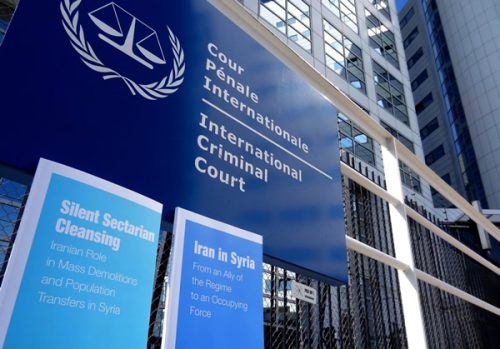
Mali, Burkina Faso and Niger, three nations in West Africa run by military governments after coups in recent years, have announced their exit from the International Criminal Court (ICC), referring to it as “neocolonial repression” and accusing the judicial body of selective justice.
In a joint statement on Monday night, the three countries said the ICC had become incapable of prosecuting war crimes, crimes against humanity, crimes of aggression and genocide without elaborating.
“[The ICC is an] instrument of neocolonial repression in the hands of imperialism,” the joint statement read, adding that the countries were seeking more “sovereignty”.
The three states added that they wanted to create “indigenous mechanisms for the consolidation of peace and justice”.
The three countries, which are ruled by military officers, have already left the Economic Community of West African States and instead formed their own bloc known as the Alliance of Sahel States.
Niger, Burkina Faso and Mali have also rolled back defence cooperation with Western powers, most notably their former colonial ruler, France, and opted for closer ties with Russia.
The countries’ withdrawal from the ICC was not unexpected after the coups that brought the military to power in the three states from 2020 to 2023.
Within the three countries, the military governments are fighting armed groups linked to al-Qaeda that control territory and have staged attacks on army posts.
Human Rights Watch and other advocacy groups have accused the fighters, the military and partner forces of Burkina Faso and Mali of possible atrocities.
United Nations experts said in April that the alleged summary executions of several dozen civilians by Malian forces might amount to war crimes.
Moreover, the ICC has had an investigation open in Mali since 2013 over alleged war crimes committed in the northern regions of Gao, Timbuktu and Kidal, which had fallen under the control of armed groups.
Withdrawal from the ICC takes effect one year after the decision is submitted to the UN General Secretariat. (AlJazeera)
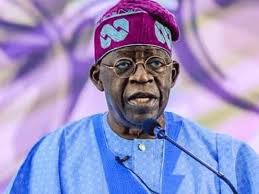
President Bola Tinubu has called on West African leaders to uphold and pass on the vision of the Economic Community of West African States (ECOWAS) ‘s founding fathers as the regional bloc marks its 50th anniversary.
In a keynote address on Wednesday in Lagos, the President urged leaders to look beyond the artificial borders created by colonialists and embrace one another as a family, Mr Bayo Onanuga, his spokesman, said in a statement.
Tinubu, the Chairman of the Authority of ECOWAS Heads of State and Government, noted that the founding fathers foresaw a more united, harmonious, and purpose-driven regional bloc that would benefit many generations.
“Today, we celebrate not only five decades of history but the enduring spirit of unity, resilience, and shared destiny that defines our community.
“In 1975, our founding leaders envisioned a West Africa where borders unite rather than divide – a region of free movement, thriving trade, and peaceful coexistence. That vision is still alive,” said Tinubu.
The President said the regional bloc had lived up to the founders’ expectations in many respects, including peacekeeping, trade liberalisation, free movement of citizens, and working together to tackle security issues and global pandemics.
“ECOWAS is a beacon of African unity. In overcoming colonial legacies, we brought together Anglophone, Francophone, and Lusophone nations under one vision —an achievement of global significance.
“Our region has pioneered free movement, expanded intra-regional trade, and deepened integration through instruments like the ECOWAS Trade Liberalisation Scheme and Joint Border Posts.
“These measures have facilitated business, cultural exchange, and mobility across West Africa,” Tinubu stated.
On peace and security, he said ECOWAS had acted decisively to restore constitutional order and counter instability.
“Our regional cooperation on counterterrorism and financial crime, including through GIABA, reflects our shared commitment to peace and safety.
“In governance, ECOWAS has upheld democratic norms through election observation, mediation, and institutions such as the ECOWAS Parliament and Court of Justice — cementing accountability, rule of law, and people-centred governance,” the President stated.
President Tinubu pointed to progress in agriculture, infrastructure, and digital innovation, singling out the ECOWAS Infrastructure Master Plan (2020–2045) and new platforms advancing regional growth and gender equality.
However, he emphasised the need for more vigorous policy implementation and urged member states to ensure citizens felt the tangible benefits of integration.
“Our young people and women – who form the majority – must be at the heart of ECOWAS development. We must invest deliberately in their education, entrepreneurship, healthcare, and leadership. Their success is the key to our future stability and prosperity.
“For nearly 40 years, Nigeria has supported regional capacity building through the Technical Aid Corps. We remain committed to deploying skilled professionals to ECOWAS countries and will continue to honour every eligible request,” the President added.
He urged leaders to close their ranks and work together to ensure the success of the economic bloc.
“As we look to the next fifty years, let us renew our compact with one another – with courage, clarity, and conviction.
“The work of integration is never done. Each generation must carry the flame forward, lighting the path of unity and shared progress for those who come after.
“Let us imagine a West Africa where our borders are zones of cooperation, not conflict; where our economies thrive through joint effort; and where our people, diverse yet bound by destiny, walk together toward peace, prosperity, and justice,” he said. (Vanguard)

 English