Senegal avoided a shock elimination from the 2025 Africa Cup of Nations, after they came from behind to beat Sudan 3-1 in their Round of 16 fixture on Saturday evening.
The Teranga Lions were behind as early as the sixth minute after Aamir Abdallah Yunis curled in the opening goal.
But they went into the break in front, thanks to two goals from Papa Gueye in the 29th and 45th minutes of play.
In the second half, Ibrahim Mbaye added a third as Senegal progressed into the next round.
They will now take on the winner of the Tunisia vs Mali last-16 clash for a place in the semi-final. (DailyPost)
Mali head coach Tom Saintfiet has launched a stinging attack on the Confederation of African Football’s decision to reschedule the Africa Cup of Nations (AFCON), insisting that it’s a decision taken by UEFA, European clubs and FIFA, but which does not have the continent’s sporting interests at heart.
The decision to make the biennial AFCON a quadrennial tournament was announced by CAF President Dr Patrice Motsepe in a press conference on Saturday, with the football administrator announcing the decision alongside the launch of a new African Nations League, that would take place annually.
The announcement has prompted mixed reactions across the continent, with Mali’s Saintfiet, speaking ahead of his team’s AFCON fixture with hosts Morocco on Friday, outlining his disgust with a decision that he believes disrespects African football.
“I’m shocked with it, very disappointed,” he told ESPN on Thursday. “It’s all instructed by the big people in UEFA, the big clubs from the five leagues, and also by FIFA…and that makes me so sad.
“We fight so long to get respected in Africa, for African people and Africa’s own identity to get respected, but then to listen to Europe to change your history, a 68-year history, for financial reasons…I think we disrespect [Africa] by going to four years.
“I’m sad about that, and I hope the love for Africa would win out over the pressure of Europe.”
Motsepe blamed the need to change the schedule, which will begin after the 2028 Nations Cup, on the ongoing club-vs-country rows, which take place every time the AFCON is organised during the European football season, among other reasons.
The 63-year-old Mamelodi Sundowns owner also used the need to generate extra revenue as a reason for reducing the volume of AFCONs, although presence of FIFA General Secretary Mattias Grafstrom sitting alongside him for the announcement, reinforced the suspicion that it’s the world football governing body’s interests which are best being served by the changes.
“[We are changing] for the pressure of the clubs, who are giving the load on the players as an excuse for the change,” Saintfiet continued, “but who have created a Club World Cup for teams, a World Cup with 40 teams, a Champions League without champions.
“If you want to respect players, you should play the Champions League with only champions, don’t create new leagues which put more load on players, and then they can still play in a competition [the AFCON] which has existed for 60 years, on a two-year basis.”
The vagueness of CAF’s announcement and the lack of clarity about competition logistics has created much uncertainty around the specifics of the future vision for African football, with the continent’s governing body yet to outline what this reorganisation and the regional Nations League means for World Cup or AFCON qualification, or existing regional competitions as well as the African Nations Championship for domestic players.
Similarly, even though the AFCON has been moved to every four years, it may not solve the club-vs-country debates if some editions of the competition are held within the European season, a necessity given the climate conditions across much of sub-Saharan Africa.
“Africa is the world’s biggest football continent, given the passion of the players, the quality of the players, the big African stars in Europe,” Saintfiet concluded. “1957 was the first AFCON, and since that period, every two years there’s been one.
“It’s the pride of African football, the best players from Africa, the best players in Europe come together, and it’s a celebration of fans.
‘It’s the honour and the glory of African football, but to take it away and go to four years…I could understand if it was a question from Africa, a request from Africa, if, for whatever reason, it was needed by African players, the federations, or CAF,” Saintfiet said. (ESPN)
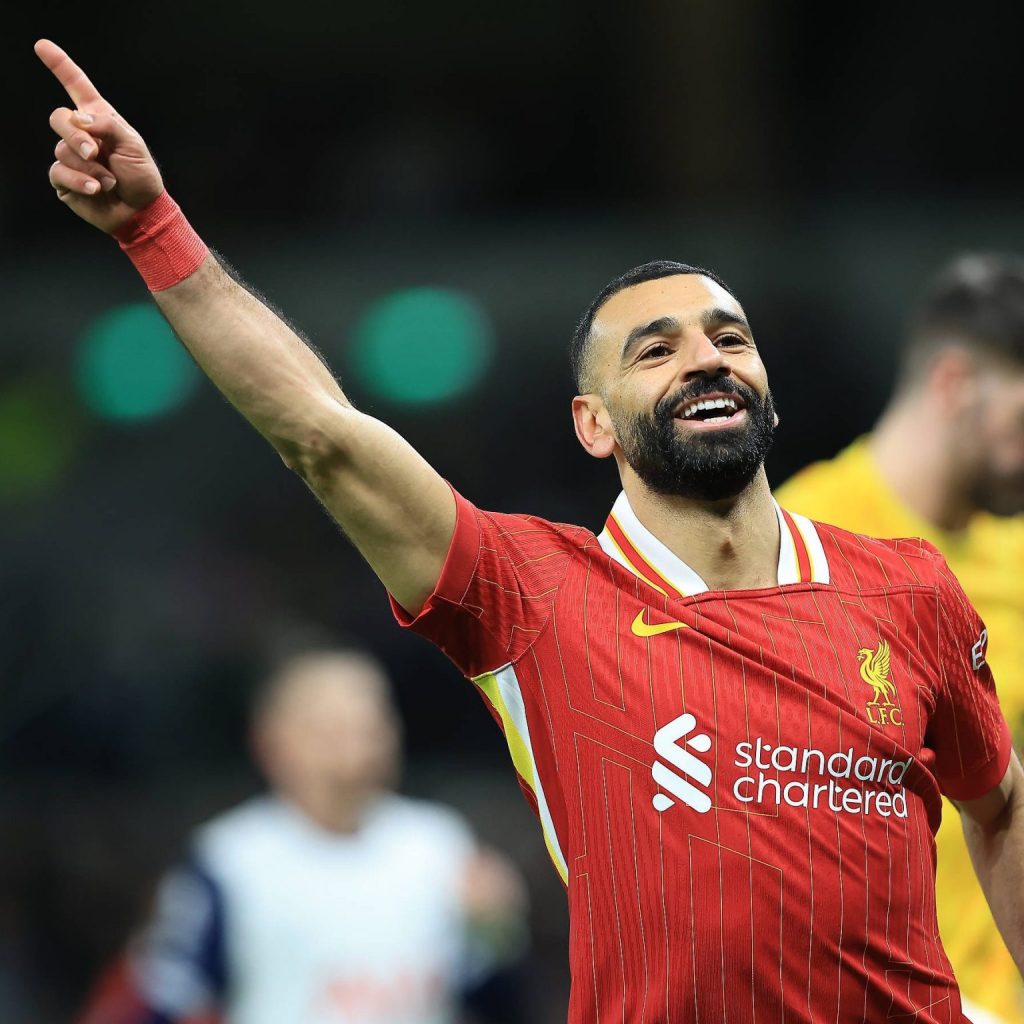
Mohamed Salah scored a first-half penalty as 10-man Egypt defeated South Africa1-0 in their Africa Cup of Nations Group B clash in Agadir to become the first team into the knockout stages of the competition.
Egypt have six points from their opening two games and cannot finish outside of the top two in the group. South Africa have three points from their two games.
Salah won the penalty when he was clipped in the face by South Africa defender Khuliso Mudau as they tussled for the ball, and stepped up to easily convert for his second goal of the tournament.
Egypt lost right-back Mohamed Hany to a red card for an ugly stamp at the end of the first half and faced wave after wave of South African attacks in the second period, as the latter were denied a penalty of their own for handball following a lengthy video assistant referee check.
Lassine Sinayoko’s second-half penalty rescued a 1-1 draw for Mali to stop the hosts Morocco from booking their spot in the last 16 in Rabat. Morocco hit the front thanks to Brahim Díaz’s spot-kick deep into added time in the first half.
Díaz earned the penalty with a fine bit of individual work before Nathan Gassama handled in the area but Mali got their own penalty after a video assistant referee check after 64 minutes when Sinayoko was upended and he made no mistake. Morocco sit top of Group A on four points, with Mali and Zambia both on two.
Angola and Zimbabwe each earned their first point at the tournament following a 1-1 draw but the result leaves both facing early elimination. They both lost their opening Group B clashes and are now left with difficult assignments in their last matches next week which they will effectively need to win if they are to progress.
Angola went ahead in the 24th minute when To Carneiro’s chipped pass fell perfectly for striker Gelson Dala, who ran on to it and squeezed the ball in at the near post as Zimbabwe’s defence proved too slow in closing down.
There was a lengthy delay soon after as Angola goalkeeper Hugo Marques suffered a cut above his eye after a clash of heads with Zimbabwe’s Divine Lunga.
He was bandaged up and continued but, in the sixth minute of stoppage time at the end of the first, he was beaten as Zimbabwe’s veteran striker Knowledge Musona equalised.
Angola now go up against the group’s top seeds Egypt, in Agadir on Monday, while Zimbabwe take on neighbours South Africa in Marrakech at the same time.
Zambia’s hopes of making the knockout stages suffered a setback after being held to a goalless draw by Comoros in Casablanca.
Comoros, beaten by the hosts Morocco in their opening Group A fixture, thought they had taken the lead in the 19th minute through Myziane Maolida after he was played in by Rafiki Saïd, but the goal was ruled out by the VAR for a foul in the buildup.
Zambia struggled to break down their opponents with the captain Fashion Sakala sending an angled shot into the side netting. Comoros went close to snatching a late winner with 10 minutes left when Youssouf M’Changama floated in a deep cross from the left which Zambia’s goalkeeper Willard Mwanza failed to collect, but Faïz Selamani sent his close-range header over. (Guardian)
Mohamed Salah got Egypt off to a winning start in the Africa Cup of Nations by scoring late for a 2–1 victory against Zimbabwe on Monday.
Salah captained the side in his first start for nearly a month and fired into the bottom corner in stoppage time to spare Egypt embarrassment against a team ranked 129th in the world.
Egypt, the record seven-time champions, were thwarted for long periods in the coastal city of Agadir by Zimbabwe’s stubborn defending and an outstanding performance from goalkeeper Washington Arubi.
Prince Dube stunned the favourites in the 20th minute when he took Emmanuel Jalai’s cross with his first touch, turned and flicked the ball past Egypt goalkeeper Mohamed El-Shenawy with his next.
Salah tried to rally his team-mates, but Egypt suffered another blow shortly afterwards when Emam Ashour went off injured. The midfielder’s tears suggested his tournament could be over just as it had begun.
Arubi tipped over a fierce strike from Omar Marmoush, Trézéguet was booked for diving in an attempt to win a penalty, and Salah, Marmoush and Mohamed all had efforts blocked before the break.
The pattern continued after half-time until Marmoush finally found a way through, scoring from a difficult angle in the 64th minute to level the match.
Salah’s winner earned the Pharaohs three points in Group B. The Liverpool forward has never won Africa’s premier international competition.
In the other Group B match, Lyle Foster earned South Africa a hard-fought 2–1 win over Angola.
Bafana Bafana ended a six-game winless run against Angola, who had won three and drawn three of their previous meetings since a World Cup qualifier in November 2015.
South Africa’s Oswin Appollis opened the scoring in Marrakech with a low strike inside the left post in the 21st minute. Angola equalised minutes later when midfielder Show deflected Fredy’s free kick from the wing inside the near post.
Tempers frayed after a foul by South Africa’s Aubrey Modiba before the break.
Tshepang Moremi thought he had scored a brilliant goal after half-time, but it was ruled out for offside following a VAR review. Mbekezeli Mbokazi then struck the crossbar with a powerful effort as South Africa kept pushing.
Angola coach Patrice Beaumelle refreshed his attack by introducing Mabululu and Milson in the 76th minute, but it was Foster who struck at the other end, curling the ball beyond Hugo Marques’ outstretched arm in the 79th.
Earlier, Patson Daka scored in stoppage time for 2012 champions Zambia to snatch a 1–1 draw against Mali in Casablanca.
Mali dominated for long spells and missed a penalty before the break when Willard Mwanza saved El Bilal Touré’s effort — the second spot-kick to be saved in as many games at the tournament.
Lassine Sinayoko eventually broke the deadlock around the hour mark, but Daka had the final say, heading home to earn Zambia a point in Group A.
Host nation Morocco lead the group with three points after opening with a 2–0 win over Comoros on Sunday.(Francce24)
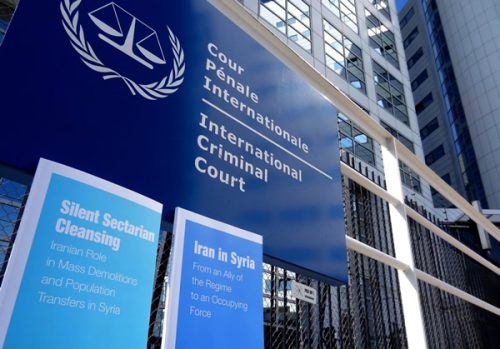
Mali, Burkina Faso and Niger, three nations in West Africa run by military governments after coups in recent years, have announced their exit from the International Criminal Court (ICC), referring to it as “neocolonial repression” and accusing the judicial body of selective justice.
In a joint statement on Monday night, the three countries said the ICC had become incapable of prosecuting war crimes, crimes against humanity, crimes of aggression and genocide without elaborating.
“[The ICC is an] instrument of neocolonial repression in the hands of imperialism,” the joint statement read, adding that the countries were seeking more “sovereignty”.
The three states added that they wanted to create “indigenous mechanisms for the consolidation of peace and justice”.
The three countries, which are ruled by military officers, have already left the Economic Community of West African States and instead formed their own bloc known as the Alliance of Sahel States.
Niger, Burkina Faso and Mali have also rolled back defence cooperation with Western powers, most notably their former colonial ruler, France, and opted for closer ties with Russia.
The countries’ withdrawal from the ICC was not unexpected after the coups that brought the military to power in the three states from 2020 to 2023.
Within the three countries, the military governments are fighting armed groups linked to al-Qaeda that control territory and have staged attacks on army posts.
Human Rights Watch and other advocacy groups have accused the fighters, the military and partner forces of Burkina Faso and Mali of possible atrocities.
United Nations experts said in April that the alleged summary executions of several dozen civilians by Malian forces might amount to war crimes.
Moreover, the ICC has had an investigation open in Mali since 2013 over alleged war crimes committed in the northern regions of Gao, Timbuktu and Kidal, which had fallen under the control of armed groups.
Withdrawal from the ICC takes effect one year after the decision is submitted to the UN General Secretariat. (AlJazeera)
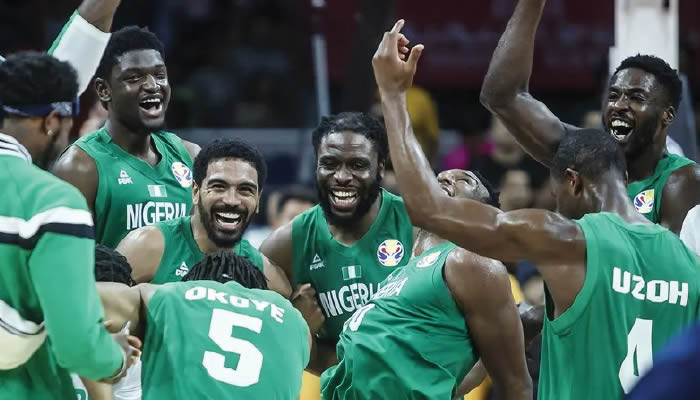
Nigeria’s men’s basketball team, D’Tigers, finished in fifth place at the 2025 FIBA AfroBasket tournament, held in Angola from August 12 to 24.
Host nation Angola emerged champions after a commanding 70–43 victory over Mali in the final, securing their 12th AfroBasket title.
The win cements Angola’s status as the tournament’s most successful team, going unbeaten in all six games. It also marks their first continental triumph since 2013 in the Ivory Coast.
D’Tigers were knocked out in the quarter-finals after losing 91–75 to Senegal, who later won the bronze medal. Despite this, Nigeria secured fifth place overall after winning three games and losing only one.
Nigeria had earlier topped Group B by beating Madagascar, Tunisia, and Cameroon.
The final standings placed Angola first, Mali second, Senegal third, Cameroon fourth, Nigeria fifth, Egypt sixth, while the Ivory Coast and Cape Verde completed the top eight.
The Nigerian team will return in November for the FIBA Men’s World Cup Qualifiers as they aim to book a spot at the 2027 tournament in Qatar. They missed out on the last edition in 2023. (Punch)
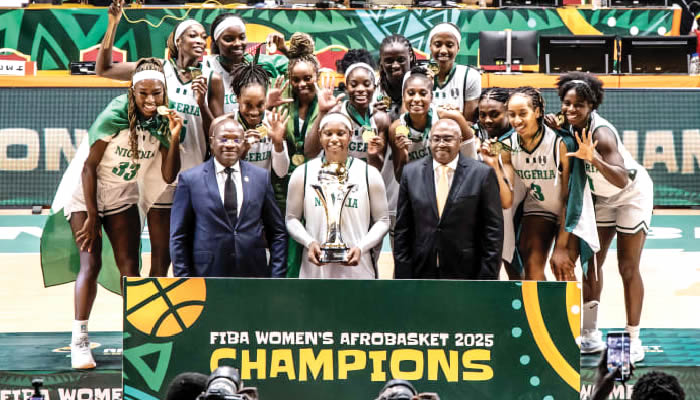
Nigeriaextended their dominance in African women’s basketball on Sunday, defeating Mali 78-64 in Ivory Coast to win a record fifth consecutive FIBA AfroBasket Women’s title, PUNCH Sports Extra reports.
The triumph not only cemented their dominance over the continent but also broke Senegal’s four-in-a-row streak from 1974 to 1981, establishing Nigeria as the first side in history to win the championship five times consecutively.
Nigeria, who have now won seven African titles, wasted no time asserting themselves. D’Tigress surged to a 12-0 scoring run early in the game, establishing a rhythm that Mali struggled to disrupt.
However, it was the Malians who claimed the first quarter 26-21.
Coach Rena Wakama’s side recovered from the five-point deficit to clinch the second quarter 20-15, as both teams went into the half-time interval level at 41-41 apiece.
The third quarter also went the way of D’Tigress, who clinched it by another 20-15 scoreline.
In the fourth quarter, Nigeria began to run down the clock as they tried to cling to their advantage. The last 10 minutes of the quarter finished in favour of D’Tigress 17-8 as Nigeria powered to yet another continental title.
The win saw Nigeria extend their unbeaten streak at the FIBA Women’s AfroBasket tournament to 29 games, stretching back the last 10 years.
Also, they have secured an automatic spot at the 2026 FIBA Women’s World Cup.
Nigeria’s Amy Okonkwo was named the Most Valuable Player, winning the award for a second consecutive tournament.
Meanwhile, President Bola Tinubu congratulated the D’Tigress for the feat, hailing their performance as a source of national pride.
“You did it, girls! D’Tigress Superb performance to become 5x consecutive Champions of Africa and seventh overall. Well done, Coach Rena and the team. You have made Nigeria proud. I am expecting you all, along with the trophy,” the president wrote in a post on X.
Key to Nigeria’s success was a balanced offensive performance and clinical execution. They shot 49.18 per cent from the field, outclassing Mali’s 37 per cent. The inside game was particularly telling, with Nigeria converting 59.46 per cent of their two-point attempts compared to Mali’s 44.12 per cent.
In contrast, both teams were less efficient from long range, with Nigeria making 8 of 24 from beyond the arc, while Mali hit just 7 of 26.
Leading the scoring for Nigeria was guard Ezinne Kalu, who poured in 20 points on 53.85 per cent shooting, also registering five assists, four rebounds and a perfect 4/4 from the free throw line.
Amy Okonkwo, who played the full 40 minutes, contributed a crucial double-double with 19 points and nine rebounds, shooting a superb 63.64 per cent from the field and registering an efficiency rating of 26.
Murjanatu Musa dominated the paint, grabbing 12 rebounds alongside nine points and three steals. Veteran point guard Promise Amukamara was the engine of Nigeria’s fluid offence, dishing out a game-high 11 assists and finishing with a +16 plus-minus despite scoring just eight points.
Victoria Macaulay added 10 points off the bench, offering Nigeria much-needed depth. In contrast, Nigeria’s bench contributed 22 points overall, slightly outscored by Mali’s 26, but it was Nigeria’s starting five that made the difference.
Collectively, Nigeria totalled 24 assists and committed 14 turnovers, a figure Mali could not exploit fully despite Nigeria’s occasional lapses.
Defensively, Nigeria were disciplined. They managed eight steals and conceded only 13 personal fouls, keeping Mali’s offensive threats at bay. The rebounding battle was narrowly lost, with Mali edging it 37 to 36, but Nigeria’s 27 defensive rebounds were vital in limiting second-chance points.
Despite grabbing fewer offensive rebounds (nine to Mali’s 13), Nigeria still outscored their opponents in the paint with 40 points to Mali’s 26.
Perhaps the most telling statistic was points off turnovers. Nigeria converted 17 Mali turnovers into 17 points, compared to Mali’s 14 points off Nigeria’s 14 turnovers.
Fast-break points also tilted in Nigeria’s favour, 10 to 5, as did second-chance points, 8 to 5. These margins, although modest, collectively illustrated Nigeria’s efficiency and composure in key moments.
With this victory, Nigeria’s unbeaten streak in the competition now stands at an extraordinary 29 games, dating back to 2015. (Punch)

 English