Posted on Leave a comment

French museum fare hikes for non-European tourists spark outcry

Should foreign tourists pay more for state-funded galleries than locals, or should art be accessible to all, without discrimination? France is hiking prices for non-Europeans at the Louvre this week, provoking debate about so-called “dual pricing”.

From Wednesday, any adult visitor from outside the European Union, Iceland, Liechtenstein and Norway will have to pay 32 euros ($37) to enter the Louvre — a 45-percent increase — while the Palace of Versailles will up its prices by three euros.

Americans, UK citizens and Chinese nationals, who are some of the museum’s most numerous foreign visitors, will be among those affected, as will tourists from poorer countries.

The French move has few precedents elsewhere in Europe, but is more common in developing countries, where tariffs at sites such as Machu Picchu in Peru or the Taj Mahal in India vary.

Trade unions at the Louvre have denounced the policy as “shocking philosophically, socially and on a human level” and have called for strike action over the change, along with a raft of other complaints.

They argue that the museum’s vast collection of 500,000 items, including many from Egypt, the Middle East or Africa, hold universal human value.

While rejecting discriminatory pricing on principle, they are also worried for practical reasons, as staff will now need to check visitors’ identity papers.

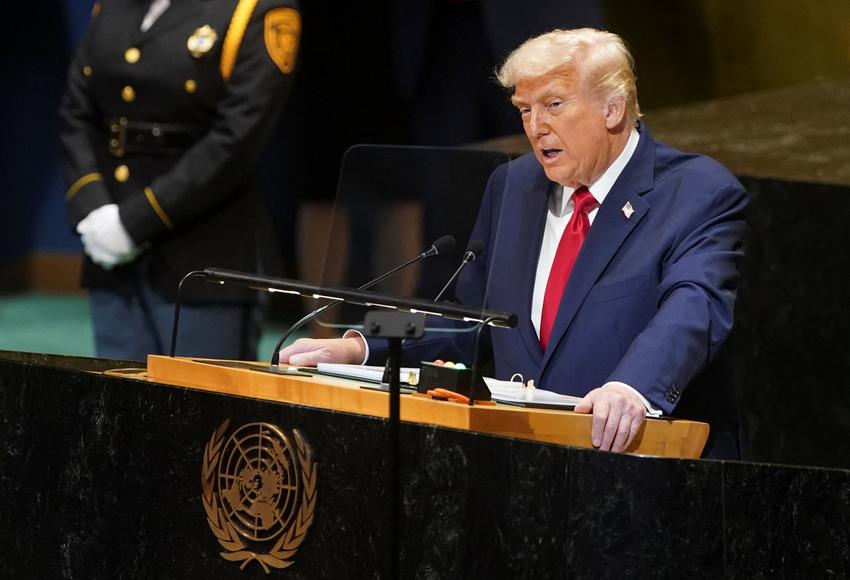
French academic Patrick Poncet has drawn a parallel between France’s move and the policies of U.S. President Donald Trump, whose administration hiked the cost for foreign tourists of visiting U.S. National Parks by $100 on January 1.

The French policy was “symptomatic of the return, as elsewhere in the world, of unabashed nationalism”, Poncet wrote in Le Monde newspaper last month.

Other state-owned French tourist hotspots are also hiking their fees, including the Chambord Palace in the Loire region and the national opera house in Paris.

The government has justified the increases on financial grounds, looking to raise 20-30 million euros annually at a time when it is under pressure to boost revenues and cut spending.

Some of the funds will go towards a colossal plan to renovate the Louvre, which French President Emmanuel Macron announced last year.

Estimated to cost around a billion euros, unions and some art critics have called the project wasteful.

Everyone agrees the Louvre is in poor shape, however, with a recent water leak, structural problems and an embarrassing daylight robbery in October focusing minds.

“I want visitors from outside the EU to pay more for their entry tickets and for that surcharge to go toward funding the renovation of our national heritage,” Culture Minister Rachida Dati said at the end of 2024 as she announced the hikes.

“The French are not meant to pay for everything all by themselves,” she added.

It remains to be seen whether the break with European convention by the continent’s most-visited country will spur other cultural destinations to follow suit.

Pricing based on age is commonplace in Europe, with access for under-18s free at places such as the Acropolis in Athens, the Prado in Madrid or the Colosseum in Rome to encourage them to visit.

The Louvre will remain free for minors from all countries and Europeans under 26.

Other destinations, such as the Doge’s Palace in Venice, offer free entrance for city residents.

Britain has long had a policy of offering universal free access to permanent collections at its national galleries and museums.

But the former director of the British Museum, Mark Jones, backed fee-paying in one of his last interviews in charge, telling The Sunday Times newspaper in 2024 that “it would make sense for us to charge overseas visitors for admission”.

The proposal prompted debate but has not been adopted.

A research paper published last year by The Cultural Policy Unit, a British museum think tank, opposed it for both practical and philosophical reasons.

It would reduce entries, lengthen queue times and overturn a centuries-old policy, the report concluded.

“Britain holds its national collections for the world — not just its own residents,” it objected. (JapanToday)
Posted on Leave a comment

Tinubu joins Lagos Eyo parade as festival honours four legends

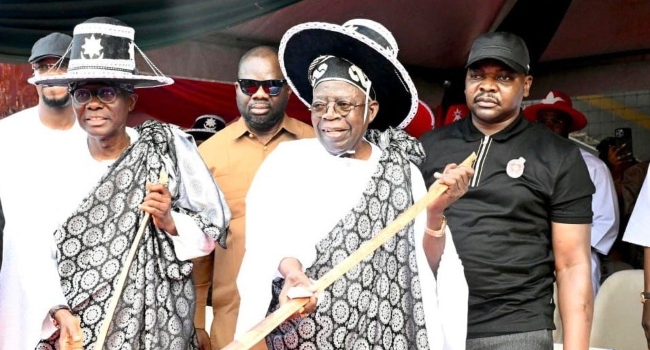
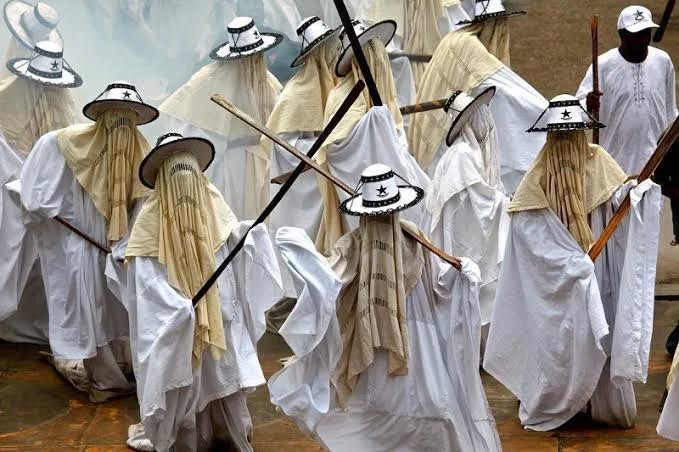
President Bola Tinubu, on Saturday, joined thousands of Lagos residents and cultural enthusiasts at the grand finale of the 2025 Eyo Festival in Lagos, marking the return of the iconic cultural parade after an eight-year hiatus.

According to a statement issued by the Special Advider to the President on Information and Strategy, Bayo Onanuga, the colourful event, held at Tafawa Balewa Square, Lagos, featured the President dressed in the traditional white robe, damask sash and distinctive hat associated with Eyo masqueraders.

The President also carried the customary opambata staff during the procession after it was presented to him in his Lagos residence on December 21.

The statement noted that this year’s festival honoured four eminent Lagos figures—former military administrator of Lagos State, Brigadier-General Mobolaji Johnson; former Governors Lateef Kayode Jakande and Sir Michael Otedola; and the late Alhaja Abibat Mogaji, former Iyaloja-General and mother of President Tinubu, breaking from the traditional practice of recognising one or three honourees.

In a message sent to organisers, Tinubu described the celebration as “a great rekindling of our culture,” saying the festival underscores the richness of Lagos traditions and the achievements of distinguished Nigerians.

He added that the timing of the festival, coinciding with the festive travel season, highlights the tourism potential of Nigerian cultural heritage.

“The Eyo Festival is a vibrant expression of the rich traditions of Lagos. It celebrates the achievements, outstanding contributions, and exemplary lives of distinguished Nigerians—not only eminent Lagosians,” he said.

The President added that all the honorees deserved the recognition.

He said, “They were leaders and builders whose visionary leadership, influence, and diligence in public service helped nurture Lagos State to both national and international prominence”.

The President also noted the festival’s timing, which coincides with Detty December, a period when Lagos welcomes thousands of Nigerians from the diaspora and foreign visitors.

“It is a reminder that our culture and traditions hold great tourism potential. Indeed, our cultural assets can serve as valuable resources for destination promotion. The glamour of white-robed figures parading our streets in celebration of distinguished Lagosians sends a resounding message about our identity and our country,” he said.

The President encouraged all revellers to celebrate peacefully and ensure the safety of all participants.

In his remark, Lagos State Governor, Babajide Sanwo-Olu, said the festival represented a “homecoming” for the President and marked a significant moment in the preservation of Yoruba heritage.

“What we’re celebrating here today is the first of its kind. As our son, our father, we are seated with the President and Commander-in-Chief of the Armed Forces of Nigeria to witness a history of the cultural heritage of Lagos. “Mr President, it is not just a coincidence; it is history in your lifetime that is being put in place today. “We honour you, give God the glory for your life, and we are indeed excited that God Almighty can bring you and most of your people to come and celebrate the best of the cultural heritage of Lagos,” he said.

Sanwo-Olu commended the traditional institutions under the Oba of Lagos, Oba Rilwan Akiolu, for their exemplary leadership in reviving the festival.

“Today, we gather on this historic ground at the Tafawa Balewa Square, wrapped in the timeless majesty of the Eyo Festival, the sacred Adamu Orisha Play.

“After an eight-year interval, this revered tradition returns to Lagos in full splendour, standing as a powerful affirmation of our identity, our resilience, and unbroken connection to our history.

“The Eyo Festival is far more than a pageantry. It is a living archive of our Yoruba heritage and a symbol of unity, a symbol of purity and the communal strength of Lagos,” he said.

The governor assured his audience that his administration will continue to advance the state’s socio-economic trajectory without abandoning its cultural roots.

He said his administration will maximise the festival’s potential as it projects Lagos onto the global stage. (Punch)

Posted on Leave a comment

US could ask foreign tourists for five-year social media history before entry

Tourists from dozens of countries including the UK could be asked to provide a five-year social media history as a condition of entry to the United States, under a new proposal unveiled by American officials.

The new condition would affect people from dozens of countries who are eligible to visit the US for 90 days without a visa, as long as they have filled out an Electronic System for Travel Authorization (ESTA) form.

Since returning to the White House in January, President Donald Trump has moved to toughen US borders more generally – citing national security as a reason.

Analysts say the new plan could pose an obstacle to potential visitors, or harm their digital rights.

Asked whether the proposal could lead to a steep drop-off in tourism to the US, Trump said he was not concerned.

“No. We’re doing so well,” the president said on Wednesday.

“We just want people to come over here, and safe. We want safety. We want security.

“We want to make sure we’re not letting the wrong people come enter our country.”

The US expects a major influx of foreign tourists next year, as it hosts the men’s football World Cup alongside Canada and Mexico, and for the 2028 Olympics in Los Angeles.

The proposal document was filed by the Department of Homeland Security (DHS) and its component agency Customs and Border Protection (CBP).

It was published in the Federal Register, the official journal of the US government.

The proposal says “the data element will require ESTA applicants to provide their social media from the last 5 years”, without giving further details of which specific information will be required.

The existing ESTA requires a comparatively limited amount of information from travellers, as well as a one-off payment of $40 (£30). It is accessible to citizens of about 40 countries – including the UK, Ireland, France, Australia and Japan – and allows them to visit the US multiple times during a two-year period.

As well as the collection of social media information, the new document proposes the gathering of an applicant’s telephone numbers and email addresses used over the last five and 10 years respectively, and more information about their family members.

The text cites an executive order from Trump in January, titled “Protecting the United States From Foreign Terrorists and Other National Security and Public Safety Threats”.

The new proposal regarding ESTA data collection for tourists invites views from the public for 60 days.

“Nothing has changed on this front for those coming to the United States,” a spokesperson for CBP said in a statement.

“This is not a final rule, it is simply the first step in starting a discussion to have new policy options to keep the American people safe.”

Sophia Cope, of digital rights organisation the Electronic Frontier Foundation, criticised the plan, telling the New York Times it could “exacerbate civil liberties harms”.

Meanwhile, immigration law practice Fragomen suggested there could be practical impacts as applicants could face longer waits for ESTA approvals. (BBC)

Posted on Leave a comment

Makinde receives UNESCO cultural heritage certificate for Sango festival

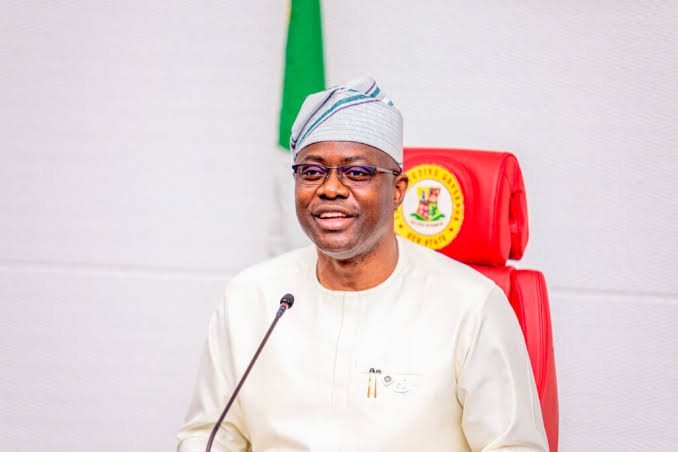
The Oyo State Governor, Seyi Makinde, has received the UNESCO Intangible Cultural Heritage Certificate for the Sango Festival in Oyo.

The Special Adviser (Media) to Oyo State Governor, Dr Sulaimon Olanrewaju, made this known in a statement issued on Tuesday.

The certificate presentation was a sequel to the festival, making it to the representative list of the Intangible Cultural Heritage of Humanity upon the proposal made by Nigeria.

The Minister of Art, Culture, Tourism and Creative Economy, Barr. Hannatu Musa Musawa had presented the certificate to the Oyo State Government on Saturday, August 16, 2025, at the grand finale of the 2025 World Sango Festival in Oyo town.

Oyo State Commissioner for Culture and Tourism, Dr Wasiu Olatubosun, who received the certificate on behalf of the state, presented it to the state governor during the Oyo State Executive Council meeting held on Tuesday, August 19, 2025.

While presenting the certificate to the governor, Dr Olatubosun lauded him for his commitment and unwavering support to all cultural and tourism activities in the state, which eventually paid off and turned the Sango Festival into an international event.

“After the inscription dated 5th December, 2023, Oyo State and Oyo town had the maiden edition of the World Sango Festival in August, 2024 in a grand style with attendance of people from all walks of life as well as envoys from various countries and embassies, and the just concluded 2025 World Sango festival was not an exemption, as there was an improvement on the year 2024 edition,” the Olatunbosun said.

Responding, Governor Makinde expressed his appreciation to the commissioner and his team, saying that their efforts culminated in the recognition of the festival by UNESCO. (Punch)

Posted on Leave a comment

UNESCO recognises Sango festival as world heritage

The United Nations Educational, Scientific and Cultural Organisation has formally recognised the Sango Festival as an Intangible Cultural Heritage of Humanity.

Minister of Art, Culture, Tourism and the Creative Economy, Hannatu Musawa, presented UNESCO’s certificate of inscription to the Alaafin of Oyo, Oba Abimbola Owoade I.

The News Agency of Nigeria (NAN) reports that the presentation took place at the grand finale of the 2025 World Sango Festival, held over the weekend in Oyo State.

Musawa described the achievement as a significant milestone in Nigeria’s cultural landscape.

She said the feat demonstrates the ministry’s commitment to safeguarding the country’s rich cultural heritage and promoting it as a tool for international diplomacy and sustainable tourism.

The minister commended the collaborative efforts between her ministry and the Oyo community, noting that the recognition aligns with the Federal Government’s broader goals of cultural promotion, employment generation, wealth creation, and community empowerment.

She said, “I heartily congratulate Your Imperial Majesty, the new Sango Chief Priest, the Oyo community, and indeed the entire Yoruba nation on the grand finale of the 2025 World Sango Festival.

“The Sango Festival has now attained global recognition with its inscription by UNESCO on the Representative List of the Intangible Cultural Heritage of Humanity.

“This is made possible by effective collaboration between the Ministry of Art, Culture, Tourism and Creative Economy and the Oyo community.

“This milestone firmly places Sango’s rich heritage on the world stage and underscores its importance as a shared global heritage.

“This achievement is a shining gain of the Renewed Hope Agenda of President Bola Tinubu, through our ministry’s commitment to safeguarding our rich cultural heritage as a powerful tool for international diplomacy and sustainable tourism.

“The foregoing further strengthens the foundation of our strong cultural identity, geared towards employment generation and wealth creation for sustainable development, empowerment of the host community, and Nigeria.”

In his remarks, the Alaafin of Oyo expressed gratitude to President Bola Tinubu and the ministry for their renewed commitment to expanding Nigeria’s culture and heritage, which he said made this recognition possible.

The monarch also reaffirmed the Oyo Kingdom’s cooperation with the federal government and the Ministry of Art, Culture, Tourism and the Creative Economy to further promote Nigeria’s cultural identity globally.

The 2025 Sango Festival, which drew dignitaries from within and outside the country, provided the backdrop for the certificate presentation, highlighting the festival’s significance as a cultural treasure and symbol of Nigeria’s rich heritage. (Punch)