
Posted on Leave a comment

US could ask foreign tourists for five-year social media history before entry

Tourists from dozens of countries including the UK could be asked to provide a five-year social media history as a condition of entry to the United States, under a new proposal unveiled by American officials.

The new condition would affect people from dozens of countries who are eligible to visit the US for 90 days without a visa, as long as they have filled out an Electronic System for Travel Authorization (ESTA) form.

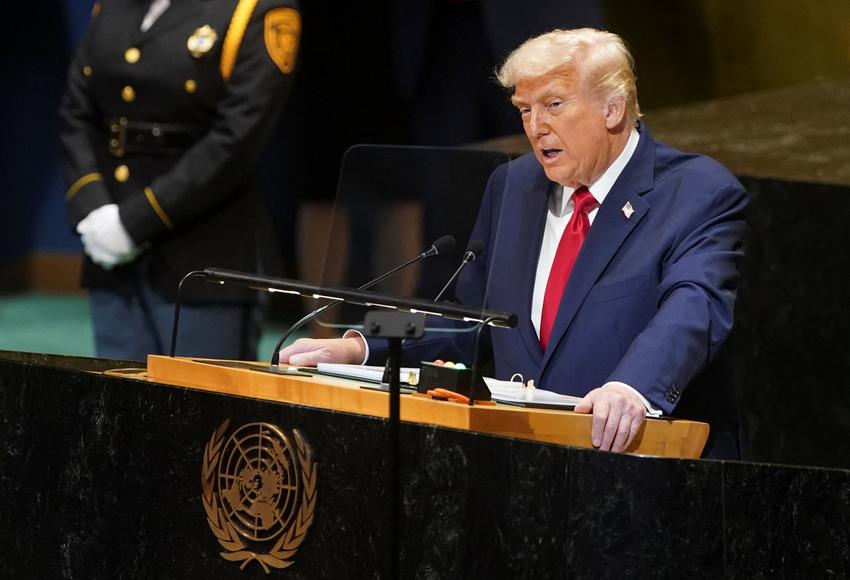
Since returning to the White House in January, President Donald Trump has moved to toughen US borders more generally – citing national security as a reason.

Analysts say the new plan could pose an obstacle to potential visitors, or harm their digital rights.

Asked whether the proposal could lead to a steep drop-off in tourism to the US, Trump said he was not concerned.

“No. We’re doing so well,” the president said on Wednesday.

“We just want people to come over here, and safe. We want safety. We want security.

“We want to make sure we’re not letting the wrong people come enter our country.”

The US expects a major influx of foreign tourists next year, as it hosts the men’s football World Cup alongside Canada and Mexico, and for the 2028 Olympics in Los Angeles.

The proposal document was filed by the Department of Homeland Security (DHS) and its component agency Customs and Border Protection (CBP).

It was published in the Federal Register, the official journal of the US government.

The proposal says “the data element will require ESTA applicants to provide their social media from the last 5 years”, without giving further details of which specific information will be required.

The existing ESTA requires a comparatively limited amount of information from travellers, as well as a one-off payment of $40 (£30). It is accessible to citizens of about 40 countries – including the UK, Ireland, France, Australia and Japan – and allows them to visit the US multiple times during a two-year period.

As well as the collection of social media information, the new document proposes the gathering of an applicant’s telephone numbers and email addresses used over the last five and 10 years respectively, and more information about their family members.

The text cites an executive order from Trump in January, titled “Protecting the United States From Foreign Terrorists and Other National Security and Public Safety Threats”.

The new proposal regarding ESTA data collection for tourists invites views from the public for 60 days.

“Nothing has changed on this front for those coming to the United States,” a spokesperson for CBP said in a statement.

“This is not a final rule, it is simply the first step in starting a discussion to have new policy options to keep the American people safe.”

Sophia Cope, of digital rights organisation the Electronic Frontier Foundation, criticised the plan, telling the New York Times it could “exacerbate civil liberties harms”.

Meanwhile, immigration law practice Fragomen suggested there could be practical impacts as applicants could face longer waits for ESTA approvals. (BBC)

Posted on Leave a comment

Tourists upset as Louvre stays shut after jewel heist

Visitors pressed against the Louvre’s iron gates on Monday, peering through bars locked after thieves pulled off a daylight jewel heist inside the world-famous museum the day before.

Would-be museum-goers queued outside the famed tourist attraction for the scheduled 0900 (0700 GMT) opening, a day after robbers stole precious jewelry and fled on scooters.

But the mood soured when the museum announced it would stay closed for a second day.

“It’s my birthday; it was my gift, and I’ve wanted to come for several years, so I’m a bit upset,” Elisa Valentino, a 31-year-old visiting from Italy, told AFP.

“I studied art… It’s even the only thing I had planned for my stay in Paris, and I’m leaving tomorrow,” she said, wiping away tears.

Lingering outside the closed gates, US tourist Jesslyn Ehlers, 38, and her husband were busy rebooking their tickets.

“We heard about the heist the day before, so we checked online before coming, and we didn’t hear anything,” she told AFP. “We were excited to show up.”

But on arrival, they found a sign saying the museum would stay shut for a second day.

“We’re just kind of disappointed. We’ve been planning this for a very long time,” she said.

Those who had booked same-day visits would be reimbursed, the Louvre said in a statement.

“We’ll be refunded, but that’s not the point,” said Adam Cooke, 65, who had travelled from London with his wife, Rachel.

With their return set for Tuesday, the couple will miss their chance to visit the museum, whose extensive collections include the Mona Lisa.

The Louvre, along with the Eiffel Tower, ranks among the French capital’s must-see attractions, drawing nearly nine million visitors last year—around 80 percent of them from abroad.

Tourists said they were shocked after masked thieves took off with eight priceless items, including an emerald-and-diamond necklace that Napoleon I gave his wife, Empress Marie-Louise.

The burglars dropped and damaged a ninth item — the crown of Empress Eugenie, the wife of Napoleon III — as they made their escape.

“It was amazing that the heist happened in broad daylight. I mean, that is obviously very unfortunate… very embarrassing,” said Cooke, the 65-year-old British tourist.

He discovered from news websites how the burglars parked an extendable ladder like those used by movers below the museum’s Apollo Gallery, where they used cutting equipment to get in through a window and open the display cases.

All in just seven minutes.

For Sissi Liu, a 39-year-old visiting from China with her husband and young sons, the theft was “unimaginable”.

“It’s a big shock that someone can get in there and steal something,” she told AFP.

Andreea Dumitras, 17, from Moldova, came to Paris with friends and family and said she was not surprised the museum stayed closed after the brazen theft.

“What’s most frustrating is that the security at the Louvre is so weak,” she said.

With her departure set for Thursday, the 17-year-old said she hopes to make it inside on Wednesday — if the museum reopens in time.

But she was not optimistic.

“Someone from security told me it’s not even certain it will reopen” by then, she said. (Channels)

Posted on Leave a comment

North Korea bans foreigners from seaside resort weeks after opening

North Korea has announced that its newly opened seaside resort will not be receiving foreign tourists.

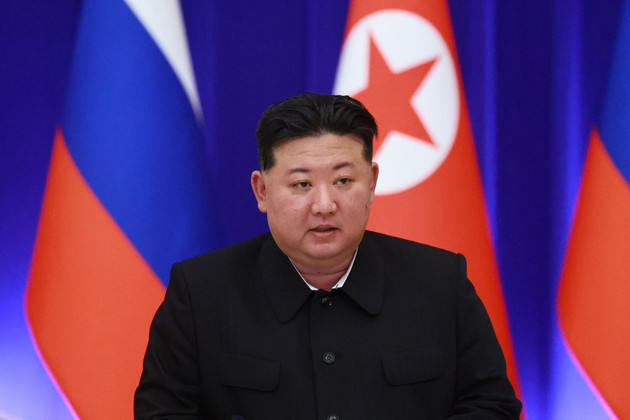
The Wonsan Kalma Coastal Tourist Zone, opened on 1 July, has been touted as a key part of North Korean leader Kim Jong Un’s ambitions to boost tourism.

In the lead-up to its opening, the resort was promoted as an attraction for both locals and foreigners. But as of this week, a notice on North Korea’s tourism website says that foreigners are “temporarily” not allowed to visit.

Last week, the first Russian tourists reportedly arrived at the resort in Wonsan – around the same time that Russian foreign minister Sergei Lavrov met Kim in the city.

Lavrov hailed the seaside development as a “good tourist attraction”, and said he hoped it would become popular among Russians, AFP reported. The two countries are set to launch direct flights between Moscow and Pyongyang by the end of the month.

A Russian tour guide previously told NK News that they had planned several more trips to the resort in the coming months.

Wonsan, a city along North Korea’s east coast, is home to some of the country’s missile facilities and a large maritime complex. It’s also where Kim spent much of his youth, among holiday villas belonging to the country’s elites.

The new seaside resort has lined 4km (2.5 miles) of its beachfront with hotels, restaurants, shopping malls and a water park. It has a capacity of some 20,000 people, according to state media.

However, since the resort began construction in 2018, human rights groups have protested the alleged mistreatment of its workers. They point to reports of people being forced to work long hours to finish the massive project, under harsh conditions and inadequate compensation.

Russian ambassadors attended the resort’s completion ceremony on 24 June, along with Kim and his family.

Last year, North Korea allowed Russian tourists to visit North Korea after a years-long suspension of tourism during the pandemic.

In February, North Korea also started to receive tourists from the West, including Australia, France, Germany and the UK. It abruptly halted tourism weeks later, however, without saying why. (BBC)