Posted on Leave a comment

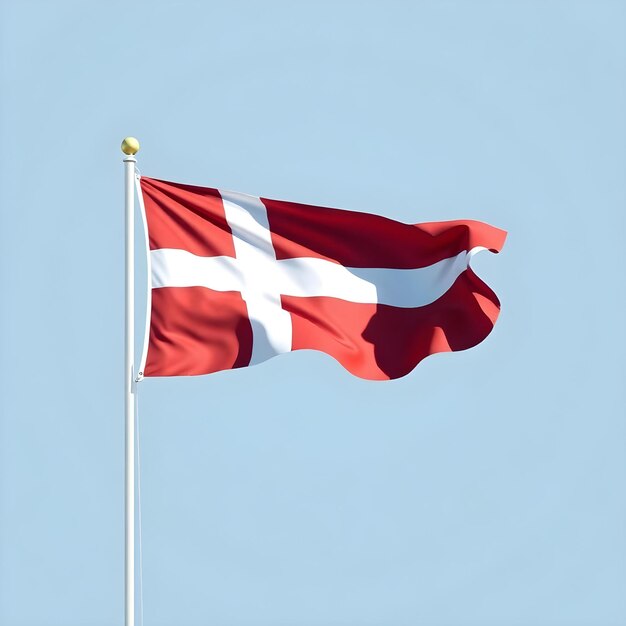
Following Australia’s lead, Denmark plans to ban social media for children under 15

As Australia began enforcing a world-first social media ban for children under 16 years old this week, Denmark is planning to follow its lead and severely restrict social media access for young people.

The Danish government announced last month that it had secured an agreement by three governing coalition and two opposition parties in parliament to ban access to social media for anyone under the age of 15. Such a measure would be the most sweeping step yet by a European Union nation to limit use of social media among teens and children.

The Danish government’s plans could become law as soon as mid-2026. The proposed measure would give some parents the right to let their children access social media from age 13, local media reported, but the ministry has not yet fully shared the plans.

Many social media platforms already ban children younger than 13 from signing up, and a EU law requires Big Tech to put measures in place to protect young people from online risks and inappropriate content. But officials and experts say such restrictions don’t always work.

Danish authorities have said that despite the restrictions, around 98% of Danish children under age 13 have profiles on at least one social media platform, and almost half of those under 10 years old do.

The minister for digital affairs, Caroline Stage, who announced the proposed ban last month, said there is still a consultation process for the measure and several readings in parliament before it becomes law, perhaps by “mid to end of next year.”

“In far too many years, we have given the social media platforms free play in the playing rooms of our children. There’s been no limits,” Stage said in an interview with The Associated Press last month.

“When we go into the city at night, there are bouncers who are checking the age of young people to make sure that no one underage gets into a party that they’re not supposed to be in,” she added. “In the digital world, we don’t have any bouncers, and we definitely need that.”

Under the new Australian law, Facebook, Instagram, Kick, Reddit, Snapchat, Threads, TikTok, X and YouTube face fines of up to 50 million Australian dollars ($33 million) if they fail to take reasonable steps to remove accounts of Australian children younger than 16.

Some students say they are worried that similar strict laws in Denmark would mean they will lose touch with their virtual communities.

“I myself have some friends that I only know from online, and if I wasn’t fifteen yet, I wouldn’t be able to talk with those friends,” 15-year-old student Ronja Zander, who uses Instagram, Snapchat and TikTok, told the AP.

Copenhagen high school student Chloé Courage Fjelstrup-Matthisen, 14, said she is aware of the negative impact social media can have, from cyberbullying to seeing graphic content. She said she saw video of a man being shot several months ago.

“The video was on social media everywhere and I just went to school and then I saw it,” she said.

Line Pedersen, a mother from Nykøbing in Denmark, said she believed the plans were a good idea.

“I think that we didn’t really realize what we were doing when we gave our children the telephone and social media from when they were eight, 10 years old,” she said. “I don’t quite think that the young people know what’s normal, what’s not normal.”

Danish officials are yet to share how exactly the proposed ban would be enforced and which social media platforms would be affected.

However, a new “digital evidence” app, announced by the Digital Affairs Ministry last month and expected to launch next spring, will likely form the backbone of the Danish plans. The app will display an age certificate to ensure users comply with social media age limits, the ministry said.

“One thing is what they’re saying and another thing is what they’re doing or not doing,” Stage said, referring to social media platforms. “And that’s why we have to do something politically.”

Some experts say restrictions, such as the ban planned by Denmark, don’t always work and they may also infringe on the rights of children and teenagers.

“To me, the greatest challenge is actually the democratic rights of these children. I think it’s sad that it’s not taken more into consideration,” said Anne Mette Thorhauge, an associate professor at the University of Copenhagen.

“Social media, to many children, is what broadcast media was to my generation,” she added. “It was a way of connecting to society.”

Currently, the EU’s Digital Services Act, which took effect two years ago, requires social media platforms to ensure there are measures including parental controls and age verification tools before young users can access the apps.

EU officials have acknowledged that enforcing the regulations aiming at protecting children online has proven challenging because it requires cooperation between member states and many resources. (ABC)

Posted on Leave a comment

Australian PM defends social media ban as teens brag about staying online

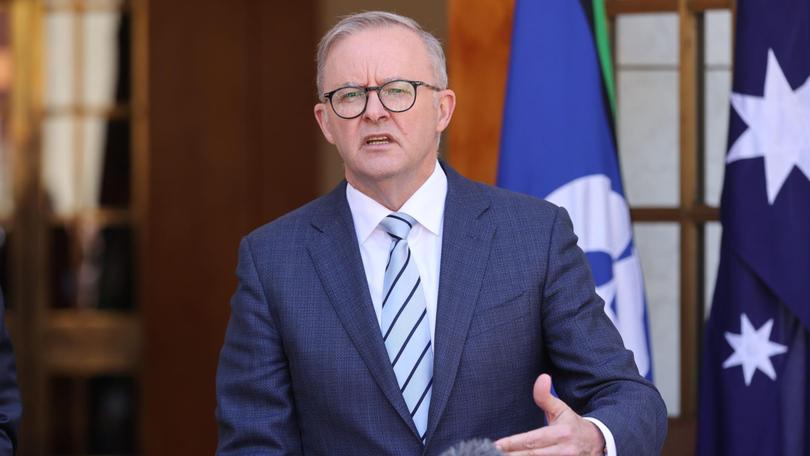
Australian Prime Minister Anthony Albanese on Thursday acknowledged some young people were still on social media a day after a world-first ban on under-16s went ‌live, saying the rollout was always going to be bumpy but would ultimately save lives.

A day after the law took effect, Australian social media feeds were flooded with comments from people claiming to be under 16, ⁠including one on the prime minister’s TikTok account saying “I’m still here, ‍wait until I can vote”.

Under the law, 10 of the biggest ‍platforms including TikTok, Meta’s ‍Instagram and Alphabet’s YouTube must bar underage users or face a fine of up ⁠to A$49.5 million ($33 million). The government has said previously that it would take some time for the platforms to set up processes to ​do this.

“Of course it isn’t smooth,” Albanese told Melbourne radio station FOX. “You can’t in one day switch off over a million accounts across the board. But it is happening.”

On Nova Radio in Sydney, Albanese added: “If it was easy, someone else would have done it.”

Governments around the world have said they would monitor the Australian rollout as ⁠they weigh whether to do something similar. U.S. Republican senator Josh Hawley endorsed the ban as it took effect, Nine newspapers reported.

The United Nations children’s agency UNICEF warned in a statement the ban might encourage children to visit less regulated parts of the internet and could not work alone.

“Laws introducing age restrictions are not an alternative to companies improving platform design and content moderation,” the statement said.

Albanese has pitched the ban as an intervention to protect young people from mental health risks associated with social media, including bullying, body image problems and addictive algorithms.

The measure would “save lives and it will change lives for this and future generations”, he told Nova.

Australian searches for virtual private networks (VPNs), which can mask an internet user’s location, surged to the highest in about 10 years ​in the week before the ban took effect, according to publicly available Google data.

Free VPN provider hide.me told Reuters it experienced a 65% spike in visits from Australia ⁠in the days before the ban kicked in, although that had not translated to a rising number of downloads.

All 10 platforms named by the ban opposed it before saying they would comply. As the ban took effect, ‍some platforms not covered by the ban rose to the top of app download ‌charts, prompting the Australian government to ‌say the platform list was “dynamic”.

One app, Lemon8, which ‍is owned by TikTok parent Bytedance, introduced an age minimum of 16. Photo-sharing app Yope told Reuters it ‌had experienced “very fast growth” to about 100,000 Australian users. About half ‍its users were over 16.

The company told Reuters it had told the Australian internet regulator overseeing the rollout that it considered itself a private messaging service, not social media. (JapanToday)

Posted on Leave a comment

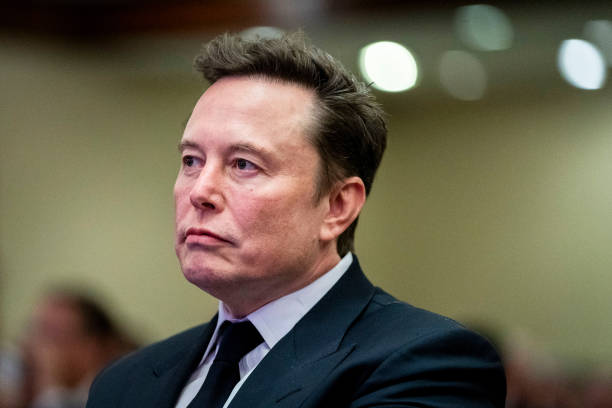
Musk’s X to appeal Indian court ruling on Secretive Content removal system

Social media platform X said on Monday it plans to appeal an Indian court order that would allow over two million police officers nationwide to issue arbitrary takedown requests via a secretive online portal called the Sahyog.

“We will appeal this order to defend free expression,” X said in a post on the platform, in its first statement since the High Court of Karnataka ruled last week that there was no legal merit to the company’s legal challenge to quash India’s content removal mechanisms, according to Reuters.

“The Sahyog enables officers to order content removal based solely on allegations of “illegality,” without judicial review or due process for the speakers, and threatens platforms with criminal liability for non-compliance,” X said on Monday.

X has locked horns with New Delhi in the past, equating the government’s mechanisms with censorship. The government of Prime Minister Narendra Modi has said the new system tackles a proliferation of unlawful content and ensures accountability online.

X owner Elon Musk has clashed with authorities in several countries over compliance and content takedown demands.

However, the company’s Indian lawsuit targeted the entire basis for tightened internet regulation in the world’s most populous nation.

Modi’s government has ramped up efforts to police the internet since 2023 by allowing many more officials to file takedown orders and submit them directly to tech firms through a website launched in October. (Channels)

Posted on Leave a comment

Cambridge Dictionary adds TikTok terms ‘skibidi’, ‘delulu’, others

The rise of TikTok trends and social media slang has prompted Cambridge Dictionary to update its online edition with 6,000 fresh entries in the past year, including buzzwords like “skibidi,” “delulu,” and “tradwife.”

For those less immersed in digital culture, some of the sample sentences the UK-based dictionary provides may sound baffling. The term skibidi was popularised through Skibidi Toilet, a surreal YouTube animation series featuring human heads popping out of toilets.

Phrases such as “that wasn’t very skibidi rizz of you” or “As Gen Z say, I’ve entered my ‘delulu era?’” can appear like another language entirely.

According to Cambridge, skibidi is defined as “a word that can have different meanings, such as ‘cool’ or ‘bad,’ or can be used with no real meaning as a joke.” (Punch)