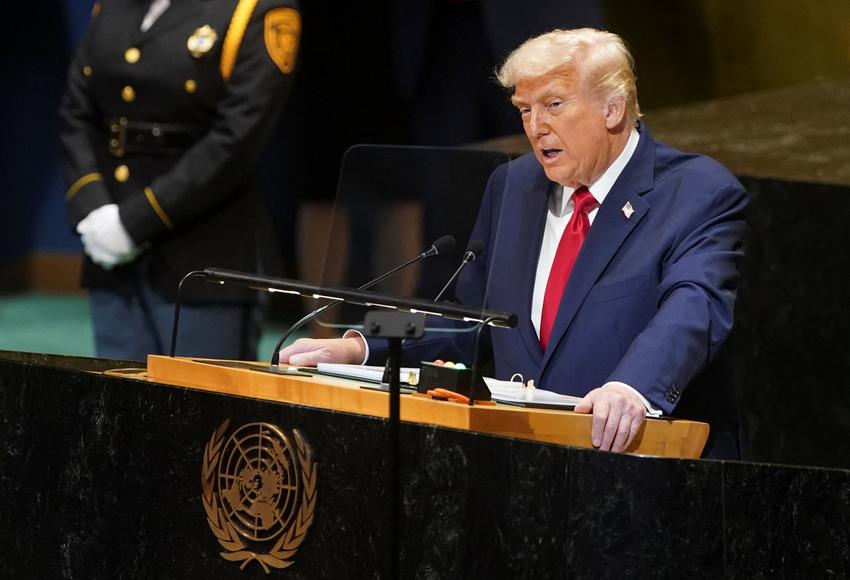
Emmanuel Macron had to walk half an hour by foot through New York after his speech to the United Nations on recognising Palestine as a state.
Video footage shows him getting out of his car to talk to police officers after they stop his vehicle to make way for the expected arrival of the motorcade of Donald Trump, the US president.
The footage, which was captured by a reporter from the social media outlet Brut, appears to show the French president saying he needs to get to his country’s consulate.
“I’m sorry, president, I’m really sorry, everything has been frozen, there’s a motorcade coming right now,” an officer tells Macron.
The president then looks out over the empty street and replies: “If you don’t see it, let me cross. I’ll negotiate with you.”
Macron, who remains stuck behind a metal barrier, takes out his phone and appears to call Trump directly. Leaning on the barrier, he says, laughingly: “How are you? Guess what? I’m waiting in the street because everything is frozen for you.”
Macron later appears to be allowed through on foot but not in his car. Still on his phone, he proceeds to stride off down the street, past shoppers and pedestrians. The reporter from Brut said Macron walked for about 30 minutes with his security detail. He stopped and posed with passersby who asked for photographs, including one encounter with a man who kissed him on the forehead.
“The time has come to end the war in Gaza, the massacres and the death,” Macron had said during his opening speech to a special summit at the UN on Monday evening. “The time has come to do justice for the Palestinian people and thus to recognise the state of Palestine in Gaza, the West Bank and Jerusalem.”
Announcing France’s official recognition of Palestine, the president set out a plan for a UN-mandated international stabilisation force in postwar Gaza that is expected to find support in many countries but not in Israel or the US. (Guardian)
Britain, Australia and Canada on Sunday recognised a Palestinian state in a seismic shift in decades of western foreign policy, triggering swift Israeli anger.
Portugal was also to recognise Palestinian statehood later Sunday, as Israel came under huge international pressure over the war in Gaza triggered almost two years ago by the October 7, 2023 Hamas attack.
“Today, to revive the hope of peace for the Palestinians and Israelis, and a two-state solution, the United Kingdom formally recognises the State of Palestine,” UK Prime Minister Keir Starmer said in a message on X.
Britain and Canada became the first G7 countries to take the step, with France and other nations expected to follow at the annual UN General Assembly which opens Monday in New York.
“Canada recognises the State of Palestine and offers our partnership in building the promise of a peaceful future for both the State of Palestine and the State of Israel,” Canadian Prime Minister Mark Carney wrote on X.
It is a watershed moment for Palestinians and their decades-long ambitions for statehood, with the most powerful Western nations having long argued it should only come as part of a negotiated peace deal with Israel.
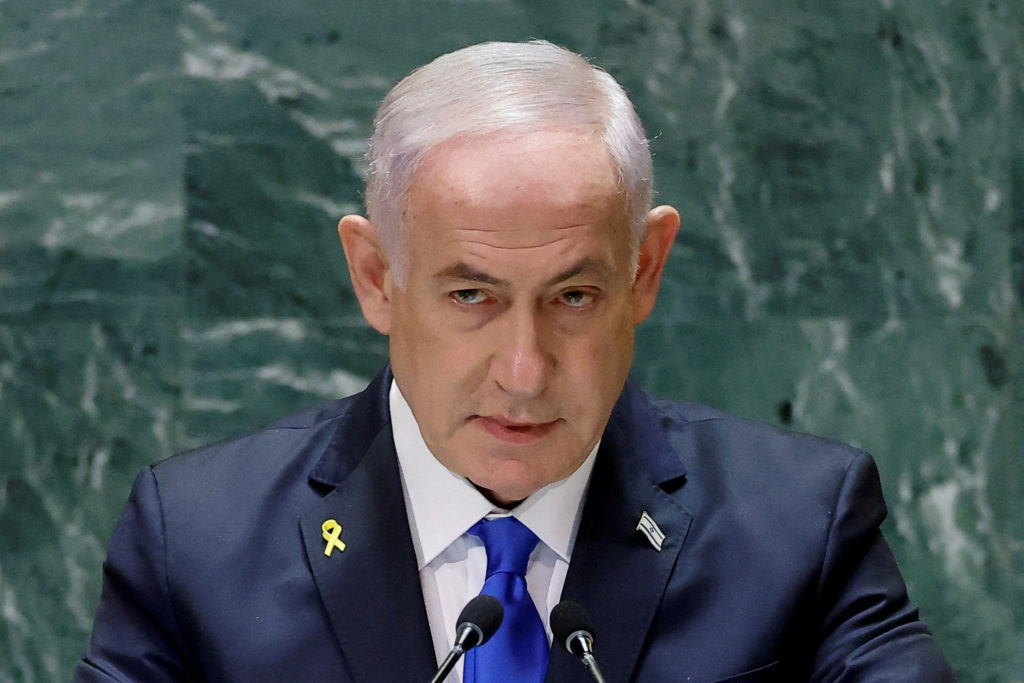
But the move puts those countries at odds with the United States and Israel, with Israeli Prime Minister Benjamin Netanyahu reacting angrily and vowing to oppose it at the UN talks.
Calls for a Palestinian state “would endanger our existence and serve as an absurd reward for terrorism,” Netanyahu said Sunday.
A growing number of longtime allies have shifted positions, as Israel has intensified its Gaza offensive, vowing to eliminate the Hamas Palestinian militants.
The Gaza Strip has suffered vast destruction, a spiralling death toll and a lack of food that has sparked a major humanitarian crisis since the start of the conflict which has drawn an international outcry
The UK government has come under increasing public pressure to act, with thousands rallying every month on the streets. A poll released by YouGov on Friday showed two-thirds of young Britons aged 18-25 supported Palestinian statehood.
Deputy Prime Minister David Lammy acknowledged at the UN in July that “Britain bears a special burden of responsibility to support the two-state solution”.
Over a century ago, the UK was pivotal in laying the groundwork for the creation of the state of Israel through the 1917 Balfour Declaration.
Three-quarters of UN members already recognise Palestinian statehood, with over 140 of the 193 having taken the step.
Starmer said in July that his Labour government intended to recognise a Palestinian State unless Israel took “substantive” steps including reaching a ceasefire in Gaza, getting more aid into the territory and confirming it would not annex the West Bank.
Starmer has also repeatedly called on Hamas to release the remaining hostages they captured in the 2023 attack, and is expected to set out new sanctions on the Palestinian militants.
Lammy told the BBC on Sunday that the Palestinian Authority, the civilian body that governs in areas of the West Bank, had been calling for the move for some time “and I think a lot of that is wrapped up in hope”.
“Will this feed children? No it won’t, that’s down to humanitarian aid. Will this free hostages? That must be down to a ceasefire.”
But he said it was an attempt to “hold out for” a two-state solution.
Palestinian foreign minister Varsen Aghabekian Shahin told AFP last week: “Recognition is not symbolic.”
“It sends a very clear message to the Israelis on their illusions about continuing their occupation forever,” she added.
Hamas’s 2023 attack on southern Israel resulted in the deaths of 1,219 people, most of them civilians, according to an AFP tally of official figures.
Israel’s retaliatory campaign has killed at least 65,208 people, also mostly civilians, according to figures from the Gaza health ministry that the United Nations considers reliable.
Portugal said that it would also formally declare its recognition in New York on Sunday.
“By acting now, as the Portuguese government has decided, we’re keeping alive the possibility of having two states,” Portuguese President Marcelo Rebelo de Sousa said. (Punch)
As the world’s attention was focused on Israel’s attack on Hamas leaders in Doha, Israeli forces continued their unrelenting bombardment of Gaza, killing more than 50 people on Tuesday.
Among the dead are nine Palestinians, who had gathered in the enclave’s south seeking aid. Israel pressed on with its offensive in Gaza City after Prime Minister Benjamin Netanyahu threatened Palestinians to flee to the south for their lives.
The Wafa news agency reported that a drone strike on a makeshift tent sheltering displaced families at Gaza’s port killed two civilians and injured others. Warplanes also hit several residential buildings, including four homes in the al-Mukhabarat area and the Zidan building northwest of Gaza City, it reported.
Another house was reportedly bombed in the Talbani neighbourhood of Deir el-Balah in central Gaza, while two young men were killed in an attack on civilians in the az-Zarqa area of Tuffah, northeast of Gaza City.
Al Jazeera’s Sanad fact-checking agency confirmed footage showing an Israeli strike on the Ibn Taymiyyah mosque in Deir el-Balah. The video captured a flash of light before the mosque’s minaret was enveloped in smoke. Despite the blast, the minaret appeared to remain standing.
Israel issued new evacuation threats on Monday, releasing maps warning Palestinians to leave a highlighted building and nearby tents on Jamal Abdel Nasser Street in Gaza City or face death. It told residents to move to the so-called “humanitarian area” in al-Mawasi, a barren stretch of coast in southern Gaza.
But al-Mawasi itself has been repeatedly bombed, despite Israel insisting it is a safe zone. At the start of the year, about 115,000 people lived there. Today, aid agencies estimate that more than 800,000 people – nearly a third of Gaza’s population – are crammed into overcrowded makeshift camps.
Philippe Lazzarini, the chief of the United Nations agency for Palestinian refugees, UNRWA, described al-Mawasi as a vast camp “concentrating hungry Palestinians in despair”.
“There is no safe place in Gaza, let alone a humanitarian zone. Warnings of famine have fallen on deaf ears,” he said.
The Palestinian Civil Defence warned that “Gaza City is burning, and humanity is being annihilated”.
The rescue agency said that in just 72 hours, five high-rise towers containing more than 200 apartments were destroyed, leaving thousands of people homeless.
More than 350 tents sheltering displaced families were also flattened, it added, forcing nearly 7,600 people to sleep in the open, “struggling against death, hunger, and unbearable heat”.
More than 64,000 Palestinians have been killed, some 20,000 of them children, in the Israeli offensive, which has been dubbed a genocide by numerous scholars and activists. The International Criminal Court has also issued an arrest warrant for Netanyahu for alleged war crimes.
The Government Media Office in Gaza said that more than 1.3 million people remain in Gaza City and surrounding areas, despite Israeli attempts to push them south. It described the evacuation orders as an effort to carry out “the crime of forced displacement in violation of all international laws”.
More than 90 percent of Gaza’s 2.3 million people have been displaced multiple times in 23 months of genocidal war, and an Israeli curb on aid entry, including food items, has led to starvation deaths. Last month, a UN agency declared famine in Gaza, affecting half a million people.
On Tuesday morning, Palestinians in central Gaza staged a protest against the latest evacuation orders.
Reporting from Deir el-Balah, Al Jazeera’s Hind Khoudary said that demonstrators carried banners reading, “We will not leave”, and “Not going out”.
“The primary goal of the [Israeli] occupation is displacement,” said Bajees al-Khalidi, a displaced Palestinian at the protest. “But there’s no place left, not in the south, nor the north. We’ve become completely trapped.”
Violence also flared in the occupied West Bank, where Israeli forces killed two teenagers in the Jenin refugee camp, according to the Wafa news agency.
Mourners on Tuesday buried 14-year-old Islam Noah, who was shot while attempting to enter the besieged refugee camp. A funeral was also held for another 14-year-old, Muhammad Alawneh. Two others were wounded in the same incident.
Israel sent missiles at Doha as Hamas leaders were meeting in the Qatari capital for talks on the latest ceasefire proposal from the United States to end the war in Gaza. Hamas said five people were killed, while Qatar said a security official was also among the dead. Hamas said its leadership survived the assassination attempt.
Qatar’s Emir Sheikh Tamim bin Hamad Al Thani condemned Israel’s “reckless criminal attack” in a phone call with US President Donald Trump. Qatari Prime Minister and Minister of Foreign Affairs Sheikh Mohammed bin Abdulrahman bin Jassim Al Thani called the attack “state terrorism”.
The Qatari prime minister said Doha would continue to work to end Israel’s war on Gaza, but raised doubts about the viability of the most recent talks. “When it comes to the current talks, I don’t think there is something valid right now after we’ve seen such an attack,” he said.
Qatar has sent a letter to the UN Security Council, condemning what it calls a cowardly Israeli assault on residential buildings in Doha.
The Doha attack has drawn global condemnation, with the UN chief calling it a “flagrant violation” of the sovereignty and territorial integrity of Qatar.
The White House claimed that the US had warned Qatar of the impending strike, but Doha rejected that account, insisting the warning came only after the bombing had begun.
Trump later said he felt “very badly about the location of the attack” and that he had assured Qatar that it would not happen again.
“This was a decision made by Prime Minister Netanyahu, it was not a decision made by me,” Trump wrote on Truth Social. “Unilaterally bombing inside Qatar, a Sovereign Nation and close Ally of the United States, that is working very hard and bravely taking risks with us to broker Peace, does not advance Israel or America’s goals.” (AlJazeera)
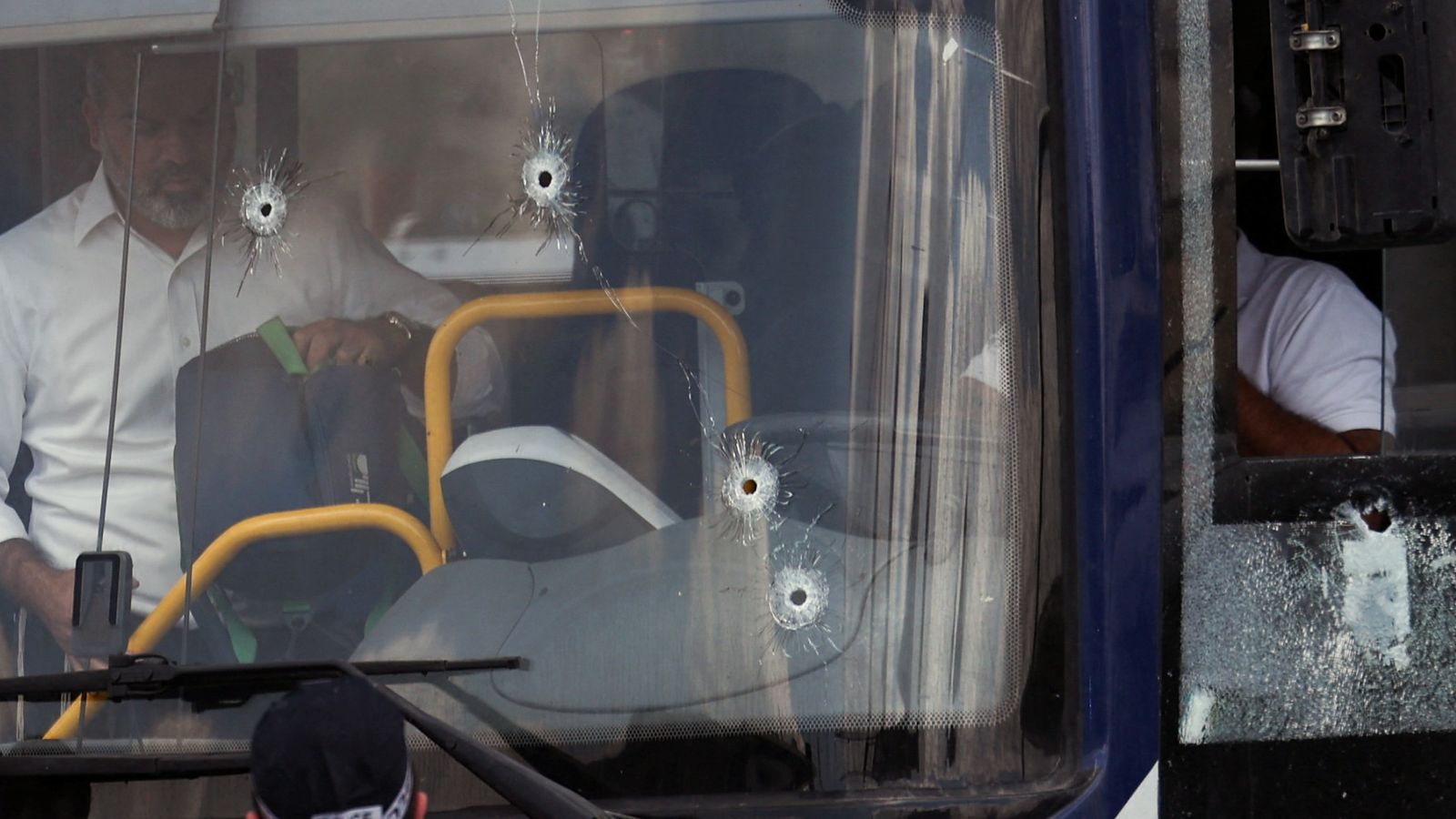
Six people have been killed in a shooting attack in occupied East Jerusalem, Israeli authorities say, as the Israeli military’s punishing assault on besieged Gaza rages alongside an accelerated violent crackdown by the army and settlers in the occupied West Bank.
Paramedics said at least 12 people were injured and six were in “serious condition” after the shooting on Monday morning at Ramot Junction. Several others were “lightly injured by glass” and treated at the scene, Israel’s paramedic service, Magen David Adom, said.
Israeli police described the shooting as a suspected “terror attack”.
A security officer and a civilian shot and killed the perpetrators soon after the shooting began, police confirmed.
The police said the perpetrators arrived in a vehicle and opened fire at a bus station.
Israeli forces closed all checkpoints between East Jerusalem and the occupied West Bank after the attack, sources told Al Jazeera.
After police said the perpetrators had come from the occupied West Bank, Israeli Army Radio reported Israeli forces imposed a military cordon on four villages in the Jerusalem governorate in the territory – Qatana, Biddu, Beit Inan and Beit Duqu – and conducted raids there.
The Israeli military said it had reinforced its forces in the wider Jerusalem area and was conducting a wide-ranging search for what it described as “accomplices” in the shooting.
Palestinians in the West Bank are preparing themselves to face collective punishment from Israel in retaliation for the attack, a Palestinian journalist said.
Speaking to Al Jazeera from the Aida refugee camp in the West Bank, Leila Warah said Palestinians were “very much on edge, waiting to see what is going to happen”. Prime Minister Benjamin Netanyahu has said Israeli forces are pursuing the villages where the attackers hailed from, in what was a now standard Israeli response to such attacks, said Warah.
Al Jazeera’s Hamdah Salhut – reporting from Amman, Jordan, because Al Jazeera is banned from East Jerusalem, the West Bank and Israel – said: “Israeli authorities are saying the two perpetrators are from an area in the occupied West Bank that is just west of occupied East Jerusalem. They say the two worked in tandem in this attack, that two gunmen boarded a bus – witnesses say one of them was dressed as a ticket inspector – and opened fire.”
“This attack took place near an illegal settlement of Ramot, just north of West Jerusalem, and if you look at where the Green Line is on a map, it actually bleeds into occupied East Jerusalem,” she added, referring to the generally recognised boundary between Israel and the West Bank. “These settlements are deemed illegal under international law and are buildings and structures that infringe on the rights of Palestinians and destroy territorial continuity for a future Palestinian state.”
“Israeli officials are now trying to wrap their heads around how exactly this happened, saying that they haven’t seen something like this happen in years, saying that the last shooting like this in greater Jerusalem was back in November 2023,” Salhut said.
Meanwhile, the Israel Hayom newspaper reported that Netanyahu informed judges that he would not attend his corruption trial session scheduled for Monday due to the security developments.
Both Netanyahu and far-right Israeli National Security Minister Itamar Ben-Gvir have visited the scene of the shooting.
“We are in an intense war against terror on several fronts,” Netanyahu said there. “I want to send condolences to the families of the dead and to the wounded. A pursuit and encirclement of the villages from which the terrorists came is under way.”
In reaction to the shooting, the Palestinian Authority (PA) has “reiterated its firm position of rejecting and condemning any targeting of Palestinian and Israeli civilians”. Its presidential office said in a statement from Ramallah in the occupied West Bank that the PA denounces “all forms of violence and terrorism regardless of their source”.
Neither Hamas nor the Palestinian Islamic Jihad has claimed responsibility for the shooting but have expressed “congratulations” for the attack.
Hamas said in a statement that the shooting was “a natural response to the crimes of the occupation and the genocide it wages against our people” and that it sends a clear message that Israel’s plans to “occupy and destroy Gaza City and desecrate Al-Aqsa Mosque will not pass without punishment”.
The group said Israel’s aggression against Palestinians in Gaza and the West Bank “will not weaken the determination of our people and their resistance” and called for more attacks in occupied territory.
The al-Quds Brigades, the armed wing of Palestinian Islamic Jihad, said in a short statement that the shooting was “a natural and legitimate response to the ongoing crimes of the Zionist enemy” in Palestinian territory.
The shooting most likely originated from the West Bank rather than from Hamas in Gaza, Israeli political analyst Ori Goldberg said.
Speaking from Tel Aviv, Goldberg told Al Jazeera he “seriously” doubted it had been ordered by Hamas.
If Hamas had carried out the attack, then it would mean Hamas was “trying to step up its resistance to what is beginning to look like a superimposed attempt to end the war”, he said, referring to comments from United States President Donald Trump’s administration that it is working on a solution to the war in Gaza.
Goldberg added that Israel has made some Palestinians feel that their only means of resistance is violence because Israel has done its utmost to ensure that they have no “sustainable model of politics”.
“Many Israelis ask where the Palestinian Nelson Mandela is at the moment, and the answer is either at a cemetery or in an Israeli prison. Israel has done everything it can to break any attempts on the part of the Palestinians to try and explore different paths, paths that are not violent like the ones we saw today,” he said, referring to the shooting.
Goldberg added that while Palestinians have also played a part in the failure of Palestinian politics, Israel is “by all means the stronger party” and bears most of the responsibility.
“Israel has done everything it can to break the Palestinian Authority, to arrest any semblance of a political leadership that might be amenable to a political process with Israel and to deny such a political process vehemently and repeatedly at all levels of the Israeli government,” he said. (AlJazeera)
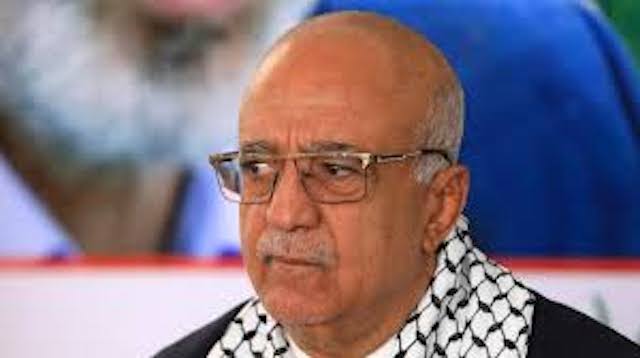
The prime minister of Yemen’s Huthis was killed in an Israeli airstrike along with other officials earlier this week, the Iran-backed rebels announced on Saturday.
Ahmed Ghaleb Nasser Al-Rahawi, who was appointed last year, is the most senior official known to have been killed in a series of Israeli strikes during the war in Gaza.
“We announce the martyrdom of the fighter Ahmed Ghaleb Nasser Al-Rahawi… along with several of his ministerial colleagues, as they were targeted by the treacherous Israeli criminal enemy,” a Huthi statement said.
“Others among their companions were injured with moderate to serious wounds and are receiving medical care since Thursday afternoon,” it added.
The Israeli military struck in the area of Sanaa, the Huthi-held capital, on Thursday. The Huthis, claiming solidarity with the Palestinians, have frequently fired missiles and drones at Israel during the Gaza war.
Israeli forces “struck a Huthi terrorist regime military target”, the Israeli military said at the time.
The Huthis have also targeted shipping in the Red Sea and the Gulf of Aden, which they claim is linked to Israel during the Gaza war.
The rebel group controls large parts of Yemen, which has been gripped by war since 2014, and is part of Iran’s anti-Israel alliance alongside militant groups across much of the Middle East. (Punch)
Israeli Prime Minister Benjamin Netanyahu said he will give final approval for the seizure of Gaza City while also restarting negotiations with Hamas aimed at returning all the remaining captives and ending the nearly two-year-old war, but on “terms acceptable to Israel”.
Speaking to soldiers near Gaza on Thursday, Netanyahu said he was still set on approving plans for seizing Gaza City, the densely populated centre at the heart of the Palestinian enclave, forcibly displacing close to 1 million people and carrying out the systematic demolitions of Palestinian homes.
“At the same time I have issued instructions to begin immediate negotiations for the release of all our hostages and an end to the war on terms acceptable to Israel,” Netanyahu said, adding: “We are in the decision-making phase.”
The wide-scale operation in Gaza City could start within days after Netanyahu grants final approval at a meeting with senior security officials later on Thursday.
Israeli forces have already stepped up attacks there, and thousands of Palestinians have left their homes as Israeli tanks edged closer to Gaza City over the last 10 days.
Hamas said earlier this week that it had agreed to a ceasefire proposal from mediators Qatar and Egypt, which, if accepted by Israel, could forestall the assault.
Israel’s army plans to call up 60,000 reservists and extend the service of 20,000 more.
The proposal on the table calls for a 60-day ceasefire and the release of 10 living captives held in Gaza by Hamas and of 18 bodies. In turn, Israel would release about 200 Palestinian prisoners held by Israel.
Once the temporary ceasefire begins, the proposal is for Hamas and Israel to begin negotiations on a permanent ceasefire that would include the return of the remaining captives.
Marwan Bishara, Al Jazeera’s senior political analyst, has likened Netanyahu’s announcement about relaunching purported truce talks while the military escalates its assault on Gaza City to “negotiation under fire”.
“There will be no stoppage of the fighting. There will be no breaks in the genocide. Hamas is going to have to make up its mind as Israel kills dozens, perhaps hundreds, of Palestinians moving forward [and] as it transfers a million Palestinians southward in Gaza,” Bishara said.
“Israel is now dictating all the terms, and it’s not listening to anyone, and it has a green light from Washington.”
At least 48 Palestinians were killed in Israeli attacks across Gaza since dawn, including 16 aid seekers who were the latest victims of shootings at GHF aid distribution points.
Meanwhile, two more people have starved to death in Gaza in the past 24 hours, the Health Ministry said on Thursday. The new deaths raised the number of Palestinians who have died from Israeli-induced hunger to 271, including 112 children, since the war began.
A renewed Israeli offensive could bring even more casualties and displacement to the famine-struck territory. The UN agency for Palestinian refugees (UNRWA) estimated that 90 percent of Gaza’s residents have been displaced, warning that shelters are deteriorating and any further displacement will worsen the catastrophic situation.
The Palestinian Ministry of Interior denounced Israel’s push to seize Gaza City as a “death sentence” for the more than one million people living there.
The Palestinian Health Ministry also released a statement responding to what it says is an Israeli push to transfer health system resources to the south of the enclave.
“The Ministry of Health expresses its rejection of any step that would undermine what remains of the health system following the systematic destruction carried out by the Israeli occupation authorities,” it said.
“This step would deprive more than one million people of their right to treatment and put the lives of residents, patients and the wounded at imminent risk.”
Some Palestinian families in Gaza City have left for shelters along the coast, while others have moved to central and southern parts of the enclave, according to residents there.
“We are facing a bitter, bitter situation, to die at home or leave and die somewhere else. As long as this war continues, survival is uncertain,” Rabah Abu Elias, 67, a father of seven, told the Reuters news agency.
“In the news, they speak about a possible truce, on the ground, we only hear explosions and see deaths. To leave Gaza City or not isn’t an easy decision to make,” he said.
Meanwhile, Israeli air attacks also destroyed a tent camp in Deir el-Balah, central Gaza, where many people have sought refuge. Residents said the Israeli military warned them to flee shortly before the attacks set the camp ablaze.
Families, many with children, could later be seen sifting through the ashes for the belongings they had managed to take with them during earlier evacuations.
Mohammad Kahlout, who had been displaced from northern Gaza, told The Associated Press they were given just five minutes to gather what they could and flee.
“We are civilians, not terrorists. What did we do, and what did our children do, to be displaced again?” (AlJazeera)
Israel’s Prime Minister Benjamin Netanyahu has indicated that Gaza ceasefire efforts are now focused on a comprehensive deal to release all the remaining hostages at once.
The plan previously being pushed was for an initial 60-day truce and partial release of living hostages.
Hamas says a delegation of its leaders is in Cairo for “preliminary talks” with Egyptian officials.
Reports say that mediators see a window of opportunity in the coming weeks to try to push a deal through.
After indirect talks between Israel and Hamas broke down last month, Israel announced a controversial plan to widen its military offensive and conquer all the Gaza Strip – including the areas where most of its two million Palestinian residents have sought refuge.
However, Israeli media do not expect the new operation to begin until October – allowing time for military preparations, including a mass call-up of reservists.
Meanwhile, intense Israeli strikes have continued in Gaza, and the Hamas-run health ministry said at least 123 Palestinians have been killed in the past day.
Witnesses say that Israel has stepped up its attacks on Gaza City in particular with air strikes destroying homes.
Footage shows large explosions caused by the strikes and demolitions in the Zaytoun area, to the east of Gaza City.
Early on Wednesday, al-Shifa Hospital said seven members of one family, five of them children, were killed when tents were targeted in Tel al-Hawa, in the south of the city. Al-Ahli Hospital said 10 people were killed in a strike on a house in the Zaytoun area, to the city’s east.
The Israeli army said it had begun new operations in Zaytoun.
Israeli military chief Lt Gen Eyal Zamir also “approved the main framework for the IDF’s operational plan in the Gaza Strip”, a statement released by the army said.
In an interview with the i24News Israeli TV Channel shown on Tuesday, Netanyahu was asked if a partial ceasefire was still possible.
“I think it’s behind us,” he replied. “We tried, we made all kinds of attempts, we went through a lot, but it turned out that they were just misleading us.”
“I want all of them,” he said of the hostages.”The release of all the hostages, both alive and dead – that’s the stage we’re at.”
Palestinian armed groups still hold 50 hostages taken in the Hamas-led attack on 7 October 2023 that triggered the war. Israel believes that around 20 of them are still alive.
Netanyahu is under mounting domestic pressure to secure their release as well as over his plans to expand the war.
Last week, unnamed Arab officials were quoted as saying that regional mediators, Egypt and Qatar, were preparing a new framework for a deal that would involve releasing all remaining hostages at the same time in return for an end to the war and the withdrawal of Israeli troops.
However, this will be difficult to do in a short time frame as Israel is demanding that Hamas give up control of Gaza as well as its weapons.
This is likely to be why, at a news conference on Tuesday, Egyptian Foreign Minister Badr Abdelatty told journalists that Cairo was still “making great efforts” with Qatar and the US – the other mediators – to revive the earlier phased plan.
“The main goal is to return to the original proposal – a 60-day ceasefire – along with the release of some hostages and some Palestinian prisoners, and the flow of humanitarian and medical aid into Gaza without obstacles or conditions,” Abdelatty said.
The Israeli prime minister says Israel’s goals have not changed. He says that the war will end only when all hostages are returned and Hamas surrenders.
Netanyahu has said that, ultimately, Israel must keep open-ended security control over Gaza. (BBC)
The death of the prominent Al Jazeera journalist Anas al-Sharif, killed along with four colleagues in an Israeli airstrike on Sunday, prompted condemnation from around the world, as hundreds of mourners carried their bodies through the streets of Gaza City.
Sharif, one of Al Jazeera’s most recognisable faces in Gaza, was killed while inside a tent for journalists outside al-Shifa hospital in Gaza City on Sunday night. Seven people were killed in the attack, including the Al Jazeera correspondent Mohammed Qreiqeh and the camera operators Ibrahim Zaher, Mohammed Noufal and Moamen Aliwa, according to the Qatar-based broadcaster.
On Monday, the Guardian visited the site where the journalists were killed. Wadi Abu al-Saud, a Palestinian journalist who was near the tent when the Israeli strike occurred on Sunday, said the attack happened at 11.22pm, just after he had finished filming his latest news bulletin.
“I entered the tent opposite theirs, raised my phone to make a call, and then the explosion occurred, Saud said. “A piece of shrapnel hit my phone. I looked back and saw people burning in flames. I tried to extinguish them. Anas and the others had died instantly from the strike.”
In two videos of the aftermath of the strike, Saud can be seen carrying the bodies of those killed. “From now on, I will not continue the coverage,” he said. “I will return to my life as a citizen. The truth has died and the coverage has ended.”
The Israel Defense Forces (IDF) admitted carrying out the attack, claiming Sharif was the leader of a Hamas cell responsible for rocket attacks against Israel – an allegation that Al Jazeera and Sharif had previously dismissed as baseless.
It was the first time during the war that Israel’s military has swiftly claimed responsibility after a journalist was killed in a strike.
Pro-Israel advocates on social media hailed the killing of Sharif and posted photos handed out by the IDF of photos the journalist took with the former Hamas leader Yahya Sinwar, taken before Hamas’s attack on 7 October.
Sara Qudah, the Middle East and north Africa director at the Committee to Protect Journalists (CPJ), said: “Israel’s pattern of labelling journalists as militants without providing credible evidence raises serious questions about its intent and respect for press freedom.”
In July, Sharif told CPJ that he lived with the “feeling that I could be bombed and martyred at any moment”.
Reporters Without Borders condemned the “acknowledged murder by the Israeli army” of Sharif in Gaza and called on the international community to intervene.
Keir Starmer’s spokesperson said: “We are gravely concerned by the repeated targeting of journalists in Gaza. Reporters covering conflicts are afforded protection under international humanitarian law and journalists must be able to report independently without fear, and Israel must ensure journalists can carry out their work safely.”
The UN human rights office condemned the targeting of the journalists’ tent, saying it was “in grave breach of international humanitarian law”.
Al Jazeera said the attack was “a desperate attempt to silence voices in anticipation of the occupation of Gaza” and called Sharif “one of Gaza’s bravest journalists”.
People gathered at Sheikh Radwan cemetery in the heart of the Gaza Strip to mourn the journalists, whose bodies lay wrapped in white sheets at al-Shifa hospital before their burial. Friends, colleagues and relatives embraced and consoled one another.
The area where the attack took place was crowded with media workers on Monday, some speaking to cameras or mobile phones, others taking photos.
Islam al-Za’anoun, a news correspondent for Palestine TV and several Arab channels who participated in the funeral, said Sunday’s attack was “a turning point in the world of journalism”.
She said: “Despite all the threats he received and the Israeli media’s incitement against him, al-Sharif continued reporting. Now one question haunts me: Who will be next on the list? Will it be me?”
Bilal Abu Khalifa, a presenter at Al Jazeera, said he had met Sharif four days ago. “He told me he was in danger,” Abu Khalifa said. “I asked him not to go out or appear publicly too often. He gave me a very simple answer: Bilal, I will not leave Gaza except to the sky! I will not leave Gaza even if I am killed. I know I am on the assassination list, but I will continue to expose the crimes of the Israeli army against my people and show the world, and everyone who stands by them, the truth.”
In a final message, which Al Jazeera said had been written on 6 April and which was posted to Sharif’s X account after his death, the reporter said he had “lived through pain in all its details, tasted suffering and loss many times, yet I never once hesitated to convey the truth as it is, without distortion or falsification.”
He continued: “Allah may bear witness against those who stayed silent, those who accepted our killing, those who choked our breath, and whose hearts were unmoved by the scattered remains of our children and women, doing nothing to stop the massacre that our people have faced for more than a year and a half.”
After the Hamas attacks on 7 October 2023, Israel barred international journalists from entering Gaza – one of the rare moments when international reporters have been denied access to an active war zone. Since then, the task of documenting the war has fallen heavily on Palestinian journalists, often at the cost of their lives – themselves caught in its devastation, displaced multiple times, their homes reduced to rubble, friends and relatives killed, and at times queueing for food at perilous distribution points.
According to Gaza’s government media office, 238 journalists have been killed by Israel since the war started. CPJ said at least 186 journalists had been killed in the Gaza conflict. Israel denies deliberately targeting journalists.
In a report released this year, the Watson School of International and Public Affairs’ costs of war project said more journalists had been killed in Gaza than in both world wars, the Vietnam war, the wars in Yugoslavia and the US war in Afghanistan combined. (Guardian)
Australia will recognise a Palestinian state in September, Prime Minister Anthony Albanese has announced, drawing condemnation from Israel.
Albanese said on Monday that his government would formally announce the move when the United Nations General Assembly (UNGA) meets in New York.
“A two-state solution is humanity’s best hope to break the cycle of violence in the Middle East and to bring an end to the conflict, suffering and starvation in Gaza,” Albanese said at a news conference in Canberra.
Australia’s announcement comes as Canada, France and the United Kingdom are also preparing to formally recognise Palestine at the meeting next month, joining the vast majority of UN member states that already do so.
Israeli Ambassador to Australia Amir Maimon said recognition of a Palestinian state will do nothing to end the war in Gaza, telling the Australian Broadcasting Corporation (ABC): “We reject the recognition, unilateral recognition.”
Israeli President Isaac Herzog also slammed the Australian announcement as a reward for Hamas for its October 7, 2023, attack on southern Israel, repeating the Israeli government’s stance on all recognition announcements thus far.
This latest recognition comes about a week after hundreds of thousands of Australians marched across the Sydney Harbour Bridge to protest Israel’s war in the Gaza Strip.
Speaking a day after the protest, Australian Minister for Foreign Affairs Penny Wong told ABC that “there is a risk there will be no Palestine left to recognise.”
“In relation to recognition, I’ve said for over a year now, it’s a matter of when, not if,” Wong added.
The opposition Liberal Party criticised the move, saying it put Australia at odds with the United States, its closest ally, and reversed a bipartisan consensus that there should be no recognition while Hamas remains in control of Gaza.
“Despite his words today, the reality is Anthony Albanese has committed Australia to recognising Palestine while hostages remain in tunnels under Gaza and with Hamas still in control of the population of Gaza. Nothing he has said today changes that fact,” Liberal Party leader Sussan Ley said in a statement.
“Recognising a Palestinian state prior to a return of the hostages and defeat of Hamas, as the Government has today, risks delivering Hamas one of its strategic objectives of the horrific terrorism of October 7.”
The Australian Greens, the fourth largest party in parliament, welcomed the move to recognise Palestine but said the announcement did not meet the “overwhelming calls from the Australian public for the government to take material action”.
“Millions of Australians have taken to the streets, including 300,000 last weekend in Sydney alone, calling for sanctions and an end to the arms trade with Israel. The Albanese Government is still ignoring this call,” Senator David Shoebridge, the party’s spokesperson on foreign affairs, said in a statement.
The Australian Palestine Advocacy Network (APAN) also criticised the announcement, describing it as a “political fig leaf, letting Israel’s genocide and apartheid continue unchallenged, and distracting from Australia’s complicity in Israeli war crimes via ongoing weapons and components trade”.
“Palestinian rights are not a gift to be granted by Western states. They are not dependent on negotiation with, or the behaviour or approval of their colonial oppressors,” APAN said in a statement.
According to Albanese, Australia’s decision to recognise Palestinians’ right to their own state will be “predicated on the commitments Australia has received from the Palestinian Authority (PA)”.
These “detailed and significant commitments” include the PA reaffirming it “recognises Israel’s right to exist in peace and security” and committing to “demilitarise and to hold general elections”, Albanese said while announcing the decision.
The PA is a governing body that has overseen parts of the Israeli-occupied West Bank since the mid-1990s.
It has not held parliamentary elections since 2006 and has been criticised by some Palestinians for helping Israel to keep tight control over residents in the occupied West Bank.
Albanese said the commitments secured by Australia were “an opportunity to deliver self-determination for the people of Palestine in a way that isolates Hamas, disarms it and drives it out of the region once and for all”.
Hamas has been in power in the Gaza Strip since 2007 when it fought a brief war against forces loyal to PA President Mahmoud Abbas.
Meanwhile, New Zealand Foreign Minister Winston Peters said on Monday that his country’s cabinet will make a formal decision on Palestinian statehood in September.
“Some of New Zealand’s close partners have opted to recognise a Palestinian state, and some have not,” Peters said in a statement.
“Ultimately, New Zealand has an independent foreign policy, and on this issue, we intend to weigh up the issue carefully and then act according to New Zealand’s principles, values and national interest.”
Peters said that while New Zealand has for some time considered the recognition of a Palestinian state a “matter of when, not if”, the issue is not “straightforward” or “clear-cut”.
“There are a broad range of strongly held views within our Government, Parliament and indeed New Zealand society over the question of recognition of a Palestinian state,” he said.
“It is only right that this complicated issue be approached calmly, cautiously and judiciously. Over the next month, we look forward to canvassing this broad range of views before taking a proposal to Cabinet.”
Of the UN’s 193 member states, 147 already recognise Palestinian statehood, representing three-quarters of the world’s countries and the vast majority of its population.
Under its 1947 plan to partition Palestine, the UNGA said it would grant 45 percent of the land to an Arab state although this never eventuated.
The announcements by Australia and New Zealand on Monday came hours after an Israeli attack killed five Al Jazeera staff members in Gaza City and as Israeli Prime Minister Benjamin Netanyahu continues to threaten a full-scale invasion of the city in the north of the Gaza Strip.
Israel’s war on Gaza has killed at least 61,430 people, according to Gaza’s health authorities.
More than 200 people, including 100 children, have died from starvation under Israel’s punishing siege, according to health authorities. (Aljazeera)
Israel’s security cabinet has approved a plan to take over Gaza City, Benjamin Netanyahu’s office has said, marking another escalation in the 22-month offensive that has killed tens of thousands of Palestinians, destroyed most of Gaza and pushed the territory into famine.
Ahead of the security cabinet meeting, which began on Thursday and ran through the night, the Israeli prime minister had said Israel planned to take control of the entire territory and eventually hand it off to friendly Arab forces opposed to Hamas.
The announced plans stop short of that, perhaps reflecting the reservations of Israel’s top general, who reportedly warned it would endanger the remaining 20 or so living hostages held by Hamas and further strain Israel’s army after nearly two years of regional wars. Many families of hostages are also opposed, fearing further escalation will doom their loved ones.
The resolution by the security cabinet will still need to be approved by the full cabinet, which may not meet until Sunday.
Israel has repeatedly bombarded Gaza City and carried out numerous raids there, returning to different neighbourhoods again and again as militants regrouped. It is one of the few areas of Gaza that has not been turned into an Israeli buffer zone or placed under evacuation orders.
The plan would mean sending ground troops into territory making up approximately 25% of Gaza.
According to Israel’s Channel 12, the plan is being framed as a limited operation rather than a full invasion, apparently to placate military chiefs wary of long-term occupation. The chief of staff, Lt Gen Eyal Zamir, has reportedly warned that occupying Gaza would plunge Israel into a “black hole” of prolonged insurgency, humanitarian responsibility and heightened risk to hostages.
A major ground operation there could displace tens of thousands of people and further disrupt efforts to deliver food to the territory.
The plan would force approximately 1 million Palestinians in Gaza City and other areas into evacuation areas in the southern part of the Gaza Strip. According to sources familiar with the details of the meeting, the evacuation of Gaza City is scheduled to be completed by 7 October.
The Israeli security cabinet’s decision has ignited protests both at home and abroad. Thousands of demonstrators are preparing to take to the streets over the weekend, while families of the remaining hostages held in Gaza fear an escalation could doom their loved ones. Dozens of them protested outside the security cabinet meeting in Jerusalem on Thursday.
Former top Israeli security officials have also come out against the plan, warning of a quagmire with little added military benefit. The Israeli opposition leader, Yair Lapid, denounced the cabinet’s move on Friday, calling it a disaster that would “lead to many other disasters”, including the death of the hostages and the killing of many soldiers, as well as costing Israeli taxpayers tens of billions and causing “diplomatic bankruptcy”.
The British prime minister, Keir Starmer, said Israel’s decision was wrong and urged it to immediately reconsider. “This action will do nothing to bring an end to this conflict or to help secure the release of the hostages. It will only bring more bloodshed,” he said in a statement.
The UN human rights chief, Volker Türk, said the Israeli government’s plan for a complete military takeover of the occupied Gaza Strip “must be immediately halted”.
Netanyahu’s office said that under the plan to defeat Hamas in the Gaza Strip, the Israeli army would prepare to “take control of Gaza City while distributing humanitarian assistance to the civilian population outside combat zones”.
An Israeli official had earlier said the security cabinet would discuss plans to conquer all or parts of Gaza not yet under Israeli control. The official, speaking on condition of anonymity pending a formal decision, said that whatever was approved would be implemented gradually to increase pressure on the Palestinian militant group.
Palestinians, at least 90% of whom have already been displaced at least once by the war and of whom nearly one in 10 have been injured in Israeli attacks, are braced for further misery. There is little remaining of the healthcare system and aid agencies such as the UN have been largely shut out by Israel.
Aya Mohammad, a 30-year-old Palestinian who, after repeated displacement, had returned with her family to Gaza City, said: “Where should we go? We have been displaced and humiliated enough. You know what displacement is? Does the world know? It means your dignity is wiped out, you become a homeless beggar, searching for food, water and medicine.”
At least 42 Palestinians were killed in Israeli airstrikes and shootings across southern Gaza on Thursday, according to local hospitals. (Guardian)