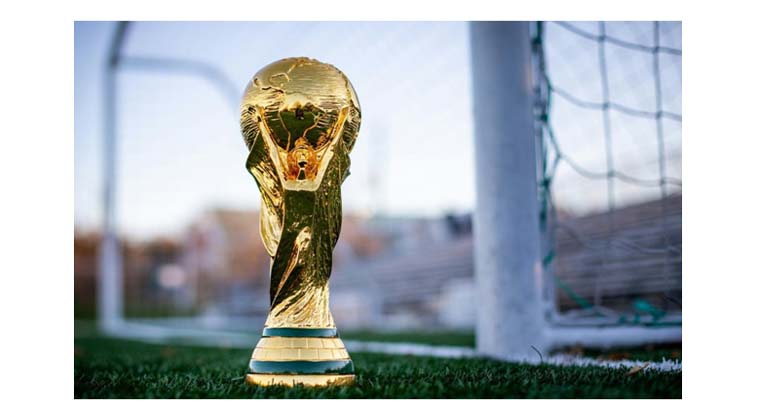
FIFA said on Wednesday it hoped all 16 host cities would be “ready” to stage games at the 2026 World Cup finals after US President Donald Trump suggested matches could be moved for security reasons.
“We hope every one of our 16 host cities will be ready to successfully host and fulfil all requirements,” a FIFA spokesperson said.
“Safety and security are the top priorities at all FIFA events worldwide.”
The spokesperson, however, added that, “Safety and security are obviously the government’s responsibility, and they decide what is in the best interest for public safety.”
Trump said Tuesday that FIFA president Gianni Infantino would support moving World Cup games from US cities if necessary.
In September, Trump raised the possibility of moving matches amid his crackdown on Democratic-run cities.
“If somebody is doing a bad job and if I feel there’s unsafe conditions, I would call Gianni, the head of FIFA, who’s phenomenal, and I would say, let’s move it to another location. And he would do that,” Trump told reporters at the White House when asked if games could be moved from Boston, one of the host cities.
“Very easily he would do it,” Trump added.
The US president suggested that, if necessary, events for the 2028 Los Angeles Olympics could also be moved.
Republican Trump’s administration has deployed national guard troops to Democratic-run US cities this year over the objections of local and state leaders, saying they are needed to counter crime and left-wing activism.
Boston is scheduled to host seven games at next year’s World Cup. San Francisco and Seattle are both hosting six matches each at the tournament while Los Angeles is hosting eight.
The United States is staging the World Cup jointly with Mexico and Canada, but will be hosting the bulk of the games in the tournament, which has been expanded to include 48 teams.
Eleven of the 16 host cities are in the United States for the June 11 to July 19 tournament.
Trump earlier this year appointed himself as chairman of a White House task force for the World Cup. (Punch)
New US tariffs on imported kitchen cabinets, vanities, lumber, timber and certain upholstered furniture have come into effect.
Under a proclamation signed by President Donald Trump last month, a 10% tariff on softwood lumber and timber imports will apply as of Tuesday.
A 25% tariff will also apply to imported kitchen cabinets and vanities – rising to 50% on 1 January – and a 25% tariff on upholstered wooden furniture will increase to 30%, unless new trade agreements are reached.
Trump has cited the need to protect US manufacturers and national security concerns for the move, but some in the industry worry the tariffs could raise housing costs and make customers postpone home renovations.
Tariffs are taxes on imported goods typically charged as a percentage of a good’s value and are paid to the US government by companies bringing in the products.
These firms may pass some or all of the extra cost on to their customers, which in this case means ordinary Americans and other US businesses.
The president’s tariff policies have been a key feature of his second term in the White House.
Trump has previously imposed sector-specific tariffs on steel, copper, aluminium, cars and vehicle components.
The additional global 10% tariffs on softwood lumber means the product from Canada – the second largest producer globally and a major US supplier – is now tariffed at more than 45%.
There is already a combined 35.16% US countervailing and anti-dumping duties placed on most Canadian producers as part of a decades-long dispute over the product between the two countries.
As part of existing trade deals with the US, duties on wood products from the UK will not exceed 10%, while those from the European Union and Japan will not exceed 15%.
The White House says Trump’s tariffs have been implemented “to protect against threats” to the US’s national security and to “strengthen manufacturing”.
But the National Association of Homebuilders said in a statement in late September that the new levies could raise housing costs.
“These new tariffs will create additional headwinds for an already challenged housing market by further raising construction and renovation costs,” said chairman Buddy Hughes.
According to Telsey Advisory Group managing director and senior retail analyst Cristina Fernández, retailers will have no choice but to raise prices on imported goods.
Speaking to the BBC’s US partner CBS News last month, she said retailers would try not to raise prices too much ahead of the holiday season, but “they can’t absorb 30% tariffs on top of other tariffs that are already in place”.
“They’ll have to pass through pricing, probably in the form of a double-digit price increase,” she added.
Last month Swedish furniture giant Ikea said the tariffs on furniture imports make doing business “more difficult”.
“The tariffs are impacting our business similarly to other companies, and we are closely monitoring the evolving situation,” the company said. (BBC)
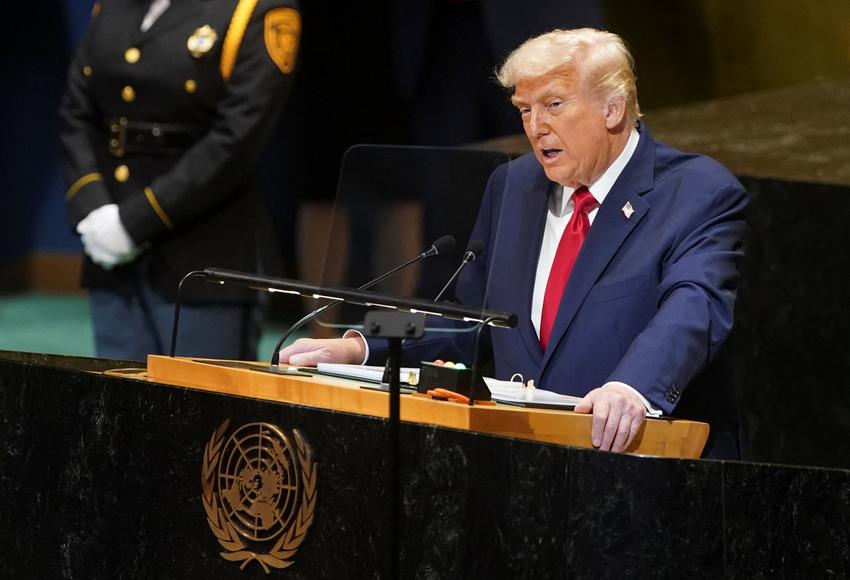
Donald Trump was heckled by left-wing politicians as he told Israel’s parliament the Gaza peace deal marks “the historic dawn of a new Middle East”.
Addressing the Knesset for more than an hour before signing the peace deal in Egypt on Monday afternoon, the US president said: “This is not only the end of a war.
“This is the end of an age of terror and death and the beginning of the age of faith and hope, and of God.
“It’s the start of a grand concord and lasting harmony for Israel and all the nations of what will soon be a truly magnificent region. I believe that so strongly. This is the historic dawn of a new Middle East.”
He added: “Against all odds, we have done the impossible, and brought our hostages home.”
The US president entered the Knesset to a two-minute standing ovation, before several members of the US and Israeli negotiating teams had their names read out to cheers and applause.
There was a particularly enthusiastic reaction for America’s envoy to the Middle East Steve Witkoff and Mr Trump’s son-in-law Jared Kushner who spearheaded the negotiations for the US president.
As Mr Trump heaped praise on Mr Witkoff, saying how he was a “great negotiator because he’s a great guy”, two left-wing Knesset members, Ayman Odeh and Ofer Kassif, heckled the president before being swiftly removed from the chamber.
Mr Trump said he has now stopped eight wars in eight months, claiming his personality “is all about stopping wars” – in reference to Hillary Clinton previously saying he has a personality that’s all about war.
The president called the peace deal, agreed on Thursday, an “incredible triumph” for Israel and the world to have so many nations working together for peace, and said the US joins Israel in “two everlasting vows – never forget, and never again”.
Mr Trump said “generations from now” this moment “will be remembered as the moment that everything began to change, and change very much for the better”.
“From Gaza to Iran, those bitter hatreds have delivered nothing but misery, suffering and failure,” he said.
The “total focus” of Gazans must be on restoring the fundamentals of stability, safety, dignity and economic development, he said.
“At last, not only for Israelis, but also for Palestinians and for many others, the long and painful nightmare is finally over, and as the dust settles, the smoke fades, the debris is removed and the ashes clear from the air,” he said.
During the lengthy speech, Mr Trump went off script, to much applause, as he called on Israeli President Isaac Herzog to pardon Israeli Prime Minister Benjamin Netanyahu, who is accused of corruption.
Earlier on Monday, Mr Trump simply said “yes” when asked by Israeli media if the war with Hamas was over.
In the Knesset gallery, a few people were wearing red hats that said: “Trump, The Peace President.”
Knesset speaker Amir Ohana announced he and US speaker of the house Mike Johnson will “rally speakers and presidents” from around the world to submit a nomination for Mr Trump for next year’s Nobel Peace Prize, to which the president smiled broadly.
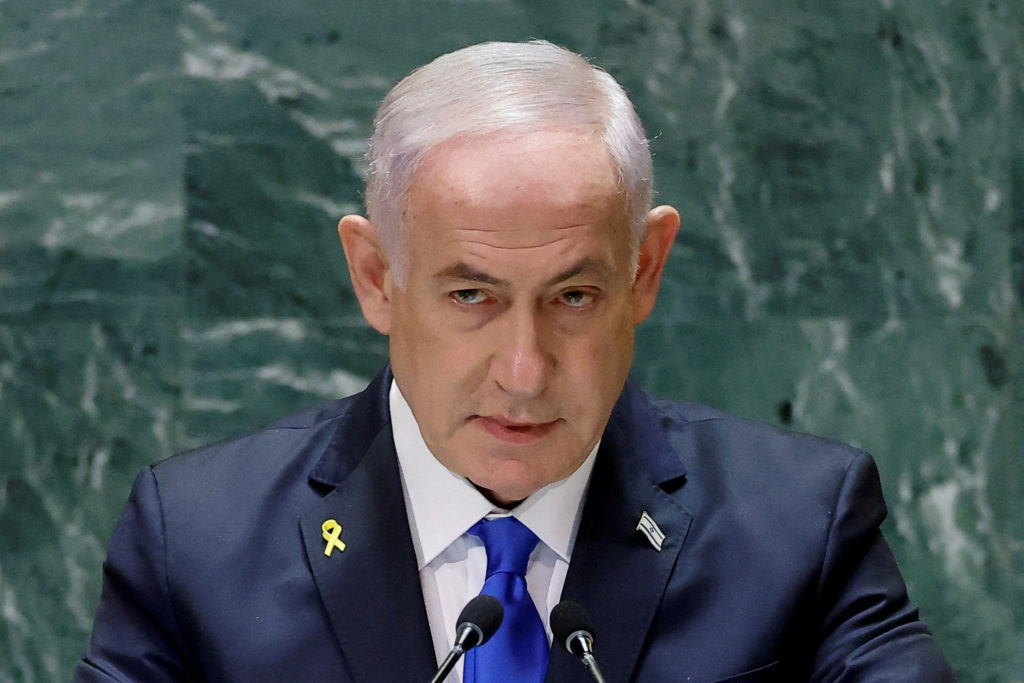
Speaking ahead of the president, Mr Netanyahu said Mr Trump is “the greatest friend the state of Israel has had in the White House” and thanked him for the peace deal that returned all the remaining hostages.
He said the agreement “achieves all our objectives” and “opens the door to a historic expansion of peace in our region and beyond”.
Mr Netanyahu said he is “committed to this peace” as he admitted Israel has paid “a high price for this war”.
“But our enemies now understand just how powerful and just how determined Israel is,” the Israeli PM added.
“They understand that attacking Israel on October 7th was a catastrophic mistake. They understand that Israel is strong and that Israel is here to stay.”
Just before Mr Trump addressed the Knesset, the remaining 20 living hostages – all men – were released by Hamas to Red Cross officials, the Israeli military said.
The bodies of the remaining 28 dead hostages are also expected to be handed over as part of the deal, although timings remained unclear.
Palestinians were also awaiting the release of hundreds of prisoners held by Israel as part of the peace agreement.
The peace deal comes two years after Hamas stormed Israel on October 7 2023, killing 1,200 people and taking 251 hostages.
Israel’s military offensive has killed more than 67,000 Palestinians in Gaza, according to the Hamas-run health ministry, which the UN deems reliable, and a famine has been declared in parts of the area. (SkyNews)
Israel’s Cabinet early Friday approved President Donald Trump’s plan for a ceasefire in the Gaza Strip and the release of all the remaining hostages held by Hamas, a key step toward ending a ruinous two-year war that has destabilized the Middle East.
A brief statement from Prime Minister Benjamin Netanyahu’s office said the Cabinet approved the “outline” of a deal to release the hostages, without mentioning other aspects of the plan that are more controversial.
The broader ceasefire plan included many unanswered questions, such as whether and how Hamas will disarm and who will govern Gaza. But the sides appeared closer than they have been in months to ending a war that has killed tens of thousands of Palestinians, reduced much of Gaza to rubble, brought famine to parts of the territory and left dozens of hostages, living and dead, in Gaza.
The war, which began with Hamas’ deadly attack on Israel on Oct. 7, 2023, has also triggered other conflicts in the region, sparked worldwide protests and led to allegations of genocide that Israel denies.
Some 1,200 people were killed in the Hamas-led assault, and 251 were taken hostage. In Israel’s ensuing offensive, more than 67,000 Palestinians have been killed in Gaza and nearly 170,000 wounded, according to Gaza’s Health Ministry, which doesn’t differentiate between civilians and combatants but says around half of the deaths were women and children.
In the hours leading up to the Israeli Cabinet’s vote, Israeli strikes continued. Explosions were seen Thursday in northern Gaza, and a strike on a building in Gaza City killed at least two people and left more than 40 trapped under rubble, according to the Palestinian Civil Defense.
At least 11 dead Palestinians and another 49 who were wounded arrived at hospitals over the past 24 hours, Gaza’s Health Ministry said.
An Israeli military official who spoke on the condition of anonymity in line with military guidelines said Israel was hitting targets that posed a threat to its troops as they reposition. Hamas blasted Israel over the strike, saying Netanyahu was trying to “shuffle the cards and confuse” efforts by mediators to end the war in Gaza.
A senior Hamas official and lead negotiator made a speech Thursday laying out what he says are the core elements of the ceasefire deal: Israel releasing around 2,000 Palestinian prisoners, opening the border crossing with Egypt, allowing aid to flow and withdrawing from Gaza.
Khalil al-Hayya said all women and children held in Israeli jails will also be freed. He did not offer details on the extent of the Israeli withdrawal from Gaza.
Al-Hayya said the Trump administration and mediators had given assurances that the war is over, and that Hamas and other Palestinian factions will now focus on achieving self-determination and establishing a Palestinian state.
“We declare today that we have reached an agreement to end the war and the aggression against our people,” Al-Hayya said in a televised speech Thursday evening.
In other developments, U.S. officials announced that they would send about 200 troops to Israel to help support and monitor the ceasefire deal as part of a broader, international team. The officials spoke on condition of anonymity to discuss details not authorized for release.
In the southern Gaza city of Khan Younis, reactions to the announcement of a ceasefire were relatively muted and often colored by grief.
“I am happy and unhappy. We have lost a lot of people and lost loved ones, friends and family. We lost our homes,” said Mohammad Al-Farra. “Despite our happiness, we cannot help but think of what is to come. … The areas we are going back to, or intending to return to, are uninhabitable.”
In Tel Aviv, families of the remaining hostages popped champagne and cried tears of joy after Trump announced the deal.
In Jerusalem on Thursday, Sharon Canot celebrated with some others.
“We are so excited this morning. We cried all morning,” she said. “It’s been two years that we are in horror.”
Under the terms, Hamas intends to release all living hostages in a matter of days, while the Israeli military will begin a withdrawal from the majority of Gaza, people familiar with the matter told The Associated Press. They spoke on condition of anonymity to discuss details of an agreement that has not fully been made public. Some 20 of the 48 hostages still in captivity are believed to be alive.
In a short video posted by U.S. Commerce Secretary Howard Lutnick, Trump was seen speaking by phone to a group of elated hostage families.
“They are all coming back on Monday,” said Trump, who is expected to visit the region in the coming days.
Tom Fletcher, the U.N. humanitarian chief, told reporters Thursday that officials have 170,000 metric tons of medicine, aid and other supplies at ready for transport into Gaza when they are given a green light.
The deal, which was expected to be signed in Egypt, will include a list of prisoners to be released and maps for the first phase of an Israeli withdrawal to new positions in Gaza, according to two Egyptian officials briefed on the talks, a Hamas official and another official.
Israel will publish the list of the prisoners, and victims of their attacks will have 24 hours to lodge objections.
The withdrawal could start as soon as Thursday evening, said the officials, who spoke on condition of anonymity because they were not authorized to be publicly named speaking about the negotiations. The hostage and prisoner releases are expected to begin Monday, the officials from Egypt and Hamas said, though the other official said they could occur as early as Sunday night.
Five border crossings would reopen, including the Rafah crossing between Gaza and Egypt, the Egyptian and Hamas officials said.
The Trump plan calls for Israel to maintain an open-ended military presence inside Gaza, along its border with Israel. An international force, comprised largely of troops from Arab and Muslim countries, would be responsible for security inside Gaza. The U.S. would lead a massive internationally funded reconstruction effort.
The plan also envisions an eventual role for the Palestinian Authority — something Netanyahu has long opposed. But it requires the authority, which administers parts of the West Bank, to undergo a sweeping reform program that could take years.
The Trump plan is even more vague about a future Palestinian state, which Netanyahu firmly rejects. (PBS)
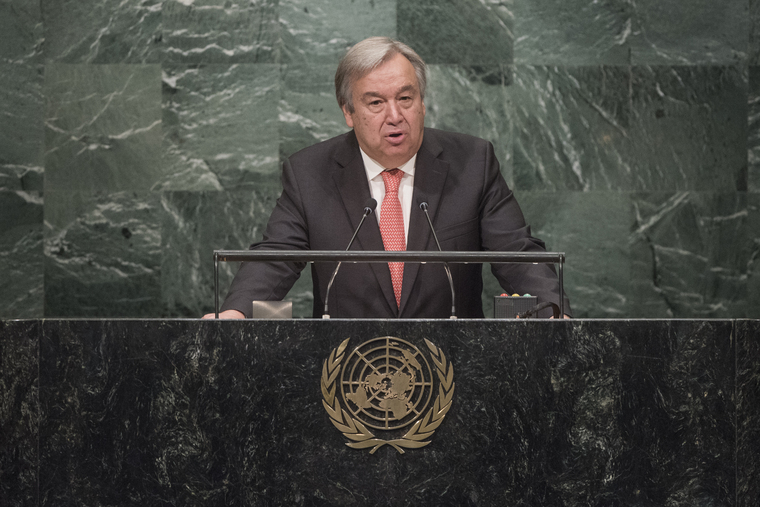
The United Nations Secretary General, António Guterres, has called on all parties to adhere to the reached agreement between Israel and Hamas on the first phase of a U.S.-backed Gaza peace plan.
“All hostages must be released in a dignified manner. A permanent ceasefire must be secured,” Guterres said in a statement on X on Thursday, urging an end to fighting and immediate, unhindered access for humanitarian aid into Gaza. “The suffering must end,” he added.
Guterres praised diplomatic efforts by the United States, Qatar, Egypt and Turkey, which helped broker the deal at talks in the Egyptian coastal resort of Sharm el-Sheikh.
The United Nations would support full implementation of the agreement, expand humanitarian aid and assist reconstruction efforts in Gaza, Guterres said.
The UN chief also encouraged both sides to seize this momentous opportunity to advance a two-state solution that would allow Israelis and Palestinians to live in peace and security. “The stakes have never been higher,” he said.
The two-state solution envisages an independent Palestinian state coexisting peacefully alongside Israel.
Both Israeli Prime Minister Benjamin Netanyahu and Hamas currently reject such an outcome. (Punch)
Electronic Arts, the company behind video games like Madden NFL, Battlefield and The Sims, is being acquired for $US52.5 billion ($80 billion), in what could become the largest-ever buyout funded by private-equity firms.
The private equity firm Silver Lake Partners, Saudi Arabia’s sovereign wealth fund PIF, and Affinity Partners will pay EA’s stockholders $US210 per share.
Affinity Partners is run by President Donald Trump’s son-in-law, Jared Kushner.
If the transaction closes as anticipated, it will end EA’s 36-year history as a publicly traded company.
PIF, which was already the largest insider stakeholder in Electronic Arts, will be rolling over its existing 9.9 per cent stake in the company.
The commitment to the massive deal is in line with recent activity by Saudi Arabia’s sovereign wealth fund, wrote Andrew Marok of Raymond James.
“The Saudi PIF has been a very active player in the video gaming market since 2022, taking minority stakes in most scaled public video gaming publishers, and also outright purchases of companies like ESL, FACEIT, and Scopely,” he wrote.
“The PIF has made its intentions to scale its gaming arm, Savvy Gaming Group, clear, and the EA deal would represent the biggest such move to date by some distance.”
Electronic Arts would be taken private and its headquarters would remain in Redwood City, California.
The total value of the deal eclipses the $US32 billion price paid to take Texas utility TXU private in 2007.
EA’s initial public offering on the stock market came seven years after it was founded by former Apple employee William “Trip” Hawkins, who began playing analog versions of baseball and football made by Strat-O-Matic as a teenager during the 1960s.
Chief executive Andrew Wilson has led the company since 2013 and he will remain in that role, the firms said on Monday, local time.
“Electronic Arts is an extraordinary company with a world-class management team and a bold vision for the future,” Mr Kushner, who serves as CEO of Affinity Partners, said.
“I’ve admired their ability to create iconic, lasting experiences, and as someone who grew up playing their games — and now enjoys them with his kids — I couldn’t be more excited about what’s ahead.”
This marks the second high-profile deal involving Silver Lake and a technology company with a legion of loyal fans in recent weeks.
Silver Lake is also part of a newly formed joint venture spearheaded by Oracle involved in a deal to take over the US oversight of TikTok’s social video platform, although all the details of that complex transaction have not been divulged yet. (ABC)
The United States men’s national team secured first place in Group E at the FIFA Under-20 World Cup, despite a 2-1 defeat to South Africa in their group-stage finale on Sunday in Rancagua.
The USMNT will face Italy next Thursday, Oct. 9, in a Round of 16 matchup.
Following South Africa’s victory and France’s 6-0 win over New Caledonia, three teams finished with 6 points in Group E. The U.S. claimed the top spot thanks to a commanding +10 goal differential, narrowly beating South Africa (+5) in second place and France (+4) in third.
France now hopes to advance to the knockout stage as one of the four best third-place teams. New Caledonia closed out Group E after three consecutive defeats, conceding 20 goals and scoring just one.
The U.S. took an early lead in the 12th minute when Noah Cobb headed home off a set piece. But just five minutes later, South Africa equalized with an own goal by American defender Joshua Wynder.
Bafana Bafana took the lead in first-half added time when Gomolemo Kekana finished a quick counterattack.
In the second half, the Americans pushed for an equalizer, but their defense was exposed to the South Africans’ rapid breaks.
U.S. coach Marko Mitrovic made six changes to the Starting XI that defeated France 3-0 on Thursday, with Cobb making his first appearance of the tournament, while Reed Baker-Whiting, Luca Bombino, Luke Brennan, Matthew Corcoran, and Pedro Soma all earned their first starts.
This is the 13th time the U.S. has advanced from the group stage of the U20 World Cup. The 2025 edition marks the sixth time the Americans have accomplished this feat as group winners. (ESPN)
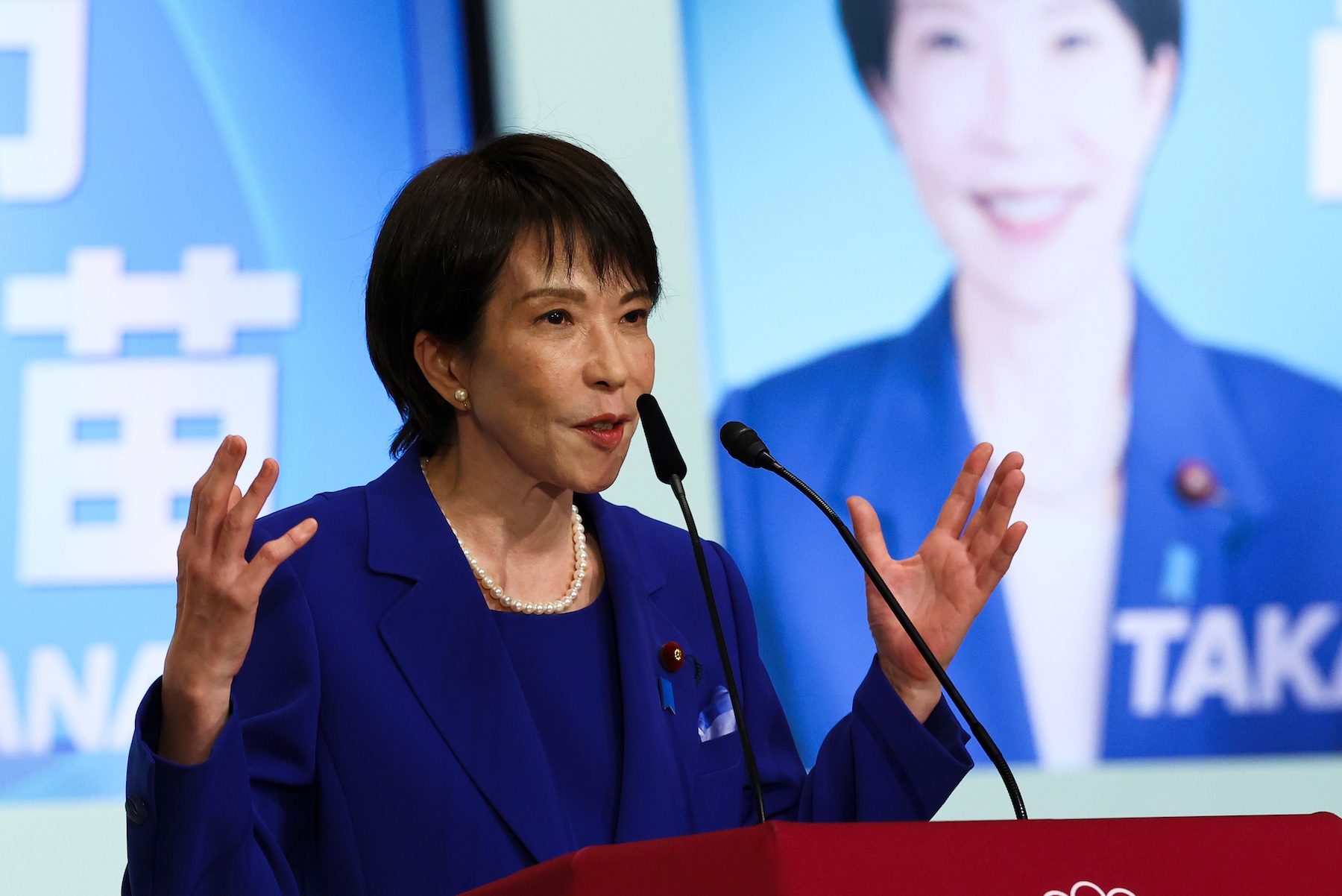
Japan’s ruling party picked hardline conservative Sanae Takaichi as its head on Saturday, putting her on course to become the country’s first female prime minister in a move set to jolt investors and neighbors.
The Liberal Democratic Party, which has ruled Japan for almost all of the postwar era, elected Takaichi, 64, to regain trust from a public angered by rising prices and drawn to opposition groups promising stimulus and clampdowns on migrants.
A vote in parliament to choose a replacement for outgoing Shigeru Ishiba is expected on October 15. Takaichi is favored as the ruling coalition has the largest number of seats.
Takaichi, the only woman among the five LDP candidates, beat a challenge from the more moderate Shinjiro Koizumi, 44, who was bidding to become the youngest modern leader.
Takaichi got 183 votes, while Koizumi garnered 156 in a runoff.
A former economic security and internal affairs minister with an expansionary fiscal agenda for the world’s fourth-largest economy, Takaichi takes over a party in crisis.
Various other parties, including the expansionist Democratic Party for the People and the anti-immigration Sanseito, have been steadily luring voters, especially younger ones, away from the LDP.
The LDP and its coalition partner lost their majorities in both houses under Ishiba over the past year, triggering his resignation.
“Recently, I have heard harsh voices from across the country saying we don’t know what the LDP stands for anymore,” Takaichi said in a speech before the second-round vote. “That sense of urgency drove me. I wanted to turn people’s anxieties about their daily lives and the future into hope.”
Takaichi, who says her hero is Margaret Thatcher, Britain’s first female prime minister, offers a starker vision for change than Koizumi and is potentially more disruptive.
An advocate of late premier Shinzo Abe’s “Abenomics” strategy to boost the economy with aggressive spending and easy monetary policy, she has previously criticized the Bank of Japan’s interest rate increases.
Such a spending shift could spook investors worried about one of the world’s biggest debt loads.
Naoya Hasegawa, chief bond strategist at Okasan Securities in Tokyo, said Takaichi’s election had weakened the chances of the BOJ raising rates this month, which markets had priced at around a 60% chance before the vote.
Takaichi has also raised the possibility of redoing an investment deal with U.S. President Donald Trump that lowered his punishing tariffs in return for Japanese taxpayer-backed investment.
The U.S. ambassador to Japan, George Glass, congratulated Takaichi, posting on X that he looked forward to strengthening the Japan-U.S. partnership “on every front”.
But her nationalistic positions – such as her regular visits to the Yasukuni shrine to Japan’s war dead, viewed by some Asian countries as a symbol of its past militarism – may rile neighbors like South Korea and China.
South Korea will seek to “cooperate to maintain the positive momentum in South Korea-Japan relations”, President Lee Jae Myung’s office said in a statement.
Takaichi also favors revising Japan’s pacifist postwar constitution and suggested this year that Japan could form a “quasi-security alliance” with Taiwan, the democratically governed island claimed by China.
Taiwan President Lai Ching-te welcomed her election, saying she was a “steadfast friend of Taiwan”.
“It is hoped that under the leadership of the new (LDP) President Takaichi, Taiwan and Japan can deepen their partnership in areas such as economic trade, security, and technological cooperation,” he said in a statement.
If elected prime minister, Takaichi said she would travel overseas more regularly than her predecessor to spread the word that “Japan is Back!”
“I have thrown away my own work-life balance and I will work, work, work,” Takaichi said in her victory speech.
Some of her supporters viewed her selection as a watershed in Japan’s male-dominated politics, though opinion polls suggest her socially conservative positions are favored more by men than women.
“The fact that a woman was chosen might be seen positively. I think it shows that Japan is truly starting to change and that message is getting across,” 30-year-old company worker Misato Kikuchi said outside Tokyo’s Shimbashi station.
Takaichi must also seek to blunt the rise of Sanseito, which broke into the political mainstream in a July election, appealing to conservative voters disillusioned with the LDP.
Echoing Sanseito’s warnings about foreigners, she kicked off her first official campaign speech with an anecdote about tourists reportedly kicking sacred deer in her hometown of Nara.
Takaichi, whose mother was a police officer, promised to clamp down on rule-breaking visitors and immigrants, who have come to Japan in record numbers in recent years.”We hope she will … steer Japanese politics in an ‘anti-globalism’ direction to protect national interests and help the people regain prosperity and hope,” Sanseito said in a statement. (JapanToday)
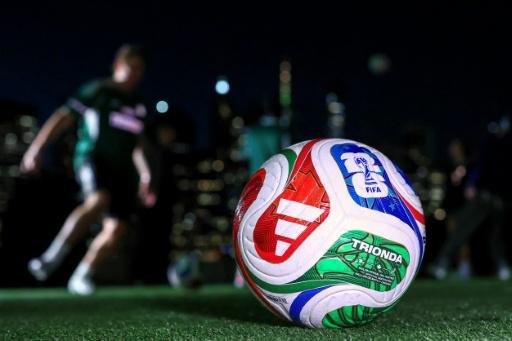
FIFA has unveiled the official match ball for the 2026 World Cup, combining high-tech refinements and design details celebrating the three co-host countries — the United States, Mexico and Canada.
The ball, called Trionda, was again designed by German manufacturer Adidas, provider of the official World Cup balls since the 1970 tournament.
“I am delighted and proud to present the Trionda,” FIFA president Gianni Infantino as the ball was revealed at an event in New York on Thursday.
The first World Cup organized by three countries, with 48 teams competing, inspired both the name and the design of the ball featuring red, blue and green colors.
Iconography from each host nation — maple leaves from Canada, the eagle from Mexico and stars from the United States also feature, with a triangle referring to the unity of the three countries.
Less visible are technological advancements that include deep seams designed to produce “optimal in-flight stability” and embossed icons that improve grip in wet or humid conditions.
A motion sensor chip will relay information on the ball’s movement, sending data to the video assistant referee (VAR) system.
The unveiling marks another step in the countdown to the North American World Cup, which will be held June 11-July 19 next year.
FIFA has launched its online phased ticket sales procedures, with more than 4.5 million fans from 216 countries and territories entering the presale draw.
The tournament draw will be held in Washington on December 5. (JapanToday)
Hamas said on Friday it was ready to release hostages held in Gaza under a peace deal proposed by but wantDonald Trumped negotiations on the details and a say in the future of the Palestinian territory.
“The movement announces its approval for the release of all hostages — living and remains — according to the exchange formula included in President Trump’s proposal,” Hamas said in a statement, adding it was ready to enter talks “to discuss the details”.
The peace plan for Gaza, presented by Trump this week and backed by Israeli Prime Minister Benjamin Netanyahu, calls for a ceasefire, the release of hostages within 72 hours, Hamas’s disarmament and a gradual Israeli withdrawal from Gaza.
In the statement, Hamas said it agreed to hand over power in Gaza to a body of Palestinian technocrats but said decisions on the territory’s long-term future would need to be discussed within a Palestinian framework “in which Hamas will participate and contribute responsibly”.
Hamas’s statement made no mention of its intentions on disarmament, a key part of the US president’s plan and a move the group has previously resisted.
Following the announcement, Mahmoud Mardawi, a senior Hamas official, told AFP the group welcomed Trump’s proposal, but that “without clear terms, criteria, and transparency, we need clarification and confirmation through a negotiated agreement”.
“The American proposal is vague, ambiguous, and lacks clarity,” Mardawi said.
Hamas had “made our position clear, and we are now waiting to see how the details of the terms will be implemented and clarified”, he added.
Under the US plan published on Monday — which has been welcomed by world powers, including Arab and Muslim nations — a post-war transitional authority for Gaza would be headed by Trump himself.
Earlier on Friday the US president gave Hamas until Sunday night to respond to the plan, and warned the group it faced “all hell” if it did not agree to the terms. (Vanguard)



 English