
Posted on Leave a comment

Takaichi elected LDP leader; likely to become Japan’s first female prime minister

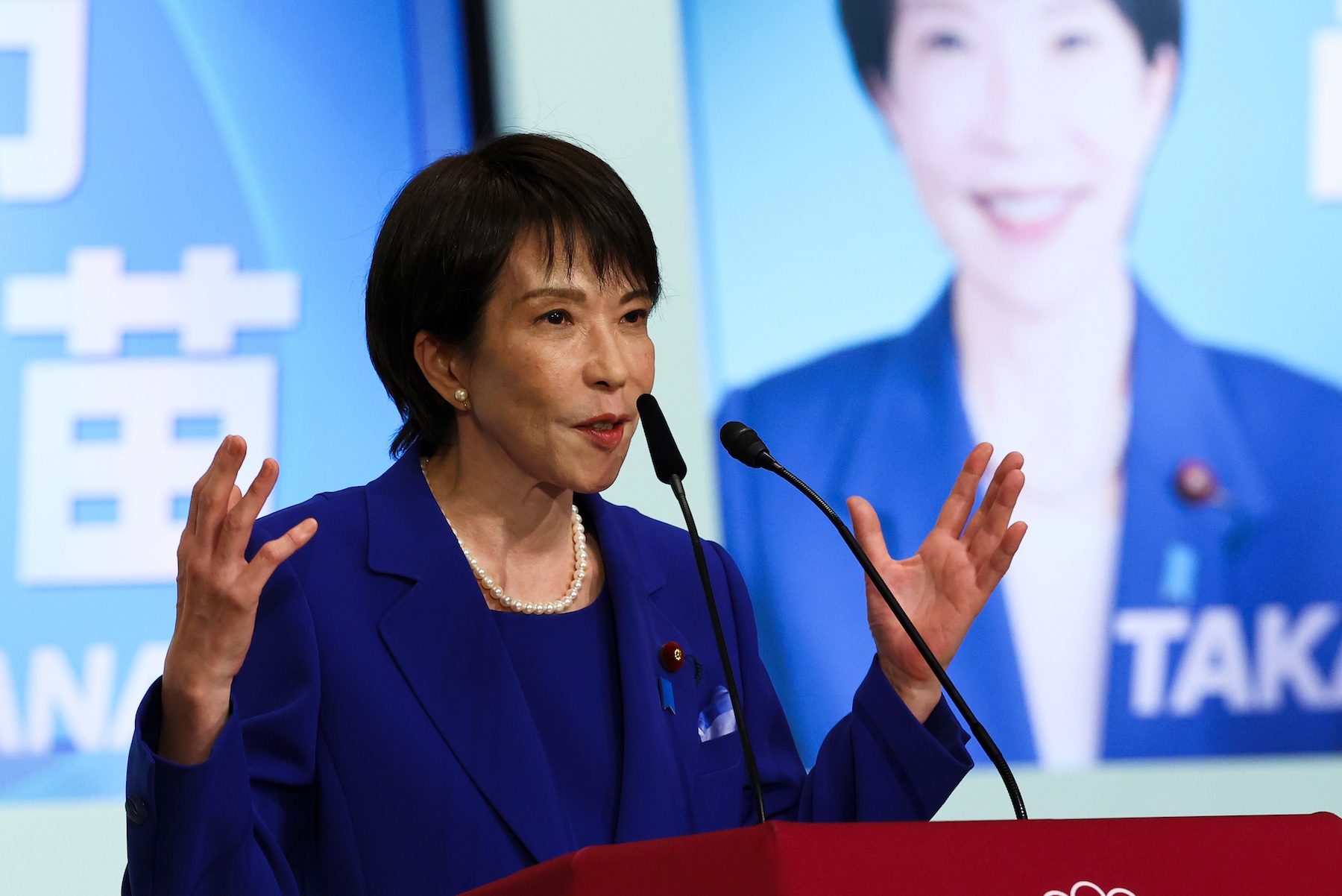
Japan’s ruling party picked hardline conservative Sanae Takaichi as its head on Saturday, putting her on course to become the country’s first female prime minister in a move set to jolt investors and neighbors.

The Liberal Democratic Party, which has ruled Japan for almost all of the postwar era, elected Takaichi, 64, to regain trust from a public angered by rising prices and drawn to opposition groups promising stimulus and clampdowns on migrants.

A vote in parliament to choose a replacement for outgoing Shigeru Ishiba is expected on October 15. Takaichi is favored as the ruling coalition has the largest number of seats.

Takaichi, the only woman among the five LDP candidates, beat a challenge from the more moderate Shinjiro Koizumi, 44, who was bidding to become the youngest modern leader.

Takaichi got 183 votes, while Koizumi garnered 156 in a runoff.

A former economic security and internal affairs minister with an expansionary fiscal agenda for the world’s fourth-largest economy, Takaichi takes over a party in crisis.

Various other parties, including the expansionist Democratic Party for the People and the anti-immigration Sanseito, have been steadily luring voters, especially younger ones, away from the LDP.

The LDP and its coalition partner lost their majorities in both houses under Ishiba over the past year, triggering his resignation.

“Recently, I have heard harsh voices from across the country saying we don’t know what the LDP stands for anymore,” Takaichi said in a speech before the second-round vote. “That sense of urgency drove me. I wanted to turn people’s anxieties about their daily lives and the future into hope.”

Takaichi, who says her hero is Margaret Thatcher, Britain’s first female prime minister, offers a starker vision for change than Koizumi and is potentially more disruptive.

An advocate of late premier Shinzo Abe’s “Abenomics” strategy to boost the economy with aggressive spending and easy monetary policy, she has previously criticized the Bank of Japan’s interest rate increases.

Such a spending shift could spook investors worried about one of the world’s biggest debt loads.

Naoya Hasegawa, chief bond strategist at Okasan Securities in Tokyo, said Takaichi’s election had weakened the chances of the BOJ raising rates this month, which markets had priced at around a 60% chance before the vote.

Takaichi has also raised the possibility of redoing an investment deal with U.S. President Donald Trump that lowered his punishing tariffs in return for Japanese taxpayer-backed investment.

The U.S. ambassador to Japan, George Glass, congratulated Takaichi, posting on X that he looked forward to strengthening the Japan-U.S. partnership “on every front”.

But her nationalistic positions – such as her regular visits to the Yasukuni shrine to Japan’s war dead, viewed by some Asian countries as a symbol of its past militarism – may rile neighbors like South Korea and China.

South Korea will seek to “cooperate to maintain the positive momentum in South Korea-Japan relations”, President Lee Jae Myung’s office said in a statement.

Takaichi also favors revising Japan’s pacifist postwar constitution and suggested this year that Japan could form a “quasi-security alliance” with Taiwan, the democratically governed island claimed by China.

Taiwan President Lai Ching-te welcomed her election, saying she was a “steadfast friend of Taiwan”.

“It is hoped that under the leadership of the new (LDP) President Takaichi, Taiwan and Japan can deepen their partnership in areas such as economic trade, security, and technological cooperation,” he said in a statement.

If elected prime minister, Takaichi said she would travel overseas more regularly than her predecessor to spread the word that “Japan is Back!”

“I have thrown away my own work-life balance and I will work, work, work,” Takaichi said in her victory speech.

Some of her supporters viewed her selection as a watershed in Japan’s male-dominated politics, though opinion polls suggest her socially conservative positions are favored more by men than women.

“The fact that a woman was chosen might be seen positively. I think it shows that Japan is truly starting to change and that message is getting across,” 30-year-old company worker Misato Kikuchi said outside Tokyo’s Shimbashi station.

Takaichi must also seek to blunt the rise of Sanseito, which broke into the political mainstream in a July election, appealing to conservative voters disillusioned with the LDP.

Echoing Sanseito’s warnings about foreigners, she kicked off her first official campaign speech with an anecdote about tourists reportedly kicking sacred deer in her hometown of Nara.

Takaichi, whose mother was a police officer, promised to clamp down on rule-breaking visitors and immigrants, who have come to Japan in record numbers in recent years.”We hope she will … steer Japanese politics in an ‘anti-globalism’ direction to protect national interests and help the people regain prosperity and hope,” Sanseito said in a statement. (JapanToday)
Posted on Leave a comment

Norman Tebbit, former Tory cabinet minister, dies at 94

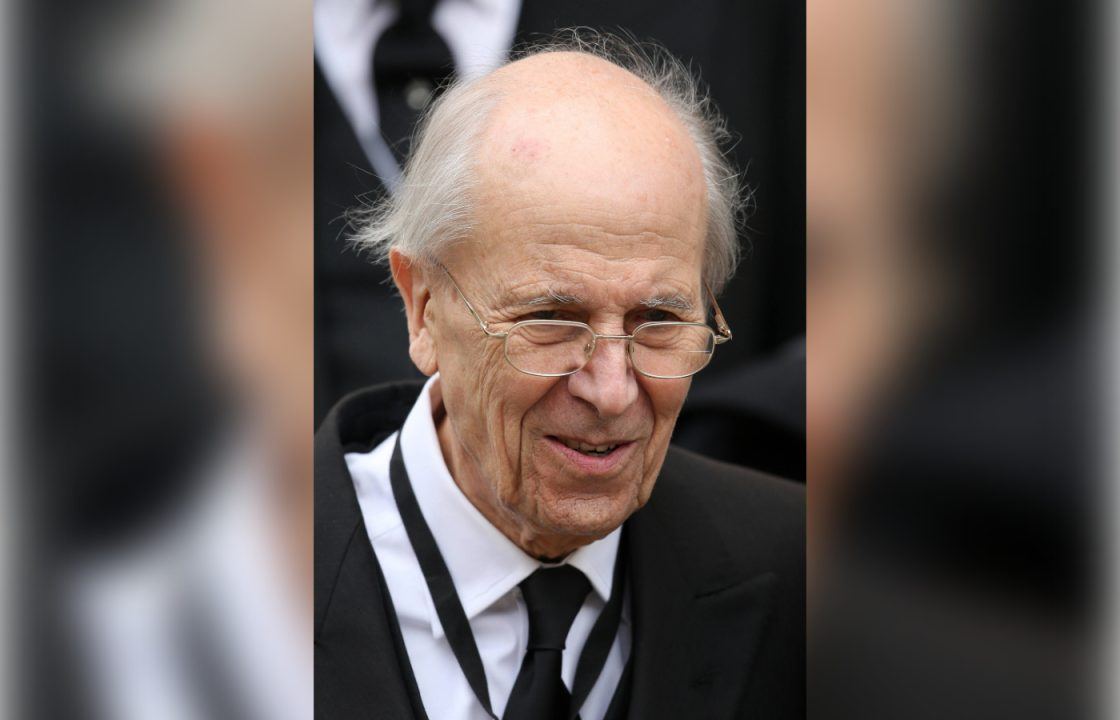
Norman Tebbit, the former Conservative cabinet minister and one of Margaret Thatcher’s most loyal supporters, has died at the age of 94.

Tebbit represented the constituencies of Epping and Chingford as an MP for 22 years before receiving a life peerage, making him Lord Tebbit of Chingford. He retired from the House of Lords in 2022.

During his long political career he served as employment secretary, trade and industry secretary, chancellor of the duchy of Lancaster and chair of the Conservative party.

His death was confirmed by his son, William, who said in a statement: “At 11.15pm on 7 July 2025 Lord Tebbit died peacefully at home aged 94. His family ask that their privacy is respected at this time and a further statement regarding funeral arrangements will be made in due course.”

Former Conservative prime ministers led tributes to the Tory grandee. Rishi Sunak said Tebbit was a “titan of Conservative politics”. Sunak said his “resilience, conviction and service left a lasting mark on our party and our country”.

David Cameron said Tebbit was a man of “great conviction” and “profound self-belief”, adding: “They don’t make ’em like Norman any more.”

“A man of great conviction, profound self-belief and with a direct and sometimes abrasive tone, he generated strong reactions from all sides,” Cameron said.

“I was sometimes on the hard end of that, but there is no doubting the tremendous impact he had on our country and my party. A staunch believer in self-reliance, hard work and enterprise, as secretary of state for employment he reformed our outdated and ineffective trade union laws, and thus transformed industrial relations in Britain for good.

“But for all his caustic tongue and sharp wit, he was also privately a kind and thoughtful man. The way he stepped aside from public life to care so tenderly and devotedly for his beloved wife, Margaret, after the Brighton bomb speaks to his compassion and the importance he placed on family, above all.”

The Conservative leader, Kemi Badenoch, said Tebbit “was an icon in British politics and his death will cause sadness across the political spectrum”.

Downing Street said Keir Starmer’s thoughts were with Tebbit’s family and paid tribute to the “great strength he showed” in the face of the Brighton bombing. “He will be missed by many,” a Number 10 spokesman said.

As employment secretary, Tebbit took on the trade unions, and as chair of the Conservative party from 1985 to 1987 he helped Thatcher secure her third general election victory.

He sustained serious injuries in the 1984 Brighton bombing, which left his wife, Margaret, paralysed from the neck down.

Badenoch said: “He was one of the leading exponents of the philosophy we now know as Thatcherism and his unstinting service in the pursuit of improving our country should be held up as an inspiration to all Conservatives. As a minister in Mrs Thatcher’s administration, he was one of the main agents of the transformation of our country, notably in taming the trade unions.

“But to many of us it was the stoicism and courage he showed in the face of terrorism which inspired us as he rebuilt his political career after suffering terrible injuries in the Brighton bomb, and cared selflessly for his wife, Margaret, who was gravely disabled in the bombing – a reminder that he was first and foremost a family man who always held true to his principles. He never buckled under pressure and he never compromised.”

Tebbit was a prominent figure in the Thatcher era with a reputation as a political bruiser unafraid of confrontation as he helped drive forward the economic and social changes that characterised the 1980s.

After inner-city riots in Handsworth, Birmingham, and Brixton, south London, in 1981, he made comments that led to him being called “On yer bike” by critics who felt he was a symbol of Conservative indifference to rising unemployment.

Rejecting suggestions that street violence was a natural response to rising unemployment, he retorted: “I grew up in the 30s with an unemployed father. He didn’t riot. He got on his bike and looked for work, and he kept looking till he found it.”

In 1990, in response to concerns over integration of migrants, he set out the “cricket test”, suggesting the side British Asians supported in internationals should be seen as an indicator of whether they were loyal to the UK, leading to accusations of racism.

He was memorably described by Labour’s Michael Foot as a “semi-housetrained polecat”, and was also nicknamed the “Chingford skinhead” in reference to his east London constituency, while his puppet on the satirical TV show Spitting Image was a leather jacket-clad hardman – an image Tebbit enjoyed because “he was always a winner”.

The former chancellor Nadhim Zahawi said: “Rest in eternal peace, great man. Norman Tebbit was a giant of Conservative politics and Conservative ideals. A man who looked after his beloved wife beautifully after the horrific terror attack by the IRA. A man who nurtured and befriended young conservatives like me.”

The Reform UK leader, Nigel Farage, said on X: “Norman gave me a lot of help in my early days as an MEP and was a great man. RIP.” (Guardian)