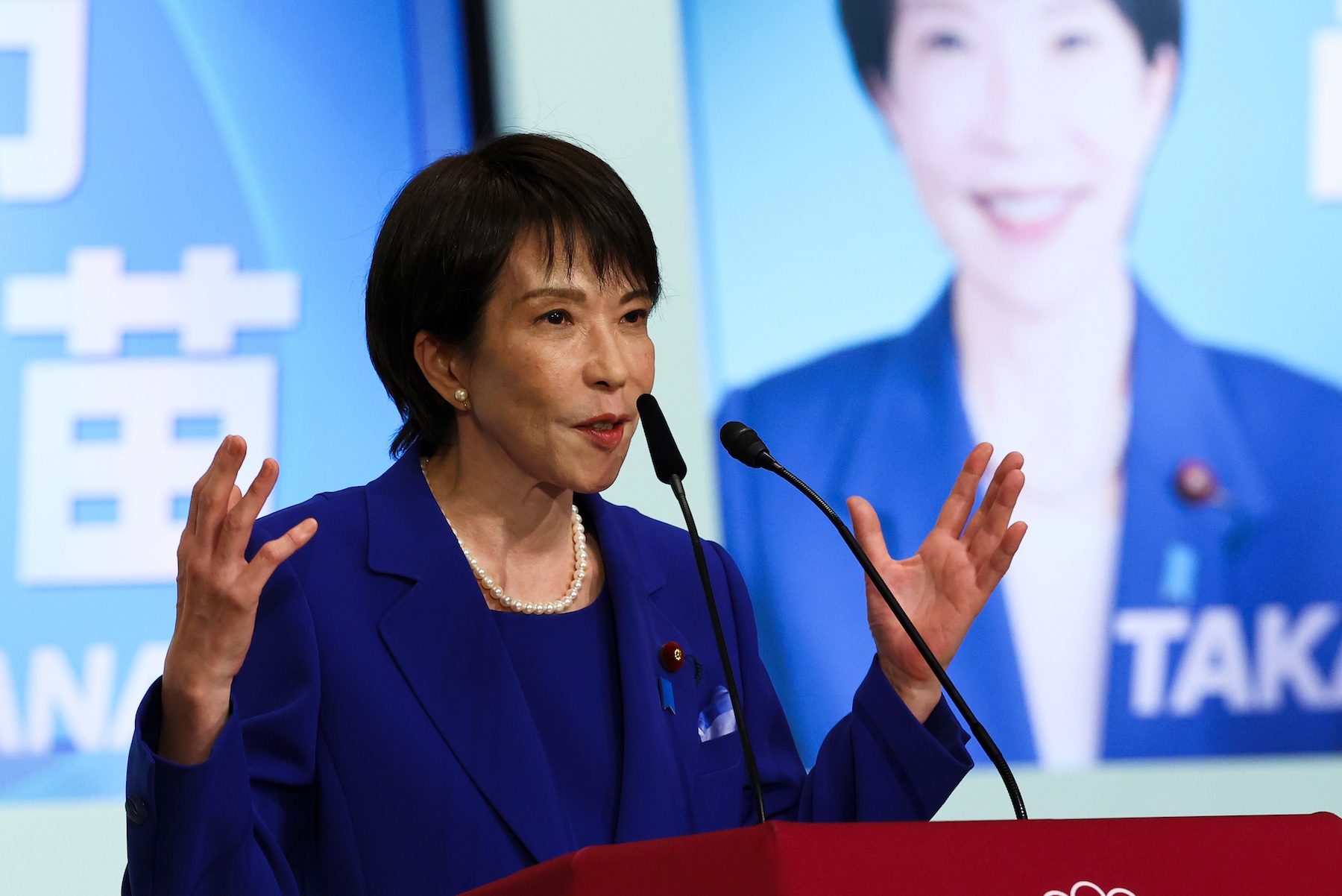
Japanese Prime Minister Sanae Takaichi said the alliance between Tokyo and Washington would collapse if Japan failed to act in the event of an attack on the U.S. military during a conflict in Taiwan.
Detailing the Japanese response to a hypothetical Taiwan crisis, Takaichi appeared to dial back on her remarks in November that suggested Tokyo could intervene militarily during a potential attack on the island.
That comment provoked the ire of Beijing, which regards the democratic island as its own territory.
Ahead of a snap election in February, Takaichi was asked during a news program Monday about her remarks in November that suggested Tokyo could intervene militarily during a potential attack on Taiwan.
Takaichi pointed out that in the event of conflict, Japan and the United States might jointly conduct an evacuation operation to rescue Japanese and American nationals.
“If the U.S. military, acting jointly with Japan, comes under attack and Japan does nothing and runs home, the Japan-U.S. alliance will collapse,” she said on the TV Asahi program.
“If something serious happens there, we would have to go to rescue the Japanese and American citizens in Taiwan. In that situation, there may be cases where Japan and the U.S. take joint action,” the prime minister said.
She added: “We will respond strictly within the bounds of the law, making a comprehensive judgment based on the circumstances.”
In the wake of Takaichi’s comments in November, China has discouraged its nationals from traveling to Japan, citing deteriorating public security and criminal acts against Chinese nationals in the country.
Beijing is reportedly also choking off exports to Japan of rare-earth products crucial for making everything from electric cars to missiles. (JapanToday)
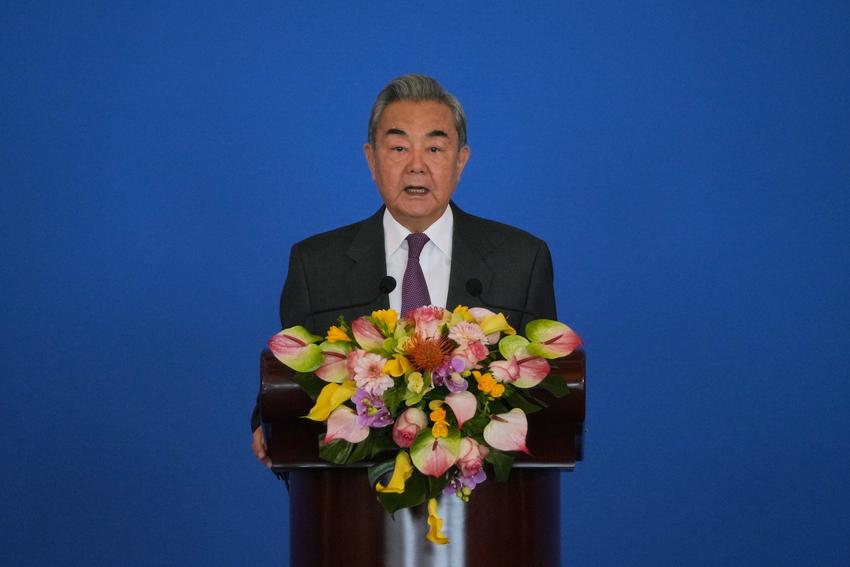
Chinese Foreign Minister Wang Yi on Tuesday lashed out at Japanese Prime Minister Sanae Takaichi for “openly challenging” Chinese territorial sovereignty after the Japanese leader’s remark on a Taiwan emergency heightened bilateral tensions.
Wang, speaking at a symposium in Beijing, also said that Japan has failed to “deeply reflect” on its wartime past, including its invasion of China.
Japan’s current leadership has been “openly challenging China’s territorial sovereignty, the historical conclusions of World War II, and the postwar international order,” Wang said.
Japan invaded a vast swath of China before World War II. The Asian neighbors have been at odds over wartime history among other issues.
Sino-Japanese relations have worsened since Takaichi, seen as a security hawk, said in early November that a Taiwan emergency could be a “survival-threatening” situation for Japan and prompt a response by Japan’s Self-Defense Forces.
China sees Taiwan as a renegade province that must be reunified with the mainland, by force if necessary.
Wang’s remarks came as China conducted military drills in five areas encircling self-ruled Taiwan in a warning against separatism and external interference. (JapanToday)
Japan has warned its citizens in China to be careful of their surroundings and to avoid big crowds amid a diplomatic row over Prime Minister Sanae Takaichi’s comments on Taiwan.
The escalating spat has already seen Beijing advise Chinese citizens to avoid traveling to Japan and hit Tokyo stocks.
“Pay attention to your surroundings and avoid as much as possible squares where large crowds gather or places that are likely to be identified as being used by many Japanese people,” the Japanese embassy in China said in a statement on its website dated Monday.
Minoru Kihara, Japan’s top government spokesman, said Tuesday that such advice was issued “based on a comprehensive assessment of the political situation, including the security situation in the relevant country or region, as well as the social conditions.”
The diplomatic feud between China and Japan was ignited by Takaichi’s suggestion that Tokyo could intervene militarily in any attack on Taiwan.
China, which claims Taiwan as part of its territory and has not ruled out using force to take the democratic island, reacted furiously to Takaichi’s comments.
It called for her to retract the remarks and summoned the Japanese ambassador on Friday.
In a post on X on November 8, the Chinese consul general in Osaka, Xue Jian, threatened to “cut off that dirty head”, apparently referring to Takaichi, who took office in October.
Tokyo said it had summoned the Chinese ambassador over the now-deleted social media post.
Masaaki Kanai, the top official in the foreign ministry for Asia-Pacific affairs arrived in China Monday seeking to defuse the row, and was at the Chinese foreign ministry Tuesday, Jiji press agency reported.
He had been expected to hold talks with his Chinese counterpart Liu Jinsong, earlier reports said.
The Japanese embassy warning also advised citizens to “respect local customs and be careful about your words and attitudes when interacting with local people”.
“If you see a person or group that you feel suspicious of, stay away from it and leave the place immediately,” it said.
Tokyo shares fell three percent Tuesday as the diplomatic spat weighed on sentiment.
Japanese tourism and retail shares dived on Monday after China warned its citizens to avoid Japan, a tourist hotspot.
Asia’s two top economies are closely entwined, with China the biggest source of tourists — almost 7.5 million visitors in the first nine months of 2025 — coming to Japan.
Before taking power last month, Takaichi was a vocal critic of China and its military build-up in the Asia-Pacific.
If a Taiwan emergency entails “battleships and the use of force, then that could constitute a situation threatening the survival (of Japan)”, Takaichi, 64, told parliament on November 7.
Under Japan’s self-imposed rules, an existential threat is one of the few cases where it can act militarily. (JapanToday)
A spat between China and Japan over Japanese Premier Sanae Takaichi’s Taiwan comments showed no signs of abating on Wednesday with a series of vitriolic commentaries in Chinese state media and calls in Tokyo to expel a Chinese diplomat.
Takaichi sparked the furore with remarks in parliament last week that a Chinese attack on Taiwan could amount to a “survival-threatening situation” and trigger a potential military response from Tokyo.
That drew a formal protest from China and a threatening post from China’s Consul General in Osaka, Xue Jian, which Tokyo said was “extremely inappropriate” and complained to Beijing about.
While Takaichi has since said she would refrain from making such comments again and Tokyo called for mutual efforts to reduce friction on Tuesday, a brace of Chinese state media commentaries suggest the furore could rumble on.
State broadcaster CCTV said in an editorial late on Tuesday that Takaichi’s remarks were of “extremely malicious nature and impact” and have “crossed the line” with China.
A post on a social media account affiliated with CCTV called Takaichi a “troublemaker”, using the word as a play on the pronunciation of her family name in Chinese.
“Has her head been kicked by a donkey?” said the post on the Yuyuan Tantian account. “If she continues to spew shit without any boundaries like this, Takaichi might have to pay the price!”
The CCTV editorial also likened Takaichi’s reference to “survival-threatening situations” with Japan’s 1931 invasion of northeast China’s Manchuria.
Japan’s foreign ministry did not immediately respond to a request for comment. (JapanToday)
Japan’s ruling party picked hardline conservative Sanae Takaichi as its head on Saturday, putting her on course to become the country’s first female prime minister in a move set to jolt investors and neighbors.
The Liberal Democratic Party, which has ruled Japan for almost all of the postwar era, elected Takaichi, 64, to regain trust from a public angered by rising prices and drawn to opposition groups promising stimulus and clampdowns on migrants.
A vote in parliament to choose a replacement for outgoing Shigeru Ishiba is expected on October 15. Takaichi is favored as the ruling coalition has the largest number of seats.
Takaichi, the only woman among the five LDP candidates, beat a challenge from the more moderate Shinjiro Koizumi, 44, who was bidding to become the youngest modern leader.
Takaichi got 183 votes, while Koizumi garnered 156 in a runoff.
A former economic security and internal affairs minister with an expansionary fiscal agenda for the world’s fourth-largest economy, Takaichi takes over a party in crisis.
Various other parties, including the expansionist Democratic Party for the People and the anti-immigration Sanseito, have been steadily luring voters, especially younger ones, away from the LDP.
The LDP and its coalition partner lost their majorities in both houses under Ishiba over the past year, triggering his resignation.
“Recently, I have heard harsh voices from across the country saying we don’t know what the LDP stands for anymore,” Takaichi said in a speech before the second-round vote. “That sense of urgency drove me. I wanted to turn people’s anxieties about their daily lives and the future into hope.”
Takaichi, who says her hero is Margaret Thatcher, Britain’s first female prime minister, offers a starker vision for change than Koizumi and is potentially more disruptive.
An advocate of late premier Shinzo Abe’s “Abenomics” strategy to boost the economy with aggressive spending and easy monetary policy, she has previously criticized the Bank of Japan’s interest rate increases.
Such a spending shift could spook investors worried about one of the world’s biggest debt loads.
Naoya Hasegawa, chief bond strategist at Okasan Securities in Tokyo, said Takaichi’s election had weakened the chances of the BOJ raising rates this month, which markets had priced at around a 60% chance before the vote.
Takaichi has also raised the possibility of redoing an investment deal with U.S. President Donald Trump that lowered his punishing tariffs in return for Japanese taxpayer-backed investment.
The U.S. ambassador to Japan, George Glass, congratulated Takaichi, posting on X that he looked forward to strengthening the Japan-U.S. partnership “on every front”.
But her nationalistic positions – such as her regular visits to the Yasukuni shrine to Japan’s war dead, viewed by some Asian countries as a symbol of its past militarism – may rile neighbors like South Korea and China.
South Korea will seek to “cooperate to maintain the positive momentum in South Korea-Japan relations”, President Lee Jae Myung’s office said in a statement.
Takaichi also favors revising Japan’s pacifist postwar constitution and suggested this year that Japan could form a “quasi-security alliance” with Taiwan, the democratically governed island claimed by China.
Taiwan President Lai Ching-te welcomed her election, saying she was a “steadfast friend of Taiwan”.
“It is hoped that under the leadership of the new (LDP) President Takaichi, Taiwan and Japan can deepen their partnership in areas such as economic trade, security, and technological cooperation,” he said in a statement.
If elected prime minister, Takaichi said she would travel overseas more regularly than her predecessor to spread the word that “Japan is Back!”
“I have thrown away my own work-life balance and I will work, work, work,” Takaichi said in her victory speech.
Some of her supporters viewed her selection as a watershed in Japan’s male-dominated politics, though opinion polls suggest her socially conservative positions are favored more by men than women.
“The fact that a woman was chosen might be seen positively. I think it shows that Japan is truly starting to change and that message is getting across,” 30-year-old company worker Misato Kikuchi said outside Tokyo’s Shimbashi station.
Takaichi must also seek to blunt the rise of Sanseito, which broke into the political mainstream in a July election, appealing to conservative voters disillusioned with the LDP.
Echoing Sanseito’s warnings about foreigners, she kicked off her first official campaign speech with an anecdote about tourists reportedly kicking sacred deer in her hometown of Nara.
Takaichi, whose mother was a police officer, promised to clamp down on rule-breaking visitors and immigrants, who have come to Japan in record numbers in recent years.”We hope she will … steer Japanese politics in an ‘anti-globalism’ direction to protect national interests and help the people regain prosperity and hope,” Sanseito said in a statement. (JapanToday)

 English