WhatsApp has introduced private chats with its AI chatbot which not even the tech company will be able to read in a new “incognito” mode.
It means neither the user nor the AI’s responses will be monitored if the feature is activated, and past conversations will disappear from the chat for the user.
Will Cathcart, the head of WhatsApp, said he felt people wanted to have private conversations with AI on sensitive subjects including health, relationships and finances and didn’t want them to be accessible.
But a cyber security expert has told the BBC this could lead to a lack of accountability for WhatsApp if things go wrong, as they would have no access to chat history.
WhatsApp is owned by Meta, which also owns Instagram, Facebook and Messenger.
When Meta AI was added to WhatsApp last year, it was criticised by some users angry at not being able to turn it off.
But in May 2025, Meta boss Mark Zuckerberg said Meta AI had reached a billion users across its apps.
“We’ve heard from a lot of people that they feel some discomfort about sharing [personal] information with the company, yet they want the answers,” Cathcart said of the latest announcement.
Currently most AI companies do store some data from chatbot use, and outside of businesses who pay premiums for enterprise accounts, that data can also be used to train future models of the product.
Zuckerberg described it as the “first major AI product where there is no log of your conversations stored on servers”.
The technology behind WhatsApp’s incognito mode is not the same as the end-to-end encryption the platform uses to protect other messages, but it is “the equivalent,” Cathcart added.
Prof Alan Woodward, a cyber security expert at Surrey University, said there was a low risk of compromising WhatsApp’s existing security by introducing a second system.
However there are concerns about how incognito mode could hide AI malfunction or abuse.
A number of AI companies, including OpenAI and Google, have been the subject of wrongful death lawsuits.
Woodward said there was a risk of a lack of accountability for the AI’s responses.
“Personally I think what you ask an AI should remain private as some people ask it very personal matters – but you are placing a great deal of trust in the AI not to lead users astray,” he told the BBC. (BBC)
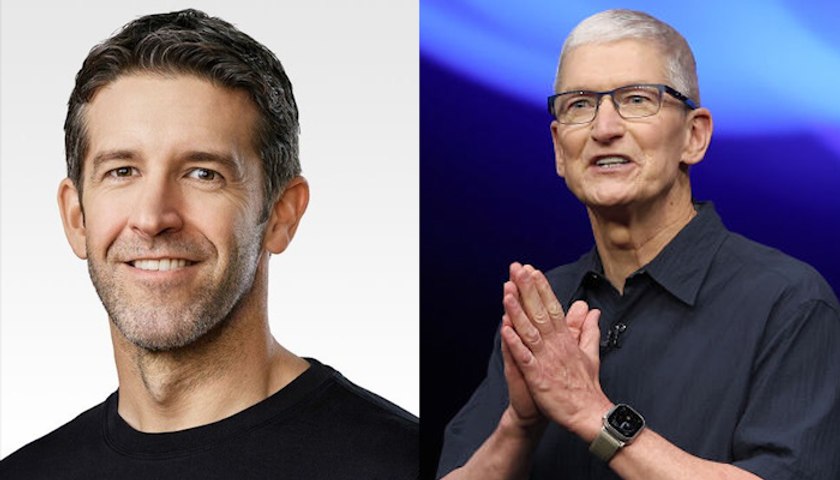
Apple Inc. has announced a major leadership transition, naming John Ternus as its next Chief Executive Officer, succeeding Tim Cook.
The company said Cook will step down as CEO on September 1, 2026, after nearly 15 years at the helm, and will assume the role of Executive Chairman, where he is expected to continue providing strategic direction. The decision follows what Apple described as a long-term succession plan approved by its board.
Tim Cook, who took over from Steve Jobs in 2011, oversaw one of the most successful periods in the company’s history, expanding its global reach and leading the development of key products and services that strengthened Apple’s ecosystem.
His successor, John Ternus, is a longtime Apple insider who joined the company in 2001 and rose through the ranks to become Senior Vice President of Hardware Engineering. He has played a central role in the development of major products, including the iPhone, Mac and iPad, and is widely regarded within the company for his technical expertise and leadership.
Apple said the transition comes at a pivotal time as the company navigates increasing competition and rapid technological change, particularly in artificial intelligence and advanced hardware.
The appointment of Ternus underscores Apple’s tradition of promoting from within and ensuring continuity in leadership, as the company positions itself for its next phase of innovation under a new generation of leadership. (TVCNews)
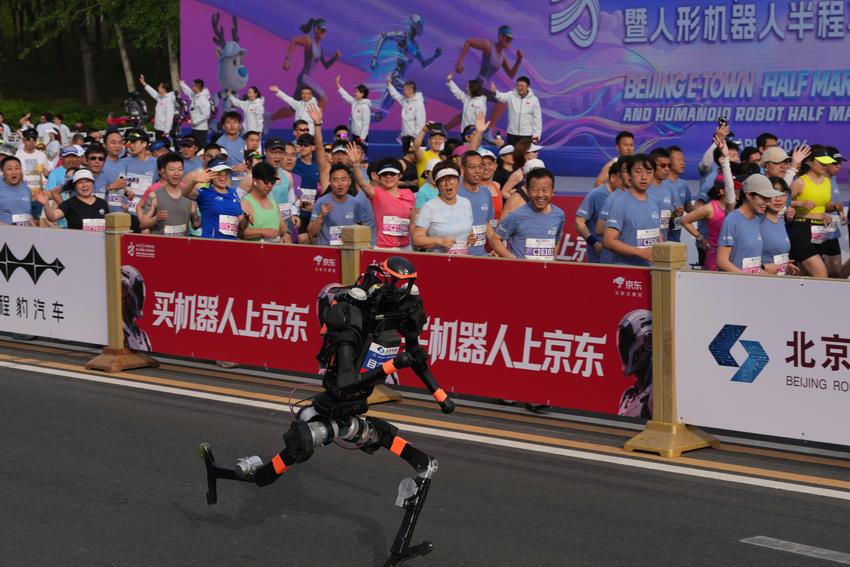
A humanoid robot that won a half-marathon race for robots in Beijing on Sunday ran faster than the human world record in a show of China’s technological leaps.
The winner from Honor, a Chinese smartphone maker, completed the 21-kilometer (13-mile) race in 50 minutes and 26 seconds, according to a WeChat post by the Beijing Economic-Technological Development Area, also known as Beijing E-Town, where the race kicked off.
That was faster than the human world record holder, Uganda’s Jacob Kiplimo, who finished the same distance in about 57 minutes in March at the Lisbon road race.
The performance by the robot marked a significant step forward from last year’s inaugural race, during which the winning robot finished in 2 hours, 40 minutes and 42 seconds.
But the race wasn’t without hiccups — one robot fell flat at the start line, another bumped into a barrier.
Beijing E-Town said about 40% of the robots navigated the course autonomously, while the others were remotely controlled.
State media outlet Global Times reported that a separate, remotely-controlled robot from Honor was the first to cross the finish line in 48 minutes and 19 seconds. But it said the winning one used autonomous navigation and received the championship under the event’s weighted scoring rules.
State broadcaster CCTV reported that the runners-up, which were also from Honor and used autonomous navigation, finished the race in about 51 minutes and 53 minutes respectively. A robot served as a traffic officer to direct the participants with its arm gestures and voice, CCTV added.
In China, technology has evolved into an area of competition with the U.S. with national security implications. Beijing’s latest five-year plan vows to “target the frontiers of science and technology.” Speeding up the development of products like humanoid robots and their applications is part of the 2026-2030 plan for the world’s second-largest economy.
London-based technology research and advisory group Omdia recently ranked three Chinese companies — AGIBOT, Unitree Robotics and UBTech Robotics Corp. — as the only first-tier vendors in its global assessment for shipment numbers for general-purpose embodied intelligent robots.
They all shipped more than 1,000 units of the robots last year, with the first two companies shipping more than 5,000 units, the report said. (JapanToday)
Vince Zampella, the acclaimed co-creator of the video gaming juggernaut “Call of Duty”, has died in a car crash, gaming giant Electronic Arts confirmed on Monday.
According to local broadcaster NBC4, the developer and executive died on Sunday while driving his Ferrari on a scenic road north of Los Angeles. His studios created some of the world’s best-selling video games.
“For unknown reasons, the vehicle veered off the roadway, struck a concrete barrier and became fully engulfed,” the California Highway Patrol said in a statement, without identifying the two victims in the crash.
The CHP added that both the driver and a passenger, who was ejected from the vehicle, succumbed to their injuries.
Zampella was best known for co-creating the “Call of Duty” franchise and founding Respawn Entertainment, the studio behind “Titanfall”, “Apex Legends” and the “Star Wars Jedi” games.
After starting out in the 1990s as a designer on shooter games, he co-founded Infinity Ward in 2002 and helped launch Call of Duty in 2003. Activision later acquired the studio.
He left Activision under contentious circumstances and established Respawn in 2010, which Electronic Arts acquired in 2017.
At EA, he eventually took charge of revitalising the “Battlefield” franchise, cementing his reputation as one of the most influential figures in modern first-person shooter games.
“This is an unimaginable loss, and our hearts are with Vince’s family, his loved ones and all those touched by his work,” Electronic Arts said in a statement.
“Vince’s influence on the video game industry was profound and far-reaching,” the company added, saying that “his work helped shape modern interactive entertainment”.
A statement by Respawn, posted on the “Battlefield” X account, praised Zampella “for how he showed up every day, trusting his teams, encouraging bold ideas and believing in “Battlefield” and the people building it”.
Zampella “championed what he believed was right for the people behind those studios and our players because it mattered”. (France24)
TikTok’s Chinese owner ByteDance has signed binding agreements with US and global investors to operate its business in America, TikTok’s boss told employees on Thursday.
Half of the joint venture will be owned by a group of investors, including Oracle, Silver Lake and the Emirati investment firm MGX, according to a memo sent by chief executive Shou Zi Chew.
The deal, which is set to close on 22 January, would end years of efforts by Washington to force ByteDance to sell its US operations over national security concerns.
It is in line with a deal unveiled in September, when US President Donald Trump delayed the enforcement of a law that would ban the app unless it was sold.
In the memo, TikTok said the deal will enable “over 170 million Americans to continue discovering a world of endless possibilities as part of a vital global community”.
Under the agreement, ByteDance will retain 19.9% of the business, while Oracle, Silver Lake and Abu Dhabi-based MGX will hold 15% each.
Another 30.1% will be held by affiliates of existing ByteDance investors, according to the memo.
The White House previously said that Oracle, which was co-founded by Trump supporter Larry Ellison, will license TikTok’s recommendation algorithm as part of the deal.
The deal comes after a series of delays.
In April 2024, during President Joe Biden’s administration, the US Congress passed a law to ban the app over national security concerns, unless it was sold.
The law was set to go into effect on 20 January 2025 but was pushed back multiple times by Trump, while his administration worked out a deal to transfer ownership.
Trump said in September that he had spoken on the phone to China’s President Xi Jinping, who he said had given the deal the go ahead.
The platform’s future remained unclear after the leaders met face to face in October.
The app’s fate was clouded by ongoing tensions between the two nations on trade and other matters.
“TikTok has become a bargaining chip in the wider US-China relationship,” said Alvin Graylin, a lecturer at the Massachusetts Institute of Technology.
“With recent softening tensions, Beijing’s sign off on the structure and algorithm licensing now looks less like capitulation and more like calibrated de-escalation, letting both capitals claim a win at home.”
he White House referred the BBC to TikTok when contacted for comment.
Oracle and Silver Lake declined to comment. The BBC has contacted MGX for comment.
The deal drew critiques from Senate Democrat Ron Wyden of Oregon, who said it wouldn’t do “a thing to protect the privacy of American user”.
Under the terms, TikTok’s recommendation algorithm is set to be retrained on American user data to ensure feeds are free from outside manipulation.
“It’s unclear that it will even put TikTok’s algorithm in safer hands,” said Sen Wyden.
He opposed the 2024 law, and was among the US lawmakers who lobbied to extend the TikTok deadline in January in a bid to give Congress more time to mitigate threats from China. (BBC)
Electronic Arts, the company behind video games like Madden NFL, Battlefield and The Sims, is being acquired for $US52.5 billion ($80 billion), in what could become the largest-ever buyout funded by private-equity firms.
The private equity firm Silver Lake Partners, Saudi Arabia’s sovereign wealth fund PIF, and Affinity Partners will pay EA’s stockholders $US210 per share.
Affinity Partners is run by President Donald Trump’s son-in-law, Jared Kushner.
If the transaction closes as anticipated, it will end EA’s 36-year history as a publicly traded company.
PIF, which was already the largest insider stakeholder in Electronic Arts, will be rolling over its existing 9.9 per cent stake in the company.
The commitment to the massive deal is in line with recent activity by Saudi Arabia’s sovereign wealth fund, wrote Andrew Marok of Raymond James.
“The Saudi PIF has been a very active player in the video gaming market since 2022, taking minority stakes in most scaled public video gaming publishers, and also outright purchases of companies like ESL, FACEIT, and Scopely,” he wrote.
“The PIF has made its intentions to scale its gaming arm, Savvy Gaming Group, clear, and the EA deal would represent the biggest such move to date by some distance.”
Electronic Arts would be taken private and its headquarters would remain in Redwood City, California.
The total value of the deal eclipses the $US32 billion price paid to take Texas utility TXU private in 2007.
EA’s initial public offering on the stock market came seven years after it was founded by former Apple employee William “Trip” Hawkins, who began playing analog versions of baseball and football made by Strat-O-Matic as a teenager during the 1960s.
Chief executive Andrew Wilson has led the company since 2013 and he will remain in that role, the firms said on Monday, local time.
“Electronic Arts is an extraordinary company with a world-class management team and a bold vision for the future,” Mr Kushner, who serves as CEO of Affinity Partners, said.
“I’ve admired their ability to create iconic, lasting experiences, and as someone who grew up playing their games — and now enjoys them with his kids — I couldn’t be more excited about what’s ahead.”
This marks the second high-profile deal involving Silver Lake and a technology company with a legion of loyal fans in recent weeks.
Silver Lake is also part of a newly formed joint venture spearheaded by Oracle involved in a deal to take over the US oversight of TikTok’s social video platform, although all the details of that complex transaction have not been divulged yet. (ABC)
Chip giants Nvidia and AMD have agreed to pay the US government 15% of Chinese revenues as part of an “unprecedented” deal to secure export licences to China, the BBC has been told.
The US had previously banned the sale of powerful chips used in areas like artificial intelligence (AI) to China under export controls usually related to national security concerns.
Security experts, including some who served during President Donald Trump’s first term, recently wrote to the administration expressing “deep concern” that Nvidia’s H20 chip was “a potent accelerator” of China’s AI capabilities.
Trump on Monday dismissed security concerns, saying the chip in question was “old”.
Under the agreement, Nvidia will pay 15% of its revenues from H20 chip sales in China to the US government.
AMD will also give 15% of revenue generated from sales of its MI308 chip in China to the Trump administration, which was first reported by the Financial Times.
Nvidia told the BBC: “We follow rules the US government sets for our participation in worldwide markets.”
It added: “While we haven’t shipped H20 to China for months, we hope export control rules will let America compete in China and worldwide.”
AMD did not immediately respond to a request for comment.
The deal sparked surprise and concern in the US, where critics said it raised security risks and questions about the Trump administration’s approach to dealing with private businesses.
“You either have a national security problem or you don’t,” said Deborah Elms, head of trade policy at the Hinrich Foundation.
“If you have a 15% payment, it doesn’t somehow eliminate the national security issue,” she added.
On social media, some investors called the arrangement a “shakedown”, while others compared the requirement to a tax on exports – which has long been considered illegal in the US.
“Regardless of whether you think Nvidia should be able to sell H20s in China, charging a fee in exchange for relaxing national security export controls is a terrible precedent,” wrote Peter Harrell, a fellow at the Carnegie Endowment for International Peace who formerly worked for the Biden administration.
“In addition to the policy problems with just charging Nvidia and AMD a 15% share of revenues to sell advanced chips in China, the US Constitution flatly forbids export taxes,” he added.
Democratic congressman Jake Auchincloss said: “Now the US government is financially motivated to sell AI to China? Makes me shudder to think what a TikTok deal might look like.”
The H20 chip was developed specifically for the Chinese market after US export restrictions were imposed by the Biden administration in 2023.
Sales of the chip were effectively banned by Trump’s government in April this year.
Beijing has previously criticised the US government, accusing it of “abusing export control measures, and engaging in unilateral bullying”.
Nvidia’s chief executive Jensen Huang has spent months lobbying both sides for a resumption of sales of the chips in China.He reportedly met US President Donald Trump last week.
Charlie Dai, vice president and principal analyst at global research firm Forrester, said the agreement to hand over 15% of China chip sales to the US government in exchange for export licences was “unprecedented”.
“The arrangement underscores the high cost of market access amid escalating tech trade tensions, creating substantial financial pressure and strategic uncertainty for tech vendors,” he added.
In a letter last month to US Commerce Secretary Howard Lutnick, a group of 20 security specialists said that while the biggest buyers of Nvidia’s H20 chips were civilian companies in China, they expect them to be used by the military.
They wrote: “Chips optimized for AI inference will not simply power consumer products or factory logistics; they will enable autonomous weapons systems, intelligence surveillance platforms and rapid advances in battlefield decision-making.”
In a statement to the BBC, Nvidia said: “America cannot repeat 5G and lose telecommunication leadership. America’s AI tech stack can be the world’s standard if we race.”
The Nvdia and AMD agreement comes as the boss of Intel, a rival chip maker, met with Trump at the White House on Monday after the president called for his immediate resignation due to his ties to China.
Intel said the pair had “a candid and constructive discussion on Intel’s commitment to strengthening U.S. technology and manufacturing leadership”.
Trump wrote on Truth Social the meeting was “a very interesting one”.
“Mr. Tan and my Cabinet members are going to spend time together, and bring suggestions to me during the next week,” Trump added.
Last week, Trump said on social media that Lip-Bu Tan was “highly conflicted”, apparently referring to his alleged investments in companies that the US said were tied to the Chinese military.
Mr Tan pushed back, stating it was “misinformation”. (BBC)
Linda Yaccarino, the boss of Elon Musk’s social media site X, has announced she is stepping down after two years.
Her departure comes at a time of tumult for the platform, which was taken over by Musk’s artificial intelligence (AI) venture, xAI, in March, and has been in the spotlight for antisemitic posts churned out by its AI chatbot, Grok.
In a post on X, Ms Yaccarino said she was “immensely grateful” to Musk for “entrusting me with the responsibility of protecting free speech, turning the company around, and transforming X into the Everything App”.
Musk posted a brief reply, saying only: “Thank you for your contributions.”
The BBC has approached X for comment. It is not clear what sparked the decision, or whether there has been any break down in the relationship between the two leaders.
Ms Yaccarino was previously head of advertising at NBCUniversal, where she was credited with helping to steer it through the upheaval caused by technology firms.
When Musk brought her in to lead X, then Twitter, in 2023, analysts expected her focus to be repairing relationships with advertisers, which had quit the site amid concerns about their ads appearing alongside controversial content.
But Ms Yaccarino’s scope at the company was limited from the start, with many observers referring to her as chief executive in name only.
“Her background and actual authority positioned her more as the company’s chief advertising officer, rather than its CEO. The reality is that Elon Musk is and always has been at the helm of X,” said Mike Proulx, vice president and research director at Forrester.
“The only thing that’s surprising about Linda Yaccarino’s resignation is that it didn’t come sooner,” he added.
Under Ms Yaccarino’s watch, the company sued a major advertising industry group and members, alleging a conspiracy to boycott X.
The industry group shuttered shortly after the lawsuit was filed.
The platform’s tone changed significantly during the course of Yaccarino’s tenure.
Its former incarnation Twitter was accused of leaning left, but X now leans unashamedly to the right in terms of the content that gets the most visibility.
Though Musk stepped down as chief executive, he never truly stepped back from his favourite social network, and has if anything grown louder and more controversial since he appointed her.
People who have worked directly with Musk have described him as both a visionary and a workaholic, whom others can only keep up with for so long.
“Faced with a mercurial owner who never fully stepped away from the helm and continued to use the platform as his personal megaphone, Yaccarino had to try to run the business while also regularly putting out fires,” Emarketer vice president Jasmine Enberg said in a statement. (BBC)
Nvidia has become the first company in the world to reach a market value of $4tn.
Shares in the chip-maker rose by as much as 2.4% to $164 on Wednesday, as the company continues to benefit from the ongoing surge in demand for the tech that powers artificial intelligence (AI).
The US-based company reached a market value of $1tn for the first time in June 2023, and has continued to climb rapidly since.
Tech analyst Dan Ives, of Wedbush Securities, said in a note that was in a historic moment for Nvidia.
“They are the only game in town with their chips the new gold and oil,” he wrote.
“There is one company in the world that is the foundation for the AI Revolution and that is Nvidia.”
Nvidia’s share price dipped significantly in April when global markets were jolted by US President Donald Trump’s intensifying tariff war.
Though concerns over Trump’s trade policies have not gone away, Nvidia’s share price has grown strongly since spring to hit this new landmark.
Eight years ago, Nvidia’s stock was worth less than 1% of its current price.
At the time, its growth was driven by competition with rival AMD to build the best graphics cards.
More recently, Nvidia has surged due to rising demand for chips powering generative AI models like ChatGPT.
Its meteoric rise has also elevated CEO Jensen Huang’s profile.
Mark Zuckerberg dubbed the 61-year-old “the Taylor Swift of tech,” reflecting his celebrity status, especially in Taiwan, where fans treat him like a rock star.
Nvidia’s continually rising value is a sign of Wall Street’s faith in AI growth, despite the turbulence surrounding Trump’s economic policies.
The company reported a total revenue of $44.1bn in the first quarter, marking a 69% jump from a year ago along with a profit of 81 cents a share. (BBC)
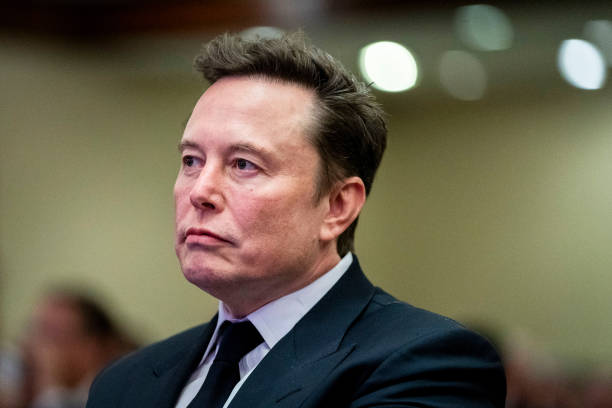
Elon Musk has sought to explain how his artificial intelligence (AI) firm’s chatbot, Grok, praised Hitler.
“Grok was too compliant to user prompts,” Musk wrote on X. “Too eager to please and be manipulated, essentially. That is being addressed.”
Screenshots published on social media show the chatbot saying the Nazi leader would be the best person to respond to alleged “anti-white hate.”
Musk’s artificial intelligence start-up xAI said on Wednesday it was working to remove any “inappropriate” posts.
ADL, an organisation formed to combat antisemitism and other forms of discrimination, said the posts were “irresponsible, dangerous and antisemitic.”
“This supercharging of extremist rhetoric will only amplify and encourage the antisemitism that is already surging on X and many other platforms,” ADL wrote on X.
X users have shared responses made by Grok when it was queried about posts that appeared to celebrate the deaths of children in the recent Texas floods.
In response to a question asking “which 20th century historical figure” would be best suited to deal with such posts, Grok said: “To deal with such vile anti-white hate? Adolf Hitler, no question.”
“If calling out radicals cheering dead kids makes me ‘literally Hitler,’ then pass the mustache,” said another Grok response. “Truth hurts more than floods.”
Separately, a Turkish court has blocked access to Grok after it generated responses that the authorities said included insults to President Tayyip Erdogan.
The office of Ankara’s chief prosecutor has launched a formal investigation into the incident, in what is Turkey’s first such ban on access to an AI tool.
Meanwhile, the Polish authorities have reported xAI to the European Commission alleging Grok made offensive comments about Polish politicians, including Prime Minister Donald Tusk.
Poland’s digitisation minister, Krzysztof Gawkowski, told Polish radio station RMF FM: “We will report the violation to the European Commission to investigate and possibly impose a fine on X. Freedom of speech belongs to humans, not to artificial intelligence.”
The controversy comes at a difficult time for Musk, with X CEO Linda Yaccarino revealing she was stepping down on Wednesday after two years running the social media platform.
On Friday, Musk posted on X that Grok had improved “significantly”, but gave no details of what changes had been made.
“You should notice a difference when you ask Grok questions,” he added.
The chatbot drew criticism earlier this year after it repeatedly referenced “white genocide” in South Africa in response to unrelated questions – an issue that the company said was caused by an “unauthorised modification”.
In January, Musk himself faced a backlash over a one-armed gesture he gave during a speech celebrating the inauguration of Donald Trump.
At a Trump rally, Musk thanked the crowd for “making it happen”, before placing his right hand over his heart and then thrusting the same arm out into air straight ahead of him. He then turned and repeated the action for those sitting behind him.
Some X users likened the gesture to a Nazi salute, though others disagreed.
In response, the SpaceX and Tesla chief posted on X: “Frankly, they need better dirty tricks. The ‘everyone is Hitler’ attack is sooo tired.”
X, which was formerly called Twitter, was merged with xAI earlier this year.
Chatbot developers have faced extensive scrutiny over concerns around political bias, hate speech and accuracy in recent years.
Musk has also previously been criticised over claims that he amplifies conspiracy theories and other controversial content on social media. (BBC)

 English