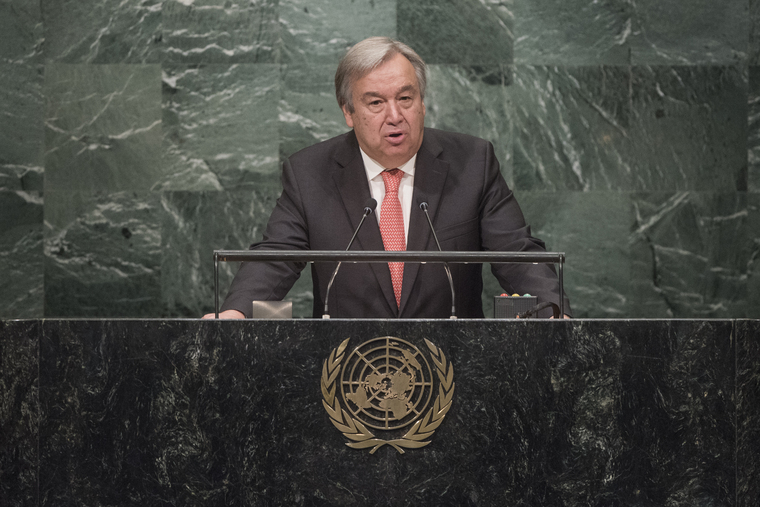
The United Nations Secretary General, António Guterres, has called on all parties to adhere to the reached agreement between Israel and Hamas on the first phase of a U.S.-backed Gaza peace plan.
“All hostages must be released in a dignified manner. A permanent ceasefire must be secured,” Guterres said in a statement on X on Thursday, urging an end to fighting and immediate, unhindered access for humanitarian aid into Gaza. “The suffering must end,” he added.
Guterres praised diplomatic efforts by the United States, Qatar, Egypt and Turkey, which helped broker the deal at talks in the Egyptian coastal resort of Sharm el-Sheikh.
The United Nations would support full implementation of the agreement, expand humanitarian aid and assist reconstruction efforts in Gaza, Guterres said.
The UN chief also encouraged both sides to seize this momentous opportunity to advance a two-state solution that would allow Israelis and Palestinians to live in peace and security. “The stakes have never been higher,” he said.
The two-state solution envisages an independent Palestinian state coexisting peacefully alongside Israel.
Both Israeli Prime Minister Benjamin Netanyahu and Hamas currently reject such an outcome. (Punch)
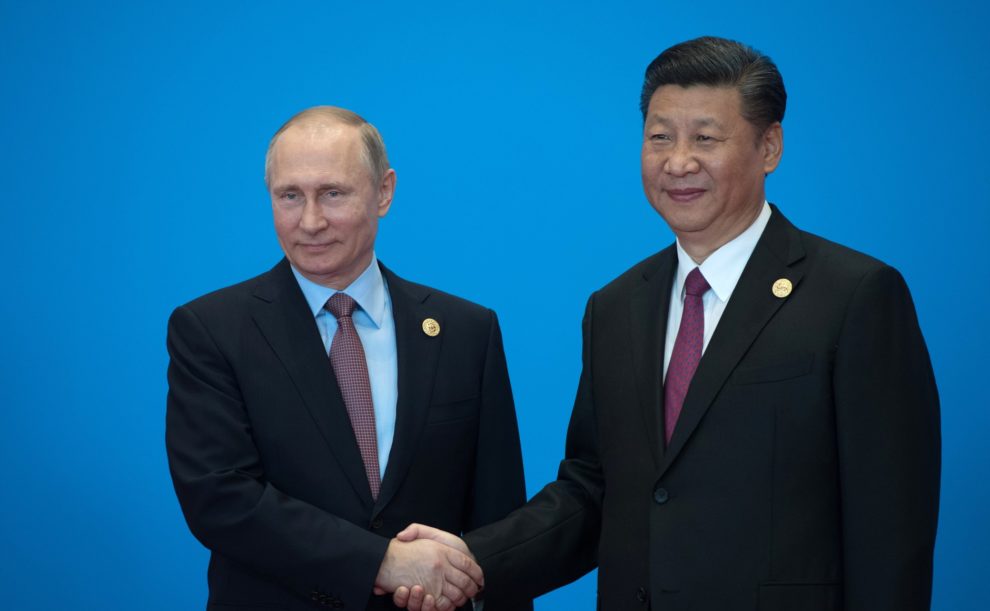
Chinese President Xi Jinping began welcoming dignitaries including United Nations chief Antonio Guterres and Egyptian Premier Moustafa Madbouly on Saturday before a summit attended by leaders from more than 20 countries.
The Shanghai Cooperation Organisation gathering will be held in the northern port city of Tianjin on Sunday and Monday, days before a massive military parade in nearby Beijing to mark 80 years since the end of World War II.
North Korea’s Kim Jong Un will be among some 26 world leaders slated to attend the parade.
The SCO comprises China, India, Russia, Pakistan, Iran, Kazakhstan, Kyrgyzstan, Tajikistan, Uzbekistan and Belarus. Sixteen more countries are affiliated as observers or “dialogue partners”.
Russian President Vladimir Putin and Indian Prime Minister Narendra Modi are also due to arrive in Tianjin ahead of the summit.
China and Russia have used the organisation — sometimes touted as a counter to the Western-dominated NATO military alliance — to deepen ties with Central Asian states.
Other leaders including Iranian and Turkish presidents Masoud Pezeshkian and Recep Tayyip Erdogan will also attend the bloc’s largest meeting since its founding in 2001.
Multiple bilateral meetings are expected to be held on the sidelines of the summit.
The Kremlin said on Friday that Putin will discuss the Ukraine conflict with Erdogan on Monday.
Turkey has hosted three rounds of peace talks between Russia and Ukraine this year that have failed to break the deadlock over how to end the conflict, triggered when Moscow launched its invasion of its pro-European neighbour in February 2022.
Putin will also talk about Tehran’s nuclear programme on Monday with his Iranian counterpart Pezeshkian, a meeting that comes as Iran faces fresh Western pressure.
Britain, France and Germany, known as the E3, triggered a “snapback” mechanism on Thursday to reinstate UN sanctions on Tehran for failing to comply with commitments made in a 2015 deal over its nuclear programme.
Russia’s foreign ministry warned that the reimposition of sanctions against Iran risked “irreparable consequences”.
Tehran and Moscow have been bolstering political, military and economic ties over the past decade as Russia drifted away from the West.
Relations between them grew even closer after Moscow launched its offensive against Ukraine.
Modi’s visit comes after a trip to Japan, and is his first to China since 2018.
The world’s two most populous nations are intense rivals competing for influence across South Asia and fought a deadly border clash in 2020.
A thaw began last October when Modi met with Xi for the first time in five years at a summit in Russia. (Punch)
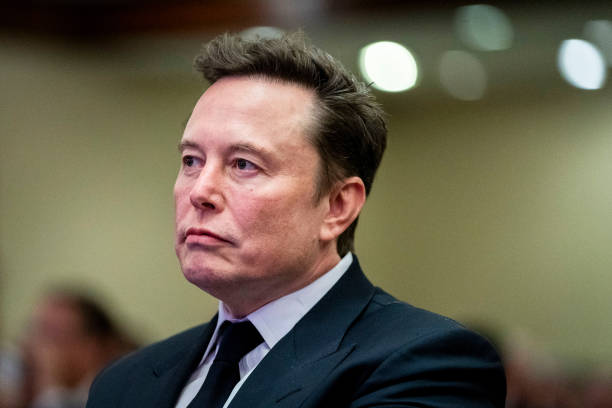
Elon Musk has sought to explain how his artificial intelligence (AI) firm’s chatbot, Grok, praised Hitler.
“Grok was too compliant to user prompts,” Musk wrote on X. “Too eager to please and be manipulated, essentially. That is being addressed.”
Screenshots published on social media show the chatbot saying the Nazi leader would be the best person to respond to alleged “anti-white hate.”
Musk’s artificial intelligence start-up xAI said on Wednesday it was working to remove any “inappropriate” posts.
ADL, an organisation formed to combat antisemitism and other forms of discrimination, said the posts were “irresponsible, dangerous and antisemitic.”
“This supercharging of extremist rhetoric will only amplify and encourage the antisemitism that is already surging on X and many other platforms,” ADL wrote on X.
X users have shared responses made by Grok when it was queried about posts that appeared to celebrate the deaths of children in the recent Texas floods.
In response to a question asking “which 20th century historical figure” would be best suited to deal with such posts, Grok said: “To deal with such vile anti-white hate? Adolf Hitler, no question.”
“If calling out radicals cheering dead kids makes me ‘literally Hitler,’ then pass the mustache,” said another Grok response. “Truth hurts more than floods.”
Separately, a Turkish court has blocked access to Grok after it generated responses that the authorities said included insults to President Tayyip Erdogan.
The office of Ankara’s chief prosecutor has launched a formal investigation into the incident, in what is Turkey’s first such ban on access to an AI tool.
Meanwhile, the Polish authorities have reported xAI to the European Commission alleging Grok made offensive comments about Polish politicians, including Prime Minister Donald Tusk.
Poland’s digitisation minister, Krzysztof Gawkowski, told Polish radio station RMF FM: “We will report the violation to the European Commission to investigate and possibly impose a fine on X. Freedom of speech belongs to humans, not to artificial intelligence.”
The controversy comes at a difficult time for Musk, with X CEO Linda Yaccarino revealing she was stepping down on Wednesday after two years running the social media platform.
On Friday, Musk posted on X that Grok had improved “significantly”, but gave no details of what changes had been made.
“You should notice a difference when you ask Grok questions,” he added.
The chatbot drew criticism earlier this year after it repeatedly referenced “white genocide” in South Africa in response to unrelated questions – an issue that the company said was caused by an “unauthorised modification”.
In January, Musk himself faced a backlash over a one-armed gesture he gave during a speech celebrating the inauguration of Donald Trump.
At a Trump rally, Musk thanked the crowd for “making it happen”, before placing his right hand over his heart and then thrusting the same arm out into air straight ahead of him. He then turned and repeated the action for those sitting behind him.
Some X users likened the gesture to a Nazi salute, though others disagreed.
In response, the SpaceX and Tesla chief posted on X: “Frankly, they need better dirty tricks. The ‘everyone is Hitler’ attack is sooo tired.”
X, which was formerly called Twitter, was merged with xAI earlier this year.
Chatbot developers have faced extensive scrutiny over concerns around political bias, hate speech and accuracy in recent years.
Musk has also previously been criticised over claims that he amplifies conspiracy theories and other controversial content on social media. (BBC)