Posted on Leave a comment

K-pop sensation BTS returns with comeback concert in Seoul after a 4-year hiatus

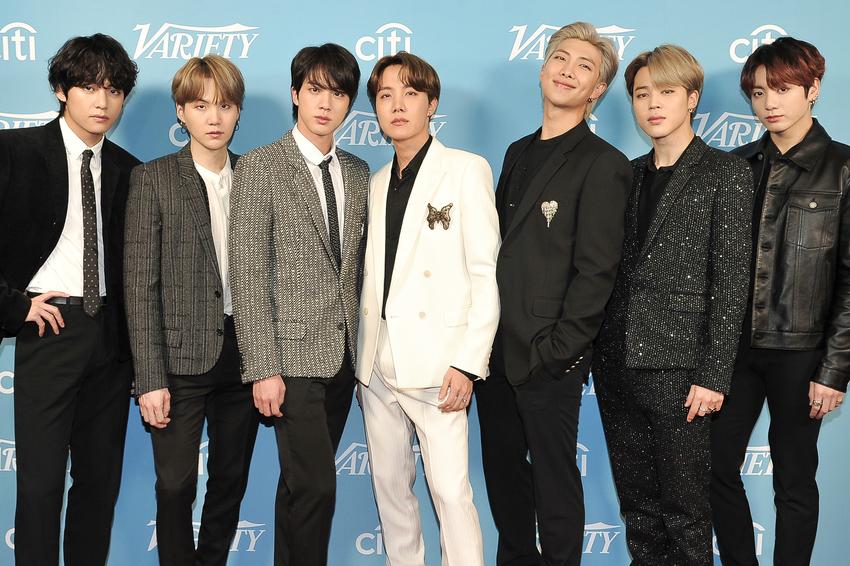
After a four-year break, K-pop supergroup BTS returned Saturday with a massive, free comeback concert in Seoul, where thousands of police locked down a central boulevard for the Netflix-exclusive spectacle that drew tens of thousands of fans.

“Annyeonghaseyo! We’re back,” RM, the band’s leader, told the crowd, using the Korean word for “hello,” as they opened with “Body to Body,” setting off delirious screams from fans waving purple-and-red light sticks and thrusting smartphones into the air.

All seven members of the band — RM, Jin, Suga, J-Hope, Jimin, V and Jung Kook — recently completed South Korea’s mandatory military service, and hope to reclaim their status as one of the world’s biggest pop acts.

The performance at Gwanghwamun Square launches a global tour spanning dozens of shows across the United States, Europe and Asia, which analysts say could generate hundreds of millions of dollars in revenue per quarter.

The hourlong concert came after the group on Friday released its fifth album, “ARIRANG,” which sold nearly 4 million copies in its first day, said the band’s management company, HYBE. The company also said RM had injured his ankle during a rehearsal, but he still performed with modified choreography.

The BTS concert, which began at 8 p.m., drew several tens of thousands to the Gwanghwamun area, including 22,000 fans who secured free seats in the designated viewing zone and others who watched on screens nearby. The show was streamed live on Netflix.

“It will be amazing because it’s been so long that BTS (was) not with us,” Dallila Di Tullio, a 32-year-old fan from Italy, said before the concert, calling it a once-in-a-century event.

BTS debuted in 2013 and has a legion of global supporters who call themselves the “Army.” It became the first K-pop act to top Billboard’s Hot 100 chart in 2020 with their first all-English song “Dynamite.”

Jung Dukhyun, a pop culture commentator, said that the impact of BTS’ return as a full-group would be tremendous at a time when global fandom for K-pop has grown much stronger, as shown by the success of Netflix’s animated sensation “KPop Demon Hunters.”

The dark streets blazed with light as waves of fans sang and cheered from cordoned sections, a jubilant scene that unfolded under an unusually heavy police presence managing the crowds.

“I still vividly remember how, at our last Busan concert a few years ago, we asked you to wait for us. Thank you so much for coming here like this,” Jin said.

The group performed songs from their new album, including “SWIM,” alongside hits like “Dynamite” and “Butter.” Some members appeared to tear up while thanking fans who braved the chilly night, before holding hands and bowing to the crowd to close the show.

Police and city officials closed nearby streets and roads, halted the area’s subway and bus services, and sealed off dozens of surrounding buildings, in what amounted to a full-day shutdown of the district.

Thousands of police officers maintained a tight perimeter around the performance venue, channeling the crowds with a maze of fences and buses. Concertgoers began queuing by midday to secure spots along nearby roads, passing through security checks and metal detectors at designated entry points. The restrictions forced nearby shops to close and police to use their buses to shuttle wedding guests to a nearby venue.

“I was hoping to (see) if we can go through some holes or be around. Apparently we cannot because they will be asking people to move,” said Bernice Sanchez, a 52-year-old fan from Switzerland, as she looked for a place to wait.

While South Korean officials have taken crowd safety more seriously since a 2022 Halloween surge that killed nearly 160 people, critics say the controls went too far and undermined the symbolism of performing in Gwanghwamun, seen as Seoul’s spiritual heart and most prominent gathering space.

Hundreds of thousands have gathered in Gwanghwamun in recent years to mourn, protest and celebrate as the country weathered tragedy and political upheaval. The BTS concert came about a year after waves of demonstrators filled the area, calling for the ouster of then-President Yoon Suk Yeol over his brief imposition of martial law in December 2024. Those monthslong rallies were marked by a festive atmosphere and a striking blend of politics and pop culture, with protesters singing and waving colorful K-pop light sticks, and ended without major safety accidents.

The new BTS album, “ARIRANG,” takes its name from a centuries-old folk song, regarded as an unofficial anthem in both Koreas, whose themes of separation, longing and quiet resilience have echoed across generations.

Gwanghwamun and nearby Gyeongbok Palace provided a sweeping historic backdrop to Saturday’s show, which was highlighted by lighting effects that bathed the palace gate and walls in purple, red and blue.

Suga told the crowd that the album’s title and the decision to perform in Gwanghwamun reflected the group’s focus on identity. RM said the band focused on making music that felt true to themselves as they reconvened to work on the new album.

“We wanted to show who we are and how we can come together,” he told the crowd.

South Korean officials, including current President Lee Jae Myung, expressed hope that the event would promote the country’s culture and soft power.

The group’s comeback follows a nearly four-year hiatus driven by South Korea’s mandatory military service, which requires most able-bodied men to serve 18 to 21 months under a conscription system aimed at deterring aggression from North Korea. BTS members began serving in 2022, with Suga the last to complete his service in June 2025.

Some analysts say the group’s “ARIRANG” world tour could become the biggest K-pop tour ever by scale and revenue, with 82 shows planned globally in stadiums of around 50,000 seats. Ha Jae-keun, a cultural critic, said BTS was likely to have a “second heyday,” as they maintained a highly powerful fandom and would benefit from the broader international ascent of K-pop.

“We will do our best to give everything we got,” J-Hope said. (JapanToday)

Posted on Leave a comment

Trump urges other nations to send ships to secure Hormuz


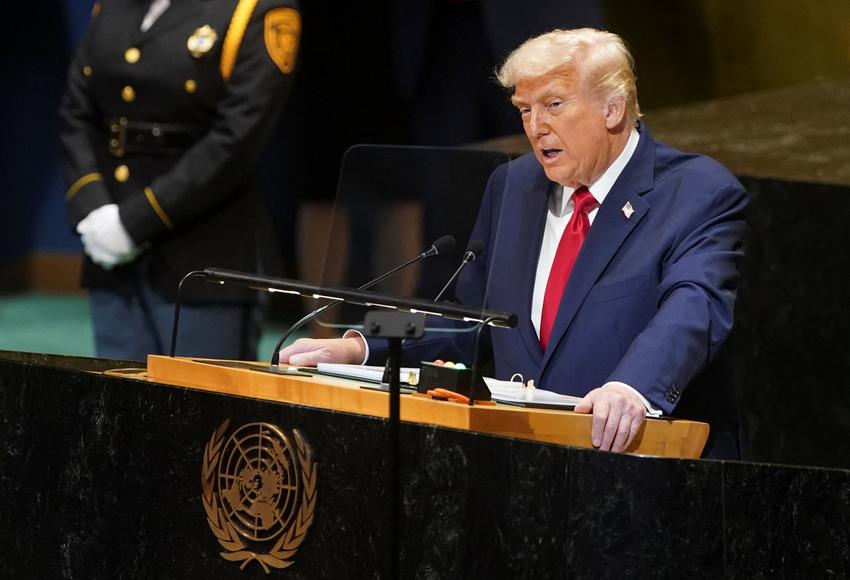
US President Donald Trump on Saturday urged other nations to send ships to help secure the Strait of Hormuz, the critical chokepoint for global oil supplies disrupted by the Mideast war.

Trump, who has said the United States will soon start escorting tankers through the strait, posted on Truth Social that “Many countries, especially those who are affected by Iran’s attempted closure of the Hormuz Strait, will be sending War Ships, in conjunction with the United States of America, to keep the Strait open and safe.”

The US president added: “Hopefully China, France, Japan, South Korea, the UK, and others, that are affected by this artificial constraint, will send Ships to the area.”

Iranian strikes have all but halted maritime traffic in the strait, through which a fifth of global crude oil and liquefied natural gas normally pass. It is just 54 kilometers (34 miles) wide at its narrowest point.

With oil prices spiking, Trump was asked Friday when the US Navy would begin escorting tankers through the Strait of Hormuz. “It’ll happen soon, very soon,” he said.

In his post on Saturday, Trump asserted that Iran’s military capability had been eliminated but he conceded that it was still able to attack the strait.

“We have already destroyed 100% of Iran’s Military capability, but it’s easy for them to send a drone or two, drop a mine, or deliver a close range missile somewhere along, or in, this Waterway, no matter how badly defeated they are,” he wrote.

As he urged nations to send ships to the strait, he added that “the United States will be bombing the hell out of the shoreline, and continually shooting Iranian Boats and Ships out of the water. One way or the other, we will soon get the Hormuz Strait OPEN, SAFE, and FREE!” (Channels)

Posted on Leave a comment

BTS announces March comeback date, putting an end to a nearly four-year hiatus

They’re going to light up 2026 like dynamite: K-pop group BTS’ comeback has an official date.

According to a note shared to social media by the entertainment company BigHit Music, the mega popular group will return on March 20.

That’s after a nearly four-year hiatus, as all seven members of BTS — RM, Jin, Jimin, V, Suga, Jung Kook and j-hope — completed South Korea’s mandatory military service.

“March 20th comeback confirmed,” BigHit Music wrote on X, formerly Twitter.

Rapper Suga was the last group member to be released — from his duties as a social service agent, an alternative to serving in the military that he reportedly chose due to a shoulder injury. That was in June 2025.

The six others, RM, V, Jimin, Jung Kook, Jin and j-hope, served in the army.

BTS tiered their enlistments, giving ample time for its members to focus on solo projects while the group was on a break.

Last summer, the group teased a world tour and announced that a new album would be released in the spring of 2026. At the time, they said they would begin working on the project in July 2025.

“Since it will be a group album, it will reflect each member’s thoughts and ideas,” they said in a statement. “We’re approaching the album with the same mindset we had when we first started.”

The 2026 album will mark their first since 2022’s anthology, “Proof,” their 2021 Japanese compilation album “BTS, the Best,” and their last studio album, “Be,” released in 2020. (JapanToday)

Posted on Leave a comment

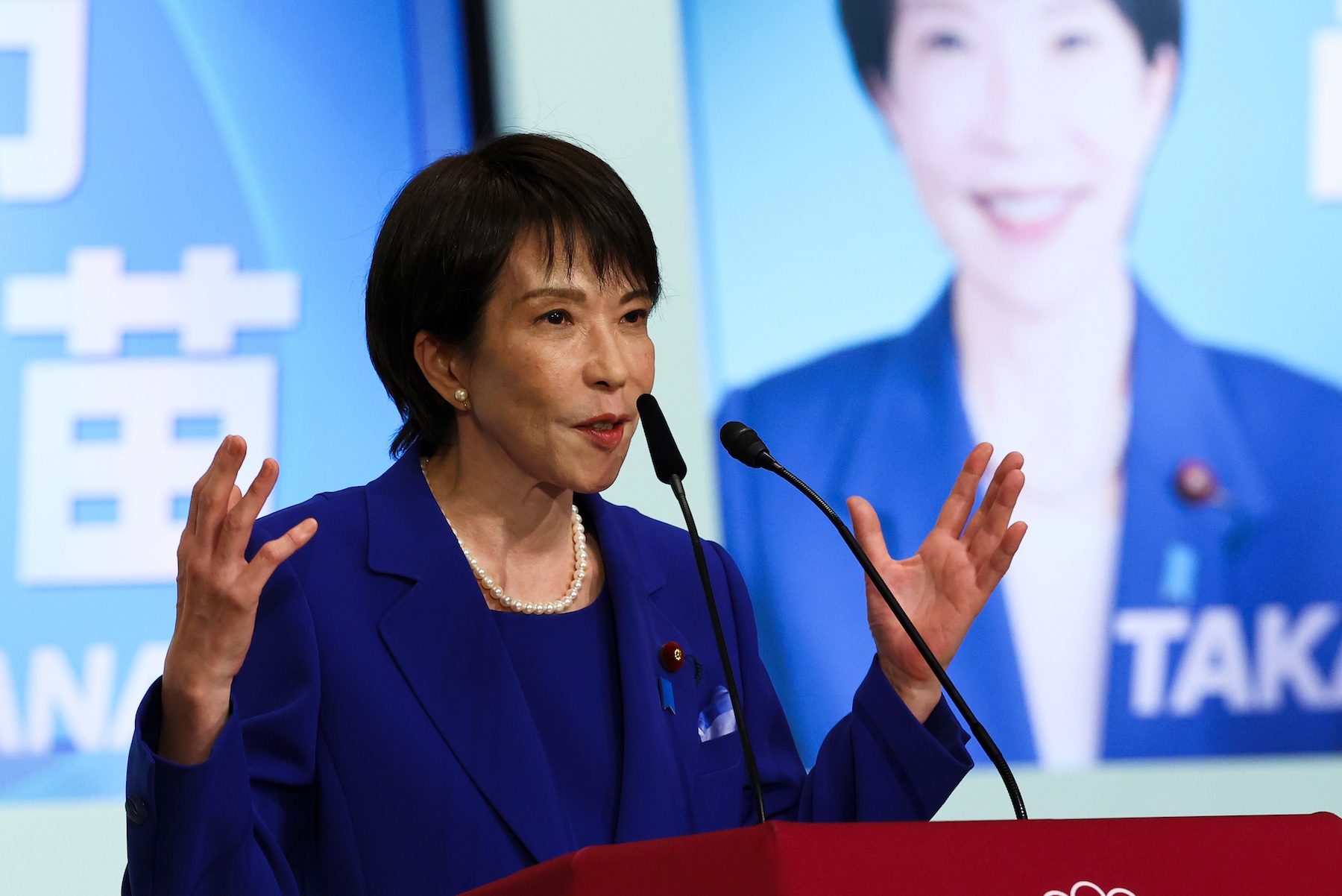
Takaichi elected LDP leader; likely to become Japan’s first female prime minister

Japan’s ruling party picked hardline conservative Sanae Takaichi as its head on Saturday, putting her on course to become the country’s first female prime minister in a move set to jolt investors and neighbors.

The Liberal Democratic Party, which has ruled Japan for almost all of the postwar era, elected Takaichi, 64, to regain trust from a public angered by rising prices and drawn to opposition groups promising stimulus and clampdowns on migrants.

A vote in parliament to choose a replacement for outgoing Shigeru Ishiba is expected on October 15. Takaichi is favored as the ruling coalition has the largest number of seats.

Takaichi, the only woman among the five LDP candidates, beat a challenge from the more moderate Shinjiro Koizumi, 44, who was bidding to become the youngest modern leader.

Takaichi got 183 votes, while Koizumi garnered 156 in a runoff.

A former economic security and internal affairs minister with an expansionary fiscal agenda for the world’s fourth-largest economy, Takaichi takes over a party in crisis.

Various other parties, including the expansionist Democratic Party for the People and the anti-immigration Sanseito, have been steadily luring voters, especially younger ones, away from the LDP.

The LDP and its coalition partner lost their majorities in both houses under Ishiba over the past year, triggering his resignation.

“Recently, I have heard harsh voices from across the country saying we don’t know what the LDP stands for anymore,” Takaichi said in a speech before the second-round vote. “That sense of urgency drove me. I wanted to turn people’s anxieties about their daily lives and the future into hope.”

Takaichi, who says her hero is Margaret Thatcher, Britain’s first female prime minister, offers a starker vision for change than Koizumi and is potentially more disruptive.

An advocate of late premier Shinzo Abe’s “Abenomics” strategy to boost the economy with aggressive spending and easy monetary policy, she has previously criticized the Bank of Japan’s interest rate increases.

Such a spending shift could spook investors worried about one of the world’s biggest debt loads.

Naoya Hasegawa, chief bond strategist at Okasan Securities in Tokyo, said Takaichi’s election had weakened the chances of the BOJ raising rates this month, which markets had priced at around a 60% chance before the vote.

Takaichi has also raised the possibility of redoing an investment deal with U.S. President Donald Trump that lowered his punishing tariffs in return for Japanese taxpayer-backed investment.

The U.S. ambassador to Japan, George Glass, congratulated Takaichi, posting on X that he looked forward to strengthening the Japan-U.S. partnership “on every front”.

But her nationalistic positions – such as her regular visits to the Yasukuni shrine to Japan’s war dead, viewed by some Asian countries as a symbol of its past militarism – may rile neighbors like South Korea and China.

South Korea will seek to “cooperate to maintain the positive momentum in South Korea-Japan relations”, President Lee Jae Myung’s office said in a statement.

Takaichi also favors revising Japan’s pacifist postwar constitution and suggested this year that Japan could form a “quasi-security alliance” with Taiwan, the democratically governed island claimed by China.

Taiwan President Lai Ching-te welcomed her election, saying she was a “steadfast friend of Taiwan”.

“It is hoped that under the leadership of the new (LDP) President Takaichi, Taiwan and Japan can deepen their partnership in areas such as economic trade, security, and technological cooperation,” he said in a statement.

If elected prime minister, Takaichi said she would travel overseas more regularly than her predecessor to spread the word that “Japan is Back!”

“I have thrown away my own work-life balance and I will work, work, work,” Takaichi said in her victory speech.

Some of her supporters viewed her selection as a watershed in Japan’s male-dominated politics, though opinion polls suggest her socially conservative positions are favored more by men than women.

“The fact that a woman was chosen might be seen positively. I think it shows that Japan is truly starting to change and that message is getting across,” 30-year-old company worker Misato Kikuchi said outside Tokyo’s Shimbashi station.

Takaichi must also seek to blunt the rise of Sanseito, which broke into the political mainstream in a July election, appealing to conservative voters disillusioned with the LDP.

Echoing Sanseito’s warnings about foreigners, she kicked off her first official campaign speech with an anecdote about tourists reportedly kicking sacred deer in her hometown of Nara.

Takaichi, whose mother was a police officer, promised to clamp down on rule-breaking visitors and immigrants, who have come to Japan in record numbers in recent years.”We hope she will … steer Japanese politics in an ‘anti-globalism’ direction to protect national interests and help the people regain prosperity and hope,” Sanseito said in a statement. (JapanToday)

Posted on Leave a comment

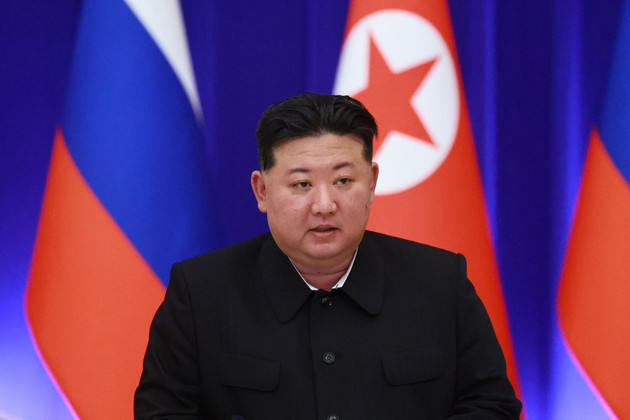
North Korean defector to sue Kim Jong Un for abuse

A North Korean defector is filing civil and criminal charges against the country’s leader Kim Jong Un for abuses she faced while detained in the country.

Choi Min-kyung fled the North to China in 1997 but was forcibly repatriated in 2008. She said she was sexually abused and tortured after her return.

When she files the case in Seoul on Friday, it will be the first time a North Korean-born defector takes legal action against the regime, said a South-based rights group assisting Ms Choi.

South Korean courts have in the past ruled against North Korea on similar claims by South Koreans but such verdicts are largely symbolic and ignored by Pyongyang.

The case names Kim and four other Pyongyang officials. The rights group, the Database Center for North Korean Human Rights (NKDB), says it also plans to take Ms Choi’s case to the United Nations and the International Criminal Court.

“I earnestly wish for this small step to become a cornerstone for the restoration of freedom and human dignity, so that no more innocent North Koreans suffer under this brutal regime,” Ms Choi said on Wednesday, according to a statement by NKDB.

“As a torture victim and survivor of the North Korean regime, I carry a deep and urgent responsibility to hold the Kim dynasty accountable for crimes against humanity,” she said.

Ms Choi fled North Korea again in 2012 and settled in the South. She said psychological trauma from the ordeal remains and that she continues to rely on medication.

For years international rights groups have documented alleged human rights violations by North Korea, ranging from the abuse of political prisoners to systematic discrimination based on gender and class.

Hanna Song, executive director of the NKDB, told BBC Korean that the lawsuits were significant because they were pursuing criminal charges “in parallel” to civil cases.

Previous court cases against North Korea had been “limited to civil litigation”, she said.

In 2023, a Seoul court ordered North Korea to pay 50 million won ($36,000; £27,000) each to three South Korean men who were exploited after being taken as prisoners of war in North Korea during the Korean War.

In 2024, the North Korean government was also ordered to pay 100 million won to each of five Korean Japanese defectors. They were part of thousands who had left Japan for North Korea in the 1960s and 1980s under a repatriation programme.

They said they had been lured to North Korea decades ago on the promise of “paradise on Earth”, but were instead detained and forced to work.

North Korea did not respond to either of the lawsuits.

But Ms Song, from the NKDB, argued that the rulings offered much-needed closure to the plaintiffs.

“What we’ve come to understand through years of work on accountability is that what victims really seek isn’t just financial compensation – it’s acknowledgment,” said Ms Song.

“Receiving a court ruling in their favour carries enormous meaning. It tells them their story doesn’t just end with them – it’s acknowledged by the state and officially recorded in history.” (BBC)

Posted on Leave a comment

K-pop singer jailed three and a half years for rape

South Korean singer Taeil, formerly from the K-pop band NCT, has been sentenced to three years and six months in prison for rape.

Taeil, 31, and two accomplices, named in South Korean reports only as Lee and Hong, admitted in June to taking turns assaulting their victim – a Chinese tourist.

A district judge in Seoul described the crime as “extremely grave”, but handed them just half the seven-year sentence requested by prosecutors, noting they were first time offenders.

The court also ordered the three men to complete 40 hours of a treatment programme designed for perpetrators of sexual violence.

The court heard they had met their victim at a bar in the Itaewon district in Seoul.

She became “heavily intoxicated” after drinking with them, the court heard. They then got into a taxi to Lee’s house, where the assault happened.

South Korean law describes this specific kind of rape as “aggravated” because it was a group attack, and a “quasi rape”, as the victim was unconscious.

Taeil, whose real name is Moon Tae-il, left NCT in August last year when allegations first emerged, although the exact details of the crime were not publicly known at the time.

Introduced as a K-pop band in January 2016, NCT is known for its experimental music spanning various genres and has gained international attention with some releases charting on Billboard lists. (BBC)

Posted on Leave a comment

Trump to slap allies Japan, South Korea with 25% tariffs

President Donald Trump announced tariffs of 25 per cent on Japan and South Korea on Monday, stepping up pressure on the two key US allies and a dozen other economies to reach trade deals with Washington.

Trump issued similar letters to South Africa, Malaysia, Myanmar, Laos and Kazakhstan, saying he would slap duties on their products ranging from 25 per cent to 40 per cent.

The president had said at the weekend that, starting from Monday, he would send a first batch of letters to countries informing them that he would reimpose harsh levies earlier postponed in April.

In near-identically worded letters to Japanese and South Korean leaders, Trump said the tariff hikes came as their trading relationships with Washington were “unfortunately, far from Reciprocal.”

The tariffs set out in Trump’s latest letters are due to take effect on August 1. He warned of further escalation if the countries involved retaliated against the duties.

Currently, the affected countries have been hit with a 10 per cent levy Trump imposed on almost all trading partners.

But Trump said he was ready to lower the new levels if countries changed their trade policies: “We will, perhaps, consider an adjustment to this letter.”

Japan’s Prime Minister Shigeru Ishiba said Sunday that he “won’t easily compromise” in trade talks with Washington.

White House Press Secretary Karoline Leavitt told reporters Monday that Trump would sign an order later in the day to delay his original July 9 deadline for steeper tariffs to take effect – postponing their imposition to August 1.

She added that besides Japan and South Korea, there would be approximately 12 other partners receiving letters from Trump soon.

With the deadline extension, Leavitt noted that Trump would set out the “reciprocal tariff rate” for partners in the coming month as negotiations continue.

Trump originally announced sweeping tariffs on world economies on what he called “Liberation Day” on April 2, claiming the United States was being “ripped off.”

Amid market turmoil, he then suspended the initial tariffs for 90 days, a deadline that would have expired Wednesday without the latest extension.

While the Trump administration had signalled hopes of striking dozens of deals by July – at one point boasting of “90 deals in 90 days”- there have been limited results so far.

Washington has unveiled pacts with only Britain and Vietnam, while the United States and China agreed to temporarily lower tariff levels on each other’s products that earlier reached three digits. (Punch)

Posted on Leave a comment

South Korea cements cultural status with six Tonys for Maybe Happy Ending

South Koreans are celebrating their first win in the Tony Awards, which they say highlights their country’s status as a cultural powerhouse.

The acclaimed Broadway production of Maybe Happy Ending, which debuted in South Korea almost a decade ago, won six Tonys, including best musical.

Maybe Happy Ending is about the romance between two humanoid robots living in an apartment building on the outskirts of Seoul. It entered Sunday night’s awards ceremony with 10 nominations.

With the Tonys, South Koreans have now won the four most coveted awards in US entertainment. Squid Game won Emmy awards in 2022 while Parasite won four Oscars in 2020. Soprano Sumi Jo won a Grammy in 1993.

On Sunday, South Korean lyricist Hue Park and American composer Will Aronson took home the Tony for best original score and best book of a musical.

Before making their Broadway debut with Maybe Happy Ending in 2024, the pair, who met as students at New York University, had written the musical in both English and Korean.

“This is amazing!” one post on Threads reads. “I heard the Broadway version got even more polished. I’m so proud that Korea is becoming a true cultural powerhouse.”

“This feels like a dream come true for the Korean Wave,” reads another post. “I’m just as thrilled as when Parasite won the Oscars, Squid Game won the Emmys, and Han Kang received the Nobel Prize.”

Former Glee star Darren Criss, who played one of the robots, Oliver, won best lead actor in a musical. It was his first Tony win.

The musical, which also stars Helen J Shen as robot Claire, was already on a streak this awards season.

It bagged some of the top prizes at the Outer Critics Circle Awards and Drama League Awards this year.

First directed by Kim Dong-yeon, Maybe Happy Ending premiered in Seoul in 2016 to much critical acclaim. It has since been revived several times in South Korea and abroad – in both Korean and English.

Maybe Happy Ending’s success comes as South Korean artists continue to break ground in entertainment, especially with K-pop acts like BTS and Blackpink dominating music in the last few years.

It also serves as a window into Korean culture, some social media users say.

“It’s amazing that Korean elements like Jeju Island, fireflies, and hwabun (a plant pot) were kept in the Broadway version too,” reads one post on Threads.

“I already felt proud just seeing it nominated, but watching the local audience react so positively made it even more special.” (BBC)

Posted on Leave a comment

Uzbekistan, Jordan qualify for first-ever World Cup

Uzbekistan and Jordan made history on Thursday by qualifying for their first World Cup, while the pair will be joined in next year’s tournament by perennial participants South Korea.

Uzbekistan, one of the fastest-rising national teams in Asia, drew 0-0 with the UAE in Abu Dhabi to take the second automatic spot in Group A, although top place is still in play after already qualified Iran lost 1-0 to Qatar in Doha.

Heading into the third round’s final set of fixtures on Tuesday, Iran sit at the summit, two points ahead of Uzbekistan.

The top two teams in each of the three Asian groups go straight to the World Cup, while those finishing third and fourth –- the UAE and Qatar hold those slots in Group A –- enter a fourth round of qualifiers.

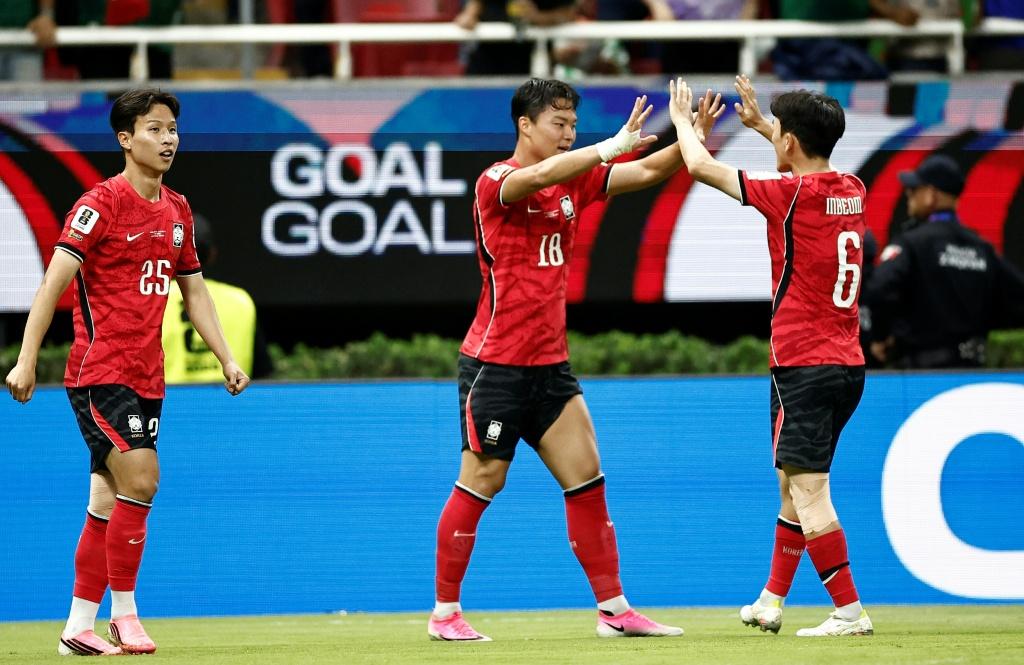
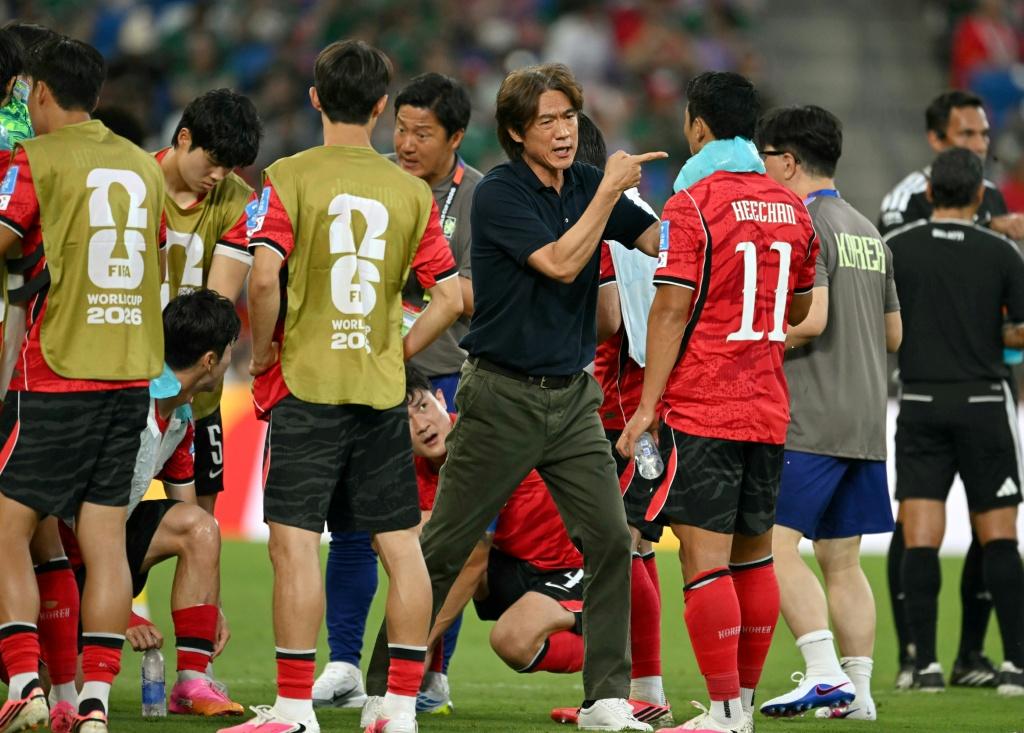
In Group B, South Korea confirmed their place in an 11th straight World Cup by defeating Iraq 2-0 in Basra.

The victory, sealed by second-half goals from Kim Jin-gyu and Oh Hyeon-gyu, means South Korea reclaim top spot from Jordan, whose 3-0 victory against Oman earlier on Thursday ultimately proved enough to secure their participation at the expanded 48-team showpiece in the United States, Canada and Mexico.

Jordan’s King Abdullah II congratulated the team on social media.

“This historic qualification is well-deserved by our team, which includes stars and cadres of whom we are proud,” he wrote on X.

“Special thanks go to our loyal fans who have been our support and encouragement.”

Ali Olwin netted a hat-trick as the 2023 Asian Cup runners-up etched their name in the record books.

Iraq were reduced to 10 men midway through the first half when Ali Al Hamadi’s foul on Cho Yu-min was upgraded to a red card following a VAR review.

Iraq sit third in Group B, with Oman and Palestine still able to progress to the fourth round of qualifying. Palestine, who defeated Kuwait 2-0 in Ardhiya, host Oman on Tuesday, while Iraq face Jordan in Amman.

Meanwhile, Saudi Arabia and Australia will go head-to-head on Tuesday for the second automatic spot in Group C.

Australia remain in pole position following their last-gasp win against group leaders Japan in Perth.

Defender Aziz Behich was the home hero in front of more than 57,000 fans, rifling into the corner in the 90th minute to give Tony Popovic’s side a crucial 1-0 victory.

“We know there’s room to grow and room to improve, but we’ve done something special tonight,” said Popovic, who saw his team outplayed for long periods by an experimental Japan side.

Saudi Arabia ensured the race for second place will go down to the wire courtesy of a 2-0 win against Bahrain in Riffa. Goals in either half from Musab Al Juwayr and Abdulrahman Al Obud saw Herve Renard’s men stay three points behind second-placed Australia.

However, the Saudis will have to win in Jeddah by five goals to leapfrog the Socceroos.

Popovic, who replaced Graham Arnold in the dugout in September, added: “We’ve all played a part in getting us to this point. We want to go to Saudi Arabia and really finish the job off.”

Also in Group C, Patrick Kluivert’s Indonesia kept alive their hopes of reaching a first World Cup since the country’s independence in 1945 with a 1-0 win over China.

That leaves Indonesia fourth in the group, one point behind Saudi. Ole Romeny scored the only goal, his controversial penalty just before half time following a VAR check leaving China rooted to the bottom of the group and thus ending their hopes of making a second World Cup. (Punch)