The Oyo State Governor, Seyi Makinde, has announced a cabinet reshuffle.
According to a statement by his Special Adviser (Media), Sulaimon Olanrewaju, Governor Makinde has relieved the Secretary to the State Government, Professor Olanike Kudirat Adeyemo, of her appointment with immediate effect.
Professor Musibau Adetunji Babatunde has been appointed as the new Secretary to the State Government.
The statement further said that Temilolu Seun Ashamu has been moved from the Ministry of Environment and Natural Resources to the Ministry of Budget and Economic Planning.
Also, Governor Makinde has announced his Senior Special Assistant on Public Works, Ademola Aderinto, as a commissioner-designate. He will consequently be presented to the Oyo State House of Assembly for screening.
The statement also announced the appointment of Honourable Abiodun Adedoja as Special Adviser on Energy Security and Kolawole Elijah Akanmu as Senior Special Assistant on Budget and Economic Planning. (Channels)
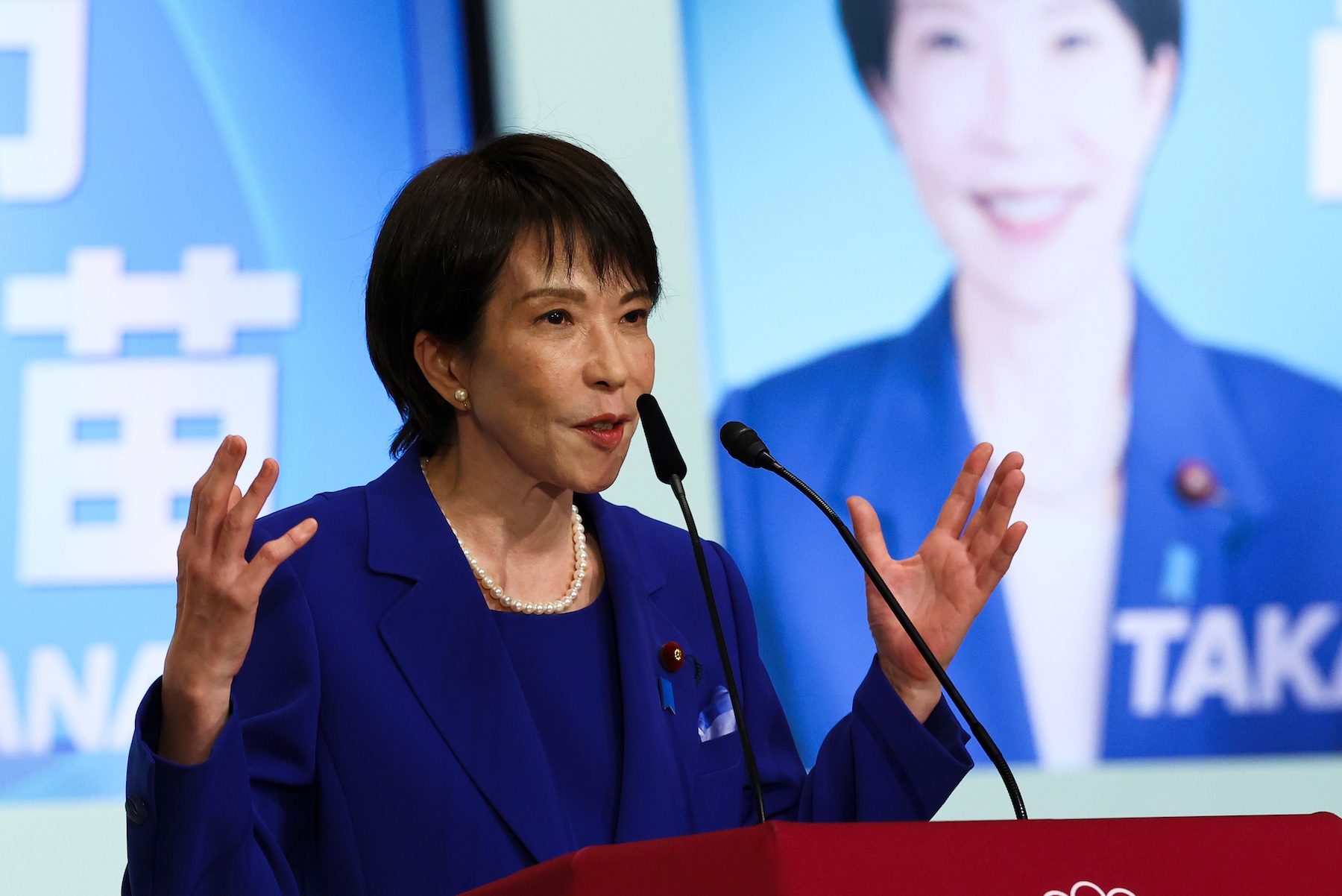
Japan’s Diet elected ultraconservative Sanae Takaichi as the country’s first female prime minister Tuesday, a day after her struggling party struck a coalition deal with a new partner expected to pull her governing bloc further to the right.
Takaichi replaces Shigeru Ishiba, ending a three-month political vacuum and wrangling since the Liberal Democratic Party’s disastrous election loss in July.
Ishiba, who lasted only one year as prime minister, resigned with his cabinet earlier in the day, paving the way for his successor.
Takaichi won 237 votes — four more than a majority — compared to 149 won by Yoshikoko Noda, head of the largest opposition party, the Constitutional Democratic Party of Japan, in the lower house, which elects the prime minister. As the results were announced, Takaichi stood up and bowed deeply.
The LDP’s alliance with the Osaka-based rightwing Japan Innovation Party, or Ishin no Kai, ensured her premiership because the opposition is not united. Takaichi’s untested alliance is still short of a majority in both houses of parliament and will need to court other opposition groups to pass any legislation — a risk that could make her government unstable and short-lived.
The two parties signed a coalition agreement on policies underscoring Takaichi’s hawkish and nationalistic views.
Their last-minute deal came after the Liberal Democrats lost its longtime partner, the Buddhist-backed Komeito, which has a more dovish and centrist stance. The breakup threatened a change of power for the LDP, which has governed Japan almost uninterrupted for decades.
Tackling rising prices and other economic measures is the top priority for the Takaichi government, LDP Secretary General Shunichi Suzuki told NHK public television as he apologized over the delay because of the party’s internal power struggle since the July election. He said the new coalition will cooperate with other opposition parties to quickly tackle rising prices to “live up to the expectations of the people.”
Later in the day, Takaichi, 64, will present a cabinet with a number of allies of LDP’s most powerful kingmaker, Taro Aso, and others who backed her in the party leadership vote.
JIP will not hold ministerial posts in Takaichi’s cabinet until his party is confident about its partnership with the LDP, Yoshimura said.
Takaichi is running on a deadline, as she prepares for a major policy speech later this week, talks with U.S. President Donald Trump and regional summits. She needs to quickly tackle rising prices and compile economy-boosting measures by late December to address public frustration.
While she is the first woman serving as Japan’s prime minister, she is in no rush to promote gender equality or diversity.
Takaichi is among Japanese politicians who have stonewalled measures for women’s advancement. Takaichi supports the imperial family’s male-only succession and opposes same-sex marriage and allowing separate surnames for married couples.
A protege of assassinated former Prime Minister Shinzo Abe, Takaichi is expected to emulate his policies including a stronger military and economy, as well as revising Japan’s pacifist constitution. With her potentially weak grip on power, it’s unknown how much Takaichi will be able to achieve.
Also an admirer of former British Prime Minister Margaret Thatcher, Takaichi was first elected to parliament in 1993 and has served in a number of senior party and government posts, including as ministers of economic security and internal affairs, but her diplomatic background is thin.
When Komeito left the governing coalition, it cited the LDP’s lax response to slush fund scandals that led to their consecutive election defeats.
The centrist party also raised concern about Takaichi’s revisionist view of Japan’s wartime past and her regular prayers at Yasukuni Shrine despite protests from Beijing and Seoul that see the visits as lack of remorse about Japanese aggression, as well as her recent xenophobic remarks.
Takaichi has toned down her hawkish rhetoric. On Friday, she sent a religious ornament instead of going to Yasukuni. (JapanToday)
Israel’s Cabinet early Friday approved President Donald Trump’s plan for a ceasefire in the Gaza Strip and the release of all the remaining hostages held by Hamas, a key step toward ending a ruinous two-year war that has destabilized the Middle East.
A brief statement from Prime Minister Benjamin Netanyahu’s office said the Cabinet approved the “outline” of a deal to release the hostages, without mentioning other aspects of the plan that are more controversial.
The broader ceasefire plan included many unanswered questions, such as whether and how Hamas will disarm and who will govern Gaza. But the sides appeared closer than they have been in months to ending a war that has killed tens of thousands of Palestinians, reduced much of Gaza to rubble, brought famine to parts of the territory and left dozens of hostages, living and dead, in Gaza.
The war, which began with Hamas’ deadly attack on Israel on Oct. 7, 2023, has also triggered other conflicts in the region, sparked worldwide protests and led to allegations of genocide that Israel denies.
Some 1,200 people were killed in the Hamas-led assault, and 251 were taken hostage. In Israel’s ensuing offensive, more than 67,000 Palestinians have been killed in Gaza and nearly 170,000 wounded, according to Gaza’s Health Ministry, which doesn’t differentiate between civilians and combatants but says around half of the deaths were women and children.
In the hours leading up to the Israeli Cabinet’s vote, Israeli strikes continued. Explosions were seen Thursday in northern Gaza, and a strike on a building in Gaza City killed at least two people and left more than 40 trapped under rubble, according to the Palestinian Civil Defense.
At least 11 dead Palestinians and another 49 who were wounded arrived at hospitals over the past 24 hours, Gaza’s Health Ministry said.
An Israeli military official who spoke on the condition of anonymity in line with military guidelines said Israel was hitting targets that posed a threat to its troops as they reposition. Hamas blasted Israel over the strike, saying Netanyahu was trying to “shuffle the cards and confuse” efforts by mediators to end the war in Gaza.
A senior Hamas official and lead negotiator made a speech Thursday laying out what he says are the core elements of the ceasefire deal: Israel releasing around 2,000 Palestinian prisoners, opening the border crossing with Egypt, allowing aid to flow and withdrawing from Gaza.
Khalil al-Hayya said all women and children held in Israeli jails will also be freed. He did not offer details on the extent of the Israeli withdrawal from Gaza.
Al-Hayya said the Trump administration and mediators had given assurances that the war is over, and that Hamas and other Palestinian factions will now focus on achieving self-determination and establishing a Palestinian state.
“We declare today that we have reached an agreement to end the war and the aggression against our people,” Al-Hayya said in a televised speech Thursday evening.
In other developments, U.S. officials announced that they would send about 200 troops to Israel to help support and monitor the ceasefire deal as part of a broader, international team. The officials spoke on condition of anonymity to discuss details not authorized for release.
In the southern Gaza city of Khan Younis, reactions to the announcement of a ceasefire were relatively muted and often colored by grief.
“I am happy and unhappy. We have lost a lot of people and lost loved ones, friends and family. We lost our homes,” said Mohammad Al-Farra. “Despite our happiness, we cannot help but think of what is to come. … The areas we are going back to, or intending to return to, are uninhabitable.”
In Tel Aviv, families of the remaining hostages popped champagne and cried tears of joy after Trump announced the deal.
In Jerusalem on Thursday, Sharon Canot celebrated with some others.
“We are so excited this morning. We cried all morning,” she said. “It’s been two years that we are in horror.”
Under the terms, Hamas intends to release all living hostages in a matter of days, while the Israeli military will begin a withdrawal from the majority of Gaza, people familiar with the matter told The Associated Press. They spoke on condition of anonymity to discuss details of an agreement that has not fully been made public. Some 20 of the 48 hostages still in captivity are believed to be alive.
In a short video posted by U.S. Commerce Secretary Howard Lutnick, Trump was seen speaking by phone to a group of elated hostage families.
“They are all coming back on Monday,” said Trump, who is expected to visit the region in the coming days.
Tom Fletcher, the U.N. humanitarian chief, told reporters Thursday that officials have 170,000 metric tons of medicine, aid and other supplies at ready for transport into Gaza when they are given a green light.
The deal, which was expected to be signed in Egypt, will include a list of prisoners to be released and maps for the first phase of an Israeli withdrawal to new positions in Gaza, according to two Egyptian officials briefed on the talks, a Hamas official and another official.
Israel will publish the list of the prisoners, and victims of their attacks will have 24 hours to lodge objections.
The withdrawal could start as soon as Thursday evening, said the officials, who spoke on condition of anonymity because they were not authorized to be publicly named speaking about the negotiations. The hostage and prisoner releases are expected to begin Monday, the officials from Egypt and Hamas said, though the other official said they could occur as early as Sunday night.
Five border crossings would reopen, including the Rafah crossing between Gaza and Egypt, the Egyptian and Hamas officials said.
The Trump plan calls for Israel to maintain an open-ended military presence inside Gaza, along its border with Israel. An international force, comprised largely of troops from Arab and Muslim countries, would be responsible for security inside Gaza. The U.S. would lead a massive internationally funded reconstruction effort.
The plan also envisions an eventual role for the Palestinian Authority — something Netanyahu has long opposed. But it requires the authority, which administers parts of the West Bank, to undergo a sweeping reform program that could take years.
The Trump plan is even more vague about a future Palestinian state, which Netanyahu firmly rejects. (PBS)
France’s outgoing Prime Minister, Sébastien Lecornu, was due to start a last-ditch effort on Tuesday to rally cross-party support for a cabinet lineup that would pull his country out of a political deadlock.
President Emmanuel Macron tasked Lecornu, 39, with forming a government in early September after parliament toppled his predecessor over an unpopular austerity budget.
Lecornu unveiled a new cabinet on Sunday evening, but it immediately drew criticism for containing many of the same faces from the previous government, and Lecornu resigned on Monday morning.
But in a twist, Lecornu had by Monday evening accepted Macron’s request that he spend two days trying to salvage his administration.
Macron tasked Lecornu with “conducting final negotiations by Wednesday evening to define a platform of action and stability for the country,” a presidential official said, asking not to be named.
The president was ready to “assume his responsibilities” in case of failure, the official said, appearing to allude to his calling new legislative elections.
Lecornu was from 9:00 am (0700 GMT) to meet party leaders at the prime minister’s office in an attempt to breach the impasse.
A political crisis has rocked France for over a year, after Macron called snap polls in mid-2024, which ended in a hung parliament.
The chaos comes ahead of the 2027 presidential elections, expected to be a historic crossroads in French politics, with the French far right under Marine Le Pen sensing its best chance yet of taking power.
Edouard Philippe, a former premier and centre-right contender in the next presidential elections, on Tuesday slammed what he called a “distressing political game”.
He urged Macron to call early presidential elections as soon as the 2026 budget was approved.
Within Macron’s own ranks, Gabriel Attal — who was prime minister until last year and now leads the president’s centrist party — on Monday evening said he no longer understood Macron’s decisions.
After a succession of new premiers, it was “time to try something else”, he said.
Le Pen on Monday said it would be “wise” for Macron to resign but also urged snap legislative polls as “necessary”.
The party leader of Le Pen’s far-right National Rally (RN), Jordan Bardella, said it would be “ready to govern”.
Socialist party leader Olivier Faure late Monday called for “a change of course” with a “left-wing government”.
Bruno Retailleau, leader of the right-wing Republicans and outgoing interior minister, said he was not against remaining in a cabinet with Macron’s centrists as long as it did not mean fewer members from his party.
Lecornu’s two immediate predecessors, Francois Bayrou and Michel Barnier, were ousted by parliament in a standoff over an austerity budget.
Any next premier will still face the challenge of finding enough support for the spending bill in a chamber where the Macron-friendly bloc is in a minority.
The crisis comes as France’s public debt has reached a record high.
France’s debt-to-GDP ratio is now the European Union’s third-highest after Greece and Italy, and is close to twice the 60 percent permitted under EU rules.
Macron has so far resisted calls for fresh parliamentary polls and ruled out resigning before his mandate ends in 2027.He could also look for a new prime minister, who would be the eighth of the president’s mandate, but would face a struggle to survive without radical change. (Punch)