Posted on Leave a comment

Webtoon Entertainment, Warner Bros. Animation to co-produce adaptations of 10 popular webcomics

Webtoon Entertainment will bring a batch of stories that originated on mobile phones to life as animated projects under a new deal with Warner Bros. Animation. The companies intend to enter into an agreement to co-produce 10 fan-favorite Webtoon webcomics series for global distribution.

The collaboration is a “significant expansion of Webtoon Entertainment’s animation pipeline,” according to the company. Projects are to be selected from the company’s Korean- and English-language platforms, with development support from Webtoon Entertainment’s U.S.-based Webtoon Productions and Japanese intellectual-property business teams.

The projects Webtoon plans to co-produce with Warner Bros. Animation could be films or series, but right now it’s early in the process — and no release dates have been targeted yet. The creators of the original Webtoon webcomics own the IP and, under their agreements with the company, will receive a share of revenue generated from the animation projects, said Yongsoo Kim, Webtoon Entertainment’s chief strategy officer and head of global.

“Our creators are building franchises that Gen Z audiences love, and working with Warner Bros. Animation gives us an incredible opportunity to take those stories further alongside one of the most respected names in animation,” said Kim.

Other Webtoon Entertainment adaptations are available on Netflix, Amazon’s Prime Video, Sony’s Crunchyroll and other platforms. The company’s content partners include Disney, Discord, HYBE and DC Comics. Webtoon, a pioneer in the webcomic format, has about 155 million monthly active users globally.

Warner Bros. Animation is home to animated characters from the DC, Hanna-Barbera, MGM and Looney Tunes libraries. WBA recently released original anime feature film “The Lord of the Rings: The War of the Rohirrim” with New Line Cinema and “The Day the Earth Blew Up: A Looney Tunes Movie,” released on March 14, 2025, with Ketchup Entertainment.

“Bringing together the world-class artistry of Warner Bros. Animation and the vibrant storytelling of Webtoon creates an awesome combination and opportunity to build something special,” said Sam Register, president of Warner Bros. Animation, Cartoon Network Studios, Hanna-Barbera Studios Europe.

Sinbae Kim, chief growth officer of LINE Digital Frontier, leads Webtoon’s global animation efforts and was involved in inking the Warner Bros. Animation deal. According to Kim, Webtoon has a “unique ability to discover original voices, nurture global fandoms and build the next generation of franchise storytelling from the ground up… This partnership with Warner Bros. Animation is an exciting next step in that journey — one that expands what’s possible for our creators, our studios and our fans.”

“From hits like ‘True Beauty,’ ‘Clevatess’ and ‘Tower of God’ to many more adaptations in progress, we’re proving that great stories can start on a phone screen and grow into global entertainment phenomena,” said Kim. (Variety)

Posted on Leave a comment

BBC apologises to Trump over Panorama edit but refuses to pay compensation

The BBC has apologised to US President Donald Trump for a Panorama episode that spliced parts of his 6 January 2021 speech together, but rejected his demands for compensation.

The corporation said the edit had given “the mistaken impression that President Trump had made a direct call for violent action” and said it would not show the 2024 programme again.

Lawyers for Trump have threatened to sue the BBC for $1bn (£759m) in damages unless the corporation issues a retraction, apologises and compensates him.

Culture Secretary Lisa Nandy told BBC Breakfast she was confident the corporation was “gripping this with the seriousness that it demands”, adding her role was to ensure “the highest standards are upheld”.

But she also told BBC Radio 4’s Today programme that the BBC’s editorial standards and guidelines were “in some cases not robust enough and in other cases not consistently applied”, adding that there would need to be people “at a very senior level with a journalistic background”.

Political appointments to the corporation’s board would be examined in the BBC’s charter review, she said in response to a question asking if member Sir Robbie Gibb, a former political adviser to Theresa May, had overstepped his remit and weighed into politics.

While this was a matter for the board and its chairman, she said, those appointments “damaged confidence and trust in the BBC’s impartiality”.

Liberal Democrats leader Sir Ed Davey had urged the prime minister on Thursday to “get on the phone to Trump” to put a stop to his lawsuit threat and “defend the impartiality and independence of the BBC”.

The fallout from the scandal led to the resignations of BBC director general Tim Davie and head of news Deborah Turness on Sunday.

BBC News has approached the White House for comment.

The apology comes hours after a second similarly edited clip, broadcast on Newsnight in 2022, was revealed by the Daily Telegraph.

In its Corrections and Clarifications section, published on Thursday evening, the BBC said the Panorama programme had been reviewed after criticism of how Trump’s speech had been edited.

The BBC had been given a deadline of 22:00 GMT (17:00 EST) on Friday to respond.

“We accept that our edit unintentionally created the impression that we were showing a single continuous section of the speech, rather than excerpts from different points in the speech, and that this gave the mistaken impression that President Trump had made a direct call for violent action,” the statement said.

Lawyers for the BBC have written to President Trump’s legal team in response to a letter received on Sunday, a BBC spokesperson said.

“BBC chair Samir Shah has separately sent a personal letter to the White House making clear to President Trump that he and the corporation are sorry for the edit of the president’s speech on 6 January 2021, which featured in the programme,” they said.

They added: “While the BBC sincerely regrets the manner in which the video clip was edited, we strongly disagree there is a basis for a defamation claim.”

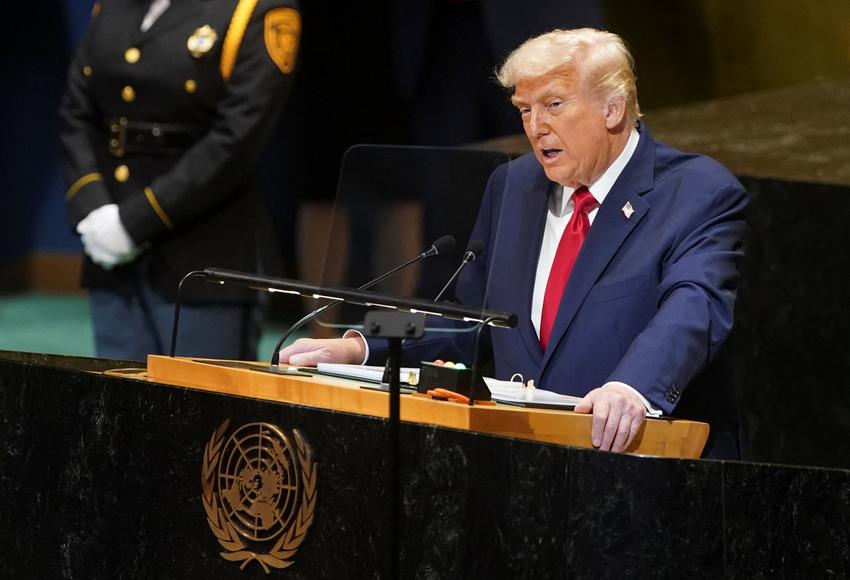
In Trump’s speech he said: “We’re going to walk down to the Capitol, and we’re going to cheer on our brave senators and congressmen and women.”

More than 50 minutes later in the speech, he said: “And we fight. We fight like hell.”

In the Panorama programme the clip shows him as saying: “We’re going to walk down to the Capitol… and I’ll be there with you. And we fight. We fight like hell.”

Speaking to Fox News, Trump said his speech had been “butchered” and the way it was presented had “defrauded” viewers.

The BBC received the letter from Trump’s lawyers on Sunday. It demands a “full and fair retraction” of the documentary, an apology, and that the BBC “appropriately compensate President Trump for the harm caused”.

In its letter to Trump’s legal team, the BBC sets out five main arguments for why it does not think it has a case to answer.

First it says the BBC did not have the rights to, and did not, distribute the Panorama episode on its US channels.

When the documentary was available on BBC iPlayer, it was restricted to viewers in the UK.

Secondly, it says the documentary did not cause Trump harm, as he was re-elected shortly after.

Thirdly, it says the clip was not designed to mislead, but just to shorten a long speech, and that the edit was not done with malice.

Fourthly, it says the clip was never meant to be considered in isolation. Rather, it was 12 seconds within an hour-long programme, which also containedlots of voices in support of Trump.

Finally, an opinion on a matter of public concern and political speech is heavily protected under defamation laws in the US.

A BBC insider said that internally, there is a strong belief in the case the corporation has put forward, and in its defence. (BBC)

Posted on Leave a comment

Donald Trump pardons UK billionaire and former Tottenham owner Joe Lewis

Joe Lewis, the British billionaire and former owner of Tottenham Hotspur FC, has been pardoned by Donald Trump over a 2024 conviction for his part in a “brazen” insider trading scheme.

Lewis, 88, was fined $5m (£3.8m) and given three years probation by a New York judge last year but was spared jail time after pleading guilty to involvement in a plan that prosecutors said was designed to enrich his friends, lovers and employees.

Lawyers for the east London-born investor initially accused prosecutors of making an “egregious” mistake by charging him with multiple counts of securities fraud and conspiracy.

But Lewis, who also owns the largest stake in one of the UK’s biggest operators of pubs, bars and restaurants, Mitchells & Butlers, later changed his plea to guilty after prosecutors agreed to a non-custodial sentence.

Lewis retained his right to change his plea again if a custodial sentence were imposed.

In a statement to the court at his sentencing last year, he said: “I made a terrible mistake. I broke the law. I am ashamed, sorry, and I hold myself accountable.”

The judge, Jessica Clarke, said Lewis’s circumstances did not warrant incarceration and imposed a $44m fine on his company, Broad Bay, on top of his $5m personal fine and probation.

But on Thursday, the Daily Telegraph was first to report that Trump planned to pardon Lewis entirely. The Guardian understands that the fine will not be repaid to Lewis or his company.

The White House later confirmed the pardon and said Lewis requested it so that he could receive medical treatment and visit his grandchildren and great-grandchildren in the US, the Associated Press reported.

Lewis said: “I am pleased all of this is now behind me, and I can enjoy retirement and watch as my family and extended family continue to build our businesses based on the quality and pursuit of excellence that has become our trademark.”

A source close to the family said: “Joe and the Lewis family are extremely grateful for this pardon and would like to thank President Trump for taking this action.

“Over his long business career, Joe has been a visionary, creating businesses across the world, which multiple generations of his family are now taking forward. There is so much more to the Joe Lewis story than this one event.”

Lewis already transferred his majority ownership interest in Tottenham to his family via a trust in 2022, the year before he was charged.

The north London football club is now overseen by Lewis’s daughter Vivienne, his son Charles, and Vivienne’s son-in-law Nick Beucher.

Details of the insider trading scheme were documented in a 29-page dossier published by the US attorney for the southern district of New York in 2023.

Prosecutors accused Lewis of passing on share tips based on inside information to his employees, including his private jet pilot and his then 33-year-old girlfriend, Carolyn Carter, to allow them to make a profit from stock trading. (Guardian)

Posted on Leave a comment

‘We’ve got to fight for our journalism,’ BBC director general tells staff

BBC director general Tim Davie has told staff that “we’ve got to fight for our journalism” after Donald Trump threatened to sue the corporation for $1bn (£760m) over a Panorama programme.

It comes after a leaked internal BBC memo, published by the Telegraph last Monday, said the film had misled viewers by splicing together parts of the US president’s speech on 6 January 2021 and made it appear as if he had explicitly encouraged the Capitol Hill riot.

“We have made some mistakes that have cost us, but we need to fight,” Davie, who resigned on Sunday alongside BBC News CEO Deborah Turness after mounting pressure over the memo, said on Tuesday.

“This narrative will not just be given by our enemies, it’s our narrative,” he added.

He said the BBC went through “difficult times… but it just does good work, and that speaks louder than any newspaper, any weaponisation”.

Trump threatened to take legal action if the BBC did not make a “full and fair retraction” of the programme by Friday. The corporation has said it will reply in due course.

BBC chair Samir Shah said in a letter to the Culture, Media and Sport Committee (CMS) on Monday that the corporation would like to apologise for the edit, which he called an “error of judgement” which gave the impression of a “direct call for violent action”.

During Tuesday’s staff call, where Shah also spoke, neither Davie nor the BBC chair mentioned Trump’s legal threat.

Davie said the fact that “there was an editorial breach, and I think some responsibility had to be taken” was one of the reasons he was quitting.

He also cited the upcoming charter renewal – saying he wanted to give his successor a “runway into that” – and the personal pressures of the “relentless” role.

Shah also defended the fact that the corporation did not respond to the memo’s publication for seven days.

“We had a deadline, that was Monday… and we met that,” he said, referring to the deadline given by the CMS, and stressed that he “needed to be careful and get it right”.

No timeline was given for selecting Davie’s replacement, but the chair said the corporation was in “succession mode”.

The BBC’s culture editor Katie Razzall said there was “some disquiet” from BBC staff over the Q&A session, which was moderated by a member of the BBC’s communications team, not by a journalist.

Speaking in the Commons on Tuesday, Culture Secretary Lisa Nandy defended the BBC from “sustained attacks” by politicians who she said were going beyond criticising its editorial failures.

She said the “concerns are serious” but there was a “fundamental difference from raising serious concerns about editorial failings and members of this house launching a sustained attack on the institution itself.”

She added that the BBC was “essential to this country” and wasn”not just a broadcaster, it’s a national institution” – “It is a light on the hill here and around the world.”

Nandy confirmed that the once-a-decade process of reviewing the corporation’s charter would begin shortly and that it would ensure a BBC which is “fiercely independent” and “genuinely accountable” to the public.

At its meeting on Tuesday, the CMS committee agreed to hold an evidence session with members of the BBC’s editorial guidelines and standards committee in coming weeks, including Shah and BBC board members Robbie Gibb and Caroline Thomson.

Shadow culture secretary Nigel Huddleston said the BBC “needs saving from itself” and that whilst “we all want the BBC to succeed” there needed to be “institutional change…not just a few people at the top”.

Downing Street has refused to comment on Trump’s legal threat, explaining that this was a “matter for the BBC”.

“It is clearly not for the government to comment on any ongoing legal matters,” the prime minister’s official spokesperson said.

“Our position is clear, the BBC is independent and it’s for the cooperation to respond to questions about their editorial decisions.”

Asked whether there were concerns the issue would impact Keir Starmer’s relationship with Trump, the spokesperson said the two had a “very strong” relationship.

The spokesperson would not be drawn on whether the BBC should apologise directly to the president.

Trump’s legal team wrote to the BBC on Sunday threatening to take action over the “false, defamatory, disparaging, misleading, and inflammatory statements” in the Panorama programme.

The BBC said the programme, which was first broadcast on 24 October 2024, was not available to watch on iPlayer because it was “over a year old”. (BBC)

Posted on Leave a comment

Democrats sweep first major elections of second Trump term

Democrats swept a trio of races on Tuesday in the first major elections since Donald Trump regained the presidency, elevating a new generation of leaders and giving the beleaguered party a shot of momentum ahead of next year’s congressional elections.

In New York City, Zohran Mamdani, a 34-year-old democratic socialist, won the mayoral race, capping a meteoric and unlikely rise from an anonymous state lawmaker to one of the country’s most visible Democratic figures. And in Virginia and New Jersey, moderate Democrats Abigail Spanberger, 46, and Mikie Sherrill, 53, won the elections for governor with commanding leads, respectively.

Tuesday’s contests offered a barometer of how Americans are responding to Trump’s tumultuous nine months in office. The races also served as a test of differing Democratic campaign playbooks ahead of 2026, with the party locked out of power in Washington and still trying to forge a path out of the political wilderness.

That said, the midterm election is a year away, an eternity in the Trump era, and opinion polls show the Democratic brand remains broadly unpopular, even as Trump’s own approval rating has declined. The contests on Tuesday also all unfolded in Democratic-leaning regions that did not support Trump in last year’s presidential election.

Perhaps the biggest practical boost to Democrats on Tuesday came out of California, where voters gave Democratic lawmakers the power to redraw the state’s congressional map, expanding a national battle over redistricting that will shape the race for the U.S. House of Representatives.

The winning candidates on Tuesday could reenergize and inspire more engagement from Democratic voters, many of whom have clamored for fresh faces at the vanguard of the party. Turnout in the New York City mayoral race was the highest since at least 1969.

All three Democratic candidates emphasized economic issues, particularly affordability, an issue that remains top of mind for most voters. But Spanberger and Sherrill hail from the party’s moderate wing, while Mamdani used a viral video-fueled insurgent campaign to present himself as an unabashed progressive in the mold of Senator Bernie Sanders and U.S. Representative Alexandria Ocasio-Cortez.

“The Democratic Party is back,” Hakeem Jeffries, the Democratic leader in the U.S. House of Representatives, assrted on X.

Mamdani, who will become the first Muslim mayor of the biggest U.S. city, outlasted former Democratic Governor Andrew Cuomo, 67, who ran as an independent after losing the nomination to Mamdani earlier this year. Cuomo, who resigned as governor four years ago after sexual harassment allegations that he has denied, portrayed Mamdani as a radical leftist whose proposals were unworkable and dangerous.

Mamdani has called for raising taxes on corporations and the wealthy to pay for ambitious left-wing policies such as frozen rents, free childcare and free city buses. Wall Street executives have expressed concern about putting a democratic socialist at the helm of the financial capital of the world.

Republicans have already signaled they intend to present Mamdani as the face of the Democratic Party. Trump has incorrectly labeled Mamdani a “communist” and vowed to cut funding for the city in response to Mamdani’s ascension.

In a social media post on Tuesday night, Trump blamed the losses on the fact his name was not on the ballot and on an ongoing federal government shutdown.

Spanberger, who beat Republican Lieutenant Governor Winsome Earle-Sears, will take over from Republican Governor Glenn Youngkin in Virginia. New Jersey’s Sherrill defeated Republican Jack Ciattarelli and will succeed Democratic Governor Phil Murphy.

Both Sherrill and Spanberger had sought to tie their opponents to Trump in an effort to harness frustration among Democratic and independent voters over his chaotic tenure.

“We sent a message to the world that in 2025 Virginia chose pragmatism over partisanship,” Spanberger said in her victory speech. “We chose our Commonwealth over chaos.”

Trump gave both candidates some late-stage grist during the ongoing government shutdown.

His administration threatened to fire federal workers — a move with an outsized impact on Virginia, a state adjacent to Washington, D.C., and home to many government employees. He froze billions in funding for a new Hudson River train tunnel, a critical project for New Jersey’s large commuter population.

In interviews at Virginia polling stations on Tuesday, some voters said Trump’s most contentious policies were on their minds, including his efforts to deport immigrants who entered the U.S. illegally and to impose costly tariffs on imports of foreign goods, the legality of which is being weighed by the U.S. Supreme Court this week.

Juan Benitez, a self-described independent, was voting for the first time. The 25-year-old restaurant manager backed all of Virginia’s Democratic candidates because of his opposition to Trump’s immigration policies and the federal government shutdown, for which he blamed Trump.

For Republicans, Tuesday’s elections served as a test of whether the voters who powered Trump’s victory in 2024 will still show up when he is not on the ballot.

But Ciattarelli and Earle-Sears, both running in Democratic-leaning states, faced a conundrum: criticizing Trump risked losing his supporters, but embracing him too closely could have alienated moderate and independent voters who disapprove of his policies. (JapanToday)

Posted on Leave a comment

Dick Cheney, one of the most powerful and polarizing vice presidents in U.S. history, dies at 84

Dick Cheney, the hard-charging conservative who became one of the most powerful and polarizing vice presidents in U.S. history and a leading advocate for the invasion of Iraq, has died at 84.

Cheney died Monday due to complications of pneumonia and cardiac and vascular disease, his family said Tuesday.

The quietly forceful Cheney led the armed forces as defense secretary during the Persian Gulf War under President George H.W. Bush before returning to public life as vice president under Bush’s son George W Bush.

Cheney was, in effect, the chief operating officer of the younger Bush’s presidency. He often had a commanding hand in implementing decisions most important to the president and some of surpassing interest to himself — all while living with decades of heart disease and, post-administration, a heart transplant. Cheney consistently defended the extraordinary tools of surveillance, detention and inquisition employed in response to the Sept. 11, 2001, attacks.

“History will remember him as among the finest public servants of his generation — a patriot who brought integrity, high intelligence, and seriousness of purpose to every position he held,” Bush said.

Years after leaving office, Cheney became a target of President Donald Trump, especially after his daughter Liz Cheney became the leading Republican critic and examiner of Trump’s attempts to stay in power after his 2020 election defeat and his actions in the Jan 6, 2021, Capitol riot.

Cheney said last year he was voting for Democrat Kamala Harris for president against Trump.

For all his conservatism, Cheney was privately and publicly supportive of his daughter Mary Cheney after she came out as gay, years before same-sex marriage was broadly supported. “Freedom means freedom for everyone,” he said.

In his time in office, no longer was the vice presidency merely a ceremonial afterthought. Instead, Cheney made it a network of back channels from which to influence policy on Iraq, terrorism, presidential powers and energy.

A hard-liner on Iraq, Cheney was proved wrong about the rationale for the Iraq War, a point he didn’t acknowledge.

He alleged links between the 9/11 attacks and prewar Iraq that didn’t exist. He said U.S. troops would be welcomed as liberators; they weren’t.

He declared the Iraqi insurgency in its last throes in May 2005, when 1,661 U.S. service members had been killed, not even half the toll by the war’s end.

Cheney and Bush struck an odd bargain, unspoken but well understood. Shelving ambitions he might have had to succeed Bush, Cheney was accorded extraordinary power.

His penchant for secrecy had a price. He came to be seen as a Machiavelli orchestrating a bungled response to criticism of the Iraq War. And when he shot a hunting companion with an errant shotgun blast in 2006, he and his coterie were slow to disclose that episode. The victim, his friend Harry Whittington, recovered and forgave him.

Bush asked Cheney to lead a search for his vice president, eventually deciding the job should go to Cheney himself. Their election in 2000 was ultimately sealed by the Supreme Court after a protracted legal fight.

On Capitol Hill, Cheney lobbied for the president’s programs where he had once served as a deeply conservative member of Congress and the No. 2 Republican House leader.

On Sept. 11, 2001, with Bush out of town, the president gave Cheney approval to authorize the military to shoot down hijacked planes. By then, two airliners had hit the World Trade Center and a third was bearing down on the capital. A Secret Service agent burst into the West Wing room, grabbed Cheney by the belt and shoulder and led him to a bunker underneath the White House.

Cheney’s career in Washington started with a congressional fellowship in 1968. He became a protégé of Rep. Donald Rumsfeld, R-Ill., serving under him in Gerald Ford’s White House before he was elevated to chief of staff, the youngest ever, at age 34.

He later returned to Casper, Wyoming, and won the state’s lone congressional seat, the first of six terms.

In 1989, Cheney became defense secretary and led the Pentagon during the 1990-91 Persian Gulf War. Between the two Bush administrations, Cheney led Dallas-based Halliburton Corp., an oil industry services company.

Cheney was born in Lincoln, Nebraska, son of a longtime Agriculture Department worker. Senior class president and football co-captain in Casper, he went to Yale on a full scholarship for a year but failed out.

He moved back to Wyoming and renewed a relationship with high school sweetheart Lynne Anne Vincent, marrying her in 1964. He is survived by his wife and daughters. (JapanToday)

Posted on Leave a comment

Nigerian Nobel laureate Wole Soyinka says US revoked his visa

Nigerian Nobel laureate Wole Soyinka has said the US revoked his visa and banned him from the country.

The 91-year-old author, who won the Nobel Prize for literature in 1986, said the US consulate asked him to bring in his passport so his visa could be cancelled in person as new unspecified information had come to light.

Soyinka called the invitation a “rather curious love letter from an embassy” in a news conference held on Tuesday and told organisations hoping to invite him to the US “not to waste their time”.

The US embassy in Nigeria has said it cannot comment on individual cases.

The Nobel laureate has previously held permanent residency in the US but renounced it in 2016, tearing up his green card in protest of President Donald Trump’s election.

The green card is a permanent residence permit for the US – prized by many African immigrants to the US.

Soyinka affirmed on Tuesday that he no longer had his green card – and jokingly added that it had “fallen between the fingers of a pair of scissors and it got cut into a couple of pieces”.

The famed author has had regular teaching engagements at US universities for the past 30 years.

“I have no visa. I am banned,” he said on Tuesday.

Soyinka has long been critical of the Trump administration’s radical stance on immigration and linked the visa revocation to his outspoken criticism.

He said his recent comparison of Trump to Uganda’s dictator – “Idi Amin in white face” – may have contributed to the current situation.

“When I called Donald Trump Idi Amin, I thought I was paying him a compliment,” Soyinka said, “he’s been behaving like a dictator.”

Idi Amin was a Ugandan military officer and dictator who ruled the country from 1971 to 1979, infamous for his brutal regime and widespread human rights abuses.

When asked if he would consider going back to the US, Soyinka said: “How old am I?”

In July, the US State Department announced sweeping changes to its non-immigrant visa policy for citizens of Nigeria and several other African countries.

According to the policy, nearly all non-immigrant and non-diplomatic visas issued to Nigerians and nationals of Cameroon, Ethiopia and Ghana would now be single-entry and valid for only three months, rolling back the up to five-year, multiple-entry visas they had enjoyed previously. (BBC)

Posted on Leave a comment

Trump tells military to prepare for ‘action’ against Islamist militants in Nigeria

US President Donald Trump has ordered the military to prepare for action in Nigeria to tackle Islamist militant groups, accusing the government of failing to protect Christians.

Trump did not say which killings he was referring to, but claims of a genocide against Nigeria’s Christians have been circulating in recent weeks and months in some right-wing US circles.

Groups monitoring violence say there is no evidence to suggest that Christians are being killed more than Muslims in Nigeria, which is roughly evenly divided between followers of the two religions.

An advisor to Nigeria’s president told the BBC that any military action against the jihadist groups should be carried out together.

Daniel Bwala said Nigeria would welcome US help in tackling the Islamist insurgents but noted that it was a “sovereign” country.

He also said the jihadists were not targeting members of a particular religion and that they had killed people from all faiths, or none.

Nigeria’s President Bola Tinubu has insisted there is religious tolerance in the country and said the security challenges were affecting people “across faiths and regions”.

Trump wrote in a social media post on Saturday that he had instructed the US Department of War to prepare for “possible action”.

He warned that he might send the military into Nigeria “guns-a-blazing” unless the Nigerian government intervened, and said that all aid to what he called “the now disgraced country” would be cut.

Trump added: “If we attack, it will be fast, vicious, and sweet, just like the terrorist thugs attack our CHERISHED Christians!”

US Defence Secretary Pete Hegseth replied to the post by writing: “Yes sir.

“The Department of War is preparing for action. Either the Nigerian Government protects Christians, or we will kill the Islamic Terrorists who are committing these horrible atrocities.”

Trump’s threat has triggered alarm across Nigeria. Many on social media are urging the government to step up its fight against Islamist groups to avert a situation where foreign troops are sent into the country.

But Mr Bwala, who said he was a Christian pastor, told the BBC’s Newshour programme that Trump had a “unique way of communicating” and that Nigeria was not taking his words literally.

“We know the heart and intent of Trump is to help us fight insecurity,” he said, adding that he hoped Trump would meet Tinubu in the coming days to discuss the issue.

Trump earlier announced that he had declared Nigeria a “Country of Particular Concern” because of the “existential threat” posed to its Christian population. He said “thousands” had been killed, without providing any evidence.

This is a designation used by the US State Department that provides for sanctions against countries “engaged in severe violations of religious freedom”.

Following this announcement, Tinubu said his government was committed to working with the US and the international community to protect communities of all faiths.

“The characterisation of Nigeria as religiously intolerant does not reflect our national reality,” the Nigerian leader said in a statement.

Jihadist groups such as Boko Haram and Islamic State West Africa Province have wrought havoc in north-eastern Nigeria for more than a decade, killing thousands of people – however most of these have been Muslims, according to Acled, a group which analyses political violence around the world. (BBC)

Posted on Leave a comment

U.S. to limit refugees to record low 7,500, mostly white South Africans

The Trump administration announced plans on Thursday to drastically cut back the number of refugees to be accepted annually by the United States to a record low and give priority to white South Africans.

Under the new policy, the United States would welcome 7,500 refugees in fiscal 2026, down from more than 100,000 a year under Democratic president Joe Biden.

The vast majority of those being accepted during the fiscal year which began on October 1 would be white South Africans and “other victims of illegal or unjust discrimination in their respective homelands,” according to a White House memo.

“The admissions numbers shall primarily be allocated among Afrikaners from South Africa,” it said.

Republican President Donald Trump essentially halted refugee arrivals after taking office in January, but has been making an exception for white South Africans despite Pretoria’s insistence that they do not face persecution in their homeland.

A first group of around 50 Afrikaners — descendants of the first European settlers of South Africa — arrived for resettlement in the United States in May.

Trump campaigned for the White House on a pledge to deport millions of undocumented migrants and signed an executive order in January suspending the U.S. Refugee Admissions Program.

Aaron Reichlin-Melnick, a senior fellow at the American Immigration Council, said that since 1980 more than two million people fleeing persecution have been admitted into the United States under the program.

“Now it will be used as a pathway for white immigration,” Reichlin-Melnick said on X. “What a downfall for a crown jewel of America’s international humanitarian programs.”

Krish O’Mara Vignarajah, president of another immigration-focused group, Global Refuge, also criticized the move by the Trump administration.

“For more than four decades, the U.S. refugee program has been a lifeline for families fleeing war, persecution, and repression,” Vignarajah said in a statement.

“At a time of crisis in countries ranging from Afghanistan to Venezuela to Sudan and beyond, concentrating the vast majority of admissions on one group undermines the program’s purpose as well as its credibility.”

In addition to slashing refugee numbers, the Trump administration has moved to strip Temporary Protected Status (TPS) for Afghans, Haitians, Venezuelans and nationals of several other countries.

The United States grants TPS to foreign citizens who cannot safely return home because of war, natural disasters or other “extraordinary” conditions.

Trump has said the Afrikaners being taken in as refugees by the United States are fleeing a “terrible situation” back home and has even gone so far as to describe it as “genocide,” an allegation widely dismissed as absurd.

Whites, who make up 7.3 percent of South Africa’s population, generally enjoy a higher standard of living than the Black majority. They still own two-thirds of farmland and on average earn three times as much as Black South Africans.

Mainly Afrikaner-led governments imposed the race-based apartheid system that denied Black people political and economic rights until it was voted out in 1994. (JapanToday)

Posted on Leave a comment

Jamaica hurricane death toll hits 28 as Caribbean Island reels from colossal disaster

Storm-ravaged communities in western Jamaica were facing dire straits Sunday, days after record-setting Hurricane Melissa left towns demolished and at least 28 people dead across the island.

Prime Minister Andrew Holness confirmed the new death toll — nine higher than the previous tally of 19 — and posted on X late Saturday that “there are additional reports of possible fatalities that are still being verified”.

Melissa became the most intense storm to make landfall in 90 years when it barreled into Jamaica last Tuesday as a Category 5 hurricane packing winds of 185 miles (300 kilometers) per hour.

It ripped a terrifying path through the Caribbean, leaving at least 31 dead in Haiti, Dominican Republicincluding 10 children who drowned in heavy flooding, and ravaged parts of Cuba and the Dominican Republic.

In Jamaica, devastation was rampant in western parishes including Westmoreland and Saint Elizabeth.

AFP reporters witnessed residents grappling with the enormity of the disaster.

Buildings in Whitehouse were destroyed or crumpled, with corrugated roofs strewn across the ground.

Power lines were down, and trees were shorn of all leaves.

Many communities have been cut off.

Countless homes, hospitals, businesses, and other buildings have been badly damaged or destroyed.

With large swathes of the country still without electricity or phone service, it was difficult to gain an accurate assessment of the death toll or the scope of the search and rescue operations needed.

The staggering economic losses will be a “burden” weighing on Jamaica and the rest of the region for years, a senior United Nations official said Sunday in Panama.

“It is estimated that Melissa could cause economic losses equivalent to Jamaica’s annual GDP,” said Nahuel Arenas, head of the UN Office for Disaster Risk Reduction (UNDRR) for the Americas and the Caribbean.

According to the World Bank, the gross domestic product of Jamaica stood at nearly $20 billion in 2024.

“These are losses that will weigh heavily on the economy of all Jamaicans for years and years to come,” Arenas said.

The World Health Organisation and other groups have sent medical teams in the country, and the United States says its emergency response teams are on the ground.

United Nations chief Antonio Guterres “emphasised that international support is crucial at this time,” and called for the “mobilisation of massive resources” to address the loss and damage, a spokesman for the secretary-general said Sunday in a statement.

The UN has allocated $4 million from its Central Emergency Response Fund to help scale up humanitarian operations in Jamaica. (Channels)